How To Tell If A Mockingbird Has Claimed Your California Yard For The Season
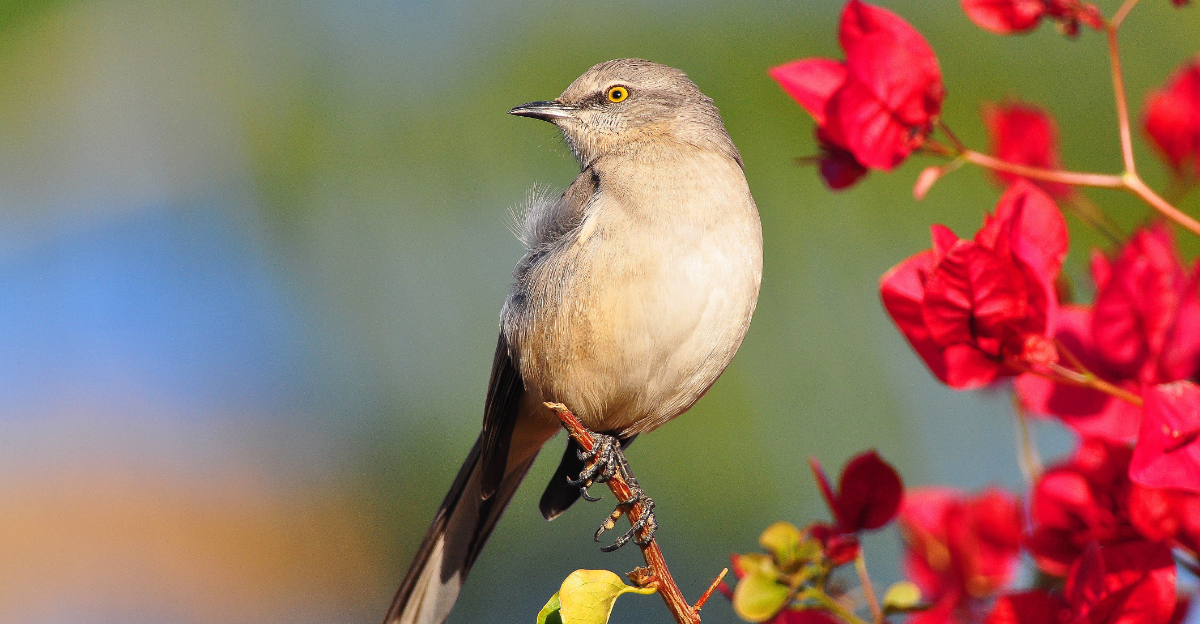
A mockingbird can make a California yard feel like its own personal stage. At first, it may seem like the bird is just passing through.
Then you notice it singing from the same high spot each morning. It may return to the same fence, watch the same corner, or act bold when other birds come close.
That is when the pattern starts to feel less random. Mockingbirds are famous for big voices and strong opinions about territory.
Once one chooses a yard for the season, it can become a regular part of the garden routine. The signs are often easy to miss until you know what to watch for.
Pay attention to its habits, and that familiar song may tell you your yard has been claimed.
1. One Bird Keeps Returning To The Same Perch
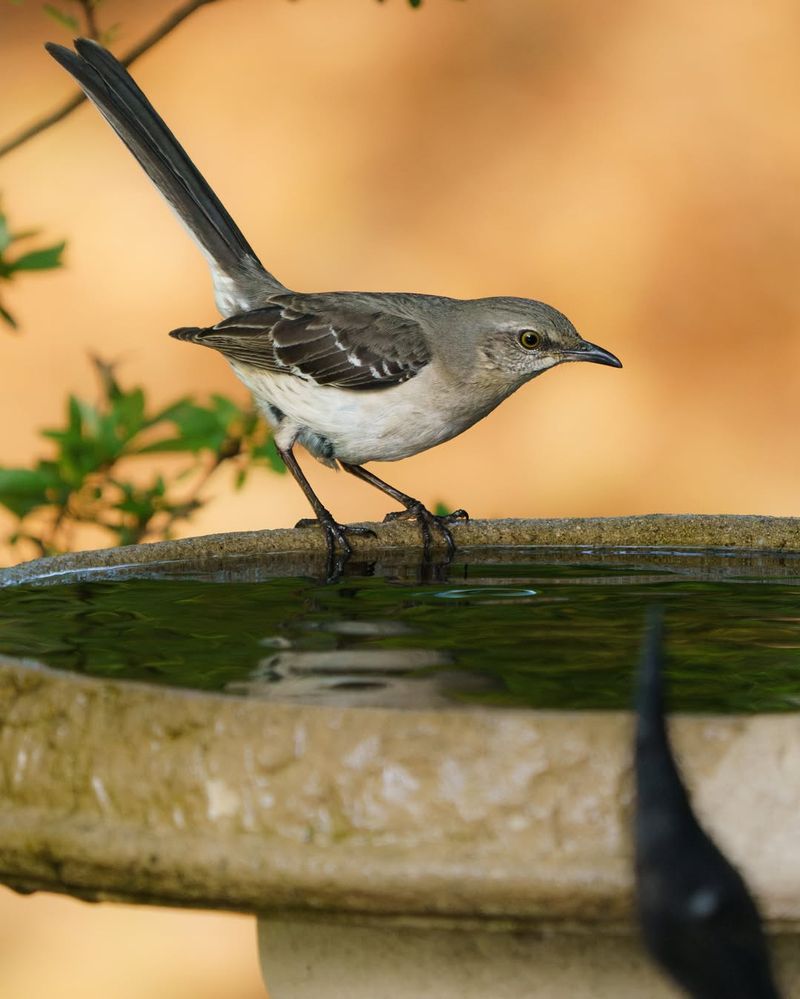
You notice the same gray and white bird sitting on your fence post every single morning. It is in the same spot, at the same time, doing the same thing.
That is not a coincidence. That is a mockingbird claiming its territory.
Mockingbirds are creatures of habit. Once a bird picks a perch it likes, it uses that spot as a lookout point.
From up high, it can watch for food, track movement in the yard, and keep an eye out for rivals. A favorite perch is often the highest point available, like a fence post, a rooftop edge, a tall shrub, or a utility wire.
If you see the same bird returning to the same spot day after day, pay close attention to its markings. Northern Mockingbirds have gray backs, white undersides, and white patches on their wings.
Their tails are long and often flicked up and down. These are easy features to spot once you know what to look for.
Returning to a regular perch is one of the earliest and most reliable signs that a mockingbird has settled in. The bird is not just passing through.
It has decided your yard is worth watching over. Once a mockingbird commits to a territory, it will defend that perch aggressively and return to it throughout the entire season without fail.
2. Loud Songs Start Early And Carry Far
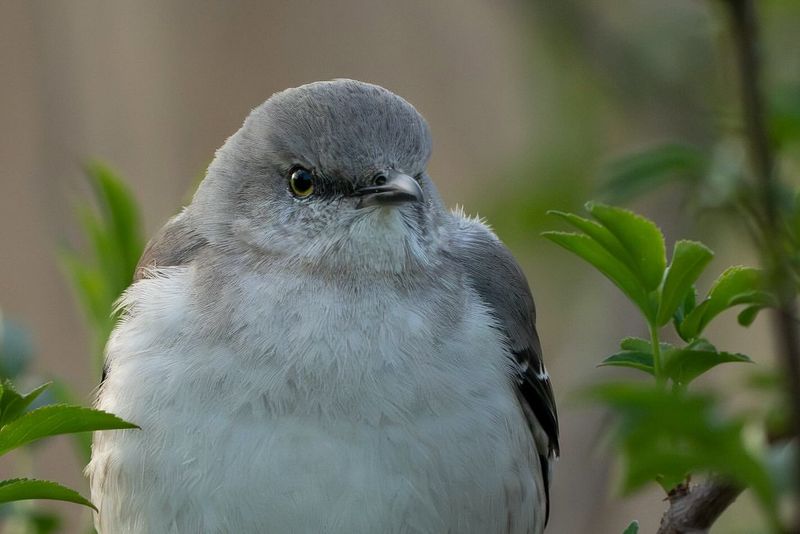
Before your alarm goes off, there is already a concert happening outside. Mockingbirds are famous for starting their songs at sunrise, sometimes even earlier.
If you are hearing a loud, varied, and nonstop melody first thing in the morning, a mockingbird is likely nearby.
What makes their song so recognizable is how much it changes. A mockingbird does not repeat the same call over and over.
Instead, it cycles through dozens of different songs in a row. It can mimic other birds, car alarms, squeaky gates, and even cell phone ringtones.
Each phrase is repeated a few times before it switches to something completely different.
Researchers have found that a single mockingbird can learn more than 200 different song types over its lifetime. That is an impressive vocal range for a bird that weighs less than two ounces.
Your California Garden Changes Every Week. Your Plan Should Too.
Gardening in California changes quickly throughout the season. Every Friday you’ll receive a simple weekly plan showing exactly what to plant, prune, fertilize, harvest, and protect so you never miss the right timing.
The songs are used to attract mates and to warn other mockingbirds to stay out of the territory.
If the singing seems to be coming from the same general area of your yard every morning, that is a strong sign the bird has set up shop nearby. The louder and more consistent the singing, the more confident the bird feels about its space.
A mockingbird that sings boldly is a mockingbird that feels fully at home in your yard for the season.
3. Night Singing Can Mean Breeding Season Energy
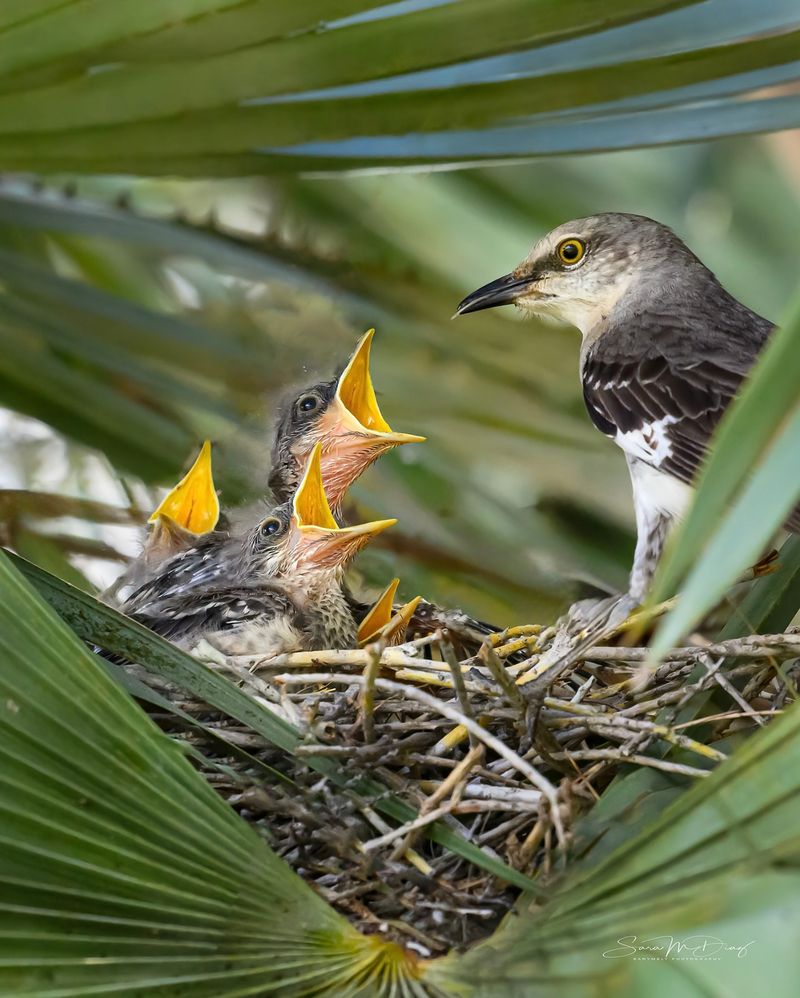
Most birds go quiet after sunset. Mockingbirds sometimes do the opposite.
If you are lying in bed and hear a bird singing at midnight or two in the morning, do not be alarmed. You likely have a mockingbird in full breeding mode right outside your window.
Night singing is most common in male mockingbirds that have not yet found a mate. The extra singing is their way of broadcasting their availability and showing off their vocal skills.
It tends to happen most often during spring and early summer, which lines up with breeding season across California The singing can go on for hours without stopping.
Some people find the nighttime songs beautiful. Others find them frustrating, especially on a work night.
Either way, it is a clear sign that a mockingbird has claimed your yard as its home base. A bird that sings through the night in the same location is deeply attached to that spot.
Night singing tends to taper off once the bird finds a mate or once the breeding season ends. Until then, the concerts can be surprisingly loud and impressively varied.
If the singing comes from the same tree or rooftop night after night, your yard has become prime mockingbird real estate. Consider it a compliment.
The bird chose your space above all others in the neighborhood for a very good reason.
4. White Wing Flashes Give It Away
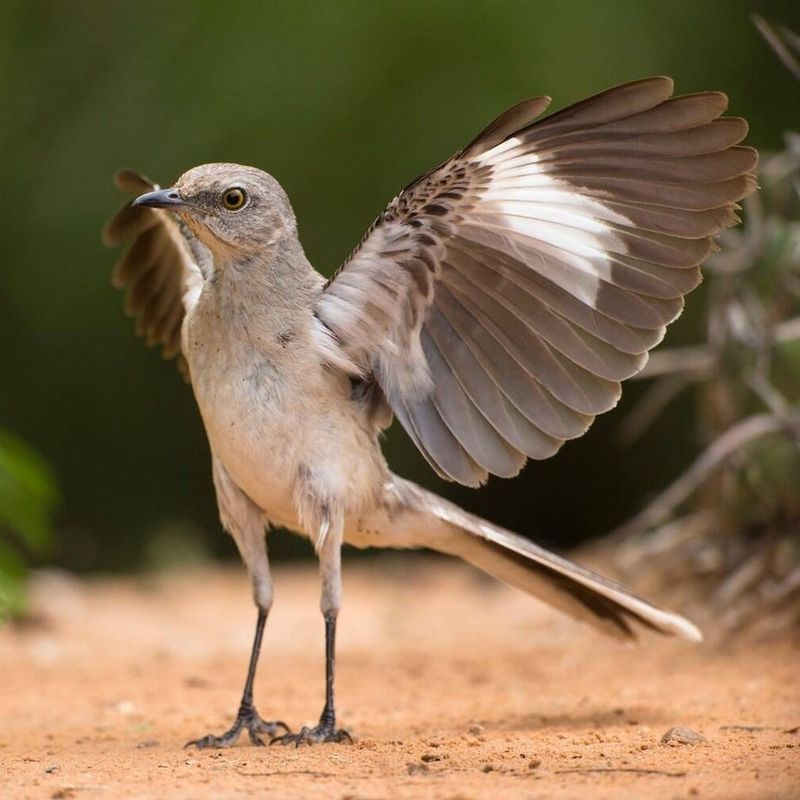
Few bird behaviors are as eye-catching as a mockingbird spreading its wings to flash those bold white patches.
If you see a gray bird suddenly open its wings in a slow, dramatic display while standing on the ground, you are watching a classic mockingbird move.
This behavior is called wing flashing, and scientists have studied it for years. One popular theory is that the sudden flash of white startles insects hiding in the grass, causing them to jump or fly.
The mockingbird then catches them before they can escape. It is a clever hunting trick that works surprisingly well.
Another reason for wing flashing is communication. The white patches are also visible during flight, making the bird easy to identify in the air.
When a mockingbird takes off from its perch and you catch a glimpse of those bright white stripes on the wings, you know exactly what bird you are watching.
Wing flashing is something you will notice more often once you know what to look for. Stand near a grassy area of your yard and watch for a gray bird walking slowly across the lawn.
When it stops and opens its wings in that slow, deliberate way, you will understand immediately why birdwatchers get so excited about mockingbirds. That flash of white is one of the most distinctive field marks of the species across our state.
5. Shrubs Become Watch Posts, Not Just Shelter
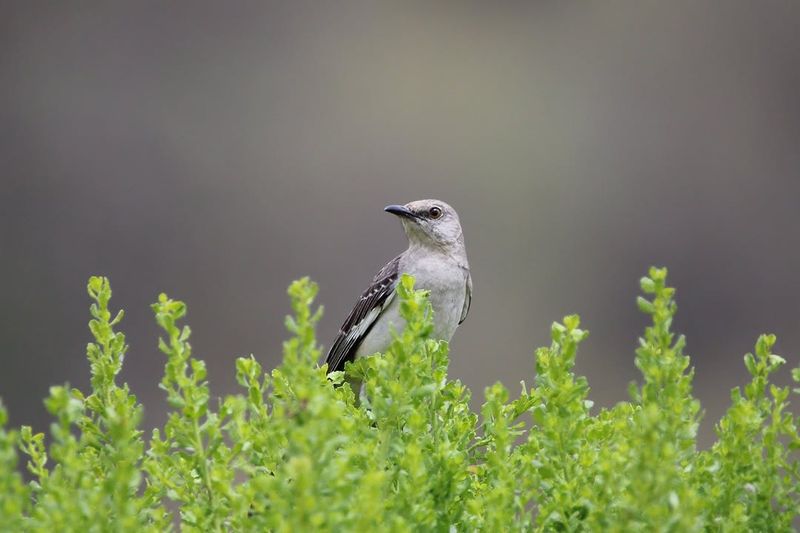
A mockingbird does not just hide inside a shrub. It sits on top of it. That distinction matters a lot when you are trying to figure out if one has claimed your yard.
Birds that are just passing through tend to stay hidden. A territorial mockingbird sits out in the open and watches everything.
Dense shrubs like toyon, coyote brush, and pyracantha are favorites across California. These plants offer both a high perch and a safe place nearby to retreat if needed.
The mockingbird will rotate between a few key shrubs throughout the day, using each one as a different vantage point depending on where the sun is or where it last spotted movement.
You might notice the bird sitting completely still for long stretches of time. Then suddenly it darts down, grabs something from the ground, and flies back up to the same shrub.
That pattern of sitting, watching, and striking is a sign of a bird that knows its yard well. It has mapped out the territory and knows exactly where food is likely to appear.
Once you start watching the shrubs in your yard with this in mind, you will likely spot the mockingbird much more easily. Look for movement at the very top of dense plants rather than inside them.
A bird perched confidently on the highest branch of a shrub is a bird that feels fully in charge of the space below it.
6. It Chases Crows, Cats, And Backyard Intruders
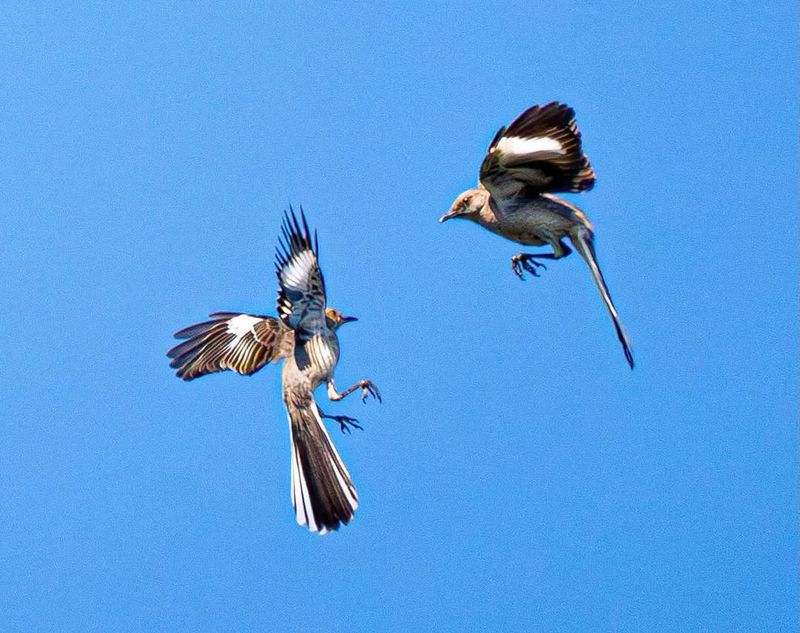
There is something almost comical about watching a tiny gray bird chase a crow three times its size across the sky. But that is exactly what a territorial mockingbird will do, and it will do it without hesitation.
If a bird in your yard is picking fights with much larger animals, you have a mockingbird on your hands.
Mockingbirds are not afraid of anything when it comes to protecting their space. They will chase crows, hawks, jays, and even cats that wander too close.
They fly low and fast, diving repeatedly at the intruder until it leaves the area. This behavior is called mobbing, and it is one of the most reliable signs of a bird defending a fixed territory.
Cats are a common target. If your outdoor cat has started avoiding a certain part of the yard, a mockingbird may be the reason.
The bird will swoop down repeatedly and sometimes even make contact with its feet. Most cats learn quickly to stay away from that area after a few encounters.
Watching this behavior play out in your yard can feel surprising the first time. A bird that weighs less than a baseball is aggressively running off animals that outweigh it by a wide margin.
But mockingbirds are bold by nature, and they rarely back down. If you see this kind of aggressive patrolling happening regularly, your yard has definitely been claimed for the season.
7. Fruit And Insects Keep It Interested
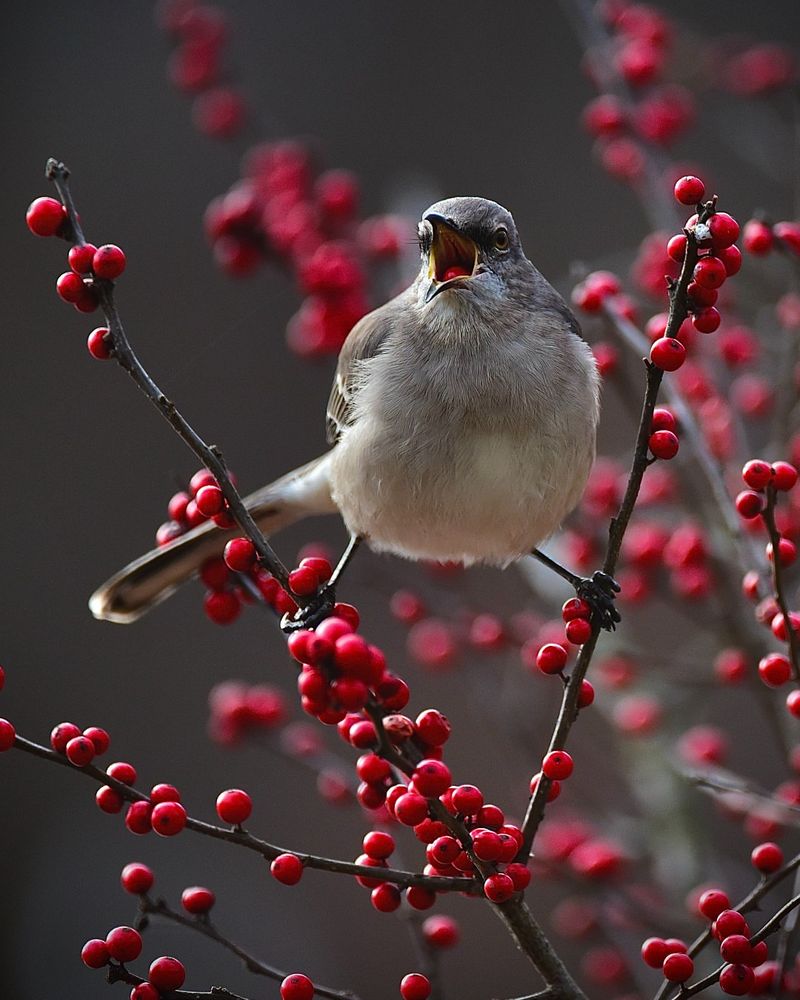
A mockingbird that keeps coming back to your yard is usually coming back for the food. These birds have a broad diet that shifts with the seasons.
In warmer months, they eat mostly insects. In fall and winter, they switch to berries and soft fruits.
If your yard offers both, you have created a very attractive home base for one of these birds.
Pyracantha, toyon, and elderberry are among the most popular food plants for mockingbirds.
These shrubs produce berries that the birds love, and a single mockingbird will sometimes guard a berry-producing shrub so aggressively that no other bird can get near it.
That kind of food guarding is another strong sign of a claimed territory.
On the insect side, mockingbirds hunt on the ground, in the grass, and among leaf litter. They eat beetles, grasshoppers, ants, and caterpillars.
A yard with a healthy insect population is like a well-stocked pantry to a mockingbird. If you have garden beds, compost areas, or patches of native plants, you are likely supporting a steady food supply.
Watching a mockingbird hunt is entertaining. It moves in quick bursts, stops suddenly, cocks its head, and then strikes.
The combination of available fruit and active insects in the same yard is often what convinces a mockingbird to claim a space for an entire season rather than just passing through.
8. Nesting May Be Hidden In Dense Shrubs
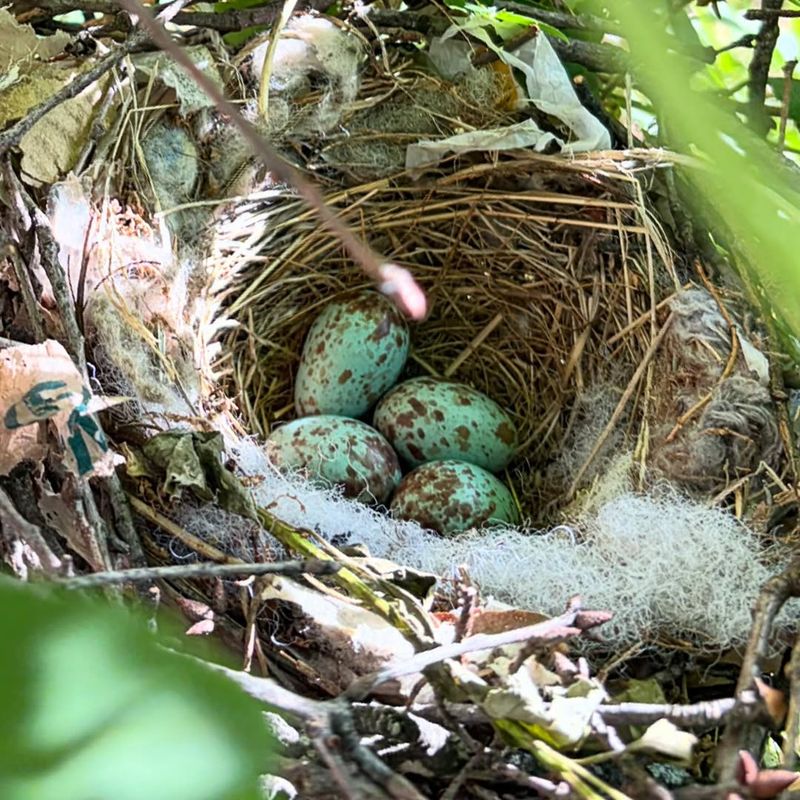
Finding a mockingbird nest is not easy. These birds are careful about where they build, and they prefer thick, thorny shrubs that make it hard for predators to reach inside.
If you have dense plants like rose bushes, bougainvillea, or hawthorn in your yard, there may already be a nest hidden inside one of them.
Mockingbirds usually build their nests between three and ten feet off the ground. The male often starts building several nests at once, and the female chooses the one she likes best.
The finished nest is a loose cup made of twigs, grass, leaves, and soft plant fibers. It blends in so well with the surrounding shrub that you can stand right next to it and miss it completely.
One sign that a nest is nearby is increased activity around a specific shrub. If a mockingbird repeatedly flies in and out of the same plant, or if it gets especially aggressive when you walk near that area, a nest is likely inside.
Both parents take turns feeding the chicks once they hatch, so you may notice two birds making frequent trips to the same spot.
Avoid trimming or disturbing dense shrubs during spring and early summer. You could unknowingly disturb an active nest.
If you suspect a nest is present, give that area extra space for a few weeks. The chicks grow fast and will leave the nest in about two weeks after hatching.
9. Dive-Bombing Means You Are Too Close
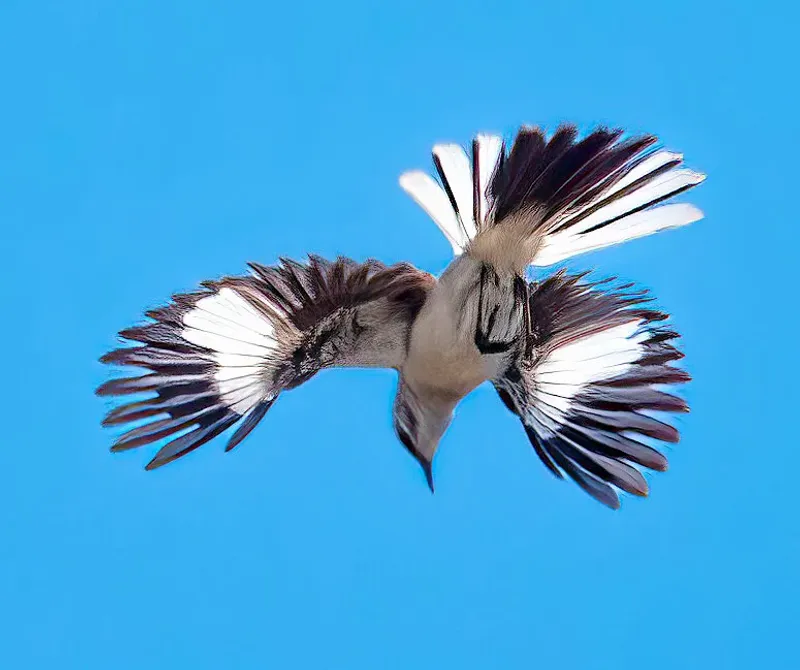
One moment you are walking through your yard minding your own business, and the next moment something small and fast is buzzing the top of your head.
That sudden swooping feeling is a mockingbird letting you know you have crossed into its protected zone.
Dive-bombing is the most dramatic sign that a mockingbird has claimed your yard. The bird will fly fast and low directly at your head, sometimes making a sharp clicking sound as it passes.
It rarely makes contact, but the message is very clear. You are too close to something it cares about, and it wants you to move away.
This behavior usually means a nest is nearby. The bird is not being mean.
It is doing exactly what a protective parent is supposed to do. Mockingbirds are wired to defend their nests with everything they have, and they do not make exceptions for humans, dogs, or anything else that wanders too close.
If you get dive-bombed in a specific part of your yard, mark that area mentally and give it some room for the next few weeks.
Wearing a hat can reduce the intensity of the experience since the bird tends to target the highest point of whatever is moving.
Once the chicks leave the nest, the dive-bombing usually stops completely. Until then, that particular corner of your California yard belongs entirely to the mockingbird, and it will remind you of that fact every single time you forget.