The Tennessee Lawn Problem That Looks Like Drought But Starts Underground
Your lawn gives slightly under your step, like soft ground shifting beneath your shoes. You water it, feed it, and still watch brown patches spread across the yard.
In Tennessee, you expect summer lawns to bounce back quickly after warm storms. Why does your yard keep struggling even when everything seems right above ground?
Something below the surface may be affecting the root system you cannot see. In Tennessee, many homeowners mistake it for dry weather and keep watering more.
Spongy patches, peeling turf, and birds searching closely are early clues already present. You are closer than you think to understanding what is happening just underneath.
The ground may feel uneven, almost springy, as if something is shifting beneath the grass. Soon small changes become clearer and sections of lawn begin losing strength in quiet patterns. You are about to see what may be happening beneath the surface.
Brown Patches That Don’t Respond To Watering
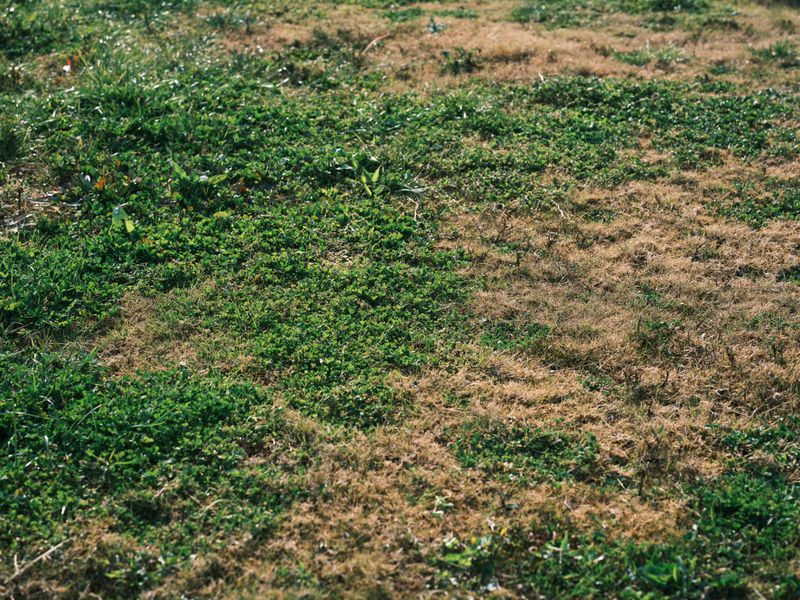
You have watered twice this week, and the brown spots are still spreading. That is an early sign that something underground may be involved.
Drought stress and grub damage look almost identical from the surface. Both turn grass tan, both make blades curl, and both seem to beg for water.
The key difference is how the grass responds to irrigation. Drought-stressed grass perks back up within a day or two after a good soak.
Grub-damaged grass stays brown no matter how much moisture it receives. The roots have been severed, so water cannot reach the blades at all.
Check your soil moisture before assuming the worst. Push a screwdriver two to three inches into the ground. That is the root zone where grubs feed and where moisture matters most.
If the soil is already wet but the grass is still brown, you are not dealing with drought. Something below the surface has broken the connection between roots and blades.
Tennessee summers are intense, so it is easy to blame the heat. But heat alone rarely creates perfectly circular or oval-shaped brown patches.
Grub feeding patterns tend to create rounded spots that slowly expand outward. A drought problem usually browns the whole lawn more evenly.
Pay attention to where the patches appear first. South-facing slopes and areas near flower beds are common grub hotspots in Middle and East Tennessee.
Catching this early saves your lawn and your water bill. The underground activity is the likely cause.
Grass That Peels Up Like A Carpet
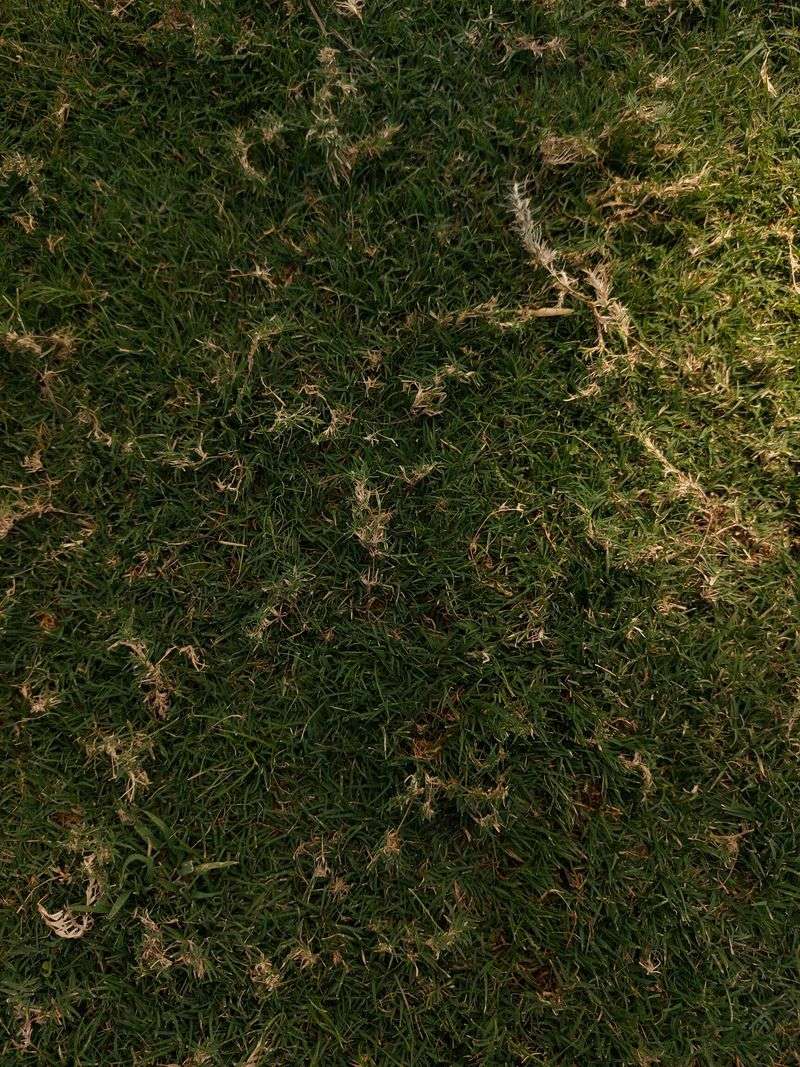
Grab a corner of that brown patch and give it a tug. If the turf rolls back like a loose rug, you may have found a strong clue.
Healthy grass has a deep, tangled root system that anchors it firmly to the soil. You practically need a shovel to pull it up.
Grub-affected turf behaves differently. The larvae chew through roots just below the surface, leaving the grass with almost nothing holding it down.
This carpet-peel test is one of the most reliable ways to confirm a grub problem. No tools are required. Just a simple test using your hands.
Your Tennessee Garden Changes Every Week. Your Plan Should Too.
Gardening in Tennessee changes quickly throughout the season. Every Friday you’ll receive a simple weekly plan showing exactly what to plant, prune, fertilize, harvest, and protect so you never miss the right timing.
Farmers and turf professionals have used this trick for generations across the Southeast. It works because grubs feed in a shallow zone, usually the top two to four inches of soil.
When you roll back the turf, look at what is left behind. Bare, dry soil with no visible root mass is a bad sign.
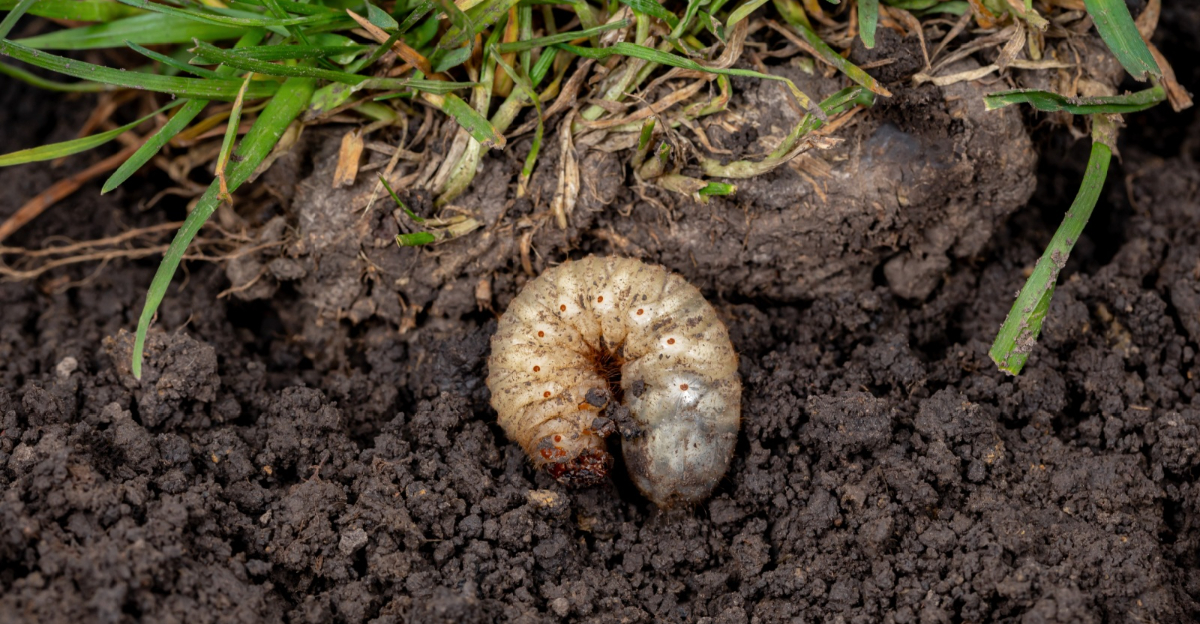
Even worse, you might spot the grubs themselves curled in the dirt. They are white, C-shaped, and typically about three-quarters of an inch to one inch long, roughly the size of a large paperclip.
Finding five or more grubs per square foot warrants close monitoring. At 10 or more per square foot, the infestation requires treatment.
Do this test in several spots around the affected area to get a full picture. Grub populations are rarely spread evenly across a lawn.
Peeling turf is not just a symptom. It is your lawn sending an urgent message that roots are gone and time is running short.
Spongy Or Bouncy Feel When Walking On Lawn
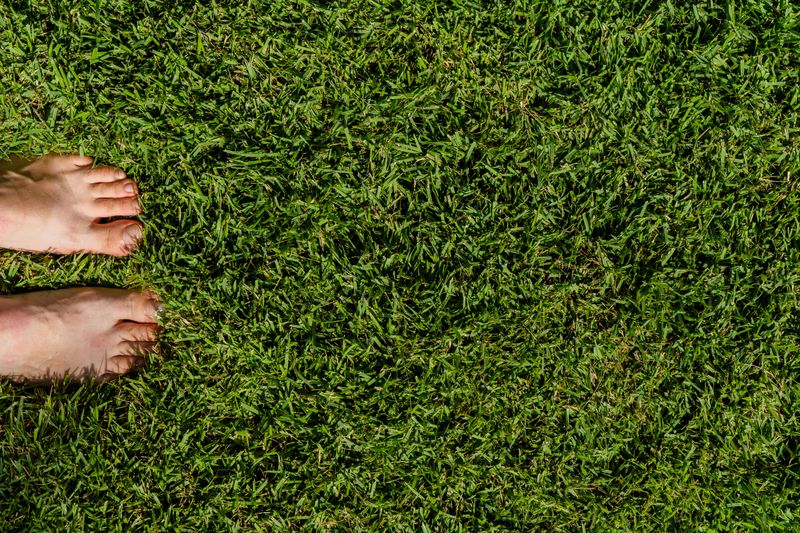
Walk barefoot across your lawn on a dry morning and pay close attention to what you feel. A healthy lawn should feel firm and springy, like a well-packed athletic field.
A grub-infested lawn feels different, almost like walking on a foam mattress. That soft, spongy sensation means the root structure below has been compromised.
As grubs feed on roots below, the soil loses its structure and the surface above begins to shift underfoot.
Many Tennessee homeowners mistake this feeling for good soil moisture or aeration. It actually signals that the root structure has been disrupted.
The bouncy sensation is most noticeable in late summer, typically between July and September. That is peak feeding season for Japanese beetle and masked chafer larvae in Tennessee.
Grubs hatch from eggs laid in midsummer and immediately begin feeding on roots. By late August, a large population can hollow out the root zone across a wide area.
Try pressing your foot firmly into the soft area and then stepping back. If the ground compresses more than half an inch without much resistance, grub activity is likely.
Compare that spot to a healthy section of your lawn. The difference in firmness is usually obvious once you know what to feel for. This symptom often appears before the grass even turns brown.
Catching the spongy feeling early gives you a head start on treatment before visible damage sets in. Your feet can help you detect changes in soil structure.
Increased Bird, Mole, And Skunk Activity
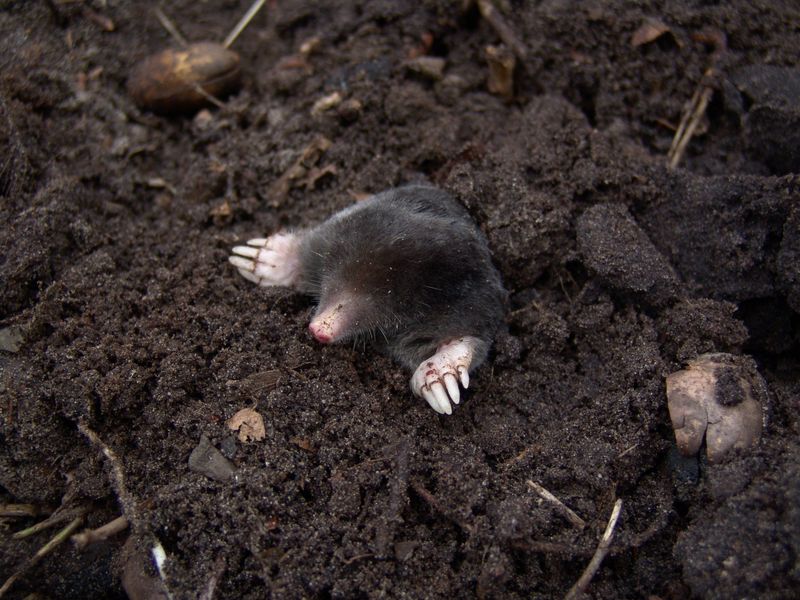
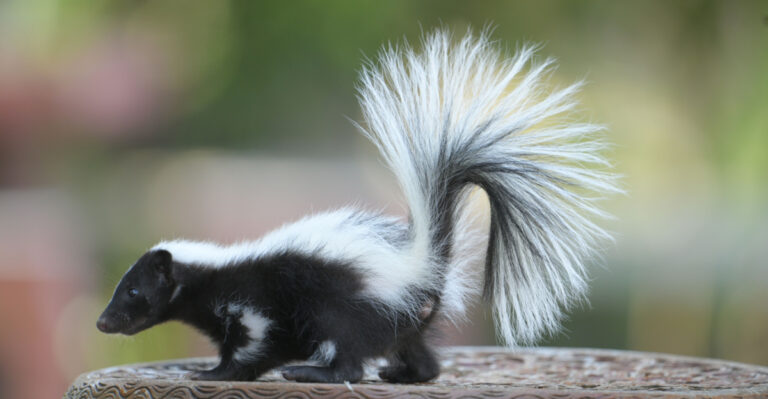
You may notice increased wildlife activity in your yard. Skunks digging at night, moles pushing up trails, and starlings pecking in groups are all chasing the same thing.
Grubs are a high-protein meal for a wide range of animals. When populations spike underground, predators show up fast and in numbers.
Skunk activity can be a useful indicator because they dig precisely. They punch small, cone-shaped holes about two to three inches wide to extract individual grubs.
Finding a cluster of those holes near your brown patches is strong evidence of an infestation. Skunks have an incredible sense of smell and rarely dig in the wrong spot.
Moles create raised ridges or tunnels as they travel through the root zone. They are not eating the grass itself but hunting grubs and earthworms below.
A sudden increase in mole activity during late summer is a reliable sign of high grub density. One mole can cover a lot of ground quickly when food is abundant.
Birds like robins, starlings, and crows will peck aggressively at soft soil when grubs are near the surface. Watching where they focus their attention can actually help you map the infestation.
Removing the animals does not address the underlying cause. They will return every night until the food source is gone.
Treating the grub population removes the attraction entirely. Once the larvae are gone, the wildlife moves on and your lawn gets a chance to recover.
Irregular Brown Spots In Sunny Areas
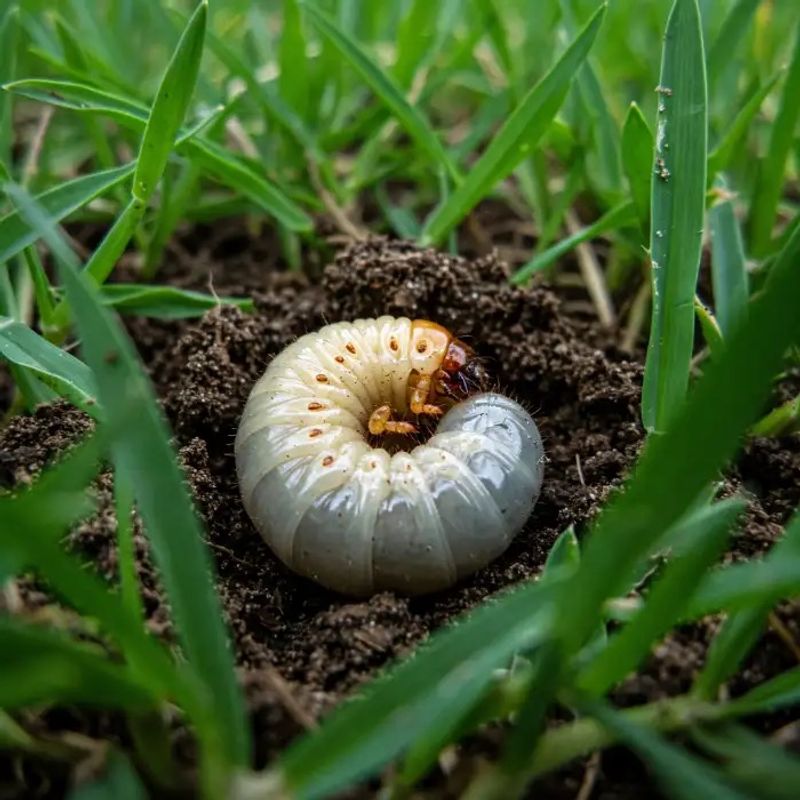
Shade-loving diseases tend to hit the dark corners of your yard first. Grubs do the opposite, targeting the warm, sunny, open sections where soil temperatures run highest.
Japanese beetles prefer to lay eggs in areas that get full sun and stay moist after irrigation. Those conditions make the soil easier to navigate and the roots more tender.
That is why you often see grub damage in the middle of the lawn rather than near tree lines or fences. Sunny slopes and open turf are favorable areas for egg-laying beetles.
The brown spots tend to be irregular in shape, not following any obvious pattern like a watering zone or a foot-traffic path. That randomness is a clue that something biological is at work.
Fungal problems often follow the shape of your irrigation system or spread from a central point in a ring. Grub damage spreads outward from wherever the eggs were deposited.
Look at the pattern over two or three weeks. If the spots are growing in an uneven, creeping way and always in the sunniest parts of your yard, grubs are a strong suspect.
Tennessee lawns planted with tall fescue or bermuda grass in open areas are especially vulnerable.
These are the turf types most commonly targeted by masked chafer beetles and Japanese beetles. Mapping your brown spots with a photo each week helps you track the spread.
Visual documentation also helps lawn care professionals assess the severity faster. Sunny areas can also be more favorable for grub activity.
Visible White C-Shaped Larvae Below The Soil Surface
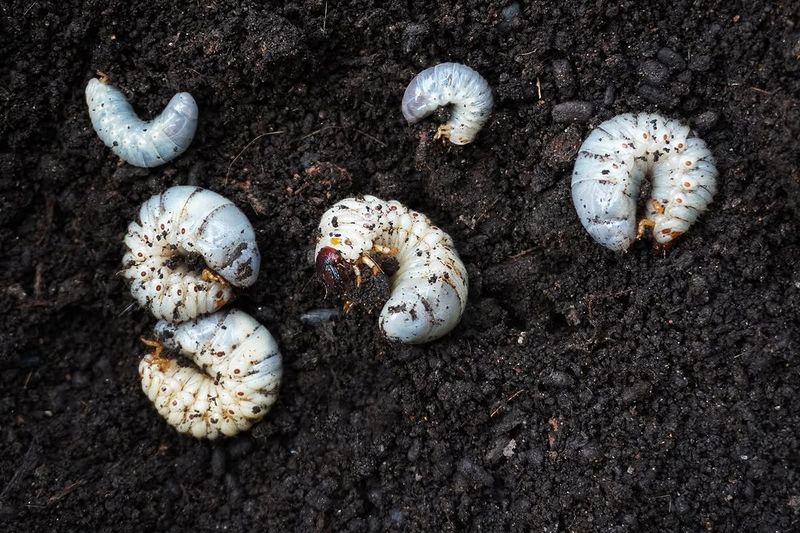
Flip back a patch of struggling turf and look carefully at the top two inches of soil. If you see plump, white, C-shaped creatures curled in the dirt, the cause becomes clear.
These are grub larvae, the immature stage of beetles like the Japanese beetle, masked chafer, or green June beetle. All three species are common across Tennessee and cause significant turf damage.
Each larva has a soft, creamy-white body, a tan or brown head, and six small legs near the front. They curl into that signature C-shape when disturbed.
Their size depends on the species and time of season. Early-stage larvae are small, less than a quarter inch long, and easy to overlook in the soil, but they grow quickly through summer.
By late August, mature larvae can reach three-quarters of an inch or longer. At that size, they consume roots aggressively to fuel their growth before winter.
Count how many you find in a one-square-foot section of soil. Finding 10 or more per square foot means the population is large enough to cause serious turf loss.
Lower counts may not require chemical treatment, especially if the lawn is otherwise healthy. Improving soil health and overseeding can help the grass outpace minor grub feeding.
Biological controls like beneficial nematodes work well against young larvae in late summer. Products containing imidacloprid or chlorantraniliprole are also effective when timed correctly.
Seeing the larvae yourself helps confirm the cause of what is weakening your grass from below. You can now focus on addressing the underlying issue rather than only surface symptoms.