Before You Plant A Ficus Tree In California, Know What Its Roots Can Do

A ficus tree can look like the perfect shade maker when it is young. Glossy leaves, fast growth, and a full canopy make it tempting for many California yards.
But the part you cannot see is often the part that causes the most trouble. Ficus roots can spread far as the tree matures, especially when water is nearby.
That can create problems around driveways, sidewalks, pipes, and foundations if the tree is planted too close. The issue is not that ficus trees are always a bad choice.
It is that they need serious room and careful placement. A small nursery tree can become a much bigger commitment than expected.
Before you plant one near a patio or property line, it helps to understand how those roots behave underground.
1. Ficus Roots Can Lift Sidewalks And Driveways
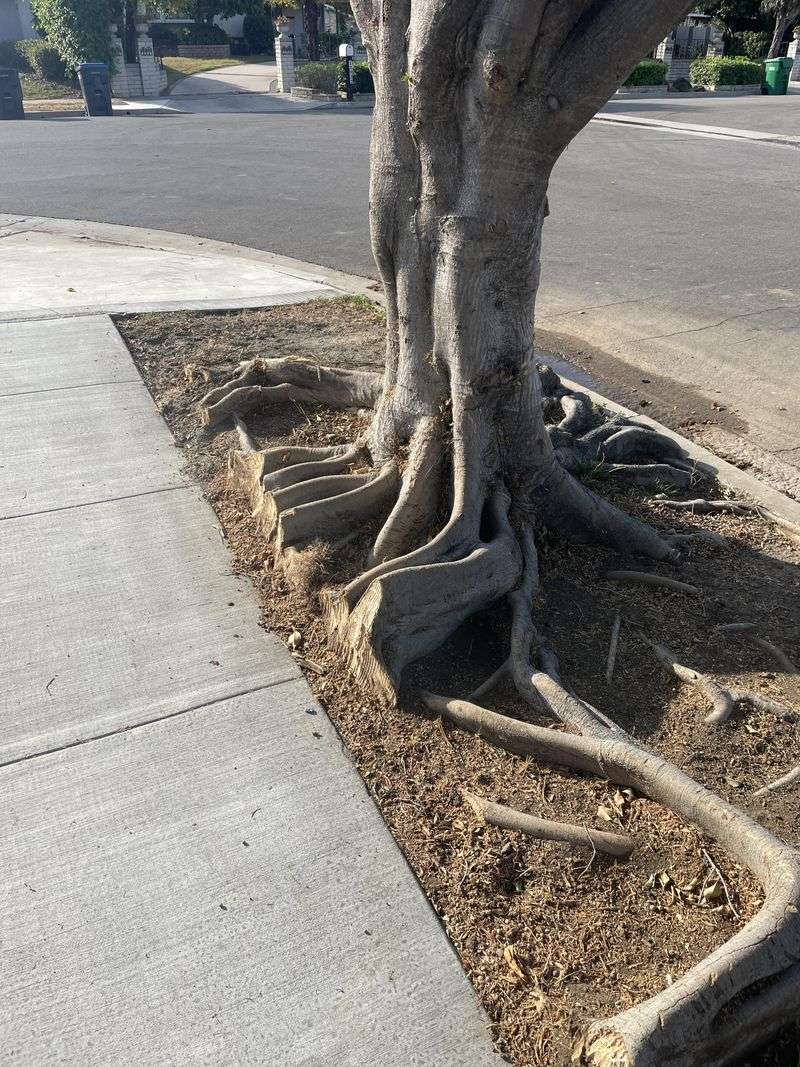
Few things are more frustrating than watching your perfectly smooth sidewalk slowly buckle and crack. That is exactly what happens when a ficus tree is planted too close to paved surfaces.
The roots of this tree are not shy. They grow fast, they grow wide, and they grow strong enough to push right through concrete.
Ficus roots tend to stay near the surface of the soil. They spread outward rather than downward, which means they run right under driveways and sidewalks.
As the roots grow thicker over the years, they push up against the concrete from below. The result is an uneven, cracked surface that becomes a tripping hazard.
In many neighborhoods across California, you can spot the damage without even looking hard. Sidewalk panels pushed up at sharp angles, driveways with long cracks running through them, and chunks of pavement popped out of place are all common signs.
These repairs are not cheap. Replacing or grinding down lifted concrete can cost hundreds or even thousands of dollars.
If you already have a ficus near your driveway or sidewalk, watch for early warning signs. Small cracks near the base of the tree are a red flag.
Root barriers installed early can sometimes slow the spread, but they do not stop it completely. In many cases, homeowners end up having to remove the tree to fix the damage for good.
Planting ficus trees away from paved areas is always the smarter move from the start.
2. Small Planting Strips Are Usually A Bad Fit
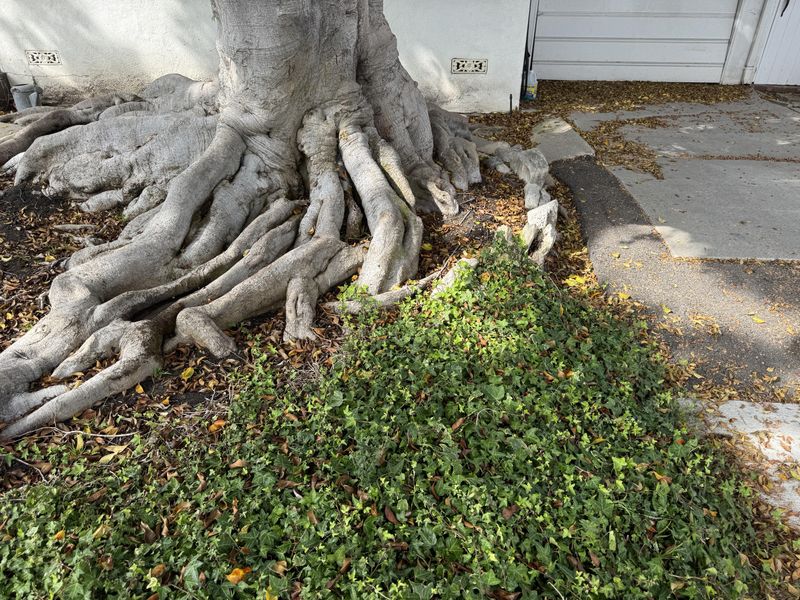
Planting strips, those narrow patches of soil between the sidewalk and the street curb, might seem like a great spot for a shade tree.
They are easy to maintain, they soften the look of the street, and they seem like a natural fit.
But planting a ficus tree in one of these strips is almost always a bad idea. The problem comes down to space. Planting strips are usually only a few feet wide.
Ficus roots, on the other hand, can spread far beyond that in every direction. When a large tree is crammed into a tiny patch of soil, its roots have nowhere to go but outward, under the sidewalk on one side and under the street on the other.
Your California Garden Changes Every Week. Your Plan Should Too.
Gardening in California changes quickly throughout the season. Every Friday you’ll receive a simple weekly plan showing exactly what to plant, prune, fertilize, harvest, and protect so you never miss the right timing.
Over time, this causes major damage to curbs, gutters, and sidewalks. The city or local municipality often holds homeowners responsible for repairing this kind of damage, even when the tree was planted with good intentions.
Repair bills can pile up fast, and some homeowners are surprised to find they owe money for damage on public property near their home.
Many cities across California have started removing ficus trees from planting strips because the damage is so predictable. Before planting any large tree in a strip, check with your local city or county guidelines.
Some areas have specific rules about what can be planted there. Choosing a smaller, less aggressive tree for a narrow planting strip will save you a lot of headaches down the road.
3. Roots May Spread Far Beyond The Canopy

Most people assume that a tree’s roots stay within the shadow of its canopy. That seems logical, right?
If the branches reach out ten feet, the roots must stay within ten feet. With ficus trees, that assumption can get you into serious trouble.
Research has shown that ficus roots can spread two to three times the width of the canopy, sometimes even more.
A tree with a canopy that covers thirty feet of ground may have roots reaching sixty to ninety feet away from the trunk.
That is a huge area, and it often extends well into neighboring properties, under patios, and toward buried utility lines.
This spreading habit is one of the reasons ficus trees are considered a high-risk choice for residential yards.
Even if you plant the tree far from your house, the roots can still find their way to structures, pipes, and paved surfaces over time.
The distance that feels safe today may not feel safe five or ten years from now.
Before planting, it helps to map out where the roots might travel as the tree matures. Think about what is in the ground nearby, including irrigation lines, gas lines, sewer pipes, and drainage systems.
Consider what paved surfaces or structures are within a large radius of the planting spot. Talking to a certified arborist before you plant can give you a clearer picture of the risks. A little planning now can prevent a lot of costly surprises later.
4. Patios And Pool Decks Can Crack Over Time

Backyard patios and pool decks are big investments. Homeowners spend thousands of dollars on beautiful concrete, pavers, or stone surfaces, only to watch them slowly get destroyed by tree roots.
When a ficus tree is nearby, that scenario plays out more often than you might think. Pool decks are especially vulnerable. The soil around a pool is often moist, and ficus roots are naturally drawn to water sources.
As the roots grow toward that moisture, they travel under the deck surface. Over time, the roots expand and push the deck material upward, creating uneven surfaces, cracks, and gaps.
This is not just an eyesore. Cracked pool decks can be a safety hazard for anyone walking barefoot nearby.
Patios face the same problem. Even if your patio is made of thick concrete, ficus roots can work their way underneath.
Once they get under there, they grow thicker with every passing season. The pressure they create is surprisingly powerful and can split even well-poured concrete slabs.
Repairing a damaged pool deck or patio is expensive and time-consuming. In some cases, the tree must be removed before repairs can even begin, because the roots will just break the new surface again.
If you have a pool or patio in your yard, keep ficus trees well away from those areas. Many landscape professionals recommend a minimum distance of at least thirty feet, though more space is always better when dealing with this particular tree.
5. Sewer And Drain Lines Can Become Root Targets

Underground pipes might seem safe from tree roots, but that is far from the truth. Sewer lines and drain pipes are actually prime targets for ficus roots, and the damage they can cause underground is often far worse than what you can see on the surface.
Older pipes made from clay or cast iron are especially at risk. These materials develop small cracks or gaps at the joints over time.
Even the tiniest opening is enough for a ficus root to find its way inside. Once in, the root grows and expands inside the pipe, eventually blocking the flow of water and waste entirely.
When roots infiltrate a sewer line, the signs show up inside your home. Slow drains, gurgling toilets, sewage smells, and backed-up sinks are all warning signs that something is wrong underground.
Getting to the root of the problem, literally, usually requires a professional plumber with a camera to inspect the line. Repairs can be very costly, especially if the pipe needs to be dug up and replaced.
Newer pipes made from PVC are more resistant to root intrusion, but they are not completely immune. Ficus roots are persistent, and if there is moisture nearby, they will find a way toward it.
If your home has older plumbing and you are thinking about planting a ficus, reconsider the location carefully.
A plumber or landscaper can help you identify where your sewer lines run so you can keep any aggressive trees far away from them.
6. Foundations Are A Bigger Concern In Tight Yards
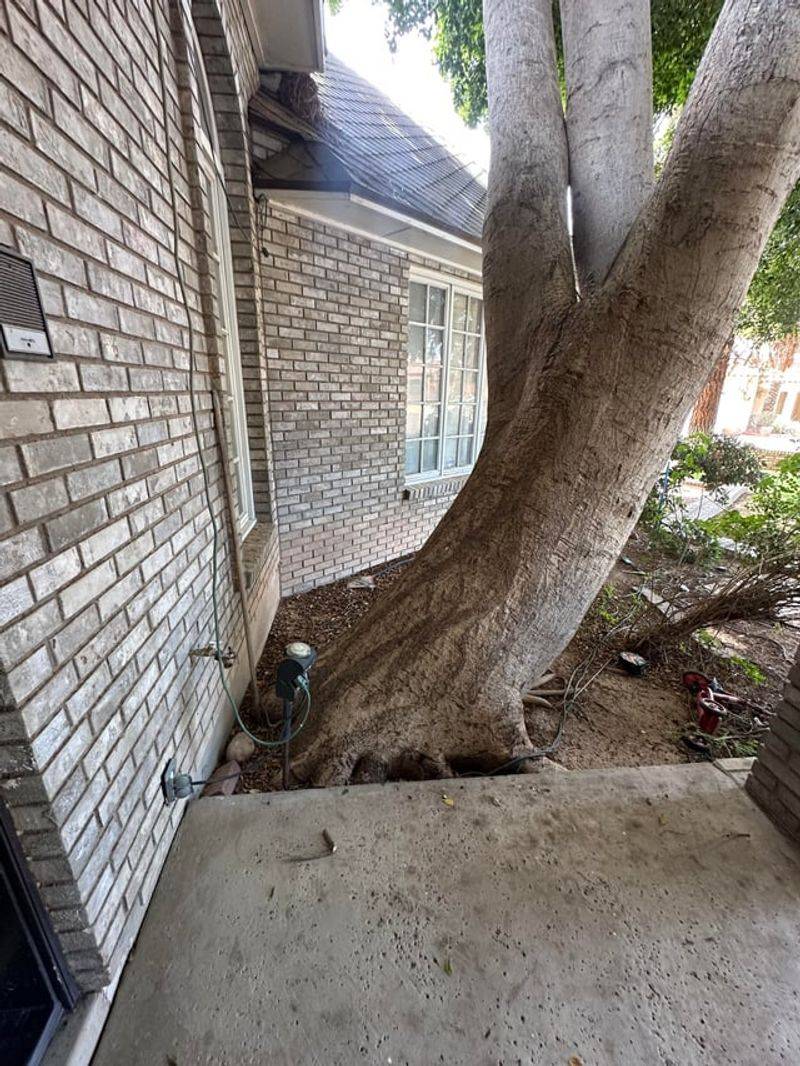
In a small yard, every inch of space matters. Planting a large, fast-growing tree in a tight space might seem fine when the tree is young and manageable.
But as ficus trees mature, the situation can change quickly, and the foundation of your home can end up paying the price.
Ficus roots do not typically grow directly through solid concrete foundations. However, they can cause problems in other ways.
As the roots grow near a foundation, they absorb moisture from the surrounding soil. In areas with clay-heavy soil, which is common in many parts of California, this moisture loss causes the soil to shrink.
When soil shrinks unevenly, it can cause the foundation to shift, crack, or settle in unexpected ways.
Foundation repairs are among the most expensive home repairs a homeowner can face. Depending on the severity, costs can range from a few thousand dollars to tens of thousands.
Insurance often does not cover tree root damage, leaving homeowners to pay out of pocket. In tight yards, the risk is even higher because the tree has nowhere to grow except toward the nearest structure.
If your yard is small and you are set on planting a ficus, talk to a structural engineer or a certified arborist first. They can assess your soil type, your foundation style, and the best planting distance for your specific situation.
In many cases, they will recommend a completely different tree species that offers shade without the structural risk.
7. Keeping Ficus As A Hedge Does Not Stop The Roots

Many California homeowners choose to grow ficus as a hedge rather than a full-sized tree. The idea makes sense on the surface.
Keeping the plant trimmed and shaped seems like it would also keep the roots under control. Unfortunately, that is not how it works.
Pruning the top of a ficus does reduce some of its overall energy, but it does not stop the roots from spreading. The root system keeps growing regardless of how often you trim the canopy.
In fact, some research suggests that heavy pruning can actually stress the plant, causing it to push roots out even more aggressively as it searches for nutrients and water.
Ficus hedges are extremely popular in California because they grow dense and fast, making great privacy screens. But those same qualities that make them appealing above ground are working against you below it.
A long ficus hedge running along your property line has roots spreading outward in both directions, often creeping under fences, sidewalks, and into neighboring yards.
If you have a ficus hedge, do not assume your infrastructure is safe just because you keep it neatly trimmed. Have a professional inspect the root situation periodically.
Root barriers can be installed along the base of a hedge to slow the spread, though they need to be deep enough to be effective.
Replacing a ficus hedge with a less aggressive privacy plant, like clumping bamboo or a native shrub, is often the best long-term solution for protecting your property.