These Oregon Natives Outperform English Laurel As Hedges Without The Invasive Risk
English laurel may grow fast, but that speed can come with baggage Oregon gardeners do not always want. A hedge should give privacy without spreading into places it does not belong.
Native plants can offer a better fit, especially when they already handle local rain, soil, and seasonal changes.
The right Oregon natives can build a screen that feels softer and more natural than a wall of laurel.
They can also support the yard in ways a plain hedge never will. Some bring flowers.
Others offer berries or year round structure. The best part is that they work with the local landscape instead of pushing against it.
Choose native hedge plants with the right mature size, and you can get privacy without inviting an invasive problem later.
1. Black Hawthorn Builds A Dense Native Barrier
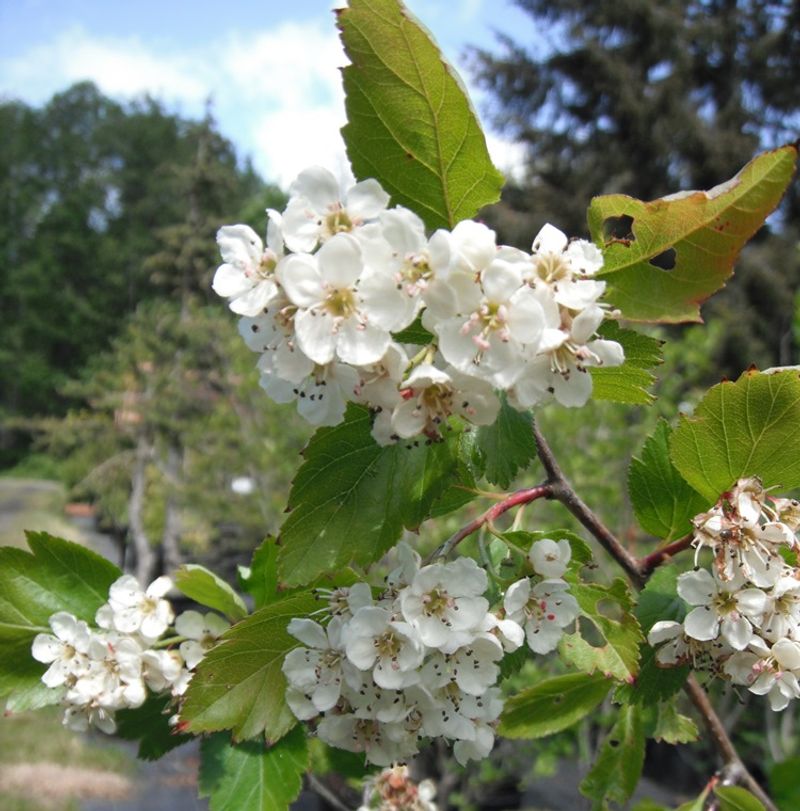
Few native shrubs can match the sheer toughness of Black Hawthorn when it comes to building an impenetrable hedge. Its long, sharp thorns make it a natural deterrent for unwanted foot traffic, wandering pets, and even deer.
Once established, it forms a wall of woody branches that stays solid through wind, rain, and cold winters common in northern regions of Oregon.
Black Hawthorn grows to about 15 feet tall, giving it real presence along property lines. It blooms with clusters of small white flowers in spring, which attract native bees and other pollinators.
By late summer, dark purple berries appear and quickly become a favorite food source for cedar waxwings, robins, and other songbirds.
Planting is straightforward. It prefers full sun to partial shade and handles both moist and moderately dry soils.
Space plants about six to eight feet apart for a hedge that fills in well within a few seasons. Unlike English laurel, it does not send seedlings creeping into neighboring yards or natural areas.
Pruning once a year keeps it tidy without much effort. Black Hawthorn is also deeply rooted in the ecology of Oregon, providing habitat and food that imported plants simply cannot replicate.
For a hedge that works hard, looks natural, and supports local wildlife, this native shrub is a standout choice worth planting first.
2. Nootka Rose Creates A Thorny Hedge Birds Actually Use
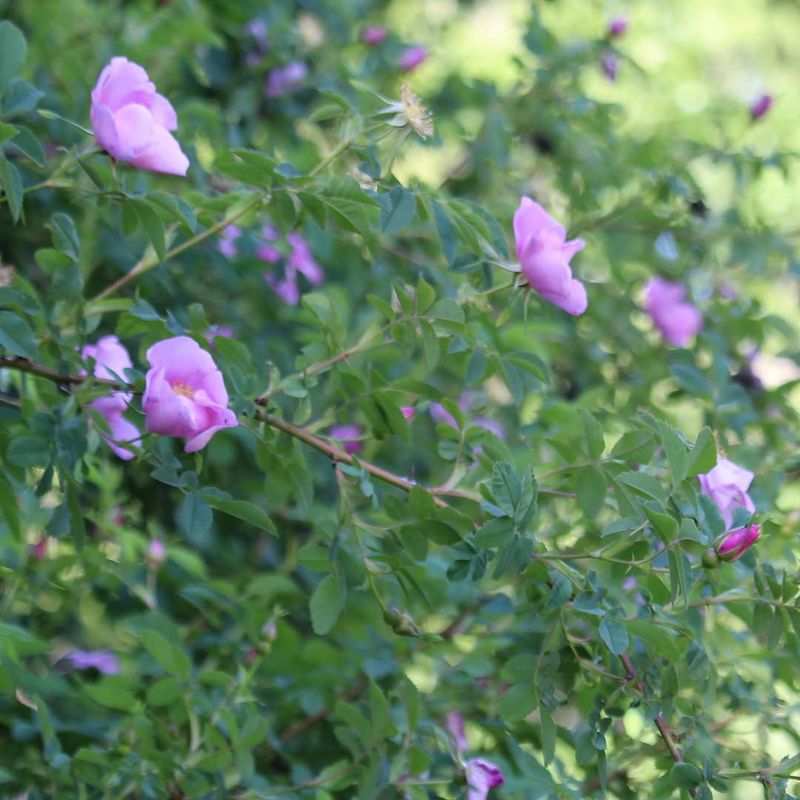
There is something almost storybook about a hedge that blooms in deep pink every June and smells faintly sweet on warm afternoons. Nootka Rose does exactly that, and it does it while building one of the most bird-friendly barriers you can grow.
Its arching, thorny canes form a tangled thicket that songbirds absolutely love for nesting and shelter.
Beyond the beauty, this rose is a workhorse. It spreads gradually by root suckers, which means it naturally fills in gaps over time without any extra planting.
The large red rose hips that follow the flowers persist well into winter, giving food to birds like American robins and varied thrushes during the coldest months of the year.
Nootka Rose grows best in full sun but tolerates light shade. It handles wet winters and dry summers with ease, making it well-suited to Oregon’s climate patterns.
Your Oregon Garden Changes Every Week. Your Plan Should Too.
Gardening in Oregon changes quickly throughout the season. Every Friday you’ll receive a simple weekly plan showing exactly what to plant, prune, fertilize, harvest, and protect so you never miss the right timing.
Heights typically reach six to ten feet, which provides solid visual privacy along a fence line. It does spread, so planting it inside a contained bed or along a boundary where spread is welcome works best.
Annual pruning after flowering keeps it from getting too wild. Compared to English laurel, it is a fraction of the maintenance and a hundred times more valuable to local wildlife.
Pollinators swarm the blooms, birds nest in the canes, and your yard becomes a genuine habitat.
3. Baldhip Rose Fills Fence Lines Without Laurel’s Invasive Risk
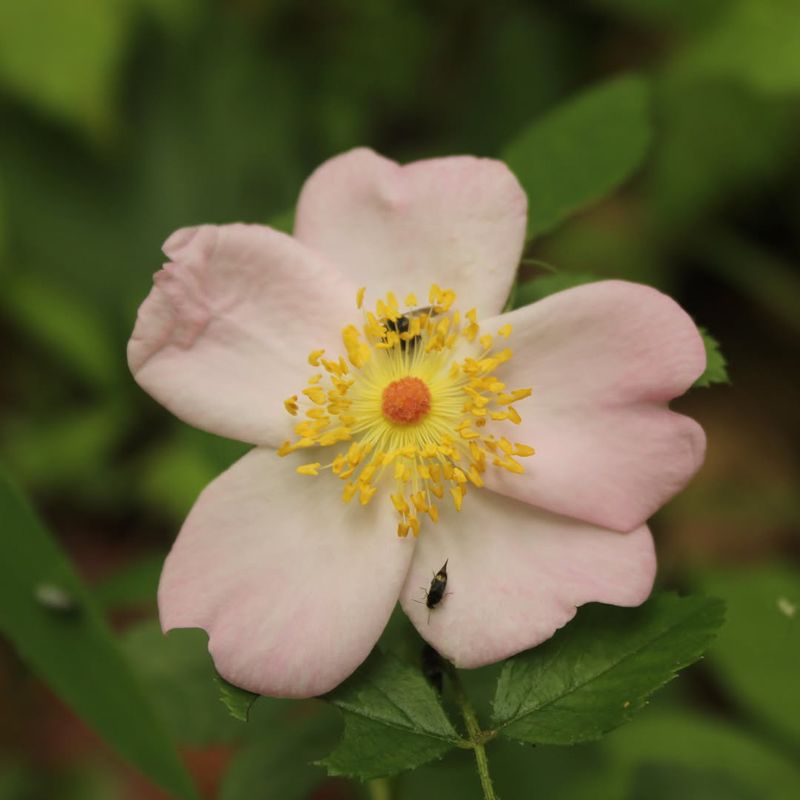
Not every yard needs a tall, imposing hedge. Sometimes a low, graceful shrub that quietly does its job is exactly the right fit.
Baldhip Rose is that plant. It grows three to five feet tall, making it ideal for shorter fence lines, front yards, or areas where you want definition without blocking views entirely.
Its small, pale pink flowers are subtle but charming, and they appear reliably each spring.
What sets this rose apart from others is its small, distinctive hip. The fruit is tiny and round, and it lacks the fleshy calyx that most rose hips have, which is where it gets its common name.
Birds still eat the hips eagerly, and the dense branching structure gives small songbirds a safe place to perch and shelter from predators.
Baldhip Rose thrives in drier, rocky, or well-drained soils, which makes it a great choice for sloped fence lines or areas where other plants struggle to establish. It tolerates partial shade but flowers most heavily in full sun.
Unlike English laurel, it does not overwhelm neighboring plants or escape into natural areas. It spreads slowly and stays manageable with minimal pruning.
Planting three to four feet apart creates a connected hedge within two to three seasons. For a low-risk, low-maintenance native option that adds real ecological value to your fence line, Baldhip Rose is a quietly excellent choice.
4. Black Twinberry Makes A Wildlife-Friendly Privacy Layer
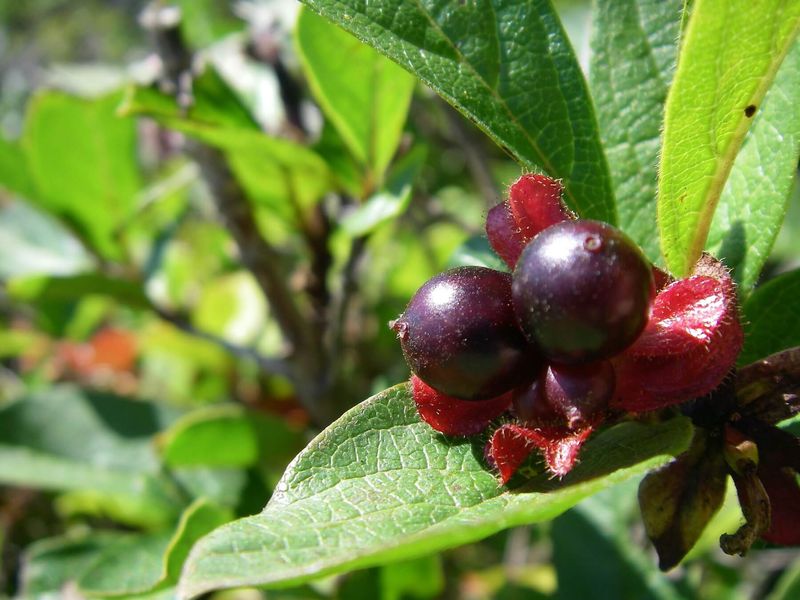
Hummingbirds find this plant almost impossible to resist. Black Twinberry produces pairs of small yellow tubular flowers that are perfectly shaped for hummingbird feeding, and the show runs from spring well into summer.
After the flowers fade, shiny black twin berries appear inside vivid red bracts, creating a striking two-toned display that catches the eye even from across the yard.
As a hedge plant, Black Twinberry brings serious privacy potential. It grows quickly to six to twelve feet tall and forms a thick, leafy screen that blocks sightlines effectively.
The foliage is dense and stays green well into fall, giving you a long season of coverage. It works especially well along the back of a property where a tall, natural-looking barrier is needed.
One of its biggest advantages is its tolerance for wet conditions. Low spots, boggy edges, and areas near streams or ponds are where this shrub genuinely thrives.
Most hedge plants struggle in those spots, but Black Twinberry handles standing water and heavy clay soils without complaint.
It prefers partial to full shade, which makes it one of the few native hedge options that actually performs better out of direct sun.
Spacing plants four to six feet apart encourages a full, connected screen. Birds, bees, and hummingbirds will visit regularly once the plant matures.
For shady, wet spots where other hedges fail, this native shrub steps up reliably.
5. Pacific Crabapple Adds Spring Flowers To A Living Fence
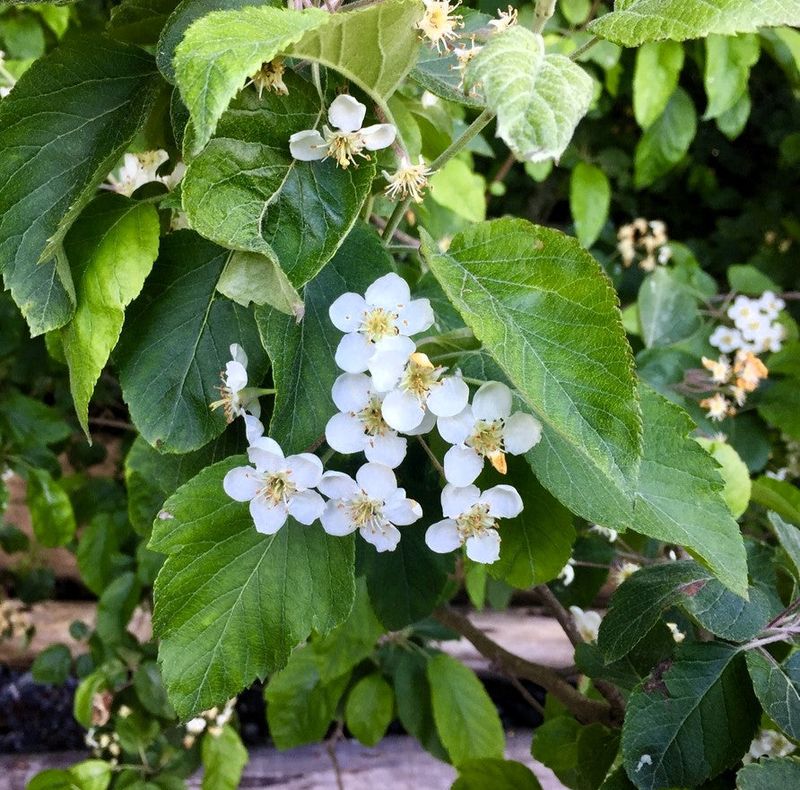
Spring arrives with a burst of fragrant white-pink blossoms when Pacific Crabapple is part of your hedge line. Few native plants deliver this level of seasonal drama.
The flowers cover the branches so completely in April and May that the foliage almost disappears beneath them. Pollinators go wild for the blooms, and the sweet scent carries across the yard on calm mornings.
By fall, small yellow and red crabapples cover the tree and quickly attract flocks of cedar waxwings, band-tailed pigeons, and other fruit-eating birds.
The fruit also appeals to deer and other mammals, making Pacific Crabapple a multi-season wildlife magnet.
Even in winter, the gnarled, twisting branch structure adds visual interest to the hedge line after the leaves have dropped.
Pacific Crabapple typically reaches 15 to 25 feet tall, so it works best as a taller screen or background layer in a layered hedge planting.
It tolerates wet soils very well and is commonly found along stream banks and forest edges across Oregon.
Full sun to partial shade suits it fine. Planting it in combination with shorter native shrubs creates a layered hedge that mimics natural woodland edges.
Unlike English laurel, it does not seed aggressively into wild areas. It stays where you plant it and rewards you with flowers, fruit, and wildlife activity through every season of the year. It is a genuinely beautiful native investment.
6. Cascara Works As A Taller Native Screen
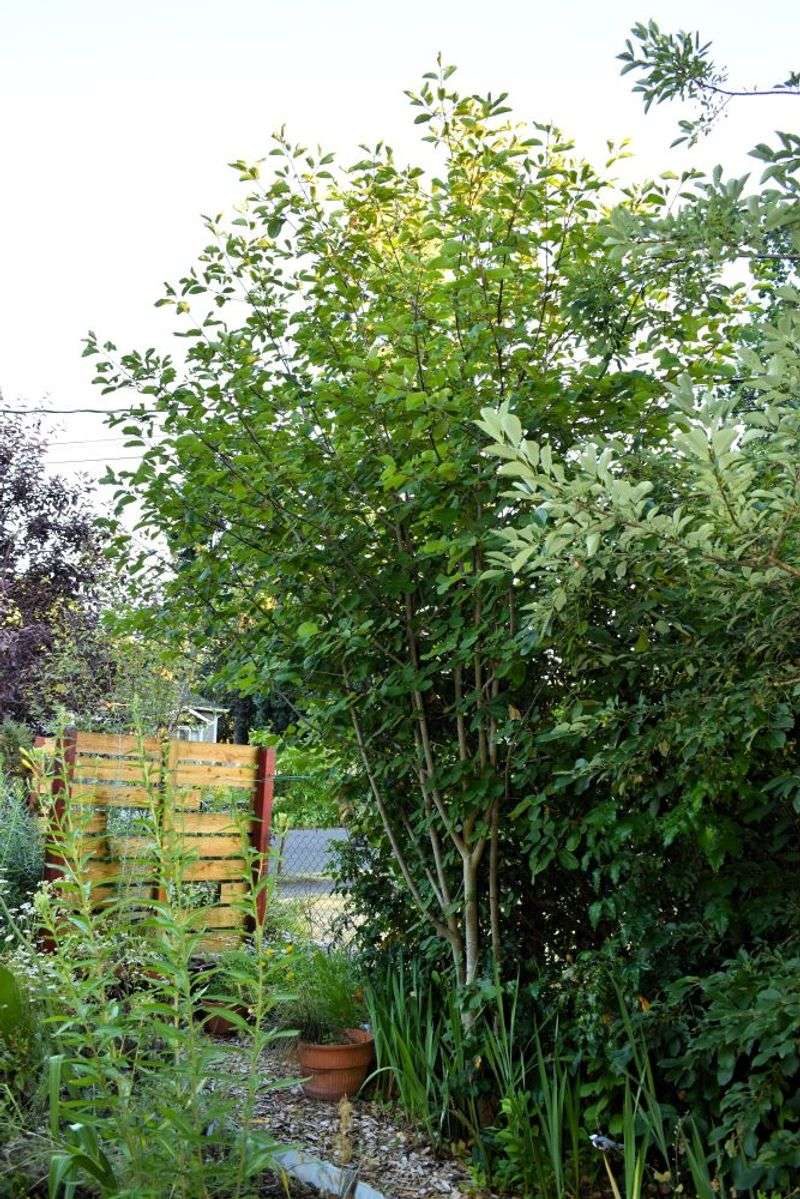
Some hedges need to be tall. When you want a screen that genuinely blocks the view from a two-story neighbor or a busy road, Cascara is the native answer.
This understory tree grows steadily to 20 or even 30 feet tall, creating a real vertical presence along a property line.
Its smooth gray bark and glossy, deeply veined leaves give it a clean, refined look that feels right at home in a Pacific Northwest garden.
Cascara has a fascinating history in Oregon. Indigenous communities used its bark medicinally for generations, and it was later harvested commercially as a laxative ingredient.
Today, it is valued more for its ecological role. Small greenish flowers in spring attract native bees, and the dark purple berries that follow are eagerly eaten by birds.
Squirrels and other small mammals also rely on the fruit in late summer and fall.
This tree prefers moist, shaded, or partially shaded conditions, which makes it ideal for the north side of a property or beneath a canopy of larger trees.
It does not handle prolonged drought well, so regular watering during the first two summers helps it establish.
Once rooted, it is low-maintenance and long-lived. Spacing plants eight to ten feet apart allows each one to develop its natural form while still creating a connected screen.
For a tall, stately, and ecologically rich native hedge, Cascara earns its spot at the back of the planting.
7. Beaked Hazelnut Gives Hedges A Soft Woodland Look
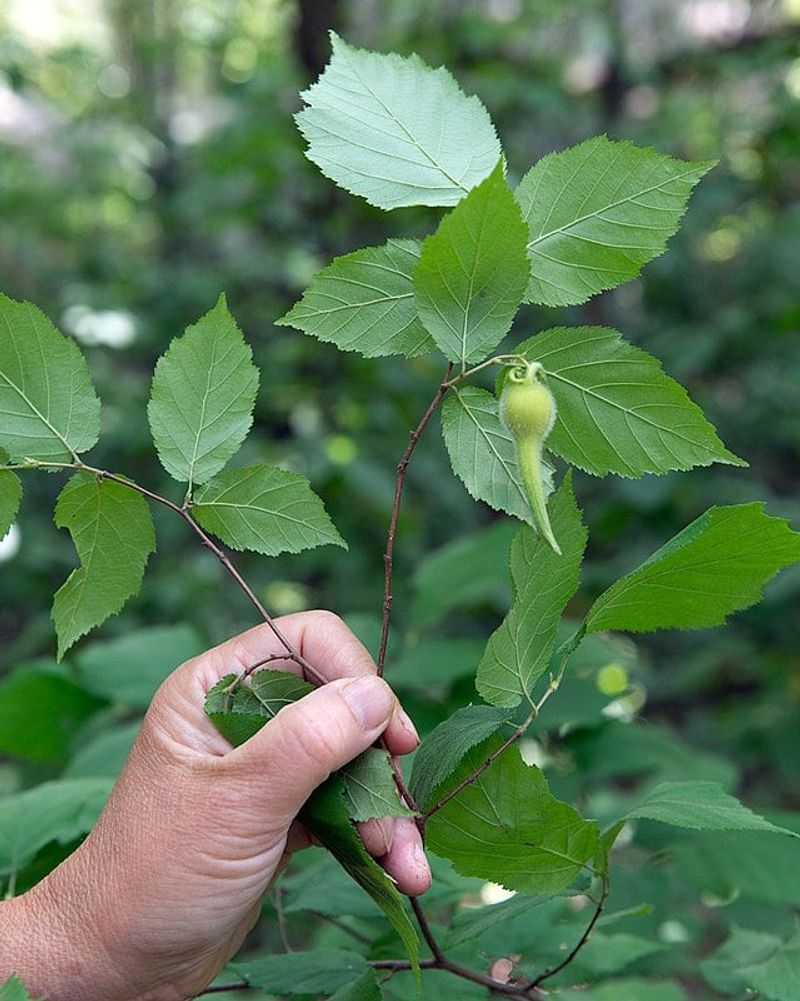
Not every hedge has to look sharp and formal. Sometimes the most beautiful boundary is one that feels like it grew there naturally, with soft textures, rounded leaves, and a relaxed, layered form.
Beaked Hazelnut delivers that woodland-edge aesthetic better than almost any other native shrub in Oregon.
Its broad, slightly fuzzy leaves give the hedge a gentle, approachable quality that feels warm and inviting rather than imposing.
In late winter and early spring, long yellow catkins hang from the bare branches before the leaves emerge.
It is one of the earliest signs of the season, and it gives the hedge a delicate, almost whimsical look during the quietest months of the year.
By late summer, small hazelnuts tucked inside spiky green husks ripen and become a prized food source for squirrels, chipmunks, Steller’s jays, and other wildlife.
Beaked Hazelnut grows six to fifteen feet tall and spreads gradually by suckering, which helps it fill in a hedge line over time.
It performs well in partial shade, making it a good fit for fence lines that receive filtered light rather than full sun.
It tolerates a range of soil types, from moist stream-side conditions to moderately dry upland sites. Annual pruning keeps it at the height you want.
It does not seed invasively into natural areas the way English laurel does, so planting it near parks or natural spaces is perfectly responsible and ecologically sound.
8. Douglas Spiraea Handles Damp Hedge Lines
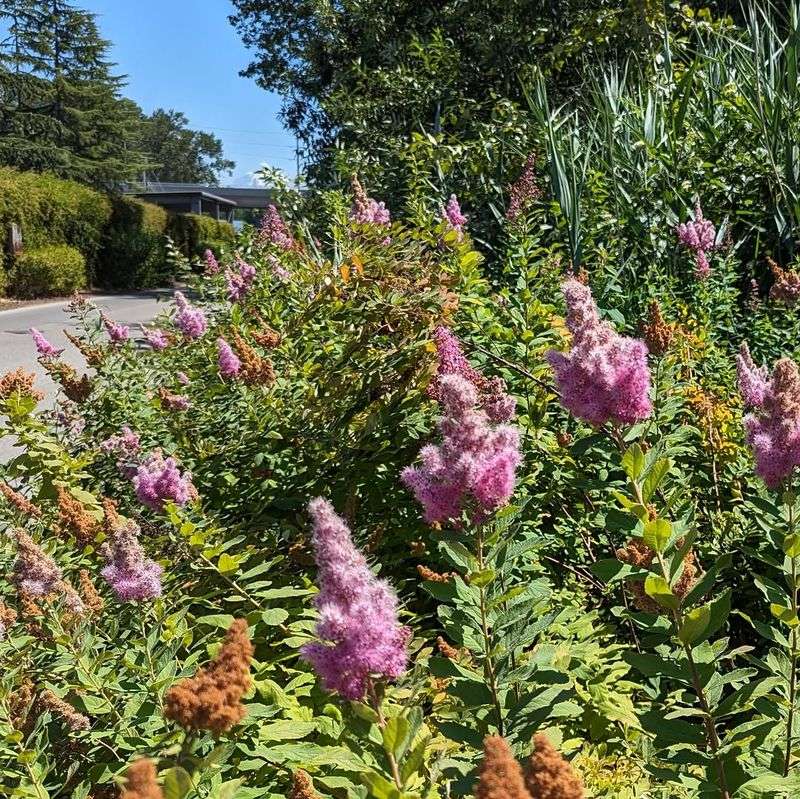
Wet spots along a fence line are a problem most hedge plants cannot solve. English laurel struggles in soggy soils, and many ornamental alternatives give up entirely in standing water.
Douglas Spiraea, on the other hand, was practically made for damp conditions. It naturally grows along stream banks, wet meadow edges, and boggy areas across Oregon, which means it handles poor drainage without any fuss.
The flowers are genuinely eye-catching. Clusters of fluffy, bright pink blooms appear in midsummer and last for several weeks.
They draw in native bees, butterflies, and other pollinators during the height of summer, turning a soggy problem area into a buzzing, colorful focal point. The dried flower heads persist into winter and add subtle texture to the hedge even after the growing season ends.
Douglas Spiraea grows three to six feet tall and spreads by root suckers, which is actually an advantage in a hedge situation because it naturally fills in gaps without replanting.
It handles full sun to partial shade and is extremely cold-hardy, surviving the harsh winters that hit northern regions without damage.
Spacing plants three to four feet apart creates a connected hedge within two seasons. It requires very little pruning and no irrigation once established in moist soils.
For low spots, rain gardens, or fence lines near water features, Douglas Spiraea is the native hedge plant that actually belongs there and genuinely thrives.
9. Thimbleberry Fills Gaps Fast In Informal Hedges
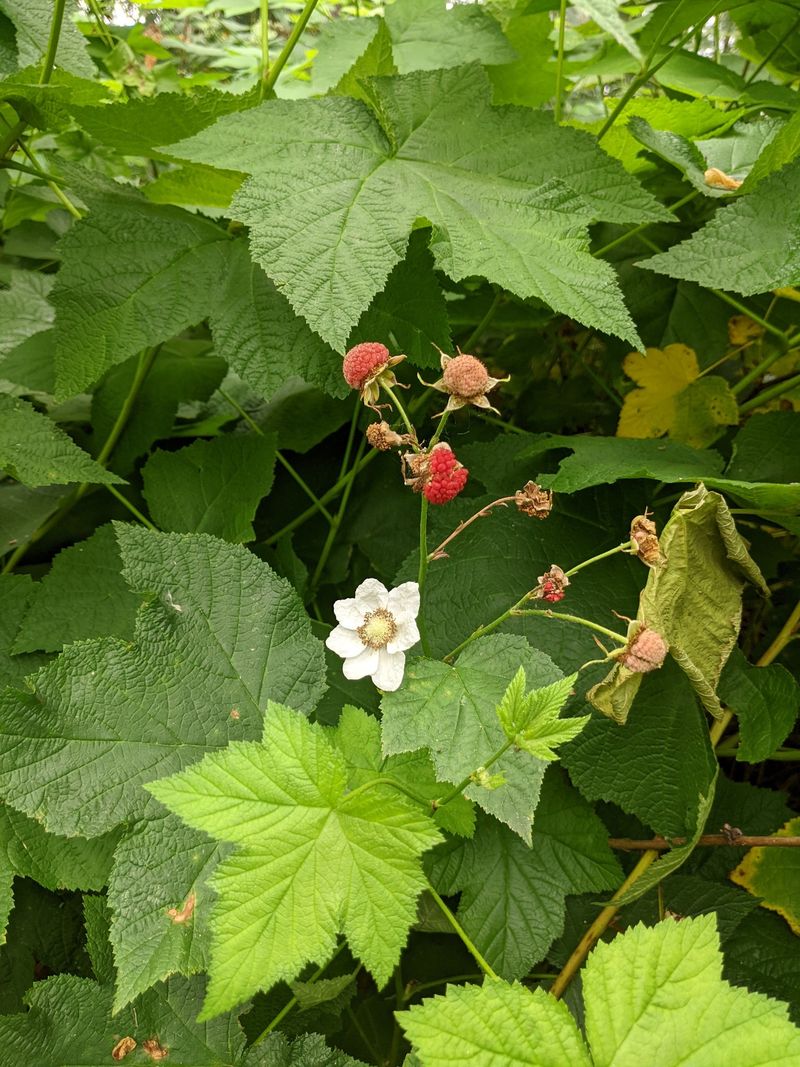
Speed matters when you are trying to fill a bare fence line. Thimbleberry is one of the fastest-growing native shrubs in Oregon, and it wastes no time spreading across open ground and filling gaps that other plants take years to cover.
Its enormous, soft, maple-shaped leaves create an almost tropical-looking density that surprises people who expect something more delicate from a native plant.
White flowers with crinkled petals bloom in late spring and early summer. They are simple but pretty, and they attract a steady stream of pollinators throughout their bloom period.
The soft red berries that follow in summer are edible and taste similar to a mild raspberry. Bears, foxes, and many bird species eat the fruit enthusiastically, and the dense foliage provides excellent nesting cover for low-nesting songbirds.
Thimbleberry grows four to eight feet tall and spreads vigorously by underground runners, so it works best in informal hedges where some natural sprawl is welcome.
It is not the right choice for a tight, formal hedge line, but for a relaxed, wildlife-rich boundary along a back fence or property edge, it is outstanding.
It thrives in partial to full shade, which makes it useful under tree canopies where other hedges cannot survive. No irrigation is needed once it is established.
Pruning back the oldest canes each spring keeps it productive and prevents it from becoming too thick. For fast, informal coverage, nothing native beats it.