The Mulch Mistake That Can Hurt California Plants In July
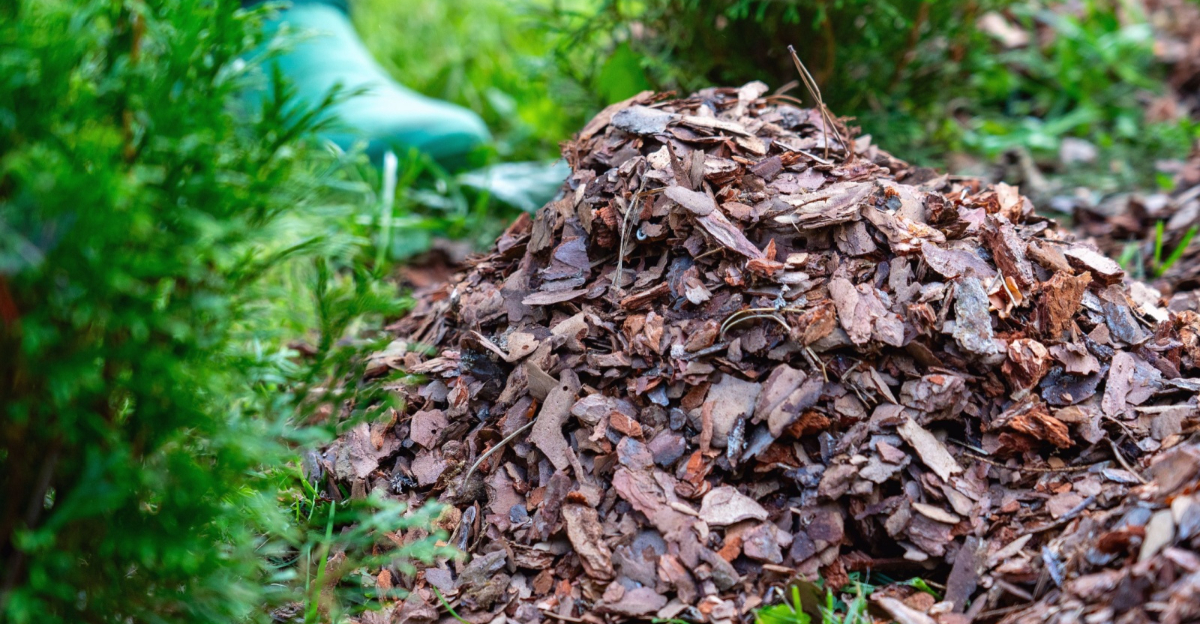
July in California is absolutely brutal, and your poor plants are out there practically begging for mercy from the blazing sun.
Naturally, you grab a bag of mulch like a superhero swooping in to save the day by keeping the soil cool and saving on your water bill.
But watch out, because there is a super common landscaping mistake that can accidentally turn your helpful shield into a plant-smothering nightmare!
Piling mulch directly against tree trunks and plant stems might look neat, but it creates a dangerous trap.
It seals in moisture right against the bark, inviting rot and bugs to move in. Your garden needs a flat blanket, not a heavy winter scarf.
1. Mulch Touching Stems Traps Moisture
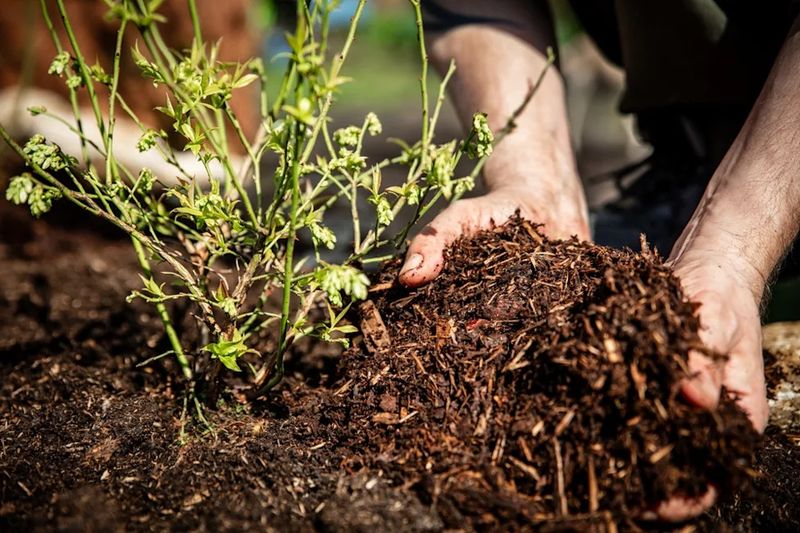
Pressing mulch right up against a plant’s stem might feel like you are giving it extra protection during a hot California July, but that contact can work against the plant in a surprisingly sneaky way.
Stems are not built to stay wet for long stretches of time.
When mulch sits directly on them, it holds moisture against the outer layer of the stem, which is designed to breathe and stay relatively dry at the surface.
Over days and weeks in the warm summer air, that trapped moisture creates a consistently damp environment right where the stem meets the soil.
Fungal issues and bark softening can develop slowly, and by the time you notice something looks off, the stem may already be weakened.
California’s July heat does not dry out that tucked-in spot the way you might expect, because the mulch acts as insulation from above.
The fix is straightforward and does not require removing mulch from the whole bed. Just pull the mulch back a few inches from the stem so there is a small gap of open soil around it.
That gap lets the stem surface breathe and dry out between waterings. For smaller perennials and shrubs, even two or three inches of clearance can make a noticeable difference in how the plant handles summer stress in California landscapes.
2. Tree Trunks Need Breathing Room
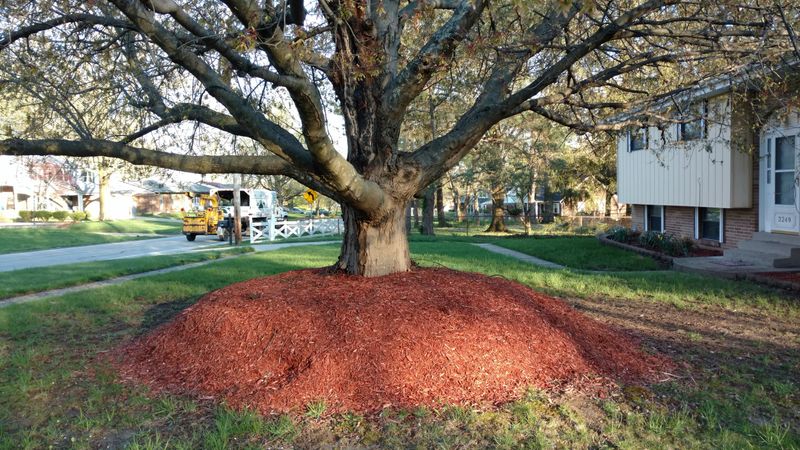
Walk through almost any California neighborhood in July and you will likely spot at least one tree with mulch piled up like a little volcano around its base.
It is one of the most widespread mulching habits in home landscapes, and it is also one of the most consistently problematic ones.
Tree trunks have a natural outer layer of bark that protects the living tissue beneath, and that bark needs air circulation to stay healthy.
When mulch is stacked against a trunk, moisture gets trapped against the bark for extended periods. In California’s warm summer conditions, that moisture does not evaporate quickly because the mulch pile acts as a barrier.
The bark can begin to soften, and the tissue underneath can become vulnerable to stress over time. Roots may also begin growing upward into the moist mulch layer rather than downward into the soil, which can eventually affect the tree’s stability.
Your California Garden Changes Every Week. Your Plan Should Too.
Gardening in California changes quickly throughout the season. Every Friday you’ll receive a simple weekly plan showing exactly what to plant, prune, fertilize, harvest, and protect so you never miss the right timing.
Keeping mulch pulled back from the trunk by at least six inches, and ideally closer to a foot for larger trees, gives the base room to breathe.
The mulch can still do its job of conserving soil moisture and moderating soil temperature across the root zone.
You do not need a bare ring of soil stretching far out from the tree, just enough clearance at the trunk base to let the bark stay dry and exposed to air.
3. Plant Crowns Can Stay Too Damp
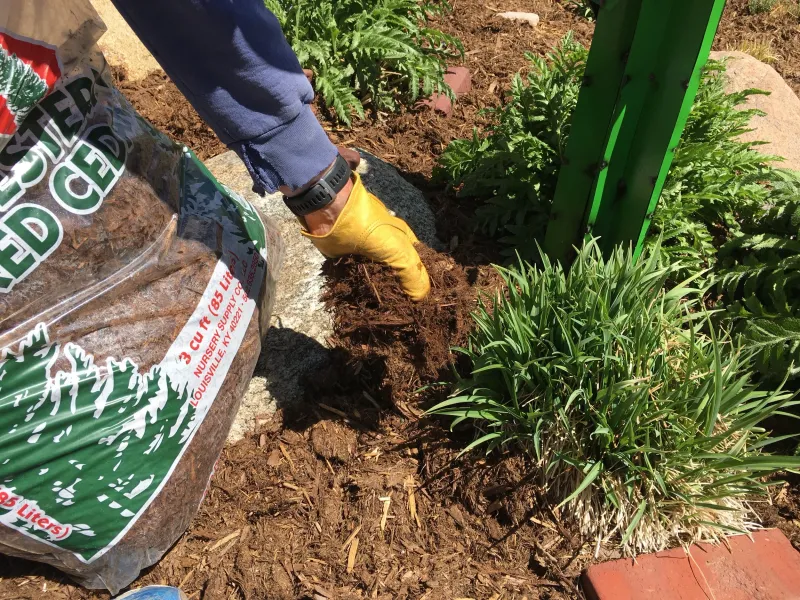
For many perennials and low-growing shrubs in California gardens, the crown of the plant is one of the most sensitive spots on the whole structure. The crown is the point where the stems meet the roots, usually right at or just above the soil line.
When mulch gets pushed up over or directly onto the crown, that area can stay wet long after watering, which is not ideal for most plants.
July in California means hot afternoons, but it also means regular irrigation for most home gardens. Each time you water, the mulch around the crown absorbs moisture and holds it.
The crown does not get a chance to dry out between watering cycles the way it would if it were exposed to open air.
Certain plants, especially those with fleshy crowns or those that prefer drier conditions at their base, can show signs of stress fairly quickly when this happens.
California native plants and drought-tolerant perennials are especially worth watching in this regard. Many of them are adapted to dry-summer conditions, and having a consistently damp crown goes against what they are built for.
Pulling mulch back so the crown is clearly visible and surrounded by a small gap of open soil is a low-effort habit that supports plant health through the summer. The rest of the root zone can still benefit from a good mulch layer, just not right at the base.
4. Root Flares Should Stay Visible
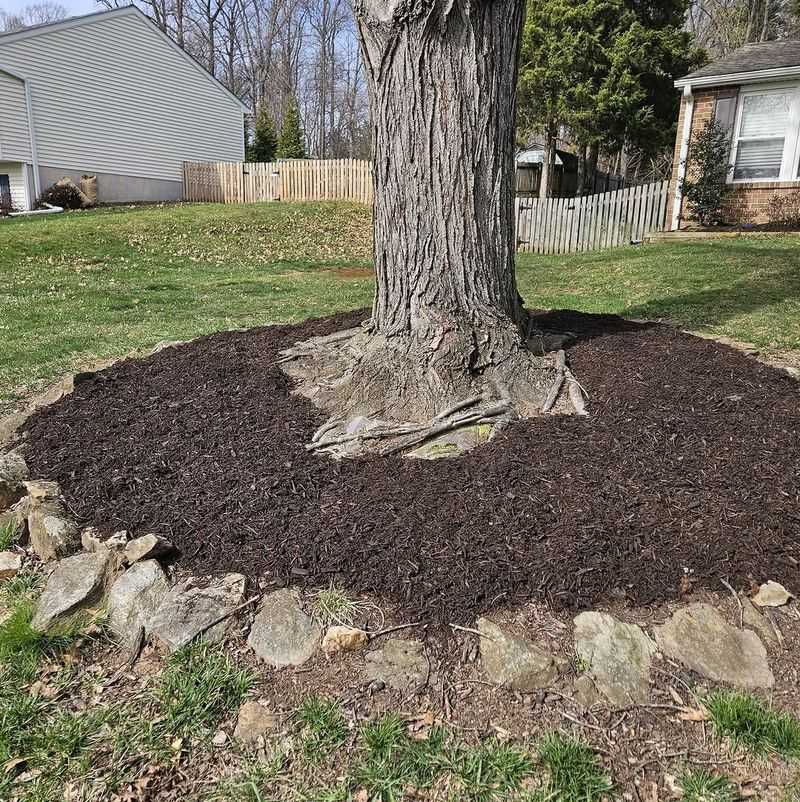
At the base of most trees, the trunk gradually widens before it meets the soil. That widening area is called the root flare, and it plays an important role in how a tree takes in water, exchanges gases, and maintains structural stability.
In California landscapes, root flares are often buried under layers of mulch added during summer garden prep, which can quietly stress trees over several seasons.
A root flare that stays buried under mulch cannot breathe the way it is meant to. The bark in that zone is not designed to be surrounded by consistently moist organic material.
Over time, the tissue can break down, and the tree may show signs of stress through thinning foliage, slow growth, or bark that looks unhealthy up close. These changes can be gradual enough that gardeners do not connect them to mulching habits right away.
When you are spreading mulch around trees in your California garden this July, take a moment to find the root flare and make sure it is visible above the mulch line.
If it has been buried by previous layers, gently rake back the old mulch until you can see where the trunk begins to widen.
Keeping that area exposed is one of the most straightforward things you can do to support a tree’s long-term health. A visible root flare is a good sign that the mulch is placed where it actually helps.
5. Thick Mulch Mounds Cause Problems
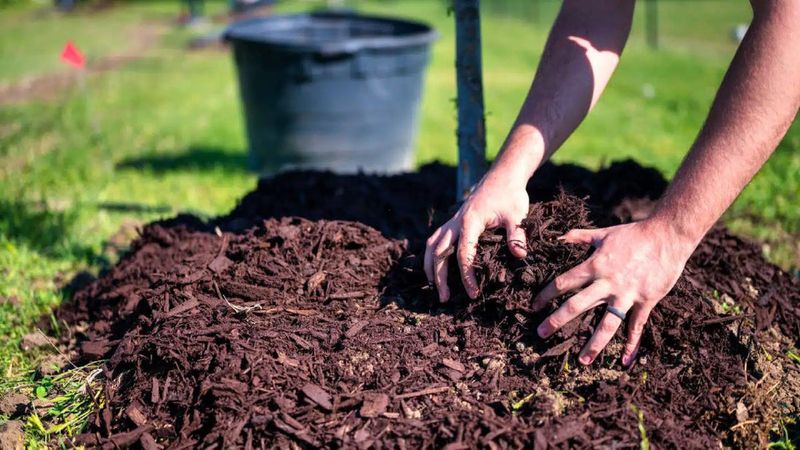
Gardeners who want to protect their plants during California’s dry July heat sometimes go a little overboard with mulch depth, reasoning that more coverage means better moisture retention and cooler soil.
While a layer of mulch does genuinely help with both of those things, there is a point where the depth starts creating new issues rather than solving old ones.
Mulch that is piled four, five, or six inches deep, especially when it is mounded rather than spread flat, can become almost water-repellent at the surface.
When that happens, irrigation water or rainfall runs off the mound rather than soaking down through it to reach the soil and roots below.
The root zone ends up drier than it would be with a thinner, flatter layer, which is the opposite of what you were going for.
A two-to-four-inch layer of mulch spread flat over the root zone is a commonly recommended range for most California home garden situations.
That depth is enough to insulate the soil, slow moisture evaporation, and moderate soil temperature during summer heat without blocking water penetration or creating the dense, compacted conditions that come with thick mounding.
If your existing mulch has built up over several seasons, it may be worth raking it back and checking the depth before adding a fresh layer this July. Refreshing rather than continuously piling is a smarter approach.
6. July Heat Makes Overmulching More Tempting
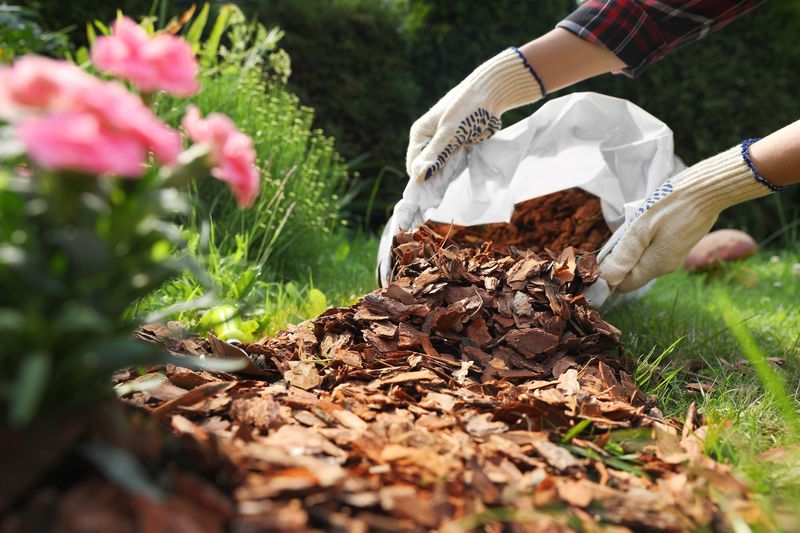
Something about a scorching California July makes gardeners want to smother every exposed patch of soil with as much mulch as possible.
The reasoning makes sense on the surface: the soil looks dry, the sun is relentless, and adding more mulch feels like the most logical response to the heat.
But that urgency can lead to overmulching, especially around plant bases where the damage tends to go unnoticed for a while.
During July, California gardeners are often also dealing with water restrictions, higher water bills, and visible plant stress from the heat. All of those pressures make the idea of a thick mulch layer feel like a solution to multiple problems at once.
The result is sometimes a garden where mulch has been piled generously around every tree, shrub, and perennial in the yard, with little attention paid to whether it is touching the stems, crowns, or trunks.
Recognizing that impulse is actually a useful first step. July is a great time to mulch, and adding or refreshing mulch during the dry season can genuinely support plant health in California gardens.
The key is channeling that enthusiasm into careful placement rather than volume.
Spreading mulch thoughtfully across the root zone, keeping it flat, and pulling it back from plant bases gives you all the moisture-conserving benefits without the unintended side effects that come from piling it too high or too close.
7. A Flat Mulch Layer Works Better
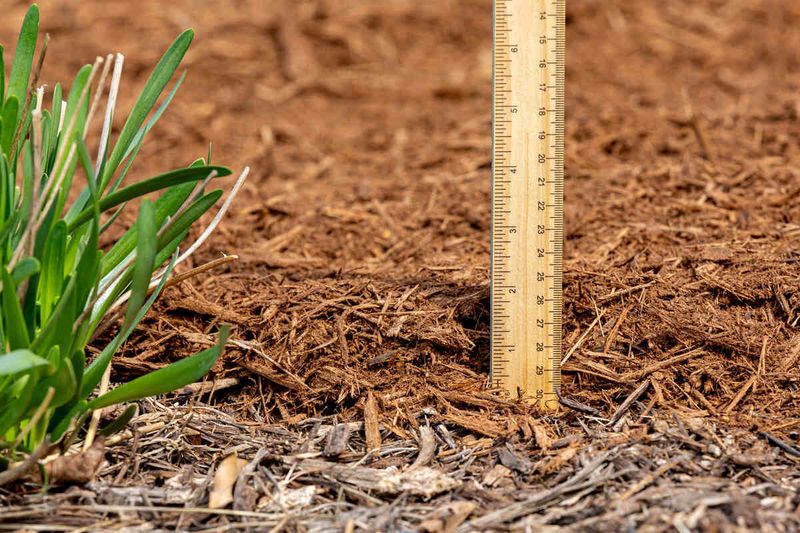
Flat is better than mounded when it comes to mulch placement, and that simple shift in approach can change how well your California garden handles July heat.
A flat mulch layer spread evenly across the root zone allows water to move downward into the soil the way it is supposed to, rather than running off the sides of a pile or pooling in uneven spots.
When mulch is spread flat and kept at a consistent depth, it creates an even barrier between the soil surface and the hot summer air.
That barrier slows moisture evaporation from the soil, which means the roots stay in a more stable moisture environment between watering sessions.
In California’s dry-summer climate, that kind of consistency can reduce how often you need to water while also keeping soil temperatures from spiking too high during afternoon heat.
Achieving a flat layer is mostly a matter of taking a few extra minutes when you spread mulch to smooth it out rather than leaving it in whatever shape it landed. A garden rake works well for this.
Aim for an even two-to-four-inch depth across the root zone, stopping several inches short of the trunk, stem, or crown. The mulch does not need to reach the plant’s base to be effective.
Covering the root zone, which typically extends out well beyond the plant’s base, is where mulch placement has the most practical impact in a California garden.
8. Pulling Mulch Back Protects The Plant Base
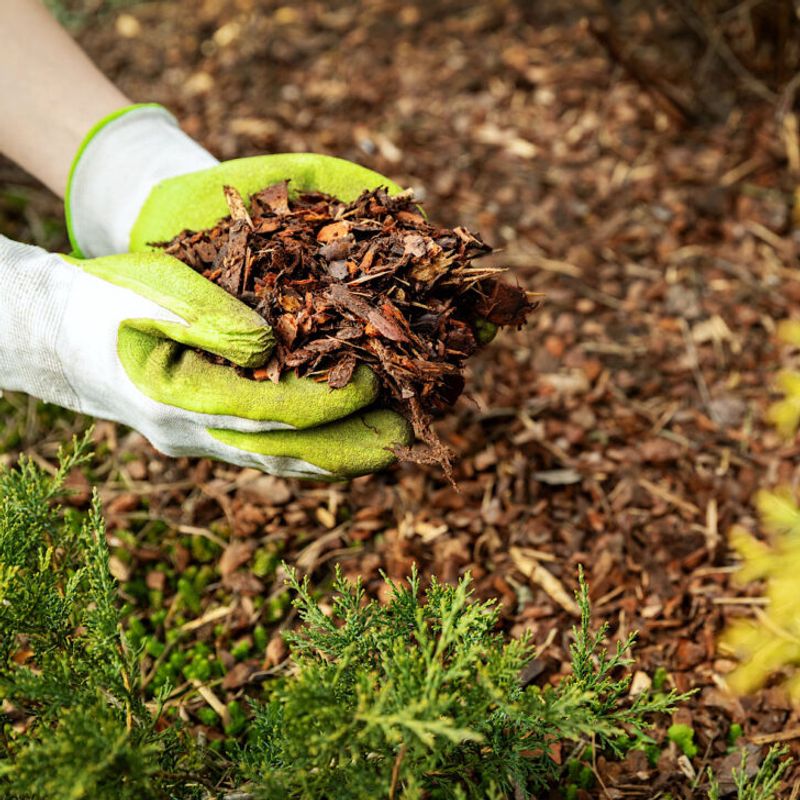
One of the easiest adjustments you can make in a California garden this July takes about two minutes per plant and requires no special tools.
Just reach down and pull the mulch back a few inches from the base of whatever you are mulching, whether that is a tree, a shrub, a perennial, or a native plant.
That small gap of exposed soil around the base makes a real difference in how the plant manages moisture and air circulation at its most vulnerable point.
Many gardeners who already have mulch down from earlier in the season may not realize that the mulch has shifted or settled closer to plant bases over time. Foot traffic, irrigation, and wind can all move mulch gradually.
Taking a walk through your garden beds and gently pulling mulch back from stems, trunks, and crowns is a low-effort habit worth building into your summer garden routine.
Pulled-back mulch does not look messy or incomplete. A small ring of open soil around a plant base is actually a sign of careful, informed gardening.
The surrounding mulch still does its job of conserving moisture across the root zone and moderating soil temperature through California’s hot summer months. You are not reducing the benefit of the mulch by pulling it back from the base.
You are simply making sure it is placed where it helps the plant rather than where it could quietly work against it.