This Is The Little Known Native Pollinator That Determines Whether Georgia Blueberry Harvests Succeed
Many Georgia blueberry growers have a secret helper, and they have no idea it exists. Not a spray, not a technique, not a new variety.
A bee. One specific bee that has been showing up to work every single spring for thousands of years, long before anyone planted a commercial blueberry field or ordered a honeybee hive.
This bee does not live in a box. It does not get managed or moved around. It lives in the ground beneath your feet, emerges at exactly the right moment, and does something honeybees cannot.
Many people walk right past it without a second glance. Some have never even heard its name. But blueberry researchers in Georgia have been studying it closely, and what they found changes the conversation about what actually drives a successful harvest.
Your blueberry patch might already have one of the best pollinators in the Southeast living just below the surface. The question is what you are doing to help it stay there.
Meet The Southeastern Blueberry Bee
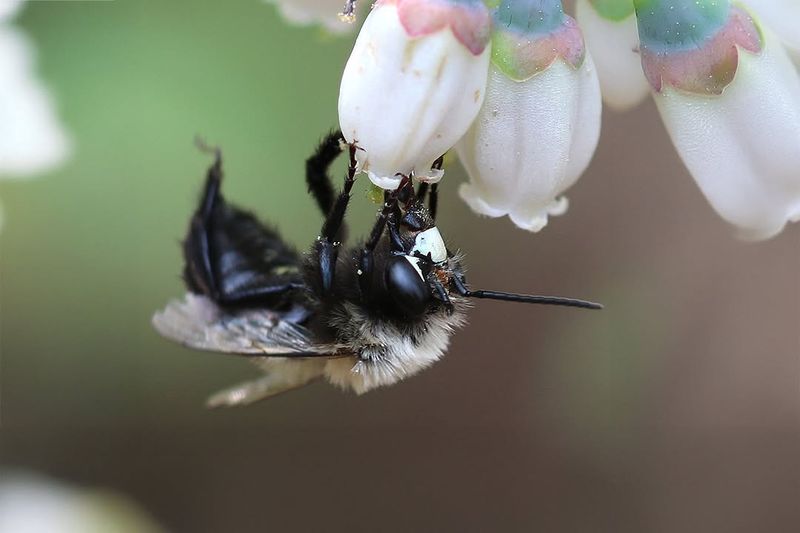
A fuzzy, fast-moving bee about the size of a honeybee, zipping through a Georgia blueberry field on a cool March morning.
That is the southeastern blueberry bee, known to scientists as Habropoda laboriosa. And blueberries are not just one stop on its menu. They are the whole restaurant.
Unlike generalist bees that visit dozens of plant species, this native bee has evolved alongside blueberry plants over thousands of years.
Its body shape, size, and behavior are almost perfectly matched to blueberry flower anatomy. Growers who know this bee tend to manage their land very differently from those who have never heard of it.
Researchers at the University of Georgia have found that it is one of the most efficient blueberry pollinators in the Southeast.
A single southeastern blueberry bee visits more flowers per minute than a honeybee and carries pollen in a way that matches blueberry flower structure almost perfectly.
That matters enormously when you are trying to set fruit across thousands of plants.
This bee is native to the southeastern United States, which makes Georgia prime habitat. It looks similar to a bumblebee but is smaller and faster, with a rounder abdomen and a noticeably energetic flight pattern.
Once you know what to look for, it stands out immediately. Spotting one for the first time in your blueberry rows feels a little like finding out your garden has had a professional on staff the whole time without telling you.
Watch It Arrive During Bloom
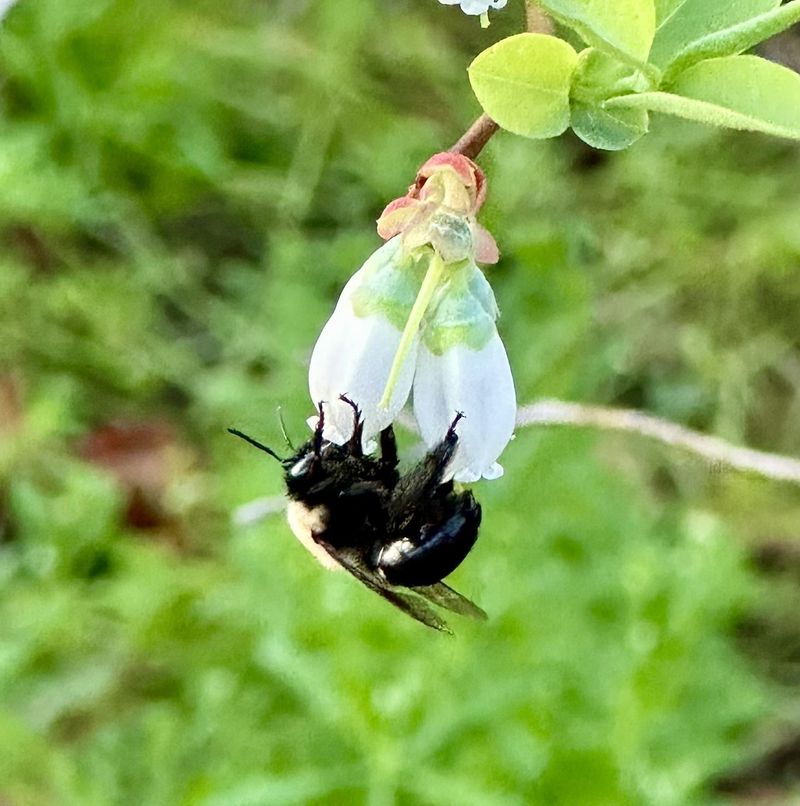
Timing in nature is everything, and the southeastern blueberry bee seems to have read the blueberry calendar very carefully.
This bee emerges from the ground in late winter or very early spring, almost exactly when blueberry flowers open in Georgia. That overlap is not a coincidence.
In Georgia, blueberry bloom can begin as early as late February for rabbiteye varieties and runs through April for highbush types.
The southeastern blueberry bee tracks this bloom window closely. Warm soil temperatures trigger adult bees to emerge, and flowering blueberries provide the nectar and pollen they need to fuel reproduction and nest building right away.
Your Georgia Garden Changes Every Week. Your Plan Should Too.
Gardening in Georgia changes quickly throughout the season. Every Friday you’ll receive a simple weekly plan showing exactly what to plant, prune, fertilize, harvest, and protect so you never miss the right timing.
This bee is active during a relatively short window each year. That makes the bloom period absolutely critical for both the bee and the grower.
Miss that window, and the opportunity for natural pollination takes a serious hit that no amount of managed honeybee hives can fully compensate for.
Growers who pay attention to early spring activity often notice these bees before they spot anything else buzzing around.
Their flight is energetic and purposeful. There is nothing casual about the way they work a row of blueberry bushes.
Watching them on a crisp morning, moving fast and low through the flowers, gives you a real sense of how much pollination power already exists in a well-managed Georgia planting.
The bee was there before you were. It just needs you to keep the door open.
Let Buzz Pollination Shake Pollen Loose
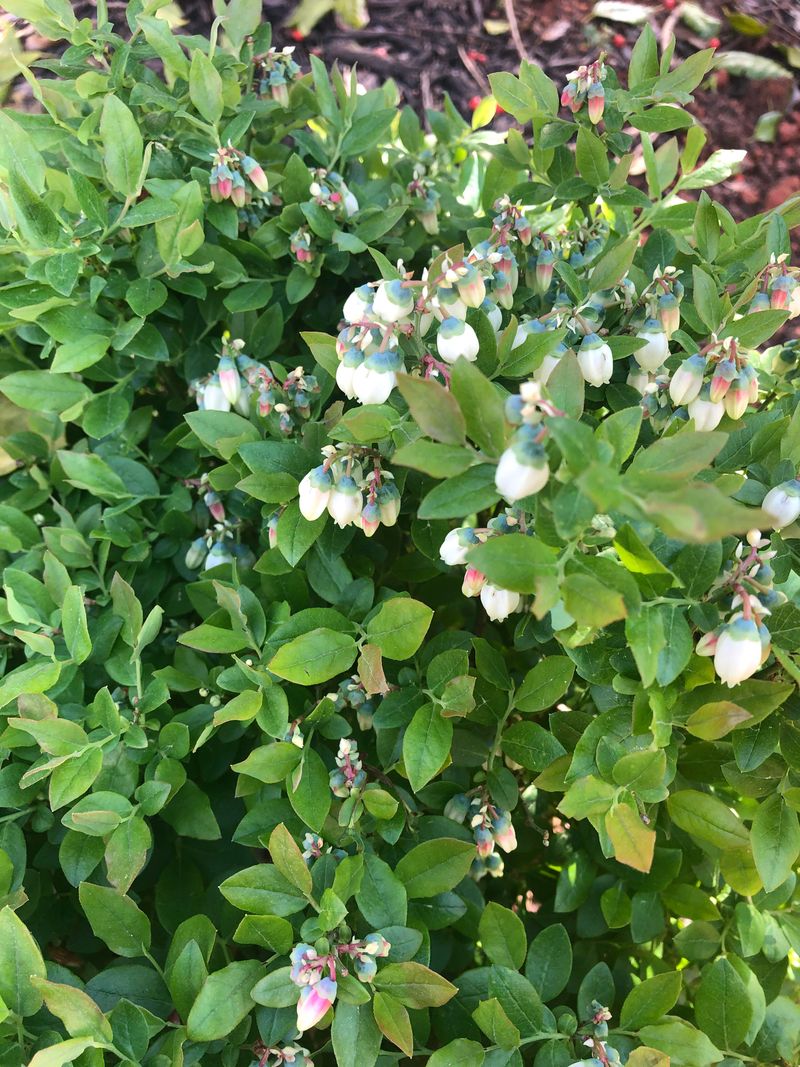
Blueberry flowers are built differently from most flowers.
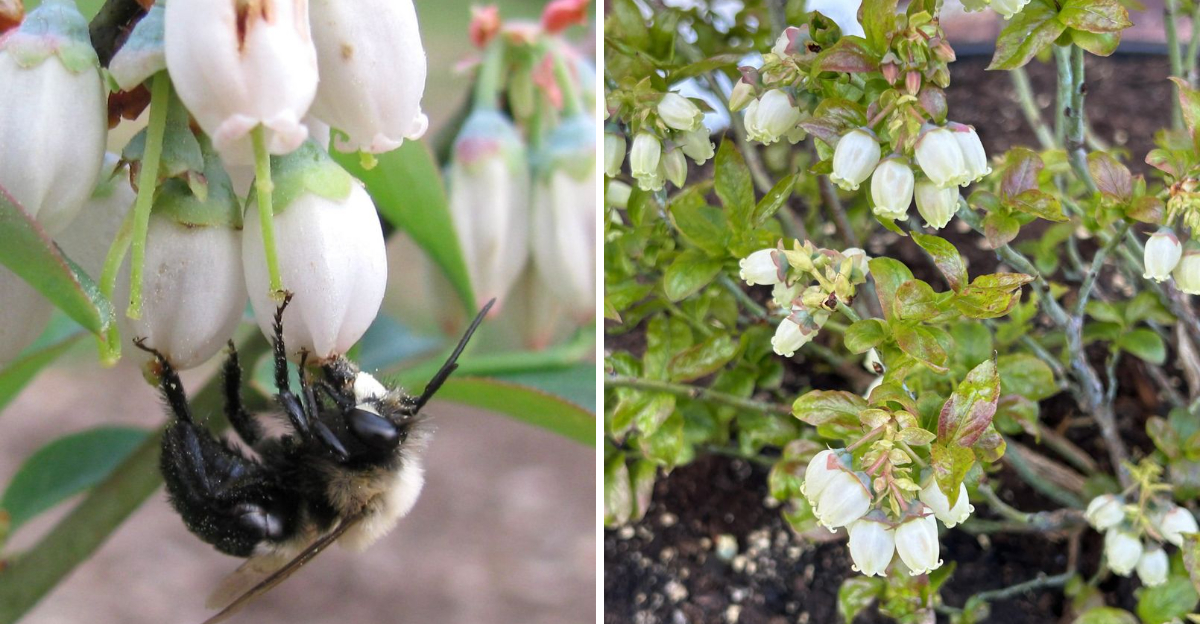
Their pollen sits inside narrow tubular anthers with small pores at the tip, almost like a salt shaker turned upside down.
Regular flower visitors that land and sip nectar often leave without shaking much pollen loose at all. That is where buzz pollination changes everything.
Buzz pollination, also called sonication, happens when a bee grabs a flower and vibrates its flight muscles at a very specific frequency without actually flying.
That vibration shakes pollen out through the anther pores in a way that casual flower visitors simply cannot replicate.
The pollen coats the bee and gets carried to the next flower, completing the pollination cycle with remarkable efficiency.
The southeastern blueberry bee is a champion at this. Its body size and muscle strength produce exactly the right vibration frequency for blueberry anthers.
Research has shown that bees capable of buzz pollination produce significantly higher fruit set in blueberry crops compared to non-buzzing visitors. Honeybees, by comparison, rarely perform buzz pollination on blueberries at all.
You can actually hear buzz pollination happening if you walk quietly through a blueberry field during peak bloom. Listen for a high-pitched buzzing that sounds different from regular flight noise.
That sound means pollen is actively releasing and everything is working exactly as it should. It is one of the most satisfying sounds in Georgia agriculture, and many people have stood right next to it without ever knowing what they were hearing.
Count Each Visit As More Efficient
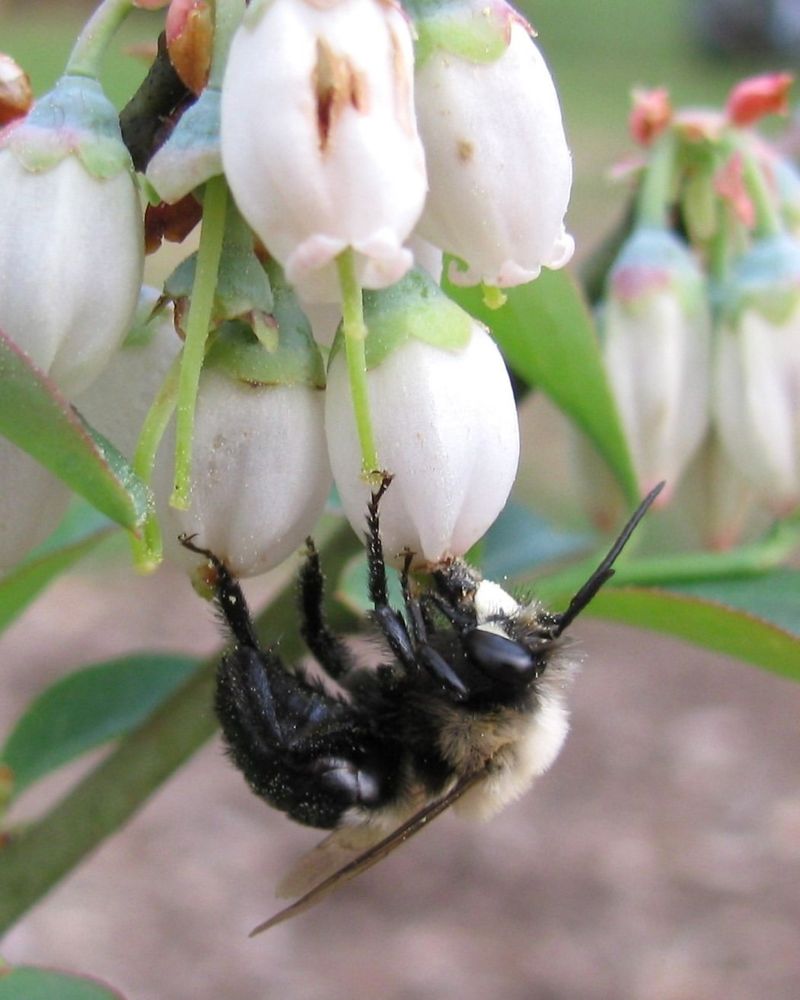
Not all flower visits are created equal.
A bee can land on a blueberry blossom and transfer almost no pollen, or it can buzz the flower and deposit exactly what is needed for fruit to form.
The southeastern blueberry bee falls firmly in the second category, and the numbers tell a clear story.
Research suggests that a single southeastern blueberry bee visit can be several times more effective at pollinating a blueberry flower than a single honeybee visit.
Part of this comes down to buzz pollination, but body hair structure, flower positioning, and movement patterns between plants also play a role. This bee moves quickly between bushes and covers more ground per unit of time than slower generalist visitors.
Cross-pollination is especially important for blueberries. Many varieties produce larger, better-quality fruit when pollen from a compatible variety reaches the flower.
The southeastern blueberry bee’s natural movement pattern encourages exactly that kind of cross-pollination across a well-planted field.
For growers managing large acreage, this efficiency is not a small detail. Fewer high-quality pollinator visits can outperform many low-quality visits when it comes to final fruit set and berry size.
Supporting a healthy population of southeastern blueberry bees is essentially adding a free, highly specialized workforce that shows up on schedule every spring.
No management fees, no hive rentals, no deliveries. Just a bee that has been doing this job longer than anyone alive, asking only for a little undisturbed soil in return.
Support Ground Nesting Habitat Nearby
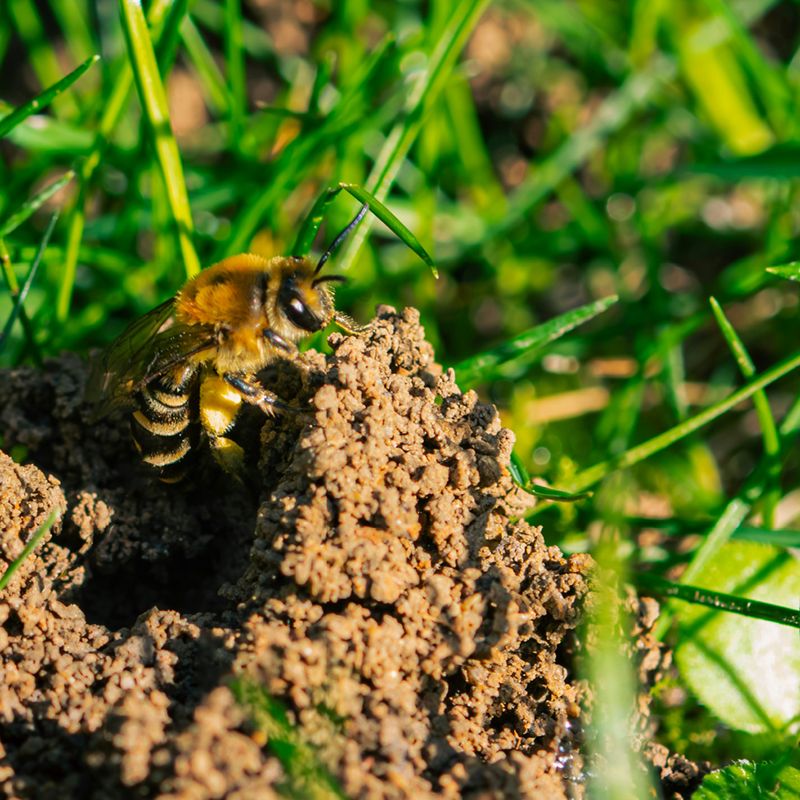
Most people do not know this about the southeastern blueberry bee: it does not live in a hive. It is a solitary bee that nests alone in the ground.
Female bees dig small burrows in bare or sparsely vegetated, well-drained soil, often near field edges or in sunny open spots close to blueberry plantings. That nesting behavior makes the ground around your field surprisingly important.
Any activity that compacts, covers, or repeatedly disturbs the soil near nesting areas can reduce local bee populations over time.
Tillage, heavy foot traffic, and thick mulch or ground cover in known nesting zones can all interfere with successful reproduction. Protecting those soil patches costs nothing and requires almost no effort.
South-facing slopes and field edges with loose, sandy loam soil are especially attractive to ground-nesting bees.
If you notice small holes about the diameter of a pencil in the soil near your fields in early spring, southeastern blueberry bees are very likely already nesting there.
That is a genuinely good sign worth paying attention to.
Leaving those areas undisturbed during bloom and nesting season, roughly February through May in Georgia, gives the next generation of bees a strong start.
Those bare soil patches are not weedy eyesores. They are bee nurseries doing critical work just below the surface. Covering them with mulch to tidy things up is essentially renovating the nursery while the babies are still inside.
Keep Early Flowers Around Blueberries
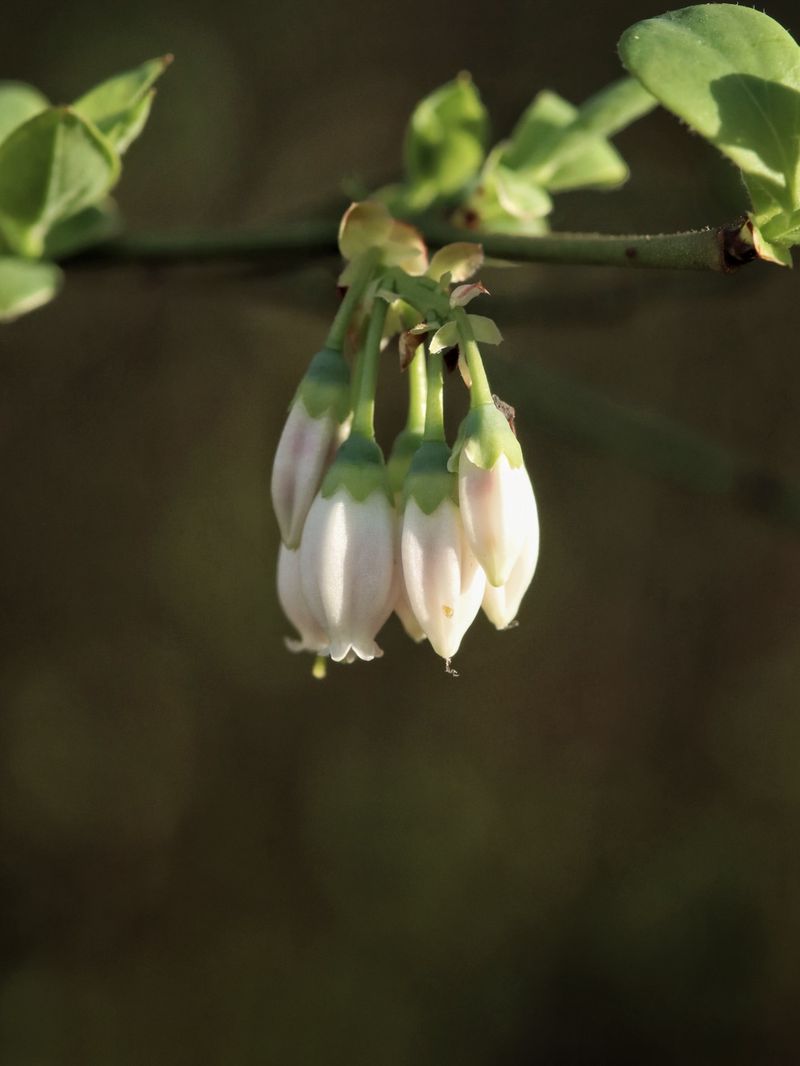
Blueberry bloom is a feast for the southeastern blueberry bee, but what does this bee eat before those flowers open? That question matters more than most growers realize.
A bee that has no food source before bloom may not build up enough energy to pollinate effectively when it counts most.
Native early-blooming plants fill that gap naturally. Native plum, wild cherry, redbud, red maple, and native willows all bloom in late winter and early spring in Georgia, often overlapping with or just preceding blueberry bloom.
These plants give emerging bees a nutritional bridge that keeps populations strong right when blueberry growers need them most.
After bloom ends, native wildflowers and flowering shrubs provide pollen and nectar that help mated female bees provision their nests with enough food for offspring to develop through summer and fall underground.
Without those resources, the next generation may be smaller or less vigorous by the time the following spring arrives.
Planting or preserving native flowering plants along field borders and hedgerows creates a seasonal food source that supports southeastern blueberry bees year-round.
You do not need a wildflower meadow to make a meaningful difference. Even a few native shrubs along a fence line or a short strip of native plants at a field edge can boost the bee population that returns next spring.
Feed the bee in March, and the bee feeds your harvest in April. That is a pretty solid deal from both sides.
Avoid Sprays During Bloom
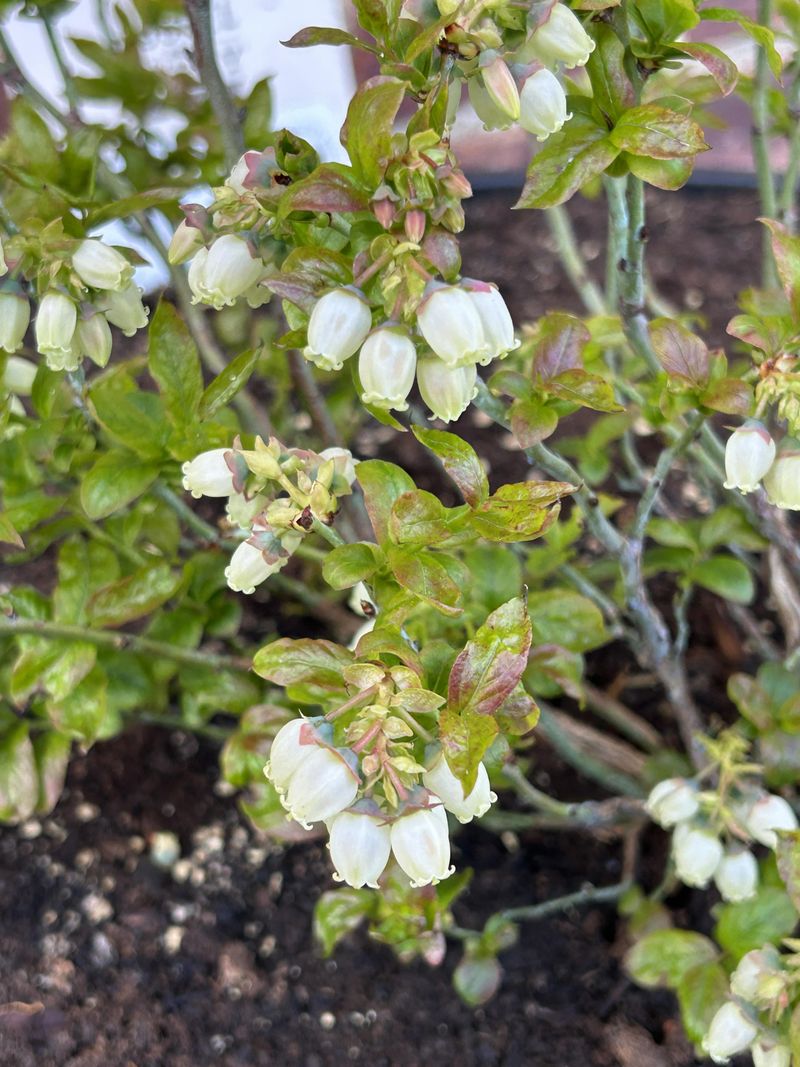
Pesticide timing is one of the most consequential decisions a blueberry grower makes each season, and bloom period is the most sensitive window of all.
When blueberry flowers are open and bees are actively foraging, any pesticide applied to or near blooming plants puts the native bee population at real risk.
That applies to insecticides, certain fungicides, and even herbicides applied near nesting areas.
The southeastern blueberry bee is especially vulnerable during bloom because its entire active adult season overlaps almost perfectly with the blueberry flowering window.
Spraying during this period does not just affect bees present that day. It can reduce how many female bees successfully nest, which directly affects how many bees are available to pollinate your crop the following year.
One bad spray decision in April can echo into next spring’s harvest.
If a spray is absolutely necessary, early morning or late evening applications reduce but do not fully eliminate the risk.
Reading pesticide labels carefully for bee hazard warnings and following all timing recommendations is essential for any grower who wants to protect native pollinator populations over the long term.
Some growers keep a simple bloom calendar to track when flowers open across different varieties in their fields. That calendar becomes a spray avoidance guide.
Knowing which blocks are in peak bloom on any given day makes it much easier to schedule treatments around the most sensitive periods.
Protecting bees during bloom is not just responsible land stewardship. It is farming strategy that shows up directly in your harvest numbers.