Ohio Redbud Trees Struggle In The First Two Years For Specific Reasons (Here’s How To Get Past Them)
You planted a redbud. You were excited. The tag said it was a native tree, tough, beautiful, practically made for Ohio. Then summer arrived and the thing just… sat there. Droopy. Sad. Unconvincing.
You watered it. You worried about it. Maybe you Googled the symptoms at 11pm and came away more confused than when you started.
Here is the thing about young redbuds: they are not fragile trees. They are native to Ohio and genuinely want to grow here.
But the first two years are a specific kind of vulnerable, and a handful of common mistakes during that window can set a tree back in ways that take seasons to undo.
Many of those mistakes are not obvious. Some feel like the right thing to do. A few happen before the tree even goes in the ground. None of them are fatal, and all of them are fixable once you know what to look for.
So what is actually going wrong with your redbud?
1. Planting Too Deep Buries The Flare
The most damaging mistake on planting day often happens at the very bottom of the hole. It is quiet, invisible once you backfill, and easy to get wrong without realizing it.
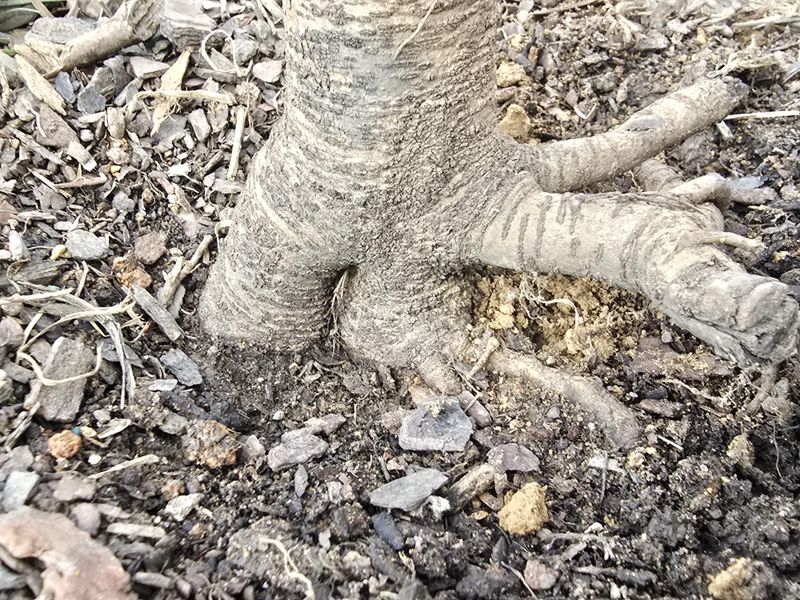
Planting a redbud too deep buries the root flare, the spot where the trunk widens and transitions into the root system, and that area needs to stay above the soil line to function properly.
When the root flare gets buried, bark stays damp and oxygen cannot reach the roots the way it should.
The tree responds slowly, with yellowing leaves, weak growth, and bark that looks discolored or soft near the base.
Many Ohio gardeners mistake these signs for a disease when the actual problem is just an inch or two of soil sitting in the wrong place.
Before you dig, measure the root ball carefully. Set the tree in the hole and confirm the flare is visible before any backfill goes in.
The rule here is simple: dig wide, not deep. A shallow, wide hole encourages roots to spread outward the way redbuds naturally grow, rather than circling downward in a hole that is too narrow and too deep.
Already planted too deep? You can carefully remove soil from around the base to expose the flare without damaging the bark.
It is a fixable mistake, but catching it early makes the correction much easier on both you and the tree.
Getting the depth right from the start saves the tree years of unnecessary stress. One careful measurement before backfilling is genuinely worth more than months of corrective watering afterward.
The hole is the foundation. Get it right and everything else has a much better chance.
2. Wet Soil Stresses Young Roots
Soggy ground moves fast against a young redbud.
Eastern redbuds are native to well-drained woodland edges and hillsides across Ohio, not low-lying areas where water pools after every storm.
Their roots are simply not built for prolonged saturation, and Ohio clay soils make that problem worse than most homeowners expect.
Your Ohio Garden Changes Every Week. Your Plan Should Too.
Gardening in Ohio changes quickly throughout the season. Every Friday you’ll receive a simple weekly plan showing exactly what to plant, prune, fertilize, harvest, and protect so you never miss the right timing.
When roots stay wet, they cannot pull in oxygen the way healthy roots need to. Nutrient uptake slows down. The tree starts looking weak even when you are giving it regular attention.
Here is the confusing part: an overwatered or poorly drained redbud can look almost identical to an underwatered one, with wilting leaves and a generally defeated appearance. The symptom is the same. The cause is the opposite.
Before choosing a spot, dig a test hole about twelve inches deep and fill it with water.
If the water is still sitting there an hour later, that location is going to work against your tree from day one. Clay holds moisture for a long time, especially in low areas where runoff collects after heavy rain.
Raised planting beds, berms, or soil amended with compost can improve drainage in problem spots. In the wild, redbuds tend to grow on slopes or elevated ground for exactly this reason.
Give the roots somewhere for water to go, and the tree will respond accordingly.
Choosing a spot where water moves away naturally after a storm costs nothing and makes everything else easier. Good drainage is not a bonus feature for a redbud. It is basically a requirement dressed up as a suggestion.
3. Drought Hits Before Roots Spread
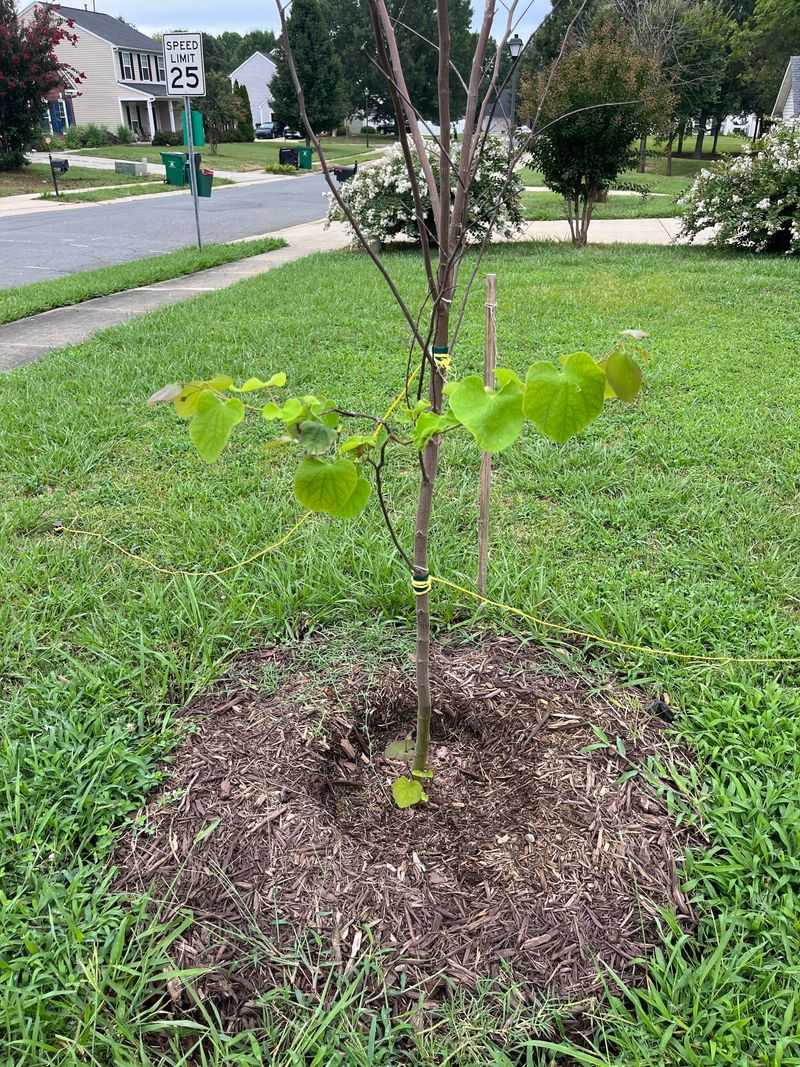
A nursery redbud arrives with a root ball that is a small fraction of what it will eventually become.
All the roots that should be spreading outward through your soil to find water are still packed tightly from the container or burlap wrap.
That compact root zone makes the tree extremely vulnerable during dry spells, particularly in Ohio summers that can turn hot and dry without much warning.
Drought stress in the first two growing seasons is one of the top reasons redbuds fail to establish well.
The tree spends so much energy just getting through dry periods that very little is left over for growing new roots or building the structure it needs long-term.
Leaves may curl at the edges, turn brown at the tips, or drop early as the tree tries to hold onto what moisture it has.
Deep, consistent watering once or twice a week during dry periods works significantly better than a quick daily sprinkle.
Deep watering pushes roots to grow downward and outward in search of moisture, which is exactly the behavior you want to encourage in year one and two.
A soaker hose placed around the drip line of the tree makes this simple and consistent. Skip irrigation during rainy weeks, but never assume a brief shower has done the job.
Check the soil a few inches down before skipping a session, because surface moisture can be misleading when the deeper zone is still dry.
The root system your redbud builds in those first two seasons is the one it will rely on for decades. Watering well now is an investment in every spring bloom the tree will ever produce.
That is a pretty good return on a garden hose.
4. Full Afternoon Sun Adds Heat Stress
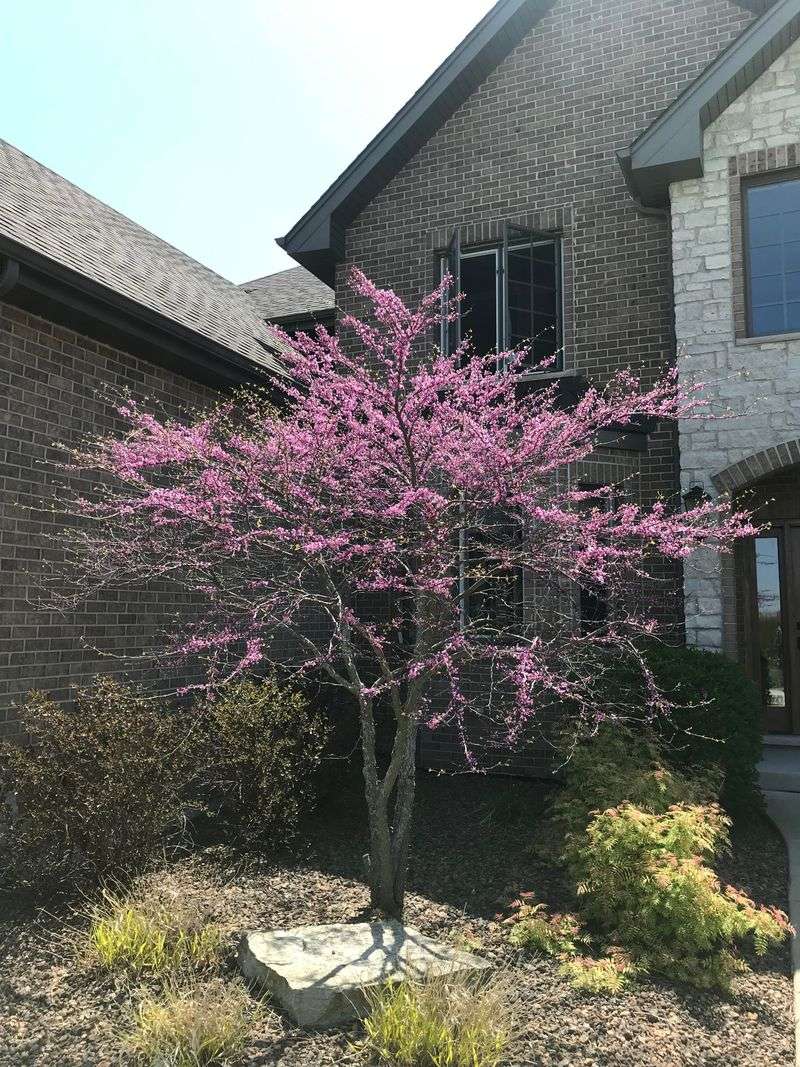
Redbuds evolved as understory trees, growing beneath the canopy of taller species in Ohio woodlands. That background matters more than most planting guides acknowledge.
Full afternoon sun, especially the intense heat that builds between two and six in the evening during Ohio summers, puts real pressure on a young tree that has not yet built a strong root system to support it.
Heat stress and drought stress look nearly identical, and they frequently show up at the same time. Leaves scorch along the edges, curl inward, or develop a dry, papery texture.
The tree cannot move water from roots to leaves fast enough to keep up with what it is losing on those blazing afternoons. The result is visible stress even when the soil seems reasonably moist.
A spot with morning sun and dappled or filtered shade in the afternoon suits young Ohio redbuds far better than a fully open, south-facing location.
Near the eastern side of a building, or beneath the light canopy of a taller deciduous tree, gives the redbud the bright light it needs for good blooming without the heat load that slows establishment.
As the tree matures and its root system expands, it can handle more sun exposure. During those first two years, protecting it from the harshest afternoon rays makes a measurable difference.
Temporary shade cloth during extreme heat waves is also a practical option when moving the tree is not realistic.
A little afternoon shade now sets up a lifetime of spring color later. Think of it as sunscreen for your tree. Completely reasonable, widely ignored, and very much worth applying.
5. Mulch Volcanoes Trap Trunk Moisture
Walk through almost any Ohio neighborhood and you will spot them.
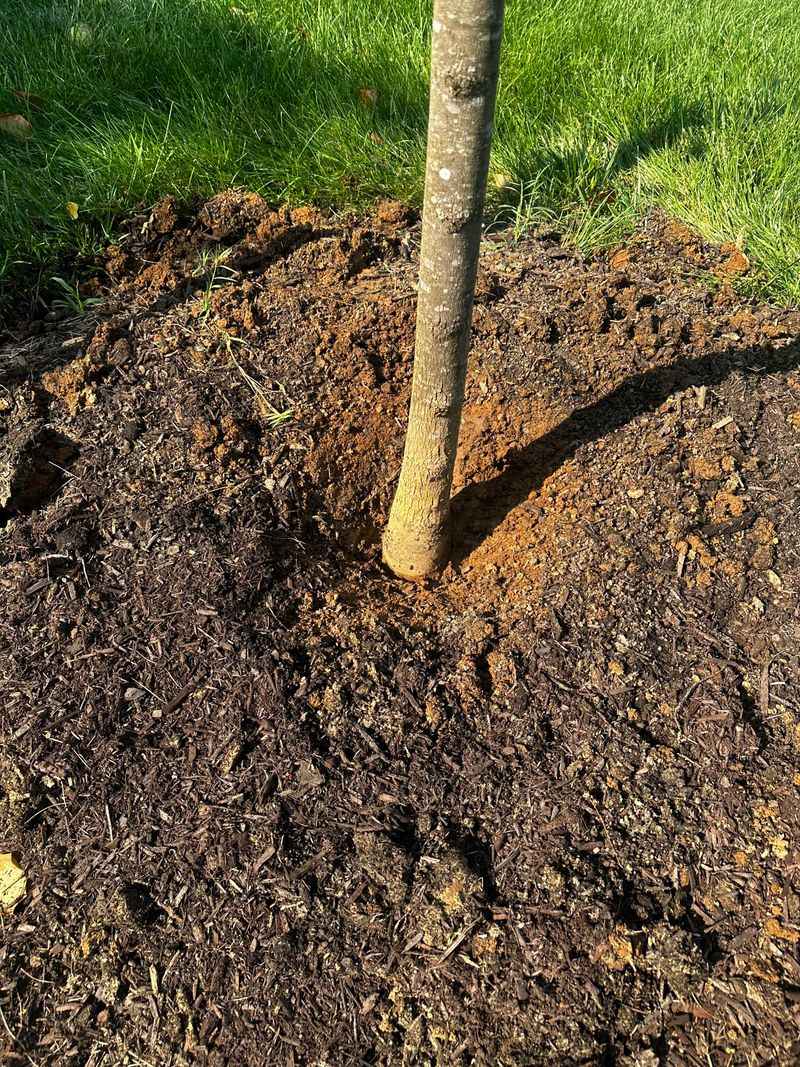
Big mounds of wood chips piled directly against a tree trunk, sometimes stacked six or eight inches high. It looks tidy. It might even look caring.
But it is one of the most widespread tree mistakes around, and young redbuds pay a real price for it.
When mulch presses against bark for weeks or months, moisture gets trapped between the mulch and the trunk. Bark was not designed to stay wet.
Over time it softens, breaks down, and becomes an opening for fungal problems and pests that a healthy, established tree might brush off but a stressed young redbud cannot afford to face.
Proper mulching is genuinely one of the easiest and most effective things you can do for a young tree.
Spread a two to four inch layer of wood chip mulch in a wide ring around the base, but pull it back two to three inches from the trunk itself. The shape to aim for is a donut, not a volcano. Wide, flat, with a clear gap at the center.
Mulch done right holds soil moisture, moderates temperature, and suppresses weeds competing with your tree for water and nutrients.
Extending the ring out toward the drip line covers the area where roots are actively growing, which is where the benefit matters most.
Getting the mulch right costs nothing extra and takes about five minutes to fix if you have been doing it wrong.
The donut versus volcano distinction sounds minor until you see what consistent trunk moisture does to a young tree over a full Ohio summer. Spoiler: it is not a good look.
6. Root Disturbance Slows Establishment
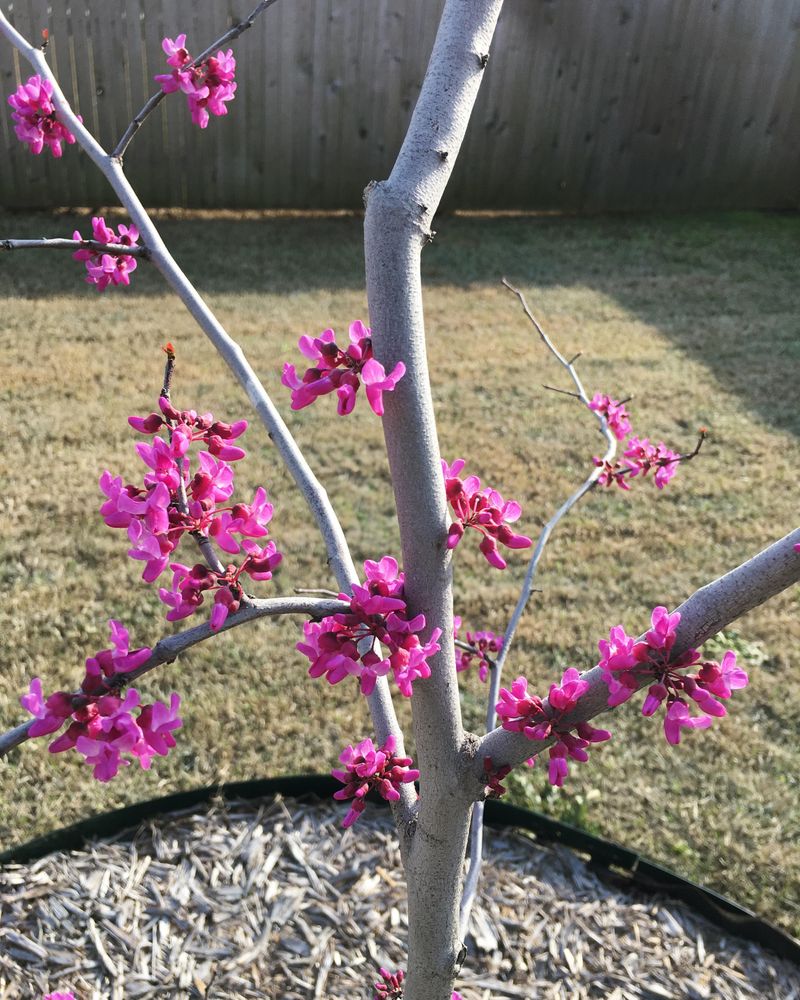
Transplant shock is real, and redbuds feel it more than some other species.
In the wild, a redbud spends its entire life in one spot, sending roots outward through familiar soil. When a nursery digs it up, wraps the root ball, and ships it to a garden center, a meaningful portion of that root system gets left behind.
That loss is stressful for any tree, but especially one already adjusting to entirely new ground.
The more roots get disturbed during planting, the longer recovery takes. Rough handling, burlap left on too long, or planting during the wrong season all pile onto that stress.
Ohio redbuds transplant best in early spring before leaves emerge, or in early fall when temperatures are cooling and soil moisture is more consistent. Both windows give roots time to settle before facing weather extremes.
For balled-and-burlapped trees, remove all wire baskets and burlap after setting the tree in the hole. Synthetic burlap will not break down on its own, and wire baskets can restrict root growth as the tree expands.
Container-grown trees should have any circling roots gently loosened before planting to prevent them from wrapping around the trunk later.
A redbud that looks like it is barely growing in its first season is often quietly rebuilding its root system underground.
Avoid heavy fertilizing in year one. Pushing top growth before the roots are ready can slow overall establishment rather than help it along.
Patience in year one pays off in years two, three, and every spring after that. The tree knows what it is doing underground.
Your job is mostly to stay out of the way and water it occasionally. That is a very manageable assignment.
7. Canker And Wilt Exploit Weak Trees
Stress opens doors that a healthy tree keeps shut.
When a young redbud is already dealing with poor drainage, heat load, or a bad planting depth, its natural defenses drop and opportunistic diseases move in.
Two of the most common problems Ohio redbuds face are Botryosphaeria canker and Verticillium wilt, both of which tend to target trees that are already under pressure.
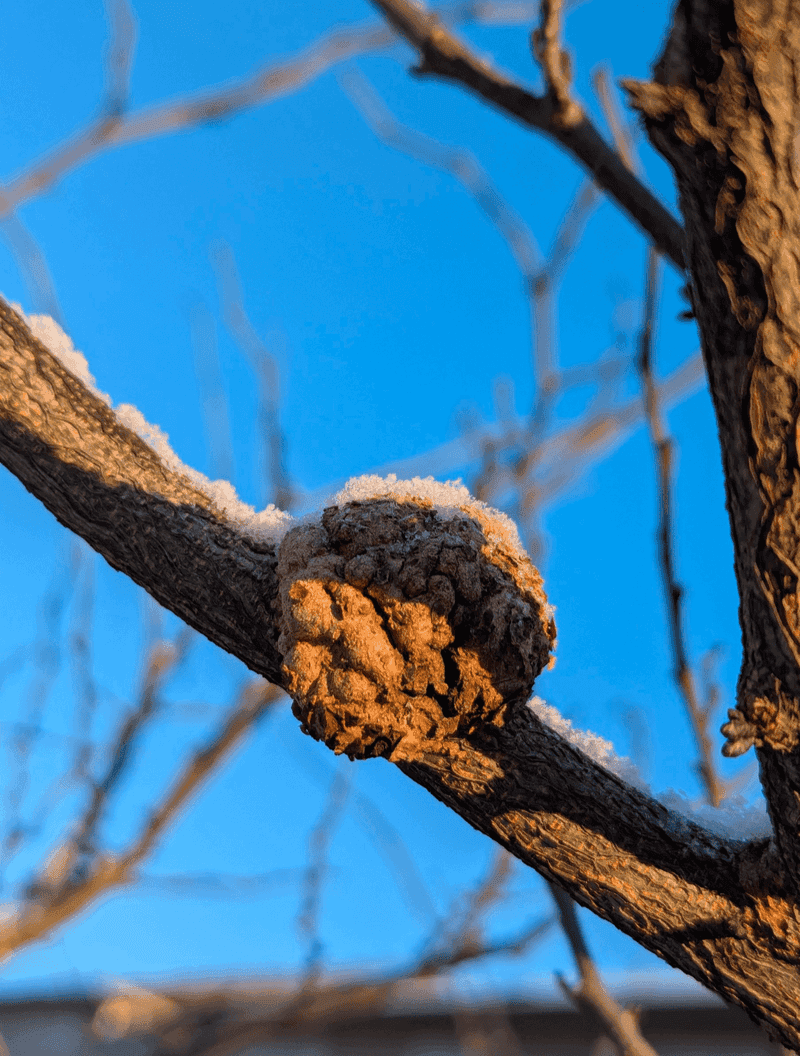
Botryosphaeria canker shows up as sunken, discolored patches on branches or the main trunk. Affected branches may wilt suddenly even when the rest of the tree looks fine.
Verticillium wilt is a soilborne fungal issue that disrupts the tree’s ability to move water through its system. Leaves on one side or one branch turn yellow, then brown, while the rest of the canopy holds on for a while longer.
Neither disease has a simple spray-and-fix solution. The most effective approach is prevention through consistently good care.
A redbud planted correctly, watered well, mulched properly, and sited in well-drained soil with appropriate sun is far less likely to develop serious disease problems during those vulnerable first two years.
If canker appears on a branch, prune back to healthy wood and sterilize pruning tools between cuts with a diluted bleach solution.
Do not leave infected material near the tree. Verticillium wilt in the soil is harder to address, and removing a heavily infected tree and replanting with a resistant species is sometimes the most practical path forward.
A well-cared-for redbud is not an easy target. Most of these diseases are opportunists, not aggressors.
Give the tree fewer reasons to be vulnerable and the problems tend to find somewhere else to go. Strong trees are boring to pathogens, which is exactly what you want.