Why Your Ohio Clematis Grows Leaves But Hardly Any Flowers
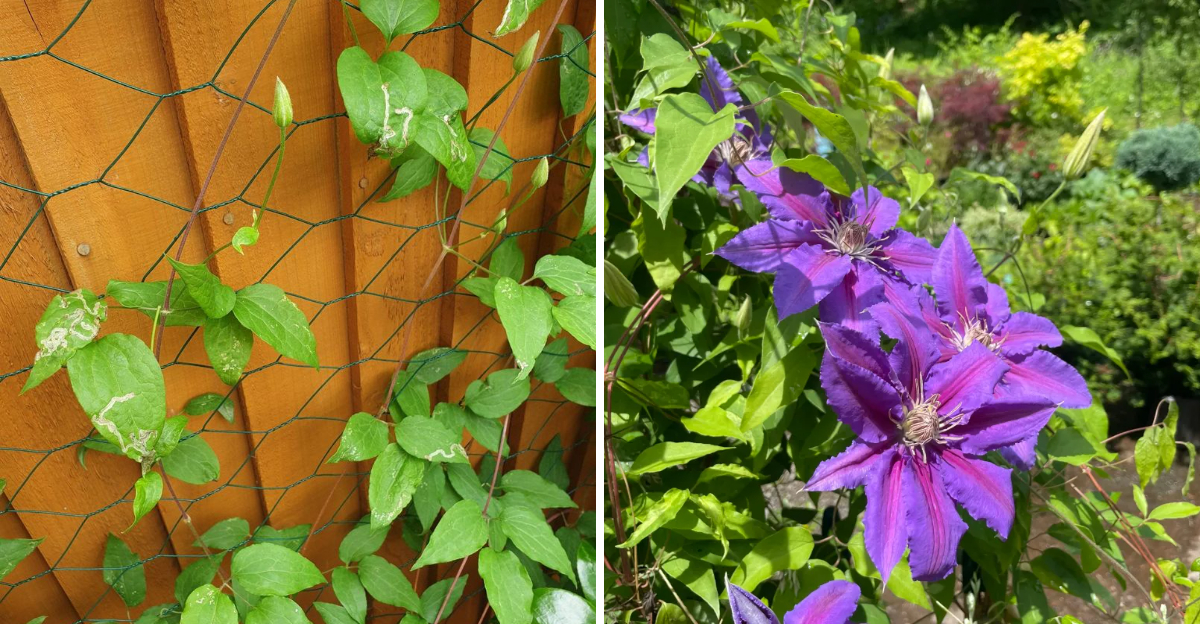
Ever look at your Ohio clematis and think, what gives? You expected a cascade of blooms, yet all you see is a jungle of leaves.
It feels like all bark and no bite, right? You water, you prune, you wait, and still no show.
So what stands in your way? Ohio weather plays tricks, soil can hold secrets, and timing can make or break the whole story.
Many gardeners face this same puzzle and scratch their heads each season. The truth hides in plain sight, from sunlight hours to prune habits that cut off next year’s buds.
Miss one detail and the plant stays quiet. Hit the right balance and it bursts with color like a firework finale.
Ready to crack the code and turn that leafy vine into a full bloom star? Let’s get straight to the root of the problem and see the flowers you dreamed of all summer.
1. You Might Be Pruning Away The Flower Show
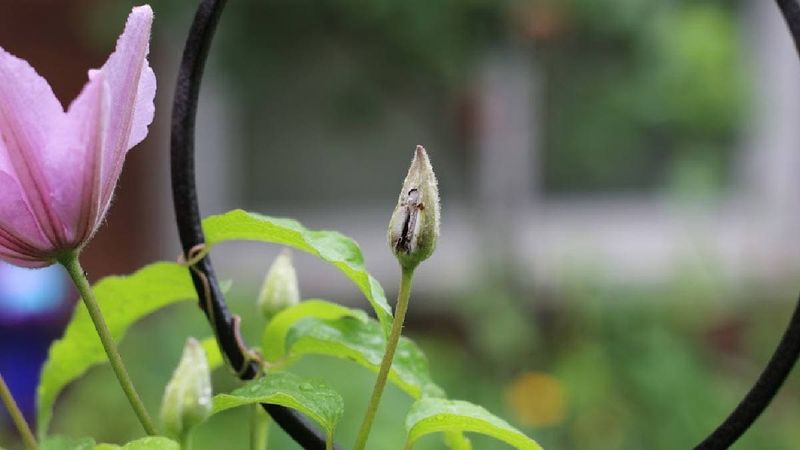
Grab your pruning shears at the wrong time of year, and you might be cutting off every flower your clematis was about to produce.
This is easily the most common reason Ohio gardeners end up with lush vines and almost no blooms, and it all comes down to which pruning group your clematis belongs to.
Clematis are divided into three groups based on when and how they bloom. Group 1 vines bloom early in spring on wood that grew the previous year.
If you cut them back in late winter or early spring before they flower, those buds are gone.
Group 2 hybrids bloom twice, first on old wood in late spring and then on new growth in summer.
Pruning them hard in early spring wipes out that first round of blooms entirely. Group 3 clematis bloom only on the current season’s growth and actually do benefit from hard pruning in late winter, cutting stems back to about 12 to 18 inches above the ground.
The problem is that many gardeners prune every clematis the same way, usually in early spring when they are tidying up the garden. That habit works fine for Group 3 but can cost you a full season of flowers on Groups 1 and 2.
Before you cut anything, figure out which group your variety falls into. Check the plant tag, look it up by name, or contact your local Ohio State University Extension office for guidance.
Matching your pruning timing to your plant type is the single most impactful change many Ohio gardeners can make.
2. Too Much Shade Can Leave You With Vines And Very Few Blooms
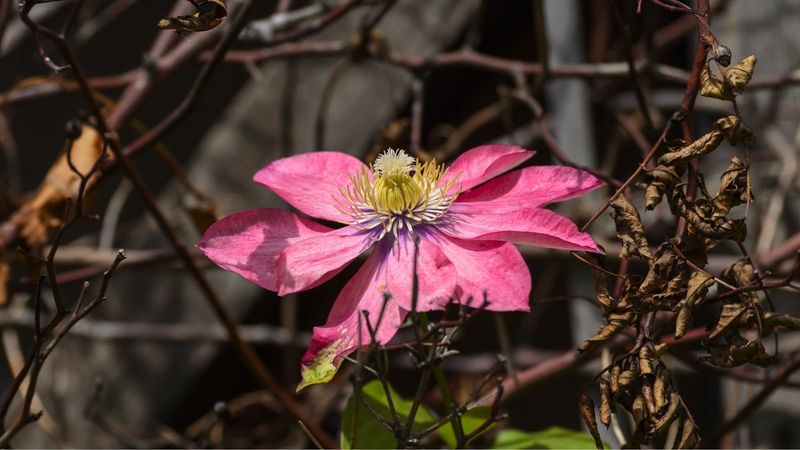
Picture a clematis planted along a fence that gets morning sun but sits in the shadow of a large oak tree by noon. The vine climbs steadily, puts out plenty of leaves, and looks perfectly healthy from a distance.
Up close, though, the flowers are sparse at best. Shade is often the quiet culprit behind a leafy but underperforming clematis.
Clematis need at least six hours of direct sunlight each day to bloom well. Leaves can still grow in shadier conditions because the plant is putting energy into whatever it can do, which is make foliage.
Your Ohio Garden Changes Every Week. Your Plan Should Too.
Gardening in Ohio changes quickly throughout the season. Every Friday you’ll receive a simple weekly plan showing exactly what to plant, prune, fertilize, harvest, and protect so you never miss the right timing.
Flowers take more energy and require more light to trigger properly. Ohio yards are full of mature trees, tall fences, and neighboring structures that can gradually shade out a spot that seemed sunny when the plant went in the ground.
As trees fill in over the seasons, a previously sunny location can shift into part shade without a gardener noticing right away.
Walk your yard and watch where the sun actually lands throughout the day, not just in the morning.
If your clematis is not getting those six solid hours, consider whether you can trim nearby branches, move the vine to a sunnier spot, or add a reflective surface like a light-colored fence nearby.
Ohio State University Extension recommends full sun to light shade for most clematis, with full sun producing the best bloom results. More sun on the vine almost always means more flowers on the vine.
3. All That Leaf Growth Could Point To A Fertilizer Problem
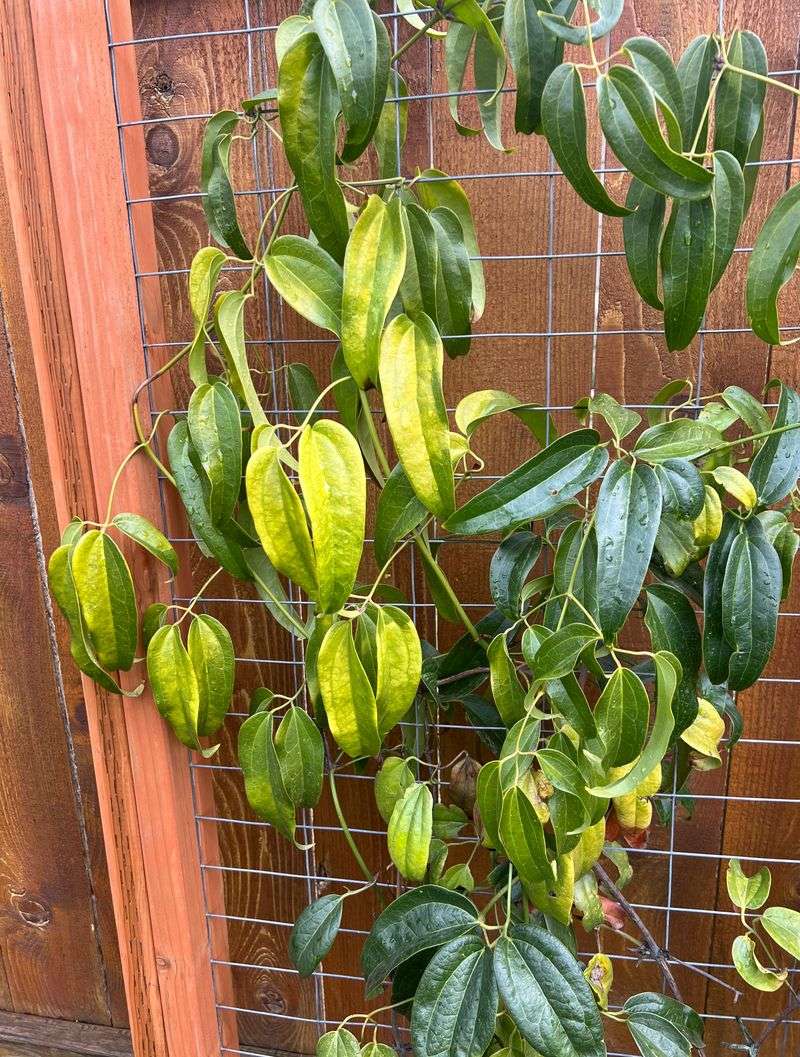
There is a certain irony in feeding your plants well and ending up with fewer flowers because of it.
Overfertilizing with the wrong product, especially one high in nitrogen, is a surprisingly easy mistake that pushes clematis toward producing more stems and leaves rather than blooms.
Nitrogen is the nutrient responsible for green leafy growth, and when there is too much of it available, the plant prioritizes foliage over flowers.
Many general-purpose lawn fertilizers are nitrogen-heavy, and gardeners who apply them broadly across the yard can accidentally dose their clematis with far more nitrogen than the plant needs.
The result looks healthy on the surface but underperforms when bloom season arrives.
What clematis actually benefits from is a balanced or phosphorus-forward fertilizer, something like a 5-10-10 formula, where the middle and last numbers represent phosphorus and potassium.
Phosphorus supports root development and flower production, making it the nutrient you actually want to encourage when blooms are the goal.
Apply a balanced fertilizer in early spring as new growth begins, then again after the first flush of flowers fades. Avoid piling on extra doses thinking more is better.
If you have been fertilizing heavily with a lawn-type product, scale back entirely for a season and see if blooming improves on its own.
Healthy soil with good organic matter, like compost worked into the planting area, can support a clematis beautifully without the need for aggressive feeding.
Sometimes doing less is the most productive thing you can do.
4. Some Clematis Need Time Before They Really Put On A Show
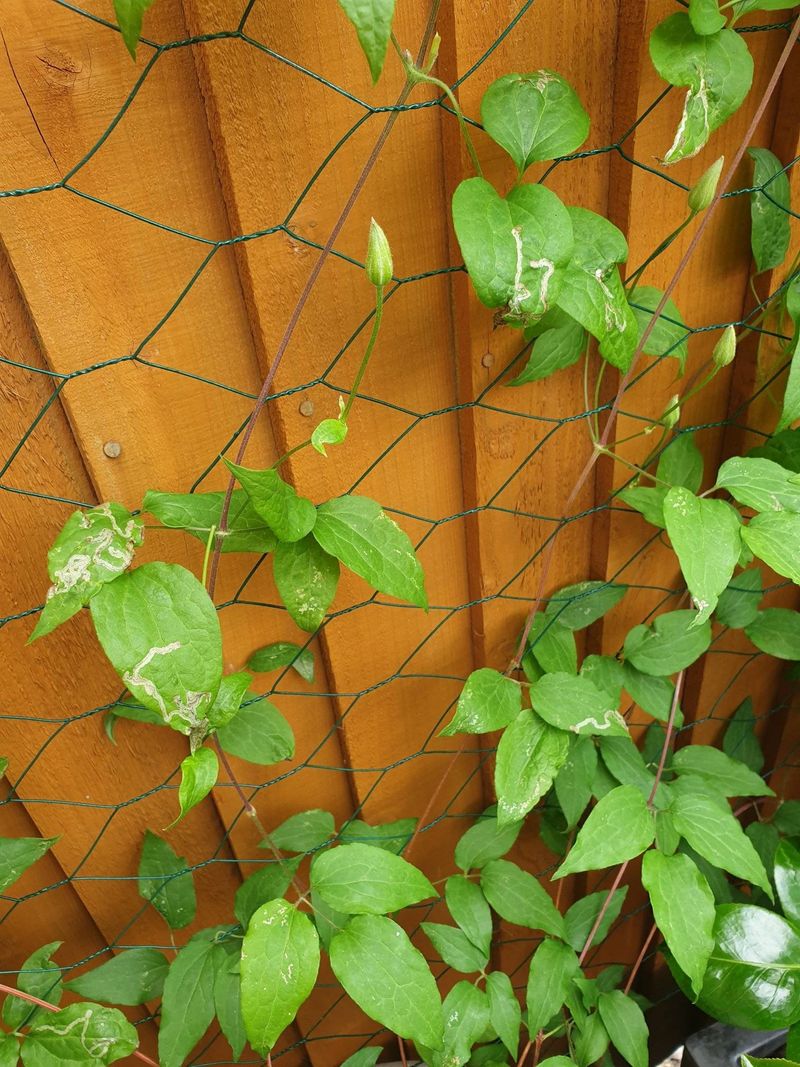
New clematis plants have a reputation for being slow starters, and for good reason. The first year or two after planting, a clematis is spending most of its energy underground.
It is building a root system strong enough to support years of vigorous growth, and that work takes priority over producing flowers.
To a gardener checking the vine every few days in early summer, the lack of blooms can feel discouraging, but the plant is actually doing exactly what it should.
There is an old piece of advice that applies well here: the first year a clematis sleeps, the second year it creeps, and the third year it leaps. While that saying is not perfectly precise for every variety, it captures a real pattern.
Many newly planted clematis produce little to no flowers in year one. By year two, some blooming begins.
By year three, a well-established plant in good conditions tends to perform much more impressively. Rushing this process by over-pruning, overfeeding, or moving the plant can reset that timeline and delay blooming further.
If your clematis was planted within the last two seasons and is growing well but not flowering much, the most useful thing you can do is wait. Make sure the planting site is right, water consistently during dry stretches, and avoid disturbing the roots.
Ohio State University Extension notes that proper establishment leads to much stronger long-term performance. Trust the process, give the plant a solid foundation, and the flowers will follow when the vine is ready to deliver them.
5. Your Variety May Bloom Later Than You Think
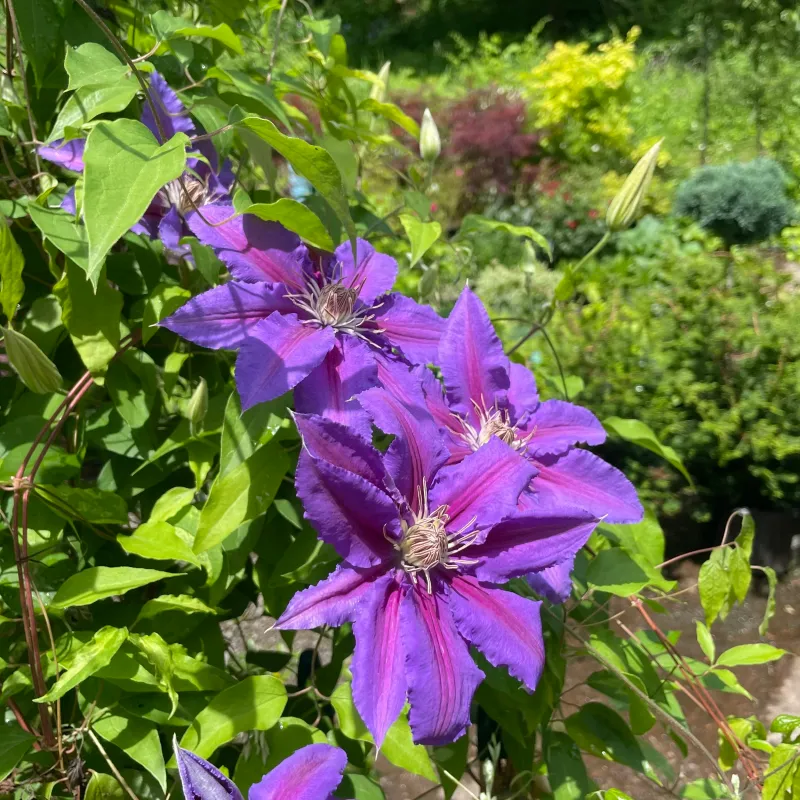
Not every clematis runs on the same schedule. Early-blooming varieties like Clematis montana can be covered in flowers by May, while late-blooming types such as sweet autumn clematis do not hit their stride until late summer or early fall.
If you are watching your vine through June and July wondering why nothing is happening, the answer might simply be that your variety has not reached its bloom window yet.
Ohio gardeners sometimes assume that all clematis should be flowering by late spring or early summer, which is when garden centers are packed with blooming plants and expectations are high. But clematis varieties span a wide range of flowering seasons.
Group 1 types bloom early on old wood, Group 2 hybrids often bloom in late spring and again in late summer, and Group 3 varieties typically bloom from mid to late summer onward.
Buying a plant in bloom at a nursery and then watching it stay quiet for the next several months can feel like something went wrong, even when nothing did.
Check the plant label or look up your specific variety to find out when it is supposed to bloom. Write the name down and keep it somewhere you can reference it.
Knowing whether you have an early, mid-season, or late bloomer changes everything about how you interpret what the vine is doing at any given point in the season.
Ohio has a long enough growing season to support all three bloom windows, so a late bloomer is not a problem, just a timing question worth understanding.
6. Hot Stressed Roots Can Hold Back Flower Power
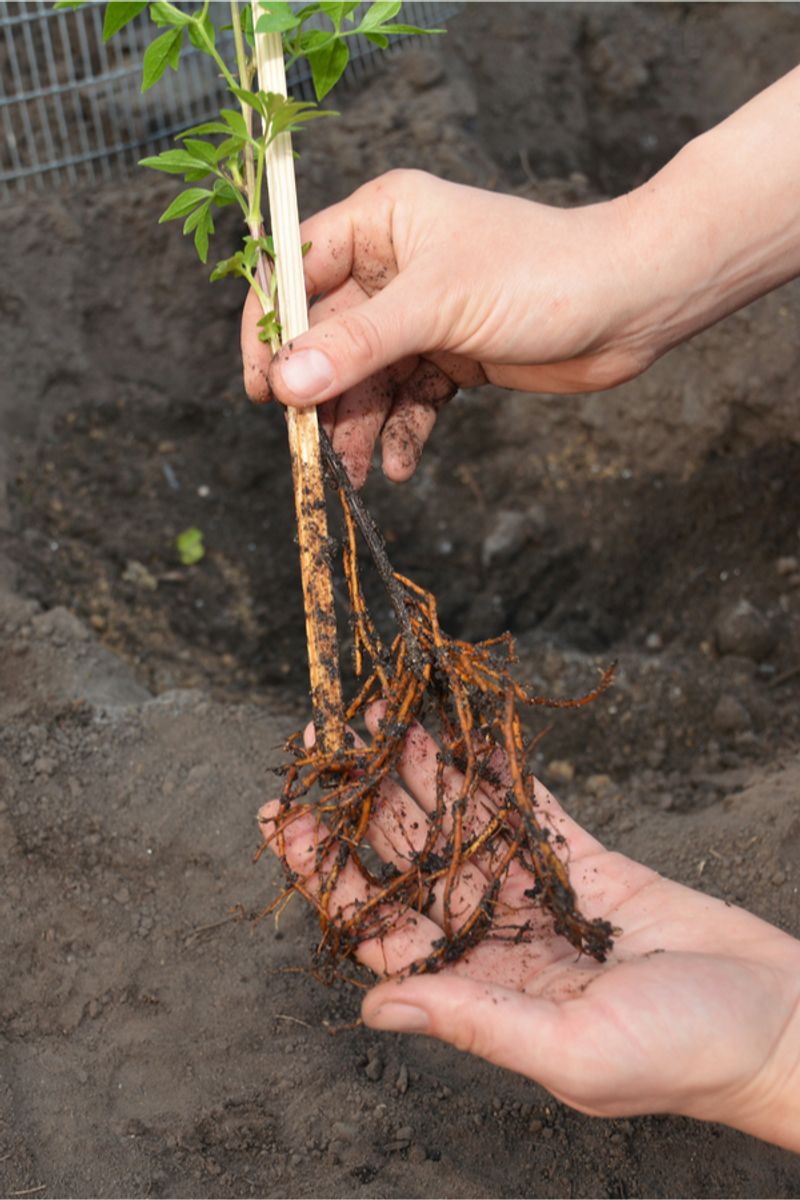
Clematis has a famously specific preference: sun on its face and cool shade on its feet. The vines love bright, warm sunlight on their stems and leaves, but the root zone needs to stay relatively cool and moist to function well.
When Ohio summers turn hot and the soil around the base of a clematis bakes in direct sun, the plant can become stressed in ways that quietly suppress flowering even when the top growth looks fine.
Heat stress at the root level affects how efficiently the plant takes up water and nutrients. A stressed root system means less energy available for producing flowers, even if the vine is still putting out new leaves and climbing steadily.
Ohio summers regularly bring stretches of intense heat and dry conditions that can push clematis roots into stress mode, particularly in planting spots with dark mulch, reflected heat from walls or pavement, or exposed bare soil that heats up quickly.
The fix is relatively simple. Apply a 2 to 3 inch layer of light-colored organic mulch around the base of the plant, keeping it a few inches away from the main stem to allow airflow.
This helps insulate the root zone and hold soil moisture. Planting low-growing perennials or ground covers nearby can also shade the root area naturally.
Water deeply during dry periods rather than giving the plant frequent shallow sips. Keeping the roots comfortable through the hottest months gives the vine the stable foundation it needs to put energy into blooming rather than just surviving the heat.
7. Winter Damage Can Cost You A Strong Bloom Season
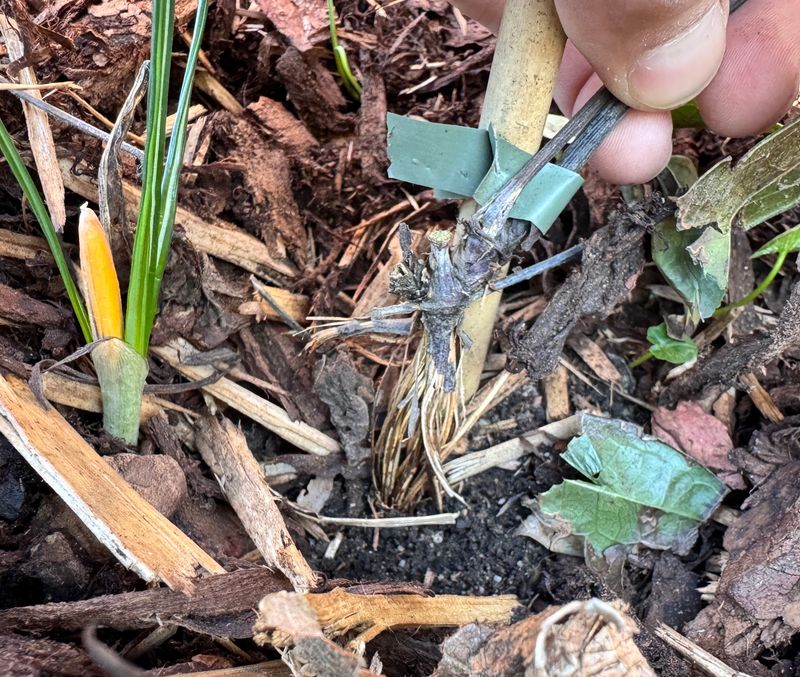
Ohio winters can be tough on perennial vines, and clematis is no exception. Depending on the variety and how cold the season got, a clematis may come through winter with significant damage to its top growth or even its developing buds.
When that happens, the vine will still leaf out as temperatures rise in spring, but the bloom season can be noticeably lighter than usual, or in some cases nearly absent.
Group 1 and Group 2 clematis are particularly vulnerable to this issue because they rely on wood from the previous year to produce flowers. If that old wood was damaged or lost during a harsh Ohio winter, the vine has to rebuild before it can bloom properly.
Group 3 varieties are less affected because they bloom on new growth and are typically pruned back hard anyway, so winter dieback matters less to their flower production.
However, even Group 3 plants can be set back if roots were damaged during an unusually severe freeze.
Protecting clematis over winter in Ohio is worth the effort, especially for Group 1 and 2 types. A layer of mulch over the root zone helps insulate against temperature swings.
In colder parts of the state, loosely wrapping the base of the vine or mounding mulch around the crown can reduce the risk of serious cold injury. If spring reveals a lot of brown, brittle stems, resist the urge to cut everything away immediately.
Wait until new growth emerges and prune only what clearly shows no signs of life. Recovery is usually possible with patience.
8. A Big Healthy Vine Does Not Always Mean More Flowers
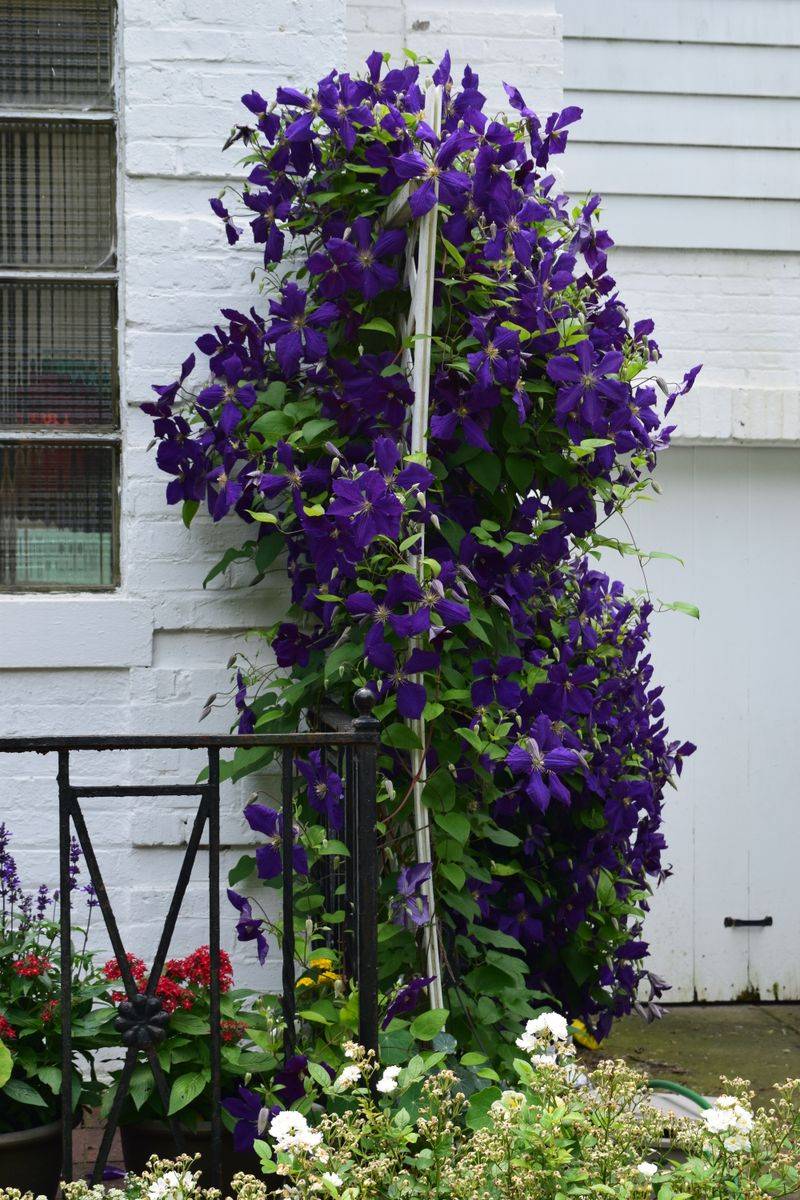
A clematis that covers an entire fence panel by midsummer looks impressive, and it is easy to assume that a big, vigorous vine must be doing everything right.
But size and flower production are not the same thing, and a sprawling vine with very few blooms is sending a message worth paying attention to.
Vigorous leafy growth can actually be a sign that something is off, whether that is too much nitrogen, the wrong pruning approach, or a site condition that favors foliage over flowers.
Support structure matters more than many gardeners realize. Clematis needs something to grab onto as it climbs, and when stems are left to tangle without guidance, the plant can put energy into extending its reach rather than producing blooms.
Regularly training new stems onto a trellis, fence, or other support keeps the plant organized and helps it distribute energy more evenly.
Site conditions, including light levels, soil quality, and root zone temperature, also play into whether a vigorous plant channels its energy toward flowering or simply keeps growing.
Variety selection is worth revisiting as well. Some clematis types are naturally more foliage-forward and flower modestly even under ideal conditions.
If you have adjusted pruning, fertilizing, light, and root care and the vine still underperforms in bloom, it may be worth researching whether your specific variety is simply not a heavy bloomer.
Pairing the right variety with the right site, the right pruning group knowledge, and consistent care is what ultimately turns a healthy-looking vine into the flowering showpiece you had in mind when you planted it.