Why California Rosemary Turns Brown In The Middle And How To Bring It Back
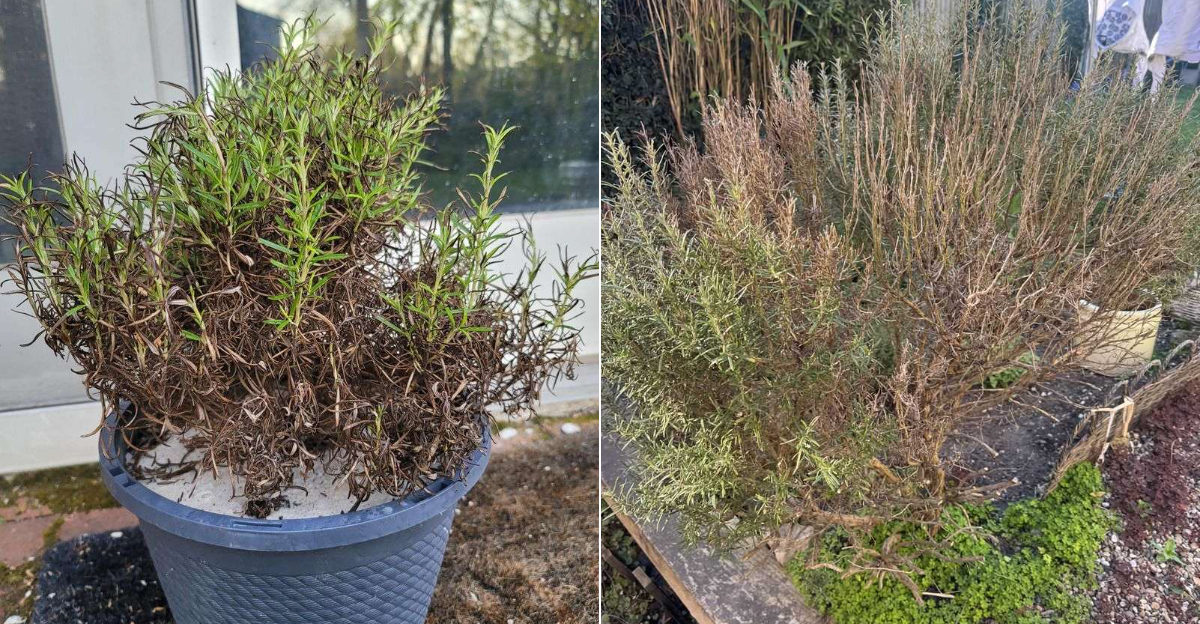
Rosemary can look tough on the outside while hiding trouble in the center. A California shrub may keep its outer tips green, then suddenly show a brown, bare-looking middle when you part the stems.
That usually means the plant is not getting enough light or airflow inside the canopy. Overwatering can make the problem worse, especially in heavy soil or crowded beds.
The tricky part is that rosemary does not always bounce back from old woody growth the way softer herbs do. A hard cut can leave you with an even rougher-looking plant.
The better move is to read the plant carefully before pruning. Check the soil, open the shape slowly, and look for healthy green growth before making changes.
With the right fix, rosemary can return to a cleaner, fuller shape without losing its rugged charm.
1. Dense Rosemary Can Shade Out Its Own Center
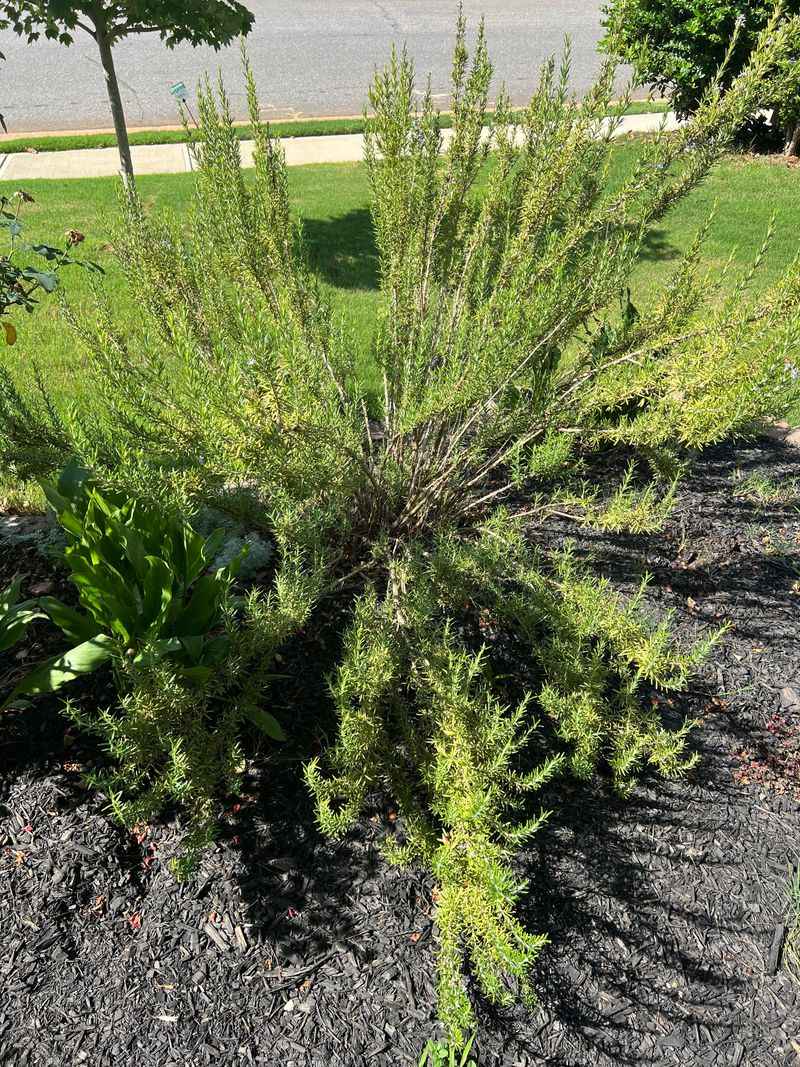
Here is something most people do not expect: rosemary can actually block its own sunlight. When the outer branches grow thick and full, they create a kind of canopy over the center of the plant.
The middle stops getting the light it needs, and the inner stems slowly turn brown and bare.
This happens a lot with older plants that have never been trimmed back. The outside looks lush and green while the inside looks like a hollow shell.
It is a sneaky problem because the plant can look healthy from a distance.
The fix is simpler than you might think. Lightly trim the outer branches every spring to open up the plant and let sunlight reach the center.
Do not go too far back into the woody stems, just thin things out enough to let air and light flow through.
Think of it like giving the plant a haircut instead of a full reshape. Removing even a small amount of dense growth from the outer edges can make a big difference inside.
You should start to see some new green growth in the center within a few weeks of pruning.
Making this part of your regular spring routine will keep the plant from getting too thick again. Rosemary responds well to consistent, light trimming throughout the growing season.
2. Woody Stems Often Turn Brown First
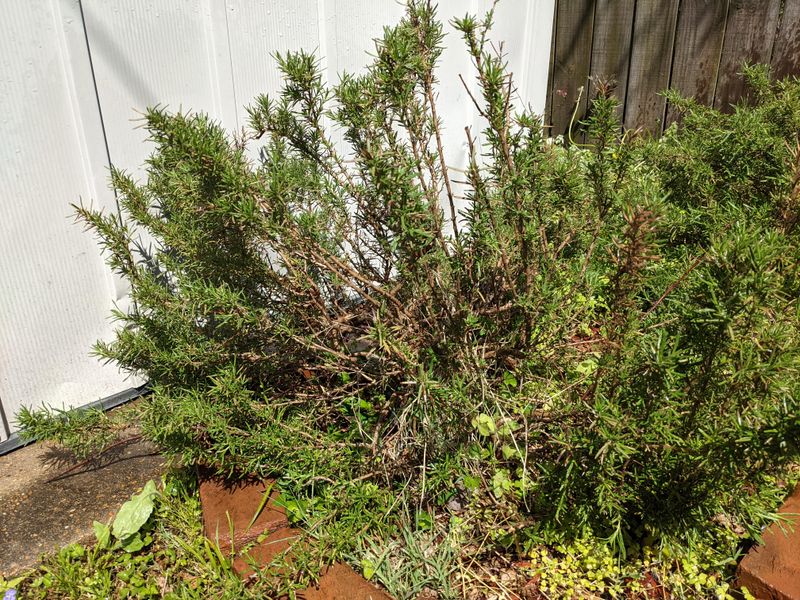
Woody stems are a natural part of how rosemary ages, but they can be confusing for new gardeners. As the plant matures, the lower and inner stems lose their green color and become hard and bark-like.
This is not always a sign that something is wrong.
Rosemary is a woody perennial, which means its older stems naturally harden over time. The problem starts when those woody sections make up most of the plant and very little green growth is left.
At that point, the plant has a harder time producing new shoots.
You can slow this process down with regular pruning. Trim back the green tips after the plant blooms each year.
This encourages fresh growth and keeps the plant from becoming too woody too quickly.
Avoid cutting all the way back to the bare wood. Rosemary does not regrow well from completely bare stems the way some other plants do.
Your California Garden Changes Every Week. Your Plan Should Too.
Gardening in California changes quickly throughout the season. Every Friday you’ll receive a simple weekly plan showing exactly what to plant, prune, fertilize, harvest, and protect so you never miss the right timing.
Always leave some green growth on every branch you cut.
If the woody sections are taking over, try cutting back a few branches at a time instead of all at once. This gentler approach gives the plant time to recover and push out new green growth.
With patience and consistent care, you can keep the woody growth in check and help your rosemary stay productive and full for many more years.
3. Too Much Water Can Make Rosemary Decline Fast
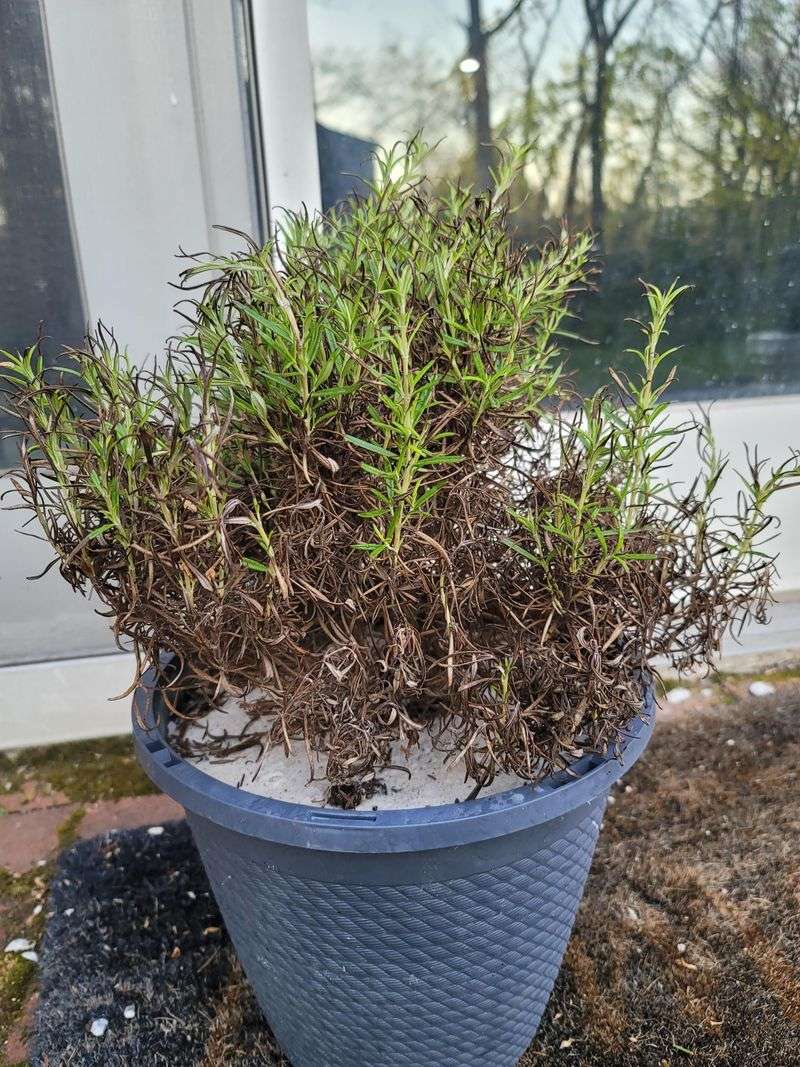
Rosemary originally comes from the dry hillsides of the Mediterranean, so it is built for drought, not soggy soil. Watering it too often is one of the fastest ways to cause browning in the center of the plant.
The roots get overwhelmed, and the plant starts to show stress from the inside out.
In California, where summers are hot and dry, it can feel natural to water more often. But rosemary actually prefers to dry out between waterings.
Giving it too much water, especially in warm months, creates conditions the plant was never designed to handle.
Cut back on watering and see if the plant starts to improve. In most parts of California, established rosemary only needs water every two to three weeks during summer.
In cooler northern regions, it may need even less.
Check the soil before you water. Stick your finger a couple of inches into the ground.
If it still feels damp, wait a few more days before watering again. This simple habit can save your plant from a lot of unnecessary stress.
Young rosemary plants need slightly more water than established ones while their roots are getting settled.
Once they are established, pull back and let the plant do what it does best: thrive on very little water.
Less really is more when it comes to keeping rosemary healthy and green.
4. Poor Drainage Can Rot The Roots
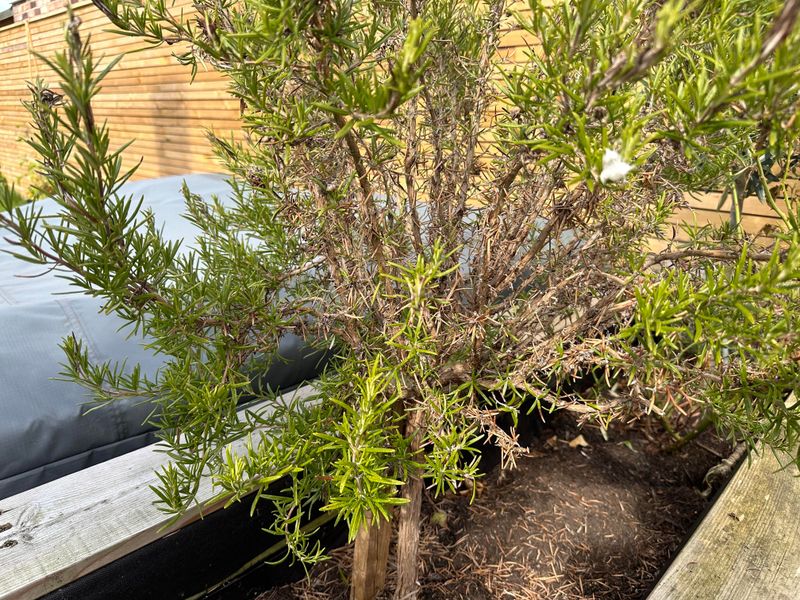
Even if you are not overwatering, your soil might be holding too much moisture on its own. Clay-heavy soils, which are common in many parts of California, drain slowly and stay wet for a long time after rain or irrigation.
Rosemary sitting in that kind of soil for too long will start to rot from the roots up.
Root rot is sneaky because you cannot see it happening underground. By the time the center of your plant turns brown, the damage has already been going on for a while.
The roots lose their ability to pull up nutrients and water, and the plant starts to decline from the inside.
Improving drainage is one of the best things you can do for rosemary. If you are planting a new one, mix coarse sand or fine gravel into the soil before you plant.
This helps water move through more quickly and keeps the roots from sitting in moisture.
For existing plants, you can carefully work some sand or gravel into the top layer of soil around the base. Raised beds and sloped garden areas naturally drain better and are great spots for rosemary.
If the roots are already badly rotted, you may need to dig up the plant, trim off the damaged roots, and replant it in a better spot with improved soil. Acting quickly gives the plant its best shot at bouncing back strong.
5. Overhead Sprinklers Can Keep The Plant Too Damp
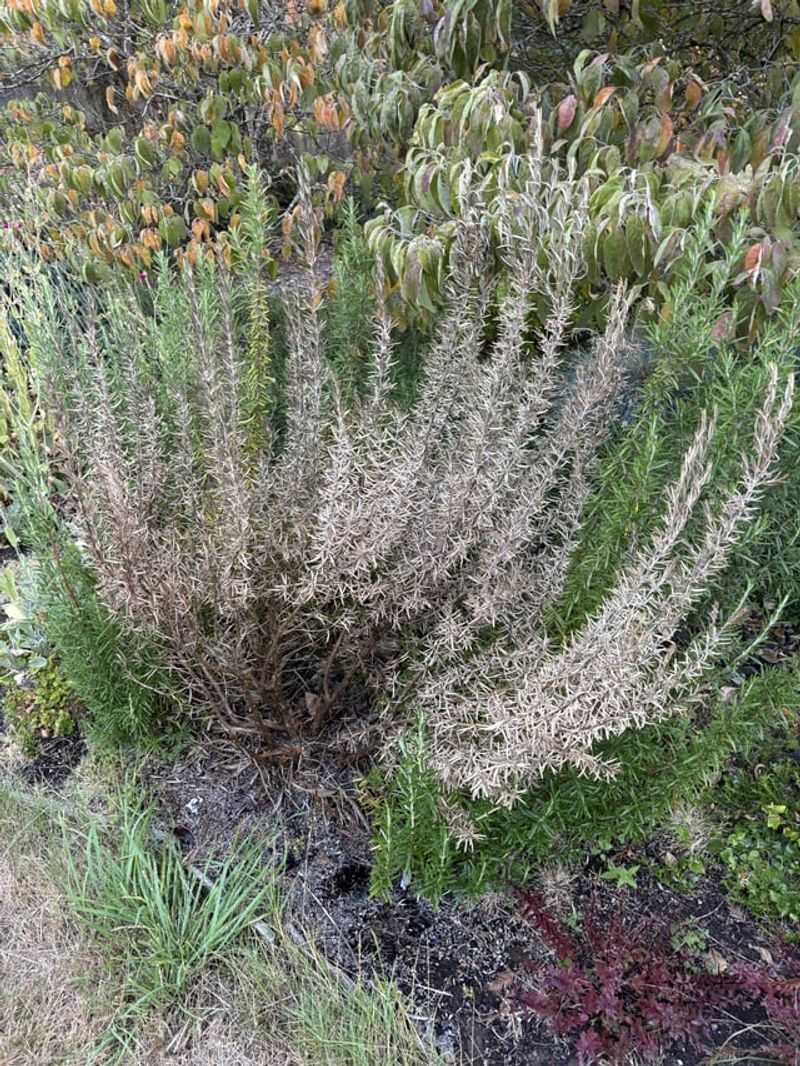
Sprinkler systems are convenient, but they can be a real problem for rosemary. When water is sprayed directly over the top of the plant, it soaks the leaves, stems, and inner branches.
Rosemary does not like sitting wet, and repeated overhead watering can cause fungal issues and browning in the center.
Many neighborhoods across California rely on automated sprinkler systems that run on a set schedule. These systems are often designed for lawns, not drought-tolerant herbs like rosemary.
The result is that rosemary ends up getting far more water than it actually needs.
If your rosemary is in a sprinkler zone, try to redirect the heads so they water around the plant rather than directly on it. Even better, switch to drip irrigation for your herb beds.
Drip systems deliver water slowly and directly to the root zone without wetting the foliage.
If redirecting the sprinklers is not possible, consider moving your rosemary to a spot outside the sprinkler zone entirely. A dry, sunny corner of the yard with no overhead watering is often the perfect home for this plant.
Also, try to avoid hand-watering from above. Water at the base of the plant instead.
Keeping the leaves and stems dry reduces the chance of fungal growth and helps the center of the plant stay healthy and open. Small changes in how you water can lead to big improvements over time.
6. Old Rosemary May Open Up In The Middle
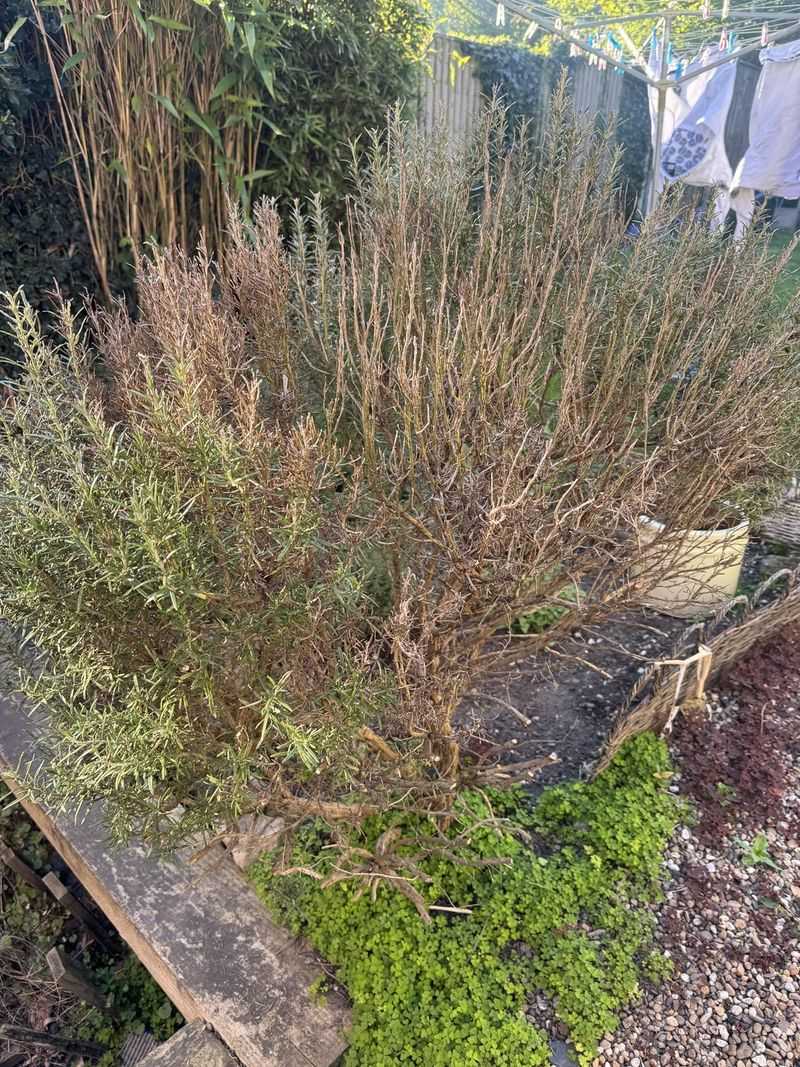
Some rosemary plants just get old, and that is perfectly okay. But as they age, especially after five or more years, they tend to spread outward and open up in the middle.
The center becomes bare and woody while the outer edges stay green and active. It is just what rosemary does as it matures.
In California’s warm climate, rosemary can grow into a large shrub over many years. The more it spreads, the more the center gets left behind.
This is especially common with varieties that have a sprawling or cascading growth habit.
One option is to embrace the shape and work with it. Some gardeners actually love the open, sculptural look of an older rosemary plant.
You can trim the outer branches to keep things tidy while leaving the natural open structure in place.
If you want to fill in the center, try selective pruning to encourage new growth from the inside branches. Cut back a few outer stems to redirect the plant’s energy inward.
This does not always work perfectly, but it can help stimulate some new shoots in the bare areas.
Another option is to start fresh with a young plant nearby. You can even take cuttings from your old rosemary and root them to grow new plants.
That way, you get the benefit of your original plant’s genetics while starting with a more vigorous, full-growing shrub right beside it.
7. Not Enough Sun Can Leave The Center Thin And Brown
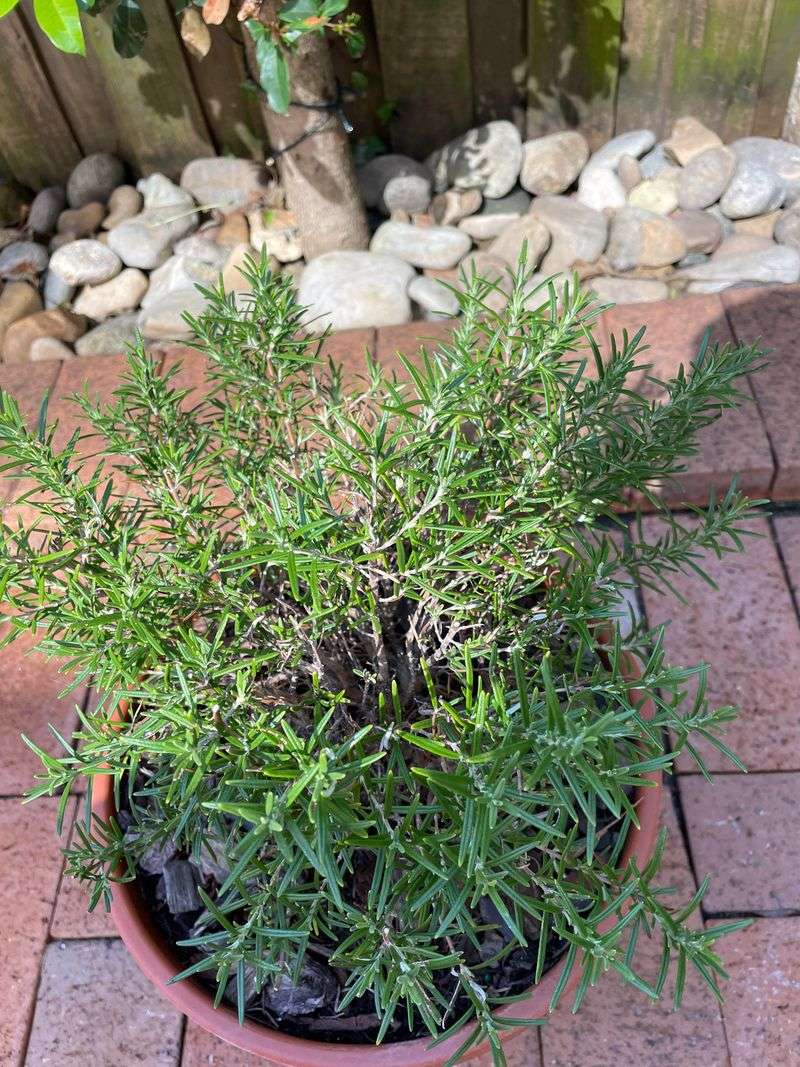
Sunlight is everything to rosemary. Without enough of it, the plant cannot produce the energy it needs to stay full and green all the way through.
The center, which is already the hardest part of the plant to reach with light, suffers the most when sun is limited.
California is known for sunshine, but not every yard gets full sun all day. Fences, trees, walls, and neighboring buildings can cast shade over parts of the garden.
If your rosemary is growing in a spot that gets fewer than six hours of direct sun per day, the center may thin out and turn brown over time.
Check how much sun your plant actually gets throughout the day. Morning shade followed by afternoon sun is usually fine.
But full shade or heavy dappled light for most of the day will cause problems over time, especially in coastal areas or northern regions where sun intensity is lower.
If the plant is in a container, simply move it to a sunnier spot. If it is planted in the ground, you may need to trim back nearby plants or remove obstacles that are blocking the light.
Pruning surrounding shrubs or plants that have grown too tall and started shading your rosemary can make a surprisingly big difference.
Even gaining an extra hour or two of direct sunlight each day can help the center of the plant recover and push out new green growth over a few weeks.
8. Heavy Pruning Into Bare Wood Can Make It Worse
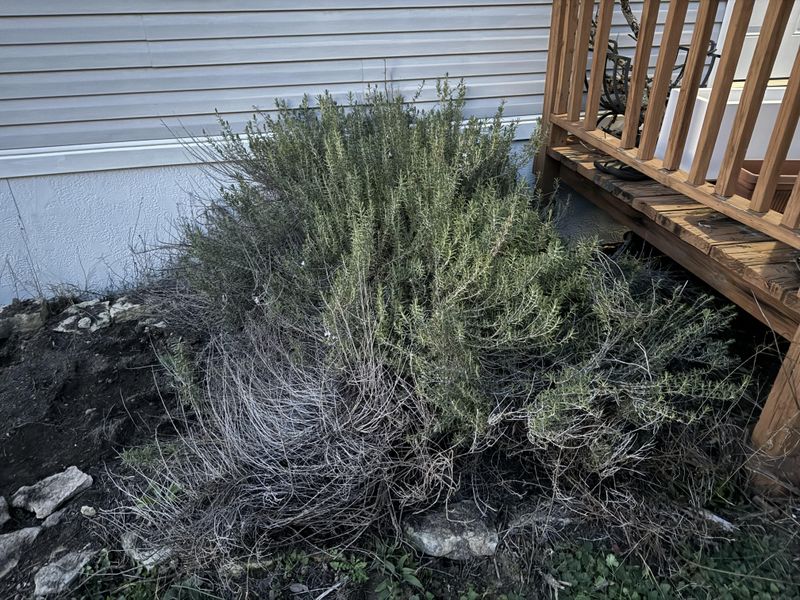
It might seem like a good idea to cut rosemary way back when it starts looking rough, but going too far can actually make things worse.
Rosemary does not regrow from completely bare wood the way many other garden plants do.
If you cut back to stems with no green growth left on them, those stems may not recover at all.
This is one of the most common mistakes gardeners make when trying to fix a struggling rosemary plant.
The impulse to cut hard and start fresh is understandable, but rosemary needs at least some green growth left on every branch for regrowth to happen.
Always leave a few inches of green growth on any stem you prune. Even a small cluster of leaves near the cut point gives the branch what it needs to push out new shoots. This is the golden rule of rosemary pruning.
If the plant has already been cut back too far and is not showing new growth after several weeks, it may need extra time and care.
Keep the soil on the dry side, make sure it is getting full sun, and be patient.
Some plants do bounce back slowly even from heavy cuts.
Going forward, prune little and often rather than all at once. Light trims two or three times a year keep rosemary in great shape without risking the kind of damage that comes from one big, drastic cutback.
Gentle and consistent care is always the better path forward.