The July Mulching Mistake That Traps Heat And Destroys Ohio Plant Roots
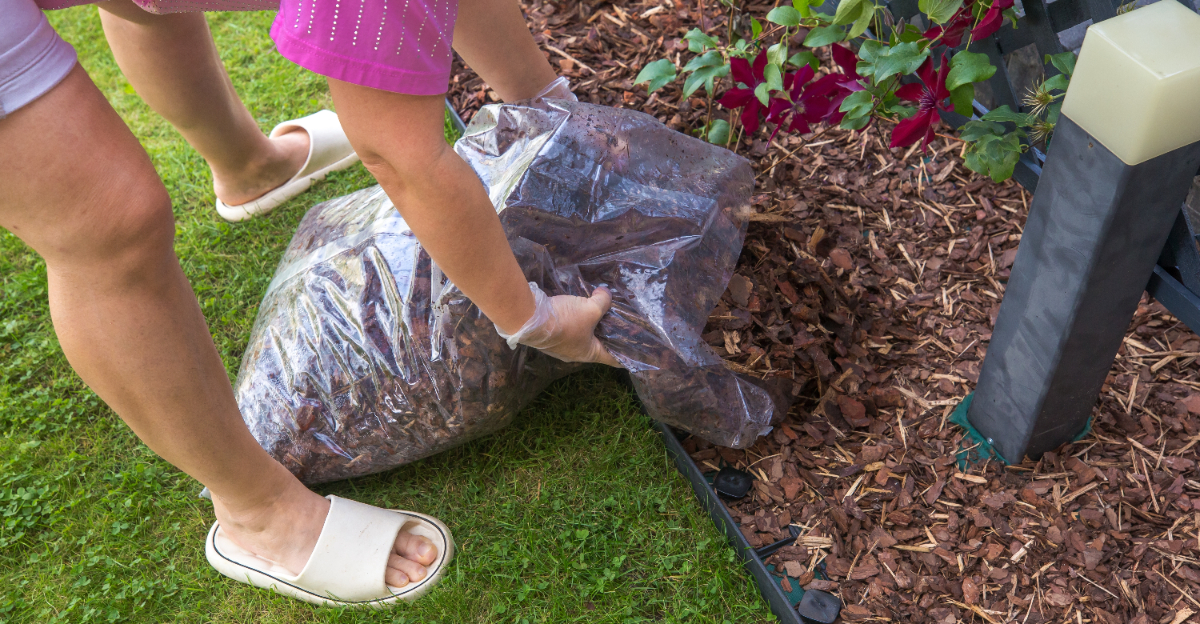
Mulching feels like responsible garden care. It conserves moisture, suppresses weeds, and gives beds a finished look that holds up through summer.
Most Ohio gardeners do not think twice about it. July, though, has a specific way of turning a well-intentioned mulching habit into something that quietly works against every plant it was supposed to protect.
Heat is the variable that changes everything. Ohio July ground temperatures are not the same as May ground temperatures.
Mulch that behaved perfectly in spring starts trapping and concentrating heat at root level in ways that stress plants from below while the sun stresses them from above. One specific mistake makes this significantly worse.
It is common, and it looks completely reasonable from the outside. The damage happens underground, where nobody sees it until the plant above starts showing the consequences.
July mulching requires a different approach than the rest of the year.
1. Piling Mulch Too Thick During July Heat
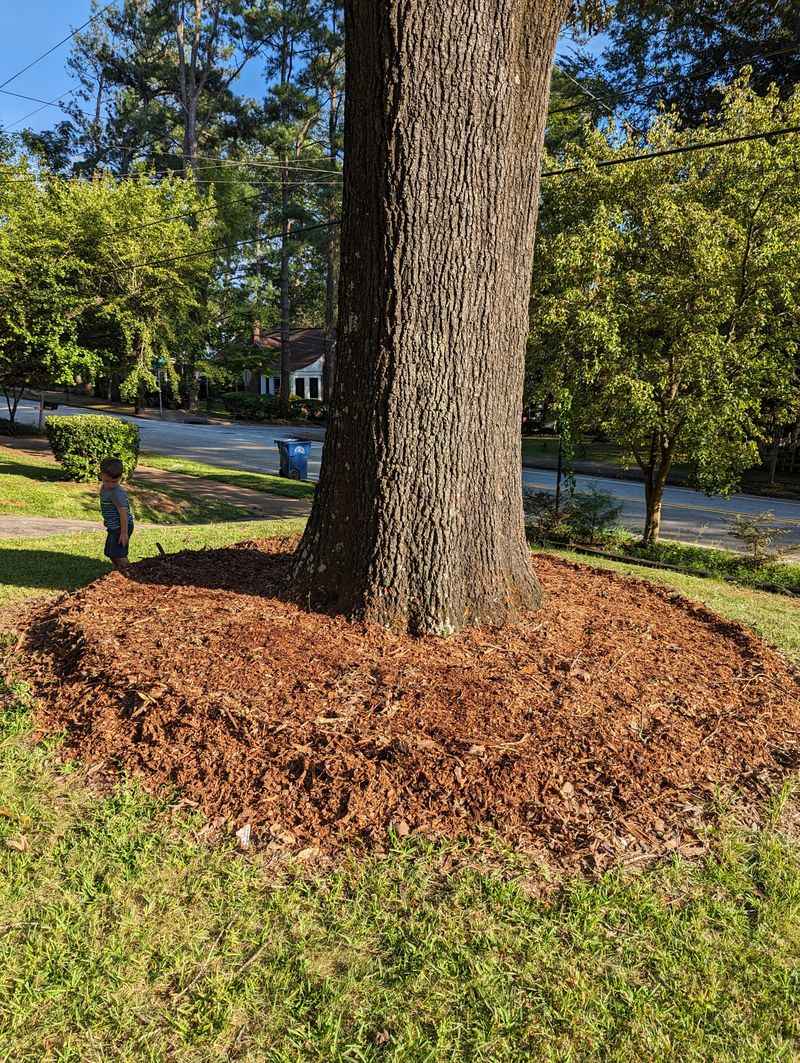
A freshly mulched bed can look tidy and well-kept from across the yard, but what is happening beneath the surface tells a very different story.
When mulch is piled too thick during July heat, the layer can actually trap warmth and reduce the oxygen exchange that roots need to stay healthy.
Roots are not just drinking water down there. They are also taking in oxygen and releasing carbon dioxide, and a thick mulch wall can slow that process.
Ohio State University Extension recommends a mulch depth of two to four inches for most landscape beds. Layers deeper than four inches can begin to hold excess moisture near the soil surface.
In dry conditions, they can also form a spongy barrier that sheds water before it reaches roots. Neither situation is good for plants already dealing with summer stress.
A four-inch layer might feel modest, but it does the job. It slows evaporation, moderates soil temperature, and suppresses weeds without smothering the root zone.
If your beds already have mulch from a previous season, measure what is there before adding more. Topping off a three-inch layer with two more inches puts you over the recommended range quickly.
Pull back old material, check its condition, and only add what is needed to reach that two-to-four-inch target for healthy summer root zones.
2. Creating Mulch Volcanoes Around Plant Stems
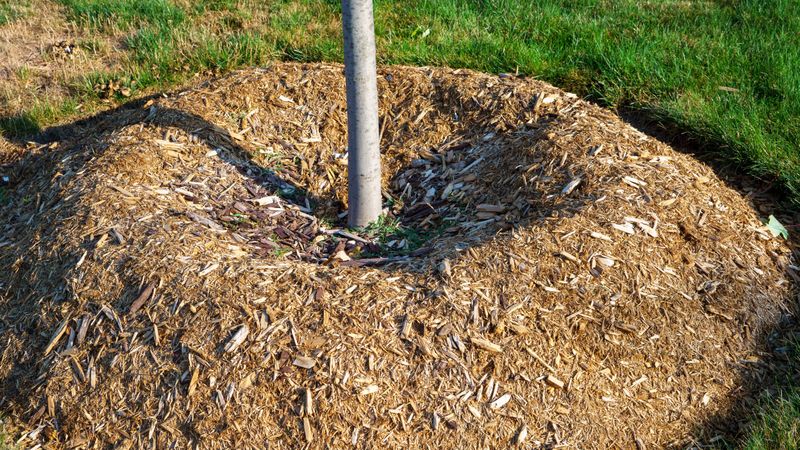
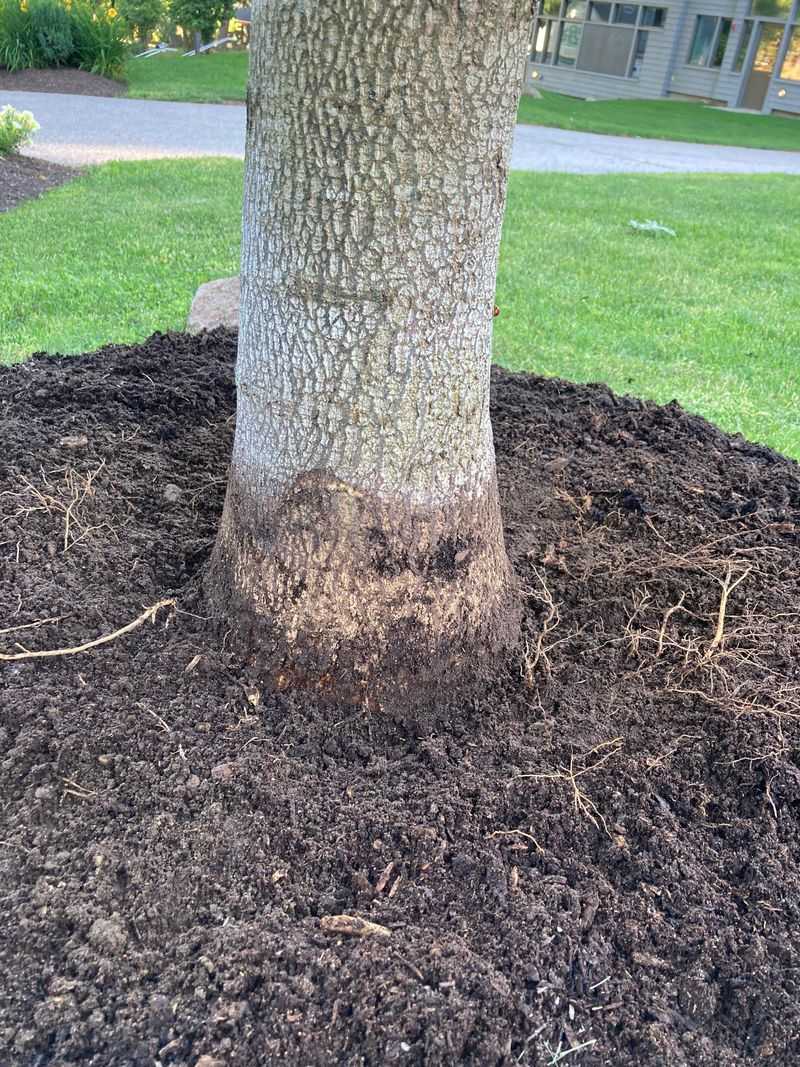
Walk through almost any neighborhood in this state during July and you will spot them. Mulch volcanoes are those cone-shaped mounds piled high against tree trunks and shrub stems, often reaching six inches or more up the bark.
They look intentional, even professional, but they are one of the most common mulching mistakes in home landscapes.
When mulch stays pressed against bark or woody stems for extended periods, it holds moisture in a spot that is not designed to stay wet. Bark needs to dry out between rain events.
Stems and trunks that stay damp under a mulch pile can develop conditions that invite fungal problems, bark breakdown, and root stress. The area just above the soil line, where the stem meets the ground, is especially sensitive.
Your Ohio Garden Changes Every Week. Your Plan Should Too.
Gardening in Ohio changes quickly throughout the season. Every Friday you’ll receive a simple weekly plan showing exactly what to plant, prune, fertilize, harvest, and protect so you never miss the right timing.
The fix is straightforward and takes only a few minutes. Pull mulch back so there is a clear gap of two to three inches around every trunk, stem, and woody base in your beds.
The mulch does not need to be removed from the bed entirely. It just needs to stay off the plant itself.
Think of it as giving the stem room to breathe. Crowns, trunks, and stem bases should always be visible above the mulch line, not buried beneath it, for the plant to stay comfortable through summer.
3. Covering Crowns Until Plants Cannot Breathe
Perennial crowns sit right at or just above the soil surface, and they serve as the launch point for every new stem, leaf, and flower a plant produces each season.
Burying that crown under fresh mulch in July is one of those mistakes that does not show up right away.
The plant may look fine for a week or two, then start to show wilting, yellowing, or stunted growth as the season pushes forward.
Crowns need airflow. When mulch covers them completely, the area stays damp and warm, which is exactly the kind of environment that encourages rot and fungal stress.
Hostas, coneflowers, black-eyed Susans, and many other common perennials in regional beds are vulnerable to crown issues. That risk increases when mulch is piled against them during hot, humid summer weeks.
Checking crown exposure takes only a moment. Gently scrape back any mulch that is sitting directly on top of where stems emerge from the soil.
The crown itself should sit above the mulch line or at least be free of any direct mulch contact. You do not need to clear a huge area.
A small circle of bare soil around each crown is enough to allow airflow and reduce moisture buildup. This simple habit protects plants without requiring any additional products or major bed work during July heat.
4. Using Dark Mulch Where Reflected Heat Builds
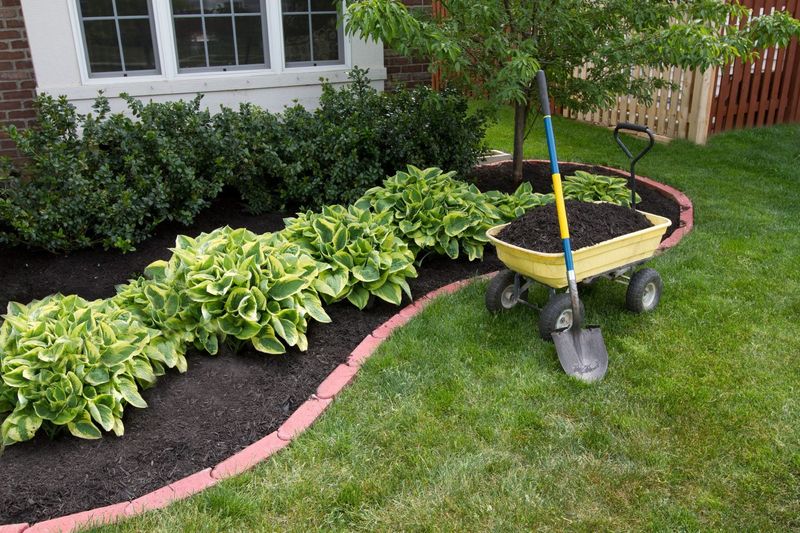
Not all mulch placement decisions are equal, and location matters more than many gardeners realize in July. Dark-colored mulch near hot pavement, brick walls, stone edging, or south-facing foundations can absorb and hold more heat.
The same mulch may behave differently in a shaded or open bed. When reflected heat from a brick wall combines with a dark mulch surface, the root zone nearby can stay warmer than expected even during cooler parts of the day.
This does not mean dark mulch is a bad choice everywhere. In shaded beds or areas with good airflow, dark mulch performs well and breaks down into organic matter that improves soil over time.
The concern is specific to spots where multiple heat sources overlap. A south-facing foundation bed with dark mulch and nearby concrete is the kind of combination worth watching during a July heat wave.
Plants showing leaf scorch, wilting in the morning, or struggling despite regular watering in those spots may be dealing with compounded heat stress.
Switching to a lighter-colored mulch, adding a thin layer of straw, or simply pulling mulch slightly away from the wall can reduce the heat load near roots.
Watching how plants respond in heat-prone spots is the best way to decide whether a mulch adjustment is needed. No single mulch color ruins a bed, but placement and surroundings always matter in summer.
5. Mulching Dry Soil Without Watering First
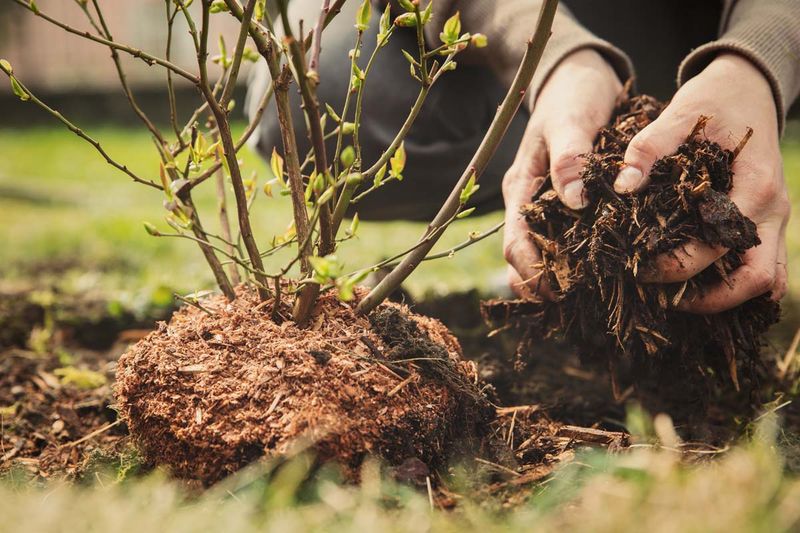
Dry soil and fresh mulch are a tricky combination that catches many gardeners off guard in July. The instinct makes sense: add mulch to protect dry soil from losing even more moisture.
But when the soil underneath is already very dry, a new mulch layer can actually slow the rewetting process. Water from rain or irrigation hits the mulch surface first.
If the mulch is thick or has started to mat slightly, that water may run off the sides of the bed before soaking through to the root zone below.
Checking soil moisture before mulching is a quick and useful step. Push a finger or a small trowel a few inches into the soil.
If it feels dry and powdery several inches down, water the bed deeply before adding fresh mulch. Give the water time to soak in, then apply the mulch on top of moist soil.
That sequence keeps moisture locked in rather than locked out.
Deep watering before mulching also encourages roots to grow downward toward consistent moisture rather than staying shallow near the surface. Shallow roots are more vulnerable to heat stress and dry spells.
You do not need to saturate the soil to the point of sogginess. The goal is simply moist, not wet.
Starting with hydrated soil and then covering it with a moderate mulch layer gives roots the best possible setup for surviving a hot Ohio summer week.
6. Leaving Old Matted Mulch In Place
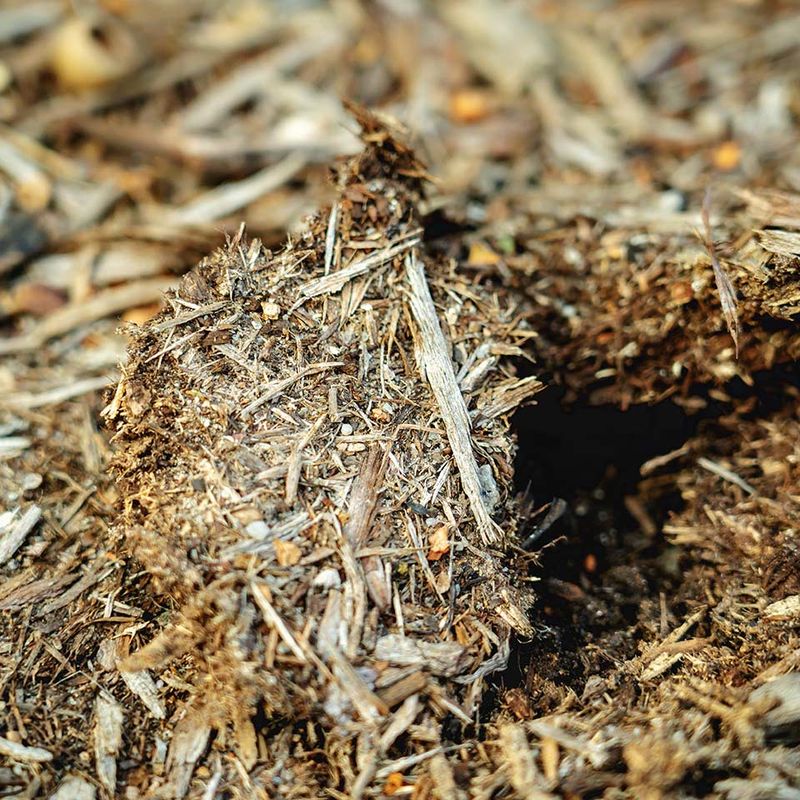
Last season’s mulch does not always stay loose and porous. Over time, wood chips and shredded bark can compress, interlock, and form a dense mat that behaves more like a thatched roof than a permeable ground cover.
Water hits the surface and rolls off instead of soaking through. Beneath that matted crust, the soil may be surprisingly dry even after a good rain, and roots in that zone can suffer without the gardener realizing what is happening.
Before adding fresh mulch in July, take a few minutes to check the existing layer. Scoop some up and look at its texture.
If it holds together in a compressed chunk or feels spongy and dense, it has likely started to mat. A garden rake or gloved hands can break it up and restore some of the open texture that allows water and air to move through.
Once loosened, the old material can stay in place as the base of a refreshed layer.
Adding fresh mulch on top of an unbroken matted layer just adds depth without solving the drainage problem. The combined thickness can also push the total mulch depth well past the recommended two-to-four-inch range.
A few minutes of raking old mulch before topping it off can dramatically improve how well water reaches the root zone. This is one of the most overlooked summer bed maintenance steps in home landscapes across this state.
7. Burying Shallow-Rooted Plants Under Fresh Mulch
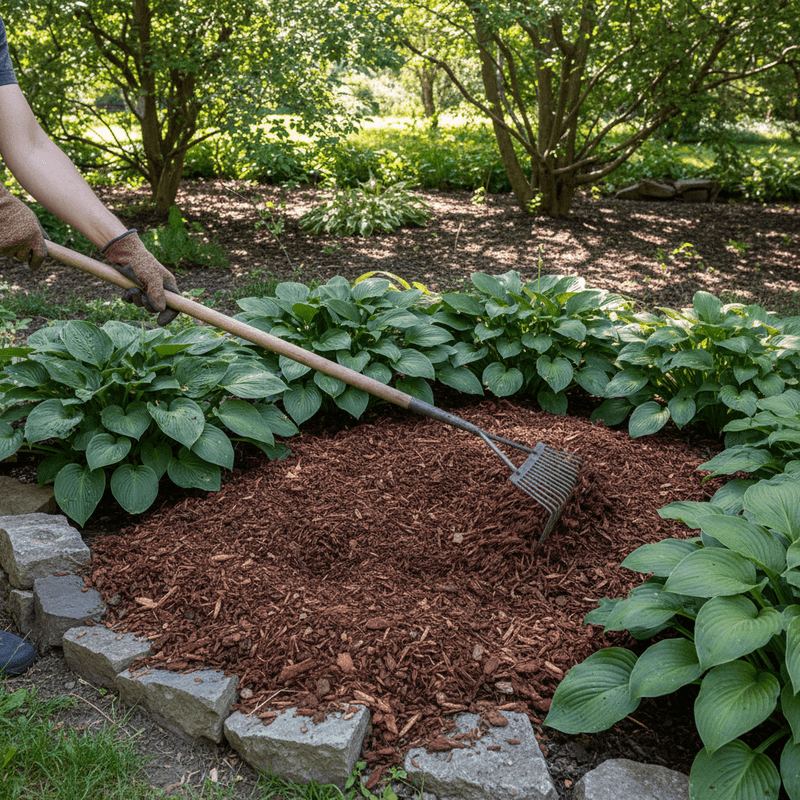
Some plants keep their roots surprisingly close to the soil surface, and those plants need a little extra care when mulch goes down in July.
Azaleas, rhododendrons, and hydrangeas are good examples of shallow-rooted shrubs that are common in local foundation beds and woodland-edge plantings.
Their root systems fan out horizontally near the top of the soil rather than pushing deep. That makes them sensitive to anything that changes conditions in that upper layer.
A mulch layer that works fine for a deep-rooted shrub can feel suffocating to a plant whose feeder roots are concentrated in the top two or three inches of soil.
Too much mulch over that zone can reduce gas exchange, hold excess moisture, or in very dry conditions, prevent water from reaching roots at all.
The crown of the plant is also at risk if mulch is piled directly against the base of the stems.
For shallow-rooted plants, two inches of mulch is often enough. Keep the material pulled back from the crown and stems, and check the depth before adding more each season.
If the existing mulch looks intact and is already two inches deep, skip the top-off for that plant and just loosen any matted spots instead.
Monitoring these plants during July heat waves is worthwhile, since they tend to show stress earlier than deeper-rooted neighbors in the same bed.
8. Pulling Mulch Back To Let Roots Breathe
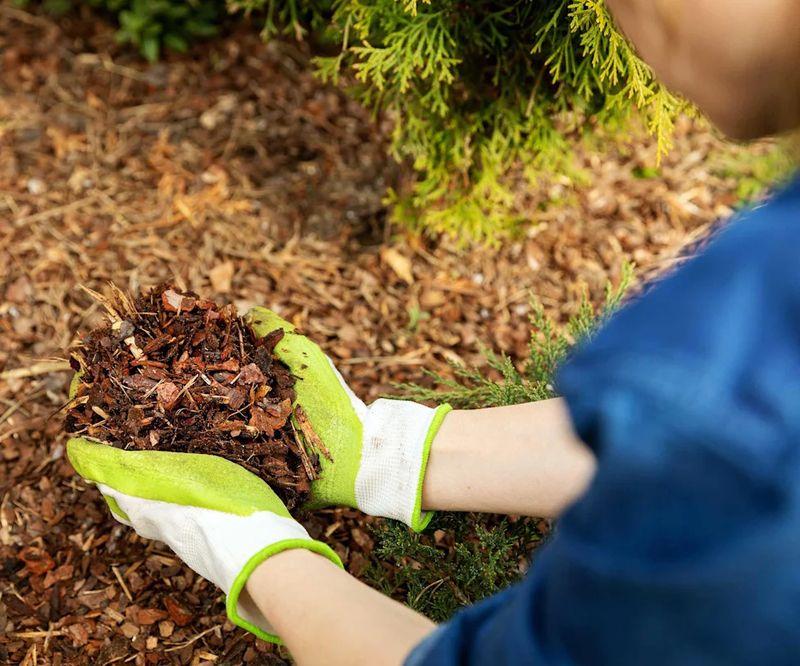
A July mulch reset does not have to be a full-day project. The most effective fixes are small, targeted adjustments that take under an hour for most beds.
Start by walking through the yard with a ruler or your hand as a guide. Check mulch depth in several spots across each bed.
If any area measures more than four inches, rake material toward the outer edges of the bed where depth is often shallower.
Next, check every stem, trunk, and crown in the bed. Pull mulch back so there is a visible gap around each plant base.
Two to three inches of clearance is enough. Roots need both moisture and air, and the crown is the most sensitive junction between the two.
A stem that has been buried under mulch for weeks may look stressed or show soft spots near the soil line. Clearing that area and letting it dry slightly can help the plant recover.
Finally, check for matted spots and break them up with a rake before the next rain event. Water the bed deeply if the soil feels dry several inches down, then let the mulch settle naturally.
This kind of practical mid-summer check keeps beds functional rather than just decorative. Roots need access to both consistent moisture and adequate airflow.
With both in place, they are far better equipped to handle the heat that July reliably brings to home landscapes across this state.