This Popular California Garden Plant Is Toxic To Dogs But Still Sold Almost Everywhere
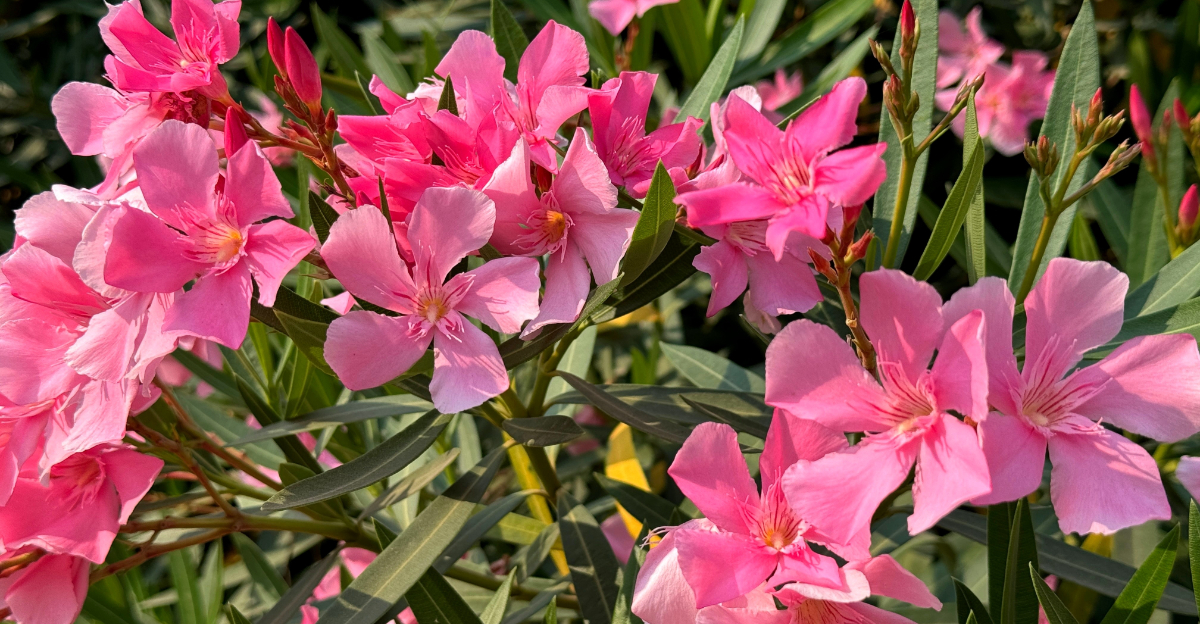
It lines California freeway medians. It fills backyard borders. It is in the parking lot of the hardware store where you buy it. It blooms in pink, white, red, and yellow, handles drought beautifully, and asks almost nothing in return.
It is also one of the most toxic plants a dog can encounter, and many owners find that out at the worst possible time.
The assumption many people make at a nursery is a reasonable one: if it is on the shelf, someone checked. Plants that can seriously harm pets would be labeled, right?
They are not. Most plant tags list sunlight and water needs. Toxicity to animals almost never appears anywhere on the packaging.
This plant is in millions of California yards right now. It might be in yours. It might be in your neighbor’s yard, along your regular walking route, or at the park where you take your dog on weekends.
Knowing what it looks like, understanding why it is concerning, and knowing what to do if your dog encounters it could genuinely matter. Ready to find out which plant it is?
Start With Oleander First
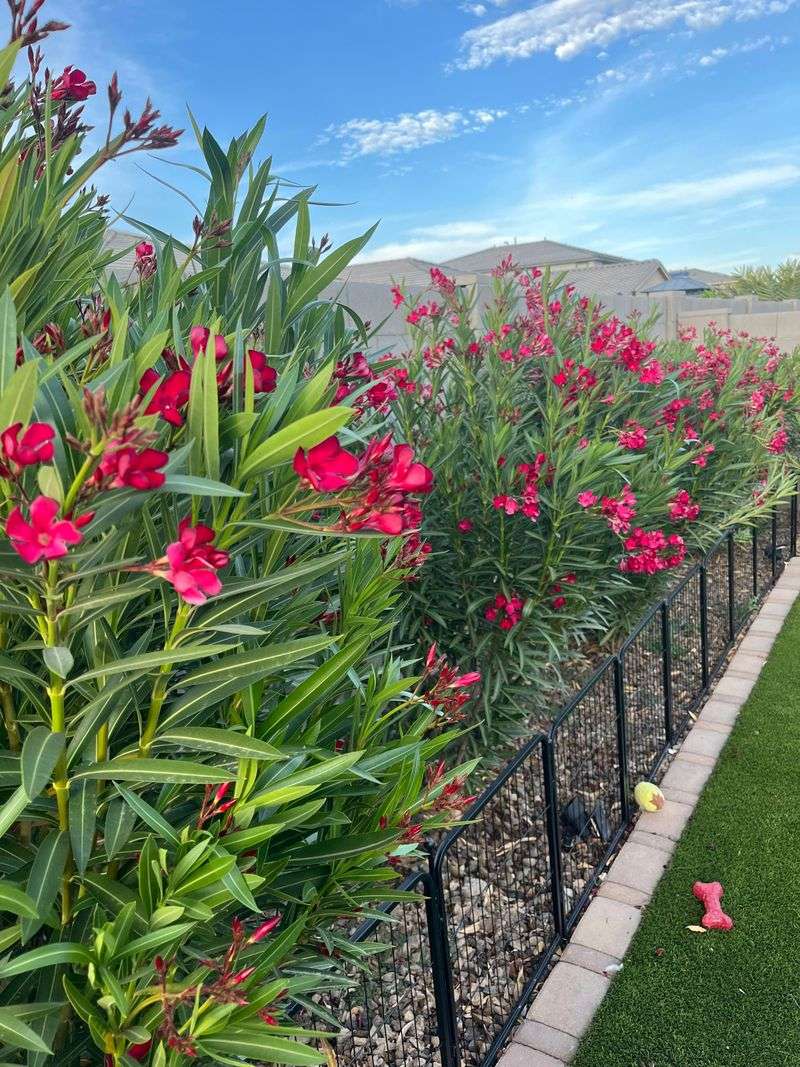
Tall, leafy, and covered in clusters of cheerful blooms: oleander is the kind of plant that fills a garden center cart without much deliberation.
The tags say heat tolerant, drought resistant, fast growing. All of that is true.
The tags, however, usually do not say anything about the cardiac glycosides present in every part of the plant, which is information that would change the calculation for anyone with a dog at home.
Nerium oleander is a Mediterranean native that has been planted across California for decades as a privacy screen, a highway buffer, and a low-water landscaping staple.
It grows quickly, looks full even in summer heat, and returns strong year after year with minimal care. From a pure landscaping standpoint, it checks every box for California conditions.
The concern is that oleander contains oleandrin and neriine throughout every part of the plant. These compounds interfere with the heart’s ability to maintain a steady rhythm.
A dog does not need to eat a large amount to experience serious effects. Even water sitting in a vase with oleander stems can carry trace compounds.
The ASPCA lists oleander as toxic to dogs, cats, and horses. It is not a fringe or rare species that requires a trip to a specialty garden center to encounter.
It is the cheerful shrub your neighbor probably has growing along the shared fence right now, and it looks completely approachable to a curious dog.
Knowing the name and what to look for is the first and most practical step. Oleander is not hiding. It is in full sun, fully labeled, and sold in every garden center in the state.
The information gap is not about availability. It is about what the label does not say.
Every Part Carries Toxic Compounds
Most plant toxicity discussions focus on berries or seeds, which can give dog owners a false sense of security about the rest of the plant.
Your California Garden Changes Every Week. Your Plan Should Too.
Gardening in California changes quickly throughout the season. Every Friday you’ll receive a simple weekly plan showing exactly what to plant, prune, fertilize, harvest, and protect so you never miss the right timing.
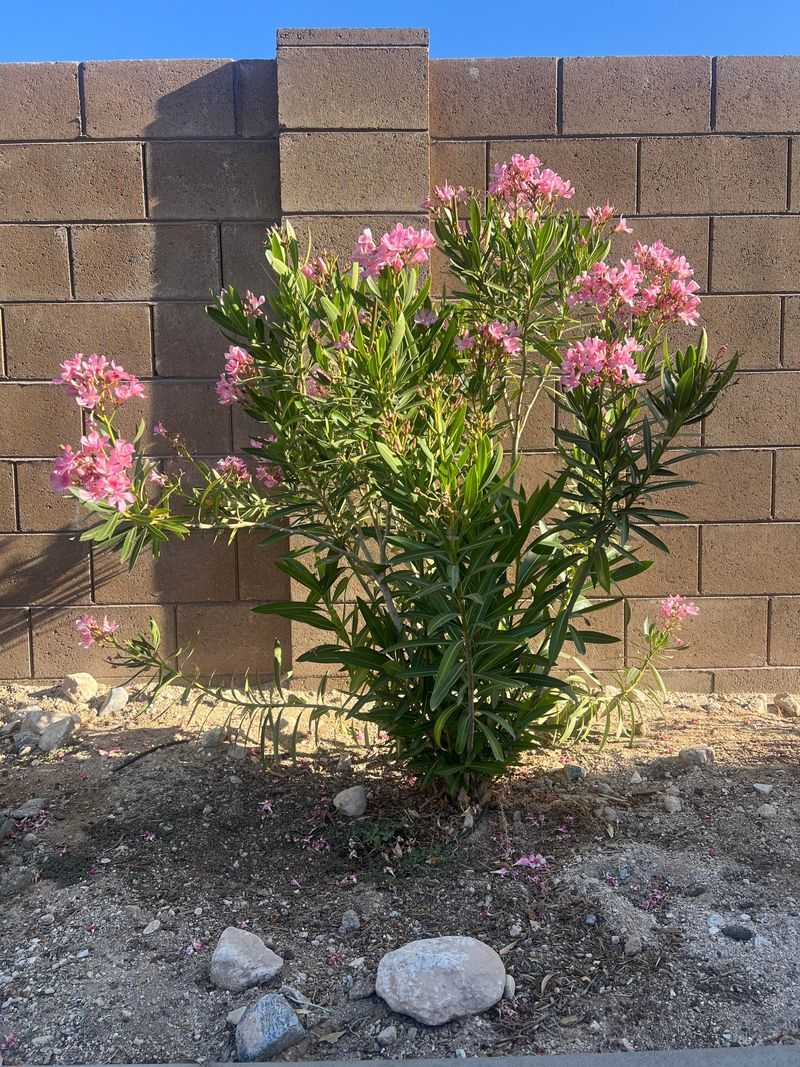
With oleander, that reasoning does not apply. From the tips of the long, leathery leaves to the base of the woody stems, every portion of this plant contains the same concerning compounds.
There is no safe part to chew, and there is no such thing as a minor encounter with it.
Oleandrin is the primary compound of concern. It belongs to a class of chemicals that interfere with the sodium-potassium pump inside heart muscle cells.
When a dog ingests oleander material, this compound can disrupt the normal electrical signals that keep the heart beating in a controlled rhythm. The digestive system typically shows symptoms first, which is important to know when assessing a potential exposure.
The flowers, which are exactly the kind of thing a curious dog stops to sniff and mouth, carry the same compounds as the leaves.
Cut or broken stems release a milky sap that also contains glycosides. Dry, fallen leaves that have been on the ground for days retain enough of the compound to be worth taking seriously if a dog picks them up.
There is no part of oleander that is considered safe for a pet to mouth, chew, or swallow. That applies to the fresh plant, the cut material, the sap, and the fallen leaves on the ground.
Understanding this changes how a dog owner thinks about yard cleanup after pruning, and about where in the yard oleander gets planted in the first place.
The whole plant is the concern. Every season, every part, every stage of growth. That is a different kind of hazard than a plant with one risky fruit or seed, and it calls for a different level of awareness.
Oleander does not offer a safe version of itself for households with dogs.
Pretty Flowers Hide A Serious Risk
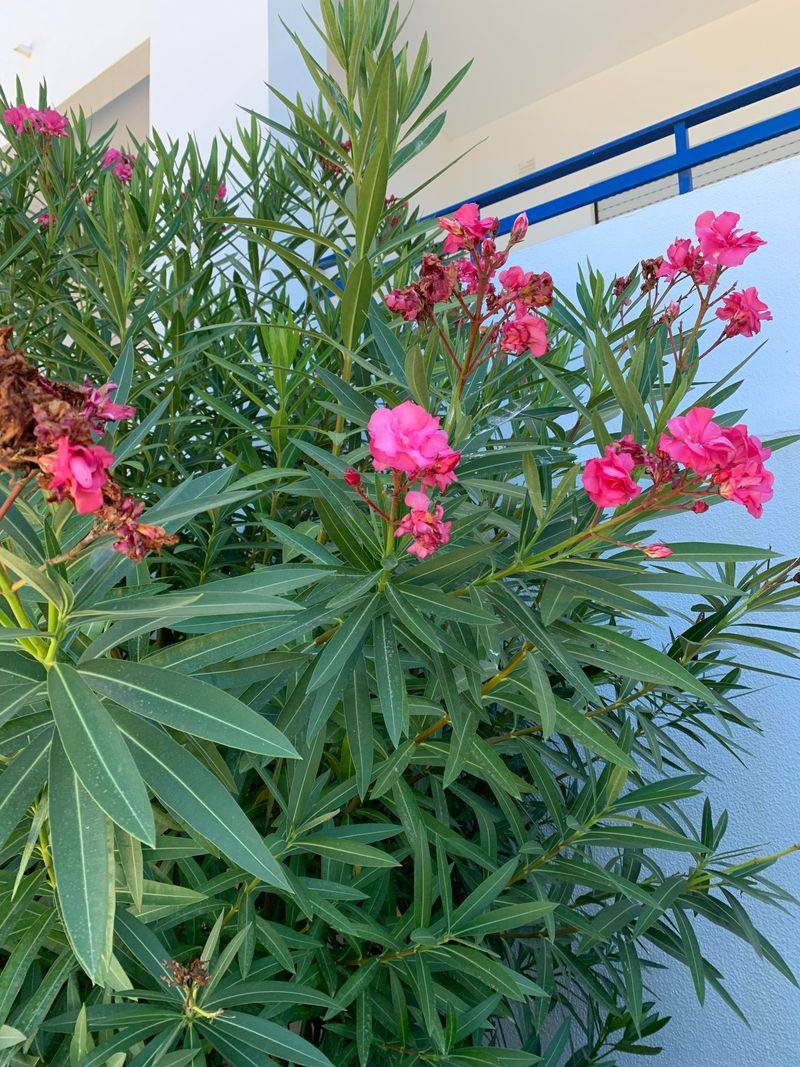
Soft pink. Creamy white. Deep red. Peachy salmon. Bright yellow.
Oleander blooms come in a range that looks like it was curated for a cottage garden magazine, and the clusters appear at the tips of branches in cheerful, abundant groups throughout the warm season.
It is a genuinely attractive plant, and that attractiveness is a significant part of why the risk gets overlooked so consistently.
When something looks beautiful and familiar, it does not trigger alarm. A plant that blooms like that, that lines respectable front yards and public parks and highway medians, reads as safe by association.
No one puts a dangerous plant in a park, the logic goes. Except oleander is in parks across California, and dogs visit those parks every day.
Dogs are drawn to interesting smells and textures. A low-hanging branch covered in soft petals is exactly the kind of thing a dog stops to investigate.
Puppies explore through their mouths as a standard part of how they learn about the world, which makes any toxic plant in a shared space a genuine hazard worth planning around rather than hoping to avoid by chance.
Oleander’s widespread use in California landscaping means it shows up in public parks, school grounds, shared community spaces, and along neighborhood walking routes, not just in private yards.
A dog on a regular walk can encounter it multiple times per week. Pretty flowers are not a reliable signal of safety, and oleander is the clearest example of that fact available in California landscaping.
The bloom is the billboard. The problem is behind the billboard. Oleander makes a very convincing case for being ordinary, and most dogs and owners believe it.
That is what makes it worth knowing about specifically rather than just generally.
Pruned Clippings Belong Away From Dogs
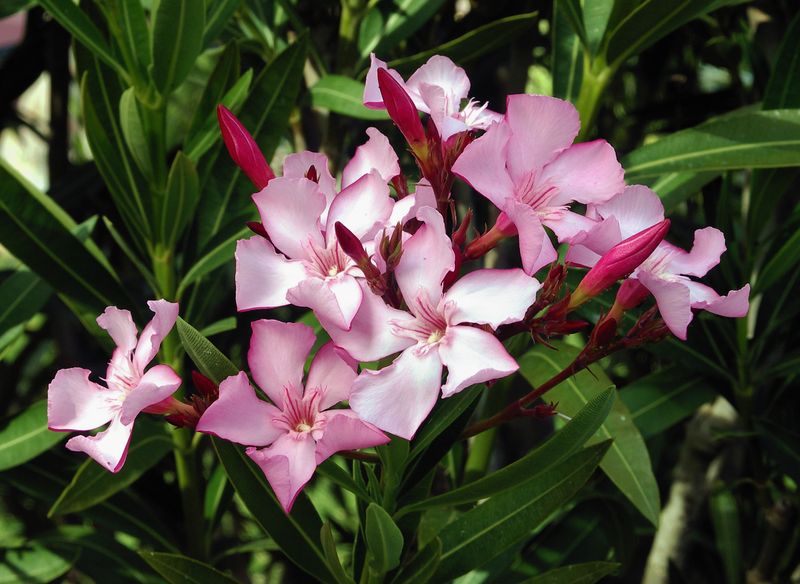
Pruning day feels productive and tidy. You work through the oleander, the clippings pile up, and then you head inside.
Meanwhile, the dog has full access to a ground-level collection of freshly cut leaves, stems, and flowers that are arguably more accessible than the living plant because they are right at nose and mouth level on the yard surface.
Freshly cut clippings carry the same compounds as the growing plant. The sap that leaks from cut stems is potent and sticky.
A dog working through a pile of yard trimmings after pruning can pick up and chew on material without anyone noticing until signs of exposure appear.
That scenario is avoidable with one habit change: bag clippings immediately and move them out of any area the dog can access before the dog goes back outside.
Use thick gloves when handling oleander. The sap can irritate skin and transfer to surfaces the dog might contact later.
Wash hands thoroughly after any pruning session, and consider keeping the dog inside or in a separate area of the yard while the work is happening and while cleanup is in progress.
California municipalities accept oleander clippings in green waste bins in most areas, so disposal is straightforward. The key habit is treating cleanup as part of the pruning session rather than something to get to later.
A clipping left on the ground overnight is hours of unsupervised access to material that should not be within reach. Making bag-and-remove an automatic final step takes thirty seconds and closes the exposure window completely.
The plant gets pruned. The clippings get bagged. The dog gets to go back outside. That sequence is the entire protocol.
The only version that creates a problem is the one where the middle step gets delayed, which is a very easy thing to prevent by keeping bags nearby before you start cutting.
Nursery Popularity Does Not Mean Pet Safety
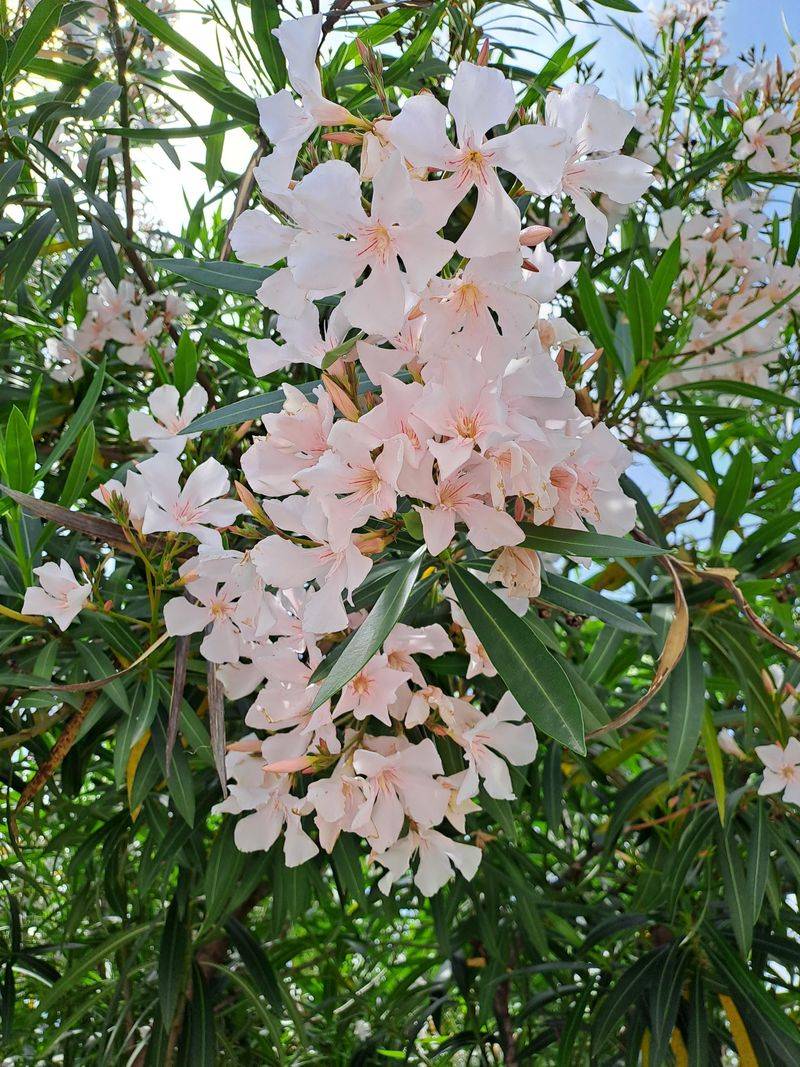
Oleander is on the shelf at Home Depot, at independent nurseries, and at big-box hardware stores across California.
That presence sends an unspoken signal that most shoppers receive without questioning: this is a normal, acceptable garden plant. The implication is that it has been vetted for ordinary household use, including households with pets.
That implication is not accurate. Nurseries are not required to flag plants as toxic to pets on their standard labels. The tag on a pot of oleander lists sunlight needs, water requirements, and mature size.
Pet toxicity rarely appears anywhere on that tag, and most shoppers never think to ask. The plant is legal to sell, useful in California’s climate, and widely stocked because it sells well. None of that is the same as being safe around dogs.
Many common landscape plants are sold freely despite being toxic to dogs. Lantana, sago palm, and foxglove are all examples.
Oleander sits at the more serious end of that list. The shelf presence of all these plants communicates normalcy, not safety, and most shoppers do not have a reason to question that distinction until something goes wrong.
The habit worth building is a thirty-second search before buying any unfamiliar plant. Look up the botanical name along with “dog safe” or “ASPCA toxic.”
The ASPCA maintains a free, searchable toxic plant database that is regularly updated and easy to use from a phone at the nursery.
One search at the point of purchase costs nothing and can change the decision in a useful direction before the plant comes home.
The nursery is not responsible for the dog’s safety at home. That is the owner’s responsibility, and it starts before the plant goes in the cart.
Thirty seconds of searching at the store is significantly easier than the conversation with a veterinarian that follows from skipping it.
Dog Runs Need Safer Screening Plants
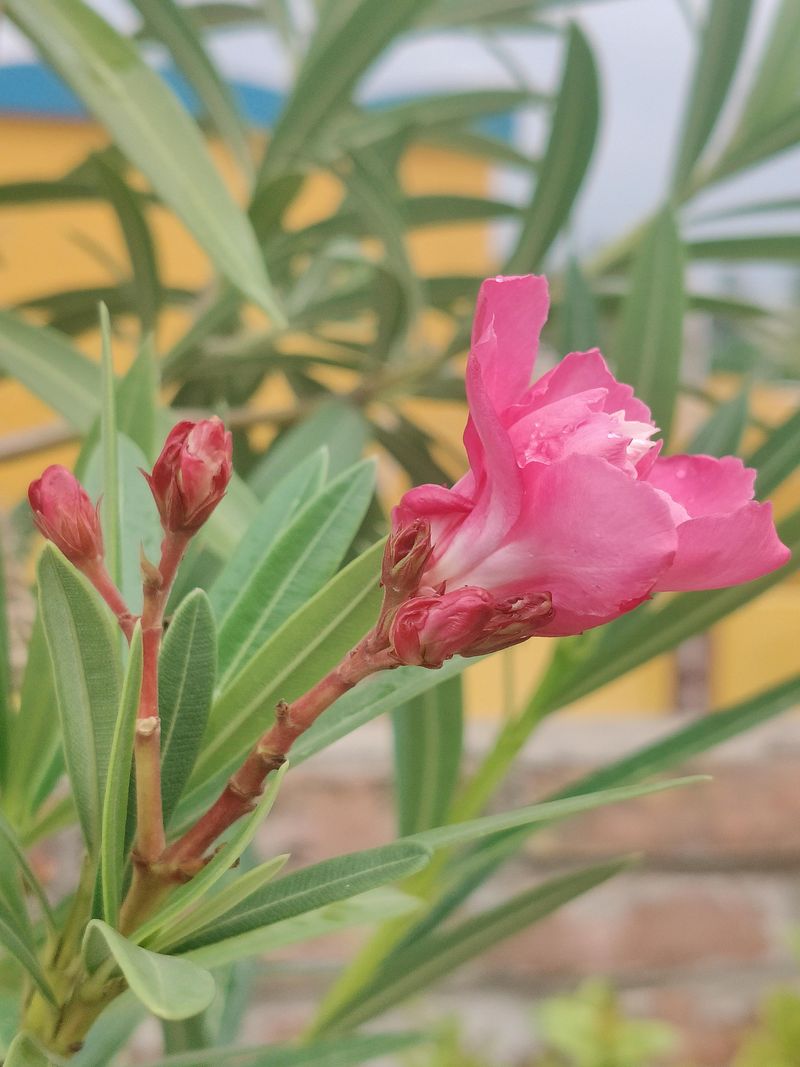
Oleander is one of the most popular choices for backyard privacy screening in California, which puts it in direct conflict with dog owners who want a safe, enclosed play area for their pets.
A tall oleander hedge along the perimeter of a dog run might look like a perfect green privacy wall, but it places a toxic plant at the boundary of the space where the dog spends the most unsupervised time in the yard.
Dogs lean against fences, poke their noses through gaps, and pull leaves through chain link when bored or curious.
A dog run bordered by oleander is a setup where plant contact becomes routine rather than accidental. The solution is not to sacrifice privacy screening. It is to choose plants that deliver the same visual result without the concern.
Clumping bamboo varieties create dense, tall privacy barriers without the invasive spreading of running bamboo types.
Podocarpus, sometimes called yew pine, is a popular California hedge plant that the ASPCA lists as non-toxic to dogs. Lemon bottlebrush is heat tolerant, attracts hummingbirds, and poses no known toxicity concern for pets.
All three do the same screening job oleander does, in the same California climate conditions.
Redesigning a dog run border takes some upfront effort and potentially a replanting season. What it removes is a recurring hazard in the space the dog uses most.
The trade is genuinely favorable. A dog run without toxic plants along its perimeter is a space where supervision can actually relax, which is the whole point of having a dedicated enclosed area for the dog in the first place.
The oleander is very good at its screening job. The alternatives are also good at that job, with none of the complications.
Swapping one for the other is a one-time project that makes every subsequent day in the dog run a simpler situation. That math is not complicated, and the dog will not miss the oleander at all. The dog was never a fan.