What Oregon Gardeners Should Plant Beside A Gravel Path To Soften The Edges
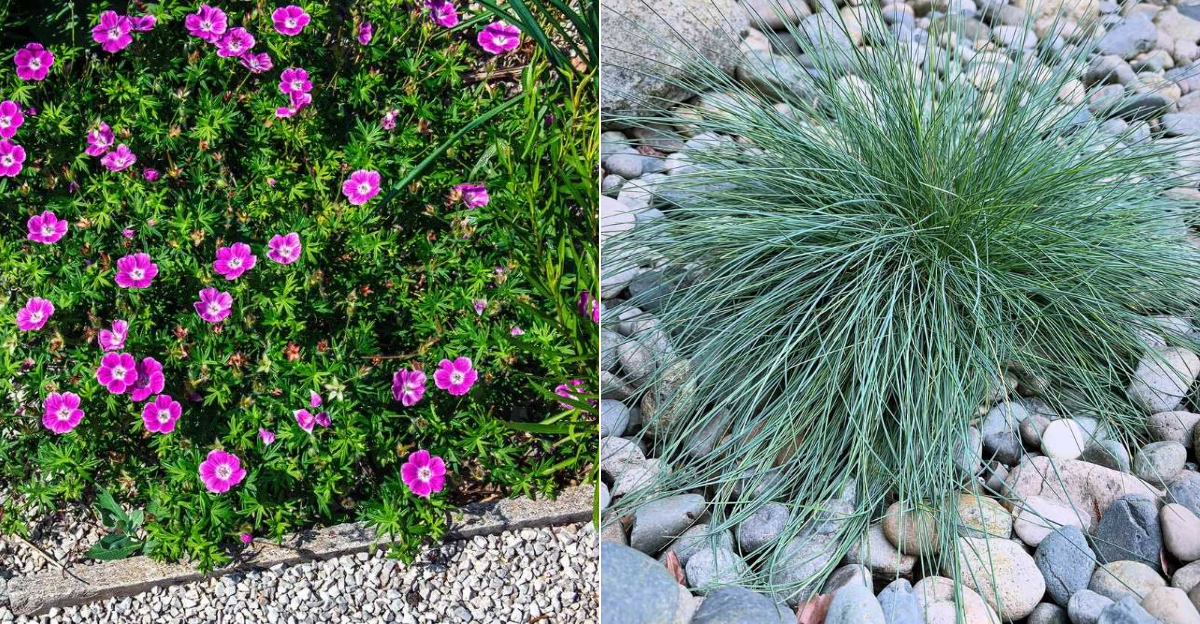
A gravel path can look charming, but the edges often need a little help. Without plants, it may feel too sharp, too bare, or too separate from the rest of the garden.
The right border plants can make the path look settled instead of freshly dropped into place.
In Oregon yards, that means choosing plants that can handle wet seasons, dry summer stretches, and the occasional bit of gravel kicked their way.
Low growers, soft mounds, and airy perennials can blur the line between path and planting bed without making the walkway hard to use. The goal is not to hide the gravel.
It is to frame it in a way that feels natural, relaxed, and easy to maintain. Choose well, and a simple path can become one of the prettiest parts of the garden.
1. Creeping Thyme Softens Sunny Gravel Edges
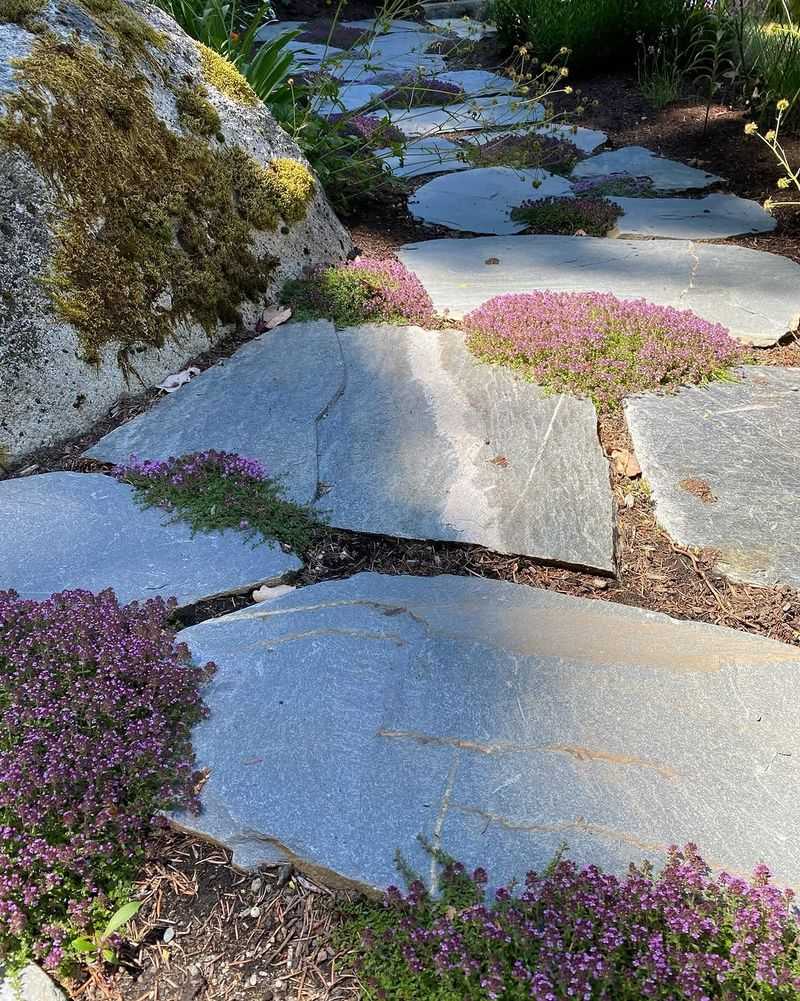
Few plants handle the tough conditions along a gravel path quite like creeping thyme. It loves heat, handles dry spells like a champ, and spreads into a low, lush mat that looks intentional rather than wild.
The tiny flowers bloom in shades of pink and purple, and they attract bees all summer long.
Creeping thyme grows only one to three inches tall, so it never blocks the path or gets in the way. It tucks itself right along the edge and slowly fills in gaps between gravel pieces.
Over time, it creates a seamless look that makes the whole path feel more natural and relaxed.
In our state, this plant thrives especially well in sunny, well-drained spots. The Willamette Valley and southern regions both offer the kind of warm summers this plant enjoys.
Even in wetter areas, it handles rain fine as long as the soil does not stay soggy.
Planting is simple. You can start with small nursery plants or divide an existing clump from a friend’s garden.
Space them about twelve inches apart, and they will fill in within one season. Once established, they need very little water or attention.
Walking on creeping thyme actually releases a pleasant herby scent, which makes it even more enjoyable along a path.
It is a tough, cheerful, and low-maintenance choice that rewards gardeners with color and fragrance all season long.
2. Lavender Adds Fragrance Without Flopping
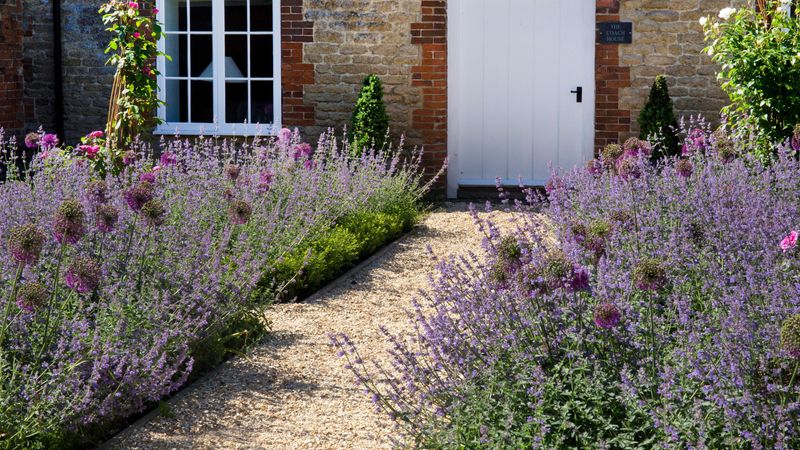
There is something almost magical about walking past lavender on a warm afternoon.
The scent drifts toward you before you even get close, and the silvery-green stems and purple flower spikes make the path feel like something out of a French countryside garden.
Best of all, lavender is built for exactly the kind of conditions a gravel path creates.
Gravel paths tend to reflect heat and drain quickly, and lavender absolutely loves both of those things.
Unlike some plants that wilt or flop in hot, dry spots, lavender stands upright and keeps its shape all season. It does not sprawl messily or take over the path.
In our state, English lavender varieties like Hidcote and Munstead perform especially well. They handle the wet winters better than other types and bounce back reliably each spring.
Your Oregon Garden Changes Every Week. Your Plan Should Too.
Gardening in Oregon changes quickly throughout the season. Every Friday you’ll receive a simple weekly plan showing exactly what to plant, prune, fertilize, harvest, and protect so you never miss the right timing.
Planting them on a slight slope or raised bed near the path improves drainage even more.
Pruning lavender once a year keeps it compact and tidy. Do this right after blooming, cutting back about one-third of the plant.
This prevents the woody, open center that older lavender can develop if left alone too long.
Lavender also works as a natural pest deterrent. Deer tend to avoid it, and aphids steer clear as well.
For gardeners who want beauty, fragrance, and toughness all in one plant, lavender along a gravel path is a genuinely smart choice.
3. Sedum Handles Hot Gravel Borders
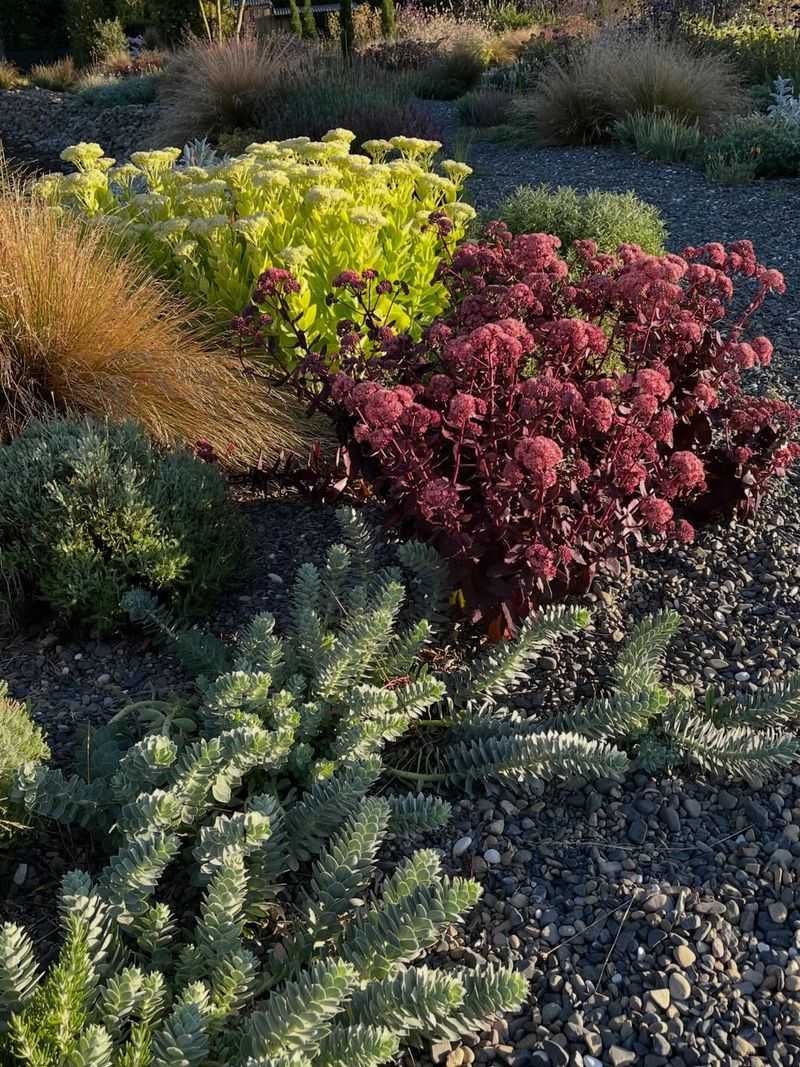
Hot, dry, and rocky conditions are where sedum truly shines. Most plants struggle when gravel reflects heat back up at them, but sedum is built for exactly that environment.
Its thick, fleshy leaves store water, which means it can handle long dry spells without any fuss.
Low-growing sedum varieties like Sedum acre or Dragon’s Blood spread slowly outward, hugging the ground and softening the hard line where gravel meets soil.
The foliage comes in shades of green, red, bronze, and even silvery blue, so there is plenty of variety to choose from depending on your garden style.
Across our state, sedum performs reliably in both coastal and inland gardens. It is not picky about soil quality, which makes it ideal for the rocky or sandy edges that often sit beside gravel paths.
Even compacted soil does not stop it from establishing well.
One of the best things about sedum is how little maintenance it needs. You do not need to water it once it settles in.
You rarely need to fertilize it either, since rich soil actually causes it to grow floppy and loose rather than compact and tidy.
In late summer and fall, many sedum varieties produce clusters of small star-shaped flowers in pink, yellow, or white. These blooms attract butterflies and late-season pollinators.
For a no-fuss, heat-loving border plant, sedum is one of the most dependable options available to gardeners in this region.
4. Lamb’s Ear Brings Soft Silver Texture
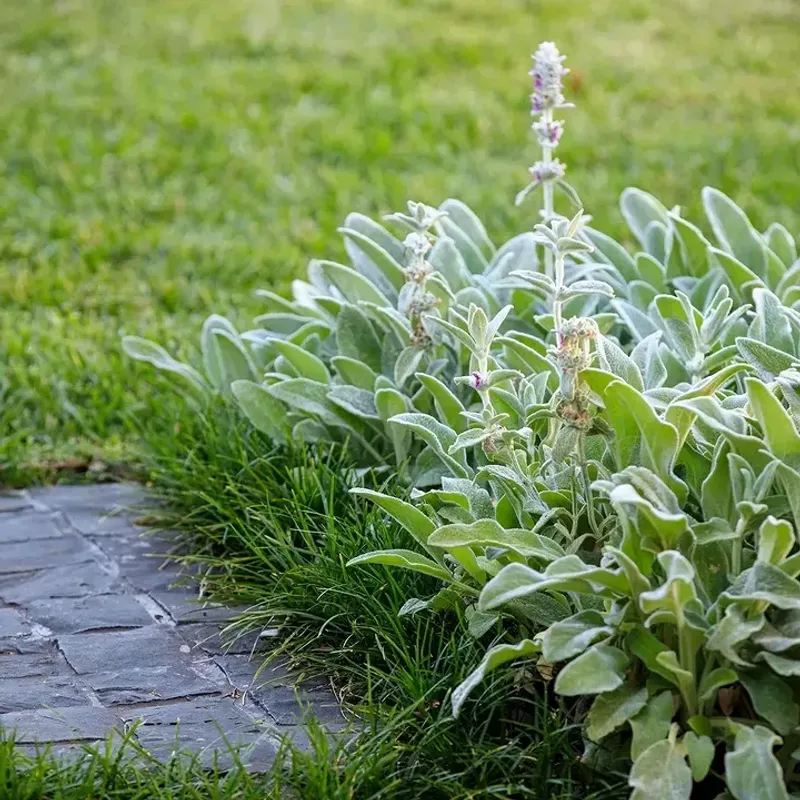
Run your hand across a lamb’s ear leaf and you will instantly understand why this plant has such a charming name. The leaves are thick, soft, and covered in fine silver hairs that feel almost like velvet.
That texture is exactly what makes it so striking when planted beside the hard, rough surface of a gravel path.
The contrast between silvery lamb’s ear and dark or tan gravel is visually stunning. The soft mounds of foliage break up the rigid edge of the path and make the whole space feel more relaxed and cottage-like.
It is one of those plants that looks expensive but is actually very affordable and easy to grow.
Our state’s mild climate suits lamb’s ear well, especially in areas with good drainage. It does not like sitting in wet soil for long periods, so raised beds or slopes near the path work best.
In wetter coastal regions, choosing a well-drained spot is especially important.
Lamb’s ear spreads by sending out runners, so it will slowly fill in along the path edge over a season or two.
If it spreads more than you want, simply pull out the extra clumps and replant them elsewhere or share them with neighbors.
The plant also sends up tall spikes of small purple flowers in summer, which pollinators love.
Even gardeners who do not usually like silver-toned plants tend to fall for lamb’s ear once they see it in action along a gravel border.
5. Dianthus Keeps Path Edges Neat And Colorful
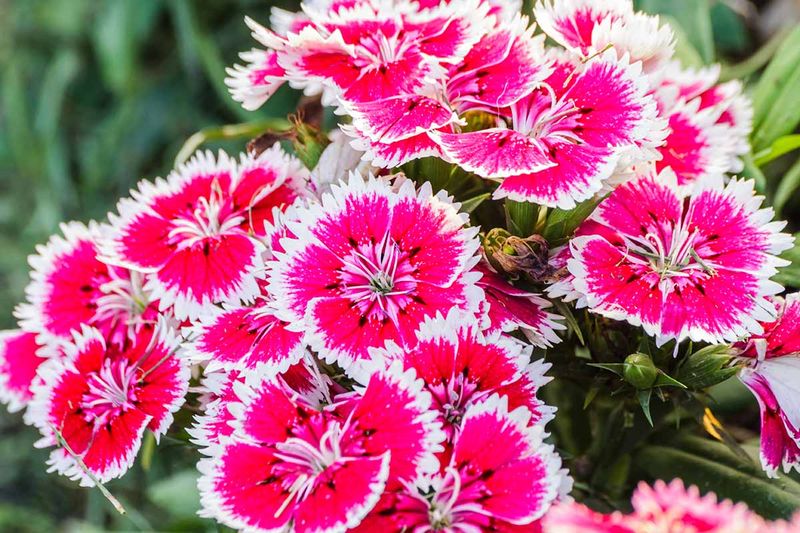
Bright, cheerful, and surprisingly tidy, dianthus is one of those plants that earns its spot in the garden every single season.
The flowers come in shades of pink, red, white, and bicolor, often with fringed or ruffled edges that look almost hand-crafted.
Up close, many varieties carry a light spicy-sweet scent that is hard to resist.
What makes dianthus especially useful along a gravel path is its naturally compact growth habit. It does not sprawl wildly or flop over.
Instead, it forms neat little mounds of blue-green foliage that stay low and tidy even when the plant is not in bloom.
Gardeners across our state have good luck with dianthus in most zones. It prefers full sun and well-drained soil, which makes gravel path edges a natural fit.
The quick drainage that gravel provides actually helps this plant avoid the root problems that soggy soil can cause.
Deadheading spent blooms encourages the plant to keep producing flowers through summer and into fall.
It takes only a few minutes of light trimming every week or two to keep the display looking fresh and full. Even beginners find this task easy and satisfying.
Perennial varieties of dianthus come back year after year, making them a great long-term investment for your garden.
They also hold up well during our mild winters, often keeping their foliage green even when temperatures drop.
For color and neatness combined, few plants beat dianthus along a gravel border.
6. Catmint Spills Gently Without Looking Messy
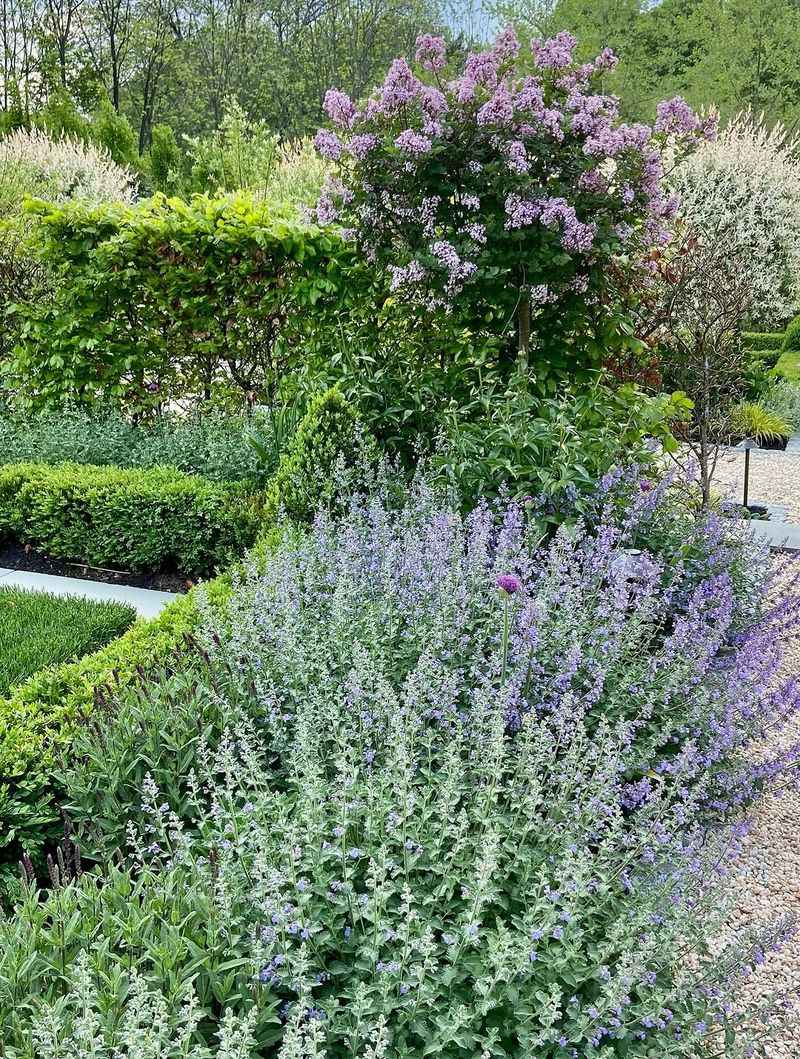
Catmint has a relaxed, flowing look that somehow never tips over into chaos. The stems arch softly outward, the lavender-blue flowers bloom in long clusters, and the whole plant gives off a pleasant herby scent when you brush against it.
It is one of the most forgiving and rewarding plants you can put beside a gravel path. Unlike some spreading plants that can become aggressive, catmint stays relatively contained.
It spills over the edge of the path in a graceful way rather than marching across it.
Cutting it back by half after the first flush of blooms encourages a second wave of flowers in late summer.
Our state’s climate is a good match for catmint, especially in the sunnier inland valleys. It tolerates dry summers better than many flowering perennials and bounces back quickly after a trim.
Even in years with late spring rains, it establishes well and starts blooming by early summer.
Walker’s Low is one of the most popular catmint varieties for path edges. It grows about eighteen inches tall and wide, making it substantial enough to make a visual impact without overwhelming the path.
The soft color pairs beautifully with stone, gravel, and nearly every other garden plant.
Cats are famously attracted to this plant, which can be a fun quirk or a mild nuisance depending on your neighborhood.
Deer, however, tend to leave it alone, which is a genuine bonus for gardeners in rural areas of our state where deer pressure is high.
7. Blue Fescue Adds Tidy Grass-Like Texture
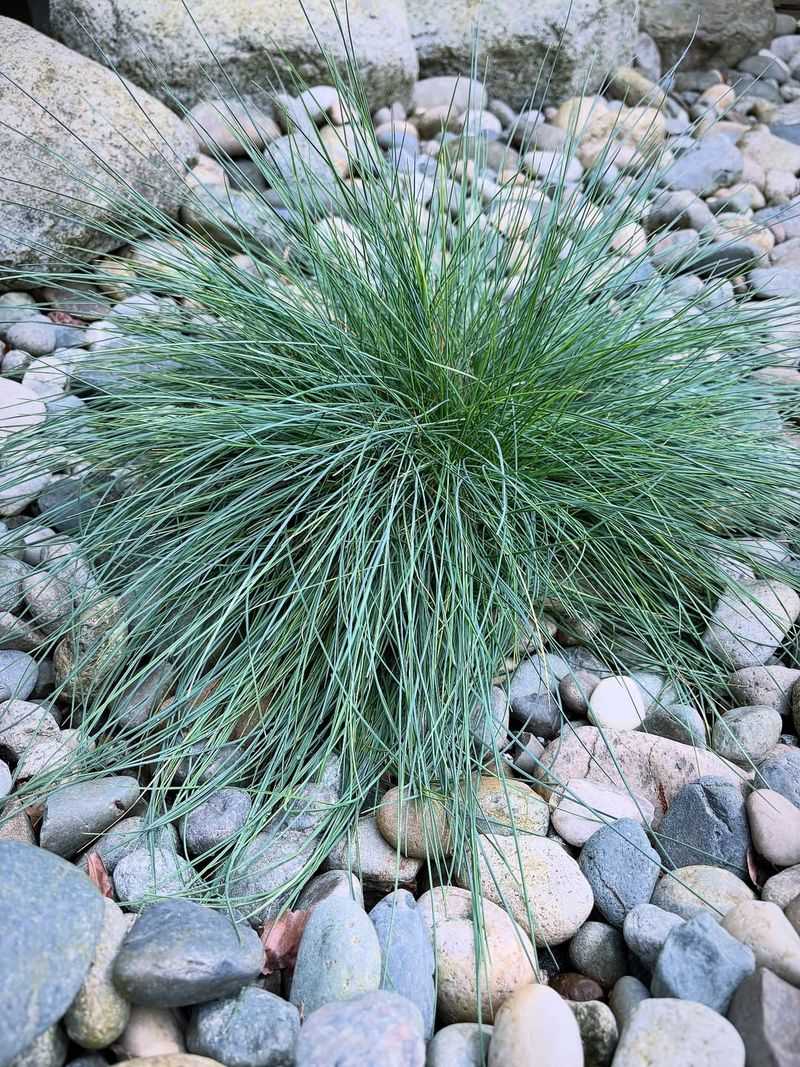
Not every gravel path needs flowers to look great. Sometimes the right texture is all you need, and blue fescue delivers that in the most satisfying way.
The steel-blue, spiky clumps look almost architectural, like little bursts of color that catch the light at different times of day.
Blue fescue stays compact and round, rarely growing taller than about twelve inches. That tidy, ball-shaped habit makes it ideal for path edges where you want structure without bulk.
Each clump holds its shape well throughout the year, even during winter months when other plants go dormant.
In our state, blue fescue grows best in full sun with good drainage. Gravel path edges naturally provide both of those conditions, which is part of why this grass looks so at home in that setting.
It handles dry summers without complaint and rarely needs supplemental watering once established.
Dividing blue fescue every two to three years keeps it looking its best. Older clumps can develop a dead center if left too long, so splitting them up refreshes the plant and gives you extra clumps to fill in more of the path edge for free.
The color is the real showstopper here. That cool blue-gray tone contrasts beautifully with warm tan or brown gravel, and it plays well with other plants like lavender, sedum, and dianthus.
For a modern, low-maintenance look along any gravel path, blue fescue is a standout option that rarely disappoints.
8. Hardy Geranium Fills Gaps Along Path Edges
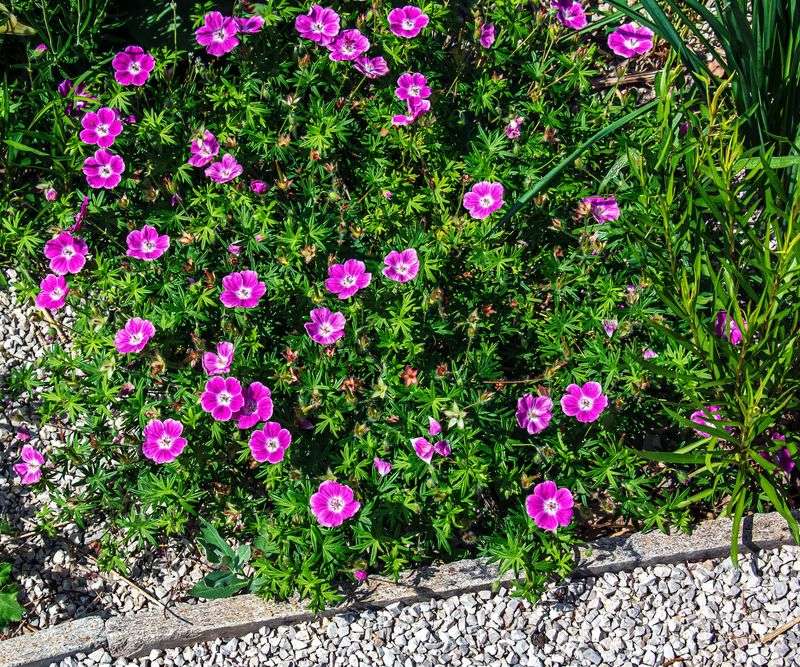
Hardy geraniums are not the same as the bright red geraniums you see in window boxes. These are tough, spreading perennials that come back every year and fill in gaps along path edges with impressive speed.
The flowers are delicate-looking, usually in shades of purple, pink, blue, or white, but the plants themselves are surprisingly rugged.
One of the most useful things about hardy geraniums is that they tolerate partial shade. Many path-edge plants need full sun to perform well, but these geraniums are happy in spots that get only a few hours of direct light each day.
That makes them especially valuable in gardens with overhanging trees or structures that block afternoon sun.
Our state’s rainy spring season suits hardy geraniums perfectly. They establish quickly in moist soil and start spreading within their first growing season.
By the second year, they form a dense, weed-suppressing mat that looks lush and full without any extra effort.
Rozanne is one of the most beloved varieties for this purpose. It blooms from late spring through fall without much deadheading and spreads to about two feet wide.
The violet-blue flowers with white centers are striking against gravel in any color range.
Cutting the whole plant back to the ground in midsummer after the first bloom often triggers a fresh flush of new growth and flowers. It feels drastic, but the plant responds with surprising enthusiasm.
For filling path edges quickly and beautifully, hardy geraniums are a top pick for gardeners across our state.