Why Certain Arizona Plants Stay Green While Others Fade In Summer
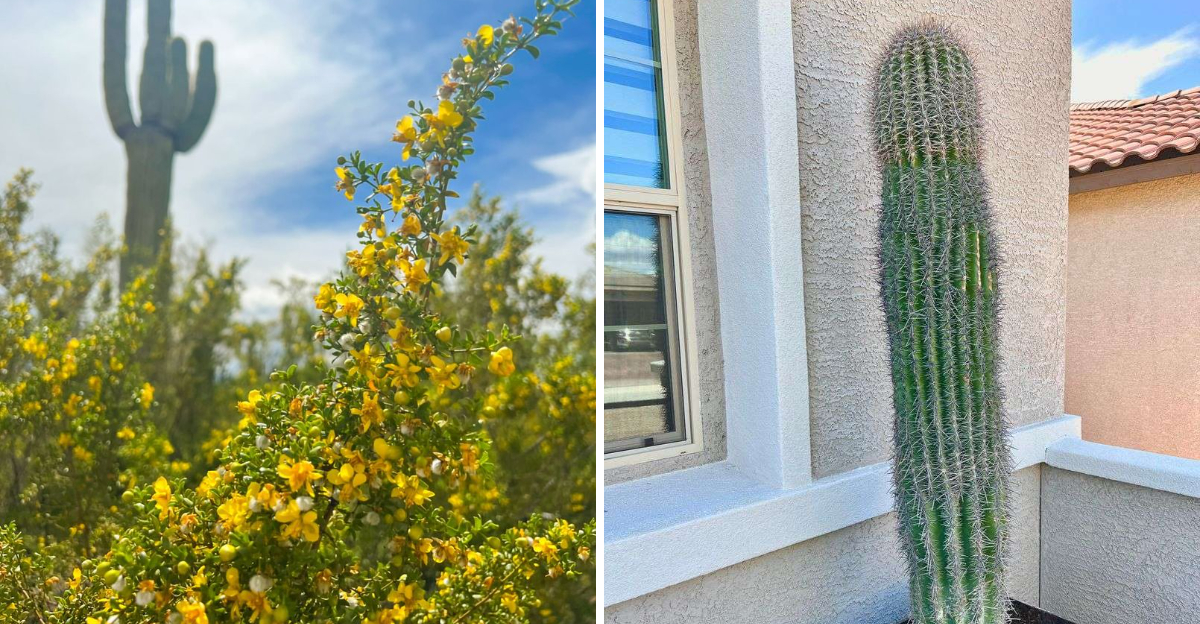
One plant looks crisp, green, and completely unbothered by the heat. Three feet away, another plant is pale, wilted, and barely holding on. Same sun. Same soil. Same neighborhood.
So what is actually going on?
The answer is not luck, and it is not better watering habits. Certain plants have spent thousands of years solving the exact problem that Arizona summers create, and the solutions they landed on are genuinely fascinating.
Some of them store water in places you would never think to look. Some of them cheat the heat in ways that sound like they should not work. And some of them do something so counterintuitive that most gardeners panic when they see it happening.
Understanding these strategies does not just satisfy curiosity. It changes almost every plant decision you make going forward. Here is what is actually happening out there.
1. Deep Roots Reach Stored Moisture
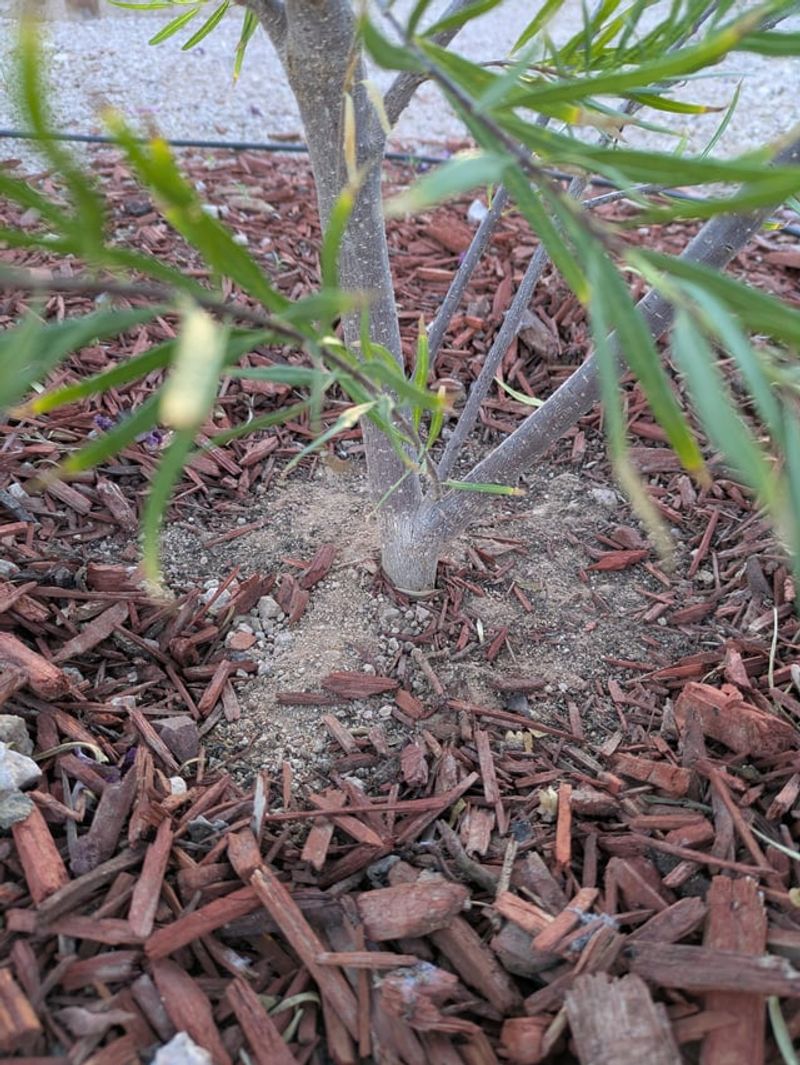
A mesquite tree standing tall and green on a blazing August afternoon is not getting any special treatment. It is simply drinking from a water source most plants cannot reach.
Deep-rooted plants send their roots far below the surface, sometimes 30 to 50 feet down, where moisture from past rains still lingers in the soil long after the surface has turned to dust.
Velvet mesquite, desert willow, and blue palo verde all develop extensive root systems that tap into subterranean moisture reserves.
These plants invest heavily in root growth during cooler months specifically so they are prepared when summer heat arrives. The surface of the soil can be completely dry while the root tips are still finding water far below.
Shallow-rooted plants depend entirely on that surface moisture, which evaporates quickly in Arizona heat. Once the top few inches dry out, those plants have nothing left to pull from.
Deep-rooted species keep drawing moisture long after the surface has given up entirely. The two plants sitting three feet apart in your yard might be operating in completely different water environments.
For a plant that stays green through July and August without constant watering, choose species known for deep root development and give them room to establish before summer hits.
Water deeply and infrequently during the first two years. The goal is to encourage roots to grow downward rather than spreading sideways near the surface where they stay vulnerable.
The investment in those early seasons pays off for decades.
2. Small Leaves Lose Less Water
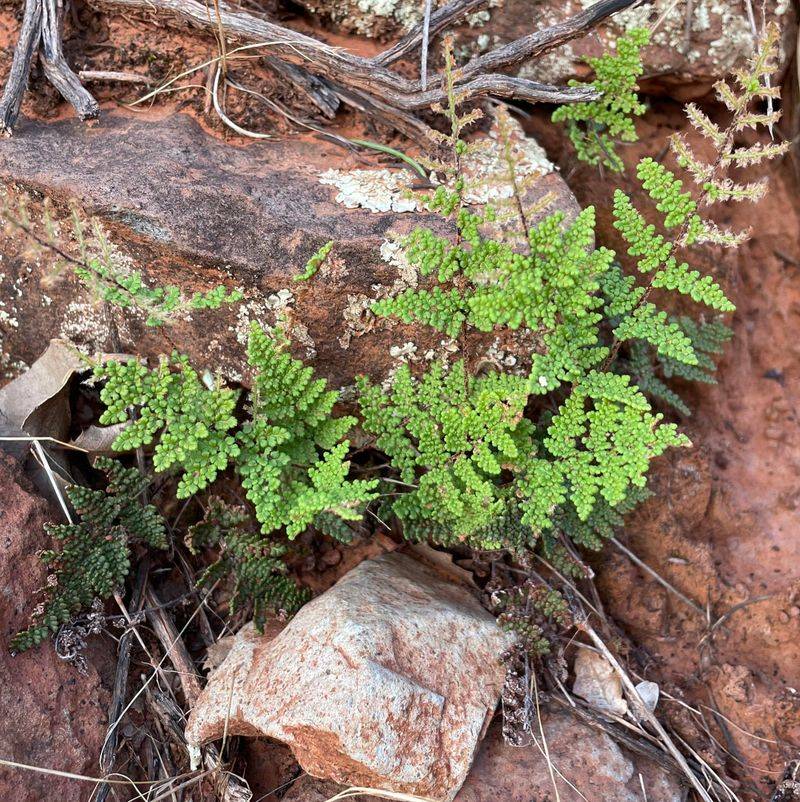
Leaf size matters enormously when temperatures climb past 100 degrees. A plant with large, flat leaves is essentially holding up a giant solar panel that collects heat and pushes water vapor out through thousands of tiny pores called stomata.
On a July afternoon in Tucson, that is a losing strategy.
Reduced leaf surface area means less exposure to direct sun and far less water lost through transpiration, the process where plants release moisture through their leaves as a cooling mechanism.
Plants like desert fern, ironwood, and palo verde have feathery compound leaves made up of dozens of tiny leaflets. Each individual leaflet is small enough to limit water loss dramatically.
Your Arizona Garden Changes Every Week. Your Plan Should Too.
Gardening in Arizona changes quickly throughout the season. Every Friday you’ll receive a simple weekly plan showing exactly what to plant, prune, fertilize, harvest, and protect so you never miss the right timing.
The whole leaf structure is engineered to survive, not just to photosynthesize.
Ocotillo takes this strategy even further. It drops its leaves entirely during dry spells and regrows them quickly after rain.
That flexibility lets the plant conserve moisture during the most stressful periods without permanently losing the ability to photosynthesize once conditions improve.
It looks dramatic from the outside. From the plant’s perspective, it is perfectly rational.
Choosing large-leafed tropical or subtropical species for full Arizona sun is one of the most common planting mistakes in the region.
Those plants may look lush in spring and then struggle badly once summer arrives.
Choosing native or desert-adapted plants with small, narrow, or compound leaves gives a garden a much better chance of staying green from June through September without requiring daily irrigation.
3. Waxy Coatings Slow Evaporation
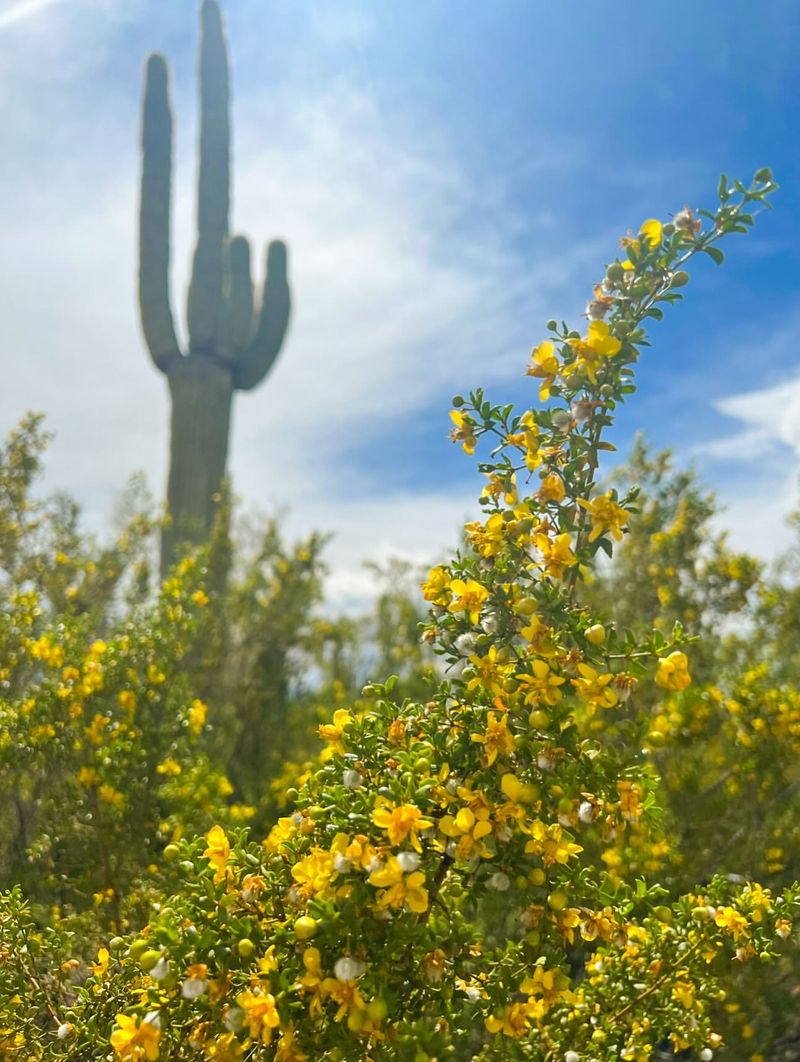
Run a finger along the leaf of a creosote bush and it feels slightly slick and resinous. That waxy, almost varnished surface is not a texture quirk.
It is one of the desert’s most effective water-saving tools, and the plants that developed it are still standing while others nearby have given up.
Many Arizona plants produce a natural coating on their leaves that acts like a seal, slowing the rate at which moisture escapes into hot, dry air.
This coating, called a cuticle, is thicker and more developed in desert plants than in plants from wetter climates.
Jojoba, creosote, and leather-leaf acacia all produce notably thick cuticles that reduce transpiration significantly, allowing the plant to hold onto water far longer than an uncoated leaf would during peak summer heat.
The waxy layer also reflects a portion of incoming sunlight, which helps keep leaf temperatures from spiking too high.
When leaves get too hot, stomata close completely to prevent water loss. That also stops photosynthesis. A plant that keeps its leaf temperature lower stays more productive throughout summer without shutting down entirely.
The coating handles two problems at once.
Plants with visibly waxy or glossy leaves are often excellent candidates for hot, dry exposures in a yard. They tend to need less frequent watering once established and generally bounce back faster after a heat wave.
That characteristic shine or slightly sticky feel is actually useful information when you are standing in a nursery deciding what goes in the toughest spot in your landscape.
4. Silver Foliage Reflects Harsh Sun
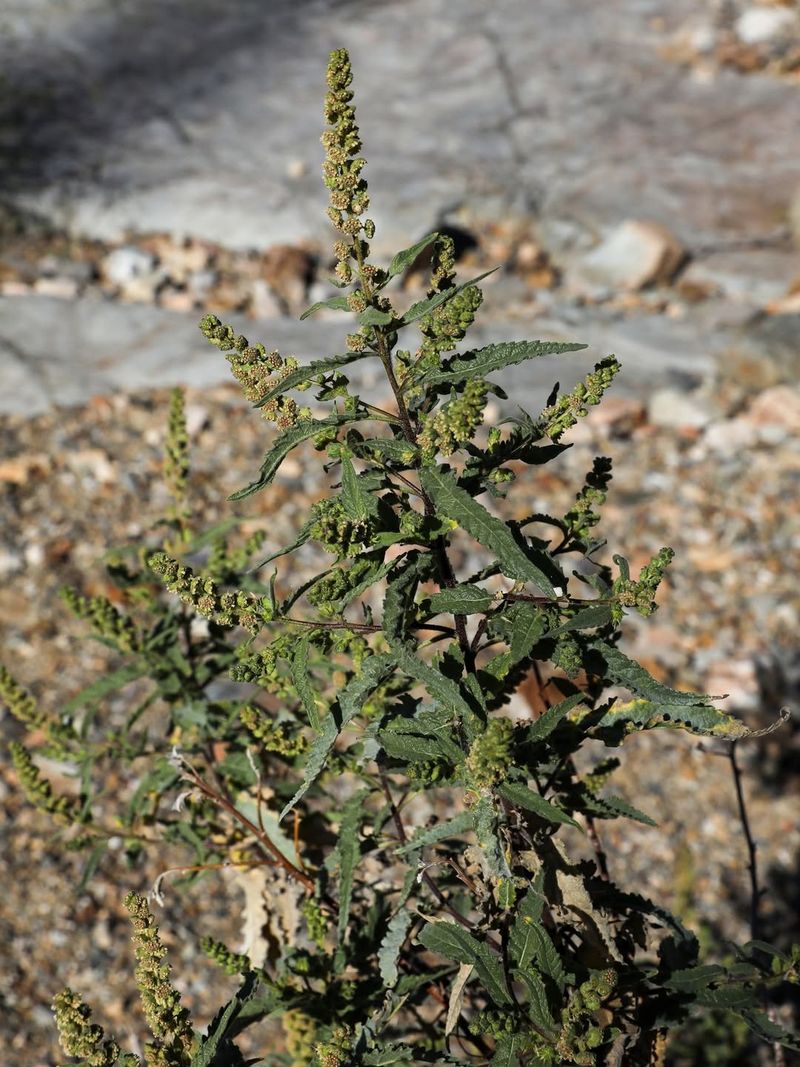
Brittlebush turning almost white-silver during the hottest part of the year is not a sign of stress. It is one of the smartest heat-management strategies in the desert plant playbook, and it happens on purpose.
Silver, gray, and pale green foliage reflects a significant amount of solar radiation before it ever gets absorbed by the leaf tissue.
Plants like brittlebush, desert sage, and white rhatany develop dense coatings of tiny hairs called trichomes on their leaf surfaces.
These hairs scatter incoming sunlight and create that distinctive silvery appearance. By reflecting heat away, the plant keeps its internal temperature lower, which reduces the need to release water vapor as a cooling mechanism.
Lighter-colored foliage can be several degrees cooler than darker foliage under the same sun exposure. Over a long Arizona summer, those degrees add up to a meaningful difference in how much water a plant actually needs to survive.
The color is not decorative. It is functional, and it was arrived at through thousands of years of pressure from exactly the conditions your yard generates every July.
For a south-facing wall or a spot that gets full reflected heat from pavement, silver-leafed species belong at the top of the list. They are built for exactly that kind of punishment.
Brittlebush in particular is widely recommended as a low-water, high-performance plant for the most exposed desert garden locations. Sometimes the plant that looks the most dramatic is also the most practical choice.
5. Succulent Stems Store Water
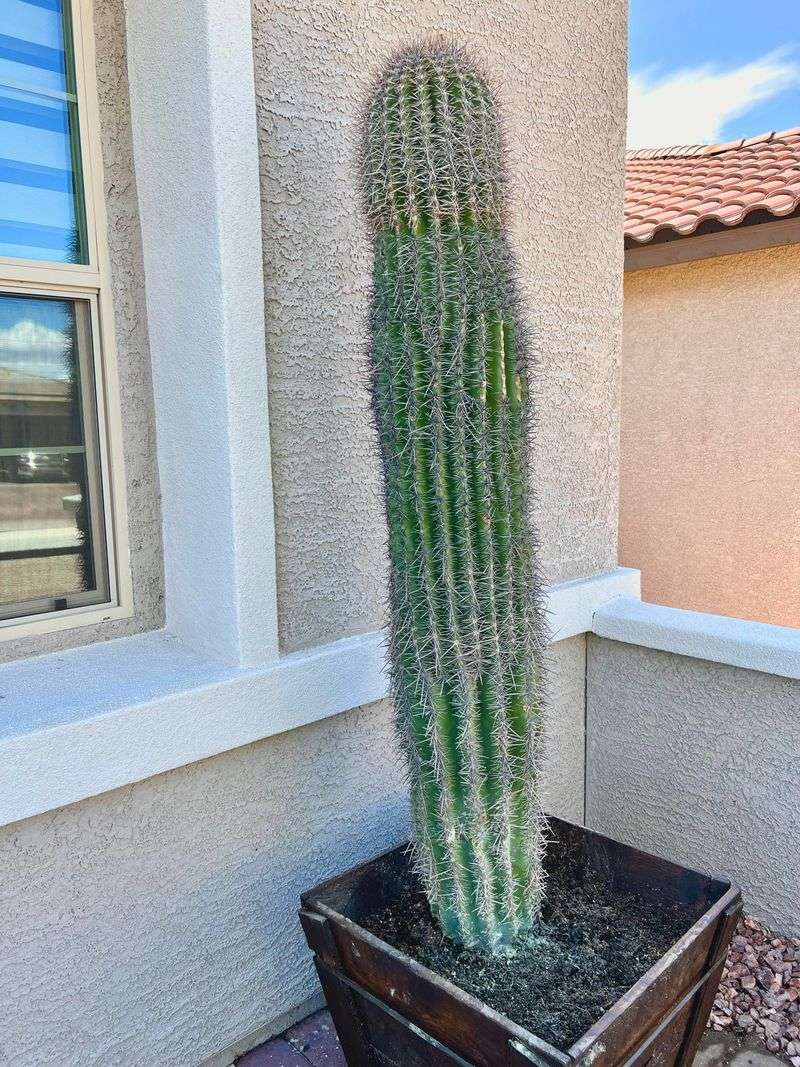
Press a hand against the arm of a saguaro cactus and you are pressing against a living water tank.
Succulent plants have evolved to do something most plants cannot: store significant amounts of water directly inside their stems, trunks, or leaves.
When rain falls in the desert, these plants soak up as much as they can and hold it in specialized tissue for months at a time.
The saguaro is the most famous example, but barrel cactus, cholla, prickly pear, and agave all use variations of this strategy.
Agave stores water in its thick, fleshy leaves rather than its stem. Prickly pear pads are essentially flattened water-storage organs covered in a tough, waxy skin that prevents evaporation.
These plants look completely green and healthy in mid-August without a single drop of rain for weeks. They prepared for this months ago.
Succulent tissue also manages what it stores with unusual efficiency. Many succulents use a special photosynthesis process called Crassulacean Acid Metabolism that allows them to open their stomata at night instead of during the day.
They take in carbon dioxide when temperatures are cooler and humidity is slightly higher, losing far less water in the process. It is a night-shift operation that lets them thrive while other plants are struggling in the daytime heat.
Adding succulents to an Arizona landscape is one of the easiest ways to guarantee green color through the summer months.
They require minimal irrigation once established, look striking year-round, and are nearly impossible to stress with heat and sun as long as drainage is solid.
For a low-maintenance, high-reward addition to a hot yard, succulents are the obvious answer.
6. Summer Dormancy Saves Plant Energy
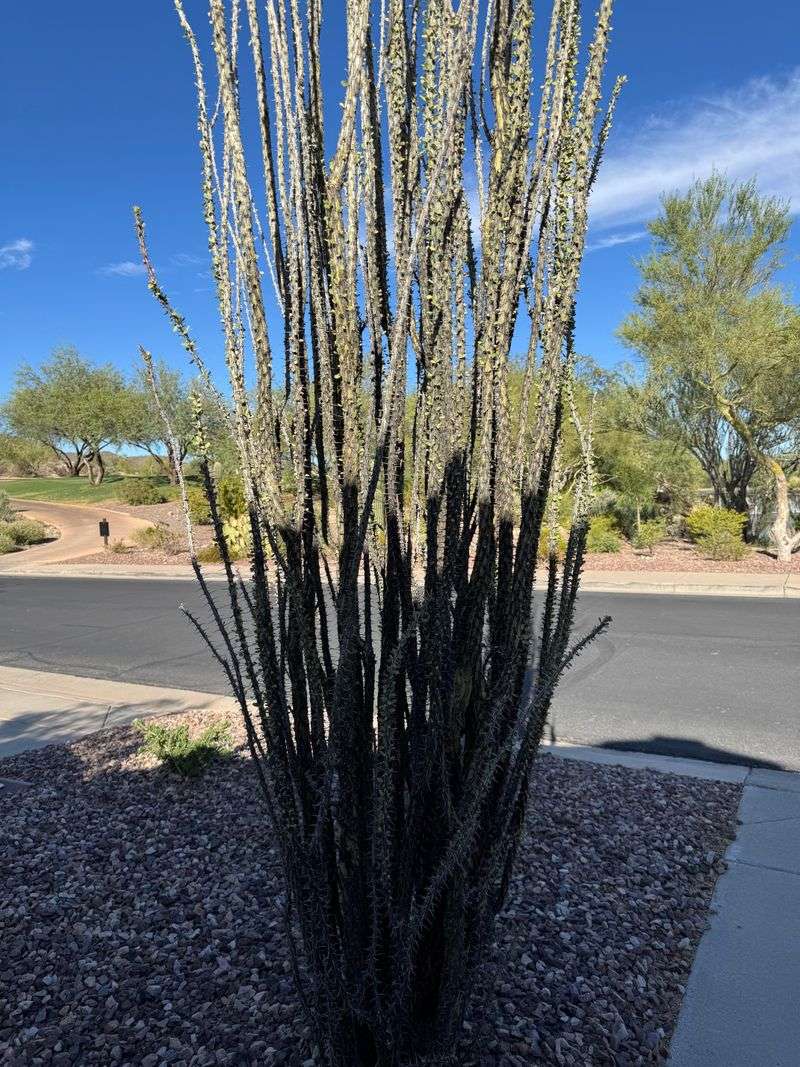
Not every plant that looks faded in summer is struggling. Some are simply taking a planned break, and understanding the difference between dormancy and decline is one of the most useful things an Arizona gardener can learn.
Summer dormancy is a survival strategy where certain plants slow down or pause active growth during the hottest, driest months of the year.
From the outside they may look bare or brown. On the inside they are conserving energy and waiting for better conditions.
Ocotillo is one of the most dramatic examples. It can drop all its leaves within days of a dry spell and sit as bare stems for weeks. After a monsoon rain it leafs out again almost overnight.
That rapid cycle of dormancy and regrowth lets it survive extreme stress without lasting harm.
The key difference between a dormant plant and one that is genuinely struggling is structural firmness. A dormant plant looks bare or dry but stems are not shriveled or mushy.
The plant has shifted into a low-energy holding mode that matches the season. Many gardeners see this, assume something is wrong, and start overwatering.
That response can cause more harm than the heat itself would have. The plant needed patience, not extra water.
Learning which plants in a yard are seasonal performers versus year-round evergreens helps calibrate the response when something looks off in August.
Dormant plants come back. Give them time and the right trigger, usually monsoon moisture, and most of them bounce back looking as full and healthy as they did in spring. Summer in Arizona is not always what it looks like from the outside.
7. Correct Irrigation Keeps Evergreens Steady
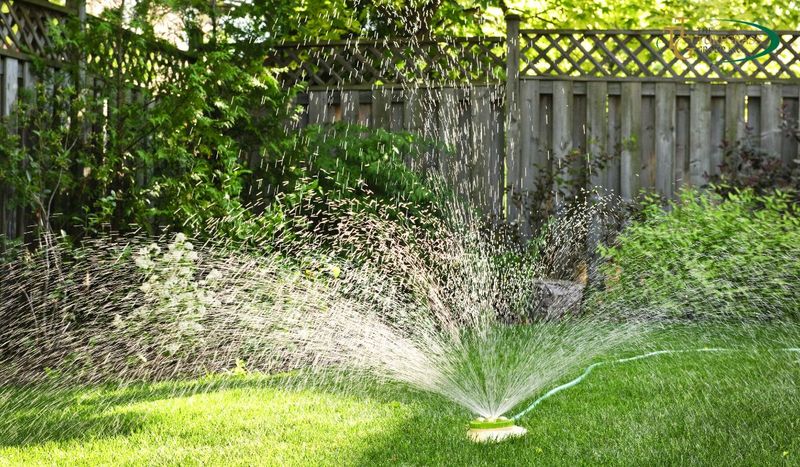
Even the toughest desert plants benefit from thoughtful watering, especially during their first few years in the ground.
The goal is not to water often. The goal is to water well. Deep, infrequent irrigation encourages roots to grow downward in search of moisture, which is exactly the behavior that makes plants more resilient as summer heat builds.
Shallow, frequent watering does the opposite. It keeps roots near the surface where soil temperatures can exceed 140 degrees Fahrenheit in full Arizona sun.
Surface roots dry out fast, stress the plant, and make it dependent on regular irrigation just to stay alive.
Deep watering less often consistently outperforms light watering more often for established desert-adapted plants, and the difference becomes most visible in August when heat pressure is at its peak.
For trees and large shrubs, watering once every one to three weeks during summer is often enough once they are established.
The water should be applied slowly and allowed to soak at least 18 to 24 inches deep. A soil probe or long screwdriver pushed into the ground after watering is a simple way to check how far moisture actually penetrated.
If it goes in easily, the water reached. If it stops at two inches, keep going.
Timing also matters. Early morning irrigation reduces evaporation loss significantly compared to midday or evening watering.
Drip systems set to run before sunrise are one of the most efficient setups for Arizona landscapes.
Matching irrigation schedules to each plant’s actual needs rather than running everything on the same timer keeps evergreen plants green without wasting water during the hottest months.
The calendar does not know your yard. Your soil does.