If You See This Beetle In Pennsylvania Do Not Touch It And Do Not Move It
Most beetles you spot in your Pennsylvania yard are completely harmless. Maybe a little startling if they catch you off guard, but nothing to worry about.
This one is different. If you happen to come across this particular beetle, the absolute best thing you can do is stop, step back, and whatever you do, do not touch it or try to move it.
This is not an exaggeration. This beetle is considered one of the most destructive invasive insects in the entire country.
It has already caused catastrophic damage in parts of the United States, wiping out millions of trees and costing communities enormous amounts of money in removal and recovery efforts. And it is spreading.
Pennsylvania is already in the danger zone. Experts and wildlife officials are urging residents across the state to stay alert, because catching this beetle early in a new area can genuinely make a difference in stopping its spread.
You don’t need to be a scientist or an entomologist to help. You just need to know what you’re looking at. Here’s everything Pennsylvania residents need to know right now.
Emerald Ash Borer
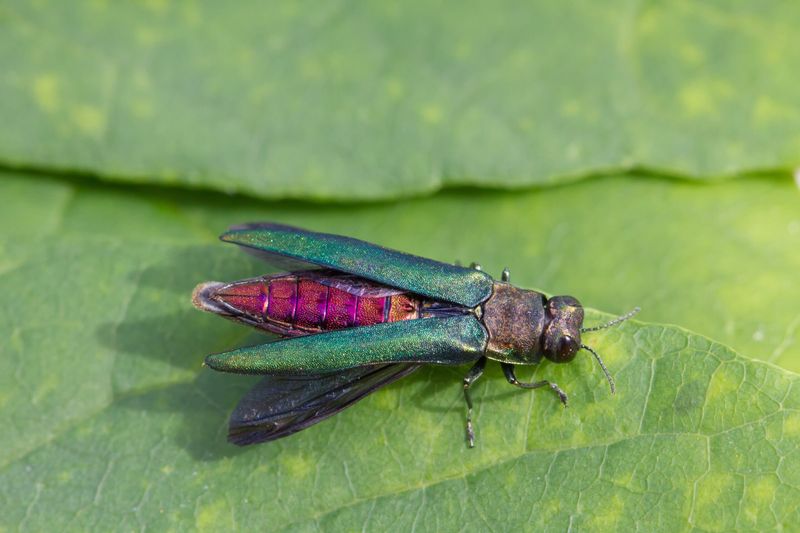
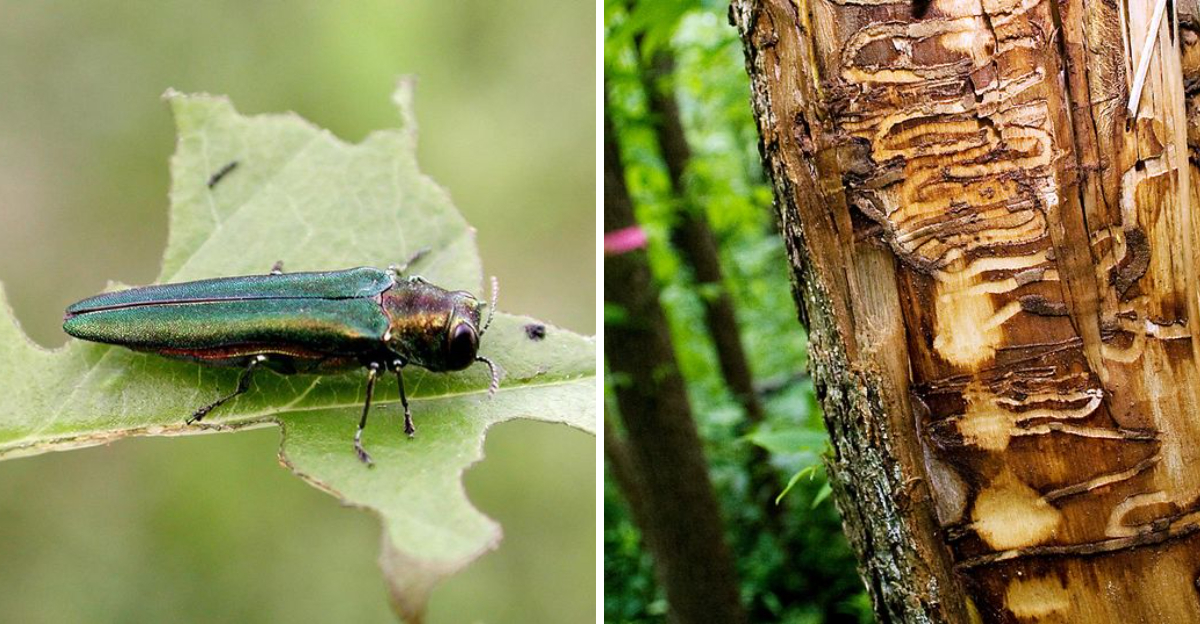
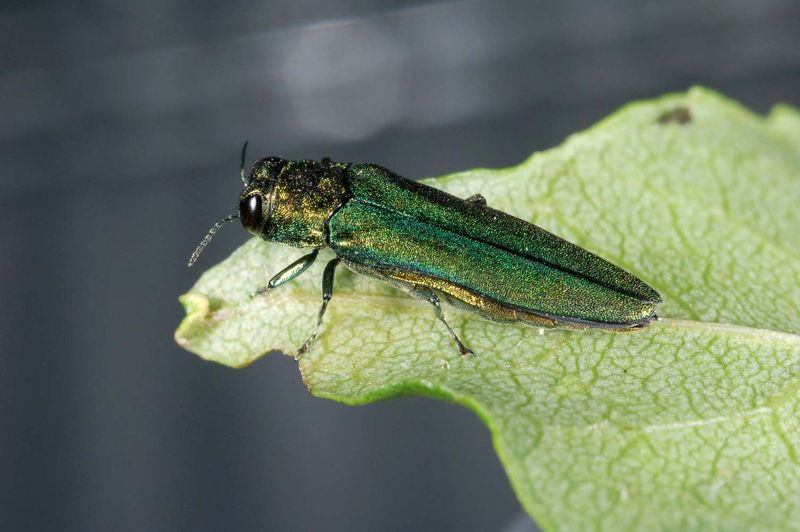
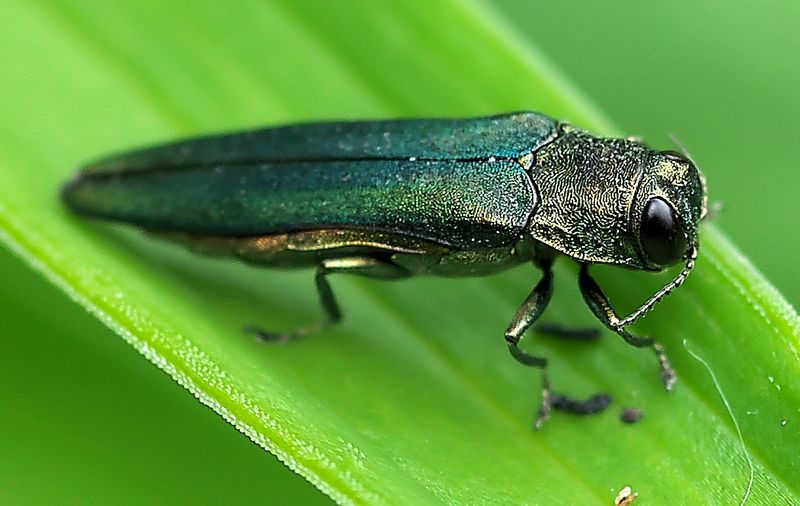
Meet one of the most destructive insects in Pennsylvania right now. The emerald ash borer, scientifically known as Agrilus planipennis, is a small beetle that measures only about half an inch long.
Its body is a brilliant, metallic green that almost looks like a tiny jewel. But do not let that beauty fool you for even a second.
Originally from Asia, this beetle was first discovered in the United States near Detroit, Michigan, in 2002. Scientists believe it arrived accidentally inside wooden packing materials used in shipping.
Since then, it has spread to dozens of states, including Pennsylvania, where it has been causing serious damage to ash tree populations.
Adult beetles are active during summer months, typically from late May through August. They feed on ash tree leaves, but the real damage is done by their larvae.
The larvae burrow beneath the bark and feed on the inner wood, cutting off the tree’s ability to move water and nutrients from roots to branches.
What makes this beetle especially tricky is how hard it can be to spot early on. The early signs of infestation often go unnoticed until a tree is already in serious decline.
By the time most people notice something is wrong, the damage is already extensive. Pennsylvania’s forests, neighborhoods, and parks all have ash trees that are vulnerable.
Understanding what this beetle is and why it matters is the first step toward protecting those trees before it is too late.
Why Pennsylvania Gardeners Should Take It Seriously
Pennsylvania has a lot to lose when it comes to the emerald ash borer. Ash trees are everywhere here.
You will find them lining streets, growing in backyards, standing tall in state forests, and providing shade in parks all across the commonwealth. Several native ash species are at risk, including white ash, green ash, black ash, blue ash, and pumpkin ash.
Your Pennsylvania Garden Changes Every Week. Your Plan Should Too.
Gardening in Pennsylvania changes quickly throughout the season. Every Friday you’ll receive a simple weekly plan showing exactly what to plant, prune, fertilize, harvest, and protect so you never miss the right timing.
Each of these species plays an important role in the local ecosystem. Birds nest in them. Insects rely on them for food. Their wood has been used for making furniture, baseball bats, and tool handles for generations.
Losing them would change Pennsylvania’s landscape in a very significant way. Even a single sighting of the emerald ash borer should be taken seriously. This pest spreads surprisingly fast.
Adult beetles can fly up to several miles on their own, and humans often help spread them even farther by moving firewood, ash logs, or ash branches from one area to another. One infected piece of wood transported to a new location can start an entirely new infestation.
Studies have shown that ash tree decline can happen quickly once a beetle population establishes itself. Trees that were perfectly healthy one year can show major damage just a season or two later.
Gardeners, homeowners, and outdoor enthusiasts in Pennsylvania all have a role to play. Staying alert, learning to identify ash trees, and knowing what to watch for are simple but powerful ways to help slow the spread of this invasive pest before more trees are affected.
What Emerald Ash Borer Damage Looks Like
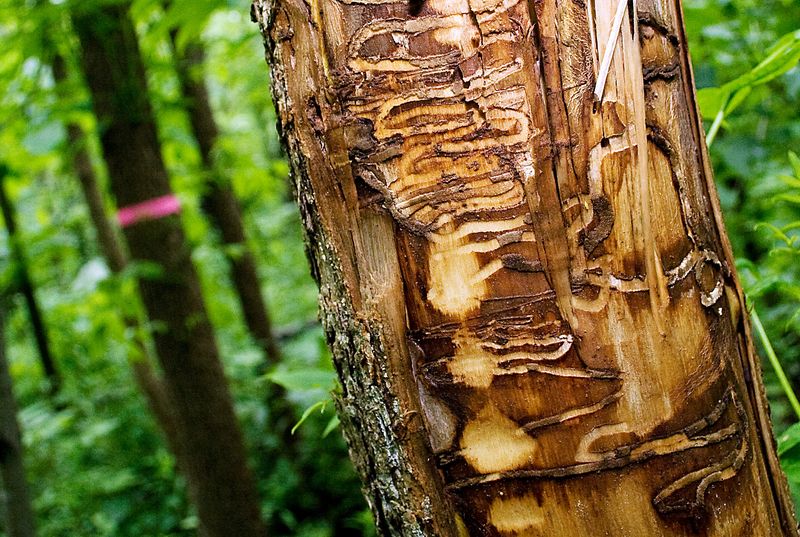
Spotting an emerald ash borer infestation early can be tricky, but there are some clear warning signs to look for once you know what to watch for. One of the first things you might notice is a thinning tree crown.
That means the top of the tree starts to look sparse, with fewer leaves than usual. Branches at the top may stop producing leaves altogether, a condition called dieback.
Bark changes are another major clue. Infested ash trees often show bark splitting or bark flaking as the tree struggles and begins to deteriorate from the inside out.
Sometimes you can even see zigzagging patterns beneath the bark once it peels away. Those winding trails are called S-shaped galleries, and they are created by emerald ash borer larvae as they feed and tunnel through the inner wood layer just beneath the surface.
One of the most well-known signs is the D-shaped exit hole. When adult beetles emerge from inside the tree, they chew their way out and leave behind a tiny hole shaped like the letter D.
These holes are about an eighth of an inch wide, and they are a sure sign that beetles have already been active inside the tree.
You might also notice an increase in woodpecker activity on ash trees. Woodpeckers love to feed on emerald ash borer larvae, and heavy pecking on the upper trunk or major branches can actually strip away large patches of bark.
If you see any of these signs on an ash tree near you, it is time to take action and get a professional involved right away.
Why You Should Not Touch Or Move It
Here is something that surprises a lot of people. The emerald ash borer is not dangerous to humans in any direct physical way.
It will not sting you, bite you, or cause you any personal harm. So why should you not touch it or move it?
The answer is all about preventing the spread of an infestation that can travel much faster with human help.
When people pick up beetles and carry them somewhere else, even accidentally, they can introduce the pest to a brand-new area. The same goes for moving ash wood, ash logs, ash branches, or firewood that may contain beetle eggs or larvae hidden inside.
You might not be able to see them, but they can be there. A single piece of firewood moved from an infested area to a new campsite or backyard can start a whole new wave of tree destruction miles away.
Pennsylvania has strict regulations around moving firewood for exactly this reason. The state, along with federal agencies, has established quarantine zones in counties where the emerald ash borer has been confirmed.
Moving ash material out of these zones without proper authorization is actually illegal and can result in serious fines.
Even outside of quarantine zones, the smart and responsible choice is to leave everything where it is. Do not move the beetle. Do not collect it as a curiosity. Do not transport logs or branches from the area.
Keeping wood local is one of the simplest and most effective tools available to help slow the spread of this pest across Pennsylvania and into new regions.
What To Do Instead If You Find One
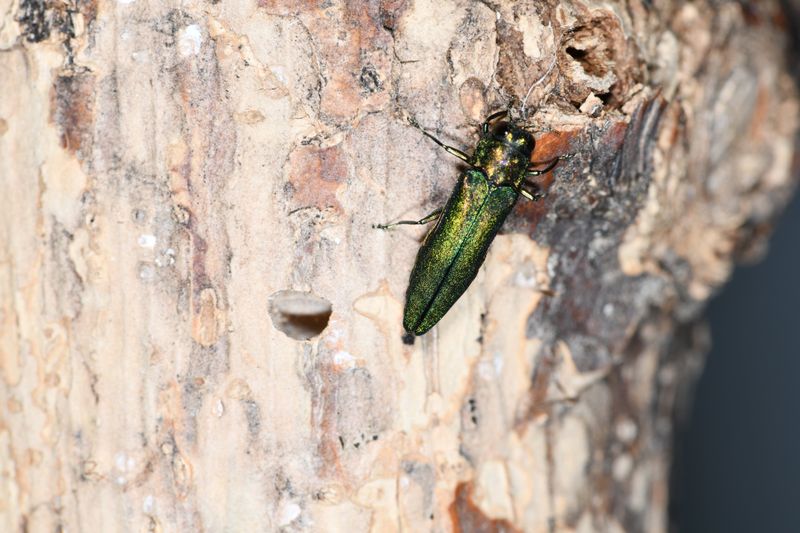
Staying calm is the best first move if you think you have spotted an emerald ash borer. Panicking will not help the trees, but taking a few careful steps can make a real difference.
Start by grabbing your phone and taking a clear, close-up photo of the beetle if you can do so safely without touching or disturbing it. A good photo is one of the most helpful things you can provide to experts.
Next, make note of exactly where you found it. Write down the address, the name of the park or trail, and any other details about the location.
Also note what kind of tree the beetle was on, since ash trees are the primary target. If you are not sure whether the tree is an ash, that is okay. Professionals can help with identification too.
After gathering that information, reach out to the right people. Your local Penn State Extension office is an excellent resource and can connect you with experts who know exactly what to look for.
You can also contact a certified arborist who is trained in tree health and pest identification. The Pennsylvania Department of Agriculture has reporting tools and resources available online as well.
If the beetle was found on or near an ash tree on your property, consider having a certified arborist inspect the tree before making any decisions. There are treatment options available for ash trees that have not yet been heavily affected.
Early intervention can sometimes save a tree that might otherwise be lost. Reporting quickly and accurately gives everyone the best chance of responding effectively.
The Best Move Is Not Moving It
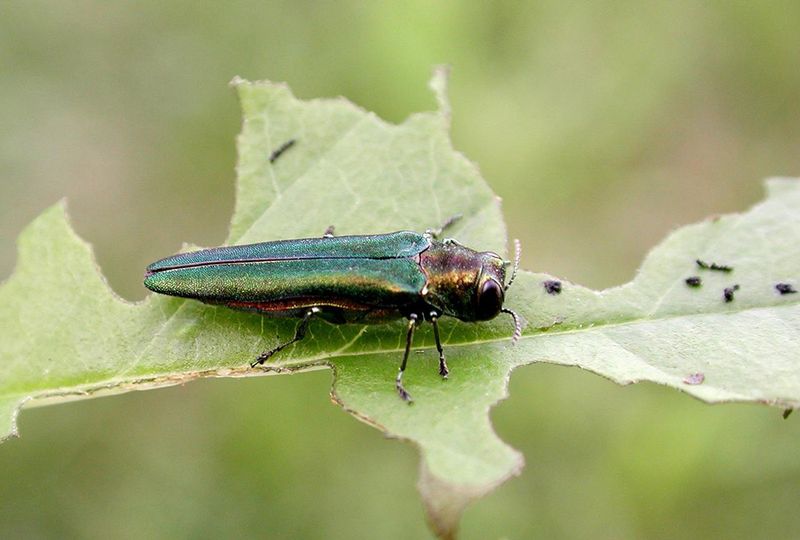
Small things can cause enormous problems, and the emerald ash borer is a perfect example of that. At just half an inch long, it is easy to overlook or even mistake for another harmless bug.
But its impact on Pennsylvania’s ash tree population has been anything but small. Millions of trees across the state are at risk, and the pace of spread depends heavily on what people do, or choose not to do, when they encounter this beetle.
One of the most powerful things anyone can do is simply keep wood where it is. Do not load up ash logs or branches and haul them somewhere new.
Do not bring firewood from home when you go camping, and do not take firewood home from a campsite either. Buy firewood locally and burn it where you buy it.
That single habit, practiced by enough people, can dramatically slow the spread of this invasive pest.
Quick reporting matters just as much. The sooner experts know where new sightings are occurring, the faster they can respond with monitoring, treatment options, and public outreach.
Every confirmed sighting adds to the map that scientists and forest managers use to understand where the beetle is spreading next.
Careful identification also plays a role. Not every green beetle is an emerald ash borer, and not every sick-looking tree has been infested.
Getting the right eyes on the situation, whether that is an arborist, an extension agent, or a state agriculture official, ensures that responses are accurate and effective. Protecting Pennsylvania’s ash trees starts with awareness, and awareness starts with you.