Fruit Tree Tricks That Can Help Michigan Gardeners Double Their Harvest
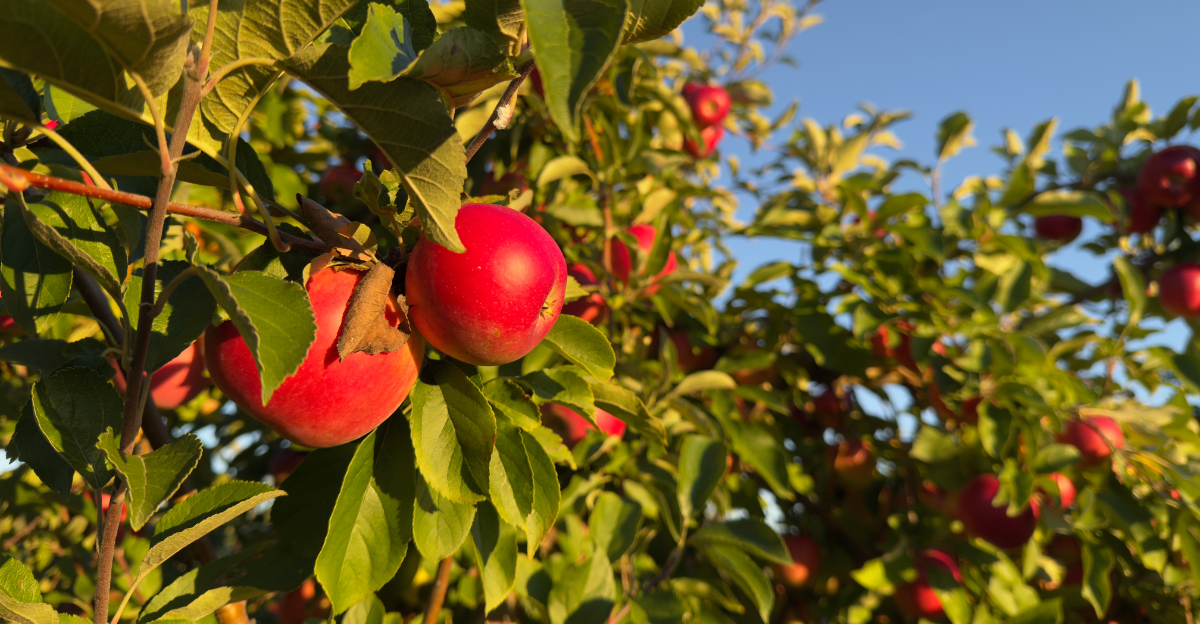
Michigan’s relatively short fruit growing season puts pressure on every stage of tree development, from bloom through harvest.
Most home orchardists focus heavily on planting and basic seasonal care without realizing that a handful of specific techniques applied at the right moments can dramatically increase what a tree actually produces.
These are not complicated interventions requiring professional equipment or specialized knowledge.
They are practical adjustments to pruning approach, pollination support, thinning timing, and soil management that experienced Michigan fruit growers have refined over years of paying close attention to what their trees respond to.
Applied consistently, they change the trajectory of a fruit tree’s productivity in ways that show up clearly at harvest time.
1. Feed From A Soil Test Not A Guess
Grabbing a bag of fertilizer off the shelf and spreading it around your fruit trees might feel productive, but it can actually work against you. Michigan soils vary a lot from one yard to the next.
Sandy soils in the west drain fast and often run low on nutrients, while heavier soils in other parts of the state can hold onto minerals in ways that change how a tree absorbs them.
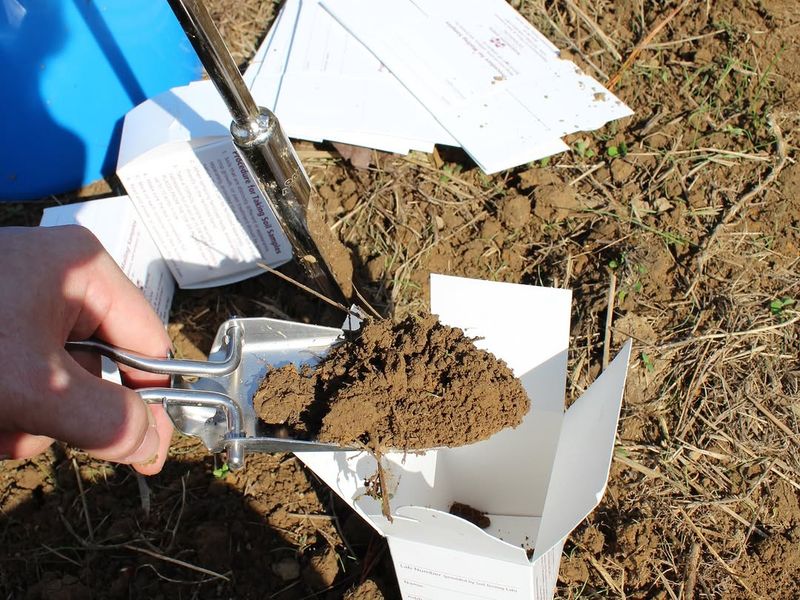
Without a soil test, you are essentially guessing, and guessing costs you fruit. A basic soil test from Michigan State University Extension costs just a few dollars and gives you a clear picture of your soil pH, phosphorus, potassium, and organic matter levels.
Most fruit trees prefer a pH somewhere between 6.0 and 7.0. If your soil is too acidic or too alkaline, nutrients get locked out even if they are technically present. That is a problem no amount of extra fertilizer will fix on its own.
Nitrogen is where many gardeners go wrong. Too much of it pushes the tree to grow lots of leaves and long shoots instead of putting energy into fruit development. A soil test tells you exactly how much, if any, nitrogen your tree actually needs.
Matching your fertilizer to your actual soil conditions is one of the simplest ways to shift a fruit tree from average production to genuinely impressive harvests year after year.
2. Water Deeply At The Drip Line
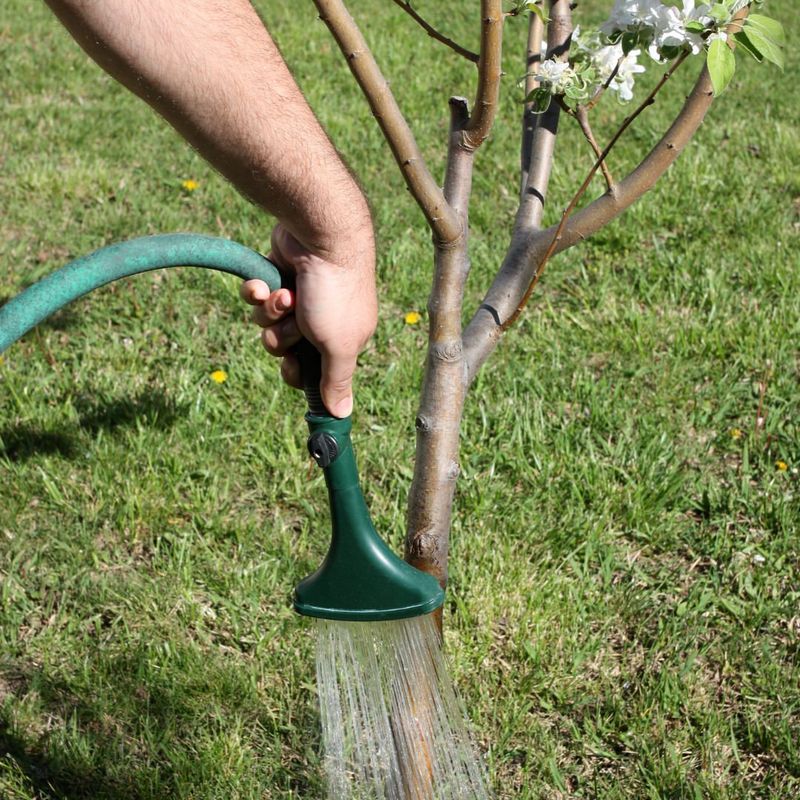
Most people water their fruit trees by standing at the trunk and soaking the ground right there. It makes sense visually, but the roots doing the real work are not sitting near the trunk.
They spread outward, often reaching as far as the canopy extends or even beyond. The spot where the canopy ends, called the drip line, is where the feeder roots are most active and most ready to absorb water.
Watering at the drip line instead of the base changes how well the tree uses every drop you give it.
For young trees just getting established, consistent deep watering at the drip line can make a dramatic difference in how fast they grow and how well they handle Michigan’s hot, dry stretches in July and August.
Shallow watering encourages roots to stay near the surface, which makes them more vulnerable to heat and drought stress.
Your Michigan Garden Changes Every Week. Your Plan Should Too.
Gardening in Michigan changes quickly throughout the season. Every Friday you’ll receive a simple weekly plan showing exactly what to plant, prune, fertilize, harvest, and protect so you never miss the right timing.
Deep watering means letting water soak slowly into the soil rather than running off. A soaker hose laid in a ring around the drip line works really well for this.
Aim for about an inch of water per week during the growing season, more during dry spells when fruit is actively sizing up.
Fruit swells quickly in the weeks before harvest, and steady moisture during that window directly affects how large and flavorful your fruit turns out.
Inconsistent watering during that period can also cause splitting and cracking in cherries and other thin-skinned fruits.
3. Mulch Wide But Keep The Trunk Clear
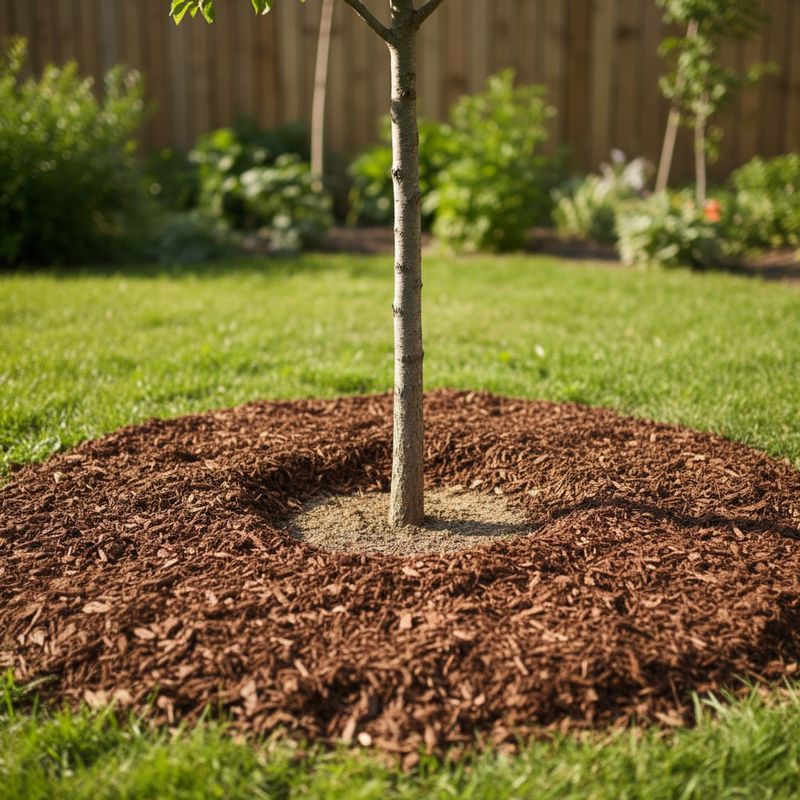
Wood chip mulch might be the most underrated tool in a Michigan fruit grower’s toolkit. A wide ring of mulch around your tree does several things at once that no single product can replicate.
It slows moisture evaporation from the soil surface, which is a big deal during dry Michigan summers. It moderates soil temperature, keeping roots cooler when the air is hot and a little warmer when early cold snaps arrive in fall.
Mulch also breaks down slowly over time, feeding the soil with organic matter that improves structure and supports the beneficial organisms living underground.
Grass and weeds competing with a fruit tree can steal a surprising amount of water and nutrients, and a solid mulch ring eliminates most of that competition without any chemicals.
Aim for a ring that extends at least three to four feet out from the trunk, and two to four inches deep works well for most situations. Here is the part that trips up a lot of gardeners: the mulch should never touch the trunk.
Piling mulch against the bark traps moisture against the wood, which creates conditions that invite rot, fungal issues, and problems with certain insects and rodents that can damage the bark over winter.
Pull the mulch back so there is a clear gap of several inches around the base of the trunk. The rest of the ring can be generous.
Wide and flat is the goal, not a volcano of mulch piled high around the base.
4. Thin Extra Fruit Early
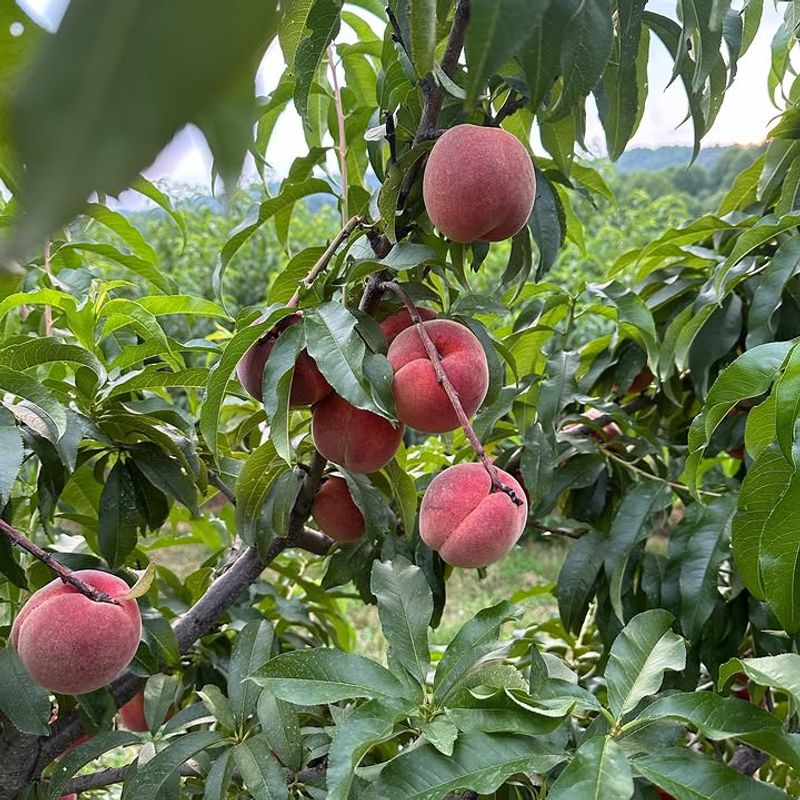
Thinning fruit feels wrong the first time you do it. You have waited all spring watching the blossoms come and go, and now you are pulling off perfectly healthy little fruits on purpose. It goes against every instinct.
But fruit thinning is one of the highest-return practices a Michigan gardener can do, and skipping it is one of the most common reasons people end up with buckets of small, underwhelming fruit instead of a truly impressive harvest.
Apples, peaches, pears, plums, and apricots all have the same tendency to set far more fruit than the tree can properly size and ripen. When a branch is overloaded, the tree splits its energy across too many fruits.
None of them get what they need to grow large, develop good sugar content, or reach their best flavor. Thinning removes that competition and lets the remaining fruits grow to their full potential.
For apples, the general guideline is one fruit every six to eight inches along a branch. For peaches, spacing them about four to six inches apart works well.
Early thinning is better than late thinning. Getting it done within four to six weeks after bloom gives the remaining fruits the most time to size up properly.
Waiting too long reduces the benefit. Beyond fruit size and quality, thinning also protects the tree itself.
Heavy fruit loads can crack and break branches, and repeated overloading year after year weakens a tree’s long-term productivity. Thinning now means a stronger, more productive tree for many seasons ahead.
5. Plant Compatible Pollinizers Nearby
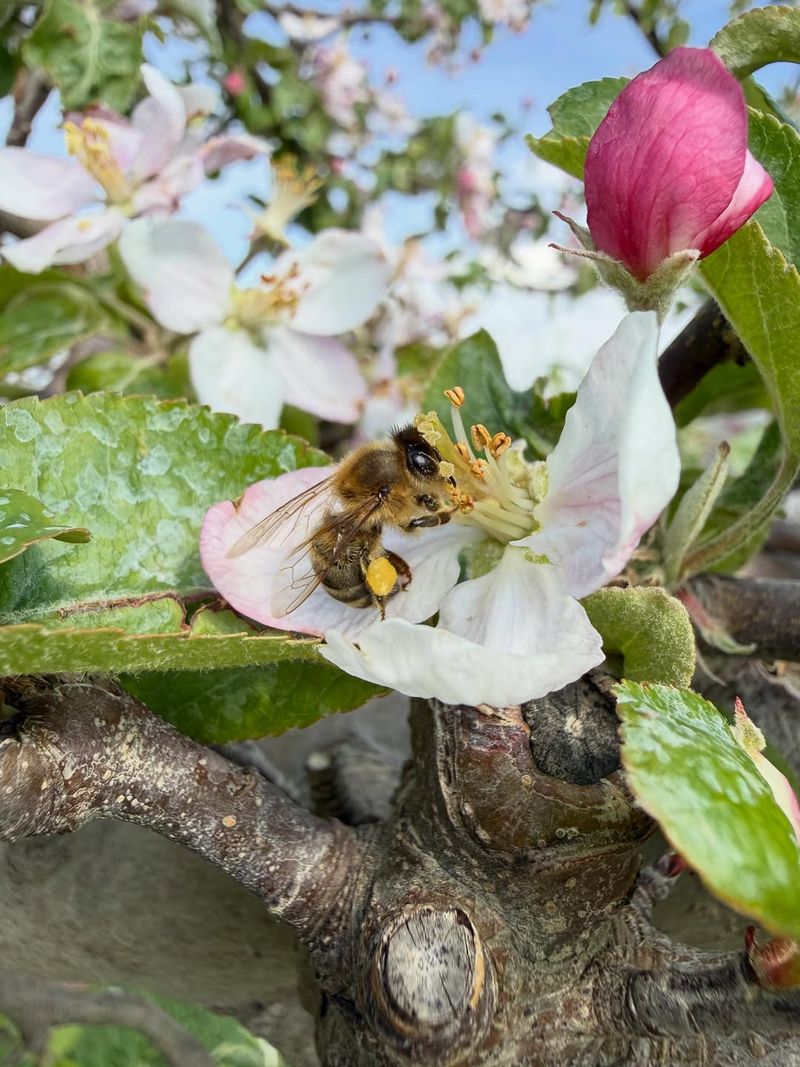
A fruit tree covered in blossoms is a beautiful sight, but those flowers do not automatically become fruit. For many of the most popular fruit trees grown in Michigan, pollination requires pollen from a different but compatible variety of the same species.
Without the right pollinizer nearby, a tree can bloom perfectly every spring and still produce almost nothing by harvest time. It is one of the most frustrating situations a gardener can face, and it is almost entirely preventable.
Apples are a classic example. Most apple varieties need a different apple variety blooming at the same time to set a full crop.
Pears work the same way. Pawpaws, which are a native Michigan fruit gaining popularity in home gardens, need another genetically different pawpaw nearby.
Many plum varieties also require a compatible pollinizer. Bees and other pollinators carry the pollen between trees, so having both varieties within about 50 to 100 feet of each other gives the bees a reasonable flight path to do their job well.
When you are choosing a second variety for pollination, bloom timing matters just as much as compatibility. Two varieties need to overlap in bloom for cross-pollination to happen.
Check with your local nursery or extension office to confirm which varieties work well together in your specific part of Michigan.
Some gardeners in tight spaces have even grafted a compatible branch onto an existing tree to solve the pollination problem without planting a whole second tree. It is a clever workaround that actually works surprisingly well.
6. Fix Drainage Before Planting
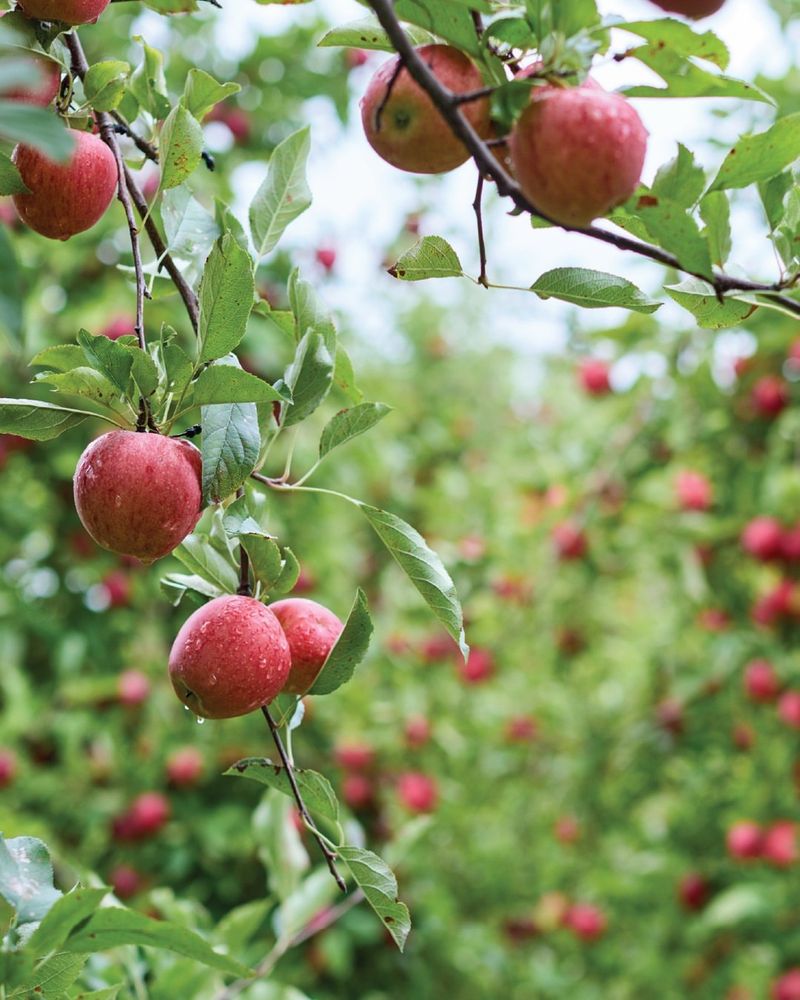
Fruit trees are pretty forgiving in a lot of ways, but waterlogged roots are not something most of them handle well.
Michigan has plenty of areas with heavy clay soil that drains slowly, and low spots in a yard can stay wet for days or even weeks after a rainstorm.
Planting a fruit tree in one of those spots without addressing the drainage first is setting that tree up for a long, slow struggle that no amount of care can fully overcome.
Roots need oxygen as much as they need water. When soil stays saturated for too long, oxygen gets pushed out and root function breaks down.
Trees growing in poor drainage often look fine for a year or two before the symptoms really show up, by which point a lot of time and money has already been invested.
Fixing the problem before planting is always easier and cheaper than trying to rescue a struggling tree later.
Raised planting berms are one of the most practical solutions for Michigan gardeners dealing with drainage issues.
Mounding up amended soil eight to twelve inches above the surrounding grade gives roots a well-drained zone to establish in, even if the soil below is slower to drain.
Mixing in compost improves structure in heavy clay and helps water move through more freely over time. Some gardeners also install simple French drains to redirect water away from planting areas.
Choosing rootstocks and varieties known to handle heavier soils is another smart layer of protection worth discussing with your local nursery before you buy.
7. Choose Michigan Suited Varieties And Rootstocks
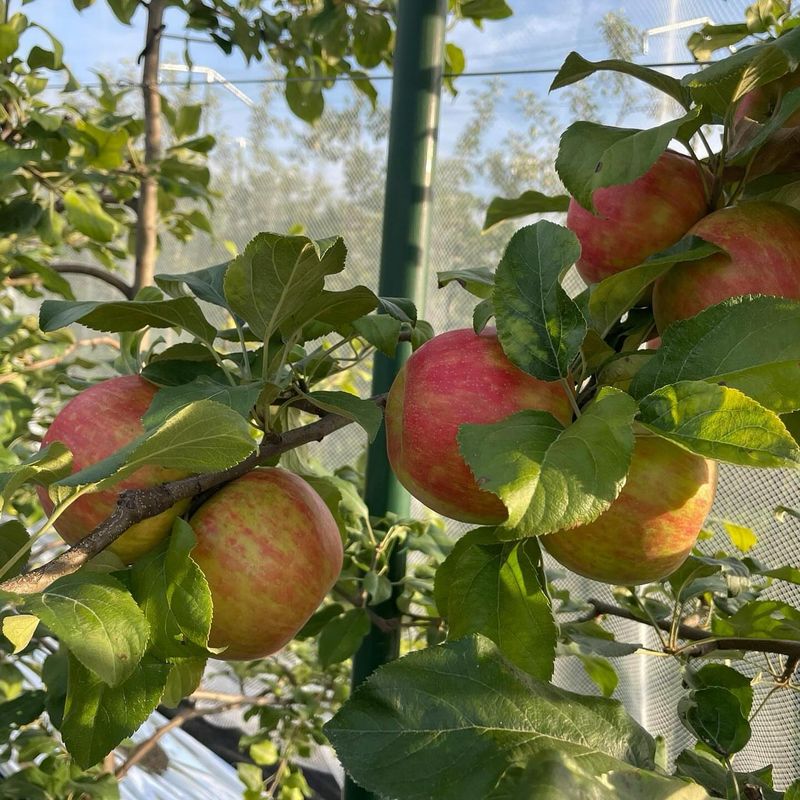
No amount of good pruning, watering, or mulching will fully make up for starting with the wrong tree.
Variety and rootstock selection is genuinely one of the most important decisions a Michigan fruit gardener makes, and it happens before the tree ever goes in the ground.
Getting this right from the start sets up every other effort you make for far better results across the life of the tree.
Michigan’s climate brings late spring frosts that can wipe out early-blooming varieties, humid summers that favor certain fungal diseases, and cold winters that test the hardiness of trees not suited to the region.
Choosing varieties with strong disease resistance, proven hardiness for your USDA zone, and bloom timing that avoids the worst frost windows dramatically improves your odds of a reliable harvest.
Enterprise, Honeycrisp, and Liberty are examples of apple varieties with good track records in Michigan. For peaches, Reliance and Contender are popular for their cold hardiness.
Rootstock controls how large the tree grows and how quickly it starts producing fruit. Dwarf and semi-dwarf rootstocks keep trees at a manageable size, which makes pruning, thinning, and harvesting much easier in a typical home yard.
Dwarf trees on good rootstocks can begin bearing fruit in as few as two to three years compared to five to seven or more for full-size trees.
A well-chosen compact tree that fits your space is far more productive in practice than an oversized tree you cannot properly manage.
Talk to a Michigan-based nursery about what performs best in your specific county and microclimate.
8. Prune In Late Winter Before Buds Open
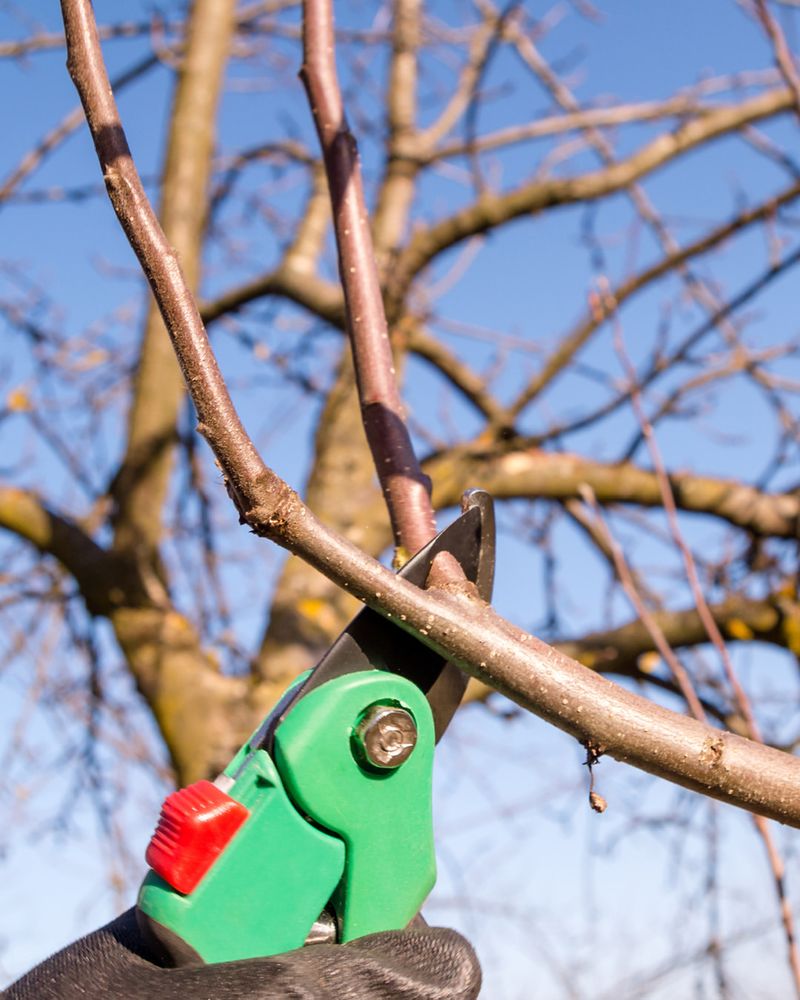
Timing your pruning correctly might be the single most impactful change a Michigan fruit gardener can make to their annual routine.
Pruning at the wrong time of year can remove flower buds you were counting on or leave fresh cuts exposed to harsh winter temperatures.
Late winter, roughly from mid-February through mid-March depending on your location, is the sweet spot. The tree is still dormant, the worst cold has usually passed, and the buds have not yet started to swell and open.
Pruning at this stage does more than just shape the tree. Opening up the canopy lets sunlight reach the inner branches, and sunlight is what drives fruit bud development.
A dense, crowded canopy shades out the interior wood, and shaded wood simply does not produce fruit reliably.
Removing crowded branches, crossing limbs, and upright water sprouts that shoot straight up from main branches all help redirect the tree’s energy toward productive fruiting wood.
Branch angle matters too. Branches that grow at a wide angle from the trunk, roughly 45 to 60 degrees, are structurally stronger and tend to produce more fruit than steep, nearly vertical branches.
When you are deciding what to remove, look for weak narrow crotch angles, anything shading the center of the tree, and any branches rubbing against each other. You do not need to remove a huge amount.
Even modest, consistent annual pruning adds up to a dramatically more open, productive tree over just a few seasons. Sharp, clean tools make every cut easier and help wounds close faster.