Why Coral Honeysuckle Is One Of Georgia’s Most Valuable Native Vines
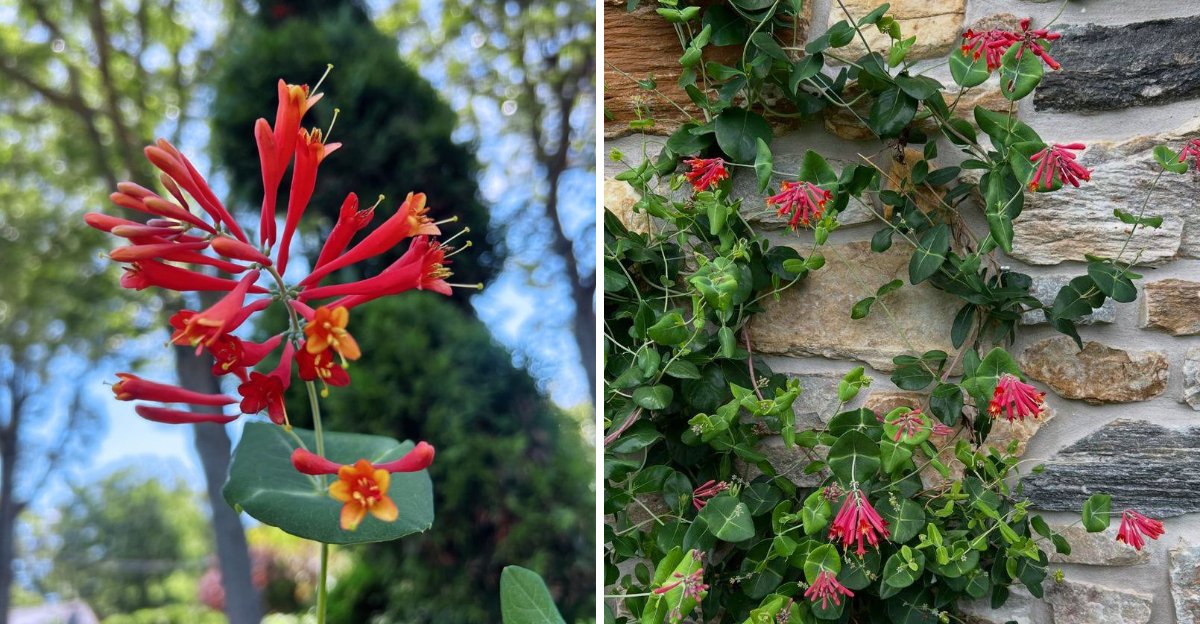
There is a native vine climbing fences and trellises across Georgia that most gardeners walk past without a second look, and that oversight is genuinely worth correcting.
Coral honeysuckle does not announce itself the way exotic ornamentals do. It does not overwhelm a yard or demand constant management.
It just produces brilliant red and orange tubular flowers from late winter through fall, feeds hummingbirds and pollinators through the entire growing season, and supports migrating songbirds with berries in autumn.
Unlike its invasive lookalike, Japanese honeysuckle, this vine grows vigorously without taking over neighboring properties or smothering native vegetation. It belongs here.
Georgia’s climate suits it naturally, and wildlife has depended on it for centuries.
Whether there is a sunny fence line, a bare trellis, or a garden arch waiting for a purpose, coral honeysuckle has something specific and valuable to offer every season it is in the ground.
These reasons explain why this vine belongs in more Georgia gardens than it currently occupies.
1. Tubular Flowers Bring Hummingbirds
Ruby-throated hummingbirds have one priority in spring: find nectar and find it reliably.
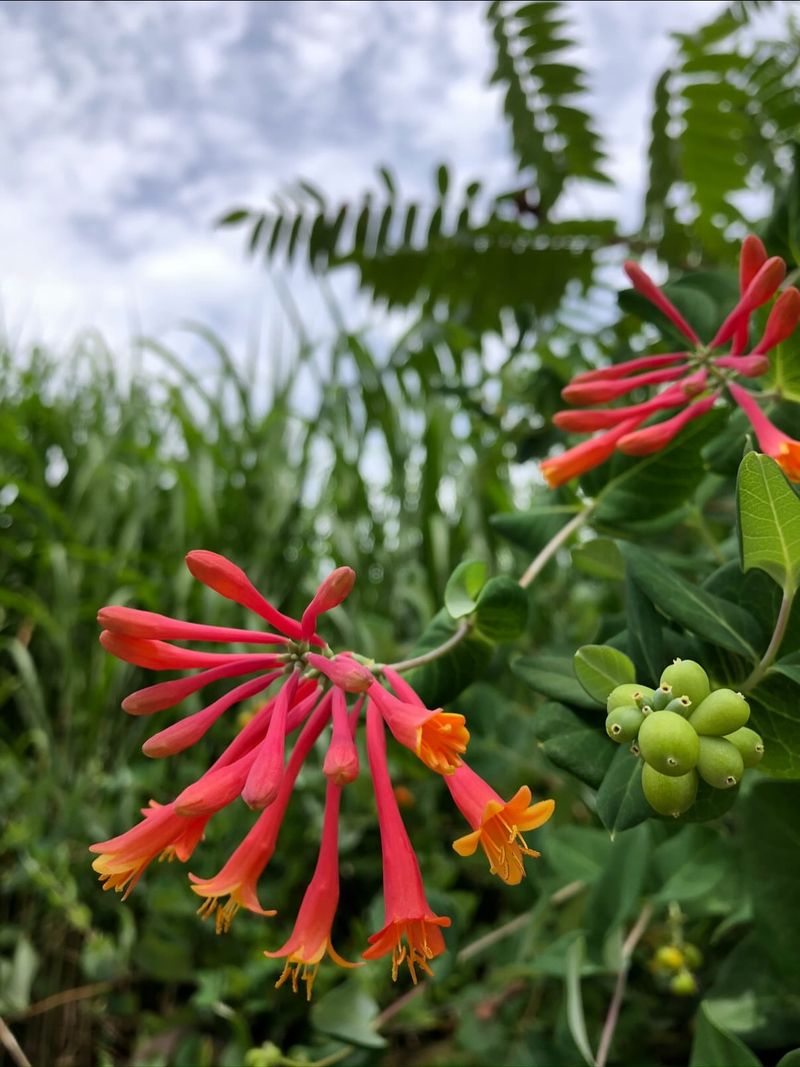
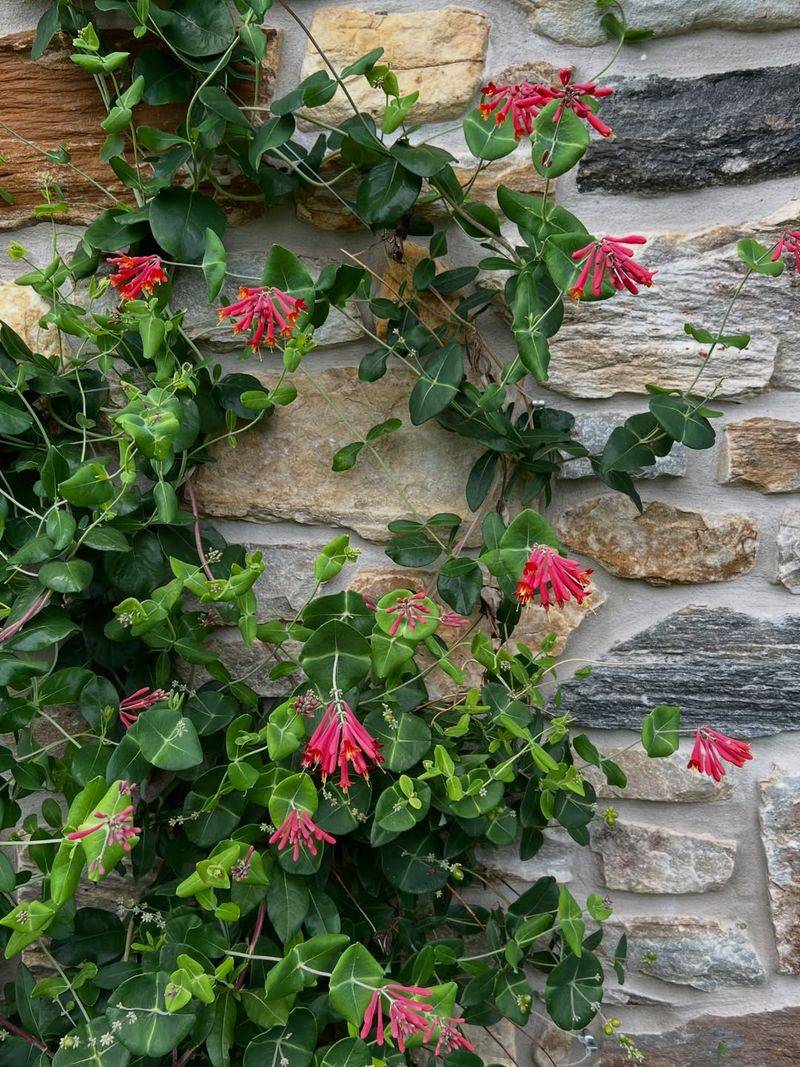
Coral honeysuckle’s long slender tubular flowers are shaped precisely to match the bill and tongue of a hummingbird, making them one of the most efficient nectar sources a Georgia gardener can plant.
The plant and the bird have been solving each other’s problems for thousands of years.
The flowers carry a rich coral-red exterior with a soft yellow or orange interior. That two-toned appearance signals high nectar reward to pollinators that co-evolved alongside this plant across generations.
Ruby-throated hummingbirds, the only hummingbird species that breeds regularly in Georgia, depend heavily on tubular native flowers during spring migration and through the summer nesting season when caloric demand is highest.
Planting coral honeysuckle near a window or porch where time is regularly spent gives the best return on that wildlife investment.
Hummingbirds become remarkably bold once they trust a food source, and watching one hover just a few feet away while working through a cluster of blooms is a genuinely satisfying experience.
Multiple birds sometimes visit the same vine throughout the day during peak bloom periods.
Unlike sugar water feeders, coral honeysuckle requires no mixing, no cleaning, and no monitoring for contamination.
The plant manages the production and the hummingbirds manage the harvesting. The gardener just gets the show, which is the most favorable division of labor in any garden relationship.
2. Long Bloom Time Adds Garden Value
Most flowering plants deliver a week or two of color and then step back for the season. Coral honeysuckle operates on a fundamentally different schedule.
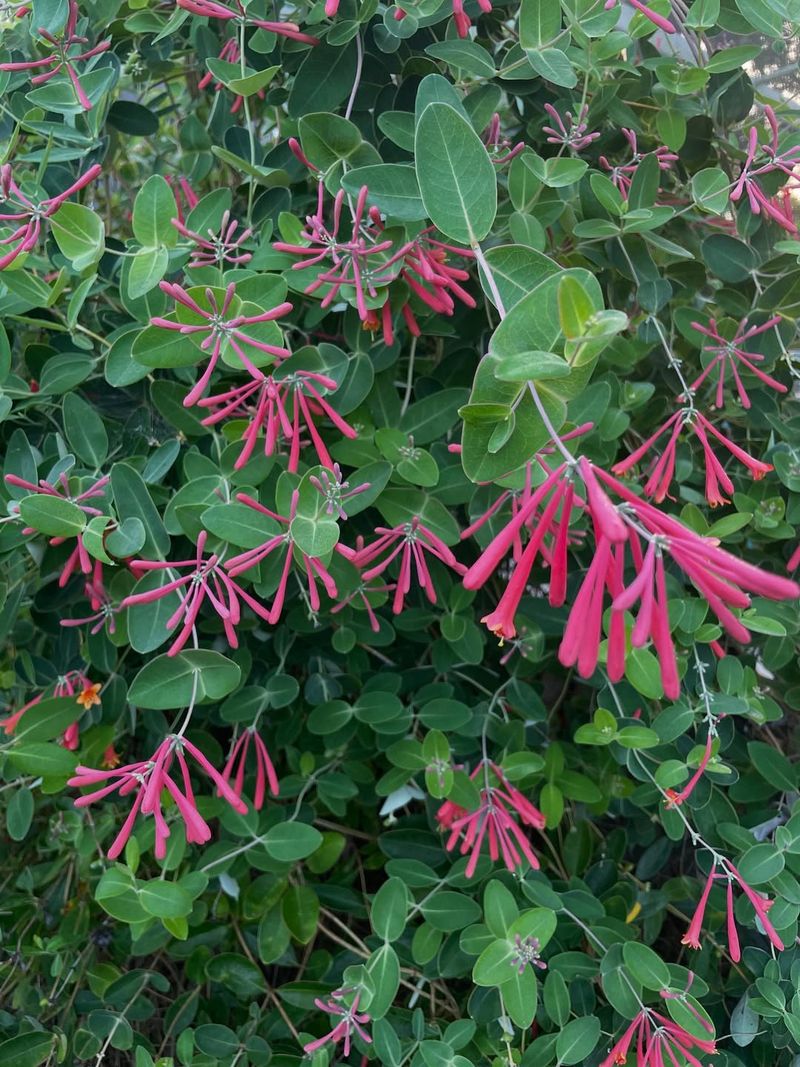
In Georgia, this vine can begin flowering as early as late February or March and continue producing blooms through fall, sometimes into November depending on conditions.
That bloom window is extraordinary relative to almost anything else available for the same growing situations.
Peak flowering arrives in spring with the heaviest flush of the season.
The vine then reblooms reliably through summer and into autumn, particularly when spent flowers receive a light trim to encourage continued production.
Your Georgia Garden Changes Every Week. Your Plan Should Too.
Gardening in Georgia changes quickly throughout the season. Every Friday you’ll receive a simple weekly plan showing exactly what to plant, prune, fertilize, harvest, and protect so you never miss the right timing.
This makes it a dependable color source during the mid-summer and late-season stretches when many other plants have already finished.
For Georgia gardeners focused on four-season interest, coral honeysuckle delivers across multiple transitions.
Spring brings the fullest bloom display. Summer maintains steady repeat flowering. Fall produces one final push of color alongside the developing berries.
Even in winter, the semi-evergreen foliage holds reasonably well in the warmer sections of the state.
Pairing coral honeysuckle with other native plants that bloom at different points in the calendar creates a layered garden that carries consistent visual interest across the full year without requiring multiple separate management approaches.
Few vines match this kind of extended seasonal performance while asking so little from the gardener managing them.
3. Native Status Beats Invasive Honeysuckles
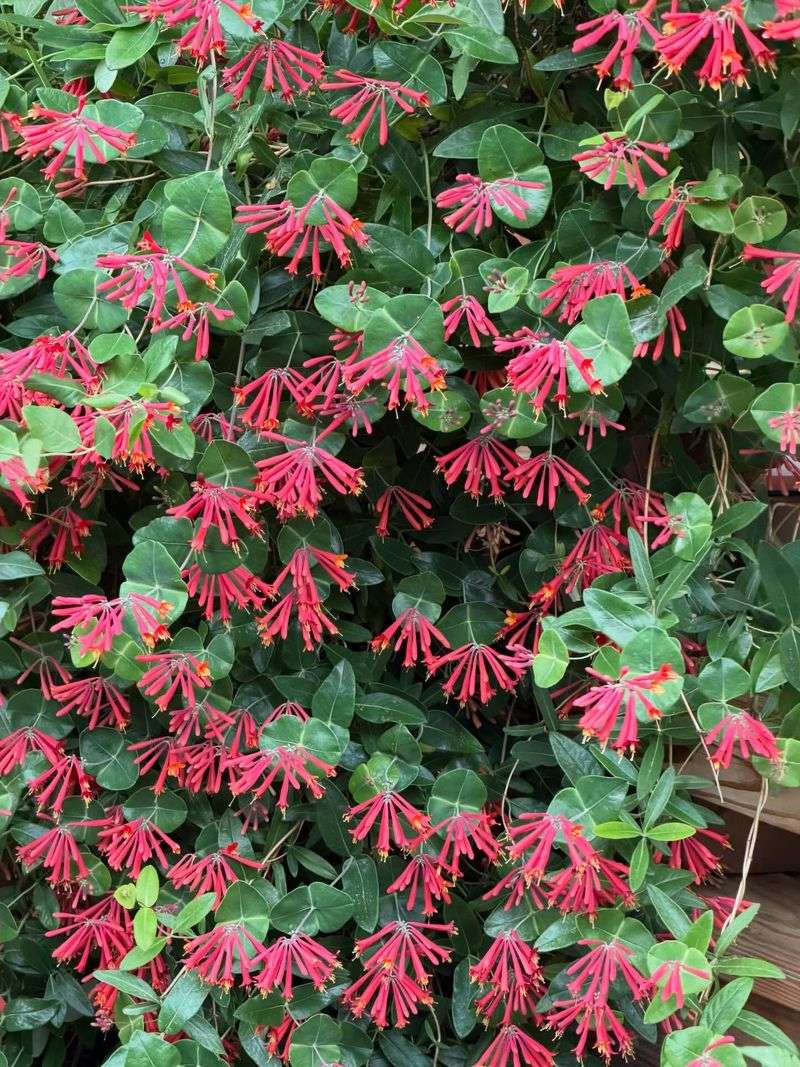
Not all honeysuckles belong in a Georgia garden, and the distinction between native and invasive matters significantly here.
Japanese honeysuckle has caused ecological damage across the Southeast, smothering native vegetation, outcompeting wildflowers, and climbing trees with enough sustained force to weaken their structure over time.
Coral honeysuckle is the ecologically sound alternative. Native to the eastern United States including Georgia, it has co-evolved with local wildlife, insects, and soil systems across centuries of shared history.
It grows vigorously without spreading aggressively through runners or seeds the way Japanese honeysuckle does. That means enjoying a lush flowering vine without the concern that it will escape into adjacent natural areas and create problems downstream.
The visual difference between the two becomes straightforward once the identifying features are known. Coral honeysuckle has paired blue-green leaves fused together at the base around the stem, creating a distinctive cupped appearance.
Japanese honeysuckle has separate opposite leaves and produces white and yellow flowers with a strong sweet fragrance. The invasive species announces itself through scent in a way the native does not.
Choosing coral honeysuckle supports Georgia’s native plant communities, the pollinators that depend on those communities, and the broader ecological relationships that make a garden genuinely functional.
Starting with a vine this productive and attractive makes that responsible choice feel less like a compromise and more like an obvious upgrade.
4. Berries Support Backyard Birds
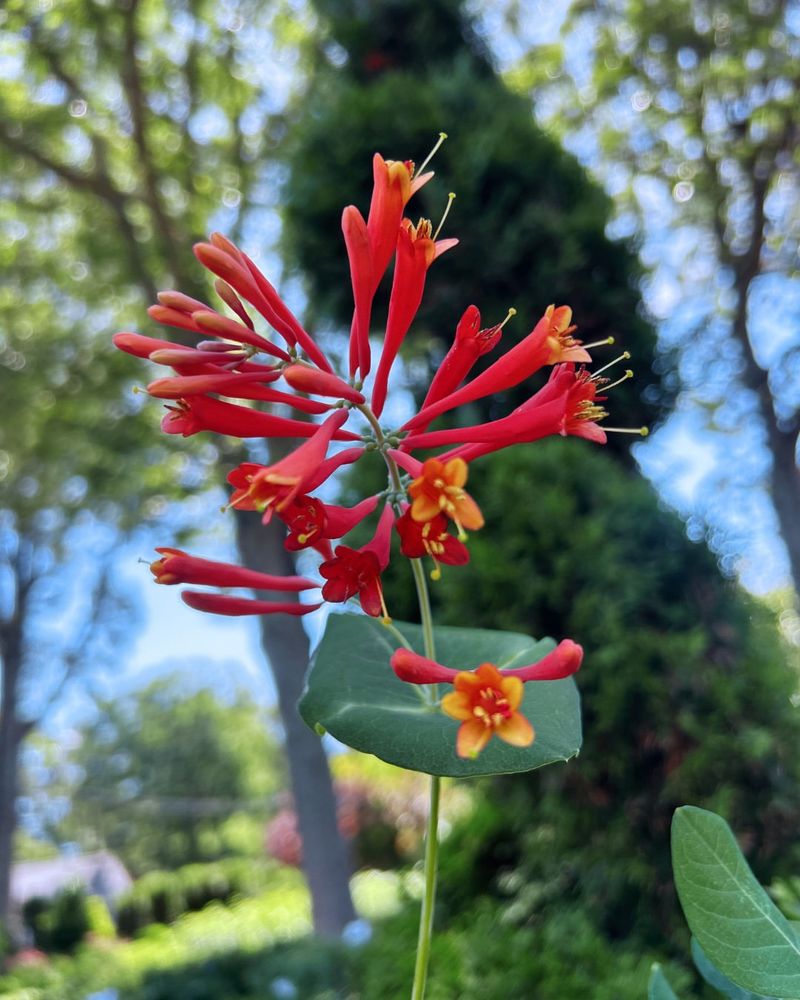
After the flowers finish, coral honeysuckle continues contributing to the yard’s wildlife value through a second seasonal offering.
The vine produces small, bright red berries in late summer and fall that attract songbirds at exactly the moment many species need high-calorie food most urgently.
American robins, hermit thrushes, and purple finches are among the species documented feeding on coral honeysuckle fruit across the Southeast.
The timing of the berries is one of their most important qualities.
They ripen precisely when migratory birds are moving through Georgia in late summer and fall, fueling for journeys that require significant energy reserves.
A coral honeysuckle vine near a shrub border or woodland edge becomes a reliable rest stop with food included during those high-traffic migration weeks.
The berries are considered toxic to humans and should not be consumed.
Birds process them without difficulty, which makes the plant a legitimate wildlife food source rather than a decorative element that happens to produce fruit.
This dual function across the seasons gives coral honeysuckle a wildlife productivity that very few ornamental vines can match.
A yard that provides reliable food across multiple seasons attracts a more consistent and diverse range of bird activity than one that only offers a single seasonal resource.
Coral honeysuckle covers both ends of that equation without requiring separate plantings or additional management.
5. Trellises Keep Growth Easy To Manage
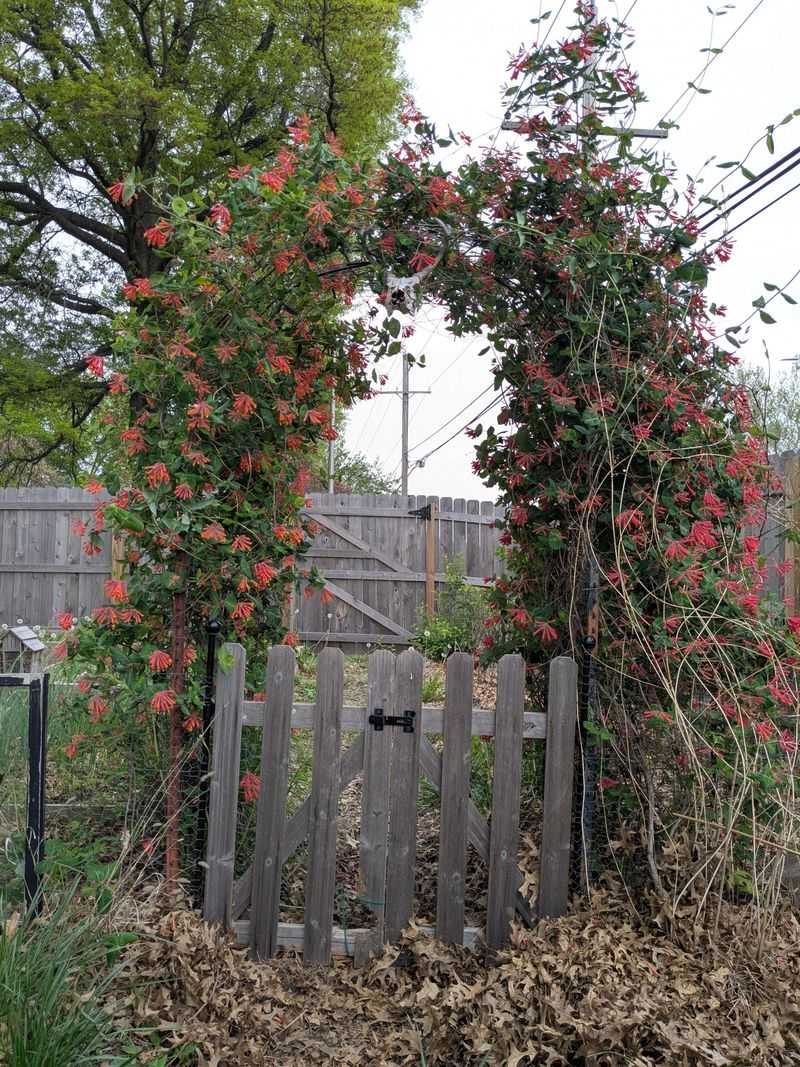
One of the most common concerns about planting a vine is losing control of it over time.
Coral honeysuckle responds well to structure in a way that makes that concern manageable rather than theoretical.
A trellis, fence, arbor, or wooden post gives it clear direction, and it follows that direction reliably without developing the territorial habits of more aggressive climbers.
The vine climbs by twining stems around supports rather than using aerial roots or adhesive pads.
This means it causes no damage to wood siding, brick, or painted surfaces, and growth can be redirected easily by guiding young stems toward the intended support during early establishment.
That training takes minutes during the first season and produces years of tidy, attractive results.
At maturity, coral honeysuckle typically reaches ten to twenty feet, which is a genuinely manageable scale for most residential landscapes.
Annual pruning after the main spring bloom maintains shape and encourages stronger rebloom through the later part of the season. The pruning does not require expertise.
Removing leggy or crossing stems and opening up the growth pattern slightly is sufficient to keep the vine looking intentional rather than overgrown.
For fence lines, garden entrances, mailbox posts, or any structure that could benefit from vertical interest and seasonal color, coral honeysuckle delivers the right combination of vigor and manageability.
It climbs with purpose rather than opportunism, and that quality makes it a practical choice for real Georgia gardens rather than just ideal growing conditions.
6. Sun Brings Stronger Flowering
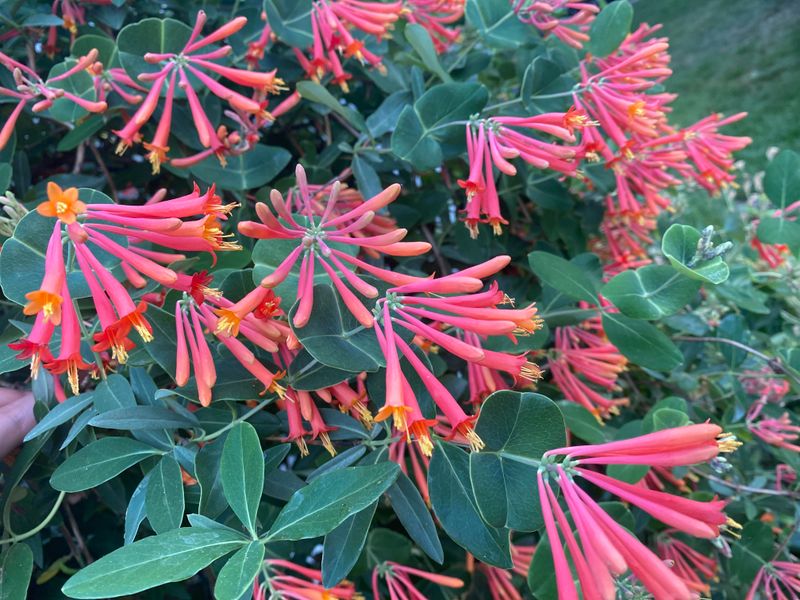
Coral honeysuckle adapts to partial shade and can be a useful choice in a variety of garden situations because of that flexibility.
Full sun, defined as at least six hours of direct sunlight daily, is where the vine demonstrates its full capability.
The difference in bloom production between shaded and sunny placements is noticeable enough to influence where the plant gets positioned in the first place.
In shadier conditions, the vine grows and flowers but produces a noticeably reduced bloom count. Foliage can become somewhat sparse in lower light situations.
In full sun, the plant responds with dense growth and a significantly heavier flower load through the entire season.
More flowers means more hummingbird visits, more sustained pollinator activity, and a more visually striking display from late winter through fall.
Georgia’s long sunny summers are an asset for a plant with this light preference.
Most of the state receives abundant sunshine through the peak growing season, which aligns directly with coral honeysuckle’s primary flowering cycle.
South-facing fence lines and west-facing trellises consistently produce the strongest results.
Gardeners working with predominantly shaded yards can still use this vine successfully, but setting realistic expectations for bloom volume prepares for the outcome accurately.
Positioning coral honeysuckle in the brightest available spot is one of the most straightforward ways to maximize what this native vine already does well.
The investment in plant selection and establishment returns more visibly when light is not a limiting factor through the growing season.
7. Wildlife Value Extends Well Beyond Hummingbirds
Hummingbirds receive the most attention in any conversation about coral honeysuckle, and the relationship between this vine and ruby-throated hummingbirds justifies that focus.
The wildlife function of the plant extends considerably further than that single high-profile connection, and understanding the full scope of what coral honeysuckle supports changes how its value gets calculated in a garden context.
Native bees with longer tongues, particularly bumblebees, access the tubular flowers and gather both nectar and pollen effectively.
Butterflies including spicebush swallowtails and zebra swallowtails visit the blooms as well.
The dense twining stems create sheltered positions where small insects overwinter, nest, or rest through temperature extremes.
Native bees sometimes use the woody stems for nesting material or shelter.
That structural habitat function operates quietly through seasons when no flowers are present and adds ecological value that goes entirely unnoticed from a distance.
The deeper principle here applies across native plant gardening broadly.
Plants that co-evolved with local wildlife over thousands of years support those wildlife communities in layered, interconnected ways that non-native ornamentals cannot replicate regardless of how attractive or well-maintained they are.
Coral honeysuckle’s relationships with Georgia’s insects and birds developed across centuries of shared ecology, and those relationships show up in the garden through small but consistent forms of activity every season.
Adding a single native vine to a conventionally planted landscape creates new ecological connections that extend benefit through the whole yard.
Coral honeysuckle is not decorative structure on a trellis. It is a functioning component of a living system, and Georgia’s wildlife responds to gardeners who recognize and act on that difference.