8 Reasons Your Tomato Leaves Are Turning Yellow In Massachusetts
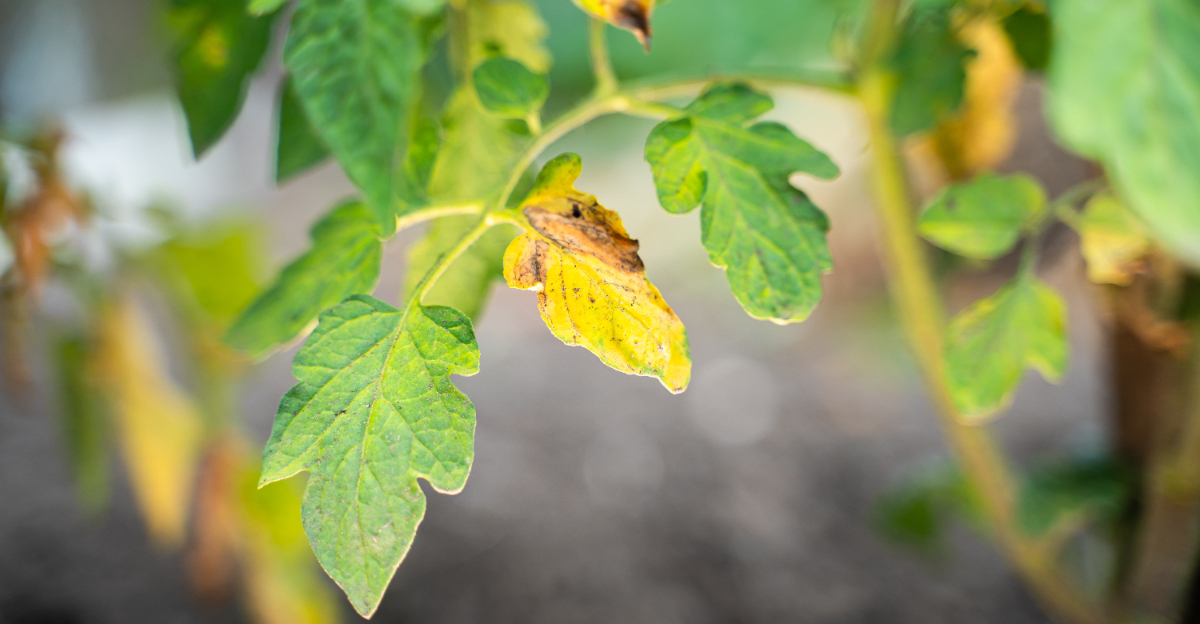
One morning your tomato plants look fine. The next, something is off, yellow leaves climbing from the bottom up, spreading faster than you expected. Massachusetts gardeners know this moment well.
The state’s humid summers, unpredictable rainfall, and heavy soils create the kind of conditions where tomato problems show up uninvited and move quickly. Yellowing leaves are rarely one thing.
They can point to a fungal disease working through your soil, a nutrient the roots cannot access, or a watering habit that seemed reasonable at the time. The tricky part is that several of these causes look nearly identical until you know what to look for.
Here are the eight most likely reasons your tomato leaves are turning yellow in Massachusetts, and what to do about each one.
1. Low Nitrogen Levels Show Up in the Leaves First
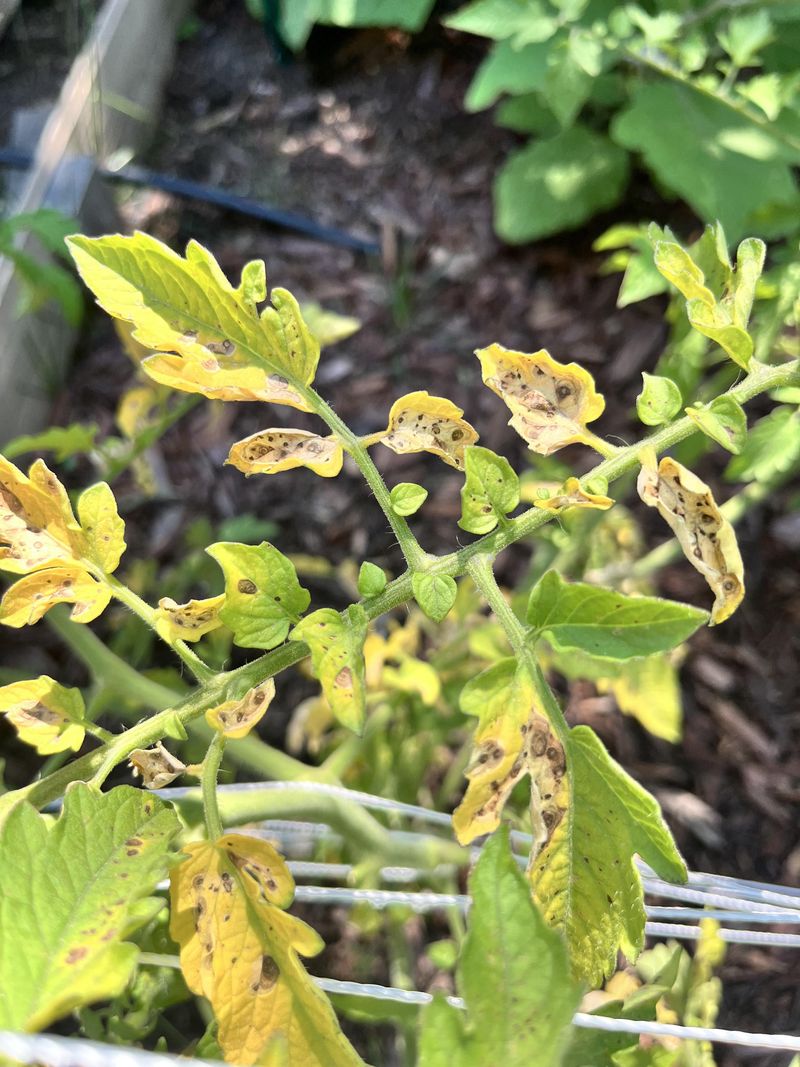
Your tomato plant is basically waving a yellow flag at you. When nitrogen runs low, the oldest leaves at the bottom of the plant lose their green color first.
Nitrogen is the nutrient that fuels leafy, green growth. Without enough of it, your plant starts pulling nitrogen from older leaves to feed new growth at the top.
The result is a slow yellowing that creeps upward over time. New leaves at the top stay green while the bottom ones fade to a pale, washed-out yellow.
Massachusetts soils, especially in areas with heavy clay or sandy loam, tend to be naturally low in nitrogen. Spring rains can also wash nitrogen out of the soil before your plants even get a chance to absorb it.
The fix is straightforward. A balanced fertilizer with a higher first number, like a 10-5-5, can restore nitrogen levels within a week or two.
You can also work compost or blood meal into the soil around the base of the plant. Water it in well so the nutrients reach the roots quickly.
Check your fertilizer schedule too. Many gardeners fertilize at planting and then forget about it. Tomatoes are heavy feeders and need consistent nutrition all season long.
A soil test from the UMass Extension program is an easy way to find out exactly what your garden is missing. Start there, and your plants will thank you with thick, green leaves all summer.
2. Watering Mistakes That Sneak Up On Massachusetts Gardeners
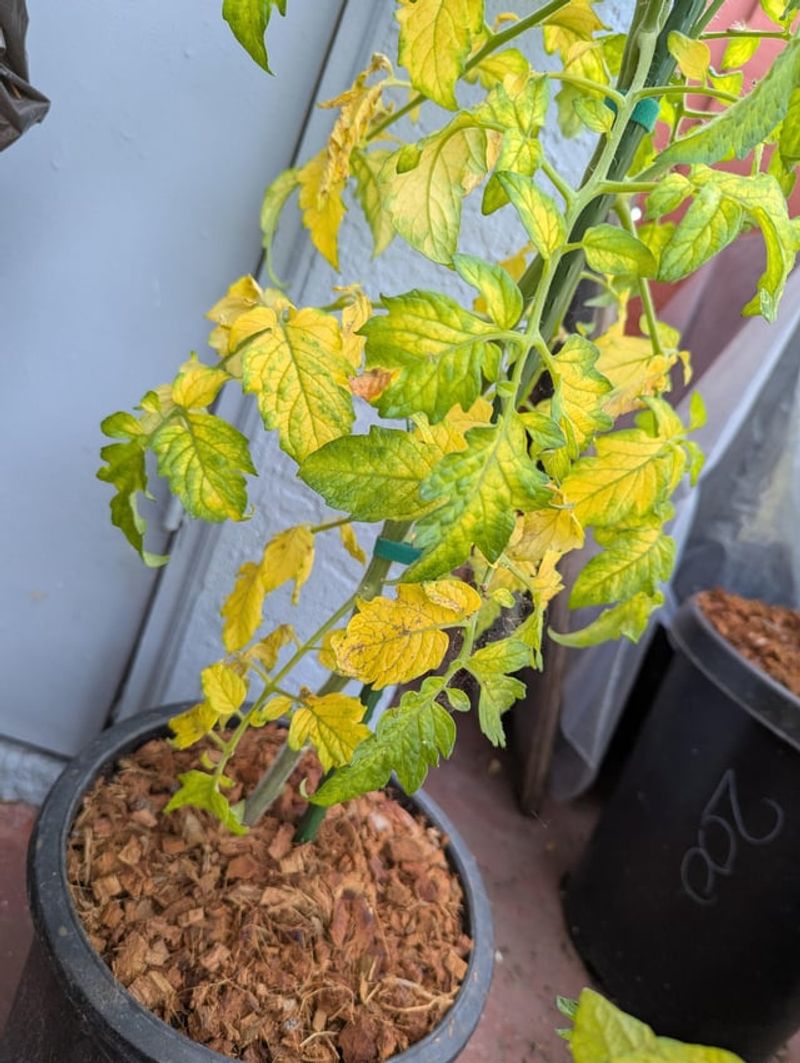
Too much water and too little water look almost identical on a tomato plant. Both cause yellow leaves, and both are extremely common in Massachusetts gardens.
Overwatering is the more frequent offender. Massachusetts springs are wet, and gardeners who water on a schedule often end up drowning their plants during rainy stretches.
When roots sit in soggy soil, they cannot pull in oxygen. Without oxygen, roots struggle to absorb nutrients, and leaves turn yellow even if the soil is packed with fertilizer.
Underwatering causes a different kind of stress. Leaves curl inward first, then yellow and drop. The soil pulls away from the edges of the container or raised bed.
The best way to check is simple. Stick your finger two inches into the soil. If it feels wet, skip the watering. If it feels dry, water deeply and slowly.
Your Massachusetts Garden Changes Every Week. Your Plan Should Too.
Gardening in Massachusetts changes quickly throughout the season. Every Friday you’ll receive a simple weekly plan showing exactly what to plant, prune, fertilize, harvest, and protect so you never miss the right timing.
Raised beds in Massachusetts dry out faster than in-ground plots, especially during July heat waves. Plants in containers need even more attention.
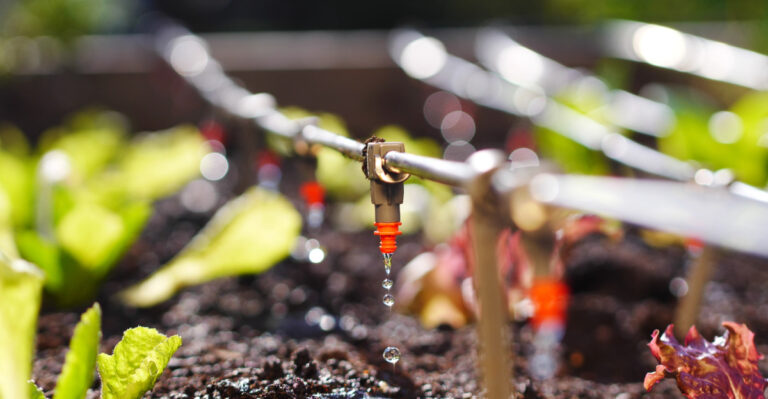
Drip irrigation is one of the most reliable ways to maintain consistent moisture. A timer-controlled drip system removes the guesswork and keeps soil moisture steady between rainfalls.
Mulching around the base of your plants also helps. A two-inch layer of straw or wood chips slows evaporation and keeps roots cool during hot spells. Consistent watering habits make a bigger difference than most gardeners expect.
3. Early Blight Thrives In Wet Massachusetts Summers
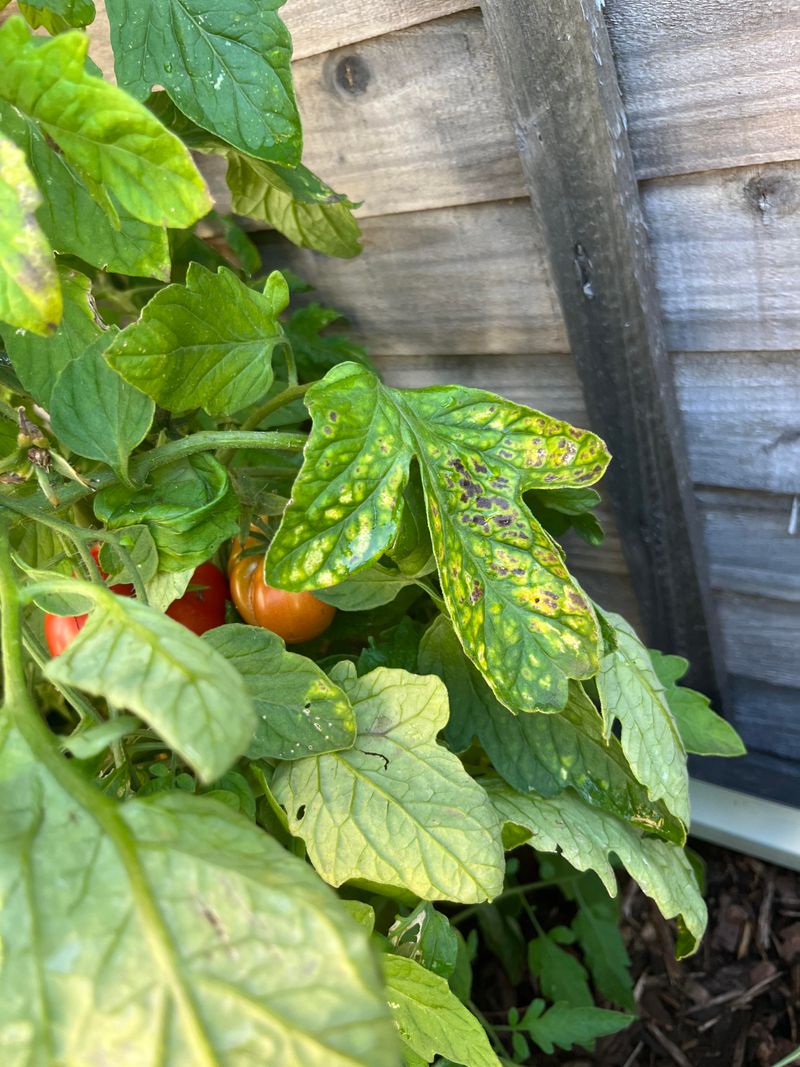
Brown spots with yellow halos on your tomato leaves are a calling card. Early blight is one of the most common fungal problems Massachusetts gardeners deal with each season.
Caused by the fungus Alternaria linariae, early blight spreads fast when temperatures hover between 75 and 85 degrees with high humidity. Massachusetts summers check both boxes regularly.
The spots usually start on the lowest leaves and move upward. Each spot has a dark brown center with a target-ring pattern and a bright yellow border around it.
Infected leaves eventually turn fully yellow and drop off the plant. If left unchecked, early blight can cause significant defoliation from the bottom up over the course of a season.
Spores live in the soil and on old plant debris. They splash up onto leaves during rain or overhead watering, which is why mulching makes such a big difference.
Remove affected leaves as soon as you spot them. Bag them and put them in the trash, not the compost pile, to stop the spread.
Copper-based fungicide sprays are effective and widely available at Massachusetts garden centers. Apply them early in the season before symptoms appear for the best protection.
Spacing your plants properly also reduces blight pressure. Good airflow between plants lets leaves dry faster after rain, which slows fungal growth significantly. Prevention is always easier than treatment once blight takes hold.
4. Septoria Leaf Spot Starts At The Bottom And Works Its Way Up
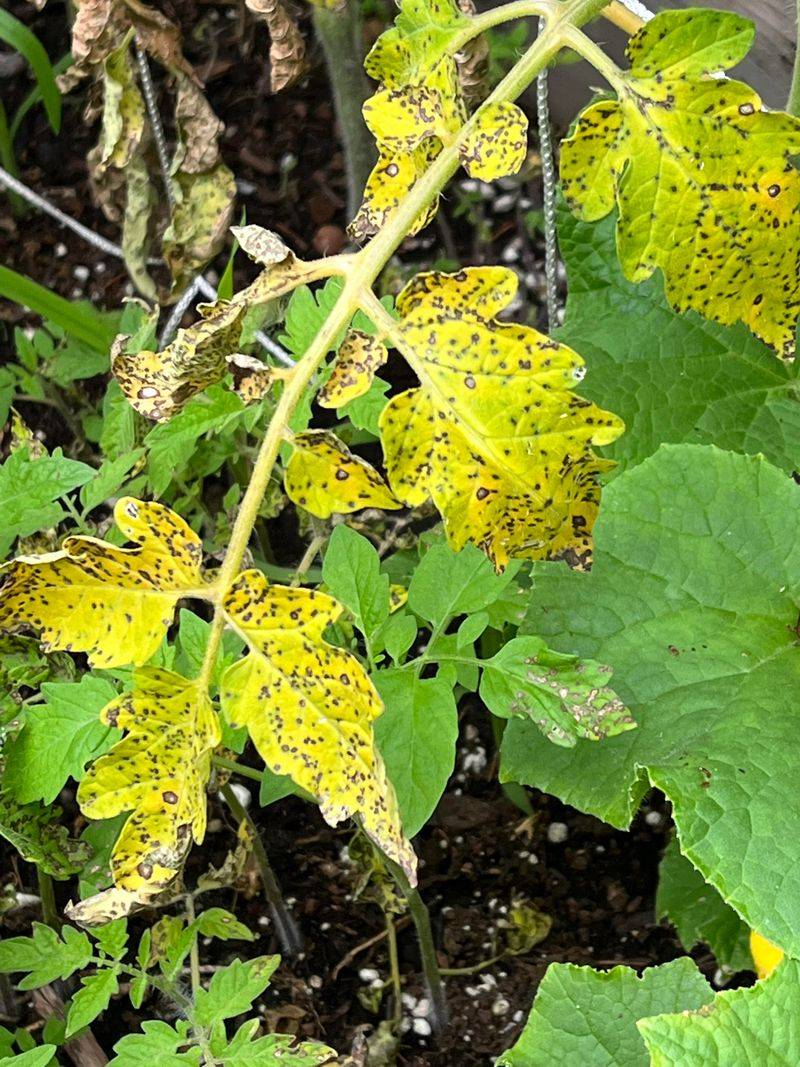
Small white spots with dark edges and yellow surroundings are showing up on your lower leaves. That pattern is almost always Septoria leaf spot, a fungal problem that loves Massachusetts weather.
Septoria lycopersici, the fungus behind the damage, spreads through water splash and infected soil. It typically appears after the first heavy rains of summer.
Unlike early blight, Septoria spots are smaller and more numerous. A single leaf can have dozens of tiny circular lesions, each with a pale white or tan center.
The surrounding tissue turns yellow as the infection progresses. Heavily spotted leaves drop off, starting at the bottom of the plant and gradually moving toward the top.
Losing lower leaves is not just cosmetic. Those leaves help shade the soil, retain moisture, and support the plant’s overall energy production. Losing too many weakens the whole plant.
Removing infected leaves quickly slows the spread. Always wash your hands and tools after handling infected plants to avoid moving spores around your garden.
Copper fungicide and chlorothalonil-based sprays both work against Septoria. Start applications at the first sign of spotting and repeat every seven to ten days during wet periods.
Rotating crops each season gives your soil a chance to recover and reduces disease pressure over time.
5. Late Blight Moves Fast And Massachusetts Gardeners Know It
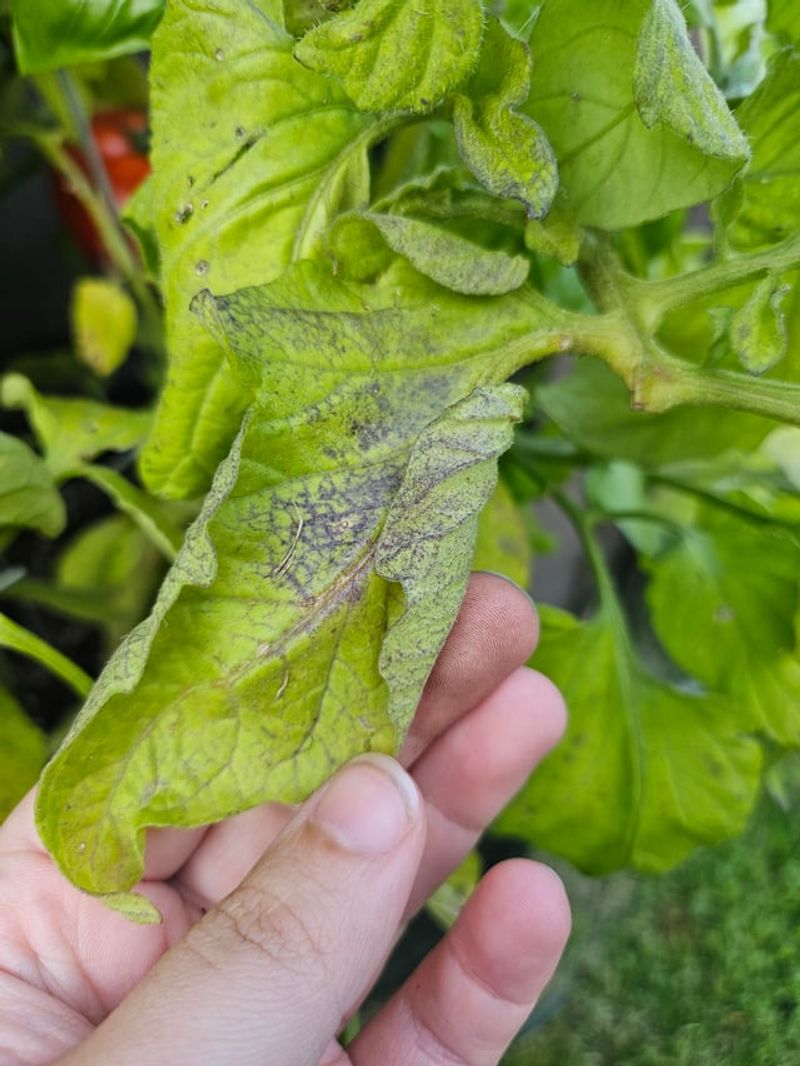
Late blight is the one that keeps experienced gardeners up at night. It spreads faster than almost any other tomato disease and can wipe out a planting in just days.
Caused by the water mold Phytophthora infestans, late blight is one of the most destructive tomato diseases a gardener can encounter. Massachusetts coastal humidity and cool nights create near-perfect conditions for it.
Symptoms start as pale green or water-soaked patches on leaves. Those patches quickly turn brown and yellow, and white fuzzy growth may appear on the underside of leaves in humid conditions.
Unlike early blight, late blight does not follow a slow bottom-up pattern. It can appear anywhere on the plant and spread to stems and fruit with alarming speed.
Once late blight is confirmed, act immediately. Remove and bag all affected plant material. Do not compost it under any circumstances.
Preventive copper fungicide applications before cool, wet weather are your best defense. Many Massachusetts gardeners start spraying in late July when conditions typically shift.
Certified disease-resistant varieties like Mountain Magic or Defiant offer built-in protection. Choosing the right variety at planting time is the smartest investment you can make.
Check your plants every single day during cool, rainy stretches. Early detection gives you the best chance of saving the rest of your garden. When it comes to late blight, speed is everything.
6. Fusarium Wilt Has A Lot To Do With Your Soil
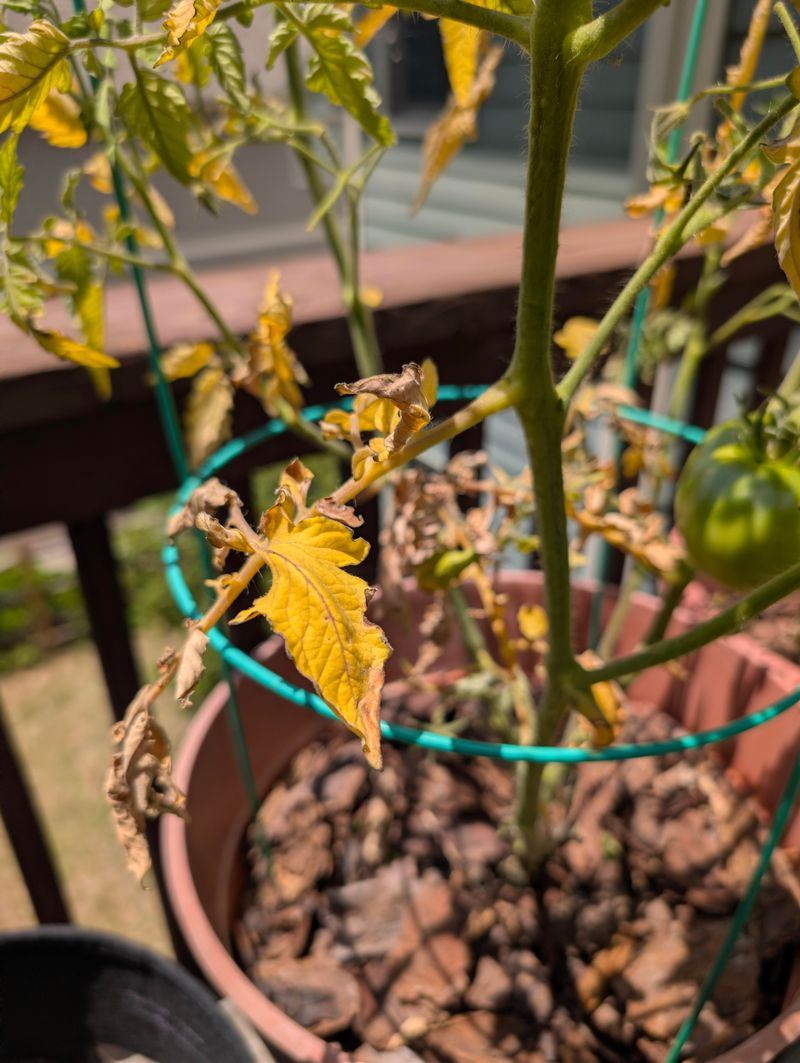
Your plant looks healthy from one side and completely yellow on the other. That lopsided yellowing is a classic sign of Fusarium wilt, a soilborne fungal disease.
Fusarium oxysporum lives in the soil and enters through the roots. Once inside, it clogs the plant’s vascular system and blocks water and nutrients from moving upward.
The yellowing often starts on just one branch or one side of the plant. That asymmetrical pattern sets Fusarium wilt apart from nutrient deficiencies, which tend to affect the whole plant evenly.
If you slice the main stem near the base, you will see brown or reddish discoloration inside. That internal staining is a reliable confirmation of the disease.
Massachusetts soils that stay warm and slightly acidic favor Fusarium development. Raised beds with poor drainage or reused potting mix can harbor the fungus for years.
There is no chemical cure once a plant is infected. Removing the plant promptly stops the fungus from spreading spores into surrounding soil.
Crop rotation is the most effective long-term solution. Avoid planting tomatoes or any nightshade family plant in the same spot for at least three years.
Look for tomato varieties labeled with an F on the tag. That letter means the variety has been bred with resistance to Fusarium wilt. Starting with resistant plants is the easiest way to keep this soil problem from becoming a season-ending headache.
7. Potassium And Magnesium Deficiencies Are Easy To Overlook
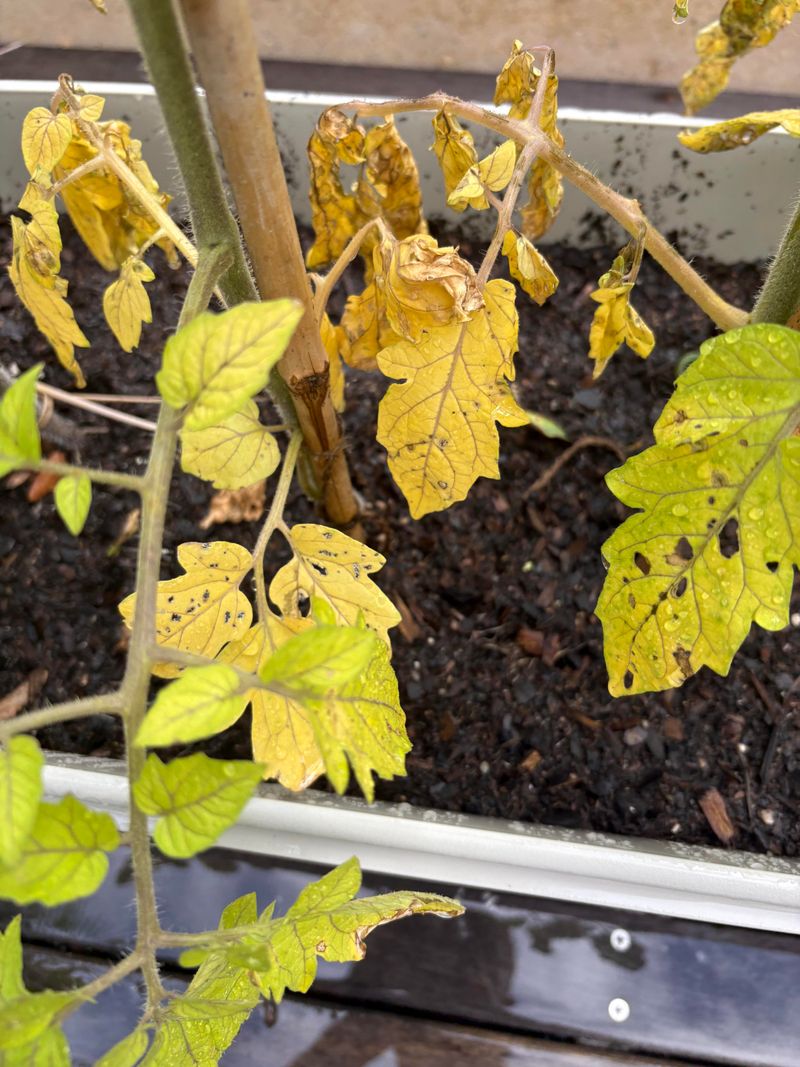
Not every yellow leaf is caused by a fungus or a pest. Sometimes your soil is simply missing key minerals, and your tomato plant shows you exactly where the gaps are.
Potassium deficiency shows up as yellowing along the outer edges of leaves. The centers stay green while the margins turn yellow and eventually brown and crispy.
Magnesium deficiency looks different. The yellowing appears between the leaf veins while the veins themselves stay green, a pattern called interveinal chlorosis.
Both deficiencies are common in Massachusetts gardens, especially in raised beds where nutrients leach out faster than in traditional in-ground plots. Frequent heavy rains speed up that leaching process.
A soil test is the most accurate way to confirm what is missing. UMass Extension offers affordable testing and provides specific amendment recommendations for your results.
For magnesium, a foliar spray of Epsom salt dissolved in water works quickly. Dissolve Epsom salt in water and spray directly on affected leaves for fast absorption.
Potassium can be boosted with greensand, wood ash, or a tomato-specific fertilizer with a higher third number. Apply it to the soil and water it in thoroughly.
Many gardeners skip soil testing because it feels like extra work, but it pays off in the long run. Knowing exactly what your plants need puts you in control of your garden from the very first planting of tomatoes in the season.
8. Pest Damage That Looks Just Like A Disease Problem
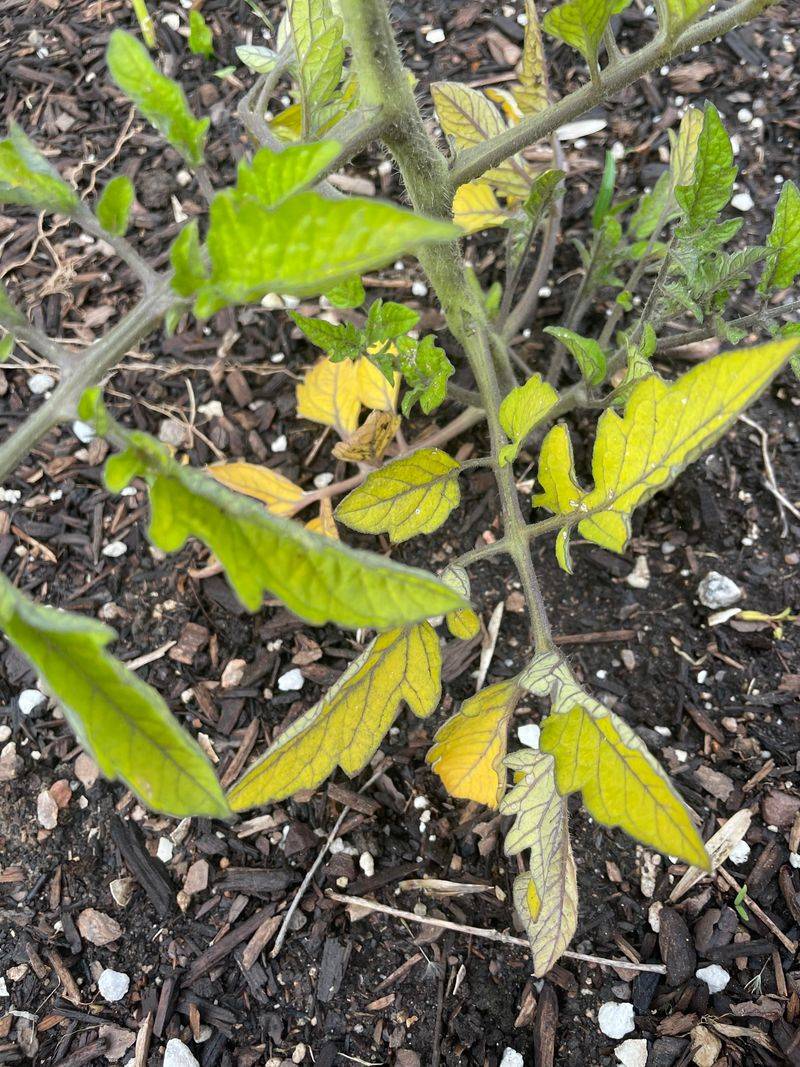
Bugs do not always announce themselves with big, obvious holes. Some of the sneakiest pest damage looks almost identical to a fungal infection or a nutrient problem.
Spider mites are the top offender in Massachusetts tomato gardens. These tiny arachnids feed on the underside of leaves, causing a speckled yellow stippling pattern across the leaf surface.
Flip a suspicious leaf over and look closely. If you see fine webbing or tiny moving dots, spider mites are your culprit, not a soil deficiency or fungal disease.
Aphids cluster on new growth and the underside of leaves. They suck sap from the plant and leave behind sticky residue, causing leaves to curl, yellow, and drop prematurely.
Whiteflies behave similarly. A cloud of tiny white insects that scatter when you brush the plant is a clear giveaway. Their feeding causes widespread yellowing across the entire plant.
A strong blast of water from a garden hose knocks aphids and spider mites off plants effectively. Repeat every few days to break the cycle before populations spread.
Insecticidal soap spray is a safe and effective option for all three pests. It works on contact and breaks down quickly, leaving no harmful residue on your tomatoes.
Checking the undersides of leaves weekly is a habit that pays off all season. Catching pest activity early means less damage and healthier tomato plants through the rest of the growing season.