8 Common Petunia Problems That Peak In Hot Weather
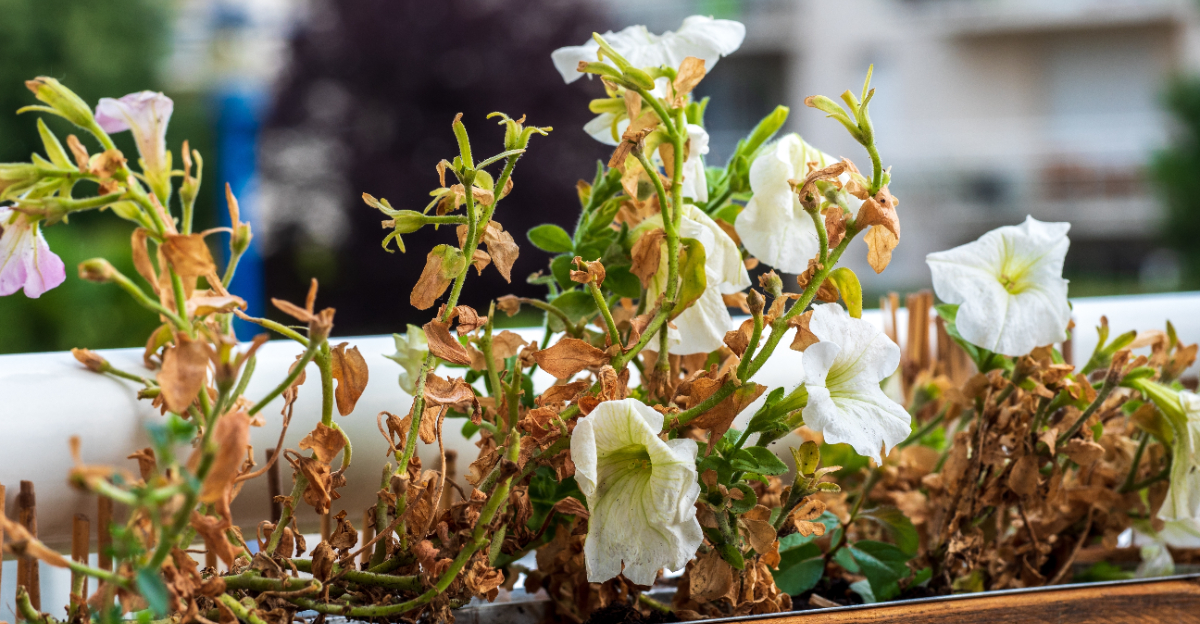
Petunias have a reputation for being tough, but summer heat exposes every weakness fast. One week they look fine, and the next week stems are sprawling, buds are disappearing, and leaves are going yellow for no obvious reason.
Most of these problems build quietly before they become impossible to ignore. A few days of missed signals, and suddenly you are dealing with a plant that looks nothing like what you put in the ground.
The eight problems covered here are the ones that show up most reliably once temperatures climb and stay there. Some are easier to spot than others, but all of them are fixable with the right approach.
If your petunias have been struggling through the heat, you are about to find out exactly why.
1. Stems That Get Leggy And Floppy Fast
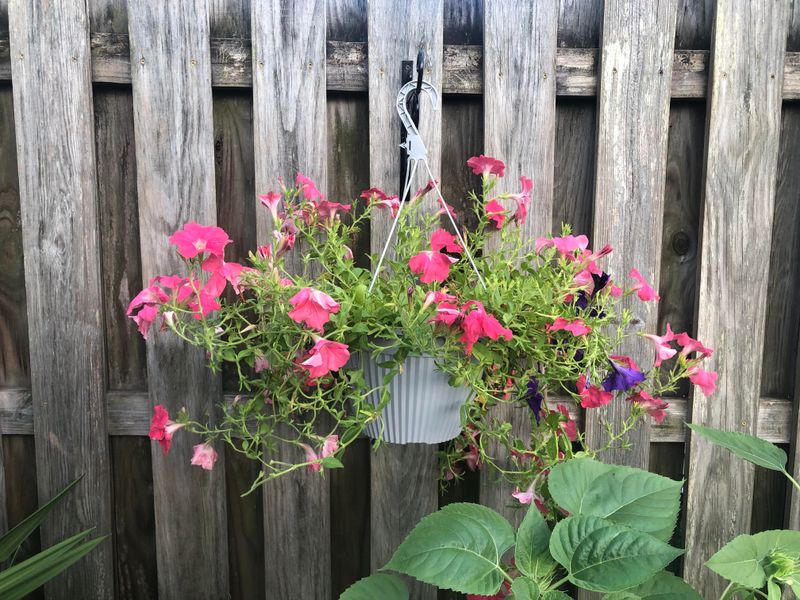
Long, floppy stems are one of the most frustrating petunia problems gardeners face once summer heat arrives. Your plant looked compact and bushy in spring, but now it resembles a tangled mess of bare vines.
Heat speeds up stem growth dramatically. Petunias push energy into stretching toward light when temperatures climb, leaving the lower stems stripped and weak.
The fix is simpler than most people expect. Pinching back the stems by about one-third encourages the plant to branch out and fill in again.
Use clean scissors or your fingernails to snip just above a leaf node. New growth will typically sprout from that spot within a few weeks.
Fertilizing right after you pinch helps speed up the recovery. A balanced liquid fertilizer gives the plant the fuel it needs to push out fresh, bushy growth.
Leggy petunias are not hopeless or past saving. They just need a firm hand and a little patience to bounce back looking full and lush.
Spacing also plays a role in this problem. Plants crowded too close together compete for light, which pushes them to stretch upward instead of outward.
If your petunias are in containers, move them to a spot with at least six hours of direct sun. Consistent light keeps stems stocky and strong all season long.
Think of pinching as a haircut your petunias actually enjoy. A little trim now means a showstopping display of blooms just a few weeks later.
2. Wilting Even When The Soil Is Wet
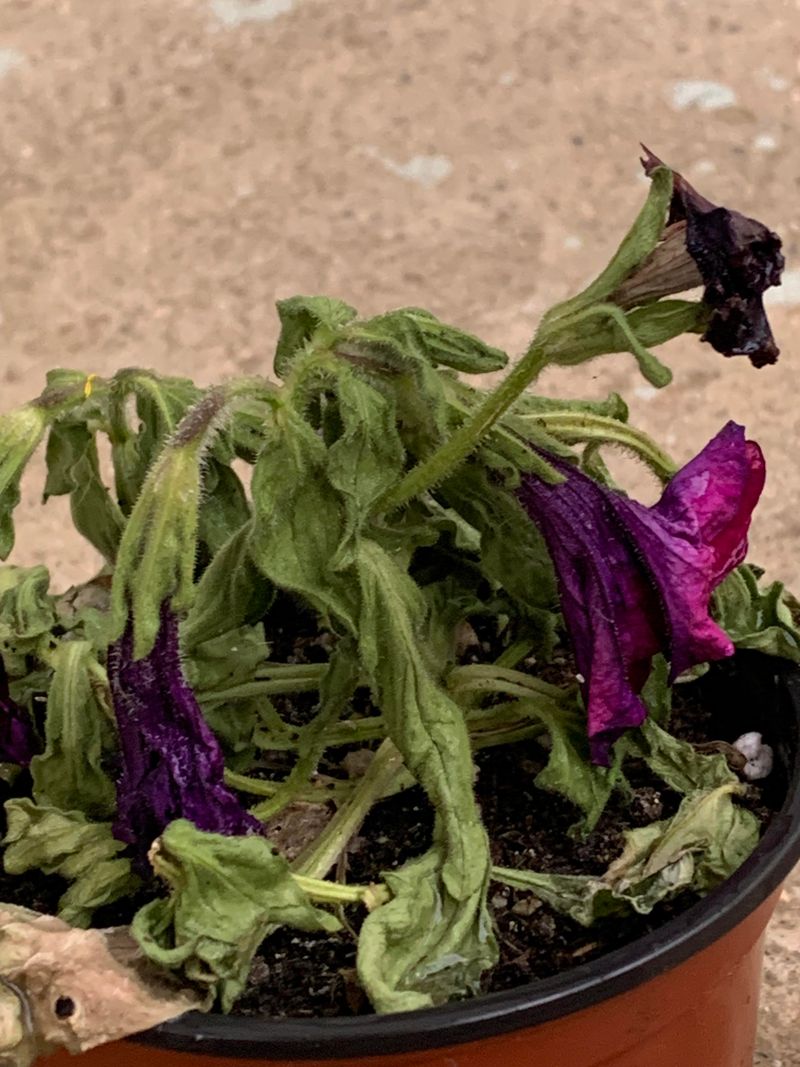
You just watered your petunias an hour ago, but they are drooping like they have not seen rain in weeks. This confusing scenario is actually one of the most common petunia problems during hot spells.
Once temperatures regularly push past 85–90°F, plants can lose water through their leaves faster than roots can replace it. The soil can be perfectly moist and the plant will still wilt by midday.
This is called heat stress, and it is temporary in most cases. The plant is not sick; it is simply overwhelmed by the heat load bearing down on it.
Check your petunias again in the early evening after the sun drops lower. If they perk back up on their own, heat stress is the culprit and not a watering problem.
Afternoon shade can make a huge difference for container-grown petunias. Moving pots to a spot that gets shade between noon and three o’clock reduces stress significantly.
For petunias planted in the ground, a light layer of mulch around the base helps keep soil temperatures cooler. Cooler roots mean a more stable water supply to the rest of the plant.
Avoid the temptation to water again just because the leaves look sad. Overwatering wet soil leads straight to root rot, which is a much harder problem to fix.
Wilting petunias in summer are sending a clear message about heat, not neglect. Read the signal correctly and your response will actually help instead of hurt.
3. Leaves Turning Yellow Out Of Nowhere
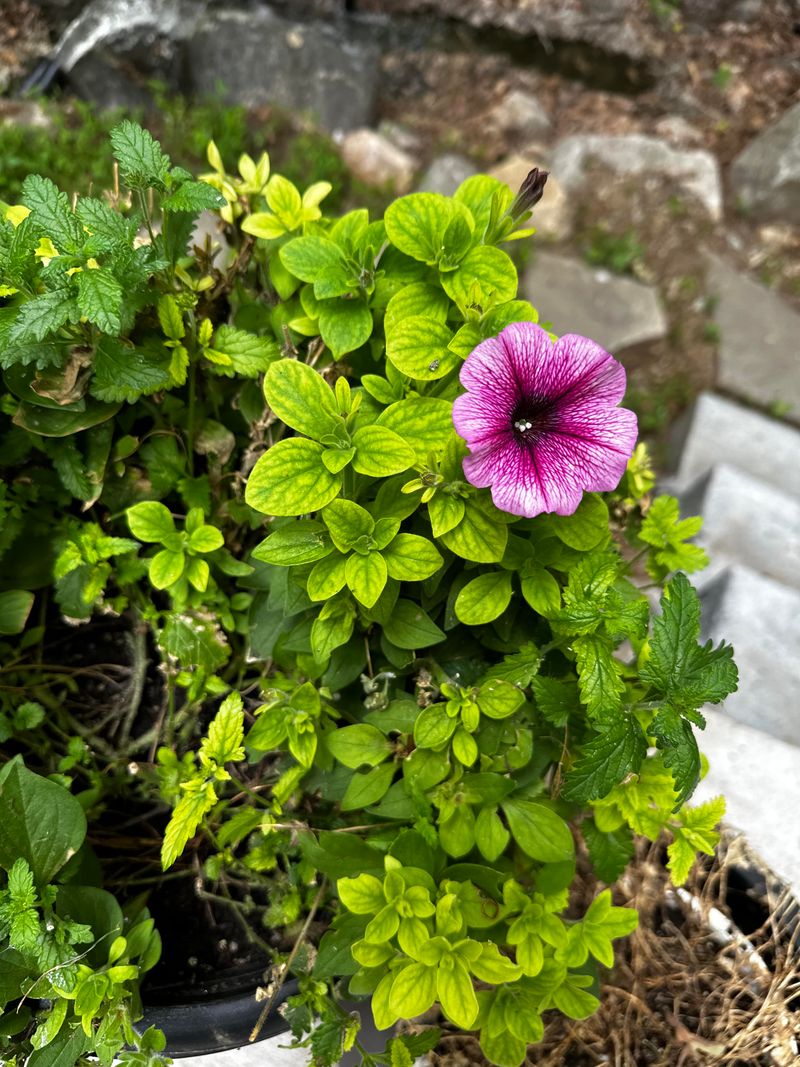
One morning you notice a few yellow leaves at the base of your petunias, and by the next week half the plant looks faded. Yellowing leaves are one of those petunia problems that can mean several different things at once.
Overwatering is the most common cause during hot weather. Soggy soil suffocates roots, and the plant cannot absorb nutrients properly, so leaves turn yellow and weak.
Nutrient deficiency is another big reason for yellowing. Petunias are heavy feeders, and summer heat speeds up their metabolism, burning through fertilizer faster than you might expect.
A yellowing pattern that starts with older, lower leaves usually points to nitrogen deficiency. Switching to a fertilizer higher in nitrogen can show improvement within a few weeks.
If the yellowing appears between leaf veins while the veins stay green, that pattern signals iron or magnesium deficiency. Chelated iron spray targets iron deficiency, while an Epsom salt solution works better when magnesium is the issue.
Sometimes the issue is simply too much direct afternoon sun on potted plants. Intense reflected heat from pavement or walls can scorch roots through the pot walls, disrupting nutrient uptake.
Check your watering schedule first before reaching for any product. Allow the top inch of soil to dry out between waterings to keep roots healthy and active.
Yellow leaves are your petunias trying to have a conversation with you. Listen carefully, diagnose the real cause, and you will have green, glossy foliage back sooner than you think.
4. Buds That Fall Off Before They Ever Open
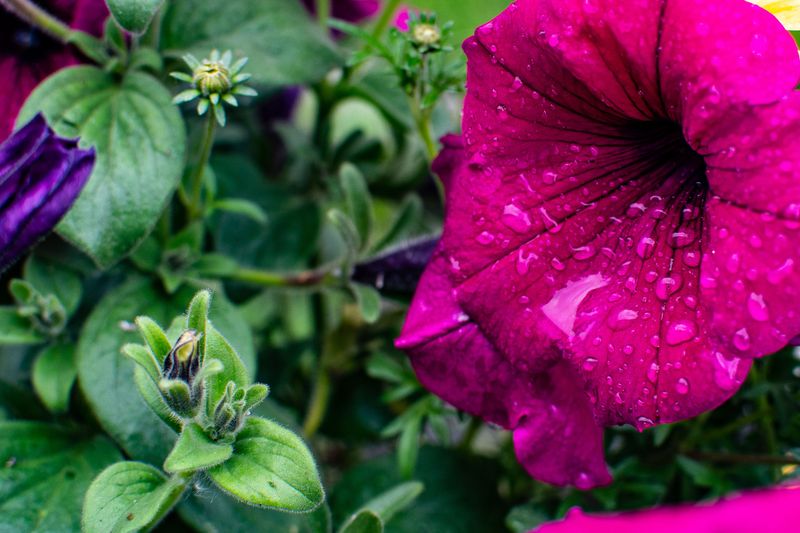
Bud drop is heartbreaking when you have been waiting weeks for your petunias to burst into color. You spot promising little buds forming, and then a few days later they are gone before a single one ever opened.
Heat is the primary trigger for this frustrating problem. When night temperatures stay above 70 degrees for extended periods, many petunia varieties struggle to complete the blooming cycle successfully.
Inconsistent watering makes bud drop worse very quickly. Going from bone-dry to waterlogged stresses the plant so much that it sheds buds as a survival response.
Keep soil moisture as steady as possible during hot stretches. A self-watering container or a drip irrigation system can remove the guesswork from your daily watering routine.
Low humidity combined with scorching temperatures also contributes to this problem. Petunias grown in dry, hot climates drop buds more frequently than those in slightly more humid conditions.
Misting the foliage lightly in the morning can raise humidity around the plant without soaking the soil. Just avoid misting in the afternoon heat, as wet leaves in full sun can cause scorch marks.
Phosphorus supports flower development, so a bloom-booster fertilizer can help during bud formation stages. Look for a formula with a higher middle number on the label, like 10-30-20.
Bud drop feels like failure, but it is really just your petunia asking for steadier conditions. Give it consistency and cooler evening temps, and those blooms will finally follow through.
5. Root Rot Sneaking Up From Below
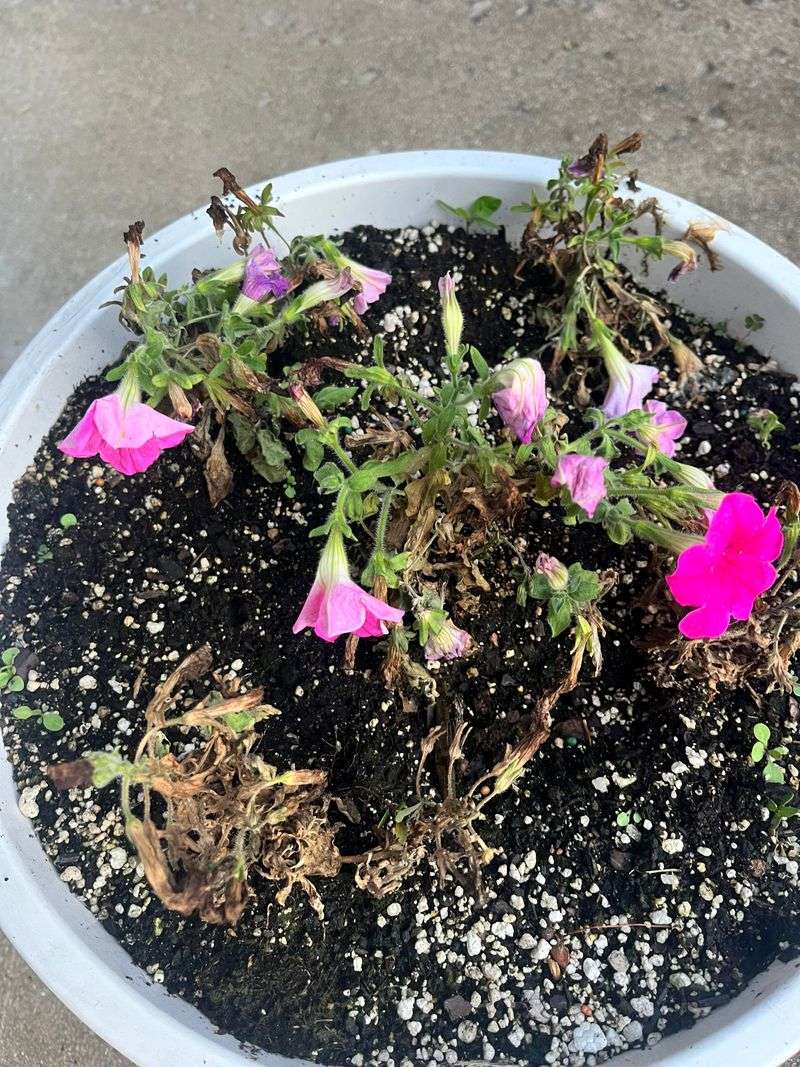
Root rot is the silent attacker of petunias during summer, moving in slowly while the plant looks almost normal above the soil line. By the time you notice the top of the plant collapsing, the roots below have already been damaged for weeks.
Hot weather creates the perfect conditions for root rot when containers lack proper drainage. Water pools at the bottom, soil stays saturated, and the fungal organisms that cause rot thrive in warm, wet environments.
Overwatering during a heat wave is the most common trigger. Gardeners see wilting and assume the plant needs more water, then add even more moisture to already soaked soil.
Always check the soil before watering by pressing your finger about an inch deep. If it still feels damp, skip that watering and check again the following day.
Make sure every container has drainage holes that are actually open and not blocked by compacted soil or roots. Elevating pots slightly on feet or bricks helps water flow out freely after each watering.
If you catch root rot early, you can sometimes save the plant. Unpot it, trim away the dark and mushy roots with clean scissors, and repot in fresh, well-draining soil mix.
A soil mix with added perlite improves drainage significantly in containers. This simple adjustment keeps roots aerated and far less vulnerable to fungal rot during humid, hot stretches.
Root rot is sneaky, but it is also very preventable with the right soil and a disciplined watering habit. Catch it early, and your petunias still have a fighting chance.
6. Powdery Mildew Showing Up On Healthy Plants
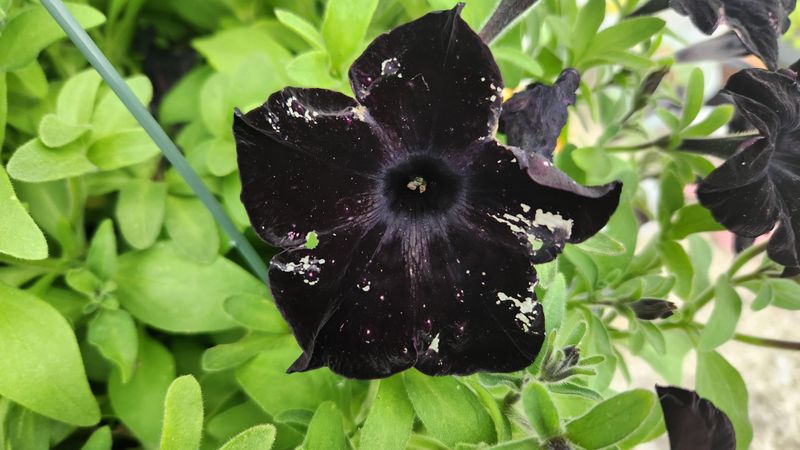
A white, chalky coating on your petunia leaves is not dust or fertilizer residue. Powdery mildew is a fungal disease that shows up with surprising speed during hot, humid summer weather.
Unlike most fungi, powdery mildew does not need wet leaves to spread. It thrives in warm weather with moderate humidity and poor air circulation. Hot days combined with cool, slightly humid evenings are all it needs to take hold.
Crowded planting is a major contributing factor. When petunias are packed too tightly together, air cannot circulate between them, and moisture lingers on the foliage far longer than it should.
Spacing plants at least eight to ten inches apart allows air to move freely. Good airflow is one of the simplest and most effective ways to prevent fungal issues all season.
Neem oil spray is a popular organic treatment that works well on early-stage powdery mildew. Apply it in the early morning so the oil has time to absorb before intense afternoon heat arrives.
Baking soda mixed with water and a drop of dish soap also offers a budget-friendly solution. Spray it directly on affected leaves and repeat every five to seven days until the mildew clears.
Remove heavily infected leaves and dispose of them away from the garden. Leaving diseased foliage on the ground lets spores spread back onto healthy plants nearby.
Powdery mildew looks alarming at first, but catching it early makes treatment straightforward and effective. Act fast, improve airflow, and your petunias will shake off this chalky nuisance before long.
7. Aphids And Thrips Moving In For The Season
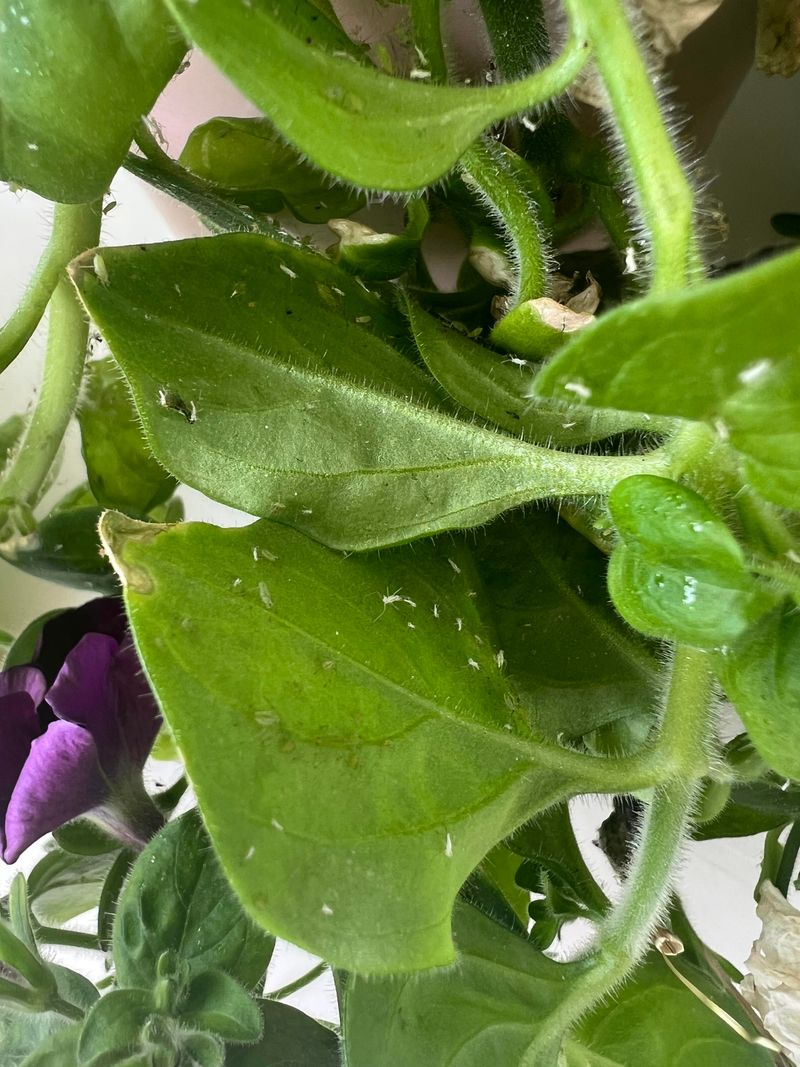
Tiny insects might be hard to spot at first, but the damage they leave behind is unmistakable. Aphids and thrips are two of the most persistent petunia pests, and hot weather sends their populations skyrocketing.
Aphids cluster on new growth and the undersides of leaves, sucking out plant sap and leaving behind a sticky residue called honeydew. That residue then attracts sooty mold, turning your petunias dark and grimy-looking.
Thrips are even smaller and harder to see without a magnifying glass. They scrape and pierce flower petals and leaves, leaving behind silvery streaks, distorted growth, and discolored blooms.
Both pests reproduce extremely fast in warm weather. A small colony can explode into a full infestation within just a few days when temperatures are high and conditions are dry.
A strong blast of water from a garden hose knocks aphids off stems and disrupts their feeding. Repeat this every couple of days to keep their numbers low without any chemicals.
Insecticidal soap spray targets both aphids and thrips effectively when applied directly to the insects. Coat the undersides of leaves thoroughly, since that is where most of the pest activity hides.
Encouraging natural predators like ladybugs and lacewings helps keep pest populations in check naturally. Planting companion flowers such as marigolds or alyssum nearby attracts these helpful insects to your garden.
Staying ahead of aphids and thrips means checking your petunias a few times each week. Catching an infestation early keeps it manageable and keeps your blooms looking their best all summer.
8. Blooms That Fade Before Their Time
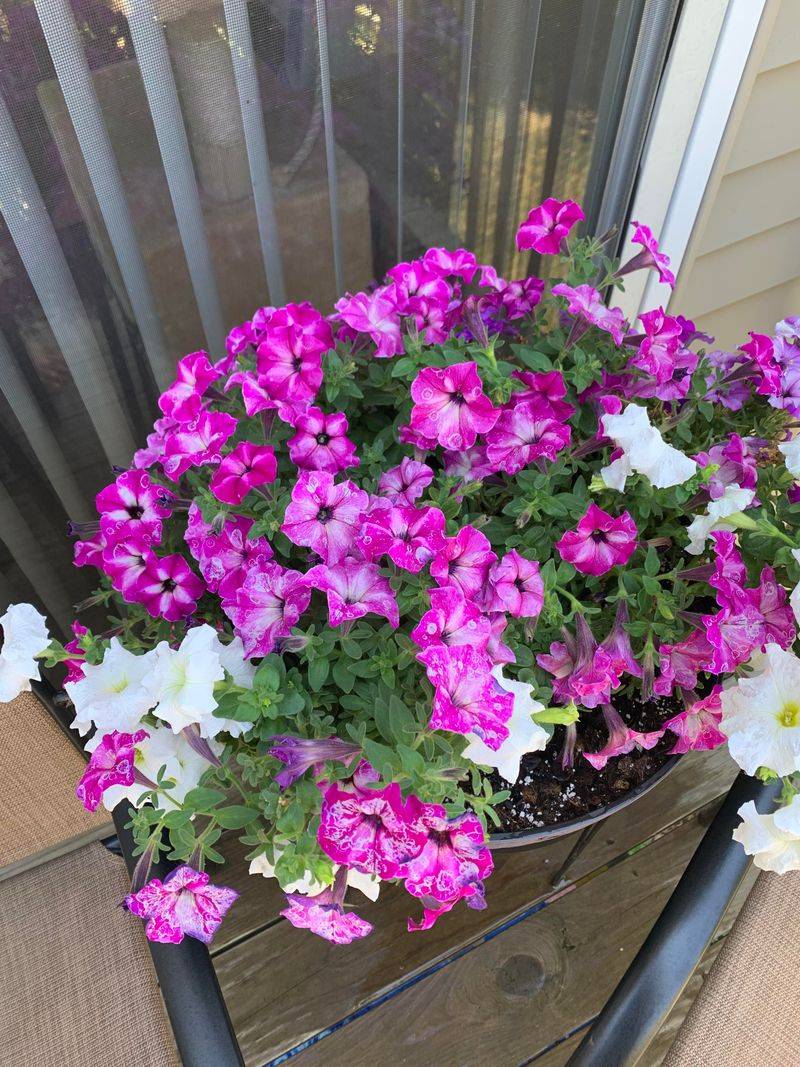
Your petunias opened up in gorgeous, saturated color, and then within just a day or two the blooms looked bleached and papery. Premature fading is one of those petunia problems that catches gardeners completely off guard.
Intense UV radiation from the summer sun breaks down the pigments in petunia petals faster than the plant can replace them. Lighter-colored varieties tend to hold up better, while deep purples and reds fade the quickest.
Heat also shortens the natural lifespan of each individual bloom. A flower that holds up well in mild spring weather may last only a fraction of that time once summer heat sets in.
Removing spent blooms regularly encourages the plant to produce fresh flowers instead of putting energy into seed production. Remove faded blooms at the base of the flower stem, not just the petals.
Afternoon shade helps blooms hold their color significantly longer. Even two hours of shade between one and four in the afternoon can extend petal life and keep colors vivid.
Consistent fertilizing with a bloom-focused formula keeps the plant producing new flowers rapidly to replace the ones that fade. A weekly liquid feed during peak summer keeps the cycle moving forward.
Choosing heat-tolerant petunia varieties makes a meaningful difference from the start. Wave and Supertunia series are both bred to handle summer conditions and hold color far better than older varieties.
Fading blooms in summer are not a sign of failure; they are just part of growing petunias in the heat. Stay consistent with care, and fresh color will keep coming all season long.