5 Weeds Oregon Gardeners Should Pull Before They Seed And 4 That Are Actually Worth Keeping
Not all weeds are created equal, and treating every uninvited plant in your Oregon garden the same way is one of those habits that creates more work than it saves.
Some of the plants pushing up through your lawn or garden beds right now are genuinely problematic and worth dealing with immediately before they set seed, spread runners, or drop berries that guarantee you a much bigger problem next season.
Others are doing something quietly useful, feeding pollinators, fixing nitrogen, or filling space that something worse would happily occupy instead.
Oregon yards host a surprisingly interesting mix of both, and knowing which category each plant falls into changes everything about how you respond.
Pull the right ones early and leave the right ones alone, and your garden gets a whole lot easier to manage over time.
1. Shiny Geranium Seeds Into Garden Edges
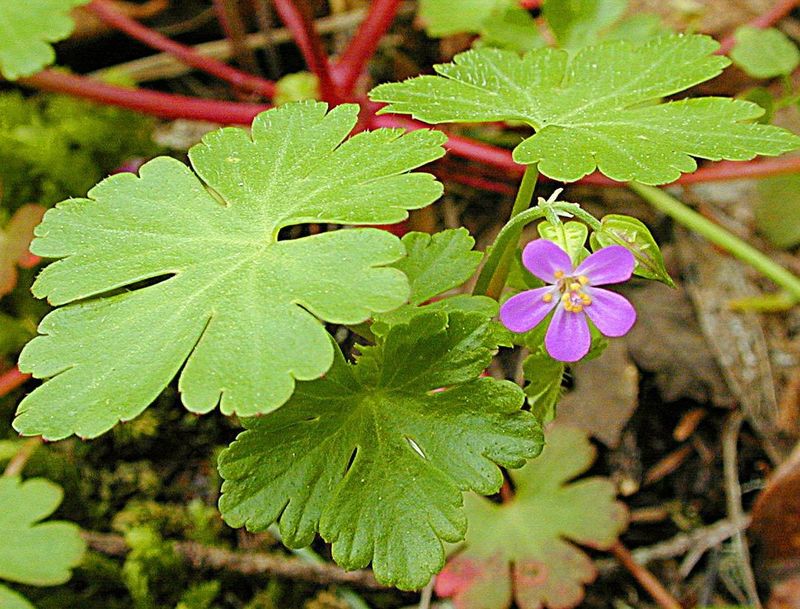
Along garden edges and shaded borders, shiny geranium has a habit of showing up quietly before most homeowners notice it has already started setting seed.
This low-growing annual weed is common in western Oregon yards, where mild winters and damp springs give it plenty of time to establish.
Its small pink flowers may look harmless, but each plant can produce dozens of seed capsules that eject seeds several feet when they mature.
The catapult-like seed release is what makes timing so important. Once those capsules start to brown and curl, the seeds are already on their way into nearby soil, mulch, trail edges, and neglected corners.
Removing plants while they are still flowering, before capsules form and ripen, gives you a real advantage in reducing next season’s seedbank.
Hand-pulling works well when the soil is moist, and shiny geranium roots are shallow enough that most plants come out cleanly.
Checking garden edges, forest margins, and shaded side yards in early spring gives you the best window to catch plants before they spread further.
Staying consistent across two or three seasons can noticeably reduce how many plants come back each year.
2. Creeping Buttercup Spreads Through Damp Lawns
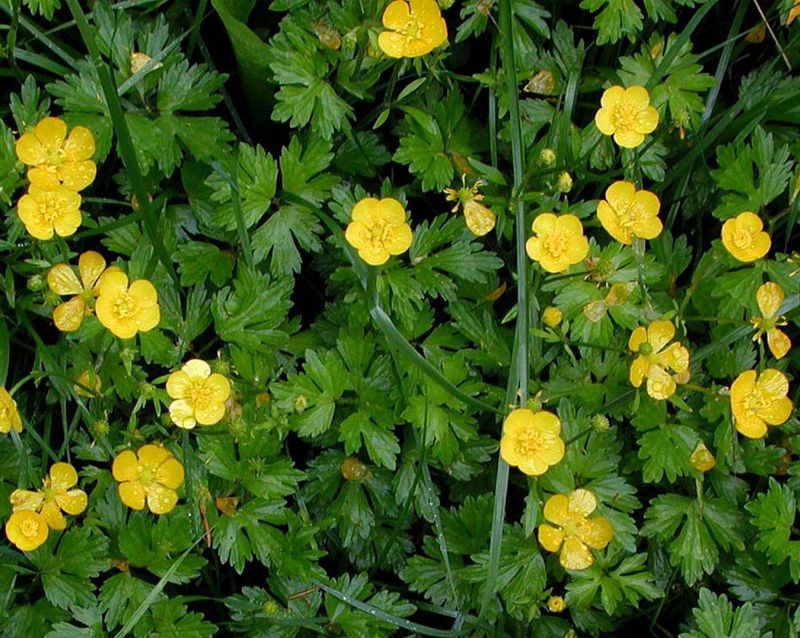
Damp low spots in Oregon lawns are exactly where creeping buttercup feels most at home. This perennial weed thrives in poorly drained areas and spreads by sending out long creeping stems, called stolons, that root wherever they touch the ground.
A small patch can expand into a dense mat surprisingly quickly, especially through wet western Oregon winters when conditions favor it and turf grasses may be struggling.
What makes creeping buttercup tricky is that pulling it by hand can leave stem fragments behind, and any rooted piece left in the soil can regrow. Working when soil is soft and moist helps you get more of the root system out in one go.
Removing plants before they flower and set seed adds another layer of control, since the plant also spreads by seed when conditions are right.
Improving soil drainage in low spots, overseeding with competitive grass varieties, and staying on top of early-season growth are all practical steps for Oregon homeowners dealing with this weed.
Your Oregon Garden Changes Every Week. Your Plan Should Too.
Gardening in Oregon changes quickly throughout the season. Every Friday you’ll receive a simple weekly plan showing exactly what to plant, prune, fertilize, harvest, and protect so you never miss the right timing.
Repeated removal over a couple of seasons is usually needed before numbers drop noticeably.
Skipping a season tends to allow patches to rebound quickly in lawns with ongoing drainage challenges.
3. Field Bindweed Twines Through Beds
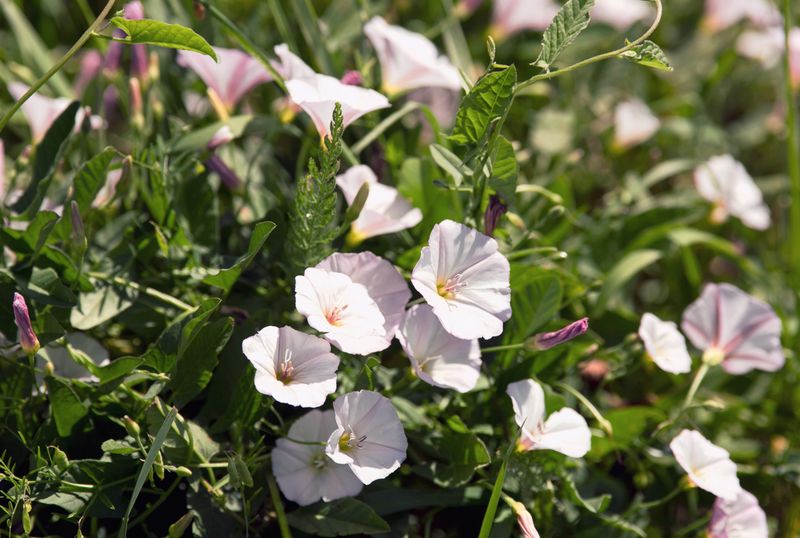
Few weeds frustrate Oregon gardeners quite like field bindweed, a perennial with twining stems that wind their way up through vegetable beds, flower borders, and ornamental plantings with remarkable persistence.
The white or pale pink trumpet-shaped flowers may look almost pretty at first glance, but the plant underneath is far harder to remove than it appears.
Roots can extend several feet deep into the soil and regenerate from small fragments left behind after pulling.
Removing plants before they set seed is a meaningful step, since bindweed seeds can remain viable in soil for many years. However, pulling top growth alone rarely provides lasting control because the root system stays active underground.
Consistent removal of new shoots as they emerge, repeated over multiple seasons, weakens the plant gradually by reducing its energy reserves.
In vegetable beds and formal borders, where bindweed can smother smaller plants and reduce productivity, staying on top of early regrowth matters most. Mulching can slow new shoot emergence slightly but will not eliminate an established root system on its own.
Oregon gardeners dealing with bindweed in problem areas often find that patience and repeated effort across several seasons produce the most noticeable long-term reduction in plant numbers.
4. Canada Thistle Needs Early Persistence
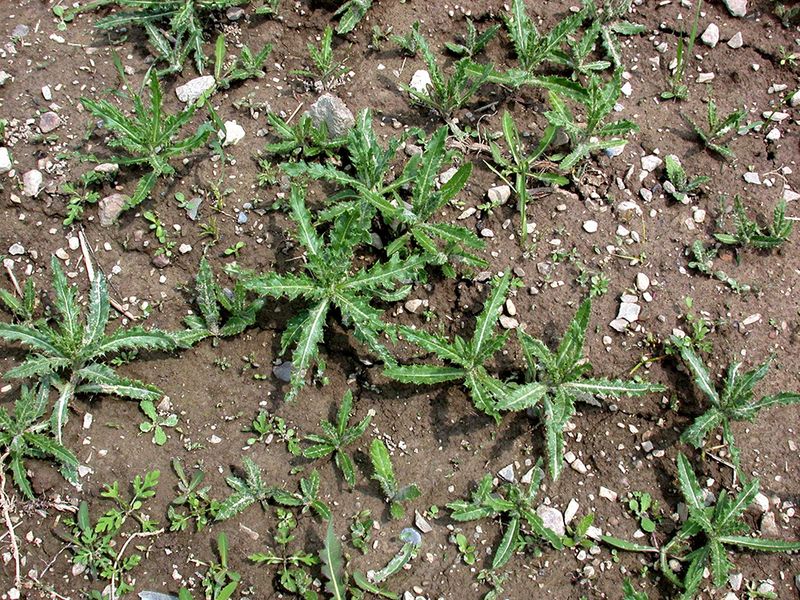
Canada thistle earns its reputation as one of the more challenging weeds in Oregon gardens because it spreads by two methods at once.
Underground creeping roots allow it to expand laterally into new areas even when no seeds are involved, while fluffy wind-carried seeds can carry the plant into neighboring beds, lawns, and open ground.
Getting ahead of it early, before flower heads develop and seeds disperse, is one of the most practical moves a gardener can make.
Cutting or pulling plants at the rosette stage, before they bolt and flower, removes the seed risk for that season. However, roots left in the ground will send up new shoots, so follow-up removal is almost always needed.
Visiting affected areas several times through spring and early summer to remove regrowth gradually depletes the root system over time, though results take more than one season to become obvious.
In vegetable gardens and newly planted native areas across Oregon, where thistle can outcompete desirable plants quickly, persistence really does pay off. Letting plants flower even once adds a new round of seeds to the soil.
Staying consistent and catching plants early each spring gives you the best chance of reducing their presence without relying on more intensive intervention methods.
5. Italian Arum Should Not Set Berries
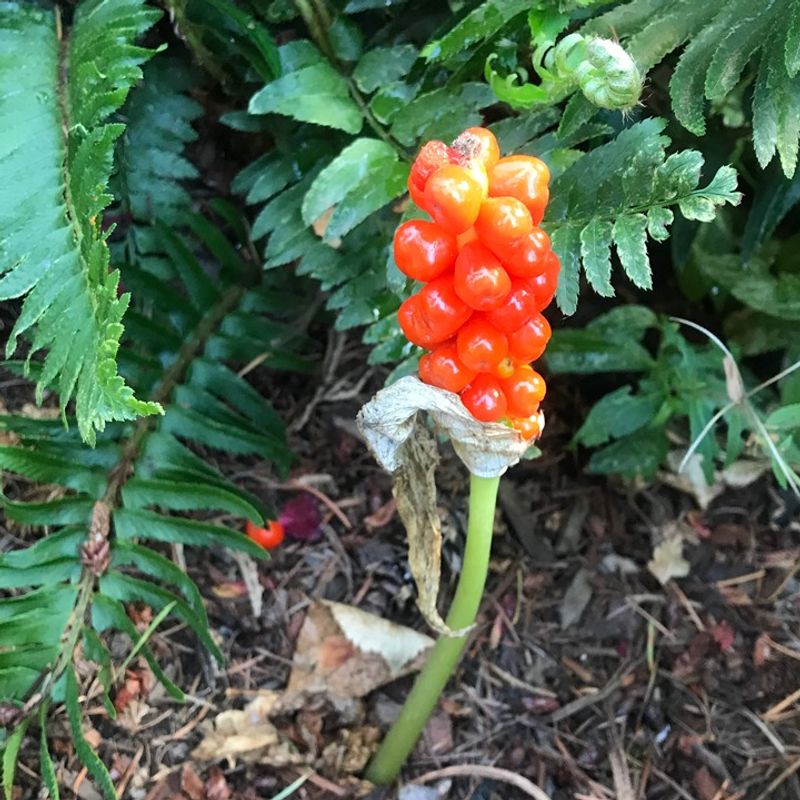
Italian arum is one of those plants that often enters Oregon gardens as an ornamental, brought in for its attractive arrow-shaped leaves and interesting flower structure.
The problem becomes clear later in the season when it produces clusters of bright orange-red berries on upright stalks.
Those berries are toxic and, more importantly from a spread standpoint, they can be moved by birds and other wildlife into areas well beyond the original planting.
In western Oregon, where mild conditions suit this plant well, it has shown the ability to naturalize in shaded and disturbed areas, including forest edges and garden margins where it was not intentionally planted.
Removing berries before they ripen and fall, or removing entire plants before berry production occurs, is the most direct way to limit its movement into new spaces.
Gardeners who already have Italian arum established in their yards should monitor it through late spring and summer, when berries develop, and remove berry clusters promptly.
Wearing gloves during removal is sensible since all parts of the plant can cause skin irritation.
If you are reconsidering this plant in your Oregon landscape, removing it entirely before it sets berries each year is a reasonable and responsible approach to keeping it contained.
6. However, White Clover Feeds Pollinators And Soil
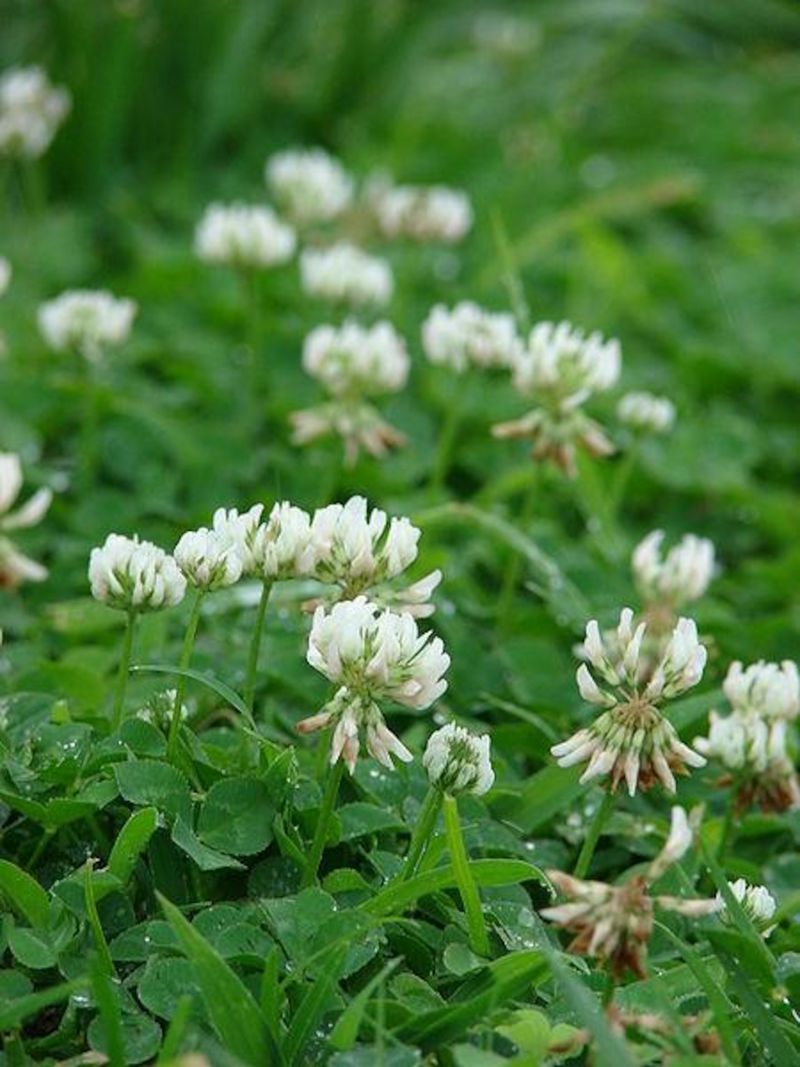
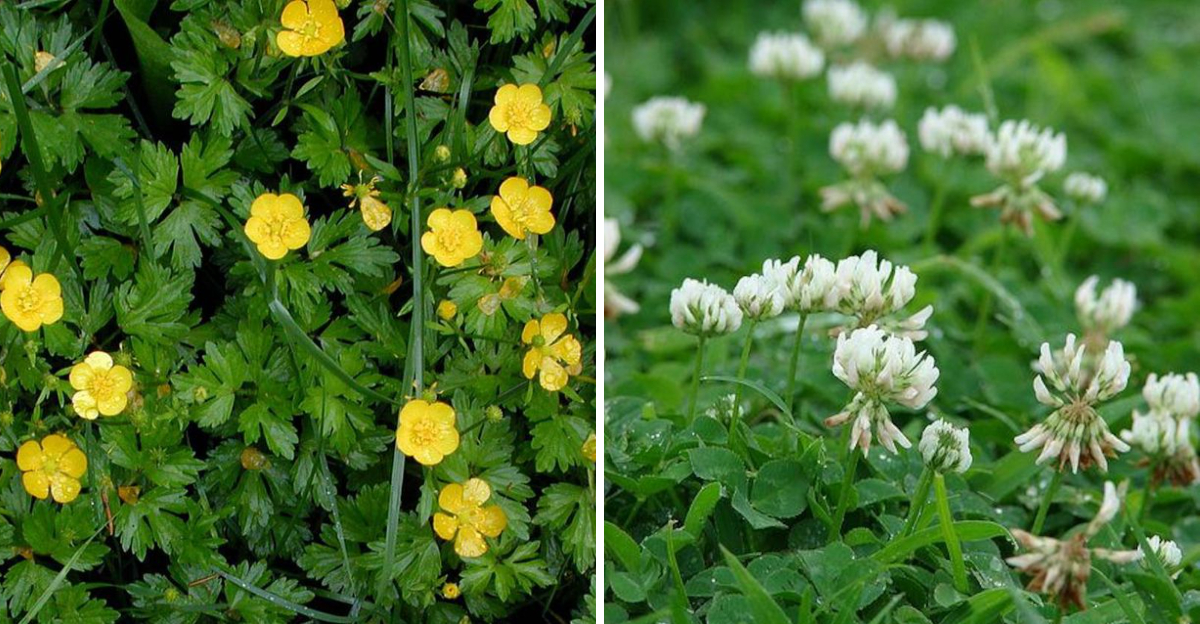
Walk through an Oregon lawn on a warm afternoon and you will likely spot white clover doing quiet, useful work. Its small white flower heads attract bumblebees, honeybees, and other native pollinators that need accessible nectar sources close to the ground.
In a lawn where a mixed, relaxed look is welcome, clover can provide real value without much effort from the homeowner.
Beyond its pollinator appeal, white clover is a legume, which means it works with soil bacteria to fix atmospheric nitrogen into a form that nearby plants can use. This can reduce how much supplemental fertilizer a low-input lawn needs over time.
Clover also tends to stay greener through drier Oregon summers than many turf-only lawns, since its roots go a bit deeper and it handles moderate dry spells reasonably well.
That said, white clover is not the right fit for every space. In vegetable beds, formal borders, or newly established native plantings, it can spread and compete with plants you actually want there.
The key is deciding where you are comfortable with it. In a casual mixed lawn or a side yard where pollinators are welcome and a uniform turf look is not the goal, white clover is genuinely worth tolerating and even encouraging.
7. Common Yarrow Fits Low-Water Lawns
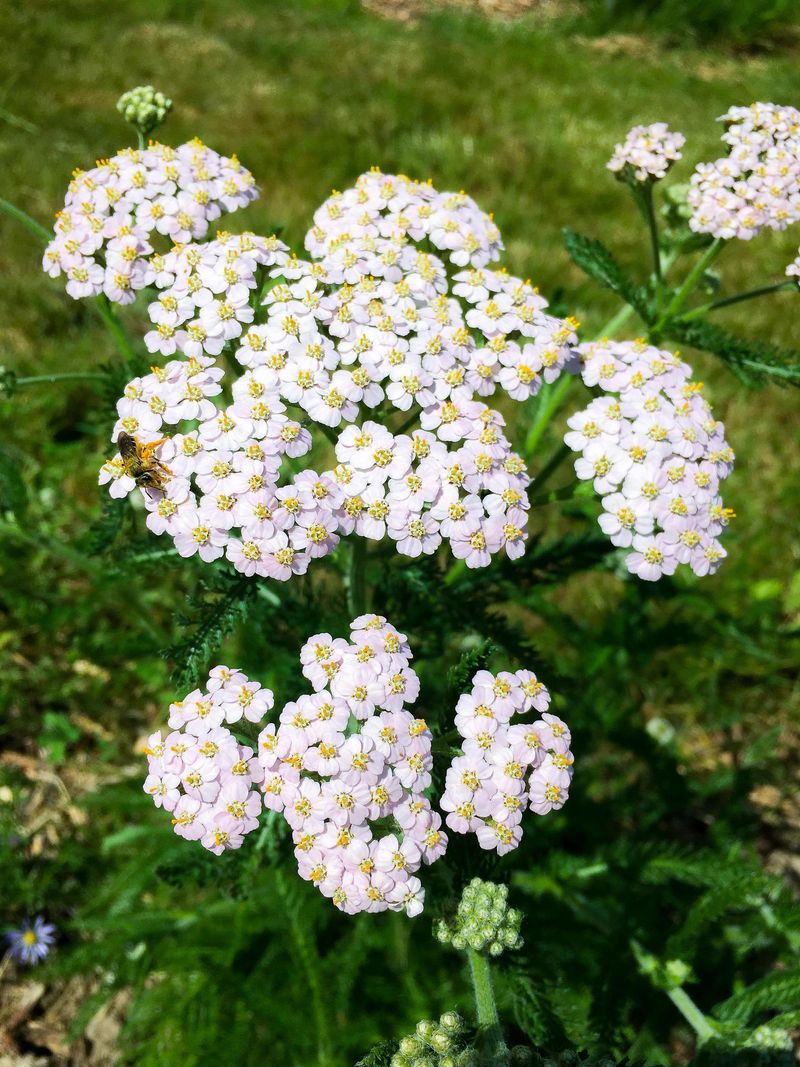
Common yarrow is the kind of plant that surprises homeowners who assumed it was just another lawn weed.
With feathery, aromatic foliage and flat-topped clusters of white or pale yellow flowers, it actually holds up well in low-water or eco-lawn settings where a perfectly uniform turf is not the priority.
In drier parts of Oregon and in gardens where summer irrigation is limited, yarrow can stay green and attractive when surrounding grasses are going brown.
Its tolerance for drought and poor soil makes it a reasonable candidate for low-input lawn mixes, gravel gardens, and informal borders where water conservation matters.
Yarrow also attracts a range of beneficial insects, including predatory wasps and hoverflies that help keep pest populations in check.
That is a useful side benefit in a garden trying to reduce chemical inputs.
Where yarrow does not belong is in tidy flower borders, vegetable beds, or native plantings where it can spread by both seed and creeping roots and crowd out more desirable plants.
If you have yarrow coming up in a spot where it is not welcome, removing it before it flowers limits seed spread.
In the right Oregon setting, though, keeping it intentionally in a low-maintenance lawn area is a practical and ecologically sensible choice.
8. Dandelions Can Support Early Pollinators
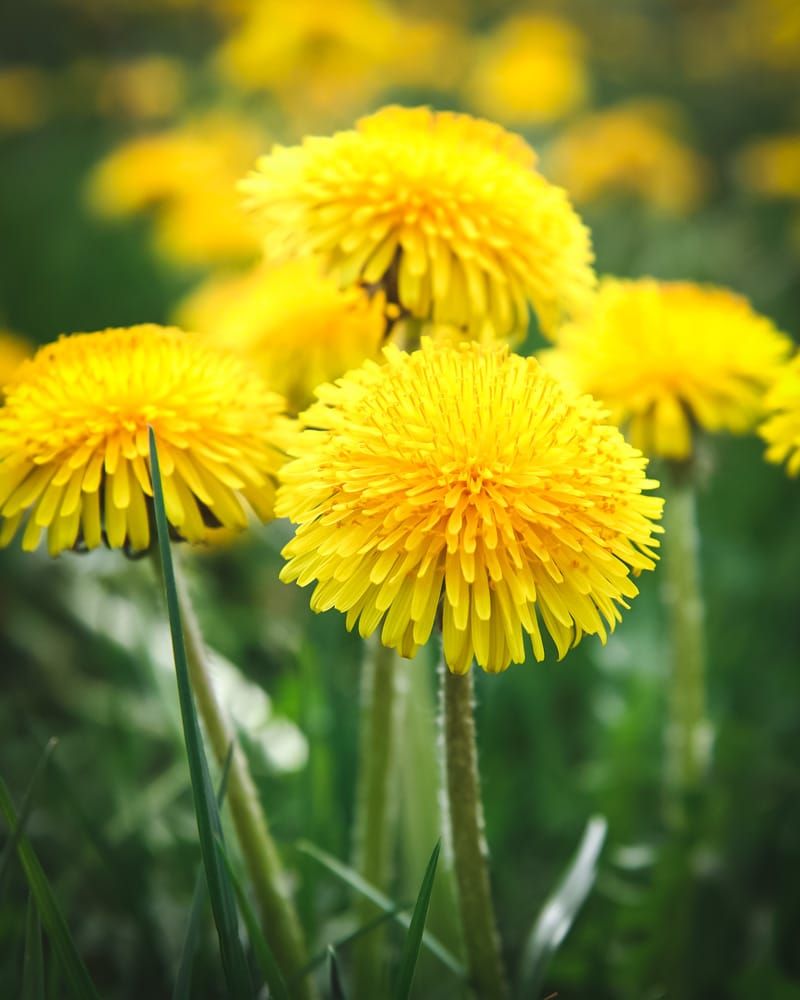
Before most garden flowers have opened in an Oregon spring, dandelions are already in bloom and offering one of the earliest accessible nectar and pollen sources for hungry bees emerging from winter.
That early-season value is real, and it is one reason some gardeners in low-input or pollinator-friendly lawns choose to tolerate dandelions rather than remove every one of them.
The honest trade-off is that dandelions spread readily by seed. Each mature flower head can release dozens of wind-carried seeds that travel well beyond your lawn.
If you live near a neighbor with a more formal lawn, or if you are trying to maintain a cleaner look in parts of your own yard, letting dandelions go to seed across a large area will create more work over time, not less.
A middle-ground approach works well for many Oregon homeowners.
Allowing some dandelions to flower early in the season, then removing flower heads before they fully go to seed, gives pollinators an early resource while limiting how aggressively the plant spreads.
In informal lawn areas or edges where spread is less of a concern, tolerating dandelions is a low-effort way to support early-season pollinators without any additional planting or cost.
9. Self-Heal Belongs In Mixed Lawns
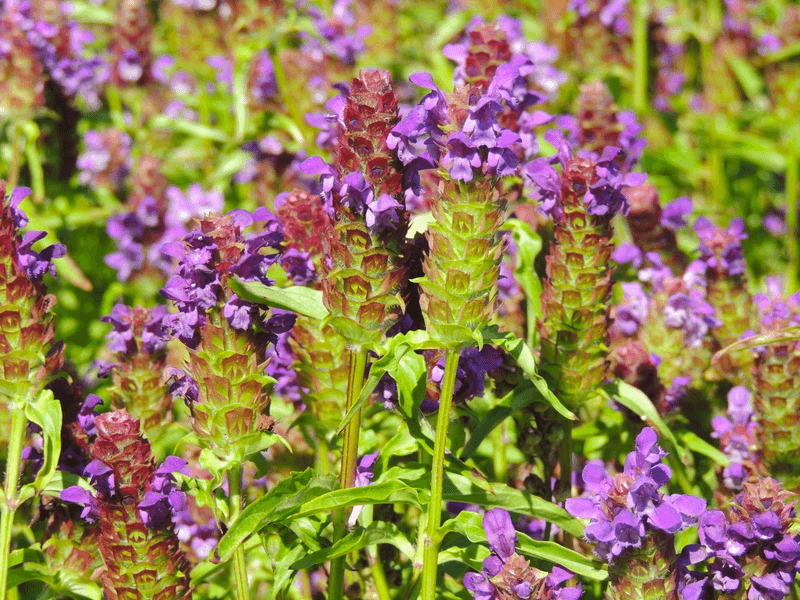
Self-heal is a low-growing perennial that most Oregon homeowners encounter as a surprise guest in their lawn rather than something they planted intentionally.
Its small spikes of purple flowers sit close to the ground, which means it often survives regular mowing and continues to bloom through the cutting season.
That low growth habit, combined with its ability to attract small bees and other beneficial insects, makes it genuinely useful in a mixed or pollinator-friendly lawn setting.
Unlike some of the more aggressive lawn weeds, self-heal tends to spread at a moderate pace and does not typically overwhelm a lawn the way creeping buttercup or bindweed can.
It handles moderate foot traffic, tolerates partial shade, and manages reasonably well in the kind of damp, mild conditions common across western Oregon through much of the year.
Where self-heal does not fit is in tidy, uniform turf or in formal garden beds where a consistent planting is the goal.
It will spread by seed and by creeping stems if given space, so keeping it out of areas where it is not wanted requires pulling it before it sets seed.
In a casual Oregon lawn where a mixed, naturalistic look is welcome, though, self-heal earns its place without much fuss or ongoing management.