The One Georgia Native Shrub That Blooms In July When Almost Nothing Else Does
Some gardens begin losing color by the time July arrives. Spring flowers have faded, summer heat is taking its toll, and it can feel like the brightest part of the season is already behind you.
That is why a plant that comes into its own now can completely change the look of a landscape.
Not every shrub is built for the hottest weeks of summer. Some slow down once temperatures climb, while others struggle to keep their flowers looking fresh.
There is one native shrub, however, that seems to shine when many other plants are taking a break.
Adding the right plant can bring fresh color when your garden needs it most.
If you are looking for something that stands out in July without demanding constant attention, this Georgia native deserves a much closer look.
1. Sweet Pepperbush Is The Shrub That Keeps Blooming In July
July is brutal for most flowering plants. Heat shuts them down fast.
But sweet pepperbush does the opposite, pushing out fresh flower spikes just as everything else goes quiet.
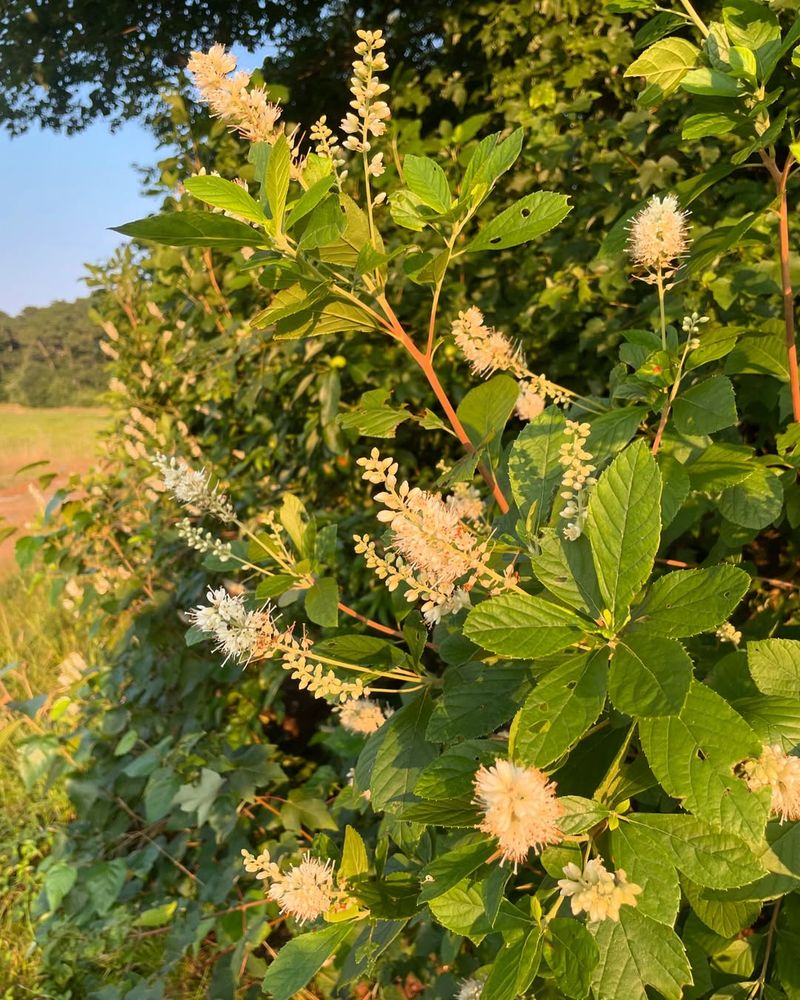
Clethra alnifolia is native across the eastern United States and thrives in the warm, humid summers of the Southeast. It blooms reliably every July without needing any coaxing from the gardener.
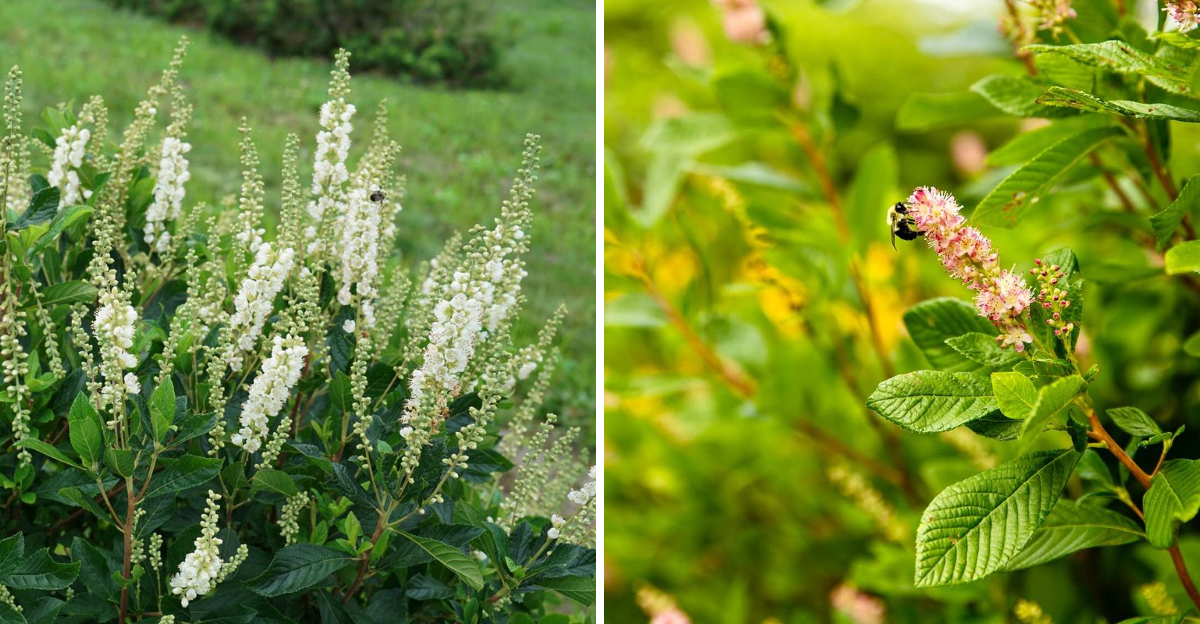
Flower spikes appear in clusters at the tips of branches. Each spike is packed tightly with small white or soft pink blossoms.
The display lasts for several weeks, not just a few days.
Most shrubs finish their show by late spring. Sweet pepperbush holds back and saves its energy for midsummer.
That timing makes it genuinely rare among native plants.
Established plants can grow four to eight feet tall depending on the variety. Compact cultivars like Sixteen Candles stay shorter and work well in smaller spaces.
Gardeners across the Southeast have started planting it more often as interest in native plants grows. Once established, it returns reliably each summer with minimal care needed from you.
No deadheading is required to keep blooms coming. The plant manages its own flowering cycle naturally.
That reliability is part of what makes it so satisfying to grow.
2. Partial Shade Still Produces Plenty Of Flowers
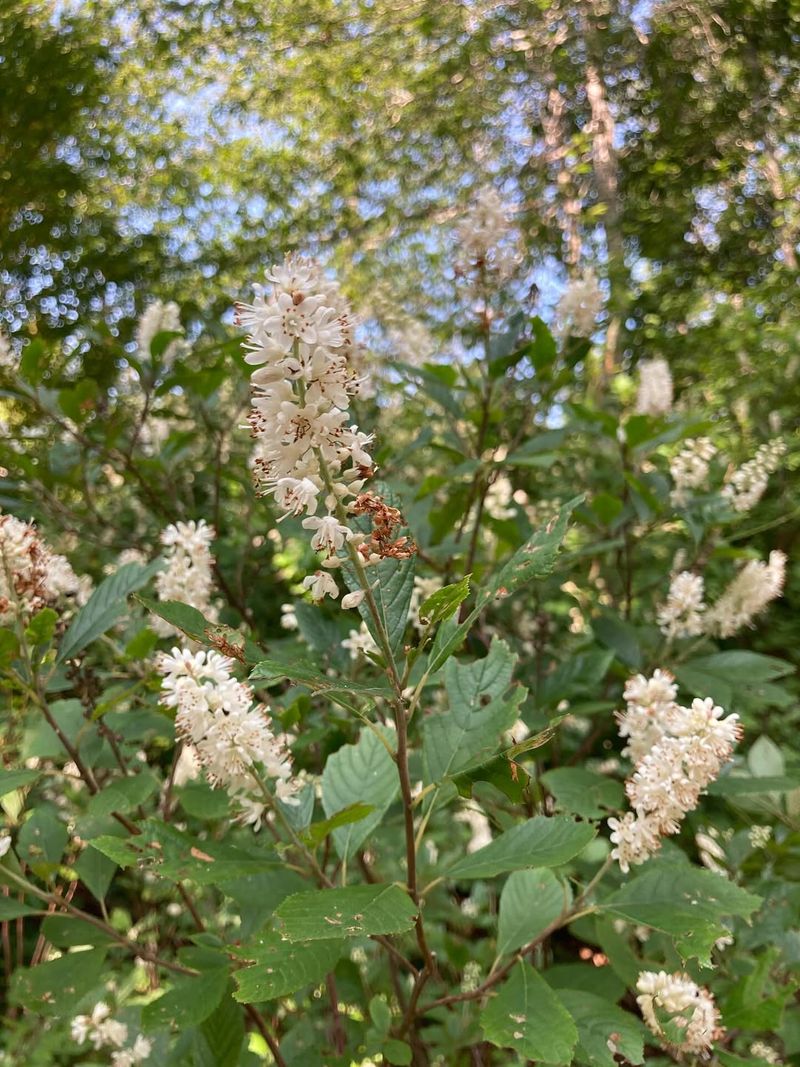
Shade gardening is often frustrating. Most flowering shrubs demand full sun, and shaded spots end up bare and boring all season.
Sweet pepperbush breaks that pattern completely.
It grows naturally along stream banks and forest edges where trees filter the light. Partial shade is not just tolerated by this plant; it is actually where sweet pepperbush performs most comfortably in hot southeastern summers.
Full sun works too, especially in cooler regions. But in areas with intense July heat, afternoon shade helps the plant hold its blooms longer without scorching the flower spikes.
Dappled light under mature trees is an ideal situation. The shrub receives enough brightness to flower well but stays protected from the harshest midday rays.
That balance produces a healthy, full plant.
Many gardeners plant it along the north or east side of a fence or building. Morning sun and afternoon shade create exactly the right environment for consistent summer blooming.
Your Georgia Garden Changes Every Week. Your Plan Should Too.
Gardening in Georgia changes quickly throughout the season. Every Friday you’ll receive a simple weekly plan showing exactly what to plant, prune, fertilize, harvest, and protect so you never miss the right timing.
Woodland garden designs benefit especially from this plant. Mixed alongside ferns, native azaleas, or oakleaf hydrangeas, sweet pepperbush adds midsummer color to spaces that usually go dull by June.
Bloom count does decrease in deep shade.
3. Moist Soil Helps Plants Bloom Their Best
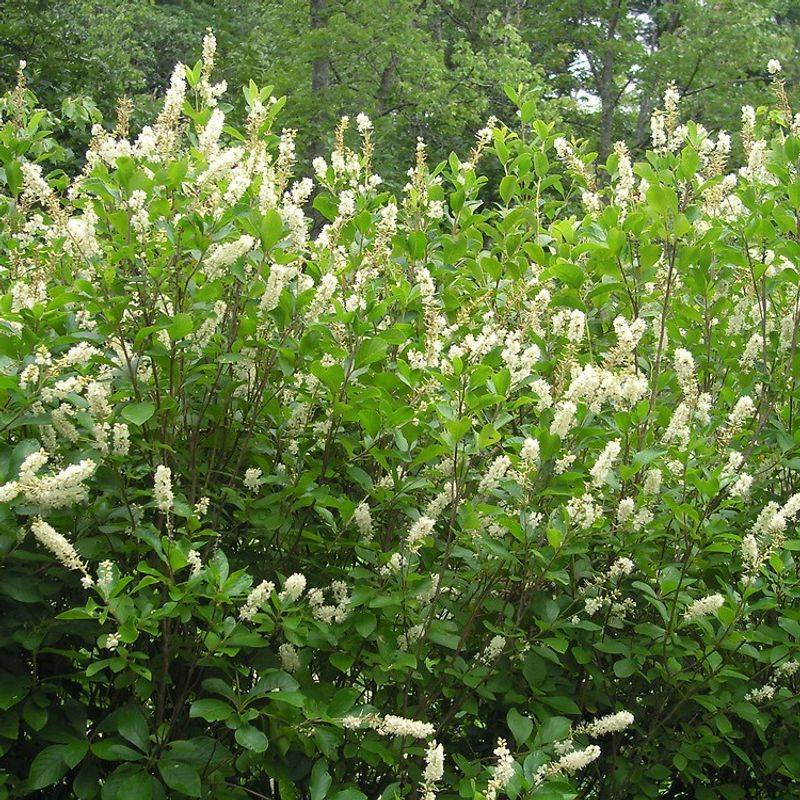
Soggy spots in the yard frustrate most gardeners. Few ornamental shrubs tolerate wet feet, and problem areas near downspouts or low spots often stay empty.
Sweet pepperbush genuinely solves that problem.
Its native habitat includes swamps, stream edges, and boggy forest floors. Consistently moist soil is not just acceptable for this plant; it is where the plant naturally thrives without any stress.
Bloom quality improves noticeably in well-moistened ground. Plants growing in dry soil still flower, but the spikes tend to be shorter and the blooming period ends sooner than it would in ideal conditions.
Average garden soil with regular watering also works fine. Mulching around the base helps retain moisture between rain events.
A two to three inch layer of shredded bark or leaf mulch makes a real difference in dry stretches.
Avoid planting in sandy, fast-draining soil without amendment. Adding compost before planting improves moisture retention significantly.
That extra step at planting time pays off for years afterward.
Rain gardens are a perfect fit for sweet pepperbush. It handles both flooding after heavy rain and short dry periods between storms.
Very few native shrubs manage that kind of flexibility.
During the first growing season, consistent watering is essential while roots establish.
4. Sweet Fragrance Carries Across The Garden
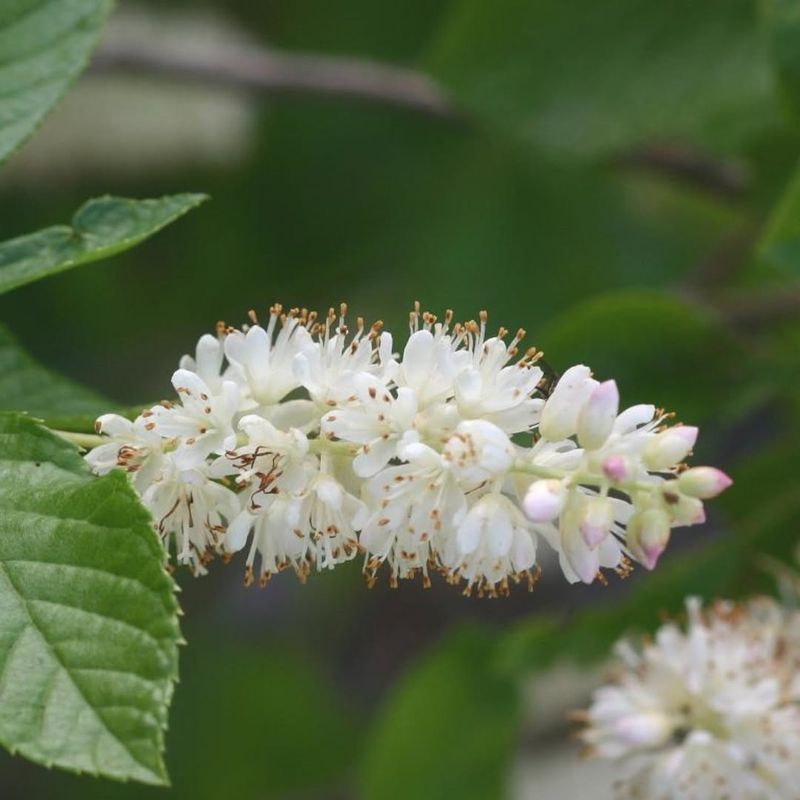
Not every fragrant plant earns its reputation. Some require you to press your nose right against the flower.
Sweet pepperbush carries its scent across open space without any effort on your part.
Experienced gardeners describe the fragrance as similar to cloves or a light vanilla, clean and sweet without being sharp or overwhelming. It works beautifully near seating areas, patios, or garden paths.
Afternoon heat amplifies the scent noticeably. Planting near a south-facing wall or patio where warmth builds through the day creates a stronger fragrance experience for anyone spending time outdoors in summer.
Morning air carries the scent differently than afternoon heat does. Early risers often notice the fragrance drifting across the yard before the day heats up.
Both windows of time offer a pleasant sensory experience.
Fragrance strength varies slightly between cultivars. The straight species tends to produce a stronger scent than some compact named varieties.
Sixteen Candles and Hummingbird are popular but may be slightly less fragrant than wild-type plants.
Planting near a bedroom window or screened porch adds an unexpected bonus. The breeze carries the scent indoors on warm evenings, which many gardeners find genuinely pleasant rather than intrusive.
Cut stems can be brought inside when in bloom. They hold their fragrance for several days in a vase of water.
5. Very Little Pruning Is Needed Each Year
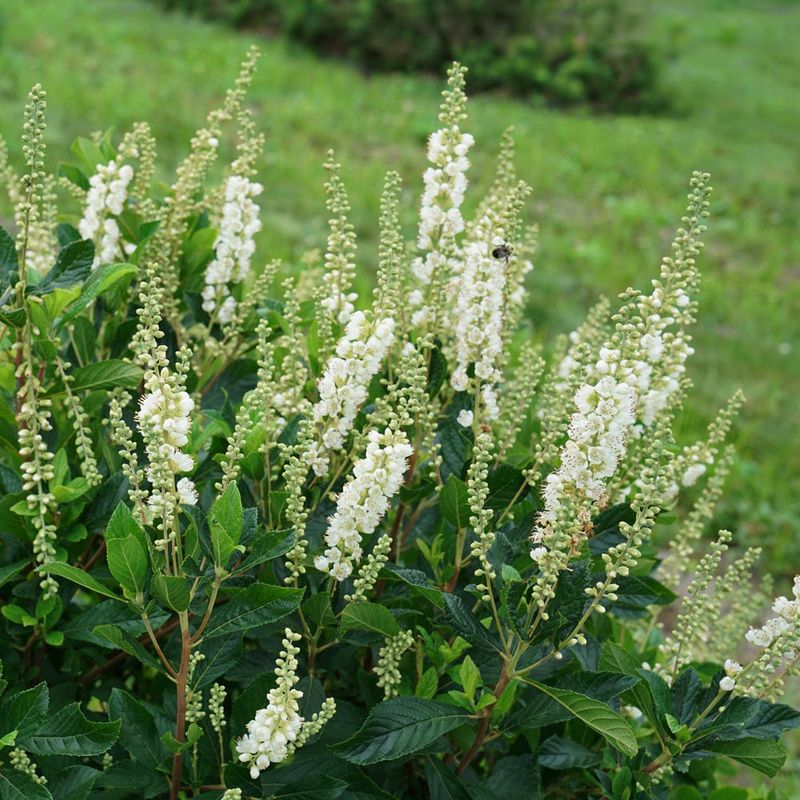
Some shrubs turn pruning into a second job. Constant trimming, shaping, and cleanup can eat up weekend after weekend.
Sweet pepperbush is not that kind of plant.
Left alone, it grows into a naturally rounded shape over several years. The branching pattern is tidy enough that most gardeners never feel the need to intervene with shears at all.
If shaping is desired, early spring is the right time to act. Pruning in late winter before new growth emerges allows the plant to set fresh buds that will bloom later in July.
Cutting too late removes the flower buds before they open.
Removing damaged or crossing branches once a year is usually all the maintenance required.
That kind of light cleanup takes less than ten minutes per plant. No special tools or training needed.
Suckers sometimes appear at the base, especially in moist conditions. Removing them keeps the plant contained if you prefer a single-stemmed form.
Leaving them creates a wider, more naturalistic colony over time.
Overgrown plants respond well to hard rejuvenation pruning. Cutting stems back to about a foot from the ground in late winter encourages vigorous new growth.
Blooming may be reduced that first year but returns fully the following summer.
6. Fragrant Flowers Bring Bees And Butterflies All Summer
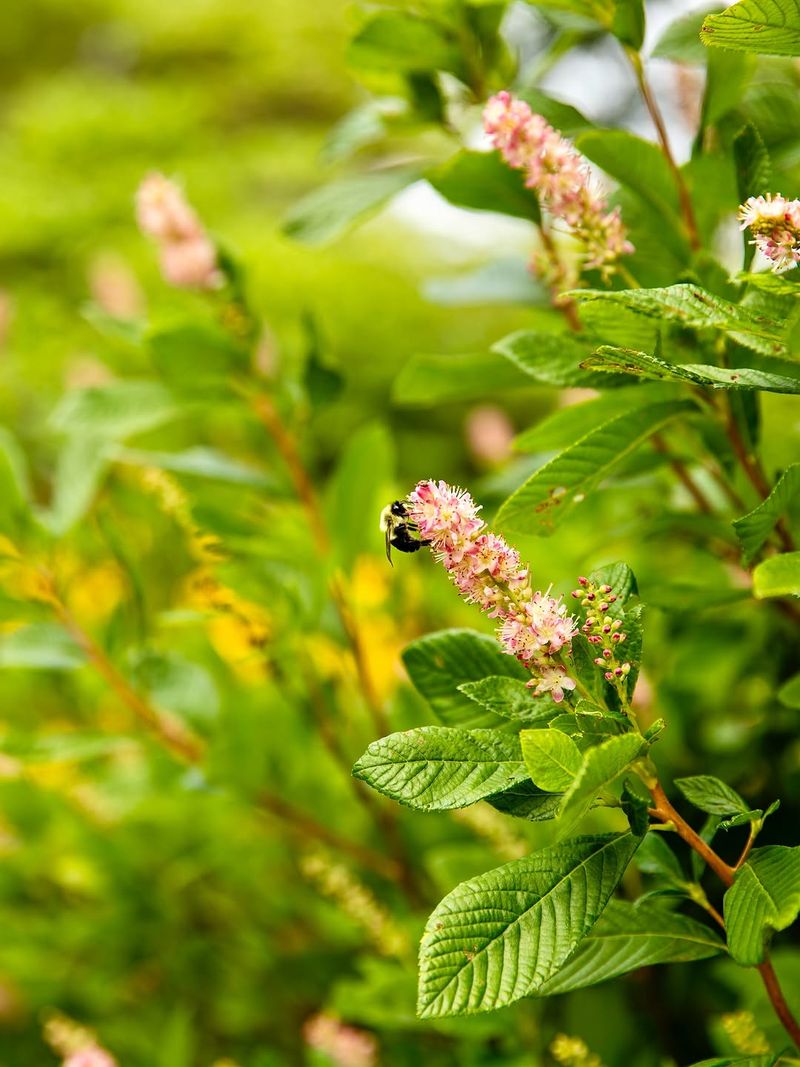
Walk past a blooming sweet pepperbush and the scent stops you cold. It is sweet, clean, and strong enough to carry several feet from the plant on a warm afternoon.
Pollinators notice it immediately. Bumblebees show up in numbers, working each flower spike from bottom to top.
Honeybees, native bees, and several butterfly species follow close behind.
In Georgia, July is a tough month for pollinators. Many spring flowers are gone, and fall bloomers have not started yet.
Sweet pepperbush fills that gap with real food and reliable nectar.
Swallowtail butterflies are especially drawn to the blooms. You can watch them hover and feed for long stretches without them moving on.
That kind of activity is rare in a July garden.
The fragrance comes from tiny glands inside each flower. It intensifies in the afternoon heat, which actually works in the plant’s favor by attracting even more insects during peak hours.
Hummingbirds have also been spotted visiting the flowers on occasion, though bees remain the primary visitors. Having multiple pollinators using one shrub makes it an efficient addition to any wildlife-friendly yard.
Planting several shrubs together creates a stronger scent corridor. Pollinators find grouped plantings faster than isolated ones.
Even two or three plants side by side make a noticeable difference in garden activity.
7. Bright Green Leaves Stay Attractive All Summer
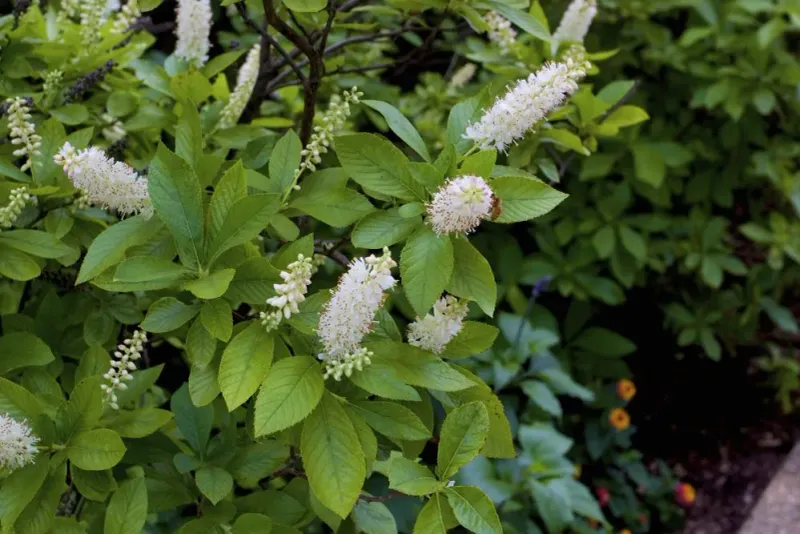
Flowers get most of the attention, but foliage matters just as much in a summer garden. Sweet pepperbush delivers on both counts without requiring any extra effort from the gardener.
Leaves are glossy, bright green, and lance-shaped with finely toothed edges. They hold their color well through the hottest months, which is not something every native shrub manages in the Southeast’s punishing summer heat.
Compared to plants that yellow or scorch by August, sweet pepperbush looks fresh and healthy right through the end of the growing season. That consistency makes it a reliable backbone plant in mixed borders.
Fall brings another visual shift. Leaves turn yellow to golden orange before dropping, adding a second season of interest.
The color is not always dramatic, but it is a pleasant bonus heading into autumn.
Stems are upright and well-organized, giving the plant a clean silhouette even when not in bloom. That structure makes it work well as a background shrub or informal hedge in naturalistic garden designs.
Deer tend to leave sweet pepperbush alone in most areas. No guarantee exists with deer, but reports of significant browsing are uncommon.
That relative resistance is worth noting for gardeners dealing with pressure from local wildlife.
Winter stems hold dried seed capsules that add minor textural interest.