Why Carpenter Bees Keep Coming Back To Illinois Porches Every Spring
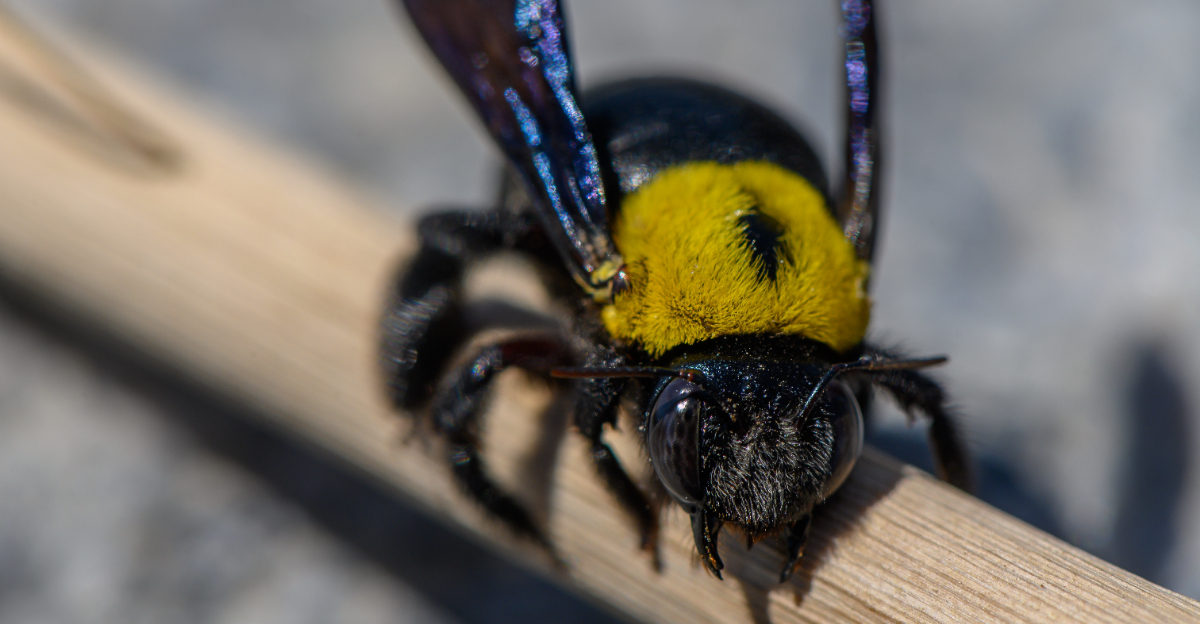
Every spring, the same thing happens on porches across Illinois. Homeowners spot fresh round holes in their wood railings, fascia boards, or porch ceilings, clean, precise, about the size of a dime.
Carpenter bees did not stumble onto your porch by accident. They came back because your porch told them to. They read wood the way a contractor reads a blueprint, checking grain, texture, exposure, and history.
Bare lumber, south-facing surfaces baking in the April sun, and old tunnels from previous seasons all send one clear message: this place works. And once a porch earns that reputation, it gets passed down.
Illinois springs give carpenter bees a narrow but reliable window to nest, and they use every day of it. Find out what they are looking for, and you know exactly what to take away.
Bare And Weathered Wood Is An Open Invitation
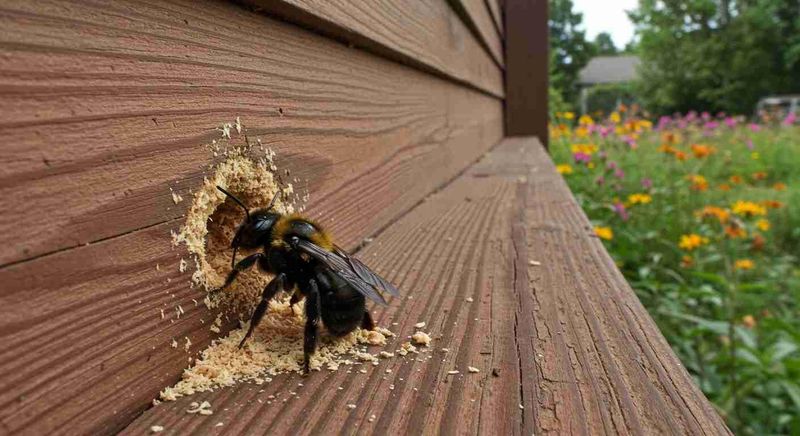
Walk up to almost any old porch in the Midwest and you will spot the telltale signs fast. Splintered edges, graying wood, and small round holes tell the whole story of a carpenter bee’s favorite address.
Weathered wood is softer and easier to bore through than fresh lumber. Carpenter bees prefer wood that has already started to break down from sun and moisture exposure.
When wood loses its protective finish, its fibers loosen and separate. That texture is practically an engraved invitation to a female bee searching for a nesting site.
She does not need power tools, her strong mandibles chew through degraded wood with surprising speed. A single bee can excavate a tunnel nearly an inch deep in just a few days.
The damage looks minor at first, but the tunnel branches inward and creates a long gallery. That gallery becomes a nursery where she lays eggs and stocks food for her young.
Porches made of pine, cedar, redwood, or fir are especially common targets. Softwoods break down faster outdoors, which makes them prime real estate for nesting activity.
Once a porch has been bored into, the exposed wood fibers release subtle chemical signals. Those signals can persist across multiple seasons, quietly advertising the spot to new bees each spring.
Sealing and painting your wood every two to three years removes that chemical beacon. A smooth, sealed surface sends a clear message: there is nothing easy here for you.
Illinois Springs Give Carpenter Bees The Perfect Window To Nest
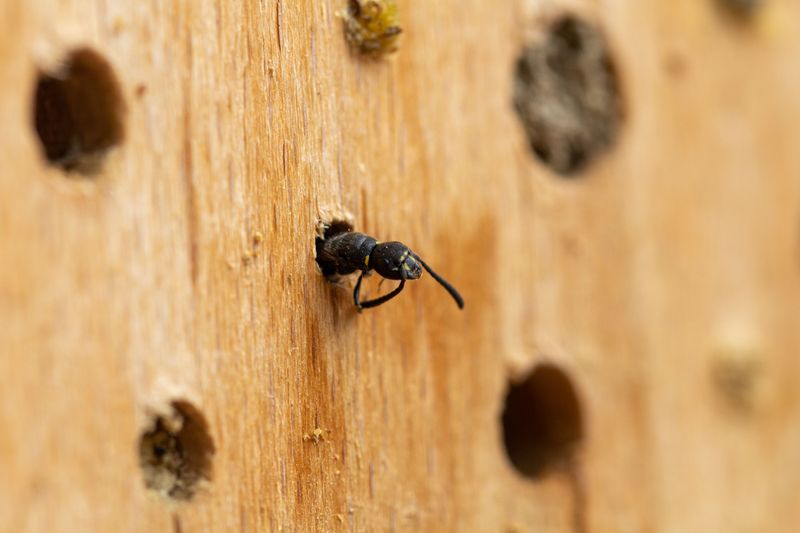
Spring in Illinois arrives like a starting gun for carpenter bees. Temperatures climbing into the mid-50s Fahrenheit trigger their emergence from overwintering spots in old wood tunnels.
These bees are not groggy when they wake up, they are ready to work. Within days of emerging, females begin actively scoping out nesting locations.
The window between late April and early June is their peak activity period. That timing lines up perfectly with when most Illinois homeowners first start spending time on their porches.
Warmer spring days accelerate the pace of nesting activity across Illinois. Females move quickly through the season, often completing tunnel excavation well before summer heat arrives.
Your Illinois Garden Changes Every Week. Your Plan Should Too.
Gardening in Illinois changes quickly throughout the season. Every Friday you’ll receive a simple weekly plan showing exactly what to plant, prune, fertilize, harvest, and protect so you never miss the right timing.
Rainfall in spring also plays a role by introducing moisture into unprotected wood. Damp, slightly swollen wood fibers are significantly easier to chew through than dry, dense lumber.
Male carpenter bees are the ones you usually see hovering aggressively near your face. They cannot sting, but they patrol the area fiercely while females do the actual nesting work.
The male-female division of labor makes the colony surprisingly efficient. By the time you notice the hovering, a female may already be several inches deep into your porch beam.
Knowing this seasonal window exists gives homeowners a real advantage. Treating and sealing wood in early March, before bees emerge, can interrupt the cycle before it even starts.
They Are Not Random And Old Galleries Pull Them Back Year After Year
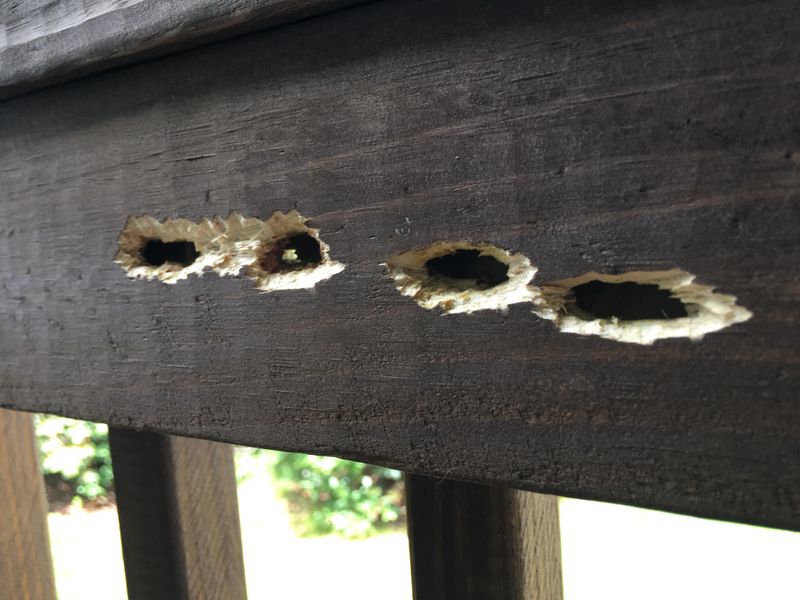
Carpenter bees are not wandering around hoping to get lucky with a nesting spot. They follow a highly specific set of preferences, and existing tunnels rank at the very top of that list.
Old galleries are essentially pre-built condos with a proven track record. A new female can move into an existing tunnel and skip the exhausting work of starting from scratch.
Research shows that carpenter bees often return to the same structure where they were born. The offspring of a bee that nested in your porch rafter may come back to that exact beam.
This behavior is called natal philopatry, which simply means returning to your birthplace. For carpenter bees, home is not just a feeling, it is a biological drive.
Old tunnels also carry pheromone residue from previous occupants. Those chemical traces act like a review system, signaling to newcomers that this location has worked well before.
Each spring, the returning bee may expand an existing gallery rather than drill a new one. A tunnel that started at six inches long can grow to well over a foot across multiple seasons.
That progressive expansion weakens structural wood significantly over time. Beams that look fine on the outside can be riddled with tunnels just beneath the surface.
Filling old holes with wood putty or steel wool before spring breaks the return cycle. Blocking access to old galleries is one of the most effective prevention steps you can take.
Unpainted And Untreated Surfaces Are Their First Choice
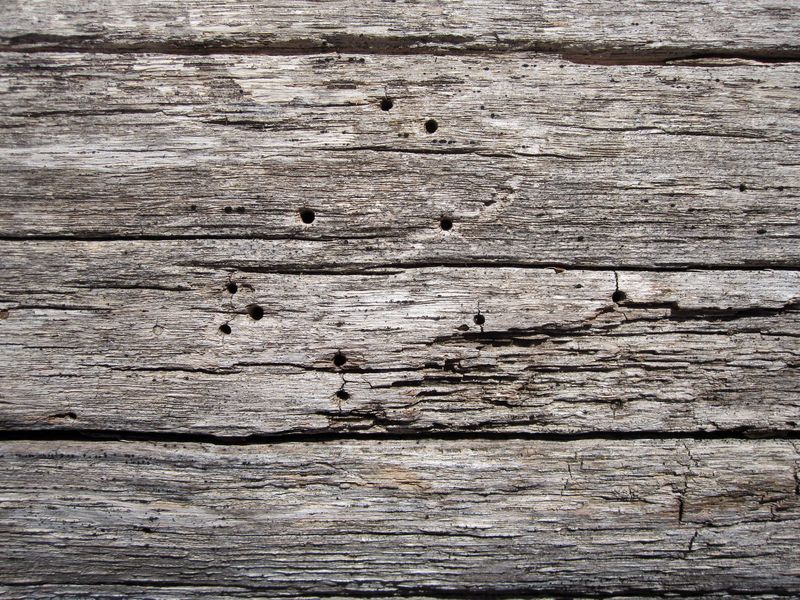
Paint is not just decorative, to a carpenter bee, it is a barrier worth avoiding. Smooth, fully coated wood is significantly harder to bore into than raw, exposed lumber.
Untreated surfaces absorb moisture, crack with temperature swings, and develop micro-fractures in the grain. Each of those imperfections is an easier starting point for a bee’s mandibles.
A female carpenter bee typically tests a surface before committing to it. She will scratch and probe the wood to assess its resistance before deciding to invest her energy.
Bare wood almost always wins that test. The absence of paint, varnish, or sealant means the wood fiber is exposed and accessible without the extra effort of cutting through a hard finish.
Porch ceilings, soffits, railings, and fascia boards are frequent targets when left untreated. These areas are often overlooked during home maintenance because they are not at eye level.
Out-of-sight surfaces tend to go years without a fresh coat of anything. That neglect is precisely what makes them attractive nesting ground for returning bees each spring.
Oil-based stains and exterior polyurethane create surfaces that are both harder and more chemically repellent to bees. Applying these finishes in early spring provides the best seasonal protection.
Even a single unpainted board among otherwise well-maintained wood can draw their attention. Carpenter bees tend to target the most accessible surface available, so one overlooked spot is often enough.
Sun Exposure Play A Bigger Role Than You Think
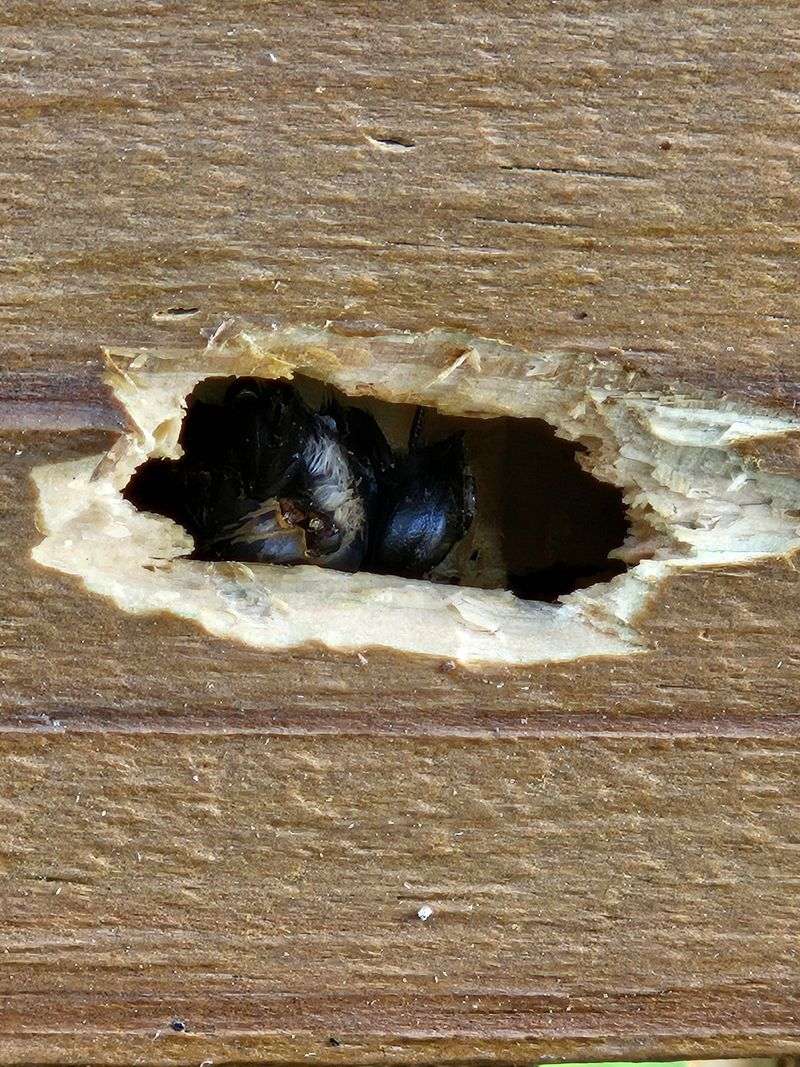
Not every porch gets attacked equally, and the direction your porch faces has a lot to do with why. South-facing and west-facing porches receive more direct sunlight, which warms the wood faster.
Carpenter bees prefer to nest in warm wood because it speeds up larval development inside the gallery. A sun-warmed beam is a far more attractive nursery than a cold, shaded one.
This preference for warmth is instinctual and deeply tied to the bee’s reproductive success. Warmer galleries mean larvae develop faster and have a better chance of surviving through summer.
South-facing porches also tend to cycle through wet and dry conditions more rapidly, and that repeated movement causes wood to crack and splinter at the grain.
Those surface cracks are natural starting points for a bee looking to establish a tunnel entrance. She will often begin at a crack rather than boring into a perfectly smooth surface.
Shaded porches on north-facing sides of homes tend to see less carpenter bee activity overall. Cooler temperatures and slower wood degradation make them less appealing as nesting destinations.
If your porch faces south or west, consider applying a UV-resistant exterior finish to slow down sun damage. Reducing wood degradation from sunlight cuts down on one of the key factors attracting bees.
Shade structures like pergola covers or retractable awnings can also reduce direct sun exposure on vulnerable wood. Changing the microclimate of your porch can meaningfully shift the odds in your favor.
Breaking The Cycle Means Removing What Keeps Attracting Them
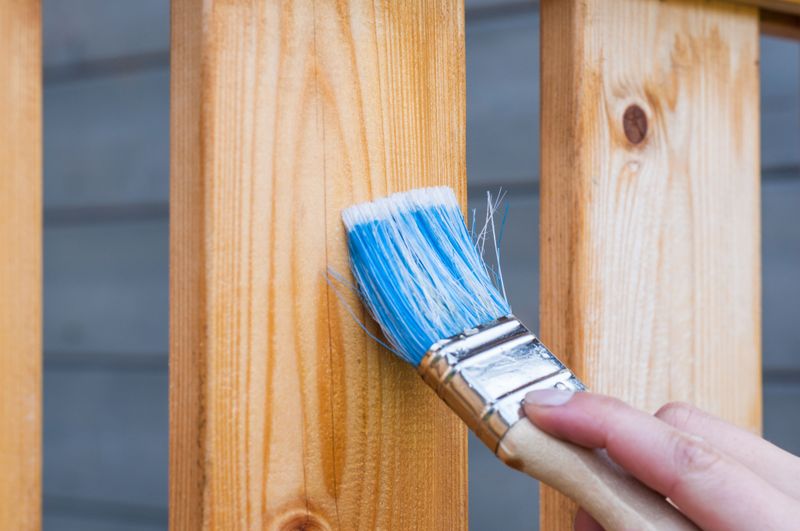
Stopping carpenter bees from returning is not about one dramatic fix, it is about removing every small thing that keeps drawing them back. Each attraction point you eliminate cuts their motivation to return.
Start with wood maintenance and treat every exposed surface before spring arrives. Fresh sealant, paint, or varnish is the single most effective deterrent you can apply.
Fill every existing hole with wood putty rated for exterior use. Once the putty cures, sand it smooth and apply finish over it so the surface is sealed completely.
Steel wool packed tightly into old galleries is another solid option before sealing. It creates a physical barrier that even determined bees cannot chew through easily.
Citrus-based sprays applied to wood surfaces are a commonly used home remedy, and many homeowners report less activity in treated areas. Carpenter bees are sensitive to citrus oils and tend to avoid freshly treated areas.
Almond oil and tea tree oil blends are used the same way and can be reapplied every few weeks during peak season, though results vary. These options are safer around pets and children than chemical pesticides.
Hanging decoy wasp nests near your porch can also reduce activity. Carpenter bees are territorial and often avoid areas where they sense competing insects have already claimed the space.
Consistent prevention reduces how much work each spring requires, and keeping up with wood maintenance is the most reliable way to stay ahead of them.