What Yellow Leaves On Arizona Oleanders Are Really Telling You
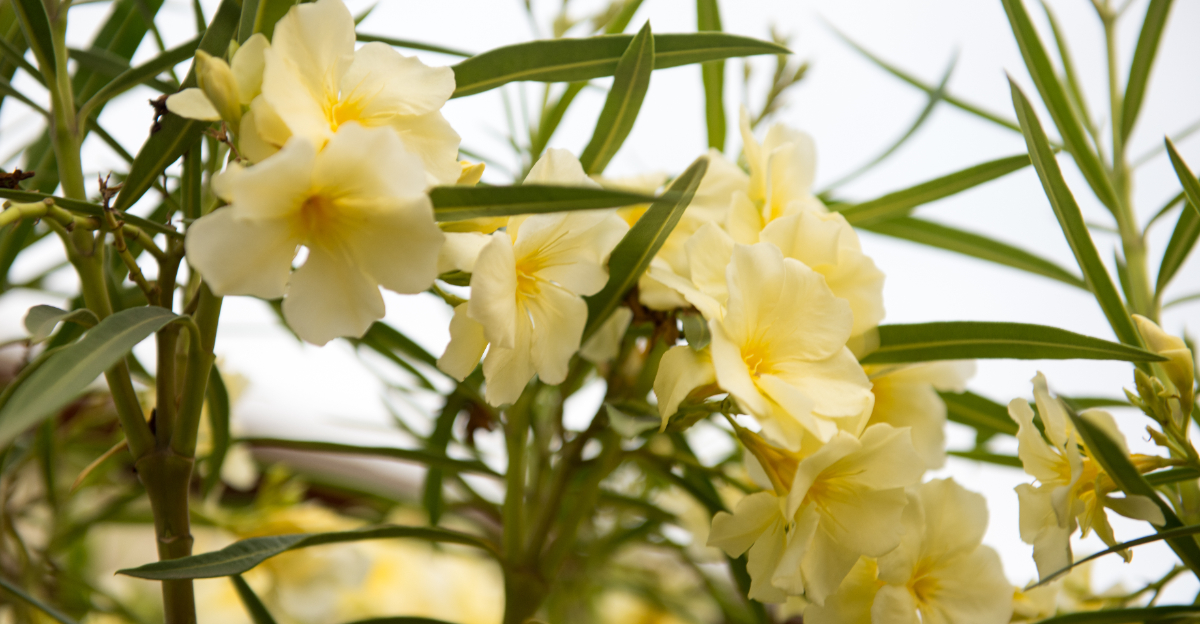
Your oleander looked perfectly green last week, and now it is sending you a message written in yellow.
Those pale, fading leaves are not random. They are clues, and each one points to something specific happening beneath the surface, in the soil, or along the branches.
Arizona gardeners who learn to read those clues can fix problems faster and keep their oleanders thriving through even the toughest desert summers.
Before you grab a fertilizer bag or call a landscaper, take a closer look at where those yellow leaves are showing up and what pattern they are making.
The location of the yellowing, whether it starts on older growth or newer tips, on branch ends or scattered randomly, tells a very different story each time.
Oleanders are tough, heat-loving shrubs that line highways and backyard fences across the Sonoran Desert, and they can handle brutal sun and dry spells better than most plants.
But they are not bulletproof, and when something is off, yellow leaves are usually the first warning sign.
This guide breaks down the most common reasons Arizona oleanders turn yellow, so you can stop guessing and start solving the real problem.
Remember that oleander is toxic to people and pets, so always wear gloves when handling any part of the plant.
1. Drought Stress Can Yellow Older Leaves
Dry soil has a way of showing up on leaves before it shows up anywhere else.
When an oleander does not get enough water during Arizona’s scorching summers, the plant makes a hard choice.
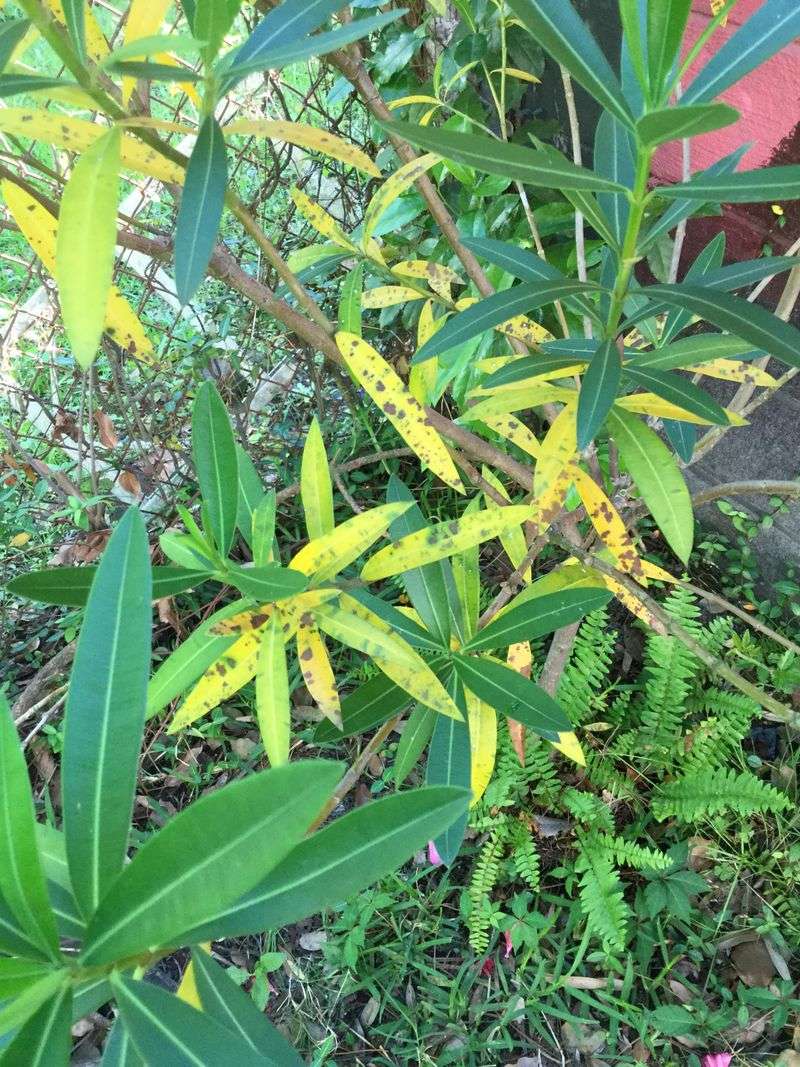
It pulls resources away from older, lower leaves and sends what little moisture it has toward newer growth. The result is a slow yellowing that starts at the bottom of the plant and works its way up.
This pattern is one of the clearest clues you can find.
If the yellowing is mostly on older interior leaves and the newer growth still looks green and healthy, drought stress is almost certainly the cause. The leaves may also feel dry or curl slightly at the edges before dropping off.
Oleanders are drought-tolerant, but that does not mean they thrive with zero water.
During summer heat, established plants in Arizona typically need deep watering every one to two weeks, depending on soil type and location. Sandy soils drain fast and may need more frequent watering than clay-heavy soils.
Check the soil at least four to six inches deep before watering.
If it feels bone dry down there, the plant is thirsty. A slow, deep soak works better than a quick surface sprinkle every day.
Deep watering encourages roots to grow downward, which makes the plant more resilient during dry spells. Always wear gloves when working around oleanders, since every part of the plant is toxic.
2. Overwatering Can Suffocate Roots
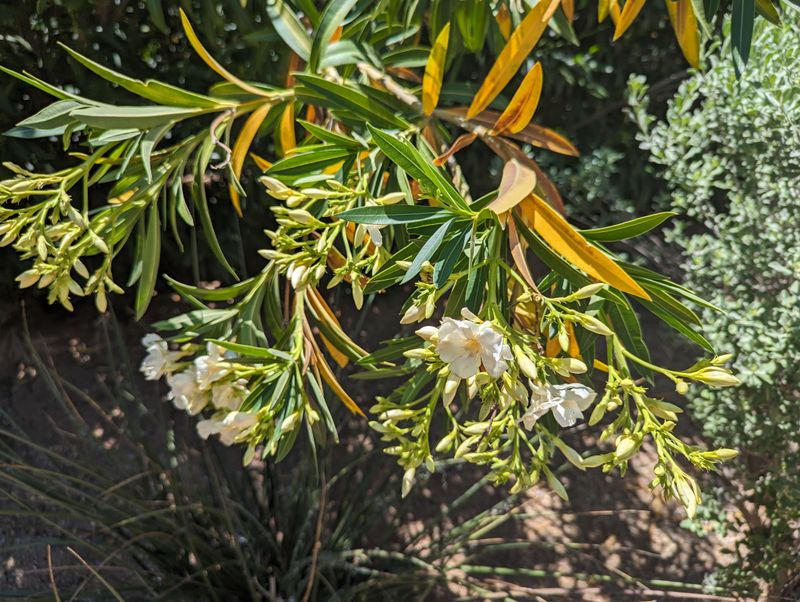
Too much water is just as much of a problem as too little, and in Arizona that surprises a lot of gardeners.
When soil stays wet for too long, oxygen cannot reach the roots. Without oxygen, roots begin to struggle and lose their ability to absorb nutrients properly.
Your Arizona Garden Changes Every Week. Your Plan Should Too.
Gardening in Arizona changes quickly throughout the season. Every Friday you’ll receive a simple weekly plan showing exactly what to plant, prune, fertilize, harvest, and protect so you never miss the right timing.
The plant starts showing that stress as yellow leaves, often scattered across the whole shrub rather than just the older growth.
Overwatered oleanders tend to have leaves that look soft, pale yellow, or even slightly droopy.
The soil around the base of the plant will feel damp or spongy even days after the last watering. Sometimes you can even smell a musty or sour odor near the roots if the problem has been going on for a while.
Arizona’s desert soils vary widely.
Some are sandy and drain quickly, while others have a layer of caliche, a hardened calcium carbonate layer, that traps water near the surface.
If your irrigation system is running on a schedule set for spring and you have not adjusted it for the season, your oleander may be getting far more water than it needs.
Cut back watering frequency and check how fast the soil dries out between sessions.
The University of Arizona Cooperative Extension recommends adjusting irrigation schedules monthly based on actual weather conditions. Letting the soil dry out partially between waterings gives roots the breathing room they need to stay healthy.
3. Salt Buildup Burns Leaf Edges
Arizona’s water carries a heavy load of dissolved minerals, and those minerals go somewhere after irrigation.
Over time, salts accumulate in the soil around plant roots, and oleanders start showing the damage in a very specific way.
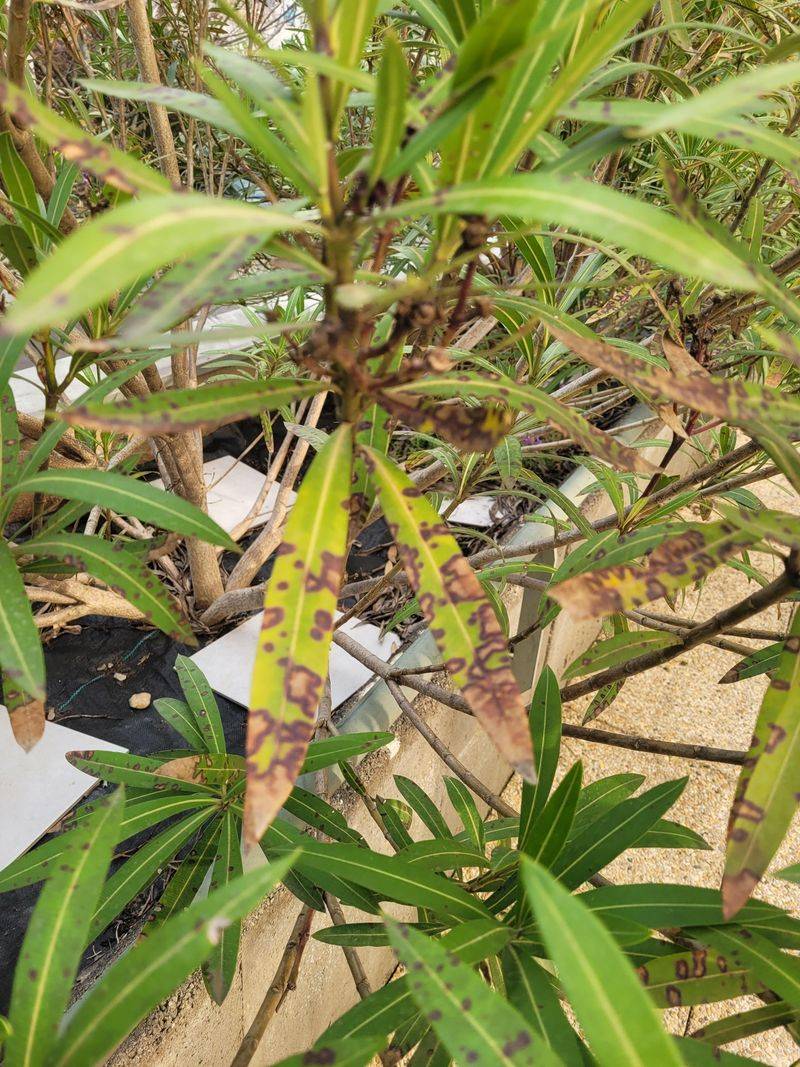
The leaf edges turn yellow first, then brown, almost like the tips of the leaves got too close to a flame. Gardeners sometimes call this leaf-edge burn, and it is a common sight in desert landscapes.
This symptom looks different from drought yellowing or overwatering.
Instead of the whole leaf turning pale, the yellowing and browning stays concentrated along the outer edges and tips. The center of the leaf may still look green while the margins look crispy and discolored.
Salt buildup is especially common in areas with hard water or in yards where fertilizers have been applied heavily over many years.
It also gets worse when plants are watered frequently but shallowly, because salts never get pushed deep enough into the soil to move away from the root zone.
The fix is called leaching, which means applying a long, deep soak of water to flush salts down and away from the roots.
The University of Arizona Cooperative Extension recommends periodic deep watering specifically to move salt accumulation below the active root zone.
Switching to a drip irrigation system that delivers water slowly and deeply can also help prevent future buildup.
4. Oleander Leaf Scorch Starts On Branches
Not every case of yellow leaves has a simple soil fix.
Oleander leaf scorch is a serious bacterial disease caused by Xylella fastidiosa, and it behaves very differently from watering or salt problems.
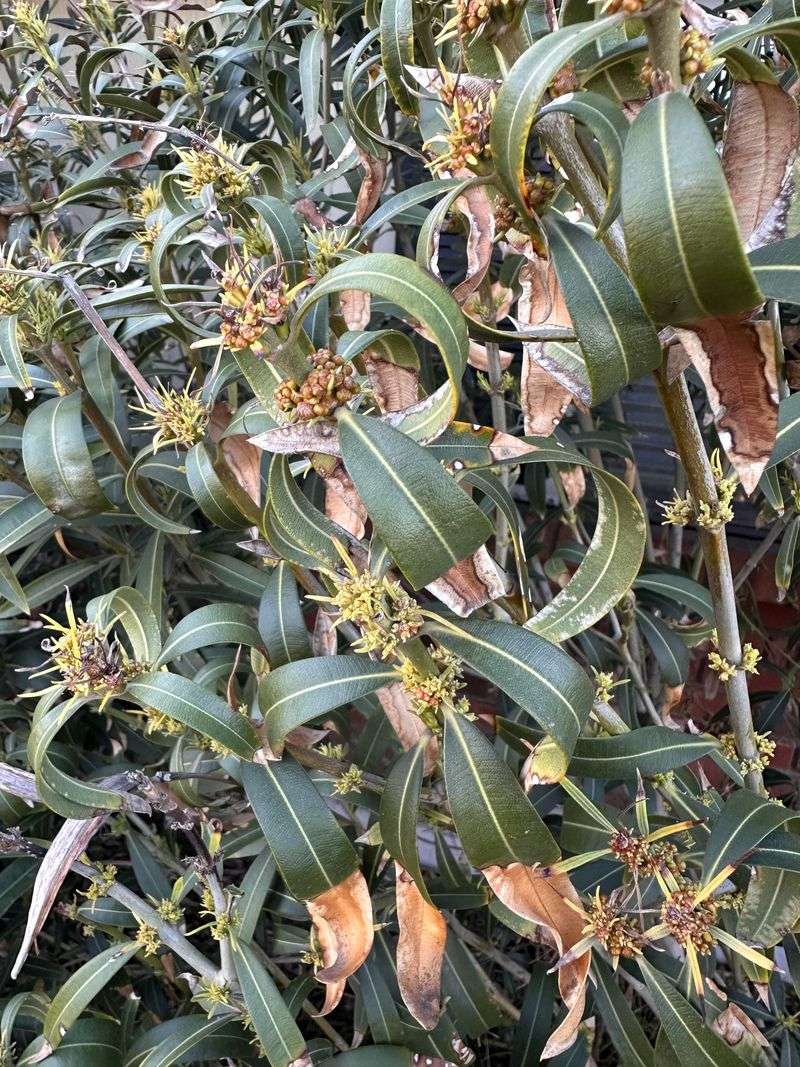
Instead of starting on older or lower leaves, this disease typically begins at the tips of individual branches and works its way back toward the main stem.
Entire branches may yellow, brown, and eventually look completely withered while branches right next to them still look healthy for a while.
The pattern here is the big clue.
If you notice the yellowing and browning is isolated to specific branches and spreading branch by branch rather than scattered across the whole plant, leaf scorch should be on your radar.
UC IPM guidelines note that leaf scorch is spread by the glassy-winged sharpshooter, an insect that feeds on plant fluid and transfers the bacteria from plant to plant.
There is no cure for oleander leaf scorch once a plant is infected.
Management focuses on removing affected branches well below the visible symptoms and disposing of them carefully, not composting. Pruning tools should be sanitized between cuts to avoid spreading the bacteria further.
If you suspect leaf scorch, contact your local University of Arizona Cooperative Extension office for confirmation before making major decisions, since a professional diagnosis can save you from removing a plant that might just have a simpler issue.
5. Nutrient Problems Need Testing
Yellow leaves do not always mean a plant is thirsty or sick. Sometimes the soil is simply missing something the plant needs to stay green and grow properly.
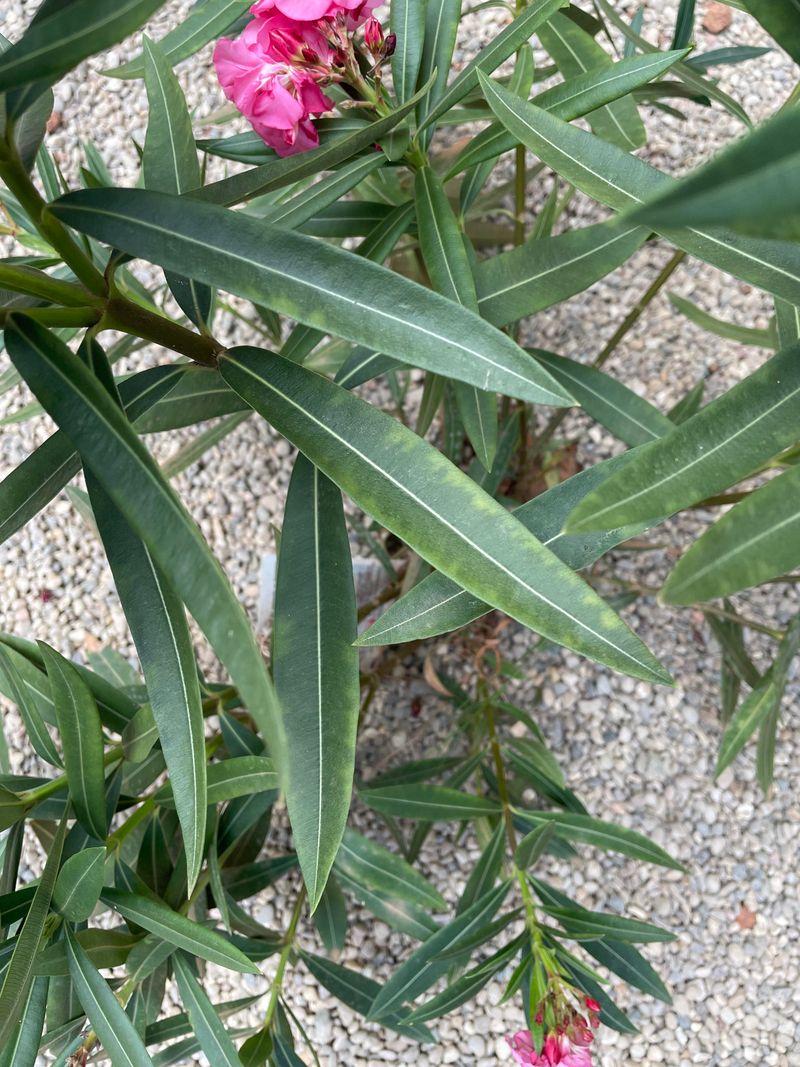
Nitrogen deficiency is the most common nutrient issue in oleanders, and it usually shows up as an overall pale yellowing of older leaves.
Iron deficiency looks a little different, causing the area between leaf veins to turn yellow while the veins themselves stay green.
That specific pattern is called chlorosis, and it shows up more often in Arizona soils that are very alkaline.
Arizona soils tend to have a high pH, which means nutrients like iron and manganese can be present in the soil but locked in a form the plant cannot actually absorb. Adding more fertilizer without testing first can make things worse, not better.
A simple soil test from your local cooperative extension office or garden center can tell you exactly what your soil is missing and what the pH level is.
That information is worth far more than guessing. Once you know what is actually low, you can apply the right product at the right rate.
For high-pH soils, sulfur amendments or chelated iron products are often more effective than standard fertilizers.
Always follow label directions and avoid fertilizing during the hottest part of summer, since the plant is already under stress.
6. Summer Heat Makes Symptoms Louder
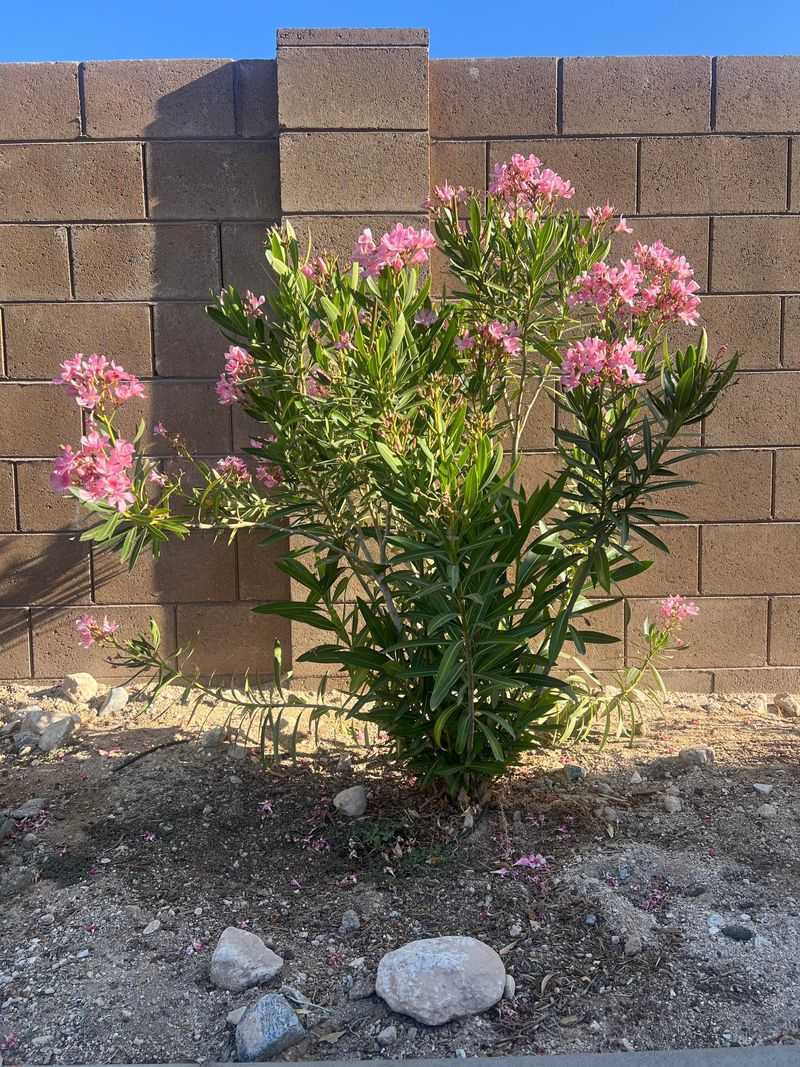
Arizona summers do not mess around.
When temperatures climb above 110 degrees Fahrenheit in the Phoenix metro area and surrounding desert regions, even tough plants feel it.
Oleanders can handle heat better than most landscape shrubs, but extreme temperatures act like a magnifying glass on any existing stress.
A plant that was mildly drought-stressed in May may look dramatically worse by July simply because the heat has pushed its limits further.
High heat increases how fast water evaporates from leaves, a process called transpiration.
The plant loses moisture faster than it can pull water up from the roots, especially if the soil is dry or compacted.
This accelerated moisture loss can cause leaves to yellow quickly, particularly on the side of the plant facing direct afternoon sun.
Heat stress alone rarely causes yellowing across a whole plant.
More often, it takes a problem that already existed and makes it impossible to ignore. Summer heat essentially turns the volume all the way up on whatever stress the plant was already dealing with quietly in spring.
Mulching around the base of the plant can help keep soil temperatures lower and reduce moisture loss.
A three-inch layer of organic mulch placed a few inches away from the main stem makes a real difference during peak summer. Adjust your irrigation schedule upward slightly during heat waves, and check soil moisture more often.
7. Poor Drainage Adds Root Stress
Water that has nowhere to go is a slow-moving problem.
In many Arizona yards, soil compaction, caliche layers, or low-lying planting spots create drainage nightmares that many homeowners do not notice until a plant starts struggling.
When water pools around oleander roots after irrigation or rain, roots sit in saturated soil longer than they should.
Poor drainage and overwatering can look almost identical from above ground.
Both cause scattered yellowing across the plant rather than a clear pattern on older or newer growth. The difference is that poor drainage is a site problem, not just a scheduling problem.
You can cut back watering all you want, but if water physically cannot move away from the roots, the plant will keep struggling.
Caliche is a particularly stubborn issue in Arizona landscapes.
This naturally occurring hardpan layer can sit anywhere from a few inches to a few feet below the surface, and it acts like a bathtub floor.
Water fills up above it and has nowhere to drain. If you dig down near a struggling plant and hit a white or grayish hard layer, caliche is likely part of your drainage problem.
Breaking through caliche with a breaker bar or auger before planting, or creating a drainage channel to direct water away, can solve the problem at the source.