What It Means When Blue Jays Keep Mobbing Trees In Your Kentucky Yard
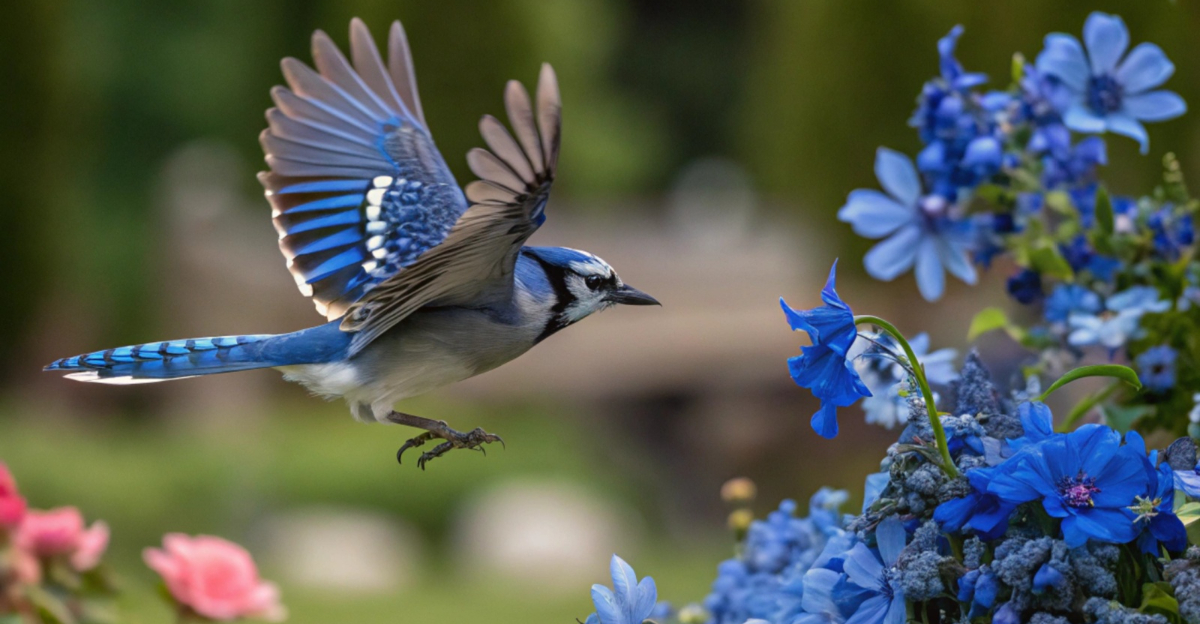
A single blue jay calling out from your maple tree is loud enough. Five or six of them, all shrieking at once, circling and diving at the same branch like they’ve lost their minds? That’s a different kind of noise entirely.
If you’ve caught this show in your Kentucky backyard, you’ve probably wondered whether something is actually wrong or if the birds are just putting on a show for the neighborhood.
Here’s the truth: they’re not overreacting. Blue jays don’t waste energy on a coordinated outburst like this without a real reason.
When a mob forms around one tree, something is hiding in that canopy, and the jays know exactly what it is, even if you don’t.
Kentucky yards see this behavior constantly thanks to the mix of mature trees and backyard wildlife that makes the perfect stage for it.
Once you find out what’s really going on up there, you’ll never look at a jay the same way again.
Mobbing Behavior In Blue Jays Signals A Predator Nearby
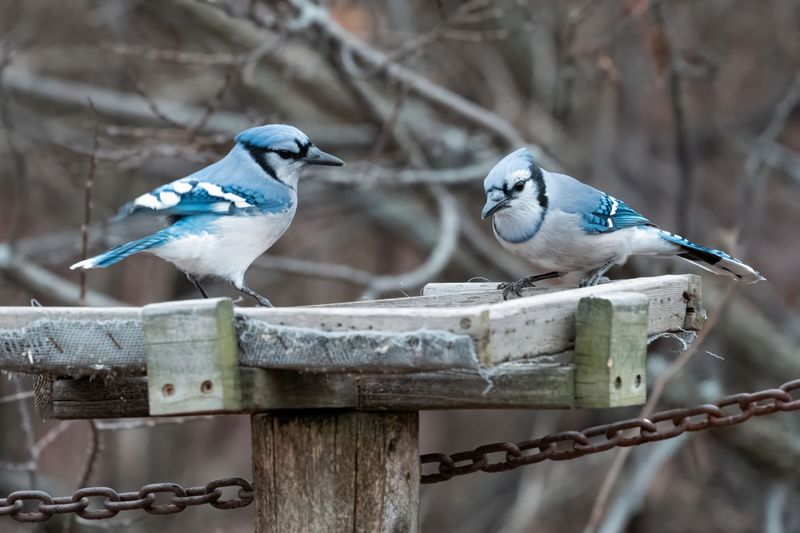
Suddenly, your yard fills with noise. Blue jays are calling, diving, and circling a single tree with intense focus.
This behavior is called mobbing, and it is one of the most reliable alarm signals in the bird world. When blue jays mob a tree, they have spotted something dangerous nearby.
Predators trigger this response almost every time. A hawk perched on a branch or an owl tucked into the foliage will set off the whole neighborhood.
Blue jays are bold enough to confront threats head-on. Their loud calls alert other birds and animals to the danger lurking close by.
Mobbing is a coordinated group effort, not just one panicked bird. Multiple jays work together to harass the predator until it moves on.
Scientists who study bird behavior call this predator harassment, and it serves a real purpose. The noise and movement make it hard for a predator to focus on hunting.
If blue jays mobbing trees in your Kentucky yard is something you keep seeing, pay attention. Your yard likely sits inside the territory of a skilled and patient hunter.
Hawks And Owls Are Common Targets Of Blue Jay Mobbing
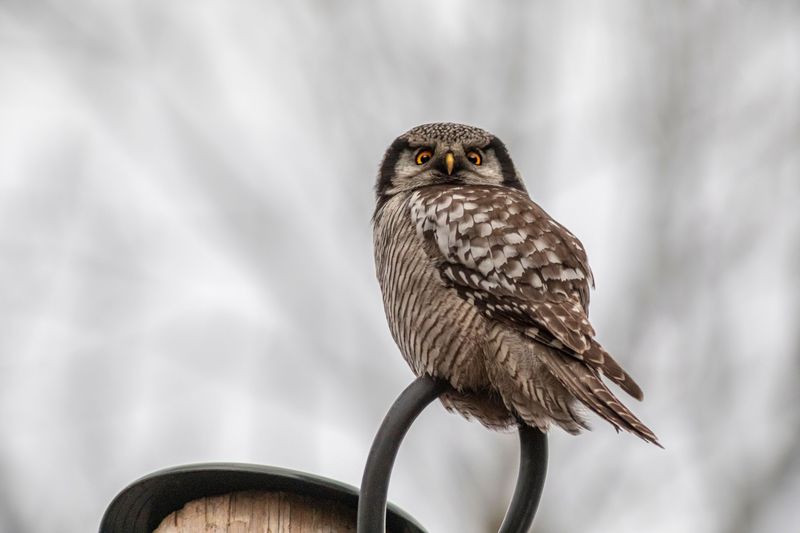
Hawks and owls are the usual suspects when blue jays spring into action. Both are skilled predators that pose a real threat to smaller birds.
Red-tailed hawks are one of the most spotted raptors in Kentucky yards. They often perch high in trees, scanning the ground below for a meal.
Great horned owls are another frequent target. These powerful birds hunt at night, but they roost in dense trees during daylight hours.
Blue jays recognize these predators on sight, even when they sit completely still. Their sharp eyesight picks up the outline of a raptor almost instantly.
Once spotted, jays recruit other birds to join the mob. Chickadees, nuthatches, and even crows sometimes join the commotion.
The goal is simple: make the predator so uncomfortable that it leaves the area. A hawk that cannot sit quietly cannot hunt successfully.
Your Kentucky Garden Changes Every Week. Your Plan Should Too.
Gardening in Kentucky changes quickly throughout the season. Every Friday you’ll receive a simple weekly plan showing exactly what to plant, prune, fertilize, harvest, and protect so you never miss the right timing.
Barred owls are also common in Kentucky woodland edges and suburban yards. If you hear blue jays going wild near a thick evergreen, a roosting owl is often the reason.
Knowing which predators live in your neighborhood helps you make sense of what the jays are telling you. Their alarm is usually reliable.
Specific Trees Attract Mobbing When They Offer Cover For Predators
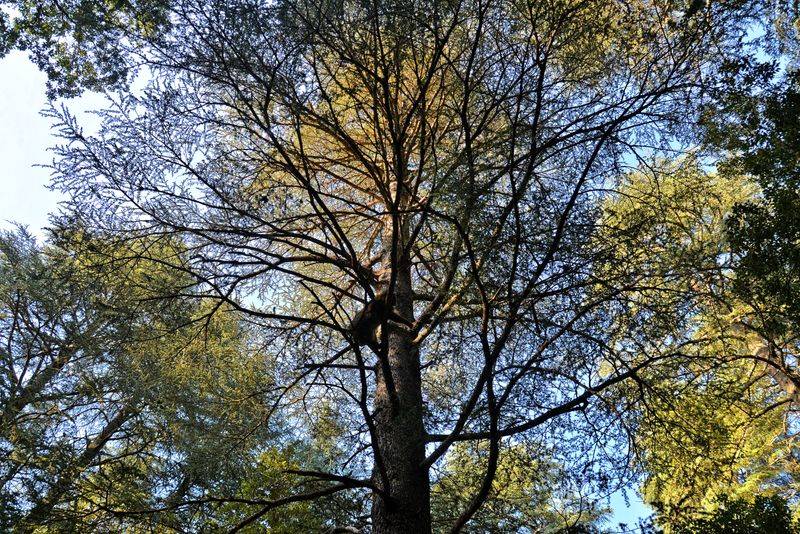
Not every tree in your yard gets equal attention from blue jays. Certain trees become hotspots for mobbing because of what they offer a hiding predator.
Dense evergreens like eastern red cedars and white pines top the list. Their thick interior provides perfect cover for a roosting owl or perching hawk.
Old oaks with wide, layered canopies are also popular hiding spots. A large hawk can tuck itself against the trunk and become nearly invisible from below.
Hollow trees are especially attractive to owls looking for a daytime retreat. Great horned owls and barred owls both favor cavities for resting between hunts.
Blue jays learn which trees in a yard consistently shelter predators. Over time, they check those specific spots more often during their morning patrols.
You might notice that mobbing always seems to happen at the same tree in your yard. That pattern likely reflects the jays consistently doing their job well.
Planting or keeping dense evergreens near bird feeders can unintentionally create a hunting advantage for raptors. Spacing your feeders away from heavy cover reduces that risk significantly.
The tree itself is not the problem, but its structure tells you a lot about why the jays keep returning to that exact spot.
Nesting Season Drives A Sharp Rise In Mobbing Activity
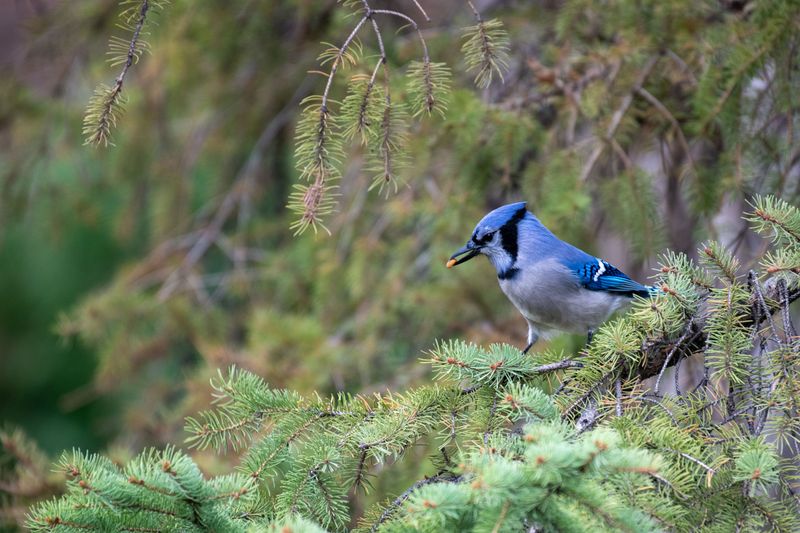
Spring arrives in Kentucky and blue jay behavior shifts into high gear. Mobbing events become more frequent, louder, and far more aggressive during nesting season.
Parent birds have everything at stake when eggs or chicks are in the nest. Any predator within range gets treated as an immediate, serious threat.
Blue jays typically nest between April and July across Kentucky. During this window, even a predator just passing through will trigger a full mobbing response.
The intensity of the mobbing often reflects how close the threat is to an active nest. A hawk perched two trees away from eggs will face persistent harassment.
Both the male and female jay participate in defending the nesting area. Their teamwork makes the harassment more effective and harder for a predator to ignore.
Young jays that fledge and leave the nest also learn mobbing behavior by watching adults. It is a survival skill passed down through observation, not instinct alone.
If you notice mobbing ramping up suddenly in late April or May, scan the nearby trees for a jay nest. It is usually a tightly built cup of twigs tucked into a fork of branches.
Nesting season turns every backyard jay into an attentive, protective guardian, and that energy is notable to witness.
Group Calling And Diving Patterns Set Mobbing Apart From Normal Behavior
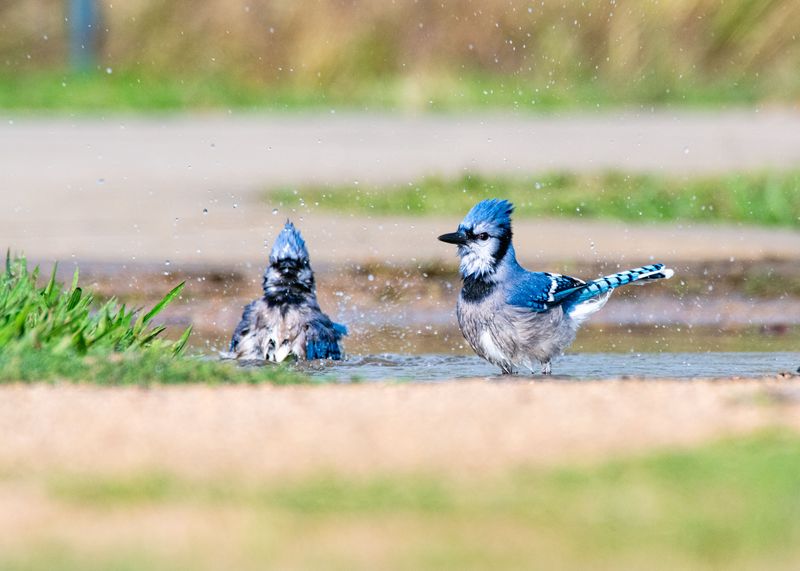
Blue jays make noise all the time, so how do you know when mobbing is actually happening? The difference is in the pattern and the energy behind it.
Normal jay chatter is scattered and relaxed. Mobbing calls are sharp, repetitive, and urgent, the kind of sound that makes you look up from whatever you are doing.
During mobbing, jays fly in tight, repeated loops around the target tree. They do not just sit and call; they actively dive toward the threat with precision.
The dives rarely make contact, but they come close enough to rattle even a large hawk. The goal is harassment, not physical combat.
Other birds in the yard respond to mobbing calls instinctively. You may notice chickadees and titmice joining the commotion within seconds of the jays starting.
The calls themselves shift during mobbing. Jays use a harsh, repetitive jeer call that is distinctly different from their everyday communication sounds.
Watch the flight paths carefully if you want to spot the predator. The jays always circle the exact location of the threat, making it surprisingly easy to find.
Once you learn to read these patterns, mobbing becomes a live, real-time map pointing directly to danger hiding somewhere in your yard.
Persistent Mobbing Over Days Points To A Resident Predator
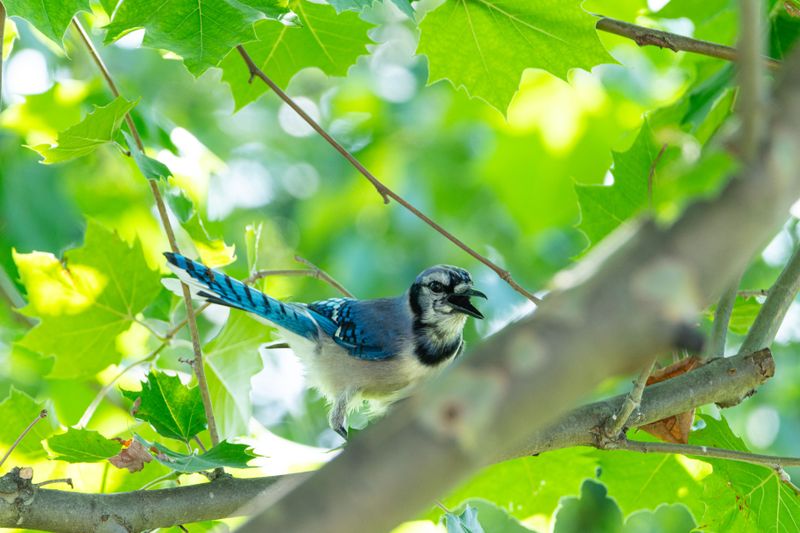
One mobbing event is interesting. Mobbing that happens at the same tree every single morning is a sign of something more permanent.
When blue jays mob a spot repeatedly over several days, a resident predator has likely claimed that tree as a regular roost. Owls especially tend to return to the same spot day after day.
Great horned owls are highly territorial and will hold a roost for weeks or even months. If the jays are targeting the same evergreen every dawn, an owl is the most likely resident.
A hawk that hunts a specific territory will also return to familiar perches. Your yard may fall inside its regular hunting route.
Persistent mobbing tells you something important about your yard’s ecosystem. You are not just hosting songbirds. You are hosting a full predator-prey food web.
Some homeowners find this unsettling, but it is actually a sign of a healthy, biodiverse backyard habitat. Predators only stay where prey is plentiful.
If the mobbing becomes a daily ritual, try watching the tree at dawn with binoculars. Patient observation usually rewards you with a clear sighting of the roosting bird.
Blue jays mobbing trees in your Kentucky yard day after day is nature’s version of a neon sign, something worth your full attention.
Checking The Tree Calmly Helps You Identify The Threat
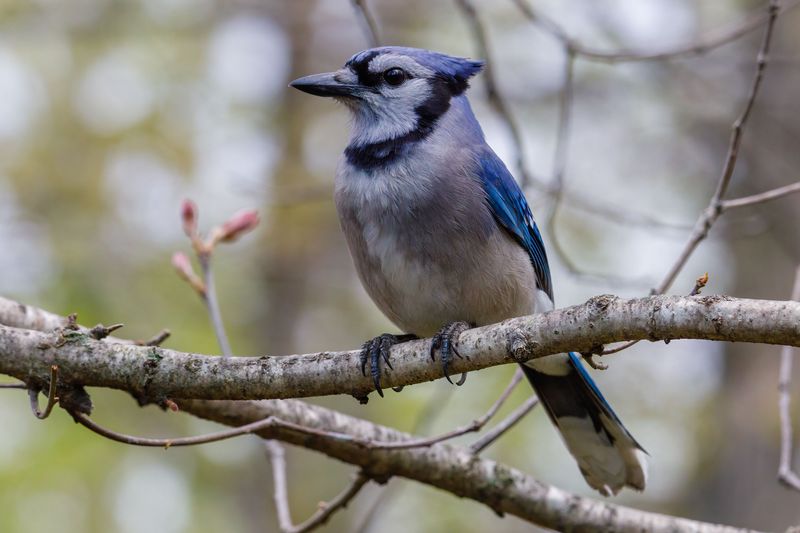
Your instinct might be to rush toward the commotion, but slow and steady works far better here. A calm, quiet approach gives you the best chance of spotting what the jays found.
Start by watching from a distance with binoculars if you have them. Look for a large, still silhouette tucked against the trunk or resting on a thick branch.
Owls often sit with their eyes half-closed during the day, which makes them easy to miss at first glance. Look for a rounded head shape and vertical posture.
Hawks tend to sit upright with their tails pointing straight down. A red-tailed hawk in a bare winter tree is actually quite visible once you know what to look for.
Move slowly around the base of the tree to change your viewing angle. Predators often become visible from one side but are completely hidden from another.
Avoid making sudden movements or loud sounds while checking. Flushing the bird before you identify it means losing the chance to know what shared your yard.
Take a photo if you can, even a blurry one helps with identification later. Free apps like Merlin or iNaturalist can help you confirm what you spotted.
Blue jays mobbing trees in your Kentucky yard is ultimately an invitation, go look, stay curious, and let the birds teach you something new about your own backyard.