What It Really Means When Wasps Start Building Nests Around Your Pennsylvania Porch This Summer
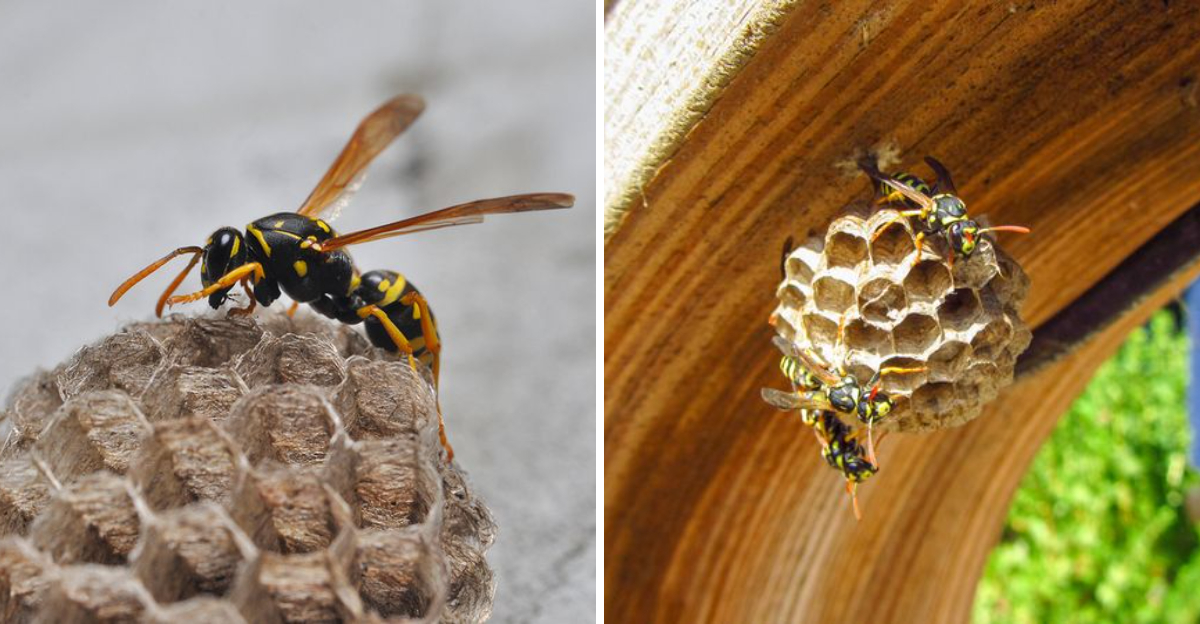
Discovering a wasp nest taking shape under your porch eave or tucked into a corner of your outdoor space is enough to make most people reach for a can of spray without a second thought. The instinct to eliminate it immediately is completely understandable.
But before you do, it might be worth pausing for just a moment, because wasps building near your porch this summer are actually communicating something worth knowing. Their choice of location is rarely random.
Wasps are selective about where they build, and the spots they choose around your porch tell you something real about your immediate environment, your local pest situation, and even the condition of the wood and materials in your outdoor structures.
Some of what they’re signaling is genuinely useful information for a homeowner. That doesn’t mean you have to live with a nest directly on your porch.
But understanding what’s behind it changes how you respond, and how effectively you prevent them from coming back.
1. They Found Shelter
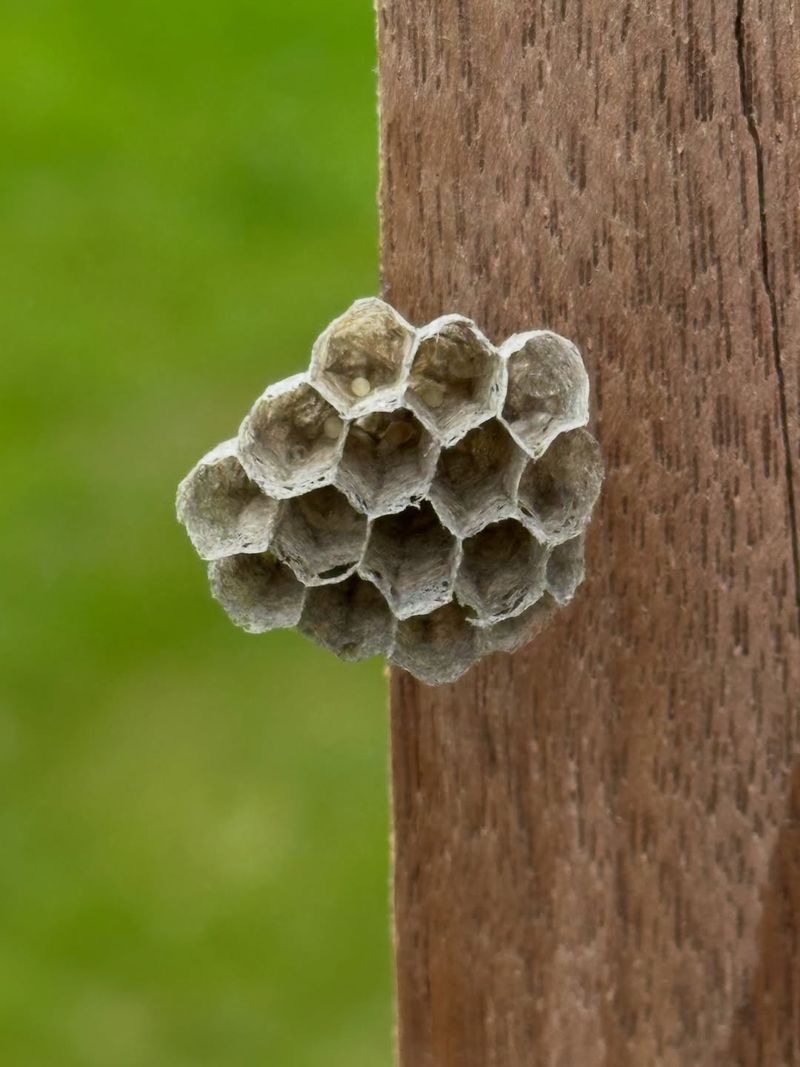
Picture this: you step outside one morning with your coffee, glance up at the porch ceiling, and notice a small papery structure hanging there like a tiny upside-down umbrella.
That is a classic paper wasp nest, and the reason it is there is simple. Your porch gave them exactly what they were looking for.
Wasps need a covered, protected spot to raise their young. Porch ceilings, eaves, door frames, railings, wall gaps, and even the undersides of outdoor furniture can all work perfectly.
These spots block wind and rain while keeping the nest off the ground and away from many ground-level threats. Pennsylvania porches, especially older wooden ones with lots of nooks and corners, are basically a dream location for a wasp colony.
Paper wasps are the most common porch nesters in Pennsylvania. They build open, comb-style nests that look like small gray or tan honeycombs.
You can often see the individual cells where eggs and larvae are kept. These nests start out the size of a golf ball and can grow larger as summer goes on.
Covered porches with overhanging rooflines are especially popular nesting spots. The deeper the overhang, the more protection a wasp gets from the elements. Even a small gap between siding boards or a hollow post can become a hidden nesting site.
Checking your porch early in spring can help you spot new nests when they are still tiny and easier to manage. A nest the size of a quarter is much simpler to deal with than one the size of a softball later in the season.
2. Summer Is Colony Season
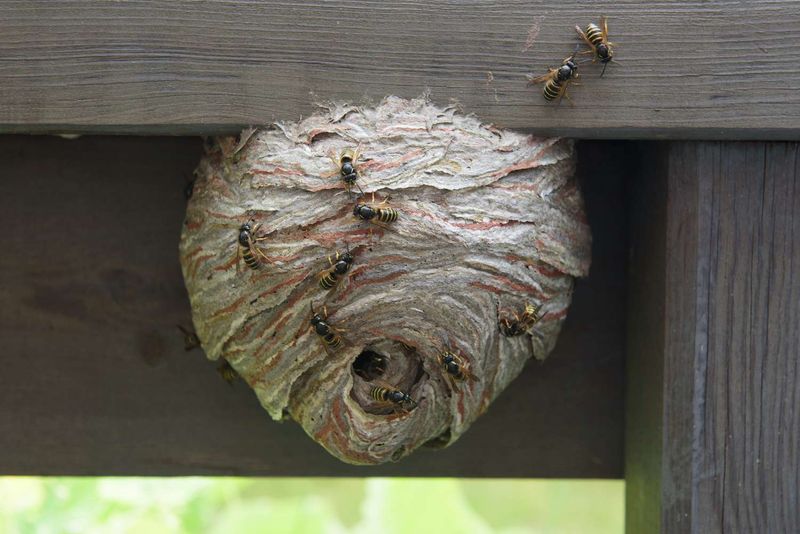
Summer feels like the busiest time for wasps, and that is not your imagination. A nest showing up on your porch in June, July, or August is almost always a sign that a colony is in full growth mode.
Understanding the wasp life cycle helps explain why summer feels like a wasp takeover. Every wasp colony starts with a single queen in early spring. She builds a tiny nest, lays the first eggs, and raises the first batch of workers all by herself.
Your Pennsylvania Garden Changes Every Week. Your Plan Should Too.
Gardening in Pennsylvania changes quickly throughout the season. Every Friday you’ll receive a simple weekly plan showing exactly what to plant, prune, fertilize, harvest, and protect so you never miss the right timing.
Once those workers hatch, they take over nest-building and food-gathering duties. The queen focuses on laying more eggs, and the colony grows fast.
By midsummer, a paper wasp nest can hold dozens of workers. Yellowjacket colonies can grow even larger, sometimes reaching hundreds or even thousands of individuals by late summer.
That is why nests that seemed small in May can look alarmingly big by August. Late summer is actually the peak of wasp activity in Pennsylvania. Workers are out foraging heavily to feed the growing colony.
This is also when wasps tend to be more defensive and more likely to sting if they feel the nest is under threat. Cooler fall temperatures will eventually slow the colony down, and freezing winter weather ends it entirely.
Spotting a nest in summer means the colony is already established and active. Early detection in spring gives homeowners more options.
But even a summer nest can be managed safely if you know what you are dealing with and approach the situation calmly and carefully.
3. Your Porch Has Nesting Material
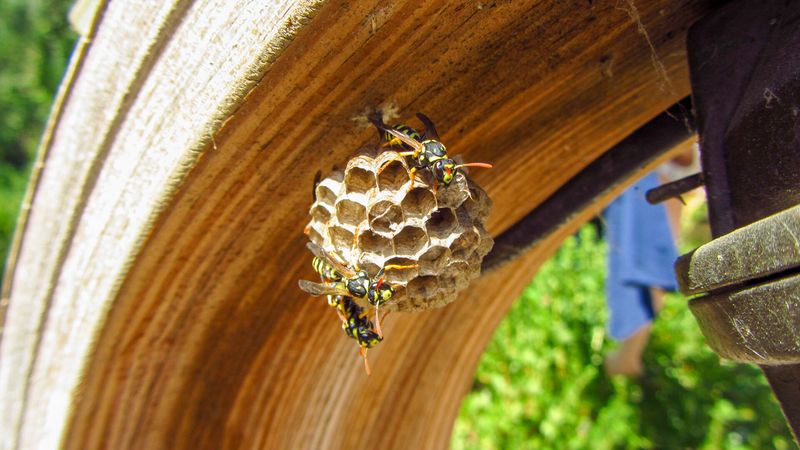
Most people do not realize they might be handing wasps a free construction supply store every time they leave old wood sitting around the porch. Wasps are resourceful builders, and your porch might be giving them everything they need to put up a nest.
Paper wasps and yellowjackets make their nests from a material that looks and feels like thin cardboard. They create it by chewing tiny bits of wood fiber and mixing it with their saliva.
The result is a pulpy paste that they shape into cells and dry into a lightweight, surprisingly strong structure. It is basically nature’s version of paper-mache.
Weathered porch railings, old fence boards, unpainted wood trim, dry branches nearby, and even cardboard or newspaper left on the porch can all serve as raw material.
The more weathered and soft the wood is, the easier it is for wasps to chew through it. Gray, sun-bleached wood is especially appealing to them.
Freshly painted or stained wood is a little harder for wasps to work with, which is one reason keeping your porch wood well-maintained can slightly reduce its appeal as a nesting material source.
It will not stop determined wasps entirely, but it can make your porch a less attractive option compared to a neighbor’s neglected fence.
Fun fact: you can sometimes spot a wasp in the act of gathering wood. They scrape the surface with their mandibles, creating a faint rasping sound.
If you hear that on your porch railing, take a closer look. You might catch a wasp mid-harvest before a nest even gets started.
4. Food Is Close By
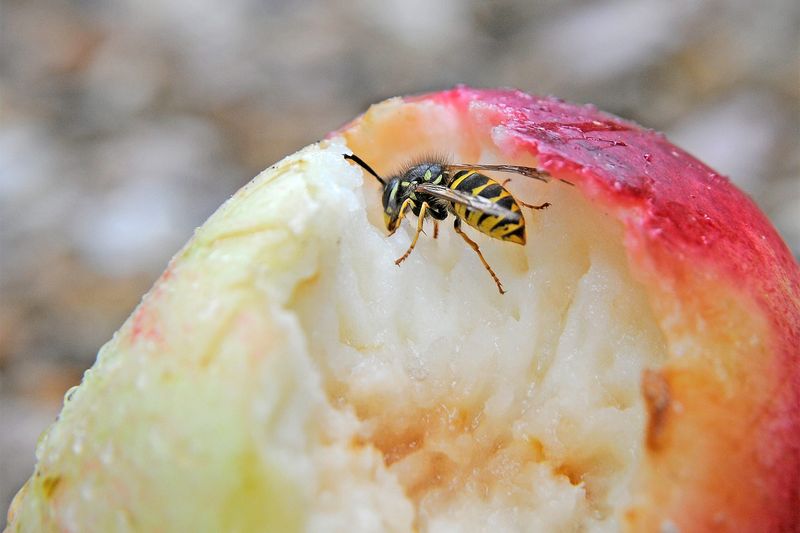
Wasps do not just pick a spot for shelter and nesting material. They also think about the food supply.
If wasps are hanging around your porch regularly, there is a good chance they are finding meals close by. And the menu is wider than most people expect.
Social wasps like paper wasps and yellowjackets are actually predators. They hunt caterpillars, flies, spiders, beetle larvae, and other soft-bodied insects to feed their larvae back at the nest.
A garden near your porch full of plants and bugs is basically a wasp grocery store. In this way, wasps quietly help control pest populations that would otherwise damage your plants.
Adult wasps also need sugar for their own energy. They are drawn to fallen fruit, open soda cans, fruit juice, sweet cocktails, and anything sticky left on porch tables.
Trash cans without tight-fitting lids near the porch are a big attractant, especially in late summer when wasps get more aggressive about finding sugary food sources.
Meat is another draw. Leftover grill scraps, pet food left outside, or open trash bags containing meat can all pull wasps in fast.
Yellowjackets in particular are well-known for crashing summer cookouts for exactly this reason.
Keeping your porch area clean makes a real difference. Rinse out empty cans and bottles before tossing them. Cover trash cans tightly. Wipe down tables after eating.
Pick up fallen fruit from nearby trees. These small habits reduce the food signals that tell wasps your porch is a great place to stick around and build a home.
5. The Wasp Type Matters
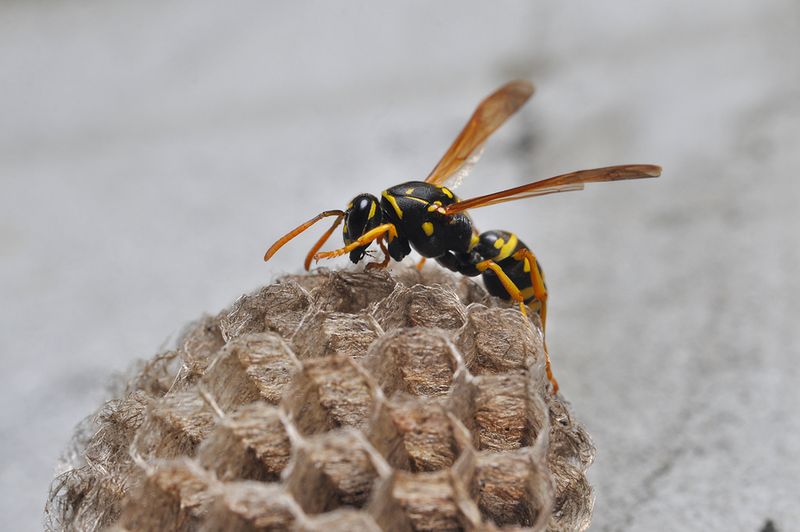
Not every wasp that shows up on a Pennsylvania porch is the same, and the type of wasp you are dealing with changes everything about how you should respond. Lumping them all together as just wasps can lead to some pretty uncomfortable surprises.
Paper wasps are the most common porch nesters in Pennsylvania. They have long, slender bodies and build open-comb nests under eaves or overhangs.
They are generally calmer than other species and will usually only sting if you directly bother the nest or them personally. Many homeowners live with a small paper wasp nest all summer without any real problems.
Yellowjackets are a different story. They are stockier, more aggressive, and far more likely to sting with little warning.
They often nest in hidden spots like wall voids, underground burrows, or inside sheds. If you notice wasps flying in and out of a small hole in the ground or siding near your porch, yellowjackets are a likely suspect.
Their colonies grow very large by late summer, making them especially risky to disturb. Bald-faced hornets are the largest of the three common types.
They build big, gray, football-shaped paper nests that are often attached to trees, shrubs, or the sides of buildings.
They are highly defensive and will chase perceived threats away from the nest aggressively. A bald-faced hornet nest near a high-traffic porch area is one situation where calling a pest-control professional is often the smartest move.
Identifying the wasp correctly before taking any action is always the right first step. A quick phone photo and a search online can help you figure out exactly what you are working with.
6. Leave It Or Remove It Safely
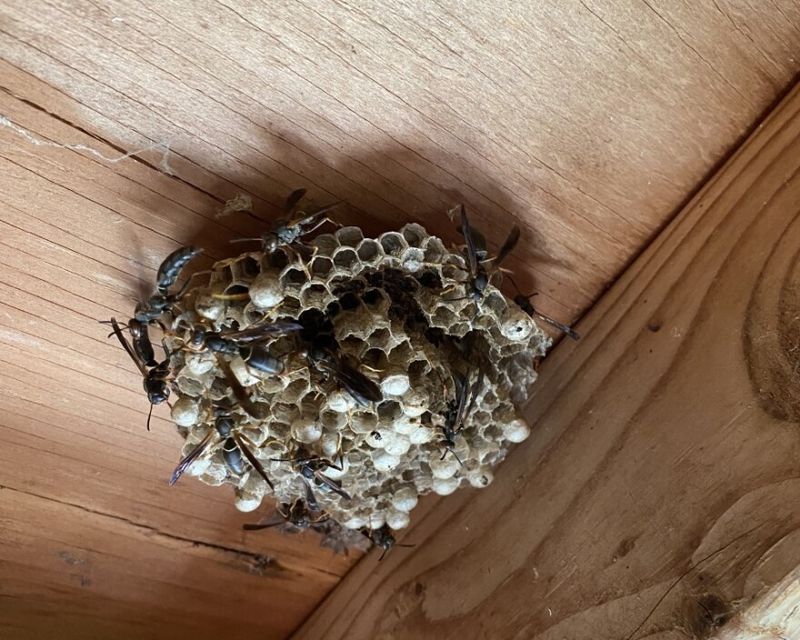
Once you have spotted a wasp nest on your porch, the big question becomes: what do you actually do about it? The answer depends on a few key factors, and rushing into action without thinking it through can make the situation much worse.
If the nest is tucked away in a corner far from doors, seating areas, children, or pets, leaving it alone is often the safest and most practical choice. Wasp colonies in Pennsylvania naturally wind down as fall arrives.
Freezing winter temperatures end the colony entirely, and the nest will not be reused the following year. A nest that is not bothering anyone may not need to be touched at all.
When the nest is in a high-traffic area, removal becomes necessary. The most important rule is to stay calm and avoid sudden movements around the nest.
Never swat at wasps near a nest. Do not spray water at it, shine a flashlight on it at night without caution, or try to burn it. These approaches often trigger defensive stinging from the entire colony at once.
For small, accessible paper wasp nests, labeled wasp spray applied at dusk or dawn when wasps are less active can work well. Wasps are slower and less aggressive in cooler early-morning temperatures.
Wear long sleeves, gloves, and eye protection. Stand as far back as the spray can reach. For larger nests, hidden nests, or any situation involving yellowjackets or bald-faced hornets, a licensed pest-control professional is the right call.
They have the proper protective equipment, experience, and products to handle the job without putting your family at risk.