Plant These 7 Fast-Growing Trees To Turn Your Connecticut Yard Into A Private Oasis
Your neighbor waves from her kitchen window. You wave back, awkwardly, still half-dressed, wondering why your backyard feels like a fishbowl.
Every barbecue turns into a performance. Every quiet morning gets watched. That is not what a backyard is for.
Here is the fix nobody tells you about: the right tree, planted now, changes everything within a couple of growing seasons.
Connecticut winters run cold and its summers turn thick and humid, yet a handful of tree species handle both with ease and grow like they mean it.
Some shoot up several feet a year. Others fill the air with a scent that stops you mid-step. A few will still be standing decades from now, quietly doing their job long after you have forgotten you planted them.
This is not decoration. This is architecture for your privacy, your sanity, your property value.
Connecticut homeowners who plant smart this season will be relaxing behind a green wall by next summer, invisible and finally at ease.
1. Emerald Green Arborvitae
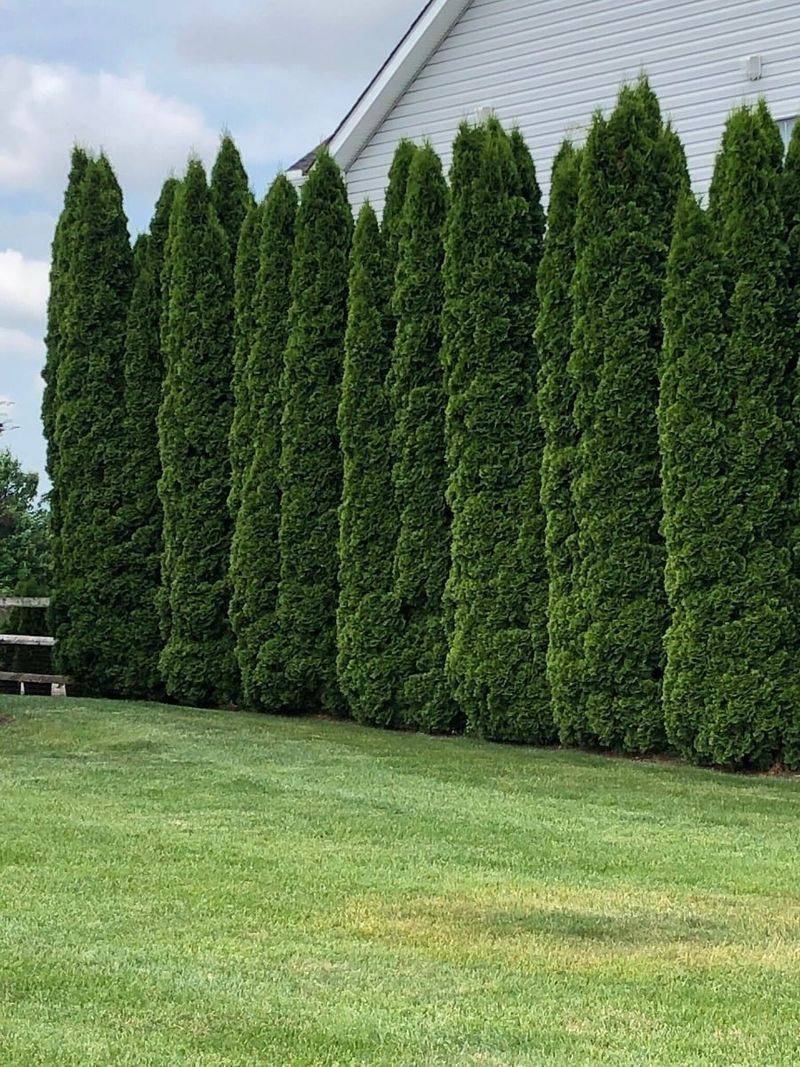
Picture a fence that never needs painting, never rots, and somehow looks better with every passing year. That is exactly what Emerald Green Arborvitae delivers to any yard craving serious, no-fuss privacy.
This compact, columnar evergreen stays naturally tight and tidy without demanding constant trimming or shaping. It grows to about 15 feet tall but spreads only 3 to 4 feet wide, making it an ideal fit for narrow side yards and tight property lines.
Homeowners across Connecticut and the wider Northeast return to this variety again and again, and for good reason.
The rich, emerald-colored foliage holds its deep color straight through winter, staying vibrant even when snow settles heavily on the branches.
Planting a row of these along a fence line or property boundary creates a dense, living screen that works year-round, not just in summer. Space them roughly 3 feet apart, and you will have a solid, uniform wall of green within just a few growing seasons.
These trees prefer full sun to partial shade and well-drained soil that does not stay soggy. Once established, they tolerate drought reasonably well and recover from harsh cold snaps without much drama or special care.
Deer can pose a real problem in some neighborhoods, so a repellent spray during the leaner winter months is worth considering. A simple mesh barrier around younger trees also offers reliable protection while they mature.
Fast-growing trees like this one are often the top pick for new homeowners wanting quick, dependable results. You can find Emerald Green Arborvitae at most garden centers each spring and fall.
Plant them in October to give roots time to establish before summer heat arrives. Your yard will never feel exposed again once these beauties fill in completely.
2. Green Giant Arborvitae
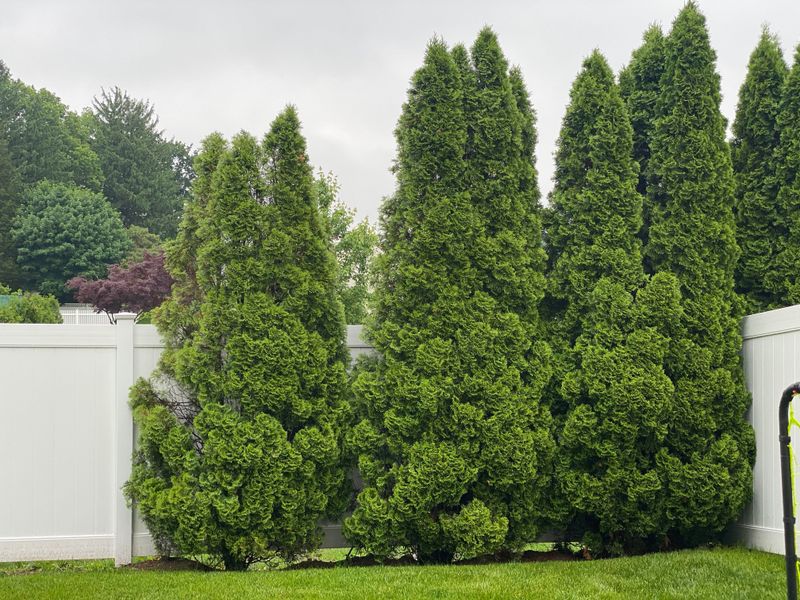
If speed is what you need, Green Giant Arborvitae is an unusually fast grower with roots to match. This powerhouse evergreen can shoot up 3 to 5 feet a year, one of the fastest privacy trees around.
Unlike its slimmer cousin, the Emerald Green, this tree grows wide and full in every direction. Mature specimens can reach 40 to 60 feet tall and 12 to 20 feet wide, creating an impressive natural wall that feels more like a solid barrier than a fence.
Your Connecticut Garden Changes Every Week. Your Plan Should Too.
Gardening in Connecticut changes quickly throughout the season. Every Friday you’ll receive a simple weekly plan showing exactly what to plant, prune, fertilize, harvest, and protect so you never miss the right timing.
The soft, feathery foliage is a rich blue-green that stays vibrant through every season of the year. Even in the coldest Connecticut winters, it holds its color beautifully and keeps your yard looking alive when everything else has gone gray.
One of its biggest advantages is a strong natural resistance to deer browsing. Deer tend to steer clear of Green Giant, which makes it a serious upgrade over other arborvitae varieties in rural and suburban settings alike.
Plant them in full sun for the fastest possible growth. They adapt well to a wide range of soil types, though they truly thrive in moist, well-drained ground with decent organic content.
Space individual trees 5 to 6 feet apart if you want a tight hedge effect fairly quickly. Give them more breathing room if you prefer a softer, more natural, layered look over time.
Watering consistently during the first two years is the real secret to strong, rapid growth. After that, these trees become remarkably self-sufficient and rarely need much attention at all.
Fast-growing trees rarely combine size, speed, and low maintenance this well. Green Giant is a true game-changer for any yard needing a bold, beautiful boundary.
3. Eastern White Pine
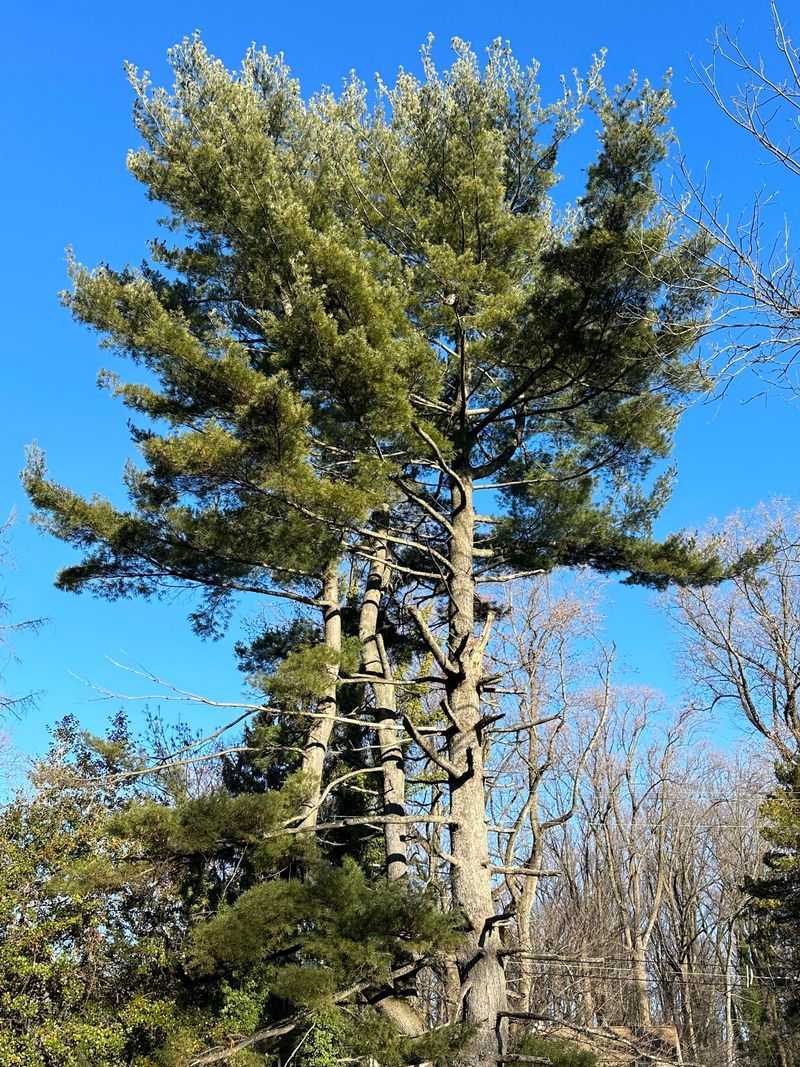
There is something deeply nostalgic about Eastern White Pine. Its long, soft needles whisper in the breeze, and its towering silhouette feels like something pulled straight from a classic New England painting.
This native tree grows fast, often adding 2 to 3 feet of height each year when conditions are right. Within a decade, you can have a genuine forest feel right in your own backyard, without having to wait a lifetime for it.
Eastern White Pine is one of the tallest trees in the Northeast, capable of reaching over 100 feet at full maturity. For privacy purposes, though, even a 20-foot specimen already creates serious, effective screening.
The soft, blue-green needles grow in clusters of five and carry a feathery, elegant texture. Unlike stiffer evergreens, this tree has a natural, flowing appearance that feels wild, loose, and alive.
It thrives in well-drained, slightly acidic soil and prefers full sun exposure. Avoid planting it in low-lying, wet areas where standing water can stress and weaken the root system over time.
One thing worth keeping in mind is that lower branches can drop as the tree matures. Planting a row of shrubs underneath helps maintain privacy at eye level even as the canopy rises higher.
Birds absolutely love Eastern White Pine for nesting and shelter. Planting even a single tree can attract warblers, chickadees, and other beloved backyard visitors within one growing season.
For a fast-growing tree that also doubles as a wildlife habitat, Eastern White Pine is genuinely hard to beat. It remains a true Connecticut classic, worth every inch of yard space it asks for.
4. Eastern Red Cedar
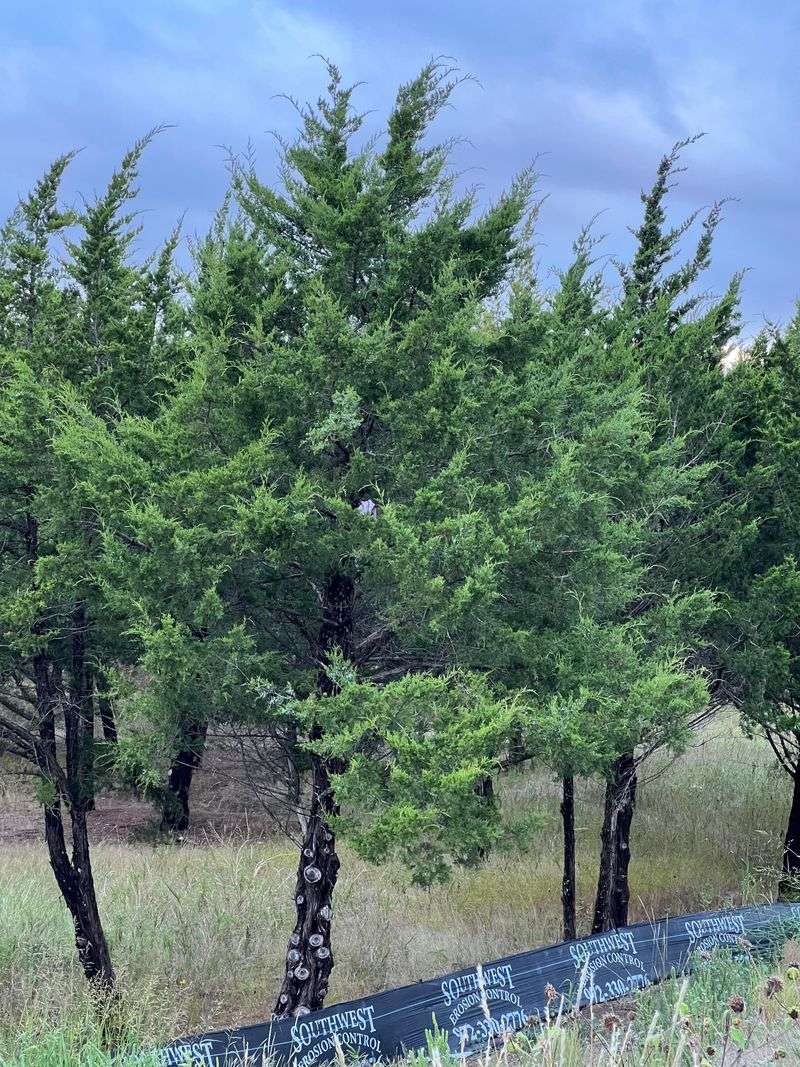
Tough as nails and twice as stubborn, Eastern Red Cedar is the tree that thrives where others give up entirely. Rocky soil, dry slopes, windy ridges, it handles all of it without complaint.
Technically a juniper rather than a true cedar, this native evergreen has been part of the American landscape for centuries. Early settlers relied on its rot-resistant wood for fence posts, furniture, and countless practical uses.
Growth rates average 1 to 2 feet per year, which is solid for a tree built this tough. Over time, it develops into a dense, pyramidal shape that provides excellent coverage all year long.
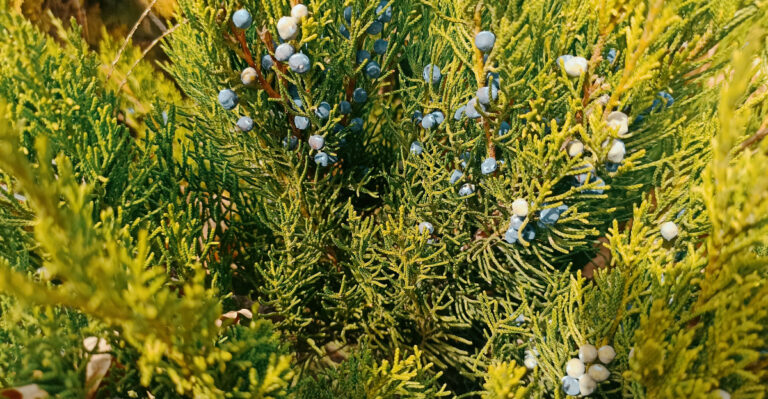
The dark blue-green foliage has a slightly prickly texture and a pleasant, woodsy scent that lingers in the air. In winter, female trees produce small, powder-blue berries that cedar waxwings absolutely go crazy over.
One of its strongest qualities is drought tolerance once it becomes established. It asks for very little water and almost no fertilizer, making it a genuinely low-maintenance choice for busy homeowners.
Eastern Red Cedar handles poor, shallow soils better than almost any other evergreen out there. If your yard has patches of rocky or sandy ground, this tree will settle right in without much hesitation.
It performs best in full sun and open spaces where air circulates freely. Planting trees too close together in humid spots can invite cedar-apple rust, so give each one some breathing room to grow.
Among fast-growing trees suited for challenging sites, Eastern Red Cedar truly stands tall. Plant it where others struggle, and it will reward you with decades of rugged, reliable beauty.
5. Norway Spruce
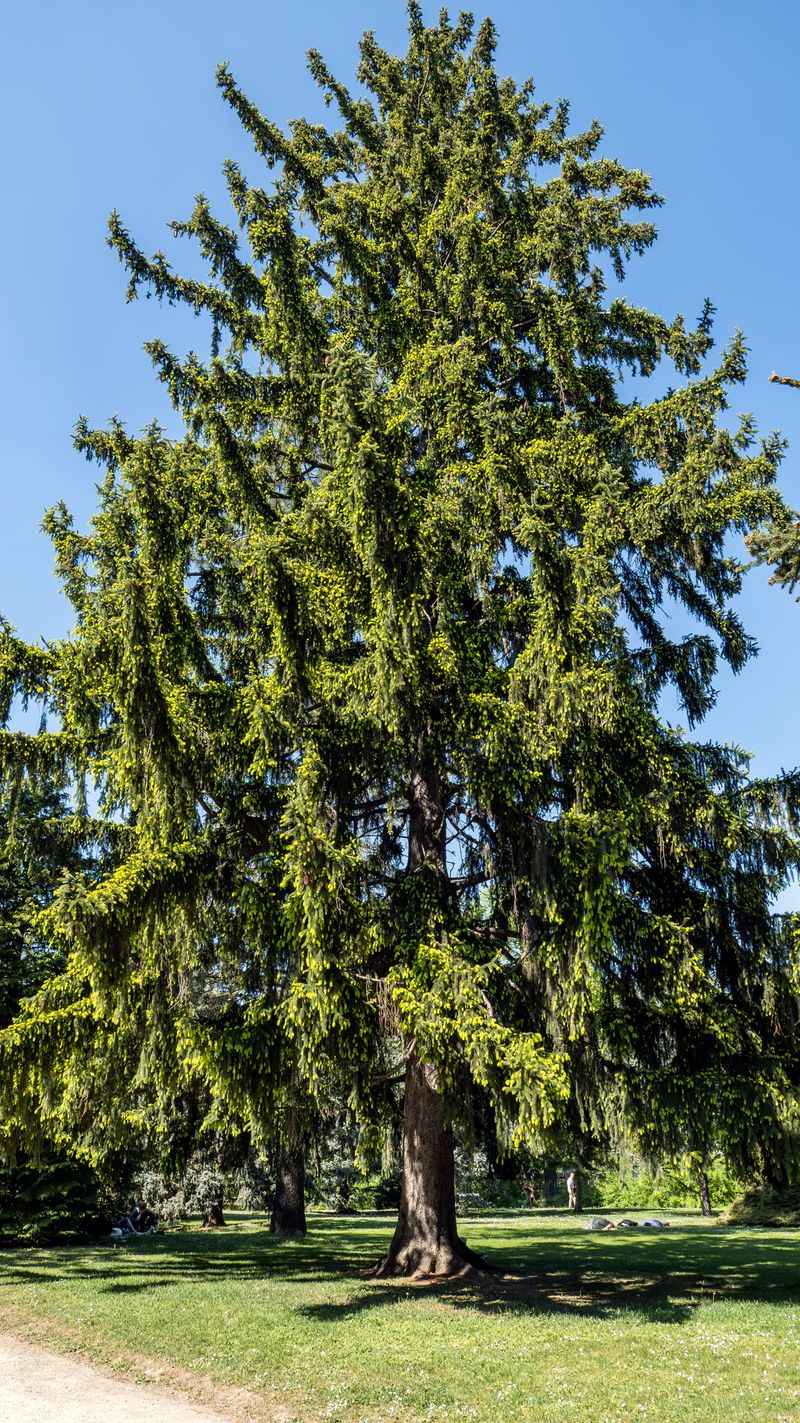
Norway Spruce has a dramatic, almost theatrical presence that stops people in their tracks. Those long, sweeping branches with pendant branchlets hanging like curtains give it a look unlike any other evergreen.
Originally from Europe, this spruce has been planted across North America for well over 200 years. It adapted beautifully to the cold, wet winters and warm summers found throughout the Northeast.
Growth rates are genuinely impressive, often reaching 2 to 3 feet per year under good conditions. A young Norway Spruce can become a commanding privacy screen in as little as five to seven years.
At full maturity, expect heights between 40 and 60 feet with a spread of 25 to 30 feet. That kind of size translates into serious wind protection and meaningful noise reduction for your yard.
This tree thrives in full sun and moist, well-drained, slightly acidic soil. It does not tolerate wet feet well, so avoid low spots where water tends to collect after heavy rain.
Norway Spruce is also considered one of the best windbreak trees available for northeastern properties. A row planted along the north or west side of a yard can meaningfully reduce winter heating costs.
The cones are the longest of any spruce species, sometimes reaching 6 inches in length. They add a beautiful, rustic detail that makes this tree a standout in every season of the year.
For fast-growing trees with bold character and serious practical value, Norway Spruce delivers on every level. Plant one this fall, and you start a relationship with your landscape that will last for generations.
6. Leyland Cypress
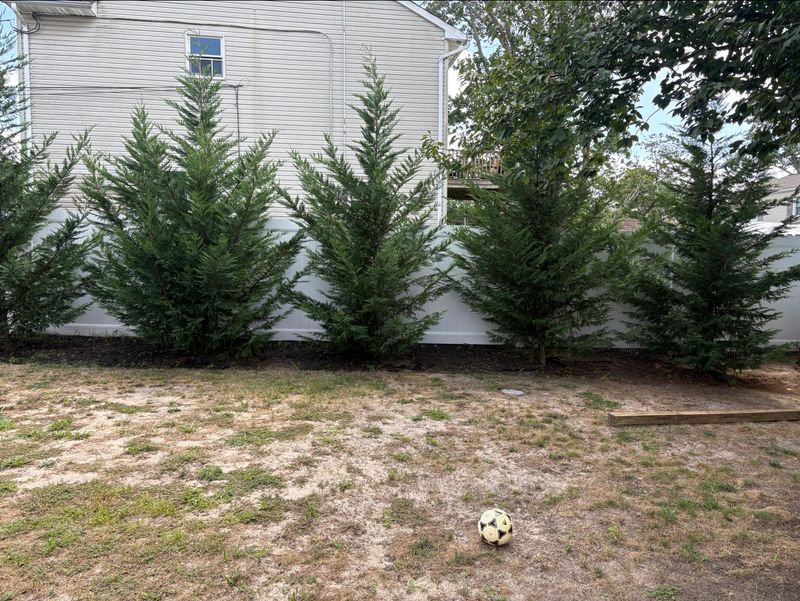
Leyland Cypress is one of the most efficient privacy trees available. It grows fast, looks polished, and creates a solid green screen that blocks unwanted sightlines almost completely.
This hybrid tree combines the best traits of two different cypress species, resulting in a vigorous grower that can add 3 to 4 feet of height each year. Few trees can match that kind of pace.
The soft, feathery foliage carries a pleasant blue-green shade that holds up well through winter. Unlike some evergreens, Leyland Cypress stays full and dense from top to bottom without requiring much pruning.
It can reach 60 to 70 feet tall at full maturity, making it one of the largest privacy options on this list. Even at just 15 feet, it already provides meaningful coverage from second-story windows.
Leyland Cypress prefers full sun and adapts well to a wide range of soil types. It handles both clay-heavy and sandy soils more gracefully than many of its evergreen competitors.
In Connecticut’s coldest inland areas, such as the Northwest Hills, Leyland Cypress sits right at the edge of its cold tolerance.
Winter damage becomes a real possibility there, so homeowners in those areas should check their local zone before planting.
Regular light pruning in spring keeps the shape clean and encourages denser branching over time. A pair of hedge shears and a free afternoon is really all it takes to keep a row looking sharp.
Among fast-growing trees built for maximum impact in minimum time, Leyland Cypress is a top contender. Plant it right, care for it well, and your yard transforms almost overnight.
7. Arrowwood Viburnum
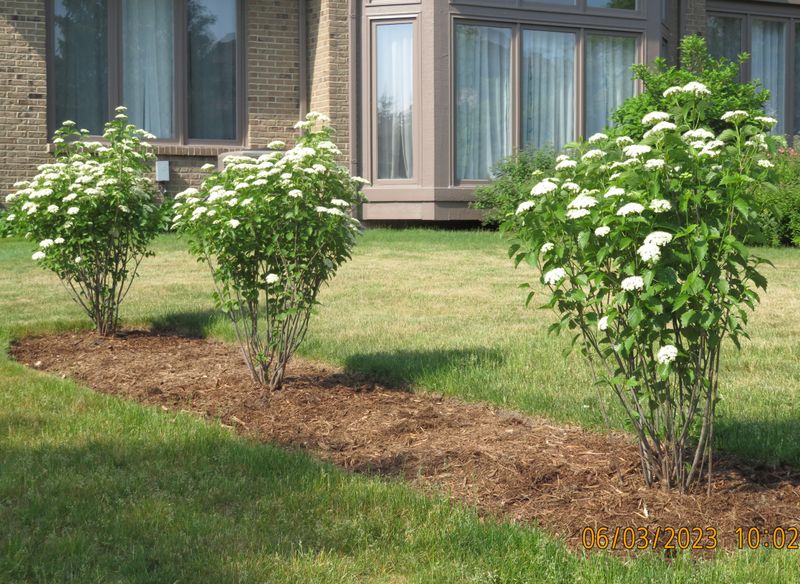
Not every privacy solution needs to be a towering evergreen. Arrowwood Viburnum brings a softer, more layered approach that blooms beautifully and feeds wildlife all at the same time.
This native shrub grows vigorously, adding 1 to 2 feet per year and reaching 6 to 10 feet tall at maturity. Planted in a row, it forms a thick, natural hedge that blocks sight lines effectively.
Spring brings clusters of creamy white flowers that attract pollinators by the hundreds. By late summer, those blooms turn into clusters of dark blue berries that birds simply cannot get enough of.
Fall color is another major selling point for this shrub. The glossy green leaves shift into shades of red, orange, and purple, giving your yard a stunning seasonal display before winter settles in.
Arrowwood Viburnum is one of the most adaptable native shrubs available for northeastern landscapes. It tolerates part shade, wet soils, and even occasional drought once it becomes settled.
Unlike strict evergreens, it loses its leaves in winter, so pairing it with a conifer backdrop creates a layered, four-season privacy solution. The combination ends up looking intentional and professionally designed.
Maintenance stays minimal once established. An occasional trim after flowering keeps the shape tidy, and a layer of mulch around the base helps retain moisture during dry summer stretches.
Among all the fast-growing trees and shrubs suited for Connecticut yards, Arrowwood Viburnum stands out for its beauty and real ecological value. Plant it along your border and let nature handle the rest.