Native Georgia Plants To Grow Instead Of Wisteria Along Fences And Arbors
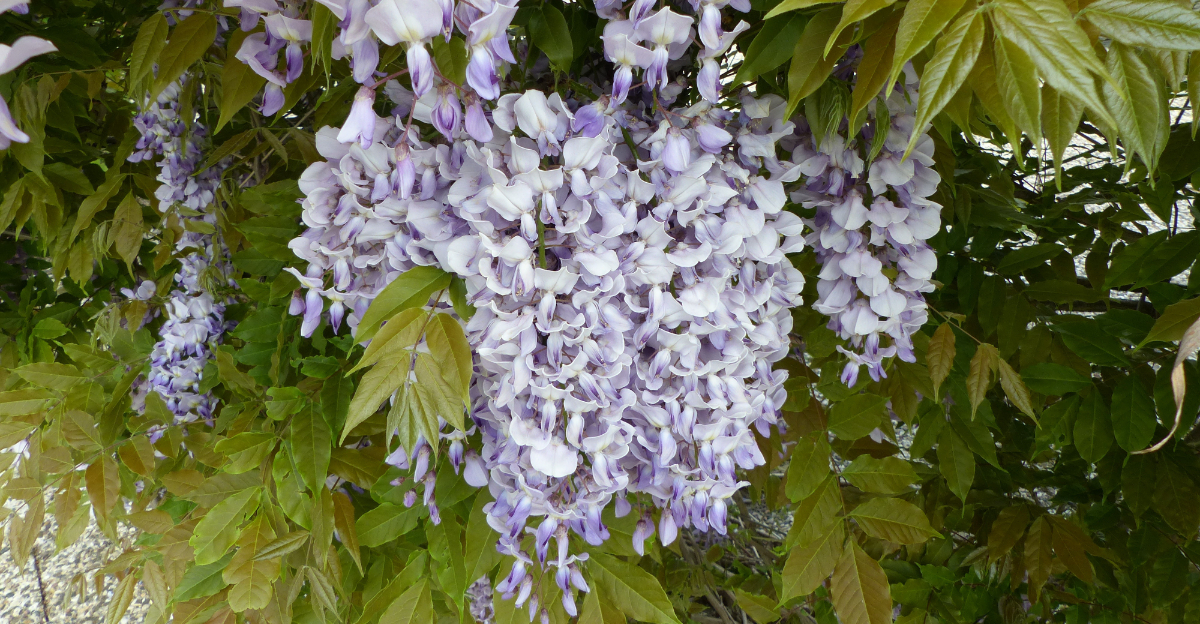
Fast growing vines can be hard to resist at the garden center. A small plant covered in flowers looks like the perfect choice for a fence or arbor, and it is easy to picture how beautiful it will become.
A few growing seasons later, that excitement can turn into constant trimming, unwanted spread, and much more maintenance than expected.
That is why many gardeners eventually start looking for a different option. They still want colorful blooms and plenty of coverage, but without feeling like they are always trying to keep the plant under control.
The good news is that replacing one vine does not mean giving up the look you wanted.
Several native plants grow beautifully across Georgia and offer a much easier way to cover fences and arbors.
The right choice can give you lasting color while fitting naturally into the landscape and supporting local wildlife at the same time.
1. Crossvine Covers Fences With Bright Spring Flowers
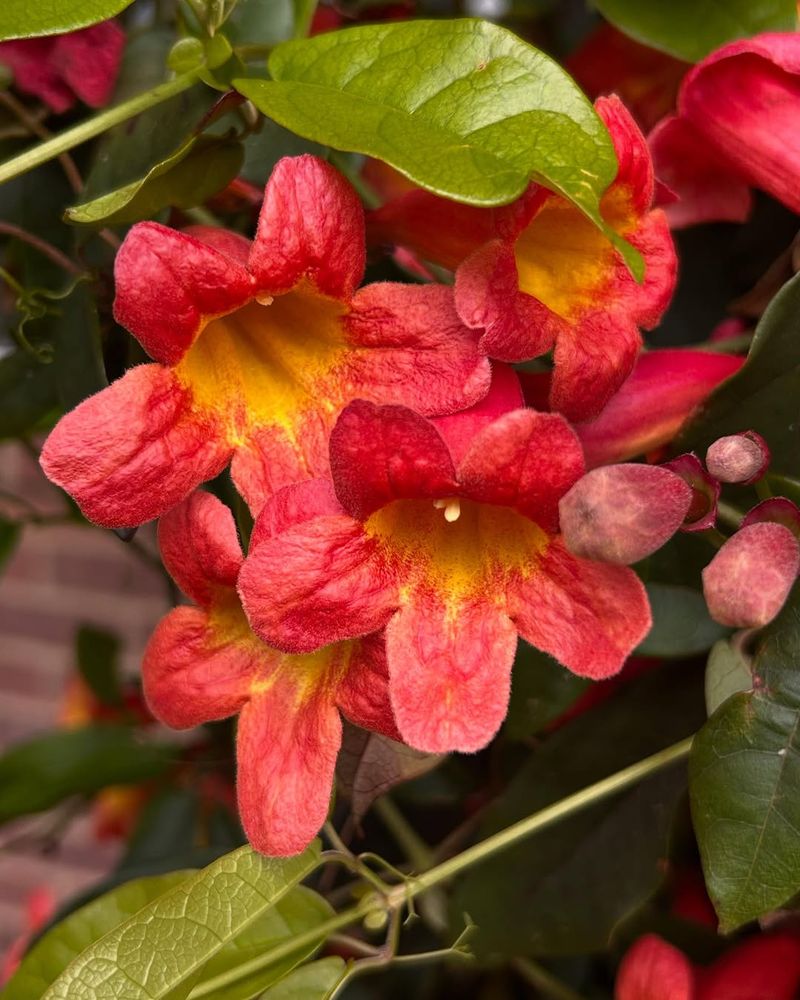
Few vines stop people in their tracks the way crossvine does in full bloom. Clusters of trumpet-shaped flowers in shades of orange, red, and yellow cover the entire plant each spring.
It is a showstopper on a fence or arbor.
Crossvine is a semi-evergreen native that holds its leaves through mild winters in the Southeast. Stems can reach 50 feet, but most gardeners keep it trimmed to a manageable size.
It attaches to surfaces using small adhesive discs, so no extra support is usually needed.
Hummingbirds are drawn to the tubular flowers almost immediately after they open. Blooms typically appear from March through May, sometimes with a lighter second flush in fall.
Planting it in full sun produces the heaviest flowering.
Well-drained soil is preferred, though crossvine tolerates clay better than most vines. Water it regularly during the first growing season, then back off.
Once established, it handles drought reasonably well without much extra attention from you.
Pruning right after the main bloom keeps the plant tidy and encourages fresh growth. Avoid heavy pruning in late summer, since that removes next year’s flower buds.
Light shaping throughout the season is perfectly fine.
Despite its vigorous growth, crossvine is generally easy to manage with occasional pruning and rewards you with reliable blooms year after year.
Despite its vigorous growth, occasional pruning is usually all it takes to keep crossvine looking neat and under control.
2. Carolina Jessamine Blooms Before Most Garden Vines
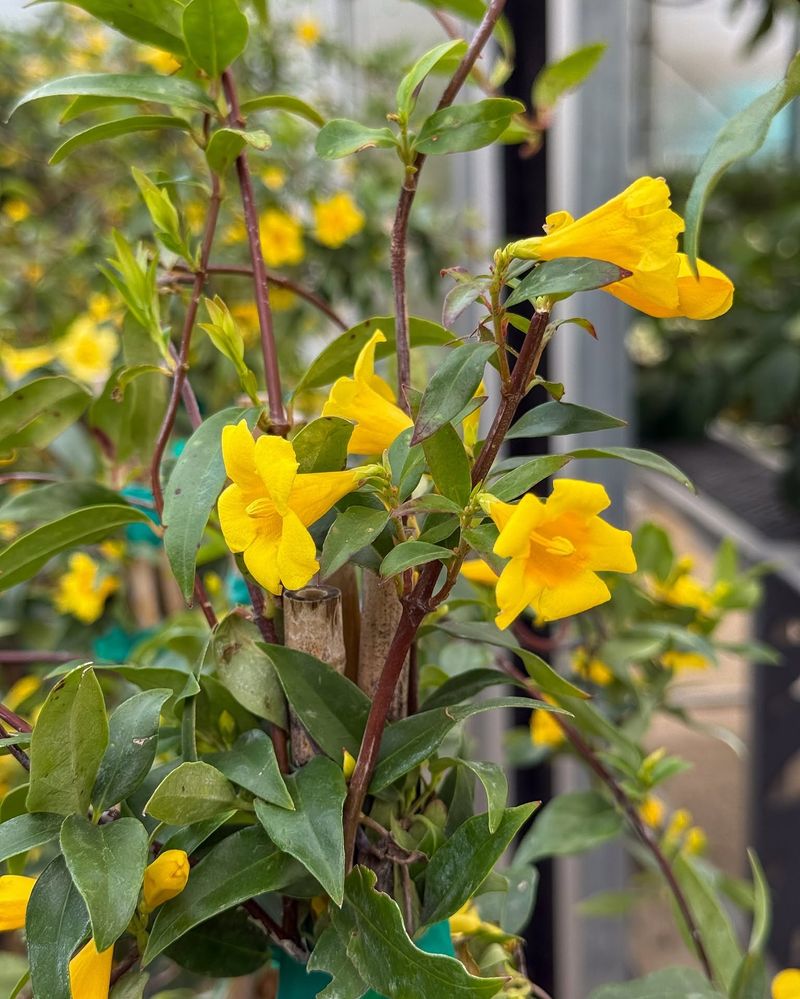
Carolina jessamine wakes up earlier than almost anything else in the garden. Bright yellow, trumpet-shaped flowers cover the vine in late winter and early spring, sometimes as early as February.
Seeing that pop of color after a dull winter feels genuinely exciting.
Native to the Southeast, this vine climbs by twining its stems around fences, arbors, and trellises. It reaches 10 to 20 feet at maturity, making it manageable for most home landscapes.
The glossy, dark green leaves stay attractive even when the plant is not flowering.
Full sun to partial shade works well for Carolina jessamine. It adapts to a range of soil types, including the clay-heavy soils common across much of the region.
Your Georgia Garden Changes Every Week. Your Plan Should Too.
Gardening in Georgia changes quickly throughout the season. Every Friday you’ll receive a simple weekly plan showing exactly what to plant, prune, fertilize, harvest, and protect so you never miss the right timing.
Good drainage matters more than soil richness.
One important note: every part of this plant is toxic if eaten. Keep that in mind if young children or pets spend time near the planting area.
Wearing gloves while pruning is a smart habit.
Pruning immediately after the spring bloom keeps the vine dense and healthy. Skip fall pruning because flower buds form on old wood.
Established plants handle heat and humidity without complaint, and they rarely struggle with serious pest or disease problems in typical garden conditions.
Once established, Carolina jessamine asks for very little care and reliably returns each spring with another spectacular display of bright blooms.
3. Coral Honeysuckle Brings Hummingbirds To Your Yard
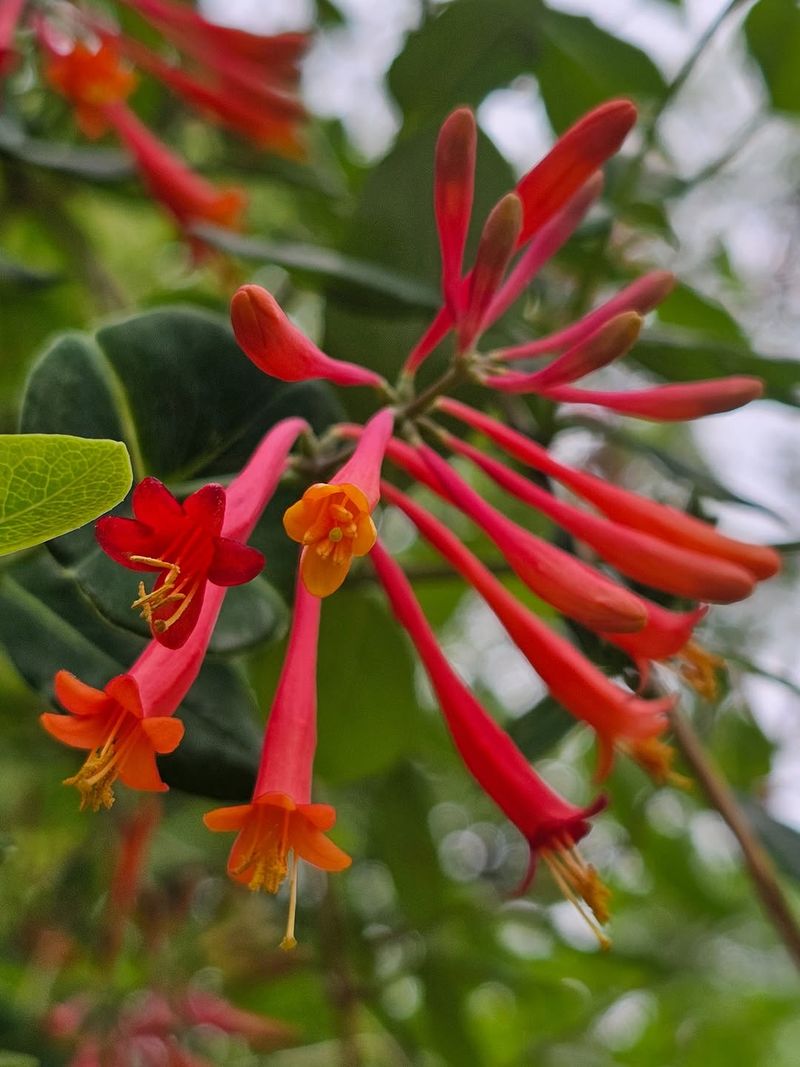
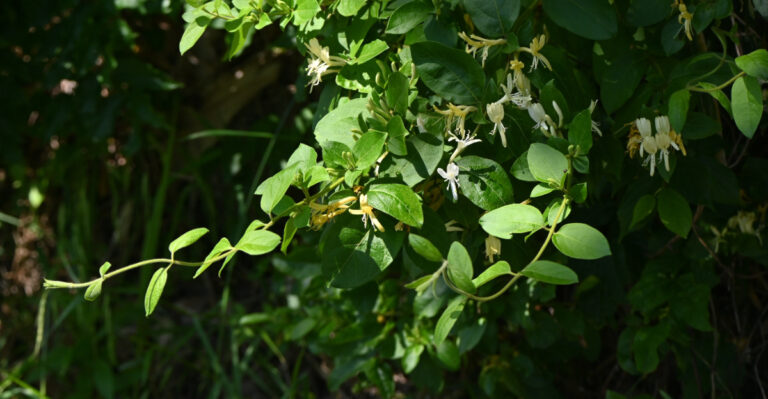
Coral honeysuckle is not the invasive Japanese honeysuckle you have probably seen taking over roadsides. It is native, well-behaved, and genuinely one of the best vines for attracting hummingbirds.
Ruby-throated hummingbirds are especially fond of the long, tubular flowers.
Blooms appear in shades of coral red and orange, typically from spring through early summer. In warmer parts of the Southeast, flowering can stretch into fall with the right conditions.
After flowers fade, small red berries form and attract songbirds through winter.
Coral honeysuckle grows 10 to 20 feet and twines readily around fences, posts, and arbors. It prefers full sun but tolerates light shade without losing too much flower production.
Morning sun with afternoon shade is a solid option in hotter microclimates.
Soil flexibility is one of this vine’s real strengths. It grows in sandy, loamy, or clay-heavy ground as long as drainage is decent.
Avoid constantly wet spots, which can cause root problems over time.
Watering during dry spells helps young plants establish faster. Mature vines handle moderate drought without much trouble.
Light pruning after the main bloom keeps the plant shapely and encourages fresh flowering stems throughout the growing season.
Unlike Japanese honeysuckle, it stays much easier to manage and does not aggressively spread through nearby landscapes.
Regular deadheading is not necessary, making seasonal care simple once the vine is established.
4. Virginia Creeper Quickly Covers Fences And Arbors
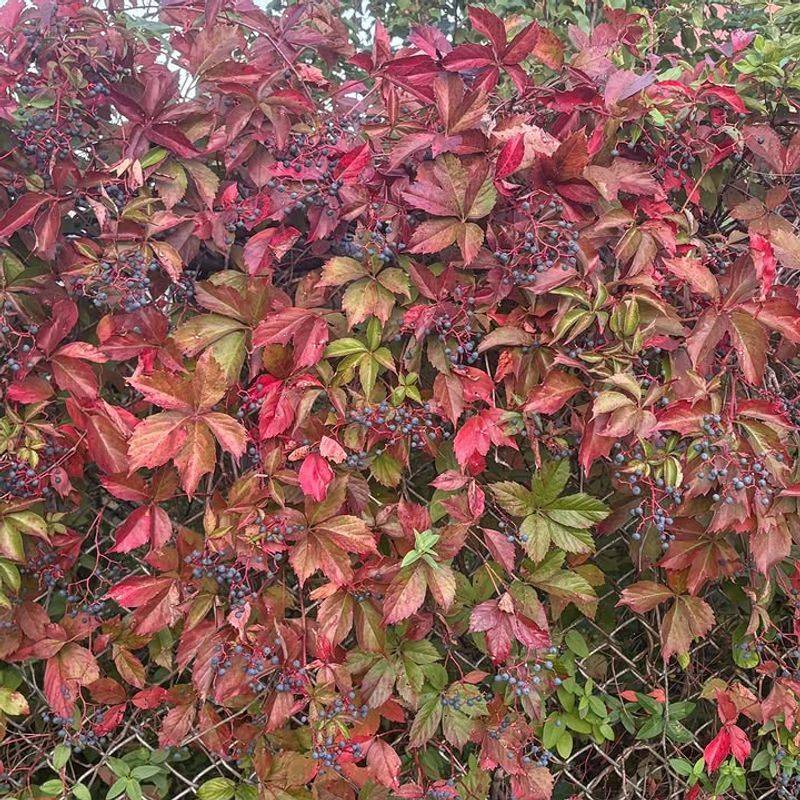
Speed is Virginia creeper’s most impressive quality. It covers fences, arbors, and walls faster than almost any other native vine.
If you need quick coverage and do not want to wait years for results, this plant delivers.
Leaves are made up of five leaflets and turn brilliant shades of red and orange in fall. That autumn color alone makes it worth growing.
Tiny adhesive pads along the stems grip surfaces without needing wire or additional support structures.
Virginia creeper grows in full sun, partial shade, or even deep shade. Very few vines tolerate low light as well as this one.
That flexibility makes it useful in spots where other plants struggle to thrive.
Wildlife value is strong. Small dark berries ripen in fall and feed dozens of bird species through winter.
Caterpillars of several moth species also rely on the leaves, adding another layer of ecological benefit to the planting.
Growth can be vigorous, especially in fertile soil with regular moisture. Plan to trim it back once or twice a year to keep it within bounds.
Pruning in late winter before new growth starts is usually the most practical approach for most home gardeners.
Avoid planting it directly against painted wood siding, since the adhesive pads can leave marks. Fences, stone walls, and arbors are much better choices for this vine.
5. American Climbing Hydrangea Grows Well In Partial Shade
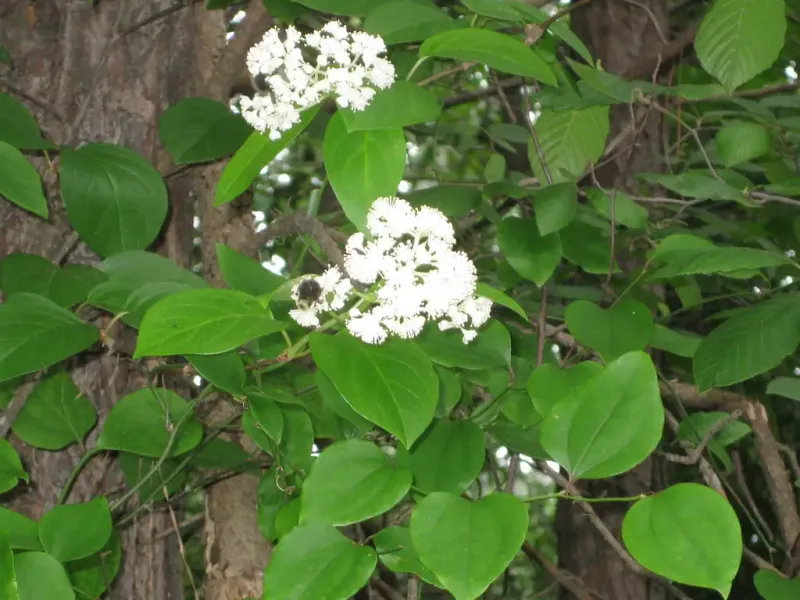
Most climbing vines want full sun, but American climbing hydrangea is different. It thrives in partial shade and even handles fairly deep shade better than most options.
Shady fences and north-facing arbors finally have a native vine worth planting.
Small clusters of white flowers appear in late spring to early summer. They carry a light, sweet fragrance that becomes noticeable on warm days.
The blooms are not as showy as some other vines, but up close they are genuinely pretty.
Stems attach to surfaces using aerial rootlets, similar to English ivy. It climbs wooden fences, stone walls, and tree trunks without needing ties or training.
Once attached, it holds on firmly through wind and rain.
Moist, rich soil produces the best growth. American climbing hydrangea is native to bottomland forests and stream edges, so it prefers consistent moisture.
Avoid planting it in dry, exposed spots where the soil bakes out in summer heat.
Growth is slower than Virginia creeper or crossvine, so patience matters with this one. Give it two to three years to establish before expecting significant vertical coverage.
After that, growth picks up noticeably each season.
Pruning is rarely necessary beyond removing damaged or wayward stems. It stays relatively tidy on its own.
This is a low-fuss option for gardeners who want native coverage without constant upkeep. Pollinators regularly visit the flowers while they are in bloom.
6. Passionflower Supports Gulf Fritillary Butterflies
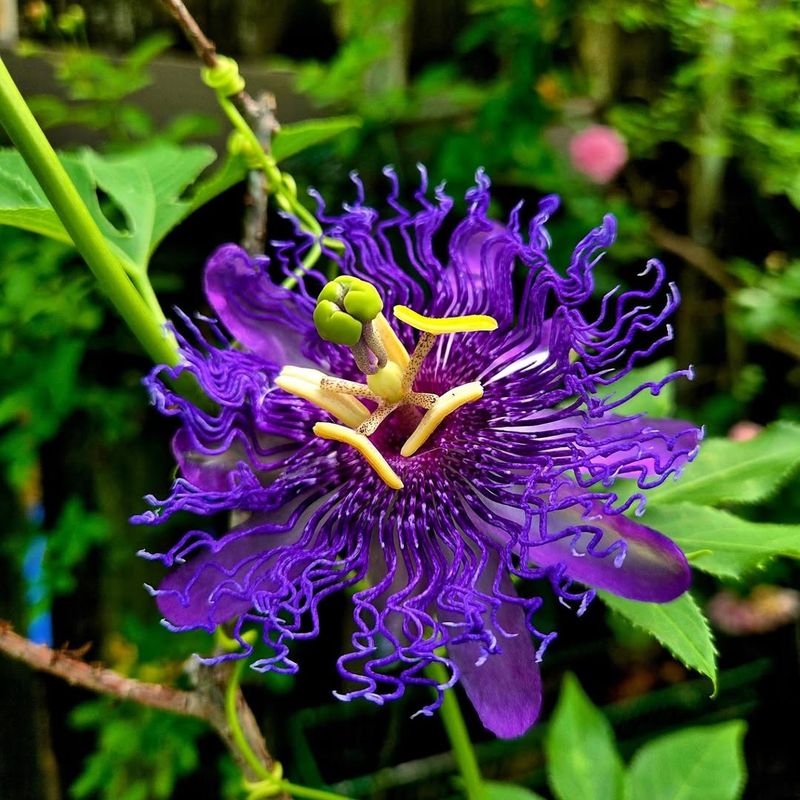
Nothing in a native garden looks quite as exotic as passionflower in full bloom. The intricate purple and white flowers look like they belong in a tropical rainforest, not a backyard fence.
Yet this plant is completely native to the Southeast and tough as nails.
Gulf Fritillary butterflies depend on passionflower as their primary host plant. Females lay eggs directly on the leaves, and caterpillars feed on the foliage as they grow.
Planting even one vine can support multiple generations of butterflies through the warm months.
Blooms appear from June through September in most areas. After flowering, egg-shaped fruits develop and ripen to a yellowish-orange color.
Wildlife eats the fruits readily, and the seeds spread easily, so expect new plants to pop up nearby.
Passionflower spreads by underground runners as well as seeds. It can colonize a larger area over time, which some gardeners welcome and others prefer to manage.
Mowing around the base controls unwanted spread without harming the main plant.
Full sun brings out the heaviest flowering. Average to poor soil is actually fine since rich soil tends to push leafy growth at the expense of blooms.
Water during establishment, then let it fend for itself in most normal seasons.
The stems fade back to the ground in winter and return reliably each spring. The root system is very hardy once established.
7. Virgin’s Bower Produces Clusters Of White Flowers
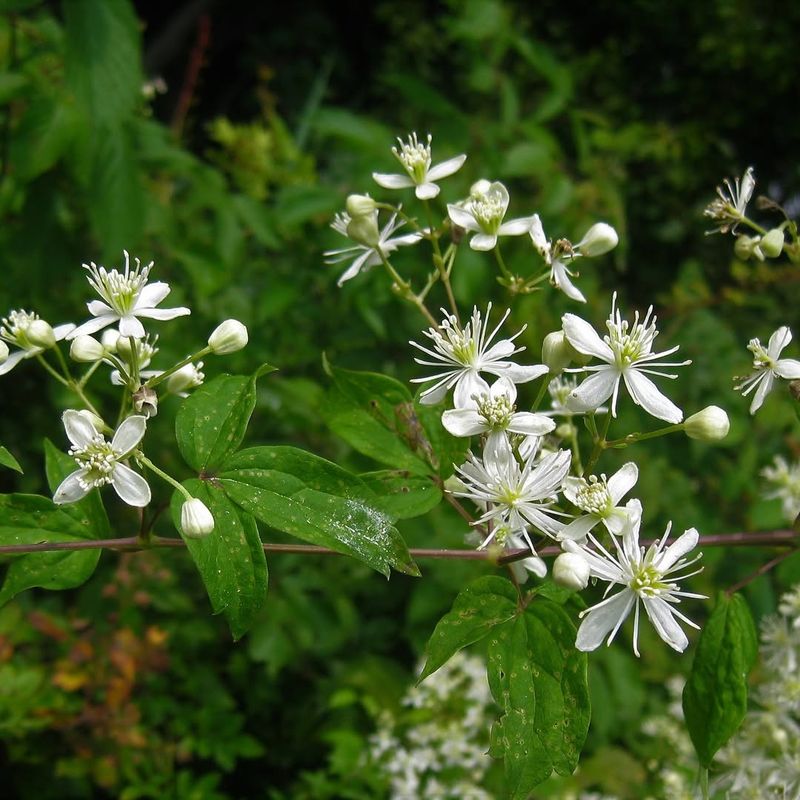
Late summer can feel like a floral desert in many gardens, but virgin’s bower changes that completely. Masses of small, star-shaped white flowers cover the vine from August into September.
When almost nothing else is blooming, this plant puts on a real show.
Virgin’s bower is a native clematis, closely related to the ornamental varieties sold at garden centers. It climbs by wrapping its leaf stalks around supports, so a fence with wire or lattice works well.
Wooden arbors and shrub branches also make good hosts.
After flowers fade, silky, feathery seed heads form and persist through fall and winter. Birds use the fluffy material for nesting.
Visually, the seed heads add interesting texture to the late-season garden long after bloom time ends.
Bees and other pollinators visit the flowers heavily during peak bloom. If supporting native pollinators matters to you, this vine earns its place quickly.
The flowering window lines up with a period when many other nectar sources are winding down.
Moist to average soil suits it well. Virgin’s bower grows naturally along stream banks and woodland edges, so it appreciates consistent moisture during hot, dry stretches.
Full sun to partial shade both work for healthy growth.
Prune in late winter to control size and encourage fresh flowering stems. It grows vigorously once established, so annual trimming keeps it looking intentional rather than wild.
8. American Wisteria Stays Easier To Manage Than Chinese Wisteria
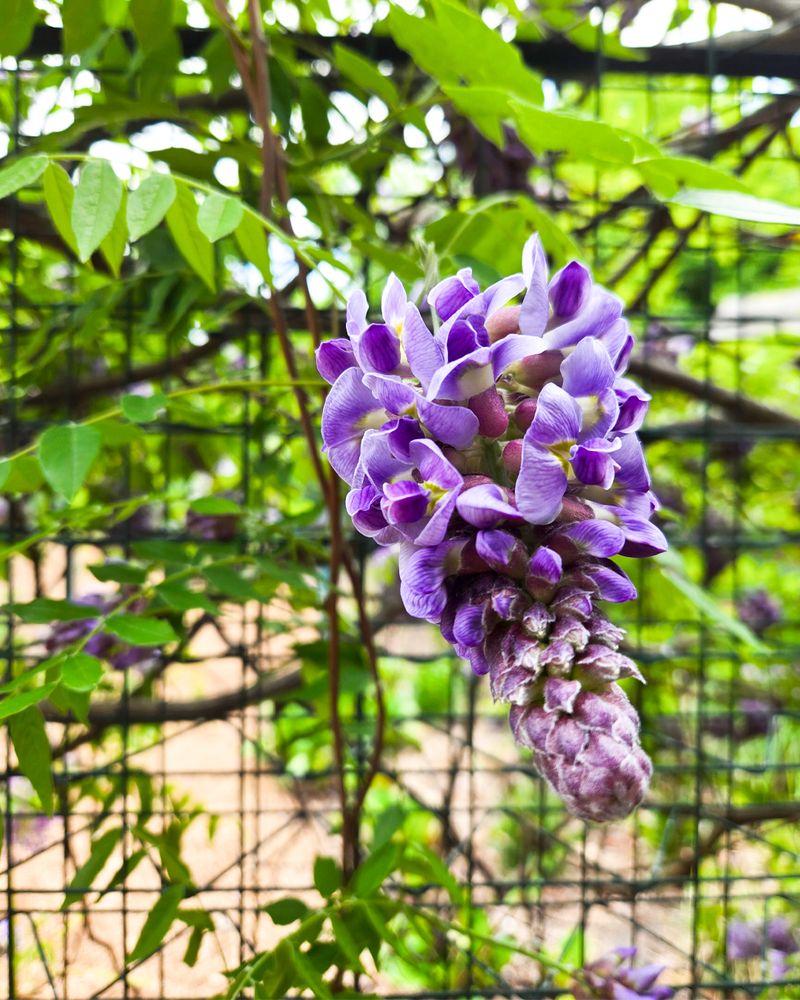
Not all wisteria is a problem. American wisteria is native to the Southeast and behaves far more responsibly than its Chinese or Japanese cousins.
It blooms beautifully without turning into a landscape-wrecking monster over time.
Flower clusters are shorter than Asian wisteria, usually around six inches long. Colors range from soft lavender to deeper purple-blue depending on the cultivar.
The fragrance is mild and pleasant rather than overwhelming.
Blooming starts in spring and often repeats in summer, especially in cultivars like ‘Amethyst Falls’ and ‘Nivea.’
That extended bloom period gives you more enjoyment without extra effort. Both cultivars are widely available at native plant nurseries across the region.
Growth is vigorous but manageable with regular pruning. American wisteria does not strangle trees or crack apart structures the way Asian species can.
Still, giving it a strong arbor or fence to climb is the smart approach.
Full sun produces the best flowering. Rich, well-drained soil suits it well, though average garden soil works fine in most situations.
Avoid planting in soggy ground since that can cause root issues over multiple seasons.
Prune twice a year for best results: once after the spring bloom and again in late summer. That routine keeps the plant compact and encourages the most flower production.
Established plants are drought-tolerant and rarely need supplemental watering after the first season.