The Most Underrated Pennsylvania Native For Dry Weed Supression
Weeds in dry garden areas are a special kind of frustrating. You pull them, they come back. You mulch over them, they push through.
And in the dry, tough spots where water is limited and the soil is unforgiving, most ground covers and low growing plants simply refuse to cooperate.
It starts to feel like bare soil and weeds are the only options. But there’s a native Pennsylvania plant quietly proving that wrong.
This underrated native thrives in exactly the conditions that defeat most other plants. Dry soil, full sun, minimal water.
And as it spreads, it does something genuinely impressive. It crowds out weeds so effectively that many gardeners who plant it find themselves doing almost no weeding in those areas at all.
It’s not a plant you’ll find featured in most gardening magazines. But the Pennsylvania gardeners who have discovered it tend to plant it everywhere. Here’s why this overlooked native deserves a spot in every dry corner of your garden.
Meet Pennsylvania Sedge
Not every hero wears a cape, and not every great plant gets the attention it deserves. Pennsylvania sedge is one of those quiet overachievers that most gardeners walk right past at the nursery.
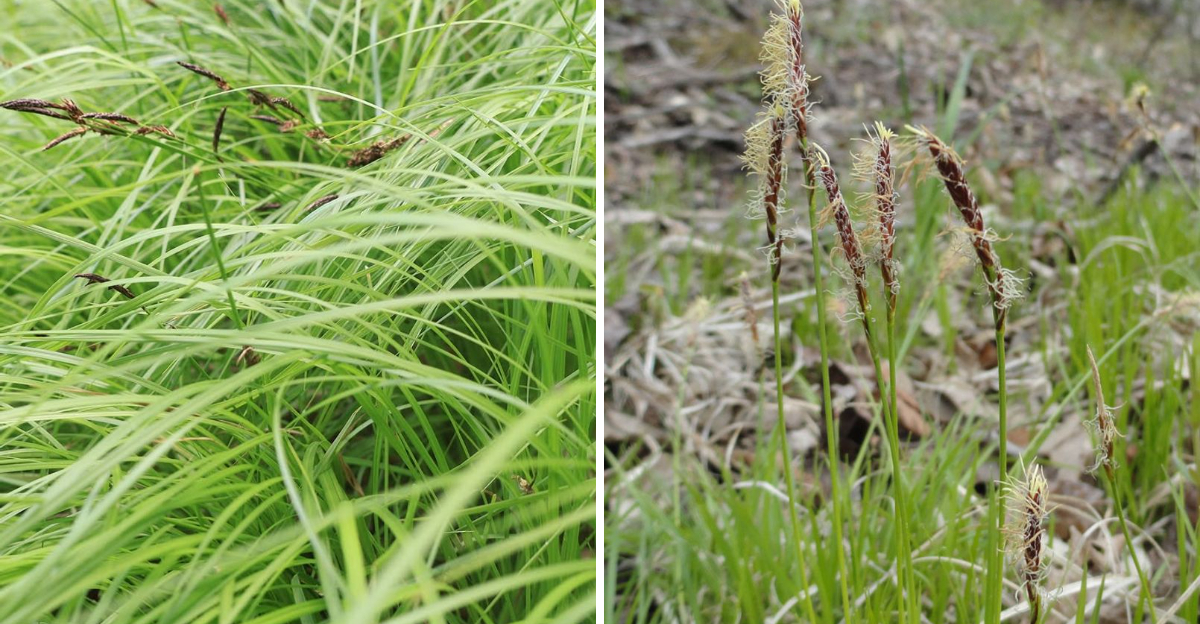
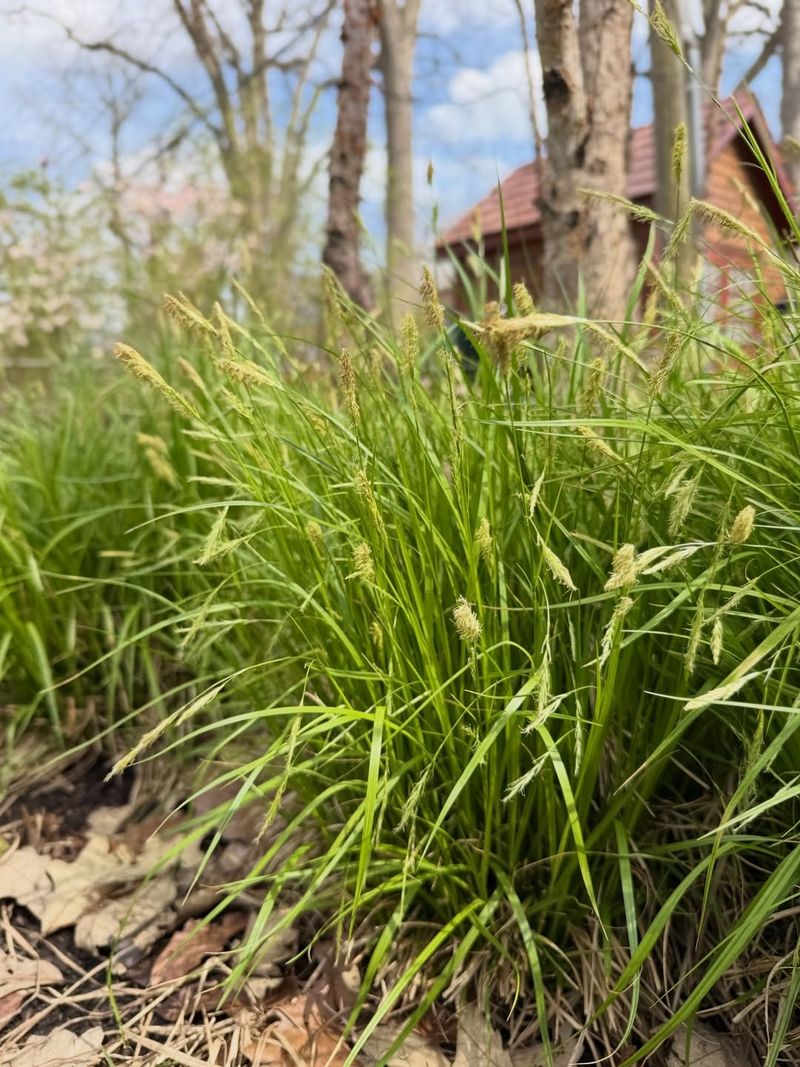
It looks simple, almost too simple, but that plainness hides something really useful. Carex pensylvanica is a native sedge that grows naturally in the woodlands of Pennsylvania and much of the eastern United States.
It stays low, usually only about six to eight inches tall, and spreads gently by underground roots called rhizomes. Over time, it fills in to create a soft, grass-like mat that covers the ground beautifully.
Many people confuse it with regular lawn grass at first glance. The leaves are fine and narrow, a rich medium green, and they arch slightly at the tips.
It has a relaxed, flowing look that feels right at home under trees or along shaded garden edges.
What makes it stand out is its ability to handle conditions that most plants refuse. Dry soil? No problem. Deep shade?
It can work with that too. Regular lawn grass often struggles and thins out in these spots, leaving bare ground that weeds quickly move into.
Pennsylvania sedge thrives where turf fails. It has evolved over thousands of years to grow under the forest canopy, where light is limited and rainfall rarely reaches the soil directly.
That natural toughness makes it a smart pick for low-maintenance Pennsylvania landscapes. If you have a shady, dry corner that drives you crazy every summer, this plant might be exactly what that space needs.
Why Dry Shade Gets Weedy
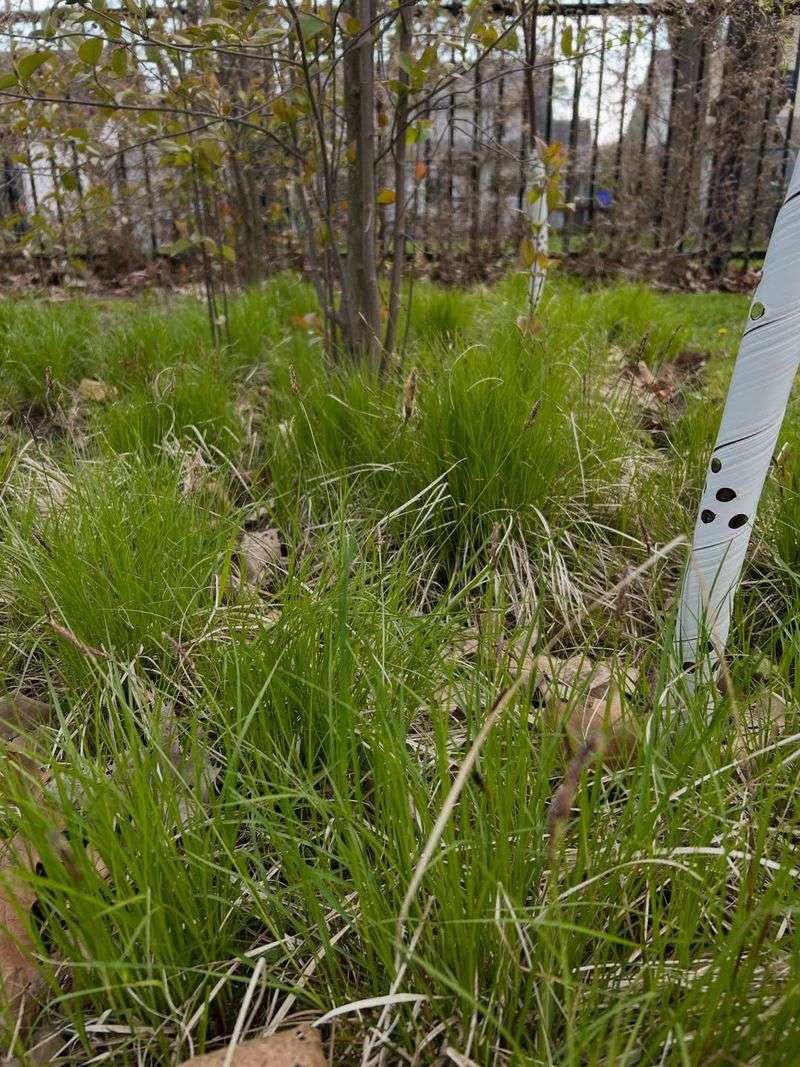
Picture the area under your biggest tree in July. The grass is thin. There are bare patches of dirt. And somehow, weeds always seem to find those open spots before anything useful does.
That frustrating cycle has a simple explanation. Dry shade is one of the hardest growing conditions in any yard. Big trees soak up most of the water before it can reach the soil below.
Your Pennsylvania Garden Changes Every Week. Your Plan Should Too.
Gardening in Pennsylvania changes quickly throughout the season. Every Friday you’ll receive a simple weekly plan showing exactly what to plant, prune, fertilize, harvest, and protect so you never miss the right timing.
Their canopy also blocks sunlight, so most traditional lawn grasses cannot photosynthesize enough to stay thick and healthy. When grass thins out, bare soil appears.
Bare soil is basically an open invitation for weeds. Weed seeds are tiny and travel easily on wind, animals, and even your shoes.
When they land on exposed ground with no competition, they sprout fast and spread quickly. Garlic mustard, ground ivy, and creeping Charlie are common troublemakers in Pennsylvania yards that take advantage of these gaps.
Areas along fences, woodland edges, and the north side of buildings share this same problem. They tend to be shaded for most of the day and dry out quickly because tree roots or building foundations pull moisture away.
Turf grass planted in these spots usually starts strong in spring but fades by midsummer, leaving gaps that weeds rush in to fill.
The real issue is not the weeds themselves. The real issue is the bare, open soil that keeps inviting them back.
Without a plant that can actually thrive in dry shade, the problem just repeats itself every season. Finding the right groundcover changes everything, and that is exactly where Pennsylvania sedge steps in.
How It Suppresses Weeds
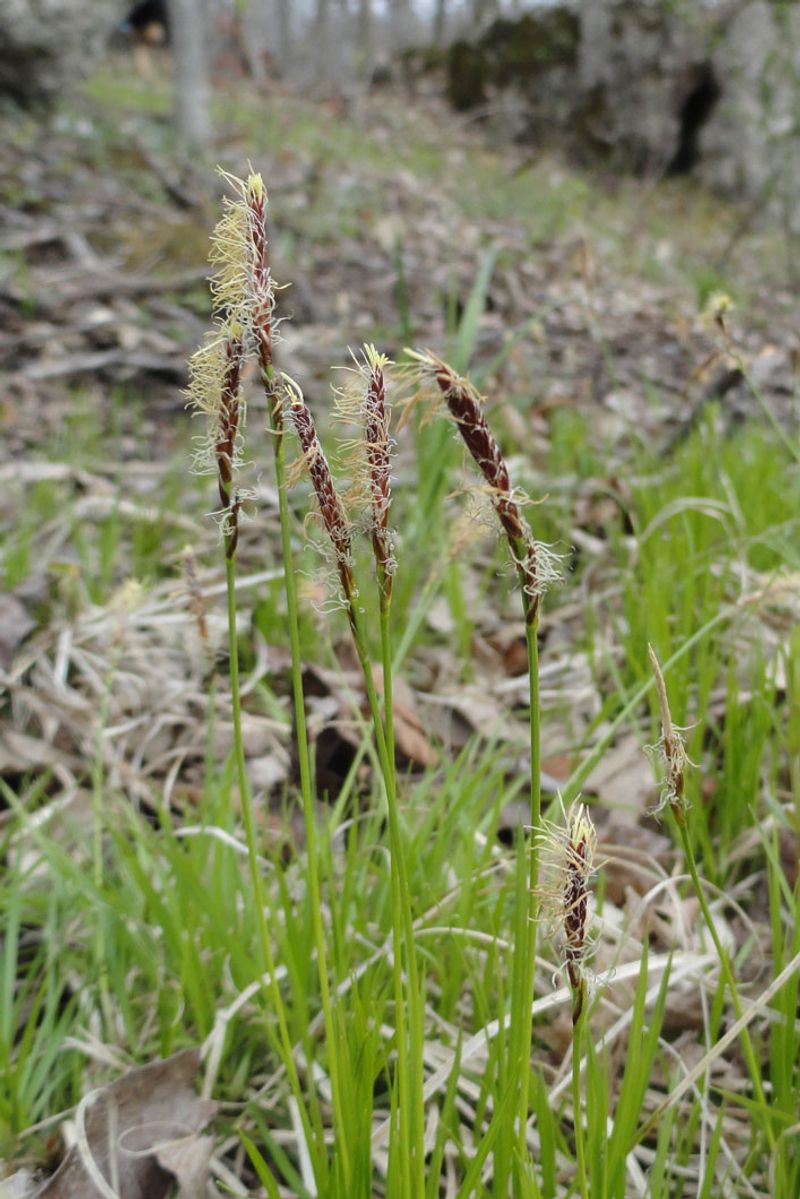
Here is something worth knowing right away: Pennsylvania sedge does not poison weeds or fight them in any aggressive way. What it does instead is quietly take up space, and that turns out to be incredibly effective.
When Pennsylvania sedge fills in and forms a dense mat, it covers the bare soil that weeds depend on. Weed seeds need open ground, warmth, and light to sprout.
A thick layer of sedge leaves shades the soil surface and keeps it cooler and more stable. That shading alone stops many weed seeds from ever getting started.
Think of it like covering a table before crumbs can land on it. Once the sedge mat is established, there is simply less room and less light available for weeds to take hold.
The roots also fill the upper layer of soil, making it harder for new plants to establish underground.
It is a passive but powerful system. The sedge does not need any help from herbicides or constant pulling.
It just grows, spreads, and gradually closes off the gaps that weeds would otherwise exploit. Over two to three years, a well-planted area of Pennsylvania sedge can become impressively weed-resistant on its own.
One thing to keep in mind is that the suppression improves as the planting matures. In the first year or two, while the sedge is still spreading, you will need to pull weeds by hand or use light mulch between the young plants.
But once it knits together into a solid carpet, maintenance drops significantly. Patience in those early seasons pays off with years of nearly weed-free ground later on.
Why It Beats Turf In Tough Spots
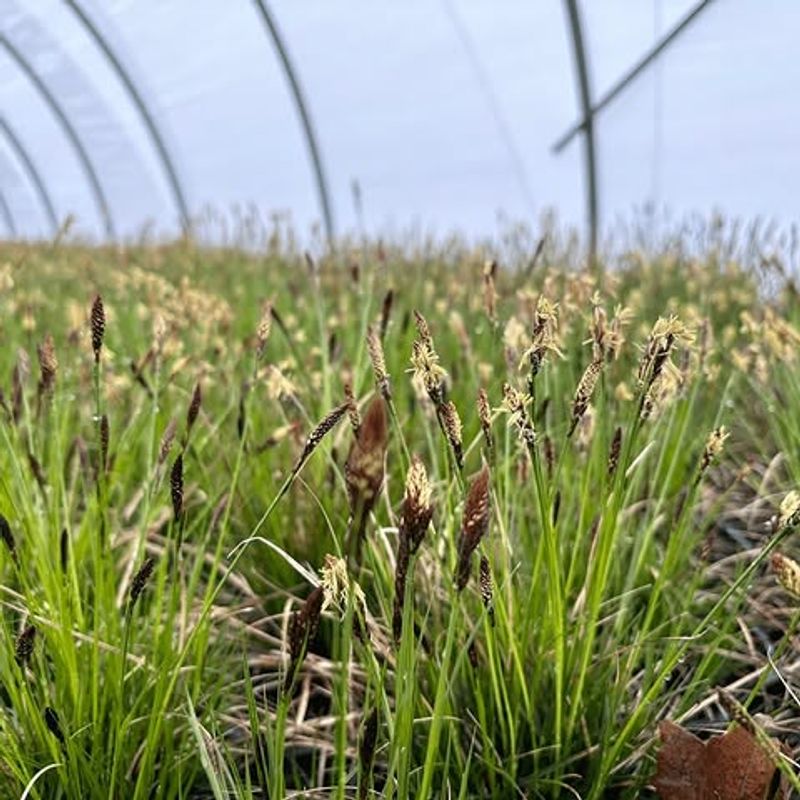
Lawn grass is great, but only when conditions are right. Push it into dry shade and it starts to fight a losing battle every single season. Pennsylvania sedge, on the other hand, was practically born for exactly these conditions.
Regular turf grasses like Kentucky bluegrass and tall fescue need a good amount of sunlight to stay thick and healthy. They also need consistent moisture.
Under trees, both of those requirements are hard to meet. The result is thin, struggling grass that never quite fills in, no matter how much seed or fertilizer you throw at it.
Pennsylvania sedge tolerates part shade all the way to fairly deep shade. It also handles dry to medium-moisture soils without complaint.
These traits come from its natural habitat on the woodland floor, where it has adapted over thousands of years to make do with less light and less water than most plants prefer.
Beyond just surviving, it actually looks good in these spots. The fine, arching leaves have a soft, natural texture that suits shaded garden areas well.
It does not look like a failed lawn. It looks intentional, like a designed groundcover planting, which it absolutely is.
Another advantage is that Pennsylvania sedge does not need fertilizing, does not require irrigation once it is established, and rarely needs spraying for pests or disease.
Compare that to the cost and effort of trying to maintain struggling turf under a big oak tree, and the choice starts to feel obvious.
For naturalized beds, low-maintenance lawn alternatives, or tricky spots under trees, this sedge is hard to beat. It thrives where turf simply gives up.
How To Plant It For Coverage
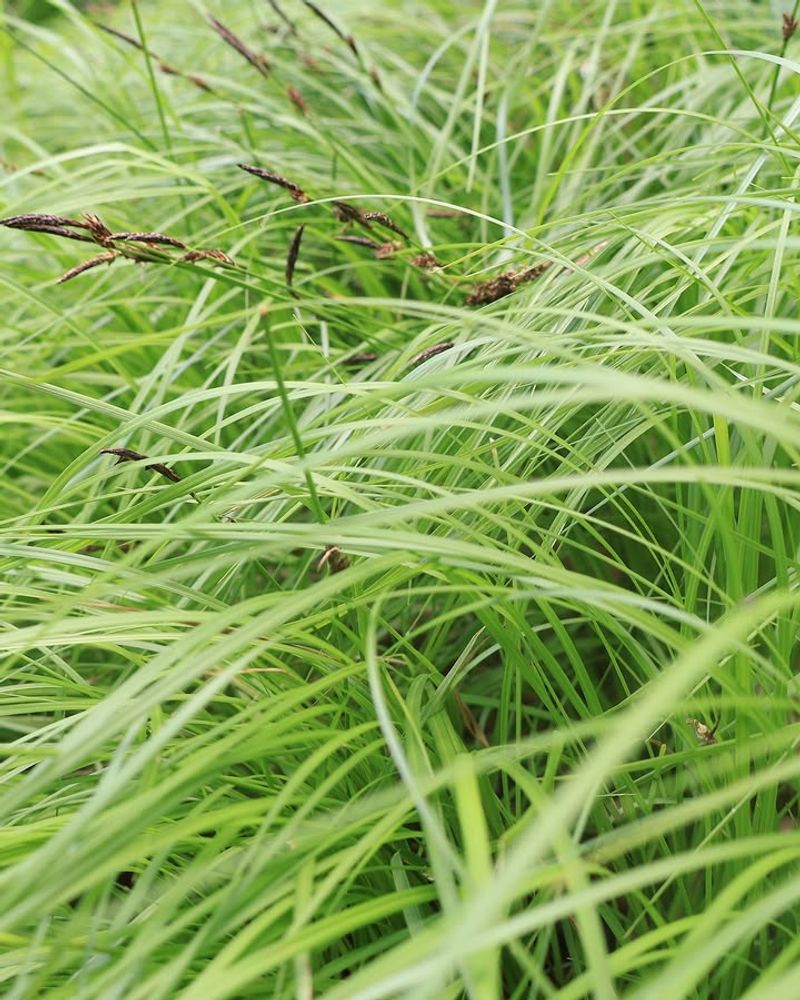
Getting Pennsylvania sedge established the right way makes a big difference in how quickly it fills in and how well it suppresses weeds over time. A little planning up front saves a lot of trouble later.
Start by sourcing your plants from a reputable native plant nursery. Pennsylvania sedge is available as plugs or small potted divisions.
Plugs are usually the most affordable option when you need to cover a larger area. Plan to space them about eight to twelve inches apart.
Closer spacing means faster coverage, but wider spacing works too if you are patient. Before planting, clear the area of existing weeds as thoroughly as you can. Pull them by hand or use a hoe to scratch them out.
Getting a clean start gives your sedge the best chance to establish without heavy competition right away.
After planting, spread a thin layer of wood chip mulch between the young plugs. Keep the mulch light, no more than an inch or two, so the sedge can still spread freely.
The mulch helps hold moisture, moderate soil temperature, and slow down weed growth while the sedge fills in.
Water the new planting regularly during the first growing season, especially during dry spells. Pennsylvania sedge is drought-tolerant once its roots are settled, but young transplants need consistent moisture to get established.
Aim to water deeply once or twice a week rather than lightly every day. By the second season, you should start seeing the plants spreading and connecting. By year three, most plantings have filled in enough to form a solid, weed-resistant mat.
The early effort is well worth the long-term payoff you get from a thriving, low-maintenance planting.
Keep It Low And Natural
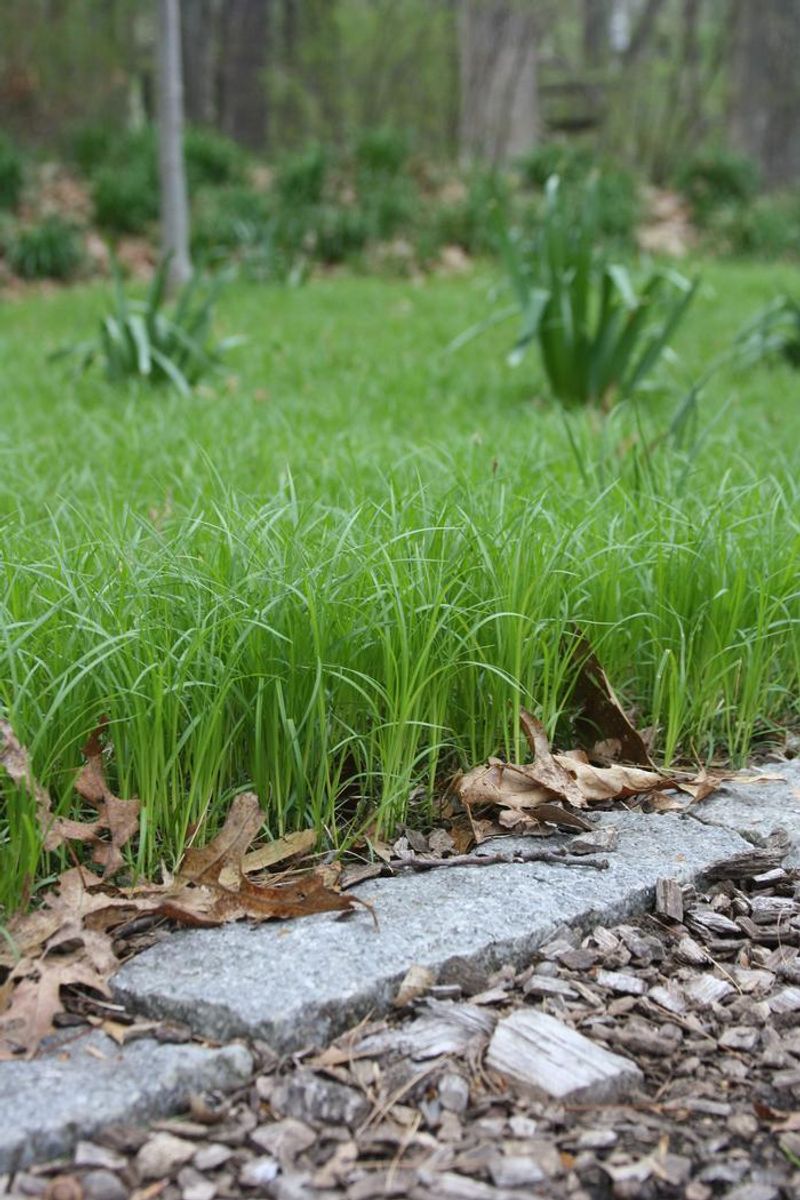
Once Pennsylvania sedge is established, caring for it is refreshingly simple. Compared to maintaining a traditional lawn, the time and energy required is remarkably low. That is one of the biggest reasons gardeners fall in love with it.
You can let it grow freely as a soft, meadow-like groundcover. The arching leaves give it a relaxed, natural look that works beautifully in woodland gardens and naturalized areas.
Many homeowners find that doing almost nothing is actually the best approach once the planting matures.
If you prefer a neater appearance, a single mowing once a year in late winter or very early spring can freshen things up nicely. Set your mower blade to about three or four inches so you are trimming the tips without scalping the plants.
Avoid mowing in summer or fall, when the sedge is actively growing or storing energy for the next season.
One thing to watch out for is heavy leaf litter in autumn. A light layer of fallen leaves is fine and even beneficial, but a thick, smothering pile can weaken the plants over time.
Rake out heavy accumulations in late fall or early spring to keep the sedge healthy and growing well.
Think of Pennsylvania sedge as a living mulch that also happens to look great. It covers the soil, keeps it cool and moist, and reduces the need for added mulch products year after year.
That combination of beauty, function, and low care makes it one of the smartest plants you can choose for dry, shaded spots in a Pennsylvania yard. Give it a chance, and it will quietly do its job season after season.