Common Mistakes North Carolina Gardeners Make When Planting Muscadines Along A Property Line
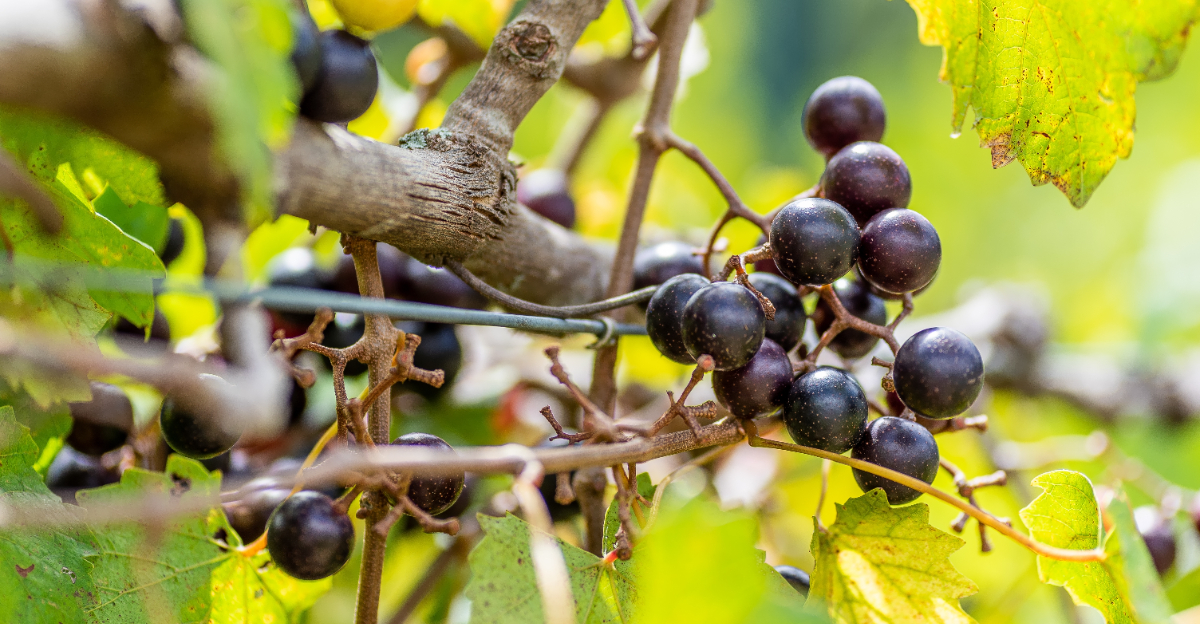
Muscadines seem like a natural fit for property lines in North Carolina. They are vigorous, productive, and capable of creating a green barrier that delivers fruit as a bonus.
What makes that placement tricky is a set of specific mistakes that consistently reduce production and create maintenance headaches when these vines go in along a boundary without enough planning behind the decision.
Spacing errors, trellis choices that do not hold up to mature vine weight, and a misunderstanding of how muscadines actually need to be oriented relative to sun exposure all show up regularly in property line plantings across the state.
Getting these decisions right before the vine goes in the ground is considerably easier than correcting them once it has been growing for two or three seasons.
1. Planting Too Close To The Property Line
Picture yourself reaching over your neighbor’s fence just to harvest your own grapes.
That is exactly what happens when muscadine vines get planted too close to the property line, and it creates more headaches than most gardeners expect.
Muscadines are vigorous growers, and they need regular attention throughout the year to stay healthy and productive.
Training the vines onto a trellis, pruning back old wood, harvesting clusters of ripe fruit, and cleaning up fallen leaves all require you to move around the base of the plant comfortably.
When the vine sits right on the boundary, you end up cramped, and your tools start drifting into your neighbor’s space.
That tension is not worth it, especially when a simple adjustment at planting time fixes everything.
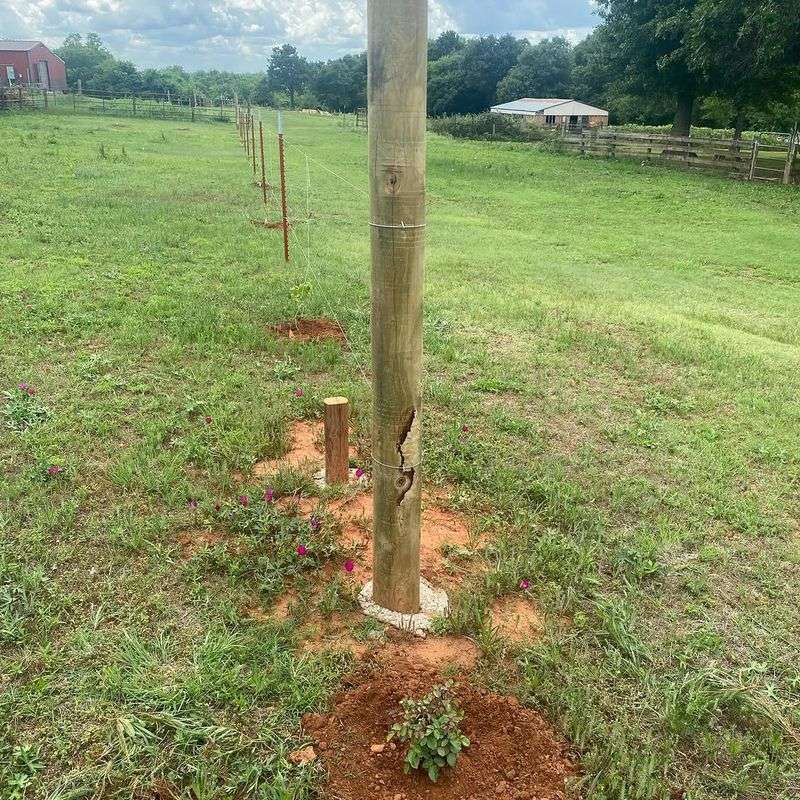
A good rule of thumb is to set your trellis posts and plant your vine far enough inside your own yard that you can walk a full circle around the base without stepping over the line.
Many experienced growers suggest leaving at least four to six feet of working room between the vine and the boundary.
That buffer gives you space to prune, spray if needed, and pick fruit without awkward maneuvering.
It also keeps the relationship with your neighbor friendly, which matters more than saving a few square feet of lawn.
Plan the placement carefully before you ever dig a hole, and your future self will thank you every single growing season.
2. Forgetting How Wide Muscadines Can Spread
Most people look at a young muscadine transplant and think it looks pretty manageable.
That small, leafy stick in a nursery pot gives almost no hint of what it will become in just a few growing seasons.
Muscadines are genuinely powerful plants, and underestimating their spread is one of the most common mistakes gardeners make when planting them along a boundary.
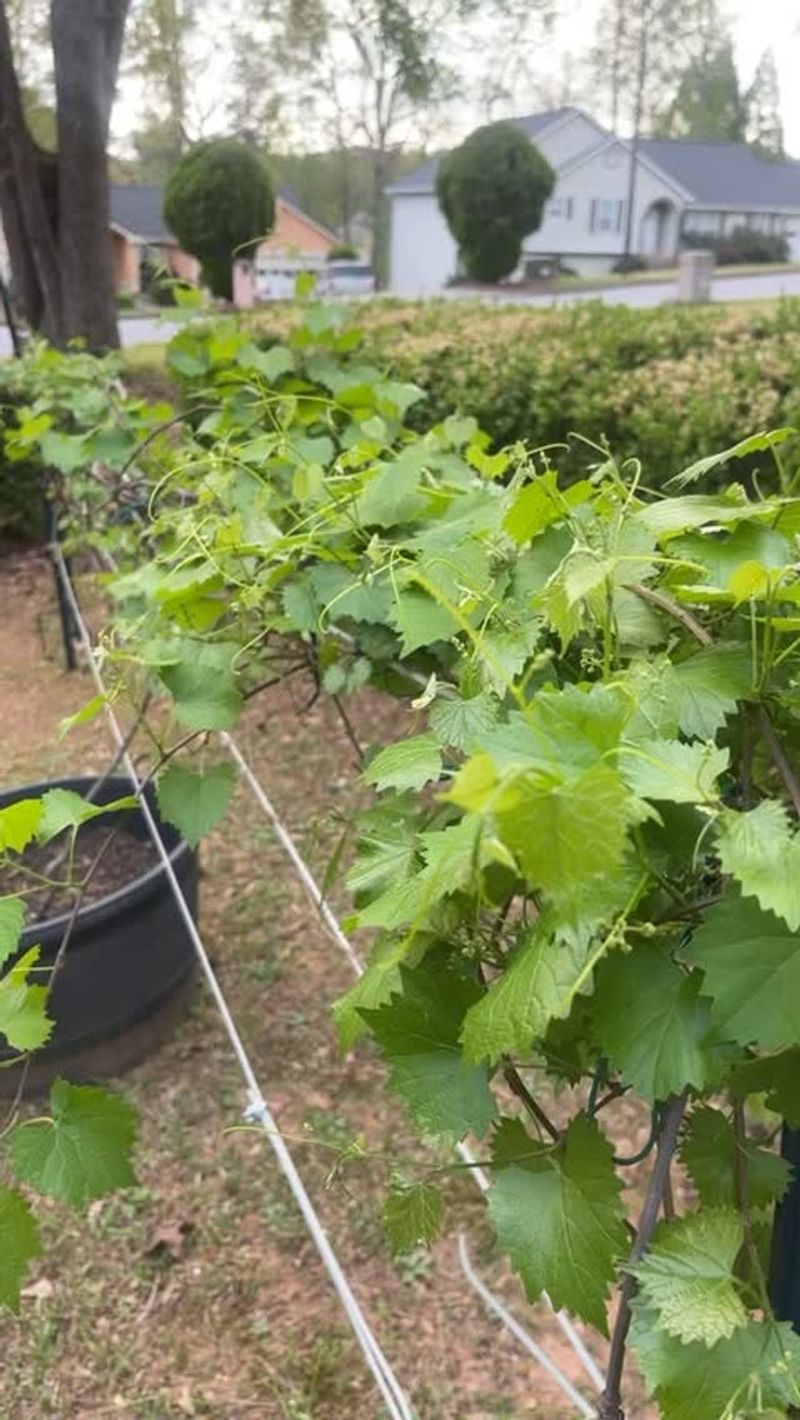
NC State University recommends spacing muscadine vines 10 to 20 feet apart to give each plant enough room to reach its full potential without competing with its neighbors.
Along a property line, that spacing becomes tricky fast. A fence post, a neighbor’s shrub, a shed corner, or even a driveway can all eat up that needed space before you realize it.
Your North Carolina Garden Changes Every Week. Your Plan Should Too.
Gardening in North Carolina changes quickly throughout the season. Every Friday you’ll receive a simple weekly plan showing exactly what to plant, prune, fertilize, harvest, and protect so you never miss the right timing.
When vines get squeezed, they start tangling into each other and into whatever structure is nearby, making pruning a real puzzle every winter.
Before planting, walk the full length of the area and measure honestly. Think about what is already growing or standing on both sides of the line.
A mature muscadine trained on a T-trellis can easily stretch 10 feet or more in each direction from the main trunk, so the total footprint per vine is larger than most people visualize at planting time.
Giving each vine its full recommended spacing from the start saves you from having to rip plants out and start over later.
Muscadines reward patience and smart planning more than almost any other garden crop you can grow in North Carolina.
3. Using A Weak Fence As The Main Support
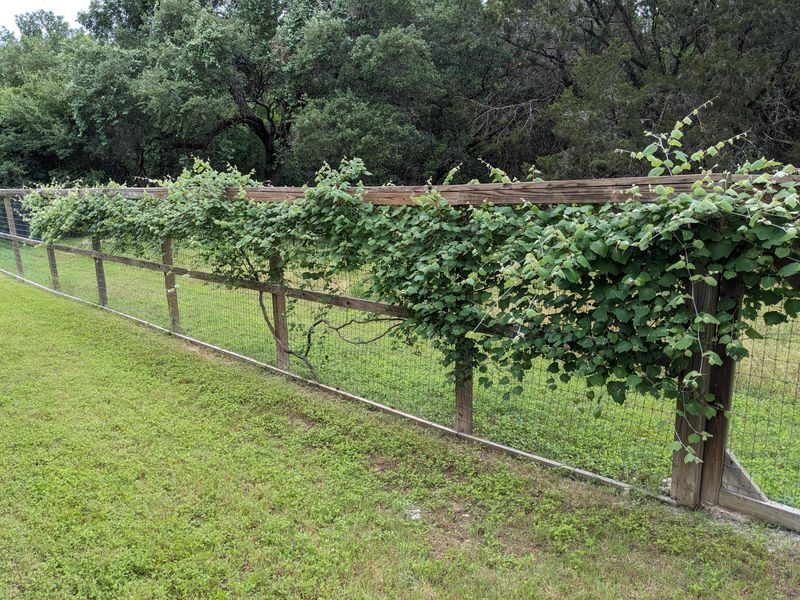
A lot of gardeners assume the fence already running along their property line will double as a perfect muscadine trellis.
It seems logical at first glance, since the fence is already there, it is already upright, and it gives the vines something to grab onto.
The problem shows up a few years later when those vines get heavy and the fence starts to lean. Muscadine vines in full fruit production carry a surprising amount of weight.
The woody trunk thickens over time, lateral arms extend in both directions, and clusters of grapes hang from nearly every shoot. All of that combined weight puts real stress on whatever structure supports it.
Lightweight decorative fencing, older wooden privacy panels, and thin wire fencing were simply not designed to hold that kind of load year after year through North Carolina summers, rainstorms, and occasional ice events in winter.
The right support for a muscadine vine is a purpose-built trellis system, a heavy-duty arbor, or a solid chain-link fence anchored with sturdy posts.
Many growers use a high-wire trellis with a single wire strung at about five to six feet, supported by wooden or metal posts set at least two feet into the ground.
This setup keeps the vine organized, makes pruning straightforward, and holds up to decades of growth.
If you want to use an existing fence, inspect it carefully first and reinforce it before planting.
Choosing the right structure at the beginning saves you from rebuilding everything mid-season when the vines are at their heaviest.
4. Choosing Shade Instead Of Full Sun
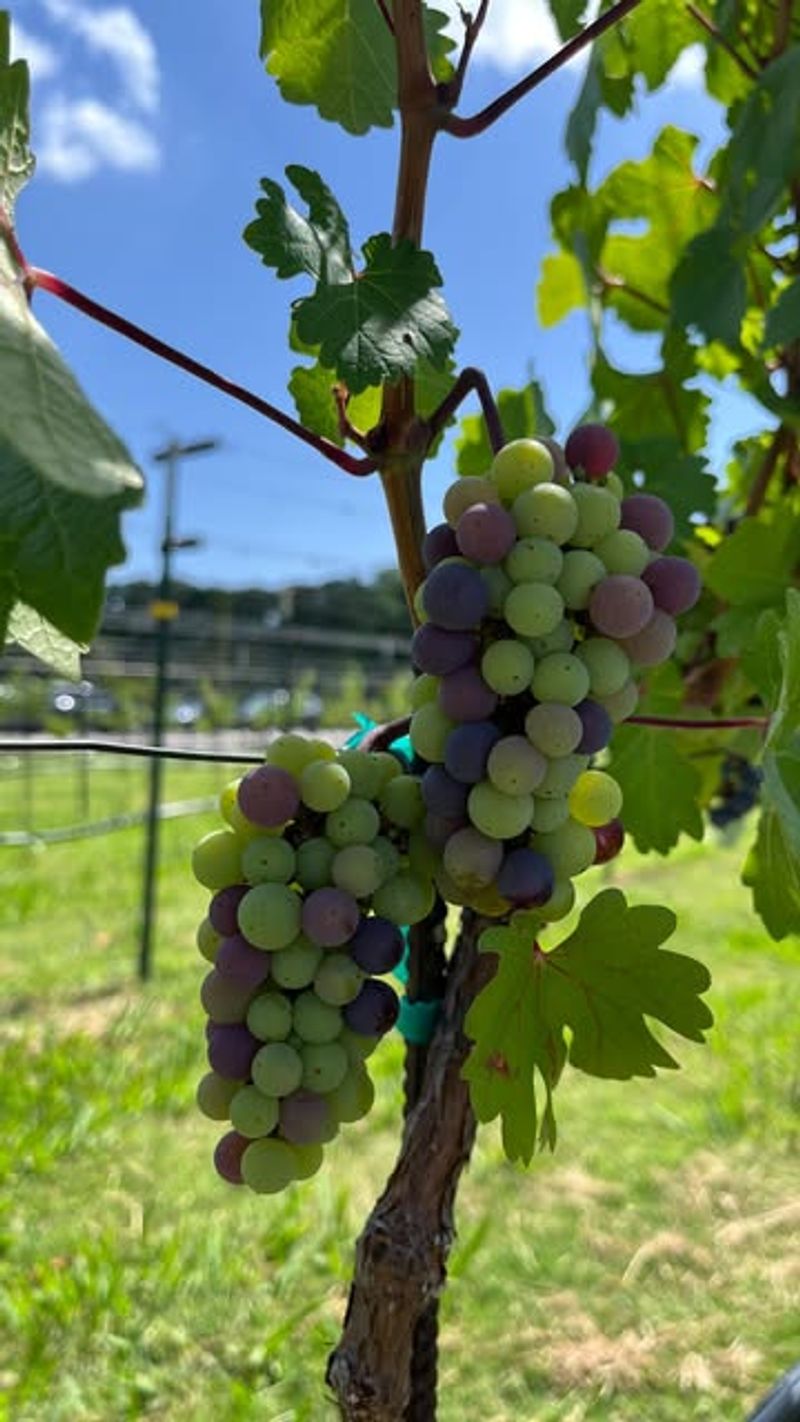
Shade feels like a good thing in the middle of a hot North Carolina summer, but muscadines have a very different opinion.
These vines are sun-lovers through and through, and planting them in a shady spot along a property line is one of the fastest ways to end up with a vine that grows plenty of leaves but produces very little fruit.
Muscadines need at least six hours of direct sunlight each day to fruit well, and more is even better.
Property lines often run alongside tall privacy fences, mature trees, outbuildings, or neighboring structures that throw shade at different times of day depending on the season.
What looks like a sunny spot in early spring can turn into a shaded corridor by midsummer once surrounding trees have leafed out fully.
Many gardeners do not notice this shift until their vines are already in the ground and struggling.
Before you commit to a planting location, spend a few days watching how sunlight moves across the area throughout the day.
Morning sun and afternoon sun both count, but make sure the total adds up to at least six solid hours without major interruption.
If nearby trees are the issue, you might be able to trim lower limbs to let more light through.
In some cases, though, the honest answer is that a particular stretch of property line simply does not get enough sun for muscadines to thrive, and shifting the planting location by even 10 or 15 feet can make a dramatic difference in fruit production.
5. Skipping Soil Drainage Checks
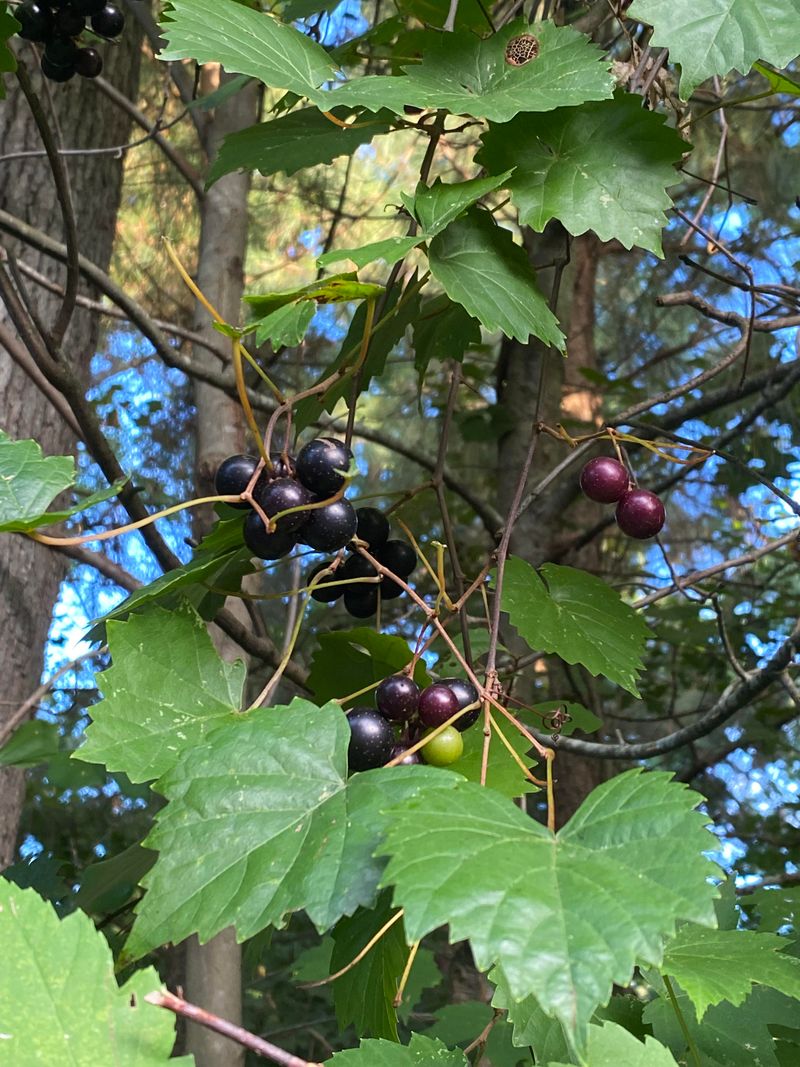
Water pooling around the base of a muscadine vine after a heavy rain is a warning sign that most gardeners wish they had caught before planting.
Poor drainage is a sneaky problem along property lines because the soil in those areas often gets compacted from foot traffic, equipment, or years of neglect.
What looks like ordinary ground can turn into a soggy mess every time North Carolina gets one of its frequent rainstorms. Muscadines need soil that drains well between watering events.
Their roots do not tolerate sitting in waterlogged conditions for extended periods, and consistently wet soil around the root zone encourages fungal problems and root rot that can weaken or eventually ruin an otherwise healthy vine.
The frustrating part is that the vine may look fine for a season or two before the effects of poor drainage really start to show up in its performance.
The smartest move is to check your drainage before you ever buy a plant. After a moderate rain, go out and look at the area where you plan to plant.
If water is still standing several hours later, that spot needs work before it is ready for muscadines.
You can improve drainage by raising the planting bed slightly, incorporating organic matter into the soil, or choosing a slightly higher spot along the property line.
In cases where the drainage problem is severe, installing a simple French drain can redirect water away from the root zone entirely. A little investigation before planting saves a lot of frustration down the road.
6. Ignoring Soil Testing Before Planting
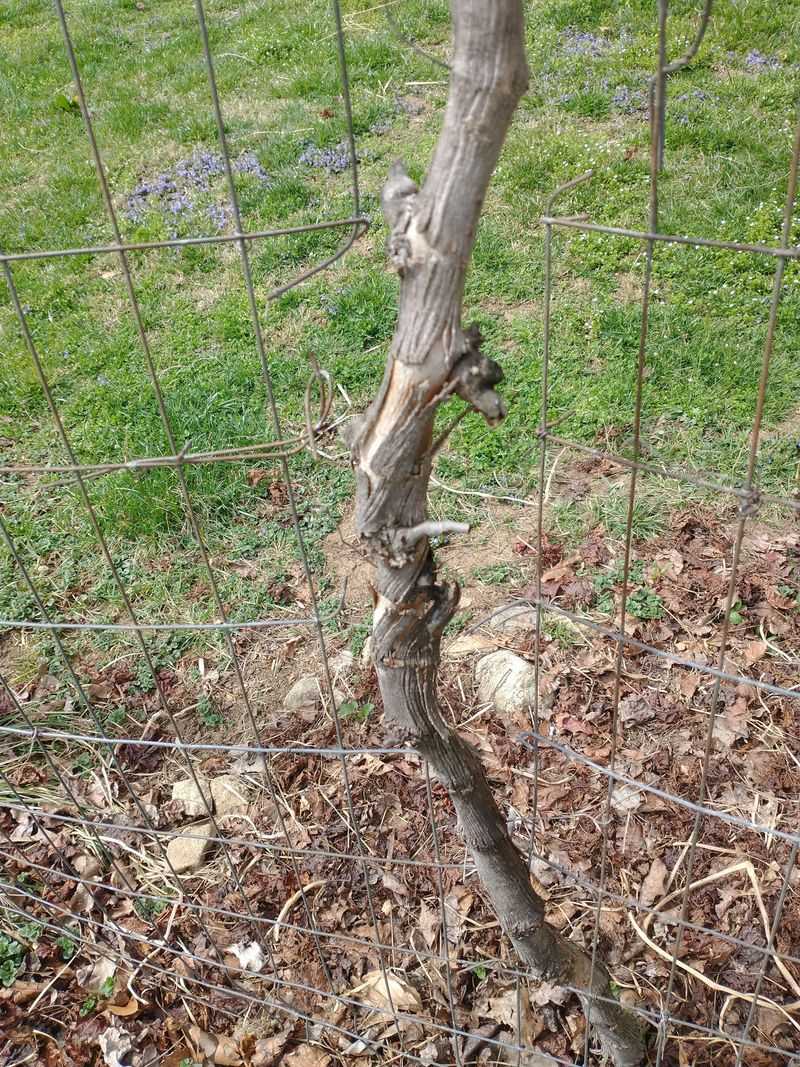
Guessing at soil conditions might work out fine for some plants, but muscadines are picky enough that skipping a soil test can cost you real fruit production over many seasons.
North Carolina has a wide range of soil types across the state, and what works great in one county might be completely wrong just a few miles away.
A soil test takes the guesswork out of the equation entirely. Muscadines perform best in soil with a pH between 5.8 and 6.5, which falls in the moderately acidic range.
Soil that is too alkaline makes it harder for the vine to absorb key nutrients even when those nutrients are present in the ground.
Soil that is too acidic can create its own set of problems with nutrient availability and root health.
Without testing, you have no reliable way of knowing where your soil actually falls on that scale, and adding fertilizer or lime without that information is essentially a guessing game that may do more harm than good.
The North Carolina Department of Agriculture and Consumer Services offers affordable soil testing, and many local cooperative extension offices can walk you through the process.
You collect a small sample from the planting area, send it in, and get back a detailed report that tells you exactly what amendments your soil needs and in what quantities.
This step costs very little and takes minimal time, but the information it provides is genuinely invaluable.
Do the test at least a few months before planting so you have time to adjust pH and let any lime you apply fully work into the soil before the vine goes in the ground.
7. Planting Only Female Vines Without A Pollinator
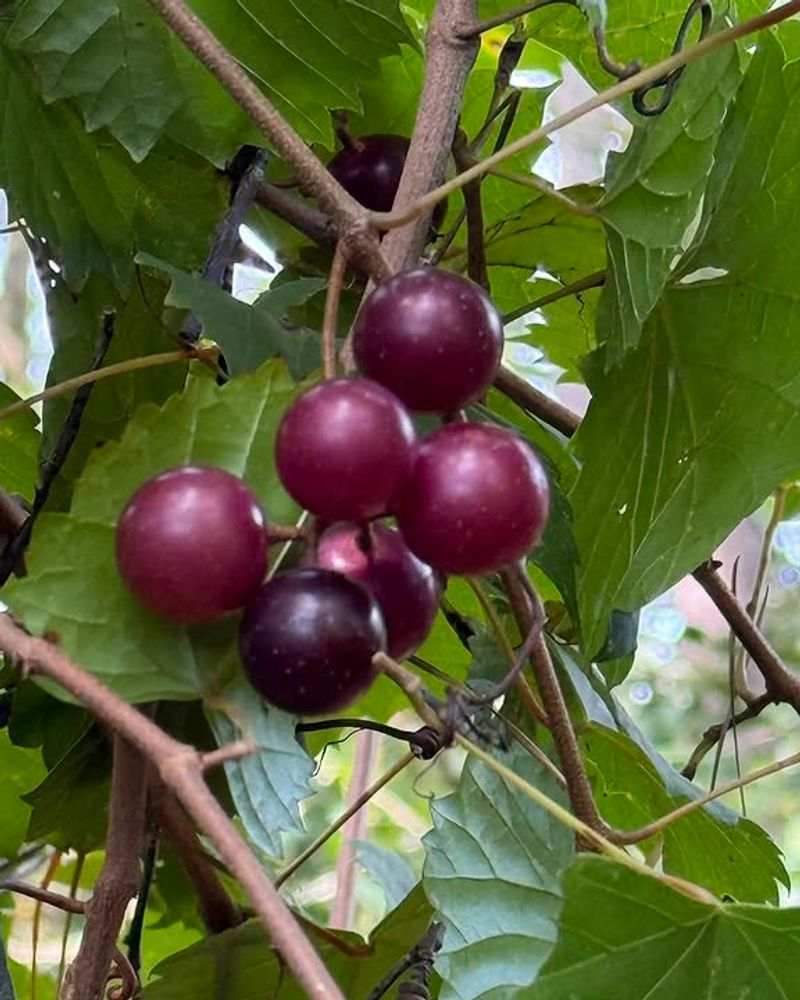
Buying a muscadine vine at the nursery and heading straight home to plant it sounds perfectly reasonable, but there is one detail that can completely determine whether that vine ever produces a single grape.
Muscadines are not all the same when it comes to flowering, and choosing the wrong mix of plants is a mistake that takes years to discover because the vine looks healthy the whole time.
Some muscadine cultivars produce only female flowers, meaning they need pollen from a different plant to set fruit.
These female-only vines will bloom every year and look like they are doing everything right, but without a compatible pollinator nearby, they will produce little to nothing at harvest time.
Other cultivars are described as perfect-flowered, meaning each flower contains both male and female parts and can pollinate itself as well as nearby female plants.
Before buying any muscadine vine, read the plant tag carefully and ask the nursery staff about the cultivar’s flowering type.
If you choose a female variety, you need at least one perfect-flowered cultivar planted within about 50 feet to ensure good pollination.
Popular self-fertile cultivars like Carlos, Doreen, and Noble are commonly available in North Carolina and work well as pollinators.
If space along your property line is limited, selecting a perfect-flowered variety from the start eliminates the pollinator concern entirely and simplifies your planting plan.
Getting this detail right before you plant means you actually get to enjoy buckets of ripe muscadines instead of wondering year after year why the vine never seems to fruit the way you hoped it would.
8. Forgetting That Pruning Is Yearly Work
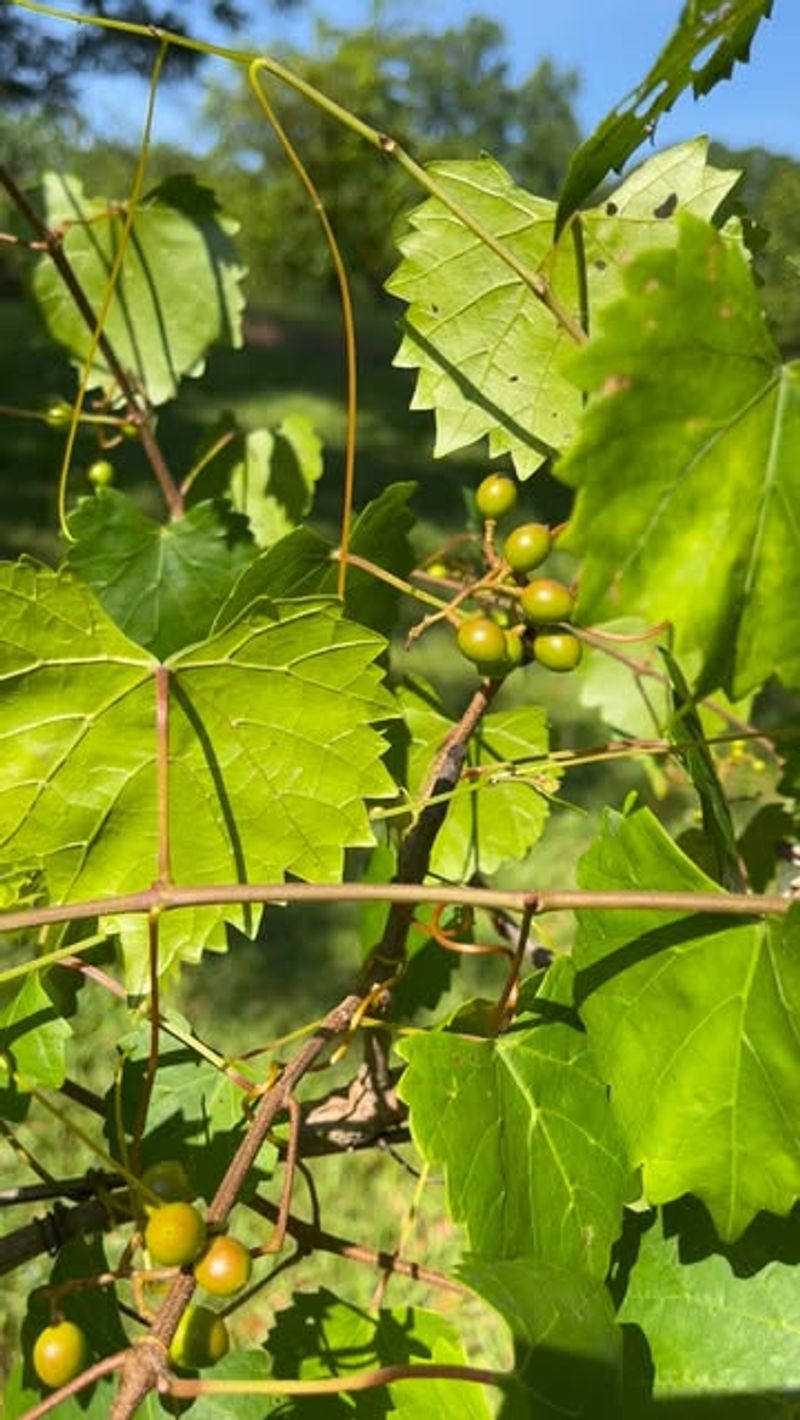
Muscadines have a reputation for being tough and low-maintenance, and in many ways that reputation is well earned.
They handle heat, humidity, and humidity-related diseases far better than most other grape varieties.
But there is one task that absolutely cannot be skipped, and planting muscadines along a property line without committing to it is setting yourself up for a frustrating mess within just a few seasons.
NC State University is clear on this point: pruning is the single most important cultural practice for muscadine vines.
These plants produce fruit on new growth that sprouts from the previous season’s wood, so without annual pruning during the dormant season, the vine quickly becomes a tangled web of old, unproductive shoots.
Harvesting becomes nearly impossible, the fruit quality drops, and the vine loses the organized structure that makes it manageable along a property line where space is already limited.
Dormant pruning typically happens in late winter, somewhere between January and early March in North Carolina, before new growth begins to push.
During this time, you cut back lateral shoots aggressively, leaving only a few buds on each spur. It sounds dramatic, but muscadines respond to hard pruning with vigorous, productive new growth every spring.
A vine that gets properly pruned each year stays neat, stays within its trellis, and consistently produces better fruit than one that gets left alone.
If you are not sure you can commit to this yearly task, consider whether a property line muscadine planting is the right project for your schedule right now.