Things You Should Never Add To Michigan Clay Soil No Matter What You Read Online
Michigan clay soil has a way of inspiring desperate measures. It compacts, it drains poorly, it bakes hard in dry weather and turns to something close to concrete by August.
So when a gardening article or a well-meaning neighbor suggests a fix, it’s tempting to try it. Some of those suggestions are genuinely helpful.
Others make clay soil measurably worse, even though they sound completely logical on the surface. Sand is probably the most famous example of advice that seems reasonable and turns out to be a real problem.
But it’s not the only one. Several common amendments and organic materials that work beautifully in other soil types create new headaches when they meet Michigan clay.
Before you haul anything home from the garden center, it’s worth knowing what actually belongs in that soil and what definitely does not.
1. Excess Sand Without Organic Matter
Here is a mistake that trips up so many well-meaning Michigan gardeners every single season. The idea sounds logical enough: clay soil is too dense, sand is loose and gritty, so mixing them together should fix the problem.
Unfortunately, that is not how soil science works in practice.
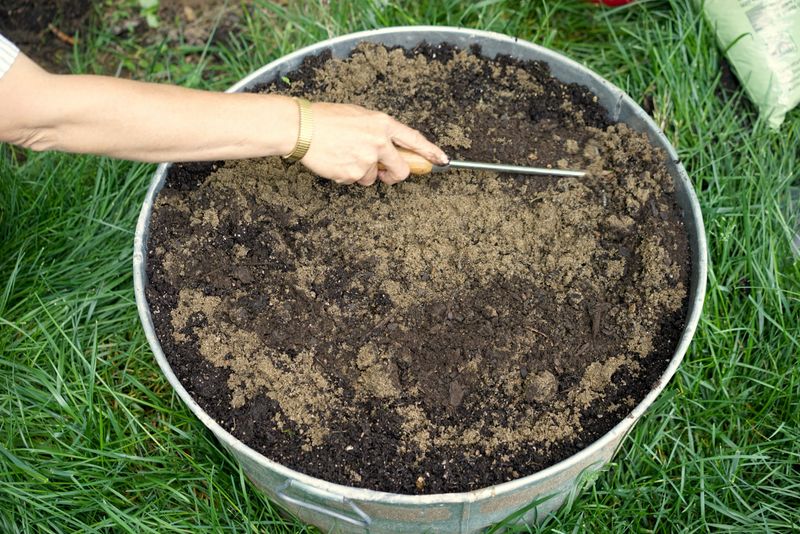
When you pour large amounts of sand into clay without adding organic matter, the two materials bind together and create something closer to concrete than garden soil. Drainage gets worse, not better.
Roots struggle to push through, and the soil becomes nearly impossible to work with a shovel after it dries out. Soil scientists have studied this for decades, and the results are consistent.
You would need an enormous amount of sand, roughly 50 percent or more of total soil volume, to see any real improvement, and even then, without compost or organic material, you are still missing the biological activity that makes soil actually healthy.
The smarter move is to work in aged compost, shredded leaves, or wood chip mulch over time. These organic materials feed the microbes that naturally break down clay structure.
Adding a few inches of compost each season and gently tilling it in will do far more for your Michigan garden than truckloads of sand ever could. Patience and organic matter are the real secret to fixing clay soil the right way.
2. Large Quantities Of Lime Without Testing
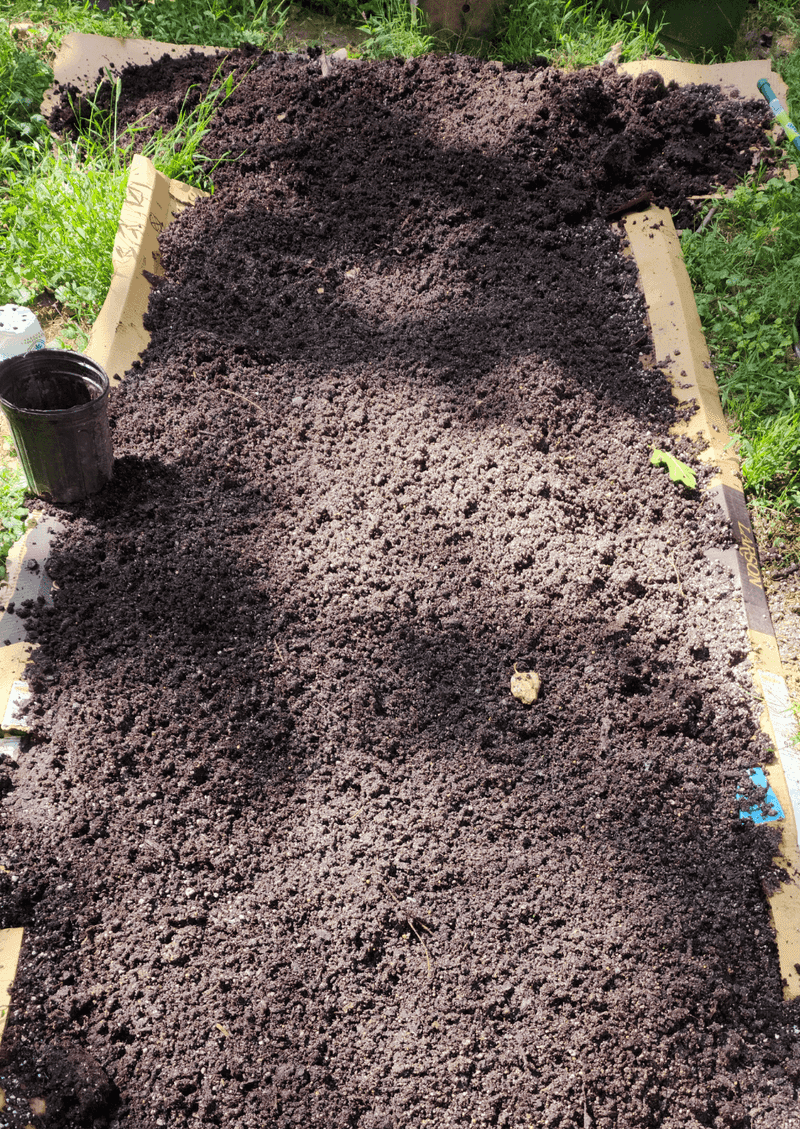
Lime gets tossed around in gardening conversations like it is a cure-all, but adding it without testing your soil first is one of the most avoidable mistakes you can make.
Michigan soils vary a lot from county to county, and some areas already have naturally high pH levels that do not need any adjustment at all.
When you raise the pH too high in clay soil, nutrients like iron, manganese, and zinc become locked up and unavailable to plants.
You might see yellowing leaves and stunted growth, and you could spend months trying to figure out why your plants look so unhealthy when the answer is sitting right in your soil.
A simple soil test from Michigan State University Extension costs very little and gives you exact numbers to work with. You will learn your current pH, what nutrients are present, and exactly how much lime, if any, your garden actually needs.
Your Michigan Garden Changes Every Week. Your Plan Should Too.
Gardening in Michigan changes quickly throughout the season. Every Friday you’ll receive a simple weekly plan showing exactly what to plant, prune, fertilize, harvest, and protect so you never miss the right timing.
Without that information, you are just guessing. Most vegetables and flowers in Michigan prefer a pH between 6.0 and 7.0. If your soil already falls in that range, lime is unnecessary and could push things in the wrong direction fast.
Clay soil holds pH changes longer than sandy soil does, so over-liming is hard to reverse quickly. Test first, apply second, and always follow the recommended application rate on the report you receive.
3. High Nitrogen Fertilizers On Newly Planted Beds
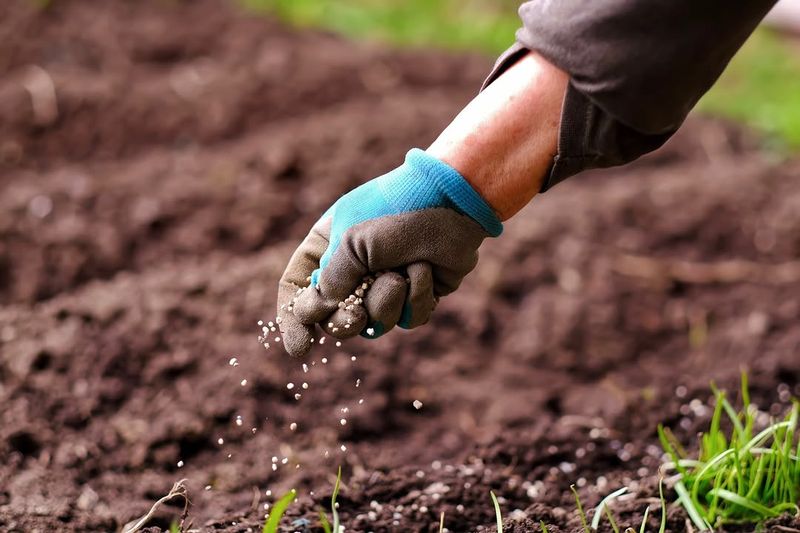
Walk into any garden center and you will find shelves full of fertilizers with big nitrogen numbers on the front.
They promise lush, green growth, and they deliver exactly that, which is actually the problem when you are working with clay soil in a newly planted Michigan garden bed.
Clay soil already has a tendency to hold moisture and restrict root movement. When you flood it with high nitrogen right after planting, plants put all their energy into producing leaves and stems above ground.
Root systems stay shallow and underdeveloped, which means the plant is poorly anchored and highly vulnerable during dry spells or cold snaps.
Roots need time and the right conditions to spread outward and downward into the clay. That process happens best when nitrogen is moderate and phosphorus levels support root growth.
Compost blended into the planting area before you put anything in the ground is a much better starting point than synthetic fertilizer.
If you feel the urge to fertilize newly planted beds, reach for a balanced slow-release organic fertilizer with roughly equal nitrogen, phosphorus, and potassium numbers. Better yet, let compost do the heavy lifting for the first full growing season.
By the second year, your plants will have stronger root systems and will actually be able to use fertilizer more efficiently. Building the foundation first always pays off in the long run.
4. Heavy Manure Without Composting
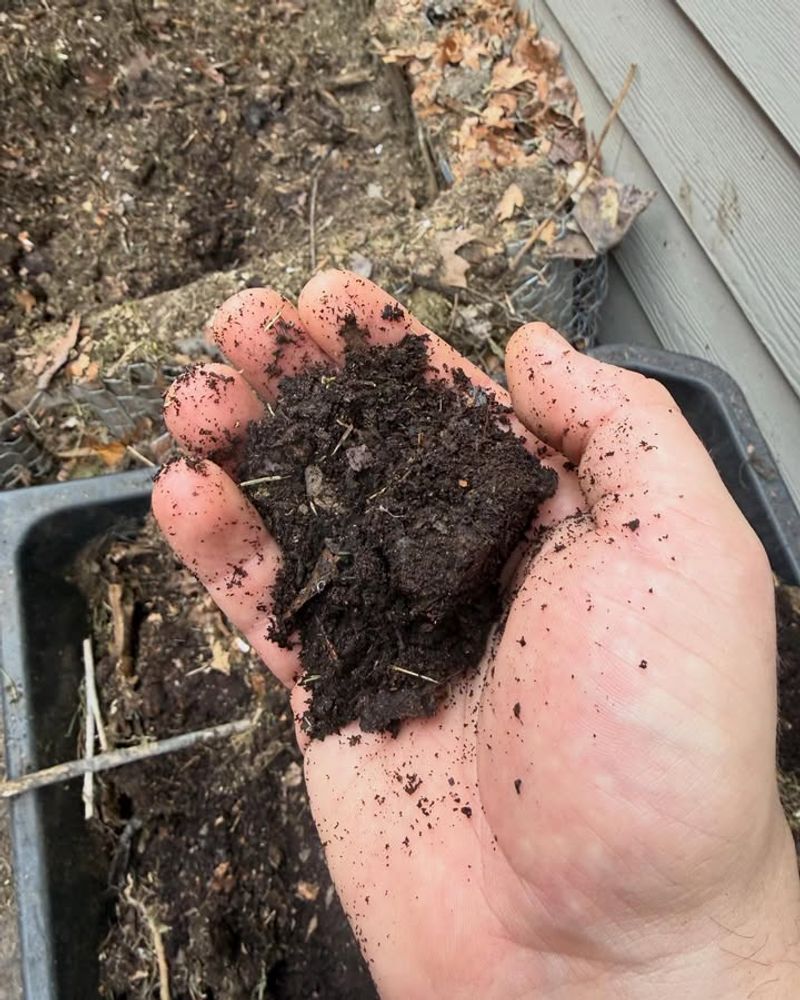
Fresh manure has a long history in farming, and there is no question that it contains valuable nutrients.
The problem is that raw, uncomposted manure and Michigan clay soil are a combination that tends to create more headaches than it solves, especially in home gardens where drainage is already an issue.
Raw manure is heavy, dense, and loaded with excess nitrogen and salts that can overwhelm plant roots.
When it sits on top of clay soil or gets worked in without composting first, it can create a thick, water-retaining layer that suffocates roots and invites fungal problems.
The clay already struggles with drainage, and raw manure only adds to that challenge.
There is also the issue of pathogens. Fresh manure from chickens, horses, or cattle can carry bacteria that survive in soil for weeks.
Michigan vegetable gardeners in particular should be cautious about using raw manure anywhere near edible crops without proper composting time, which typically means at least 90 to 120 days of hot composting.
Well-rotted, fully composted manure is a completely different story. It improves soil structure, feeds beneficial microbes, and adds a gentle, slow-release nutrient boost without the risks of the raw version.
Apply it in fall so Michigan winters help break it down further before spring planting. The wait is absolutely worth it, and your plants will show the difference clearly by midsummer.
5. Peat Moss Alone Without Nutrient Additions
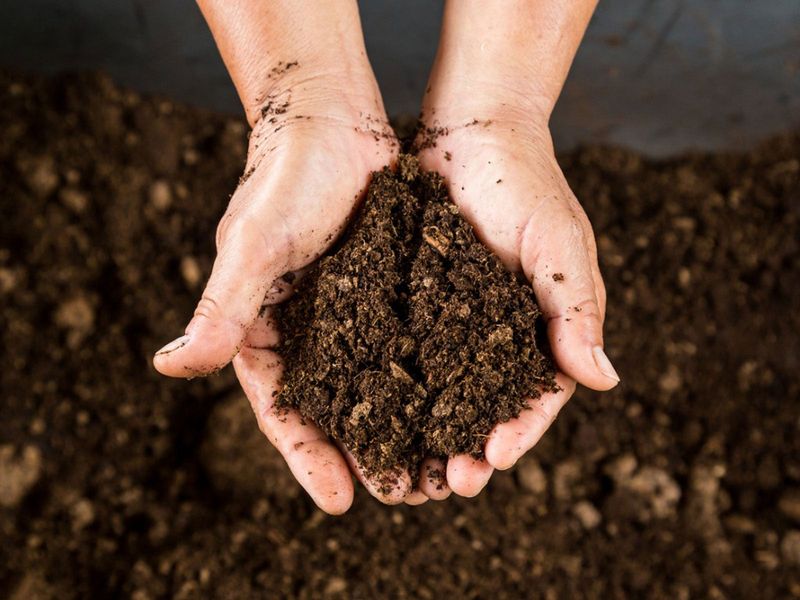
Peat moss looks impressive in the bag. It is dark, fluffy, and feels like it should solve every soil problem instantly.
Many Michigan gardeners have reached for it as a quick fix for heavy clay, and while it does have some useful properties, using it alone is a setup for disappointing results.
Pure peat moss is highly acidic, with a pH that typically falls between 3.5 and 4.5. Most Michigan garden plants prefer something much closer to neutral.
Adding large amounts of peat moss to clay without balancing it with compost or other amendments can push your soil pH into a range where nutrients become unavailable, even if they are physically present in the soil.
Peat moss also holds water extremely well, which sounds like a benefit but creates problems in clay.
Clay already struggles to drain properly, and layering a water-retentive amendment on top of it can lead to soggy, oxygen-poor conditions that suffocate plant roots during wet Michigan springs and summers.
On top of that, peat moss contains almost no nutrients on its own. It is essentially an inert filler that improves texture slightly but does nothing to feed the soil biology that makes clay actually workable over time.
Pair it with aged compost and a balanced organic fertilizer if you choose to use it at all. Compost alone, honestly, will get you further faster without the pH complications that come with heavy peat moss use.
6. Inorganic Clay Breakers Sold As Miracle Products
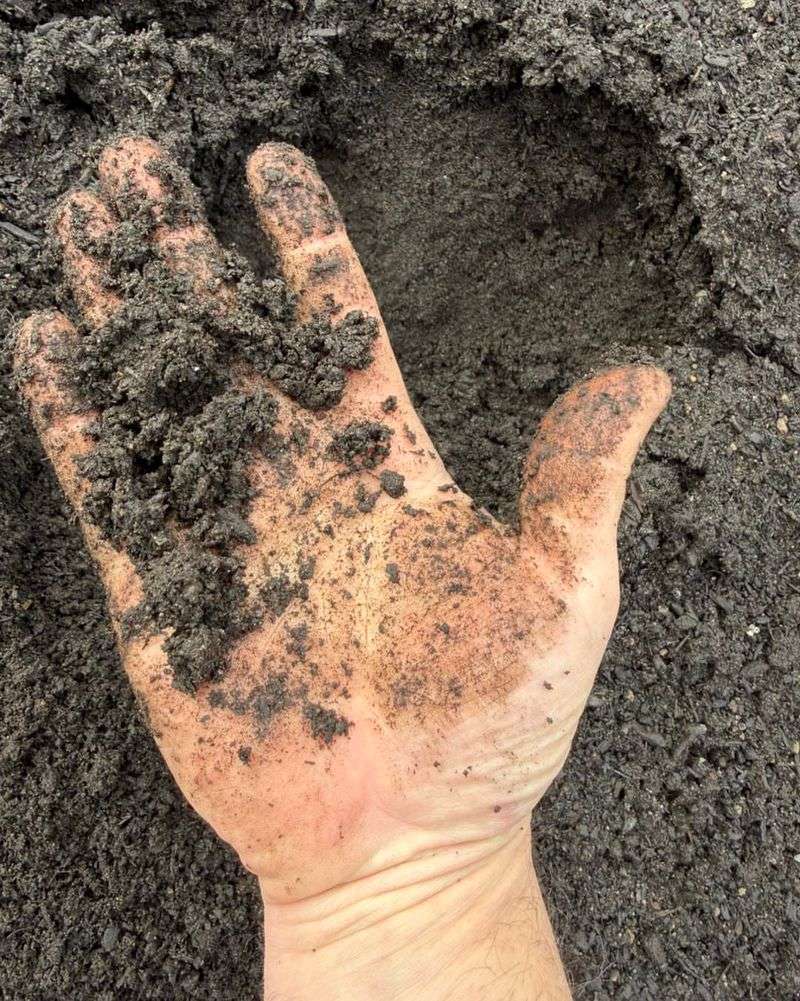
The gardening product market is full of bags and bottles promising to transform your rock-hard Michigan clay into loose, fluffy soil with just a few applications.
Some of these products have flashy marketing, glowing testimonials, and price tags that suggest they must be doing something powerful. Most of them are not.
Many inorganic clay breaker products work by temporarily dispersing clay particles, giving the soil a looser feel for a few weeks. But they do not build the biological structure that makes soil healthy and productive over the long term.
Once the product wears off, the clay reverts to its old habits, and you are back to square one with a lighter wallet.
Real soil improvement in Michigan clay happens through biology, not chemistry. Earthworms, fungi, bacteria, and other soil organisms create the pore spaces and aggregate structure that allow clay to drain and breathe properly.
No synthetic product can replicate what a thriving soil ecosystem does naturally over a growing season or two.
Cover crops like winter rye, crimson clover, or daikon radish are some of the most powerful clay busters available, and they cost very little. Their roots physically break apart compacted layers while feeding the soil as they decompose.
Combined with regular compost additions and organic mulch, these strategies outperform any commercial clay breaker product in every measurable way. Save your money and invest it in compost instead.
7. Excessive Wood Ash
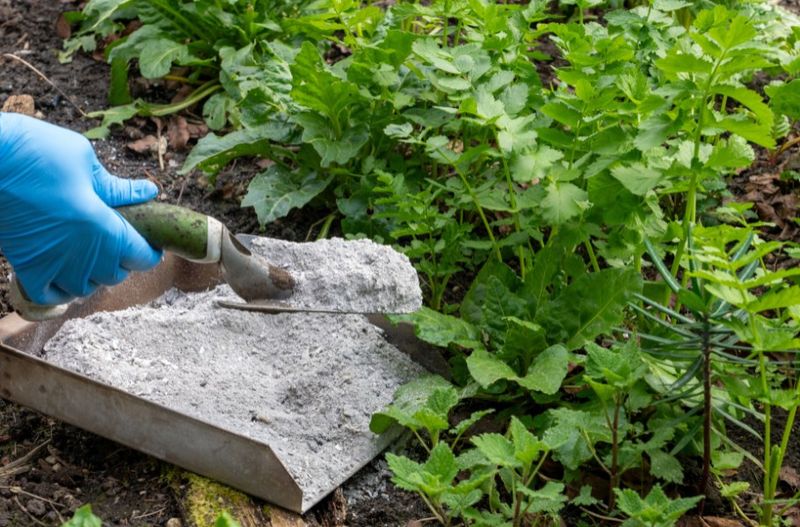
Wood ash from a fireplace or fire pit feels like a natural, free soil amendment, and in small, controlled amounts it actually can be useful.
The trouble starts when Michigan gardeners get generous with it, especially in clay soil that already has a higher buffering capacity and holds pH changes for a long time.
Wood ash is strongly alkaline. Even a modest application can raise soil pH noticeably, and clay soil amplifies that effect because of its dense mineral structure.
Once pH climbs above 7.5 or 8.0, nutrients like iron, boron, and manganese become chemically unavailable to plants even if those nutrients are physically in the soil. Yellowing, poor growth, and nutrient deficiency symptoms follow quickly.
Many Michigan soils in the southern Lower Peninsula already lean slightly alkaline due to limestone deposits in the parent material. Adding wood ash on top of that without testing first is a gamble that rarely pays off well.
The effects can linger in clay for years because clay does not flush out excess alkalinity the way sandy soils do after rainfall.
If you want to add potassium and trace minerals to your garden, greensand or kelp meal are gentler, slower-acting options that will not spike your pH.
A small handful of wood ash worked in around fruit trees or berry bushes once a year is reasonable, but always test your soil pH before applying, and never use it on acid-loving plants like blueberries.
8. Non-Native Mulches That Alter Soil Chemistry
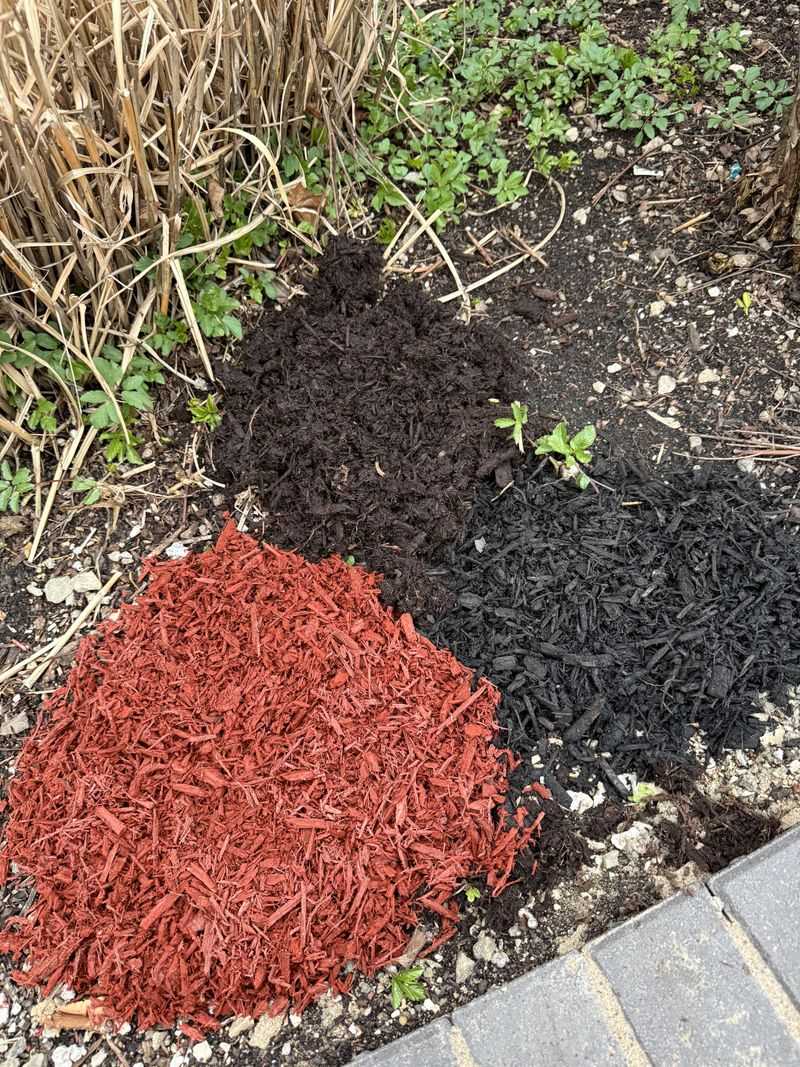
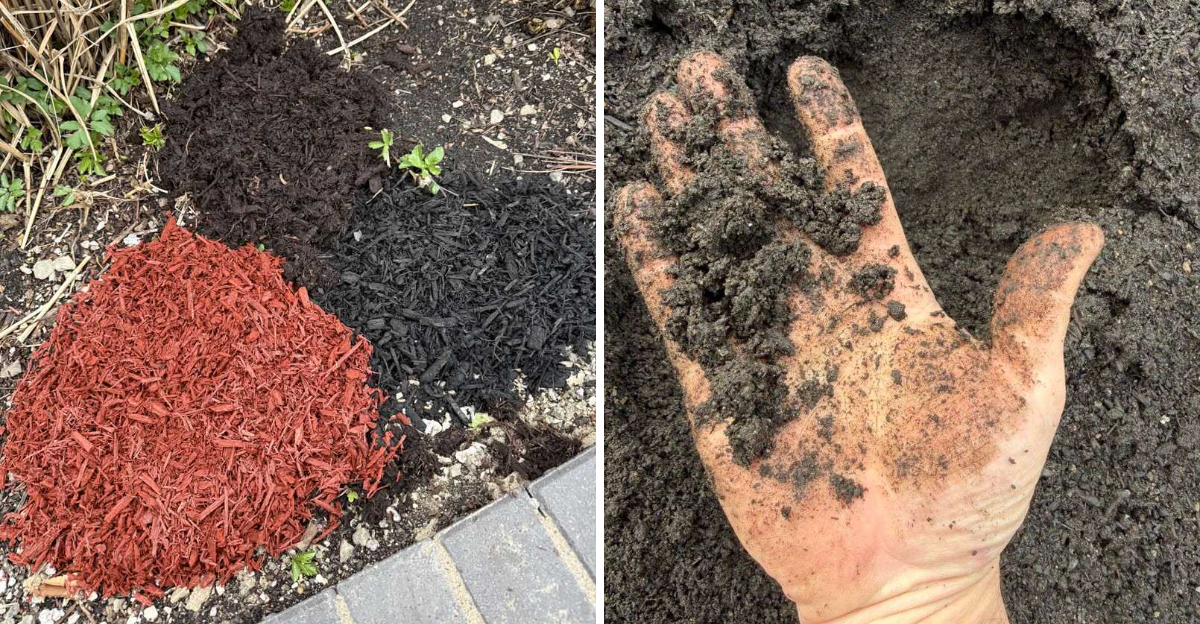
Colored mulch is everywhere at big box stores in spring, and it does look tidy in a garden bed. Those vivid reds, blacks, and golds are eye-catching, but what is underneath that color matters a lot more than how it looks from the driveway.
Some dyed mulches are made from recycled wood products including old pallets and construction lumber treated with chemicals.
When these mulches break down on top of Michigan clay soil, they can introduce substances that affect microbial populations and alter the chemistry of the soil over time.
Clay soil is already a slow-draining environment, which means anything leaching from mulch has more time to concentrate and interact with roots and soil organisms than it would in a faster-draining mix.
Beyond the chemistry concern, some non-native or heavily processed mulches break down into fine particles that can seal the soil surface and reduce gas exchange.
Clay already struggles with oxygen movement through its dense structure, and a mulch that forms a crust on top makes that problem worse, not better.
Natural, locally sourced mulch materials are always the better choice for Michigan gardens.
Shredded oak or maple leaves, untreated wood chips from a local arborist, or composted hardwood bark all break down into humus that genuinely feeds the soil.
They moderate temperature, retain moisture sensibly, and support the earthworm populations that do so much of the real work in improving clay over multiple seasons.
9. Synthetic Polymers Or Soil Conditioners
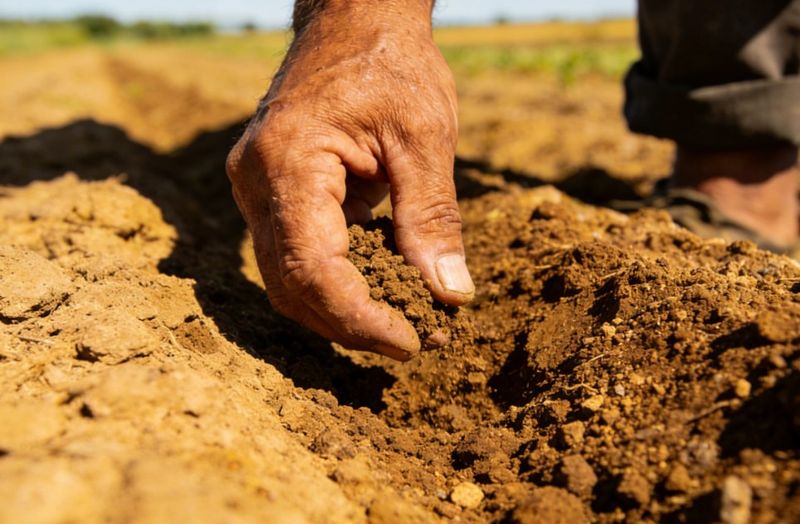
Synthetic polymer soil conditioners have been marketed to gardeners for years with promises of improved water retention and better soil structure.
Some of these products contain polyacrylamide or similar compounds that absorb water and swell into gel-like beads within the soil.
The concept sounds innovative, but the reality in Michigan clay gardens is far less exciting.
Clay soil already retains water very effectively, sometimes too effectively. Adding a water-absorbing polymer to soil that already struggles to drain creates conditions that stay waterlogged longer after rain.
During Michigan springs, when heavy rainfall is common, that extra moisture retention can suffocate roots and encourage root rot in ways that would not happen in healthier, more balanced soil.
Long-term studies on synthetic soil conditioners also raise questions about their persistence in the environment. Some polymer compounds break down slowly and may accumulate in soil layers over multiple growing seasons.
Healthy soil biology depends on a balanced chemical environment, and introducing synthetic compounds into clay can disrupt the fungal networks and bacterial communities that are essential for natural soil improvement.
Cover crops planted in fall and turned under in spring, combined with regular compost additions, create genuine structural improvement that gets better every year.
Earthworms thrive in compost-rich soil, and their activity alone does more for clay structure than any polymer product on the market.
Building soil health organically takes a little longer, but the results are lasting and completely safe for your plants, your family, and the broader Michigan ecosystem.