How Michigan Plant Owners Can Repot A ZZ Plant The Right Way
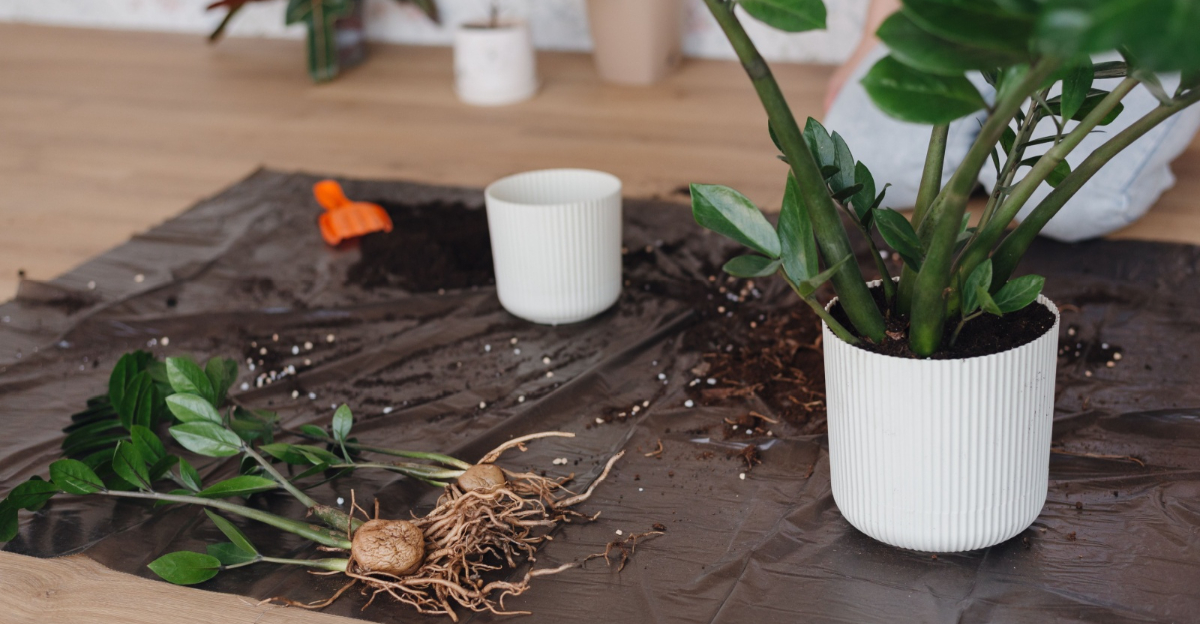
ZZ Plants have built an excellent reputation among Michigan houseplant owners, and they have earned every bit of it.
Low light, dry heated air, irregular watering, the kind of neglect that would send most plants into a spiral – ZZ Plants handle all of it with remarkable composure.
They are, genuinely, one of the most forgiving things you can grow indoors in Michigan. Repotting them, though, is where that forgiving nature has some limits.
Those thick fleshy rhizomes that make ZZ Plants so drought-tolerant also make overpotting, dense soil, and heavy watering after repotting a real problem.
Get those details wrong and a plant that survives almost everything else starts to struggle in ways that are slow to show up and even slower to fix.
Getting them right is straightforward once you know what to watch for.
1. Repot Only When The Plant Is Crowded
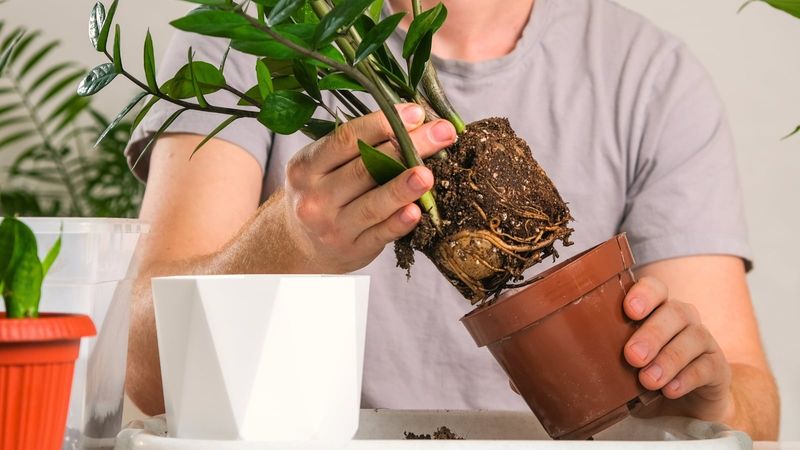
Tight nursery pots tell a story pretty quickly. When rhizomes start pushing against the sides of the container or poking up above the soil line, that is a reliable sign a ZZ Plant has genuinely outgrown its current home.
Michigan plant owners who notice roots creeping out of drainage holes or soil that dries out unusually fast after watering may be seeing the same signal.
ZZ Plants are slow growers indoors, especially in Michigan homes during the long winter months when light levels drop and heated air keeps rooms dry.
Because of that slower pace, most healthy ZZ Plants only need repotting every two to three years, and some go even longer between moves.
Repotting too often can actually stress the plant more than leaving it alone.
A crowded pot is not automatically an emergency. ZZ Plants tolerate being slightly root-bound and may even bloom more readily when their roots fill the container.
The real concern comes when the soil can no longer hold moisture long enough for the roots to absorb water, or when the pot becomes visibly misshapen from the pressure of growing rhizomes.
Watching for those specific signs, rather than repotting on a fixed schedule, helps Michigan plant owners make a smarter decision about when the plant actually needs more space.
2. Choose A Pot With Drainage Holes
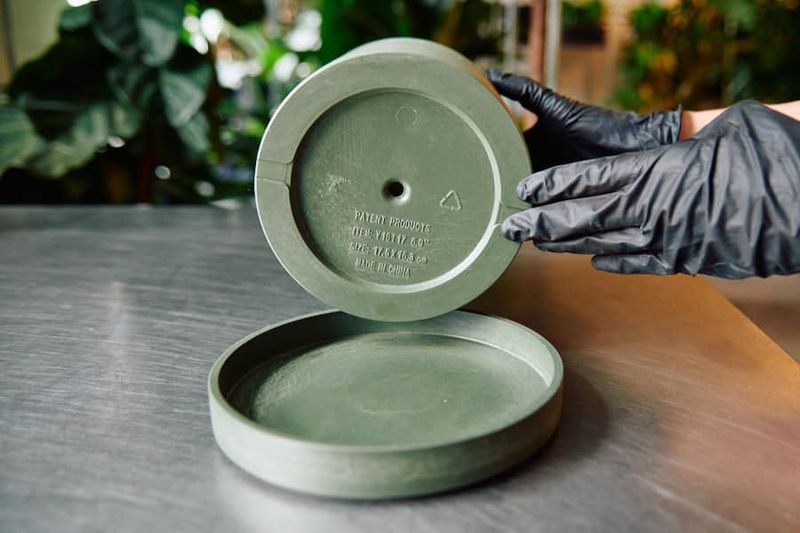
Heavy decorative containers look beautiful on a Michigan apartment shelf or a living room plant stand, but they can quietly cause problems for a ZZ Plant if they lack drainage holes.
Without a way for excess water to escape, moisture collects at the bottom of the pot and stays in contact with the rhizomes far longer than the plant needs.
ZZ Plants store water in those thick underground structures, so they simply do not need or want wet soil sitting around them.
Terracotta pots work especially well for ZZ Plants because the porous material allows some air movement through the sides, which helps the soil dry out at a reasonable pace.
In Michigan homes where winter heating can make indoor air quite dry, terracotta may dry the soil a bit faster, so checking moisture before watering becomes a helpful habit.
Your Michigan Garden Changes Every Week. Your Plan Should Too.
Gardening in Michigan changes quickly throughout the season. Every Friday you’ll receive a simple weekly plan showing exactly what to plant, prune, fertilize, harvest, and protect so you never miss the right timing.
Plastic nursery pots with drainage holes are another practical option, particularly if you want to drop the nursery pot inside a decorative cachepot.
Using a cachepot arrangement lets Michigan plant owners enjoy a stylish container without giving up proper drainage. The key is to check the cachepot regularly and empty any water that collects in the bottom after watering.
Water sitting in a saucer or cachepot for more than a day or two can lead to the same problems as a pot without drainage. A pot with drainage holes is one of the simplest ways to protect the plant during and after repotting.
3. Go Up Just One Pot Size
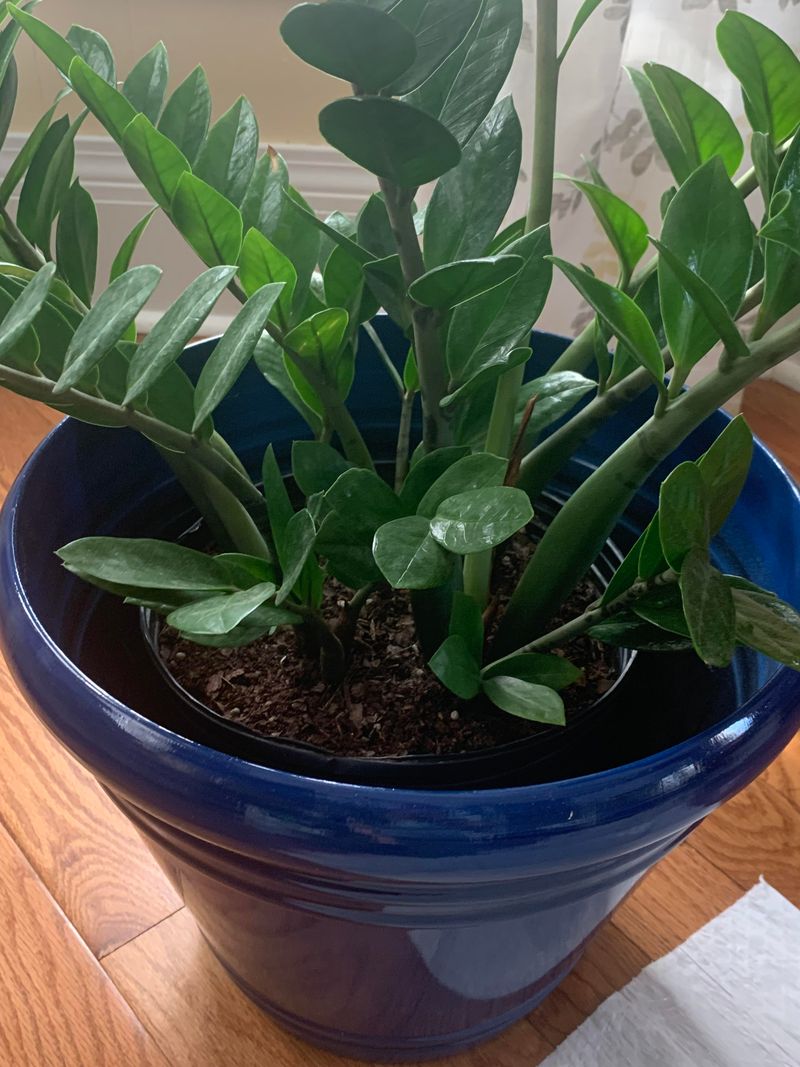
Choosing a container that is only one size larger than the current pot is one of the most practical decisions a Michigan plant owner can make when repotting a ZZ Plant.
A pot that is too large holds far more soil than the roots can use right away, and that extra soil stays wet for longer than it should.
For a plant that stores water in its own rhizomes and prefers to dry out between waterings, sitting in a large volume of damp soil raises the risk of rhizome rot.
One pot size up typically means moving from a four-inch pot to a six-inch pot, or from a six-inch to an eight-inch. That modest increase gives the roots room to spread without surrounding them in excess soil.
Michigan plant owners who skip ahead to a much larger container hoping to encourage faster growth may find the plant actually looks smaller and less lush in an oversized pot, since the roots have not yet filled the space.
Slow indoor growth is normal for ZZ Plants, especially in Michigan during fall and winter when light is limited and temperatures inside stay consistent but cool near windows. A slightly snug pot encourages the plant to fill its container steadily.
When the roots and rhizomes eventually reach the edges again, that is the right time to consider moving up by one size once more. Patience and restraint with pot sizing tends to serve ZZ Plants well over the long run.
4. Use A Coarse Well-Draining Mix
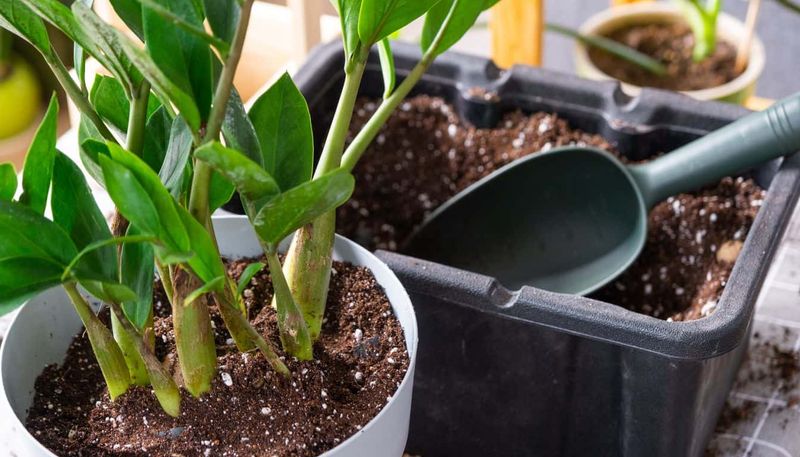
Dry potting mix with a gritty, open texture is far better for a ZZ Plant than a dense, moisture-retaining blend.
Standard all-purpose potting soil can hold too much water for this plant, especially in Michigan homes during the heating season when airflow near windows may be limited and temperature swings between day and night can affect how quickly soil dries.
A mix that stays wet for days at a time puts unnecessary strain on the rhizomes.
A reliable approach is to blend a standard potting mix with perlite, coarse sand, or a combination of both to improve drainage and aeration.
Some Michigan plant owners also mix in a small amount of orchid bark, which adds air pockets and helps the roots stay in contact with oxygen rather than sitting in compacted, wet material.
The goal is a mix that drains quickly when watered and does not clump into a dense, soggy mass.
Cactus and succulent mixes sold at Michigan garden centers are often a reasonable starting point because they are already formulated for plants that prefer drier conditions.
Amending that type of mix with a bit of extra perlite can make it even better suited for a ZZ Plant.
Avoid mixes with added moisture-retaining crystals or water-holding gels, since those work against the drainage the plant needs. Getting the soil right before repotting is one of the most effective steps toward a smooth transition for the plant.
5. Handle Rhizomes And Roots Gently
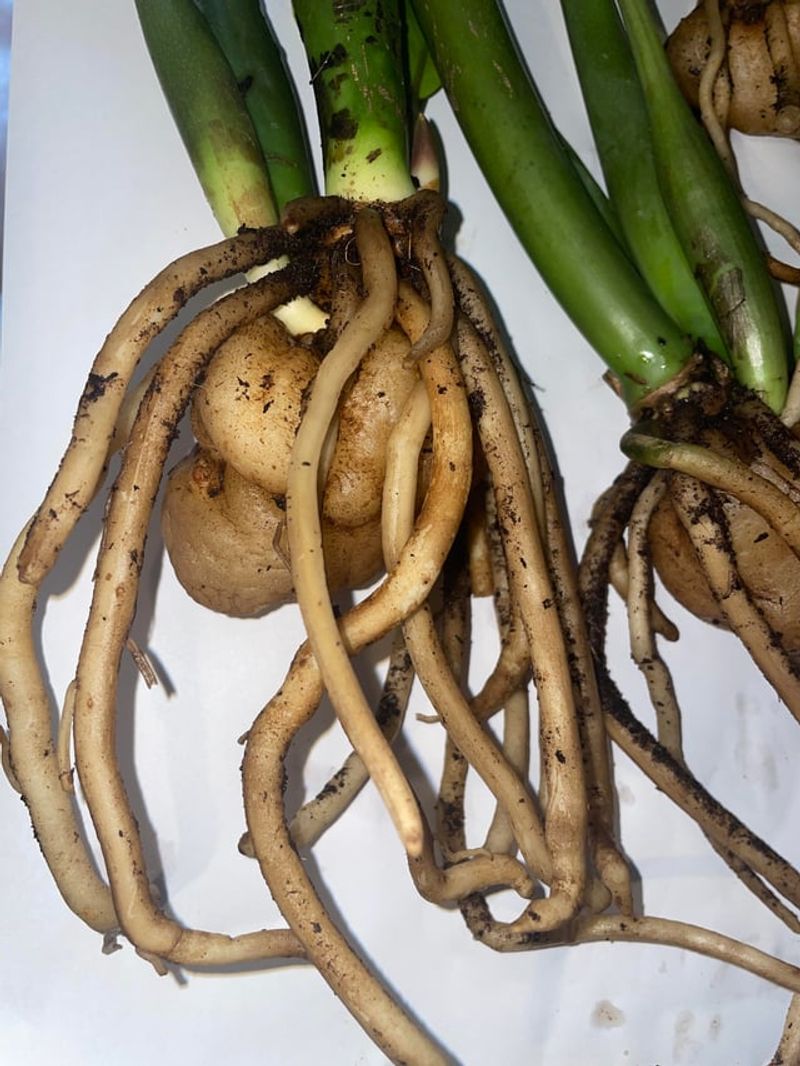
Thick rhizomes are what make ZZ Plants so resilient, but they also require careful handling during repotting.
These fleshy, potato-like structures store water and nutrients, and snapping or bruising them can leave the plant vulnerable while it adjusts to its new container.
Michigan plant owners who have repotted other houseplants may be used to gently loosening roots without much concern, but ZZ rhizomes deserve a bit more patience and a lighter touch.
Before removing the plant from its pot, letting the soil dry out slightly can make the process easier. Dry soil tends to pull away from the container walls more cleanly, reducing the risk of tearing roots.
Tipping the pot sideways and gently squeezing the sides if it is a flexible plastic nursery pot can help loosen the root ball without forcing it. Avoid pulling the plant out by its stems, since ZZ stems can detach from the rhizome more easily than they look.
Once the plant is out, gently shake or brush away loose soil from the rhizomes and roots. Some Michigan plant owners use a soft brush or their fingers to clear away old soil without yanking on the root structure.
If any roots look brown and mushy rather than firm and tan, those sections can be trimmed away with clean scissors before repotting.
Letting any cut surfaces dry for an hour or two before placing the plant in fresh mix gives the tissue a small amount of time to seal before coming into contact with new soil.
6. Set The Plant At The Same Depth
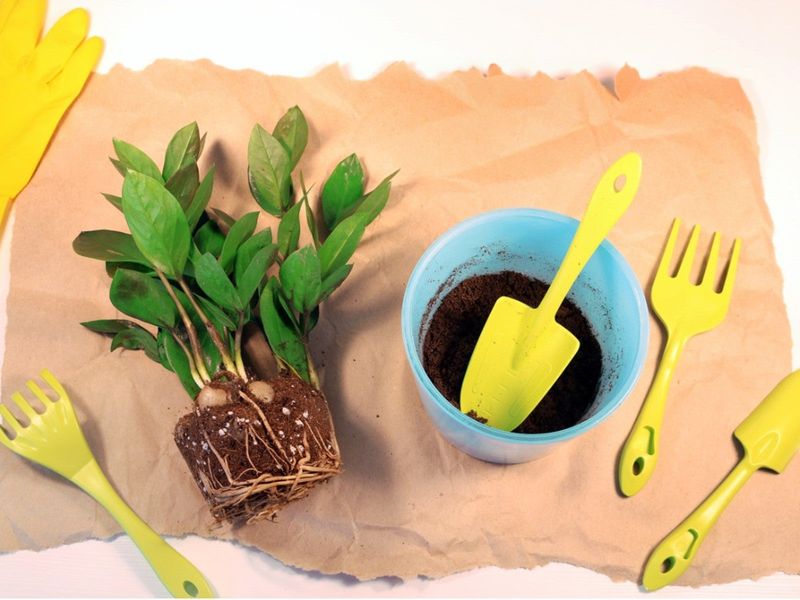
Planting depth matters more than it might seem when repotting a ZZ Plant. Burying the rhizomes too deeply in the new container can trap moisture around structures that prefer to stay relatively close to the soil surface.
Conversely, leaving them too exposed above the soil line may cause them to dry out more than necessary, especially in Michigan homes during winter when heated indoor air can be surprisingly desiccating.
A straightforward approach is to position the plant so the top of the rhizome cluster sits at roughly the same depth it occupied in the previous pot.
Most ZZ Plants grow with their rhizomes just below or just at the soil surface, so matching that depth in the new container keeps things consistent and familiar for the plant.
Adding a layer of fresh potting mix to the bottom of the new pot first allows for easy height adjustment before placing the plant inside.
Once the plant is positioned at the right depth, fill in the sides with fresh potting mix and press it down lightly to eliminate large air pockets without compacting the soil too firmly.
Firm but not packed is the goal, since overly compressed soil can restrict drainage and make it harder for roots to spread into the new space.
Michigan plant owners working in smaller apartments or on balconies during warm summer months may find it easiest to do this step outdoors where cleanup is simpler and natural light makes it easier to see what they are doing.
7. Water Lightly Then Let It Dry
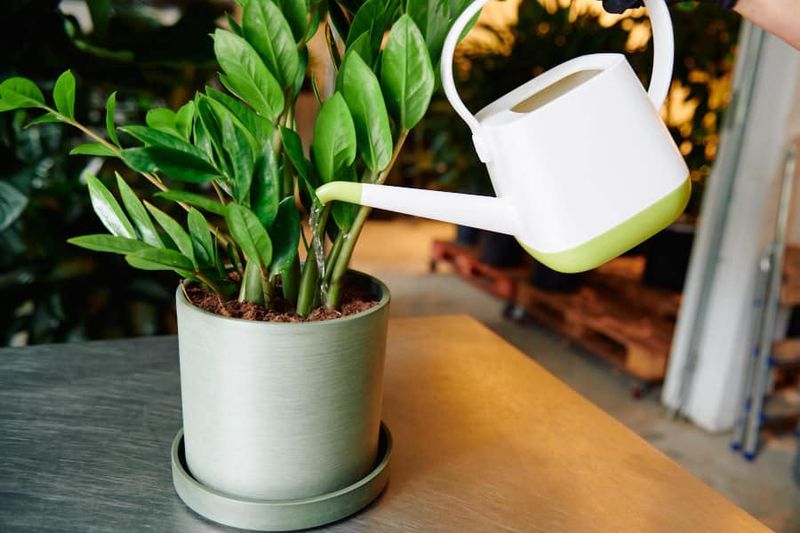
After repotting, the instinct to water generously can actually work against a ZZ Plant. The roots and rhizomes have just been disturbed, and the fresh potting mix around them is new and untested.
A light watering right after repotting helps settle the soil and closes any large air gaps around the roots, but soaking the pot thoroughly at this stage introduces more moisture than a stressed plant can comfortably absorb.
In Michigan homes, especially during late fall and winter when the heating system runs regularly and light levels are lower, freshly repotted ZZ Plants benefit from a restrained watering routine.
Letting the top inch or two of soil dry out before watering again gives the roots a chance to establish themselves in the new mix without sitting in consistently wet conditions.
Checking the soil with a finger rather than watering on a fixed schedule tends to produce better results.
Some Michigan plant owners notice that a freshly repotted ZZ Plant does not seem to use water as quickly as it did before, which is completely normal.
The plant may pause visible growth for a few weeks while it directs energy toward root establishment rather than producing new leaves.
Resisting the urge to water more frequently during this settling period is one of the kinder things a plant owner can do. Patience with watering after repotting often leads to a healthier, more stable plant in the months that follow.
8. Use Bright Indirect Light After Repotting
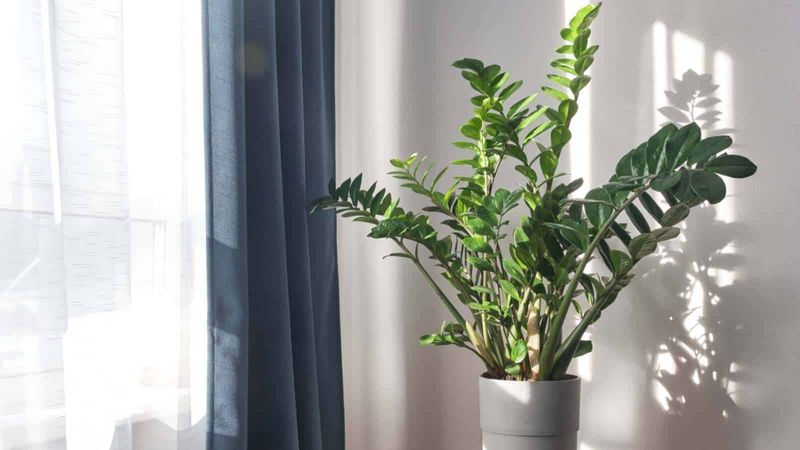
Light placement after repotting can quietly shape how well a ZZ Plant bounces back.
Bright indirect light gives the plant enough energy to begin settling into its new container without the added stress of intense direct sun, which can cause leaf scorch on a plant that is already adjusting to a new environment.
In Michigan, south-facing windows in winter offer strong light that can feel intense for a recently repotted plant, so a sheer curtain or a slightly set-back position can soften the exposure.
East-facing windows tend to offer a gentler morning light that works well for ZZ Plants during their post-repotting recovery period.
West-facing windows in Michigan homes can provide warm afternoon light, though the intensity in summer months may be a bit much for a freshly potted plant.
Rotating the pot every few weeks helps the plant grow evenly rather than leaning toward the light source, which is a common habit ZZ Plants develop on apartment shelves and narrow windowsills.
Avoid placing a freshly repotted ZZ Plant in a drafty spot near an exterior door or a cold Michigan windowsill in winter, since temperature fluctuations can add unnecessary stress during recovery.
A stable, warm, well-lit location is the most supportive environment for the first few weeks after repotting.
Once the plant shows signs of new growth, usually a fresh stem or leaf emerging from the soil, that is a good indicator it has settled into its new container comfortably.