The Meaning Behind Seeing A Mourning Dove In Your Florida Yard
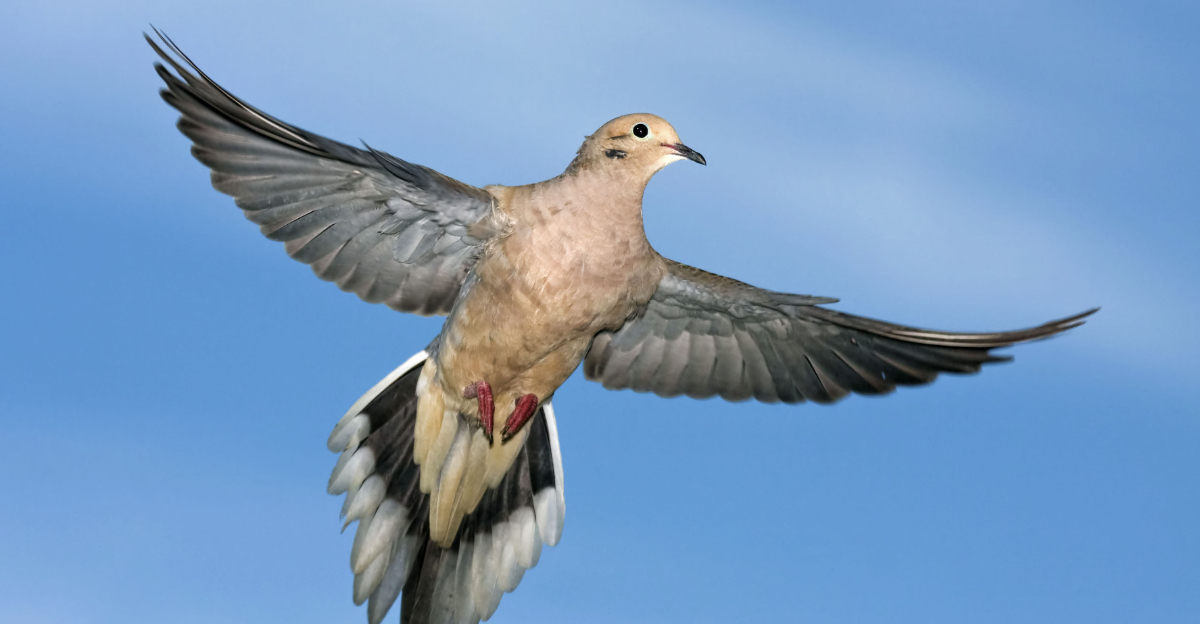
Mourning doves are so common in Florida yards that most people stop seeing them. They blend into the morning routine, quiet and unhurried, and rarely get the second look that flashier birds demand.
That familiarity has cost them a reputation they probably deserve more credit for. A mourning dove is not just background noise.
Across cultures and generations, this bird has carried a weight of meaning that runs deeper than its gentle appearance suggests. Indigenous tradition, Southern folklore, and belief systems from across the world have attached significance to the mourning dove.
Those meanings overlap more than most people expect. Its presence in a Florida yard, the timing of a sighting, and the bird’s behavior all matter.
Each detail factors into what different traditions have believed it signals. Familiar does not mean ordinary.
The mourning dove has a story worth knowing, and most people have never heard it told fully.
1. A Quiet Visitor With A Peaceful Reputation
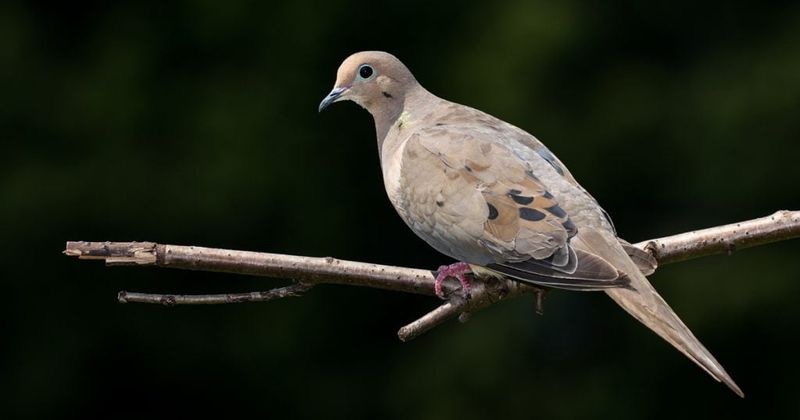
Few birds carry as much quiet emotional weight as the mourning dove. Soft gray feathers, a rounded silhouette, and a calm, unhurried way of moving have made this bird a symbol of peace and gentleness across many cultures and traditions.
People often describe feeling comforted when one appears nearby, especially during times of grief, stress, or personal reflection.
It is worth being honest here. No scientific study has confirmed that a dove arrives with a message.
These associations are human interpretations, shaped by culture, history, and personal experience. Still, that does not make the feeling less real or less valid.
Emotional meaning and natural behavior can exist side by side without one canceling out the other.
The dove’s appearance itself contributes to the feeling. Its muted colors, slow movements, and soft eyes make it feel approachable and calming in a way that more startling birds simply do not.
Many people associate it with remembrance, hope, and quiet presence. If a mourning dove has landed in your yard and the moment felt tender, you are not alone in that response.
Honoring the feeling while staying curious about the bird is a perfectly reasonable way to experience the visit.
2. That Soft Coo Means More Than Background Noise
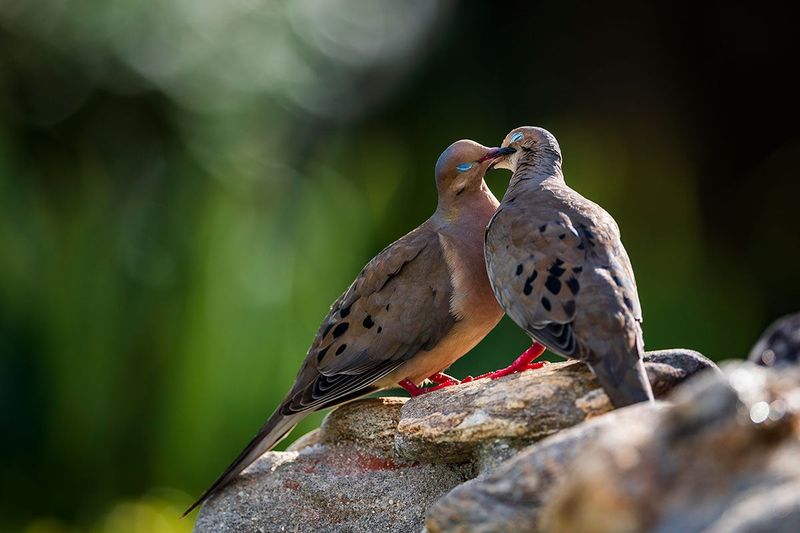
Most people recognize the mourning dove’s call before they spot the bird itself. That low, flowing coo drifts across yards and neighborhoods with a kind of rhythm that feels almost meditative.
It is the sort of sound that makes you slow down without realizing you have done it.
According to the Cornell Lab of Ornithology, the mourning dove produces a distinctive cooing call that is often mistaken for an owl. The call serves real biological purposes.
Males use it during courtship to attract a mate, and both sexes may use soft calls to maintain contact with a partner or nearby birds. The sound is part of normal, healthy bird communication, not a mysterious signal intended for human ears.
Even so, the emotional effect is real. Something about the rhythm and softness of the coo taps into a quiet part of the human brain that responds to calm, repetitive sound.
Your Florida Garden Changes Every Week. Your Plan Should Too.
Gardening in Florida changes quickly throughout the season. Every Friday you’ll receive a simple weekly plan showing exactly what to plant, prune, fertilize, harvest, and protect so you never miss the right timing.
Many people say the call makes them think of summer mornings, childhood, or a loved one who has passed. Those personal connections are meaningful, even if the dove is simply doing what doves do.
Listening closely to the call is one of the simplest ways to feel more connected to the wildlife sharing your yard.
3. Your Yard May Be Offering Exactly What It Needs
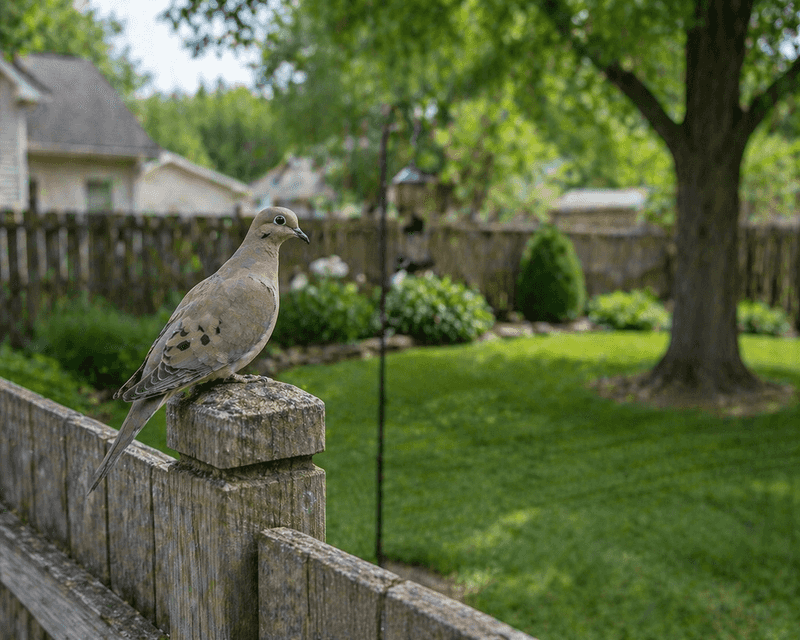
Before assuming a dove’s visit carries a personal message, take a moment to look at your yard through the bird’s eyes. Open ground, scattered seeds, a source of fresh water, low shrubs, and quiet corners are all things mourning doves actively seek.
If your yard checks even a few of those boxes, the bird may have arrived for entirely practical reasons.
Ground-feeding birds like mourning doves prefer yards with some bare or short-grass areas where seeds are easy to spot and reach. Dense, overgrown spaces make foraging harder and increase the risk of hidden predators.
A yard that offers open sightlines with some nearby cover is close to ideal habitat for this species.
Watching what the dove actually does during its visit can tell you a lot. Is it pecking along the ground, searching for seeds?
Is it resting near a water source? Is it perched in a shrub, scanning the area?
Each behavior points to a specific need being met. Paying attention to these details does not take away from the meaning of the moment.
It adds a layer of understanding that makes the visit feel richer. The yard you have built, even without trying, may already be a small refuge for local wildlife.
4. Scattered Seeds Can Turn A Lawn Into A Dove Stop
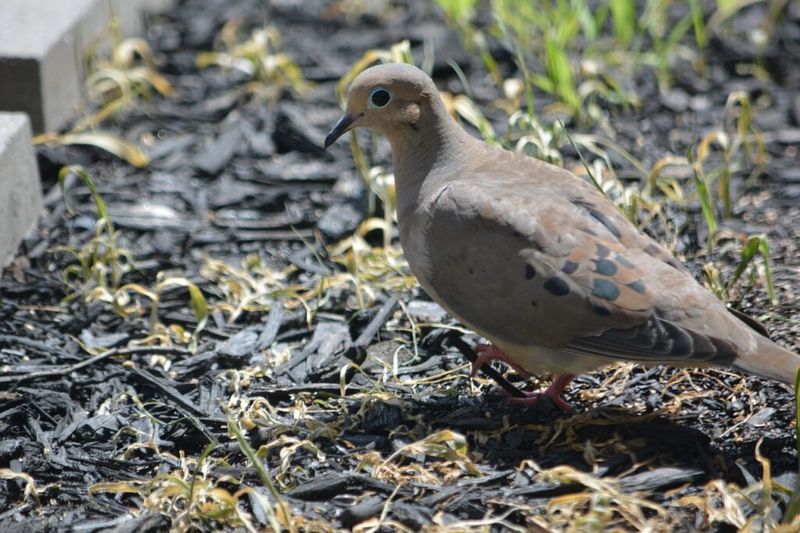
Mourning doves are seed specialists. According to UF/IFAS and the Cornell Lab of Ornithology, seeds make up more than 99 percent of the mourning dove’s diet.
They forage almost entirely on the ground, picking up seeds one at a time with their small bills. Millet, sunflower chips, safflower, and cracked corn are among their favorites at backyard feeders.
Native seed-producing plants are an even better option than store-bought seed alone. Plants like beautyberry, black-eyed Susan, and native grasses drop seeds naturally, creating a foraging area that feels like natural habitat.
This approach reduces waste, keeps the yard tidy, and supports other wildlife at the same time.
If you use a ground-level feeder or scatter seed on the lawn, keep the area clean and dry. Wet or moldy seed can harm birds and attract unwanted pests.
A small platform feeder placed close to the ground works well for doves, since they are not built for clinging to hanging feeders. Offering a reliable, clean food source is one of the most straightforward ways to encourage repeat visits.
Just remember that feeding wildlife comes with responsibility. Keep amounts modest, clean up spilled seed regularly, and make sure the feeding area stays safe from outdoor cats.
5. A Nest Nearby Can Make The Visit Feel Personal
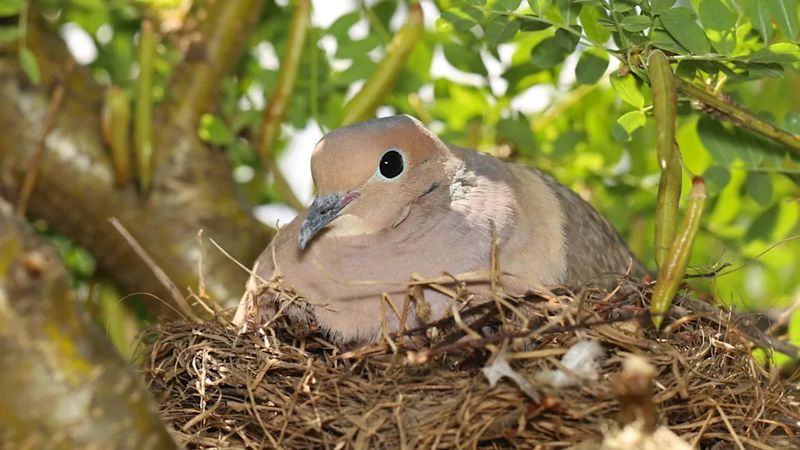
Repeated dove visits to the same corner of your yard may be more than coincidence. Mourning doves nest throughout the year in the Sunshine State, taking advantage of the mild climate to raise multiple broods.
If a pair keeps returning to the same shrub, low branch, or ledge, there is a good chance a nest is nearby or already in use.
Mourning dove nests are famously simple, just a loose platform of twigs that can look almost accidental. Both parents share incubation duties, and the young, called squabs, grow quickly.
The Florida Fish and Wildlife Conservation Commission notes that wild bird nests, eggs, and young are protected under state and federal law. Touching, moving, or disturbing an active nest is not only harmful to the birds but also illegal.
Knowing a nest is close can make the bird’s presence feel more personal and intimate. Watching a pair of doves tend to their young from a respectful distance is one of the more quietly moving experiences a backyard can offer.
Keep pets away from the nesting area, avoid pruning shrubs during the nesting season, and give the birds plenty of space. Patience and distance are the best gifts you can offer a nesting pair.
6. Predators Can Change The Meaning Of The Moment
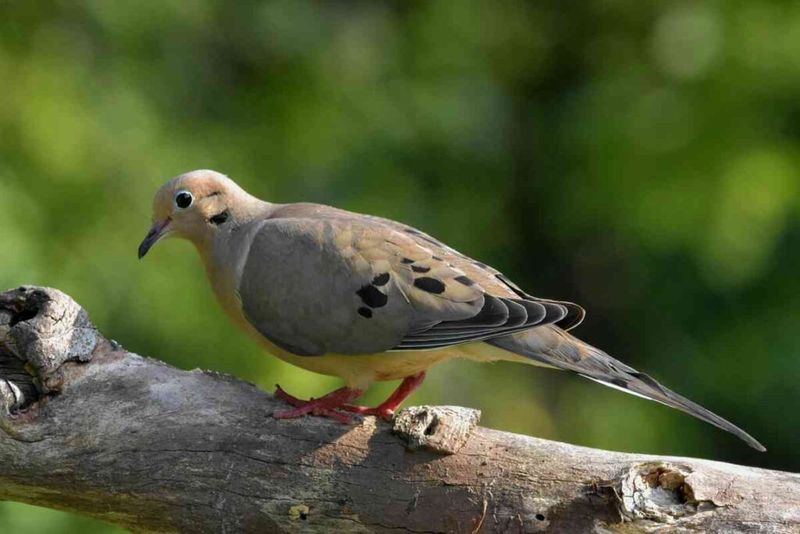
A dove that suddenly flushes from the yard in a burst of whistling wings is not being dramatic. Ground-feeding birds face real risks every time they land in an open space, and mourning doves are well aware of what is around them.
Hawks, outdoor cats, dogs, and snakes are among the most common threats in backyard settings across the state.
Cooper’s hawks and sharp-shinned hawks regularly hunt songbirds and doves in suburban yards. A dove choosing a specific perch or feeding spot may be making a calculated decision about sightlines and escape routes.
Open areas with a clear view in all directions give the dove time to react if a predator approaches. Dense shrubs nearby offer quick cover if needed.
Keeping cats indoors is one of the most effective ways to protect backyard birds. The American Bird Conservancy estimates that outdoor cats remove billions of birds annually across the country.
Even a well-fed cat will hunt instinctively. If you notice a dove acting nervous, freezing, or flushing repeatedly, scan the yard and sky for a predator nearby.
Understanding that safety shapes bird behavior adds real depth to the moment. Your yard is a living ecosystem, and every species in it is navigating its own set of risks and needs.
7. Native Plants Can Make Dove Visits More Likely
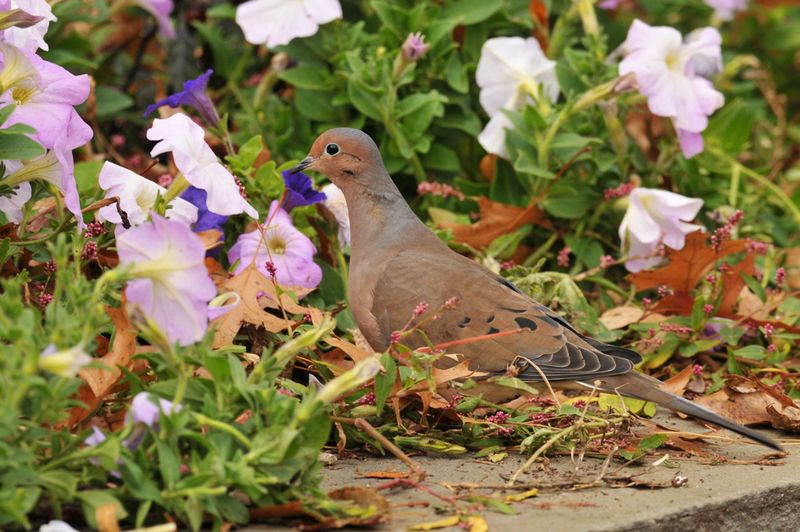
A yard full of native plants does more than look beautiful. It creates a layered habitat that birds, including mourning doves, can actually use.
Native seed-producing plants drop food naturally throughout the year, reducing the need for supplemental feeding and making the yard feel more like natural habitat than a managed lawn.
UF/IFAS and Audubon Florida both recommend incorporating native grasses, wildflowers, and shrubs into home landscapes to support local wildlife. Plants like firebush, native sunflowers, and wiregrass are excellent choices for yards across the state.
They attract insects, produce seeds, and provide cover without requiring heavy maintenance or chemical inputs.
Reducing or eliminating pesticide use is equally important. Pesticides can remove the insects that birds rely on during nesting season and may contaminate seeds and water sources.
A clean, shallow birdbath placed in a visible but sheltered spot gives doves and other birds a place to drink and bathe. Changing the water every day or two keeps it fresh and reduces the risk of mosquito breeding.
None of these changes need to happen all at once. Even small improvements can make your yard more welcoming to the wildlife already living in your neighborhood.
That can be as simple as adding one native plant or placing a simple water dish outside.
8. The Real Meaning Is In The Timing And The Setting
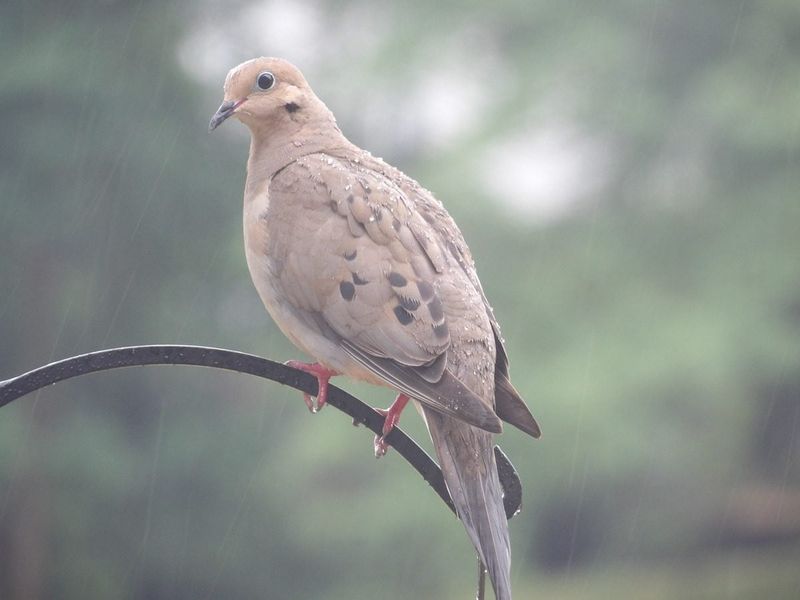
Sometimes the most honest answer to what a mourning dove visit means is also the most personal one. The meaning lives in what you noticed, what you were feeling, and what the moment asked of you.
A dove landing in your yard on a hard morning hits differently than one that passes through on an ordinary Tuesday afternoon.
Context matters in wildlife observation just as much as it does in life. The season, the time of day, what the bird was doing, and your own state of mind all shape how the visit lands.
A dove resting quietly near your garden during a difficult week may feel like a small, unexpected comfort. That feeling is real, even if the dove is simply resting between foraging trips.
Grounding the moment in both emotional response and natural observation is not a contradiction. You can let the visit feel special and still be curious about the bird’s actual behavior.
Both things are true at once. Pay attention to what the dove does, where it goes, and whether it returns.
Let the moment be what it is without needing to prove or explain it. Sharing your yard with wildlife, even briefly, is its own kind of quiet gift.
The dove does not need to carry a message to make the morning feel a little more meaningful.
9. Welcoming The Dove Back Again And Again
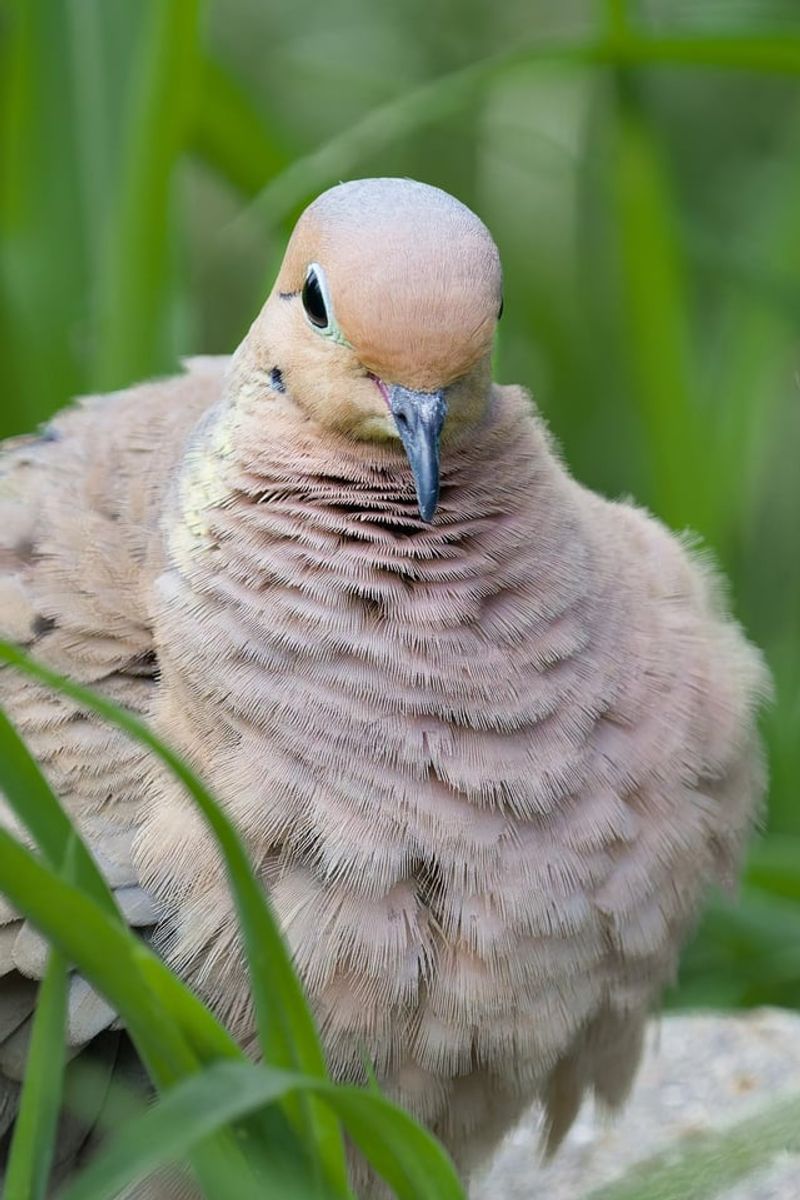
Once a mourning dove finds a yard that meets its needs, it often returns. These birds have strong site fidelity, meaning they tend to use the same feeding and nesting areas repeatedly when conditions remain safe and consistent.
A single visit can become a regular pattern if the yard continues to offer food, water, shelter, and peace.
Building that kind of relationship with a wild bird takes patience and restraint. Resist the urge to approach too closely, offer food by hand, or make sudden movements that could startle the bird.
Observing from a window or a quiet spot across the yard is far more rewarding in the long run. Over time, the dove may become less cautious around your presence, which is a sign of trust earned slowly and respectfully.
Keep feeding areas clean, refresh water sources regularly, and avoid using chemicals near areas where birds forage. Simple, consistent care makes a real difference.
If you want to go further, consider adding one or two Florida native plants each season to build a more layered, wildlife-friendly landscape over time. A yard that supports mourning doves will also support dozens of other species.
The dove that stopped by this morning may be the beginning of something longer, a quiet, ongoing connection between your home and the natural world just outside your door.