Best Places To Hang Hummingbird Feeders In Ohio
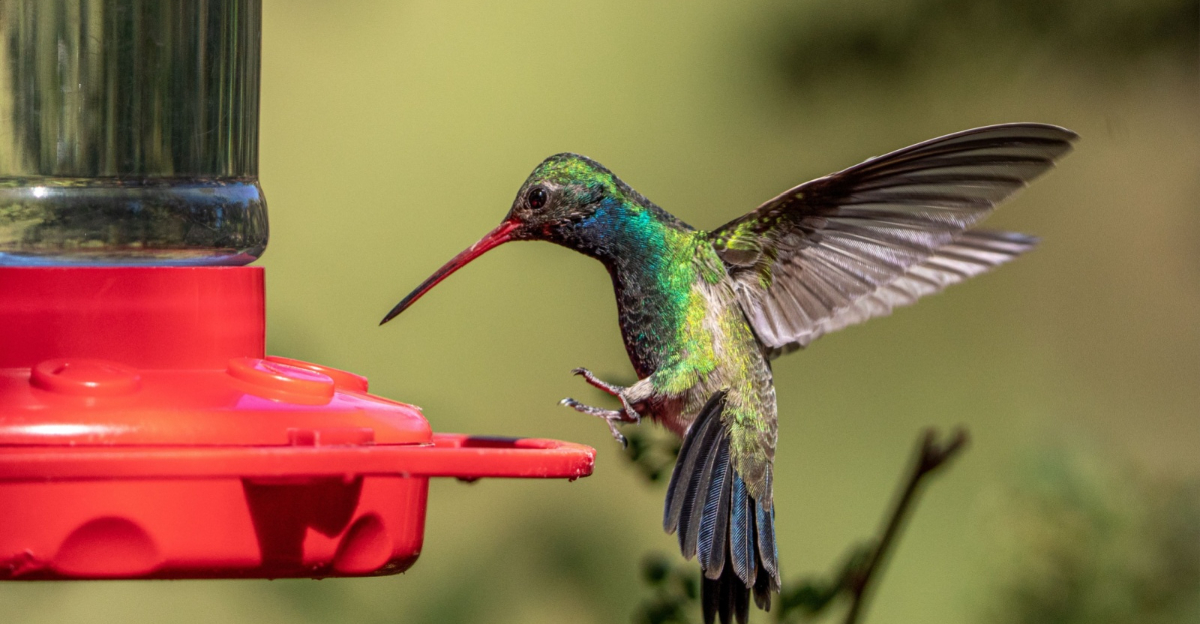
Few backyard moments in an Ohio summer top the first hummingbird sighting of the season.
One second the garden is perfectly still and the next there is a ruby-throated hummingbird hovering in front of the feeder like a tiny, jewel-toned helicopter that runs on pure attitude.
Incredible every single time. But here’s something a lot of Ohio gardeners don’t think about until after the feeder is already hanging: placement matters a lot more than most people realize.
The right spot can mean the difference between a feeder that gets visited all summer and one that gets ignored after the first week.
Wind exposure, afternoon heat, window reflections, nearby flowers, cat traffic, and even feeder visibility from your favorite chair all play a role.
Get the location right and hummingbird season in Ohio becomes genuinely unforgettable.
1. Place Feeders Near Nectar-Rich Flowers
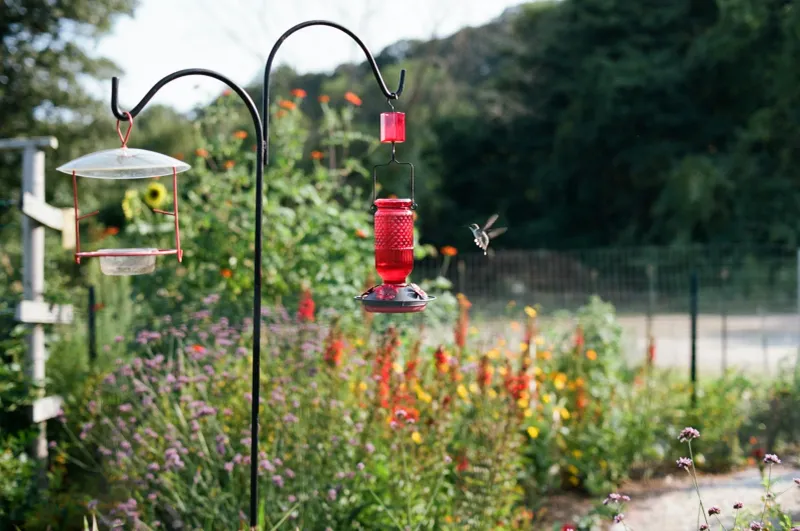
Summer flower beds in Ohio are one of the most reliable ways to attract ruby-throated hummingbirds to a new feeder. When hummingbirds arrive in your yard, they scan for color and movement, and a cluster of tubular red or orange blooms acts like a natural signal.
Placing your feeder within a few feet of nectar-producing plants like bee balm, salvia, cardinal flower, or trumpet vine gives birds two reasons to visit the same corner of your yard.
Hummingbirds that are already working a flower border will often notice a nearby feeder more quickly than one hanging in an open, unplanted area.
Ohio gardeners who combine container plantings with a mounted feeder on a shepherd’s hook nearby tend to see faster initial visits from passing hummingbirds.
Native plantings are especially helpful because they attract the insects hummingbirds also depend on for protein.
You do not need a large garden to make this work. Even a patio pot of salvia or a hanging basket of fuchsia near your feeder can help draw attention.
Try positioning the feeder so it is visible from the flower bed but not tangled inside the foliage, giving hummingbirds clear, easy access without having to navigate around stems or leaves.
2. Choose Light Shade During Hot Afternoons
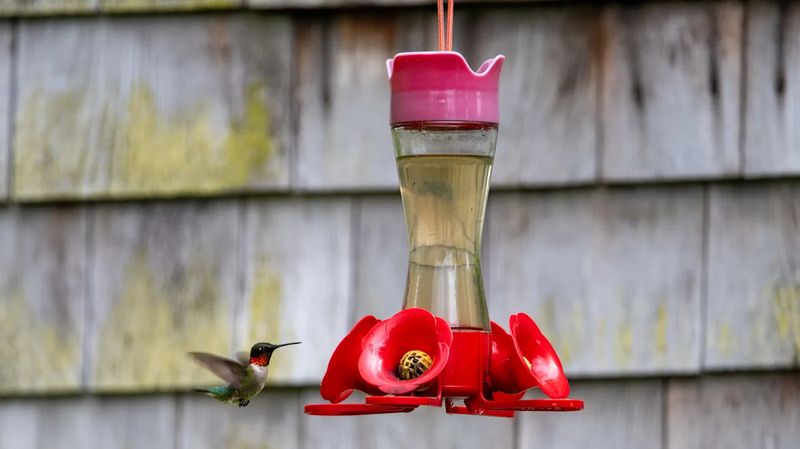
Shaded porches and tree canopies offer something that open sunny patios often cannot during an Ohio July: cooler nectar. When a feeder hangs in direct afternoon sun for hours, the sugar-water solution inside can ferment or spoil faster than most people expect.
That means more frequent cleaning and refilling, and it can also mean hummingbirds encounter nectar that has already begun to turn before you have had a chance to swap it out.
Light shade, meaning a spot that gets morning sun but is sheltered from the strongest afternoon rays, tends to keep nectar fresher longer without making the feeder too dark or hard to find.
The east side of a house, under the partial canopy of a small ornamental tree, or near the shaded edge of a pergola are all reasonable options in a typical Ohio residential yard.
Avoid placing feeders in spots that are fully shaded all day, since hummingbirds prefer to be able to see clearly when approaching and departing. A little filtered light still helps the feeder remain visible.
Your Ohio Garden Changes Every Week. Your Plan Should Too.
Gardening in Ohio changes quickly throughout the season. Every Friday you’ll receive a simple weekly plan showing exactly what to plant, prune, fertilize, harvest, and protect so you never miss the right timing.
During Ohio’s hottest weeks in July and August, even a modest amount of afternoon shade can noticeably extend how long your nectar stays in good condition between cleanings.
3. Hang Feeders Near Safe Perching Spots
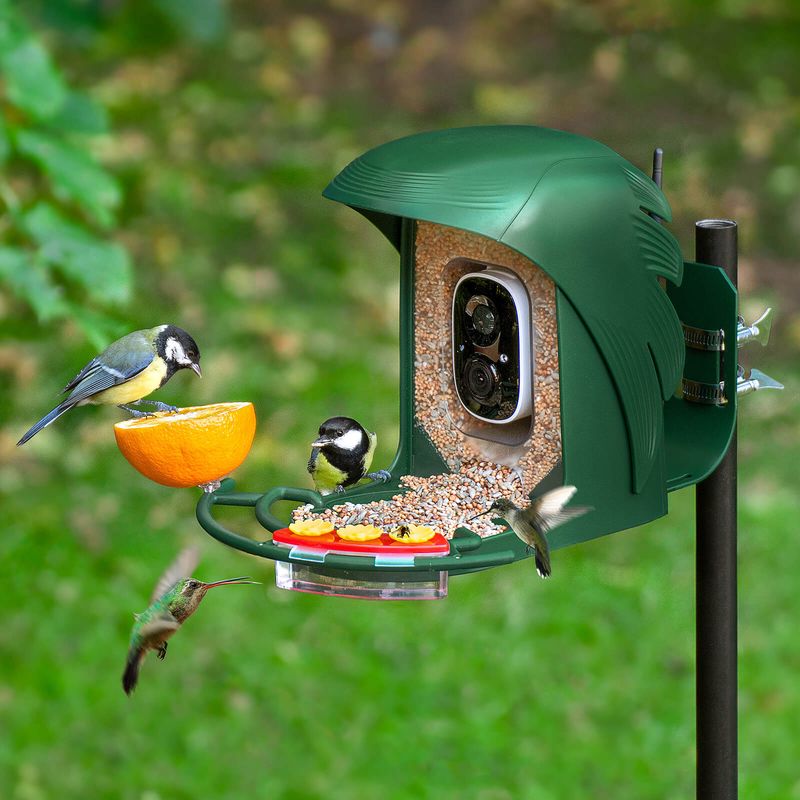
Quick flashes of green and red near a thin branch are often the first sign that a ruby-throated hummingbird has claimed a favorite perch in your yard.
Hummingbirds spend more time perching than most people realize, and having a small branch, trellis wire, or garden stake within a few feet of the feeder gives them a place to rest, watch for rivals, and digest between feeding visits.
When you choose a feeder location in an Ohio yard, look for spots where a small shrub, young tree, or sturdy vine trellis is already nearby. Roses, viburnums, and small ornamental trees like serviceberry all work well.
The perch does not need to be elaborate. Even a simple shepherd’s hook with a small decorative branch attached nearby can encourage hummingbirds to linger longer in one area of your garden.
Perching spots also serve a practical purpose during territorial behavior.
Male ruby-throated hummingbirds are known to guard feeders from a nearby high point, so giving them a visible spot to monitor from can actually reduce the amount of active chasing that disrupts other birds from feeding.
Thoughtful placement near natural perching options makes your Ohio feeder setup feel more like a habitat than just a food station.
4. Keep Feeders Away From Reflective Windows
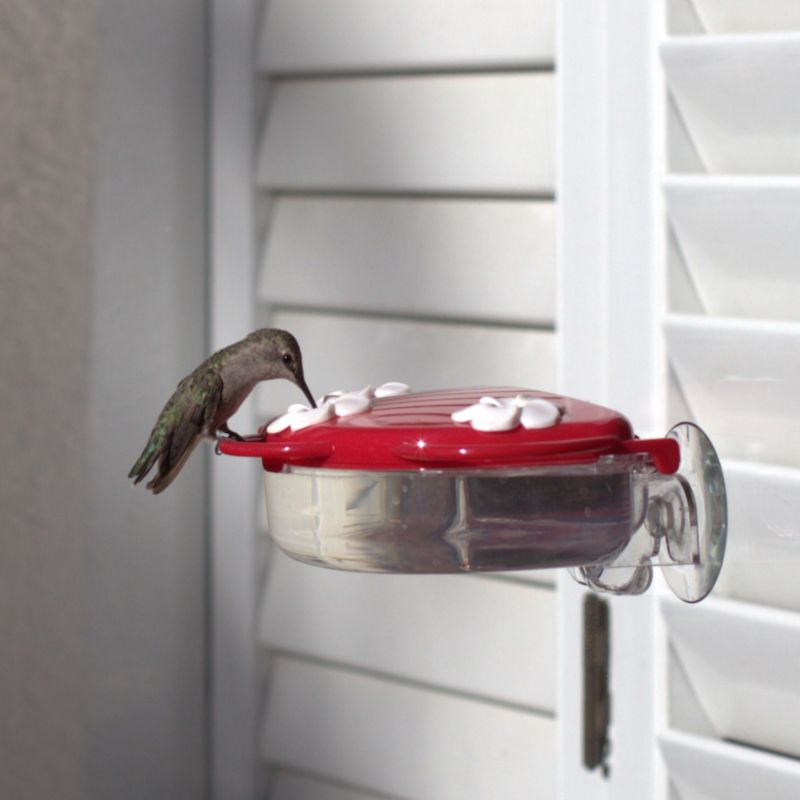
Reflective windows are one of the more overlooked hazards in Ohio backyards for small birds, including hummingbirds. When glass reflects sky, clouds, or surrounding trees, birds can mistake the reflection for open space and fly toward it at full speed.
For hummingbirds, which move exceptionally fast, even a short-distance collision with a window can cause serious harm.
Feeder placement plays a key role in reducing this risk. Hanging a feeder either very close to a window, within about three feet, or farther away, beyond ten feet, tends to reduce the speed at which a bird might approach the glass.
The logic is simple: a feeder placed very close means a bird leaving it cannot build up much speed before reaching the window, while one placed far away gives the bird enough space to see the glass before impact.
Ohio homeowners who notice hummingbirds frequently hovering near windows may want to add window decals, screens, or exterior tape patterns to break up the reflection.
Pairing smart feeder placement with one of these visual deterrents on nearby glass makes the combination more effective.
Moving a feeder just a few feet to the side, away from a direct window line, is often a straightforward first step that costs nothing and makes a meaningful difference.
5. Raise Feeders Above Easy Cat Reach
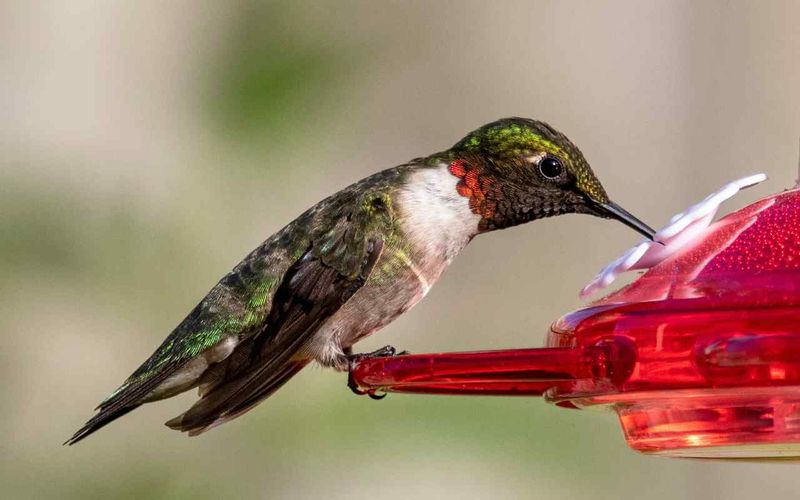
Cats are patient, quiet, and surprisingly quick, and outdoor cats in Ohio neighborhoods are one of the more common threats to backyard birds at low-hanging feeders.
Hummingbirds hover in place while feeding, which makes them briefly predictable in a way that other birds are not.
A feeder positioned too close to the ground or near a fence rail gives a crouching cat a much easier opportunity than one placed high and in the open.
A good general approach is to hang feeders at least five to six feet off the ground, away from fence tops, deck railings, or low tree branches that a cat could use as a launching point.
A tall shepherd’s hook placed in an open area of the yard, away from structures a cat could climb, tends to work well for most Ohio residential settings.
If you use a pole-mounted feeder, adding a squirrel baffle below the feeder can also help deter cats from climbing the pole.
Container gardeners on apartment balconies in Ohio cities can use a railing-mounted bracket set at a height and angle that keeps the feeder away from easily reached ledges.
The goal is simply to remove the easy opportunity rather than making the yard completely off-limits, which is rarely practical.
Small adjustments to feeder height can make a noticeable difference in how comfortably hummingbirds feed.
6. Pick A Spot That Is Easy To Clean
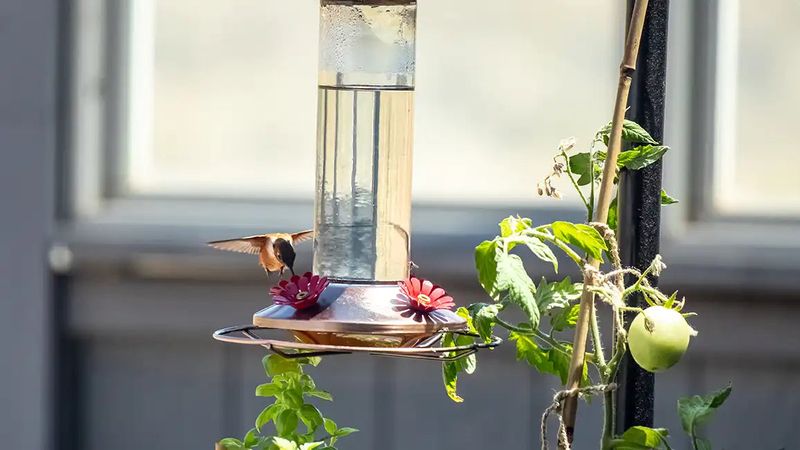
Cleaning a hummingbird feeder is not optional, and how often you do it depends partly on where the feeder hangs. In warm Ohio summer weather, nectar can begin to ferment in as little as two to three days, especially when a feeder sits in a sunny location.
Choosing a spot that makes the cleaning process quick and convenient means you are far more likely to keep up with it regularly, which matters more than almost any other part of feeder care.
Think about whether you can easily reach the feeder without dragging out a ladder or stepping over a garden bed every time.
A hook near a porch door, a bracket mounted at a comfortable arm height on a deck post, or a shepherd’s hook positioned just off a walkway all make the routine much more manageable.
The easier the access, the more often the cleaning actually happens.
Ohio summers can be humid and warm for weeks at a stretch, which accelerates how quickly nectar turns cloudy or develops mold inside the feeder ports.
Rinsing with warm water and scrubbing the ports and reservoir thoroughly every few days is a reasonable goal.
When your feeder hangs somewhere convenient rather than tucked into a hard-to-reach corner, you remove one of the most common reasons homeowners fall behind on this important maintenance task.
7. Use Sheltered Areas Away From Strong Wind
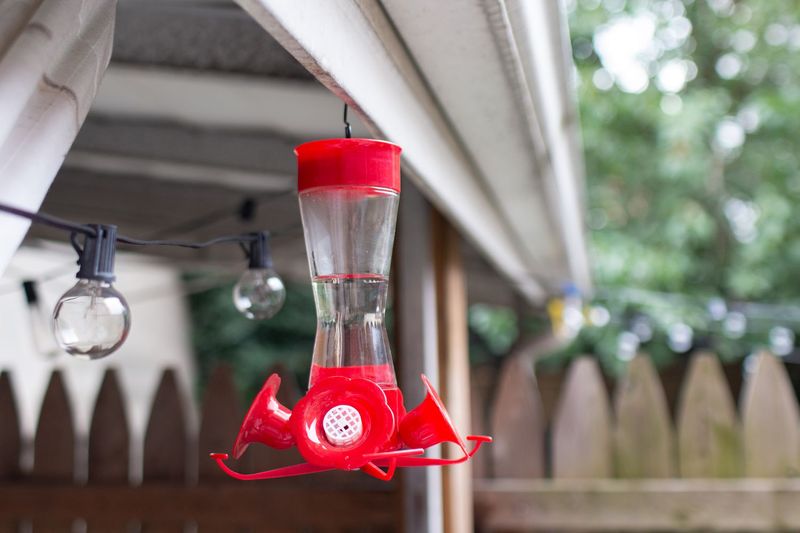
Breezy corners of an Ohio yard might feel pleasant on a hot afternoon, but a feeder that swings and spins in the wind is harder for a hummingbird to use comfortably.
Strong gusts can splash nectar out of the feeding ports, leaving the reservoir lower than expected and making the feeder messy and less inviting.
Over time, wind exposure also tends to speed up nectar spoilage by warming and agitating the liquid more than a sheltered spot would.
Look for spots near a fence line, a tall hedge, the side of a garden shed, or the corner of a house where the structure naturally blocks prevailing winds without creating full shade.
These transitional spots often offer a good combination of light, protection, and visibility.
In Ohio, where spring and early summer storms can bring gusty conditions, a sheltered feeder location helps keep nectar in the bottle and the feeder steady enough for small birds to hover and feed without difficulty.
A feeder that hangs relatively still tends to be easier for hummingbirds to approach with confidence. If you notice a feeder swinging significantly on a breezy day, try moving it to a spot with more natural windbreak nearby.
Even shifting the hook a few feet closer to a structure can reduce motion noticeably and make the feeding station feel calmer for visiting birds.
8. Hang One Where You Can Watch Easily
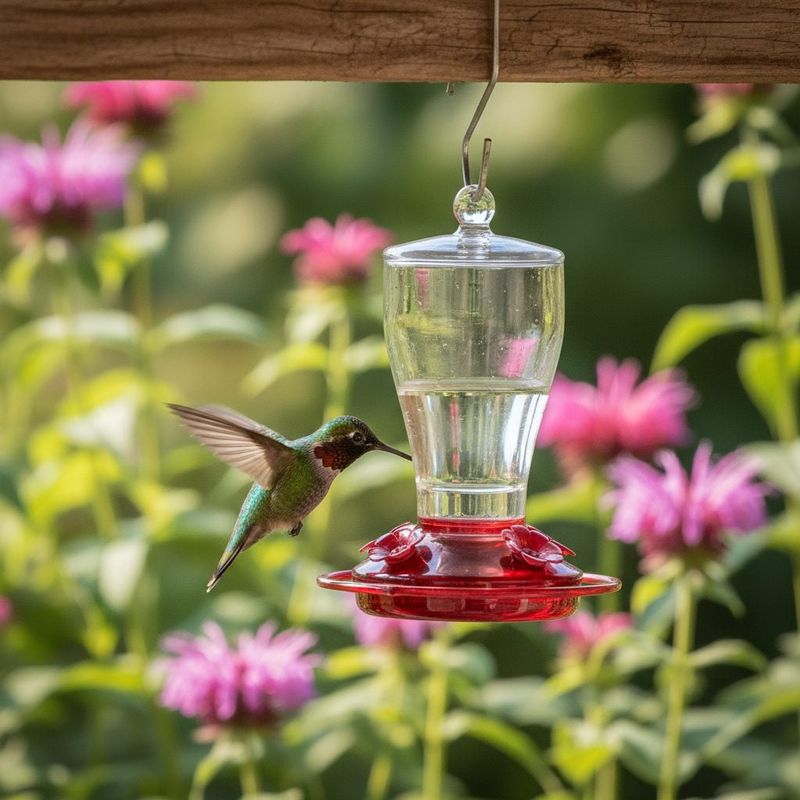
One of the genuine pleasures of keeping a hummingbird feeder in an Ohio yard is watching these birds up close, and placement matters a lot for how enjoyable that experience can be.
A feeder tucked behind a dense shrub or hung far down a side yard might attract hummingbirds, but you will rarely see them from inside the house or from a favorite porch chair.
Hanging a feeder within comfortable viewing distance of a kitchen window, a sliding glass door, or a screened porch is a small adjustment that pays off every single day during hummingbird season.
Many Ohio homeowners find that placing a feeder roughly six to ten feet from a window they look through regularly turns ordinary mornings into something genuinely entertaining.
You get to watch feeding behavior, territorial displays, and the occasional hovering standoff without going outside.
Natural light helps here too. A feeder positioned where morning or midday light falls on it from the side tends to catch the iridescent colors of a ruby-throated hummingbird’s throat feathers in a way that a backlit or shadowed feeder simply does not.
Thinking about your own sightline when choosing a location is not selfish; it actually encourages you to spend more time watching, which means you notice problems like empty feeders or cloudy nectar sooner and respond faster.
9. Add A Second Feeder To Reduce Chasing
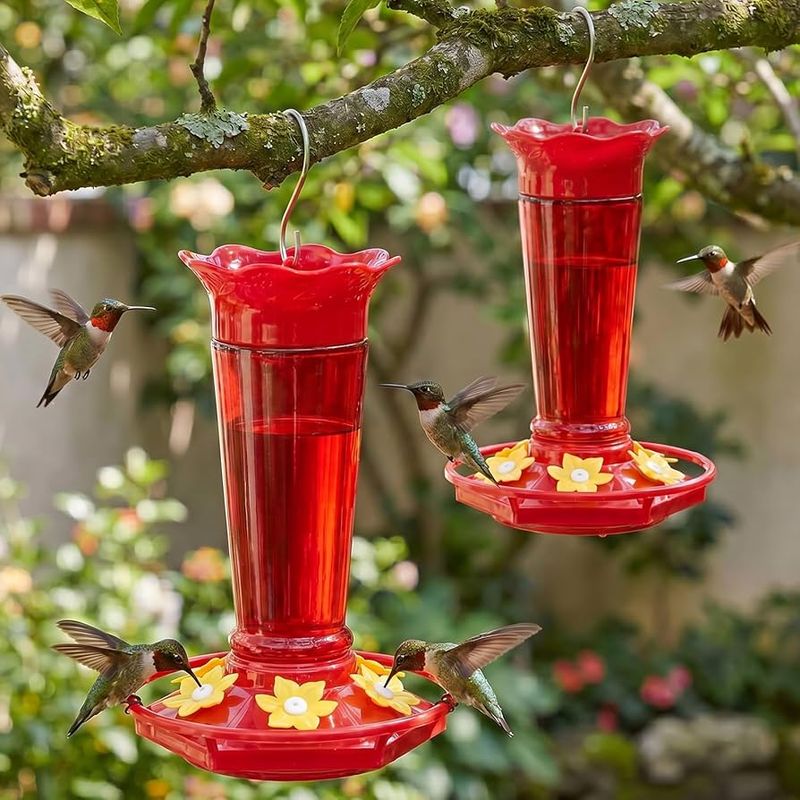
Anyone who has watched a male ruby-throated hummingbird in an Ohio yard during July knows how aggressively these small birds can guard a single feeder.
One dominant bird may spend more energy chasing others away than actually feeding, which means fewer hummingbirds get a chance to use the feeder you carefully placed and maintain.
Adding a second feeder is one of the most practical ways to ease that tension without complicating your setup too much.
The key is distance and visibility. Two feeders placed right next to each other are easy for one territorial bird to monitor and defend.
Spreading them out, ideally on opposite sides of the yard or at least far enough apart that one bird cannot easily see both at the same time, makes it harder for a single hummingbird to control both stations.
This setup tends to encourage more overall feeding activity and allows younger or less dominant birds to visit without constant interruption.
In smaller Ohio yards, even moving a second feeder around the corner of a porch or to the far end of a flower border can create enough separation to be useful. You do not need a large property to benefit from this approach.
Two modest feeders in well-chosen spots often attract more consistent hummingbird visits throughout the day than one premium feeder in a single location ever could on its own.