The Arizona Plants That Help Keep Your Patio Cooler In Peak Summer
Summer can make a patio feel like the last place anyone wants to spend time. Morning coffee turns into a quick trip outside, and evenings often begin with waiting for the air to cool down.
Even a comfortable outdoor space can lose its appeal when heat builds up day after day.
Plants can do much more than brighten the landscape with flowers and greenery. Some create welcome shade, soften the glare from nearby surfaces, and help make sitting outside more pleasant.
A few even become valuable parts of the patio instead of simple decorations.
Many landscapes in Arizona include plants chosen for exactly those reasons. Some grow into light shade, others cool the area around them, and several continue looking great through intense summer heat.
A few thoughtful additions can completely change how a patio feels during the hottest weeks of the year.
1. Desert Willow Adds Light Shade Without Feeling Heavy
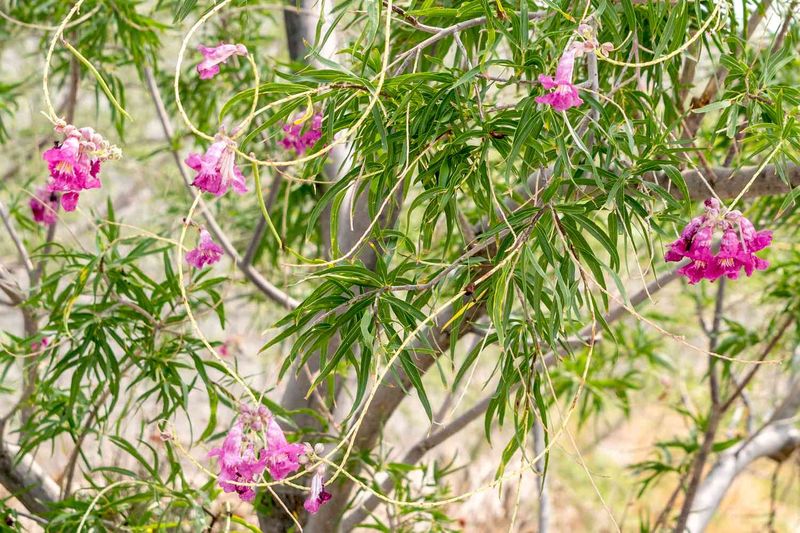
Shade without heaviness is a real thing, and desert willow delivers it better than almost any other tree suited to dry climates. Its canopy is open and airy, filtering harsh afternoon sun without completely blocking airflow.
That combination matters a lot when you want relief without turning your patio into a dark corner.
Desert willow grows quickly once established, often reaching 15 to 25 feet tall. It produces long, narrow leaves that move easily in a breeze, helping circulate air across your patio surface.
From late spring through fall, it also covers itself in trumpet-shaped pink, purple, or white flowers that attract hummingbirds regularly.
Watering needs drop significantly after the first year or two. Established trees handle dry stretches well, though they appreciate a deep soak every few weeks during peak heat.
Avoid overwatering. Soggy roots cause more problems than drought ever would with this plant.
Placement matters with desert willow. Position it on the west or southwest side of your patio to intercept afternoon sun, which is typically the most intense.
A single mature tree can shade a sizeable patio area without making the space feel closed in. Its light canopy keeps the area feeling open while still dropping the temperature noticeably.
It is one of the most underused cooling trees available in desert Southwest landscaping.
2. Texas Sage Handles Heat With Very Little Water
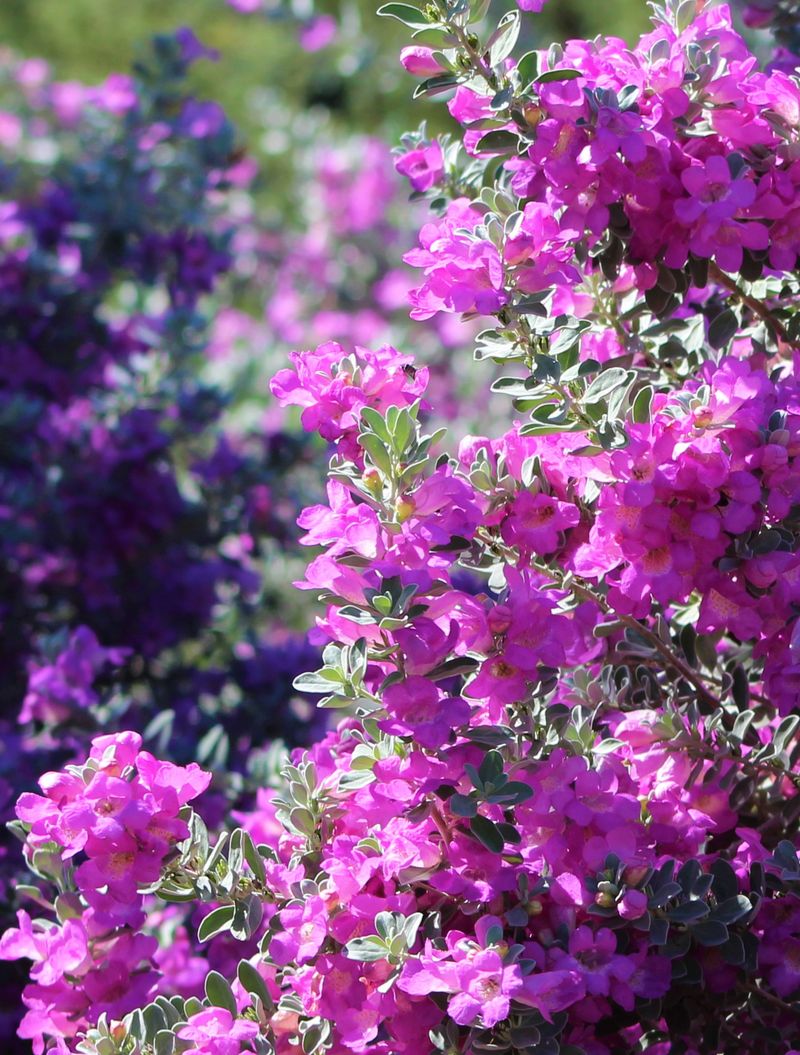
Right after a monsoon rain, Texas sage explodes into purple blooms almost overnight. That natural timing is one reason desert gardeners love it, but the real value for patios goes beyond the flowers.
As a large, dense shrub, it blocks low-angle sun and reflects less heat than bare walls or gravel.
Texas sage thrives on neglect. Once established, it needs almost no supplemental water in most desert Southwest climates.
It pulls through summer heat that would stress most ornamental plants. Minimal pruning keeps it tidy, but it naturally forms a rounded shape without much intervention.
Mature plants reach four to eight feet tall and wide depending on the variety. That size makes them practical as a heat-blocking screen along the west or south edge of a patio.
Your Arizona Garden Changes Every Week. Your Plan Should Too.
Gardening in Arizona changes quickly throughout the season. Every Friday you’ll receive a simple weekly plan showing exactly what to plant, prune, fertilize, harvest, and protect so you never miss the right timing.
They slow down hot afternoon winds while still allowing some air movement through the foliage.
Planting in full sun is non-negotiable. Texas sage performs poorly in partial shade and becomes leggy and sparse.
Good drainage is equally important. Avoid planting in low spots where water collects after rain.
Amended soil is generally not needed and can actually reduce the plant’s heat and drought tolerance over time.
For a low-effort, high-impact patio buffer, it is hard to match what Texas sage offers in dry, sun-heavy environments like the desert Southwest.
3. Lady Banks Rose Covers Pergolas With Cooling Shade
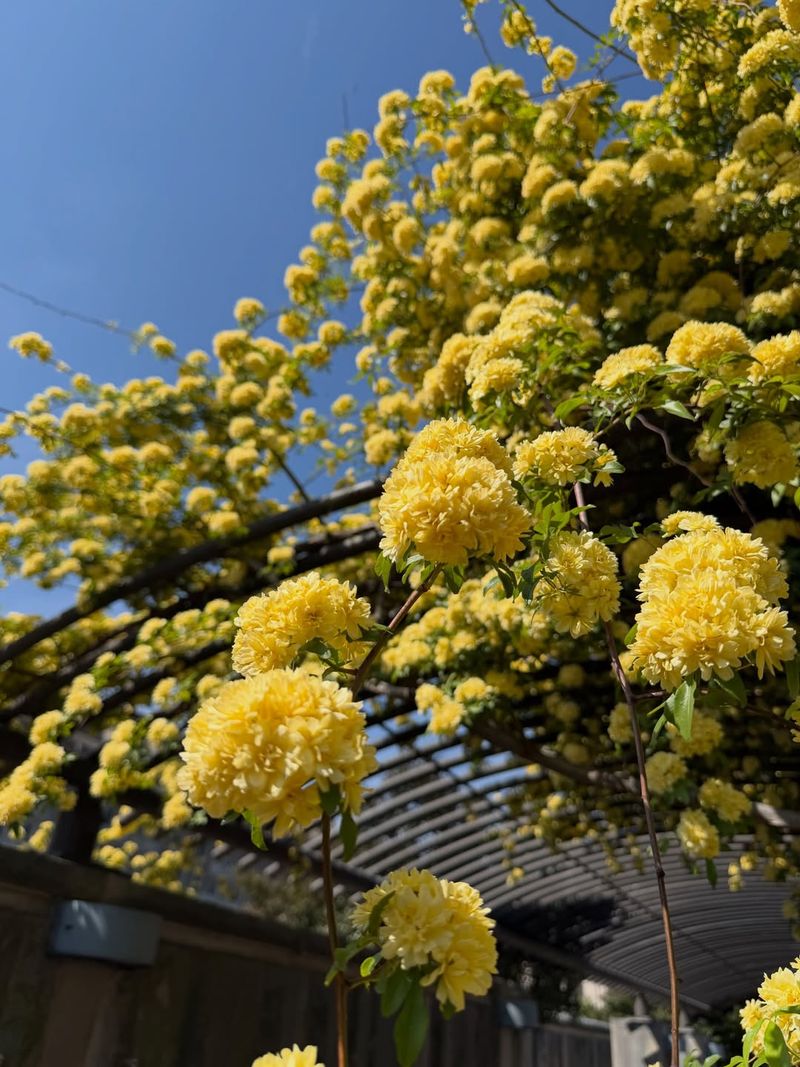
Few vines work as fast or as dramatically as Lady Banks rose when trained over a pergola. Within a few seasons, it can completely cover a structure and create a dense, living roof above your patio.
That overhead layer of foliage blocks direct sun and drops surface temperatures significantly on hot afternoons.
Lady Banks rose is nearly thornless, which makes it practical in high-traffic areas. It blooms heavily in spring with clusters of small yellow or white flowers, then settles into a deep green canopy through summer.
That summer canopy is exactly what makes it useful as a cooling tool.
Growth is vigorous. Plants can reach 20 feet or more and spread wide when given a sturdy structure to climb.
Regular pruning after the spring bloom keeps it manageable and prevents the weight from stressing pergola frames. Skipping pruning for multiple years can lead to very heavy wood buildup.
Water needs are moderate compared to other roses. Established plants handle dry spells reasonably well, though they benefit from consistent deep watering during peak summer.
Root zone mulching helps retain moisture and keeps soil temperature lower. Lady Banks rose performs best in full sun with good air circulation.
Avoid planting it against walls that trap heat and restrict airflow.
Given the right structure and position, it turns a bare pergola into one of the most comfortable spots on your property during summer months.
4. Arizona Yellow Bells Thrive In Full Sun
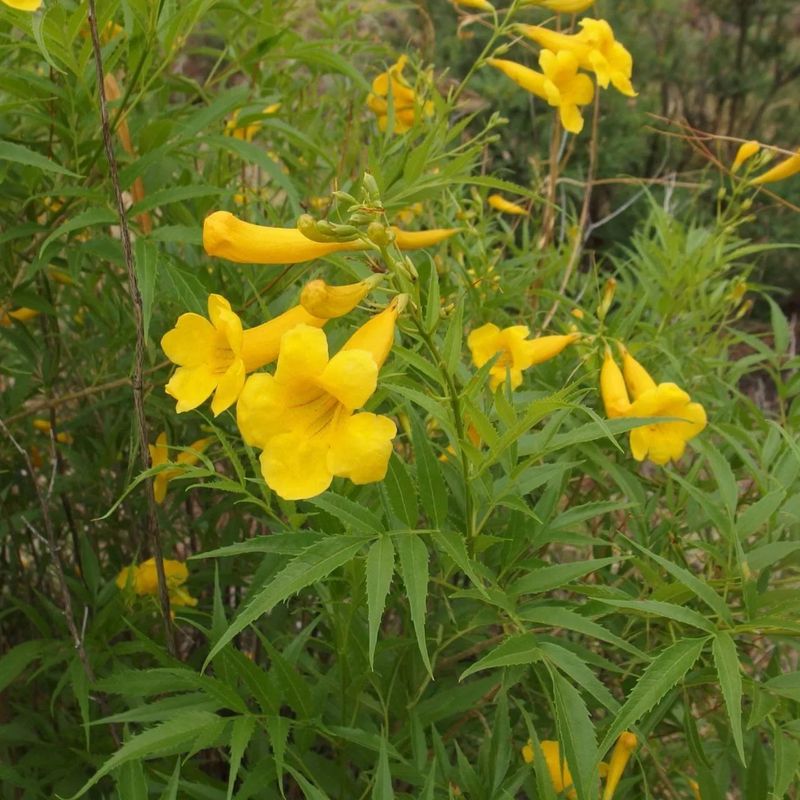
Bright yellow flowers against a blazing summer sky is not something most plants manage to pull off. Arizona yellow bells do it without complaint, blooming heavily from summer straight through fall when most ornamental shrubs have long since given up.
That persistence alone makes it worth planting near patios.
Yellow bells, also called Tecoma stans, grows into a large, rounded shrub reaching six to eight feet tall in favorable conditions. Its dense foliage provides solid side screening, blocking radiant heat from walls, fences, and hardscape surfaces nearby.
Positioned on a west-facing patio edge, it intercepts intense afternoon sun before it hits your seating area.
Water requirements drop sharply after the first growing season. Established plants push through dry stretches with little supplemental irrigation.
During extreme heat waves, a deep soak every ten to fourteen days keeps growth strong without encouraging excessive water use.
Hummingbirds visit the tubular flowers constantly through summer, which adds life to any patio setting. Pruning in late winter or early spring encourages fresh, dense growth before summer begins.
Hard pruning every few years prevents the base from becoming too woody and keeps the plant producing flowers on newer growth. Yellow bells performs best when planted in well-draining soil with full sun exposure.
It handles reflected heat from walls and pavement better than most flowering shrubs, making it a reliable choice for desert Southwest patios that need both color and practical heat buffering.
5. Hopbush Forms A Dense Privacy Screen
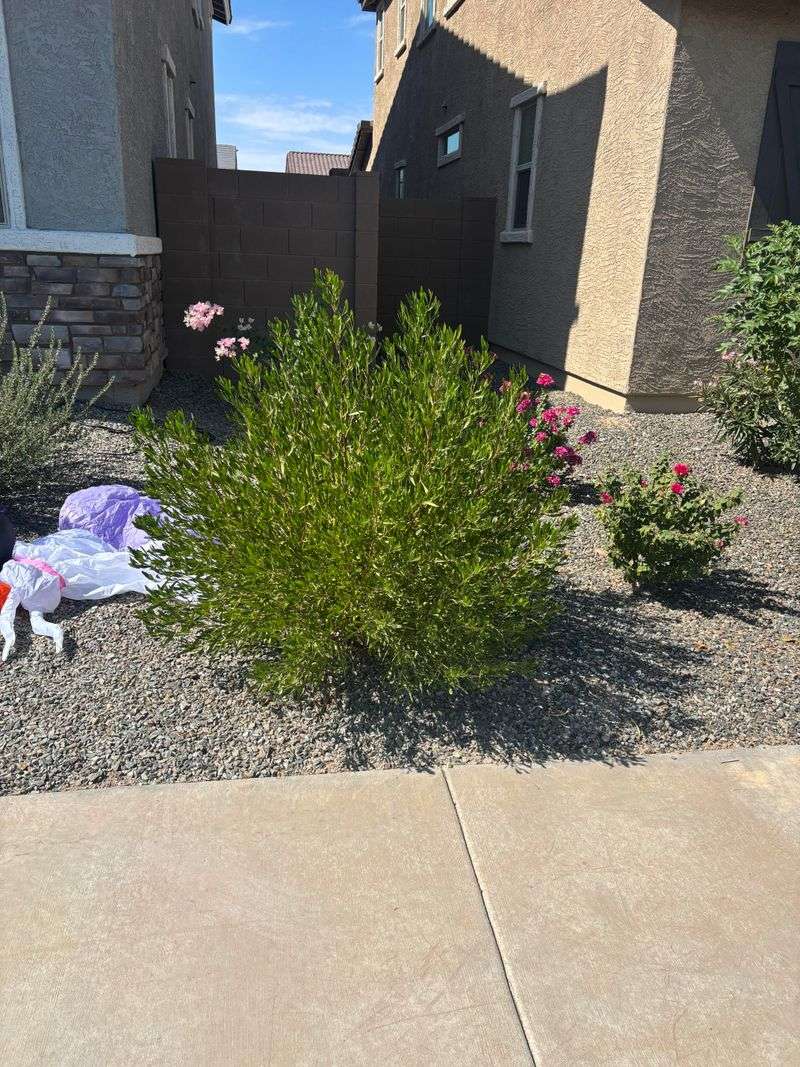
Not every patio problem is about overhead sun. Sometimes the heat comes sideways, radiating off a neighboring wall, a concrete fence, or bare gravel on the property edge.
Hopbush solves that specific problem better than most plants its size. It forms a thick, upright screen that blocks both sight lines and radiant heat transfer.
Hopbush grows fast and dense, typically reaching six to fifteen feet tall depending on variety and water availability. The foliage is glossy and slightly leathery, which helps it handle direct sun without scorching.
Bronze or purple-leaved varieties add visual interest while performing the same screening function as green-leaved types.
Water needs are low once roots establish, usually within the first full growing season. Deep watering once or twice a month during summer keeps growth steady without promoting excessive lushness that can attract pests.
Avoid overhead watering when possible, as wet foliage in intense heat can cause spotting on some varieties.
Spacing matters when planting hopbush as a screen. Placing shrubs four to five feet apart allows canopies to merge within two to three growing seasons, forming a continuous barrier.
Pruning once a year keeps the shape tight and prevents the lower branches from thinning out. Hopbush tolerates reflected heat from walls and pavement, making it one of the more versatile screening options for desert Southwest patios.
It handles the tough spots other plants struggle with, filling gaps where heat and exposure are most intense.
6. Bamboo Muhly Adds Soft Texture Around Patios
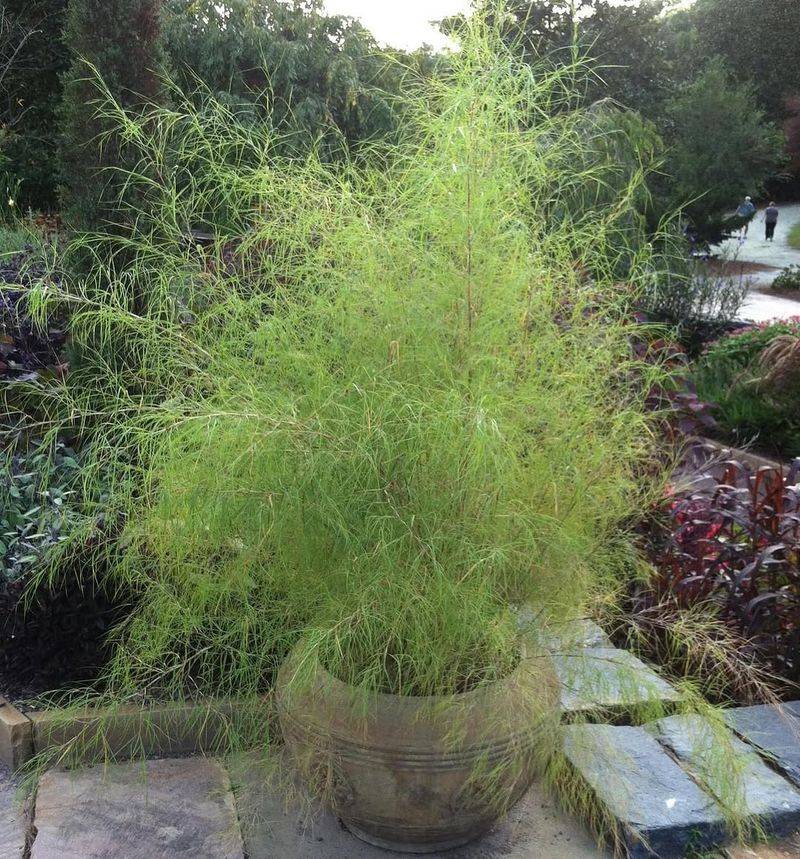
Hard surfaces dominate most desert patios. Stone, concrete, gravel, and tile all absorb heat and radiate it back through the evening.
Breaking up those surfaces with soft, textural plants like bamboo muhly changes how the space feels, both visually and thermally. Grass clumps absorb heat rather than reflecting it.
Bamboo muhly forms graceful, arching clumps reaching three to four feet tall. In fall, it sends up feathery pink to reddish plumes that catch late afternoon light beautifully.
That combination of texture and seasonal color makes it one of the more attractive low-maintenance options for patio borders.
Water requirements stay low after establishment. Bamboo muhly handles dry stretches well and actually performs better in lean conditions than in overly rich or irrigated soil.
Too much water or fertilizer causes floppy, open clumps instead of the tight, upright form that makes it visually appealing.
Planting in clusters rather than single specimens creates a more effective heat-absorbing border. Groups of three to five plants spaced two feet apart form a continuous soft edge along patio perimeters.
Cut clumps back hard in late winter or very early spring before new growth begins. Leaving old growth through winter protects the crown during cooler months.
Bamboo muhly thrives in full sun and tolerates reflected heat from nearby hardscape.
It is one of the most adaptable ornamental grasses for desert Southwest patio settings, requiring minimal care while contributing meaningfully to a cooler outdoor environment.
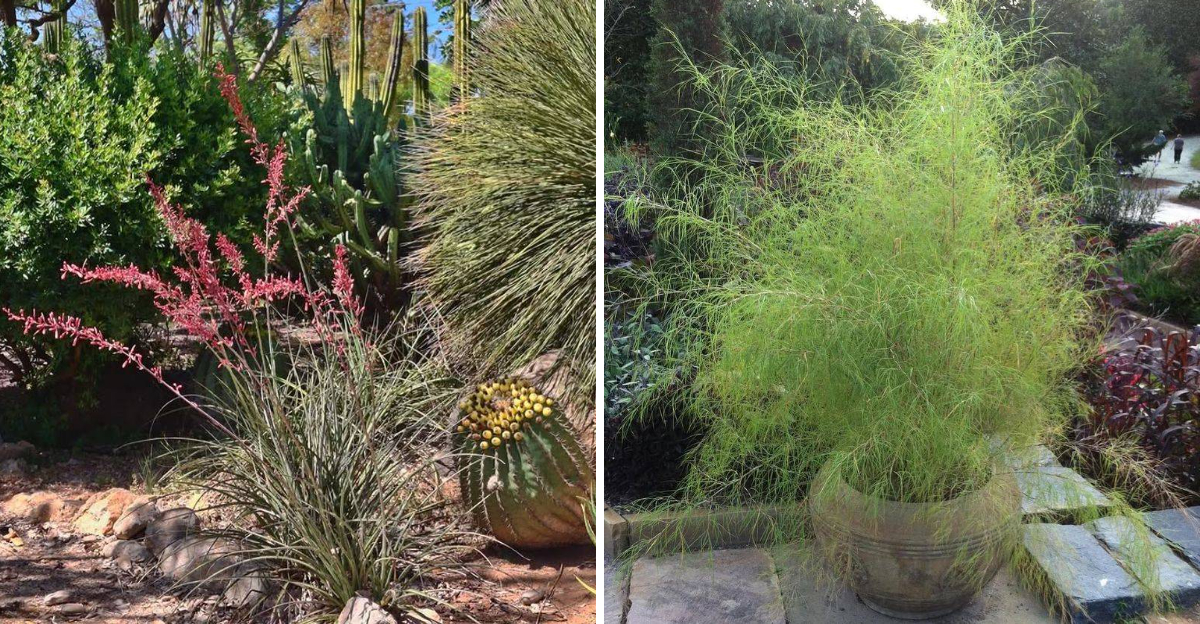
7. Red Yucca Brings Color Through Extreme Heat
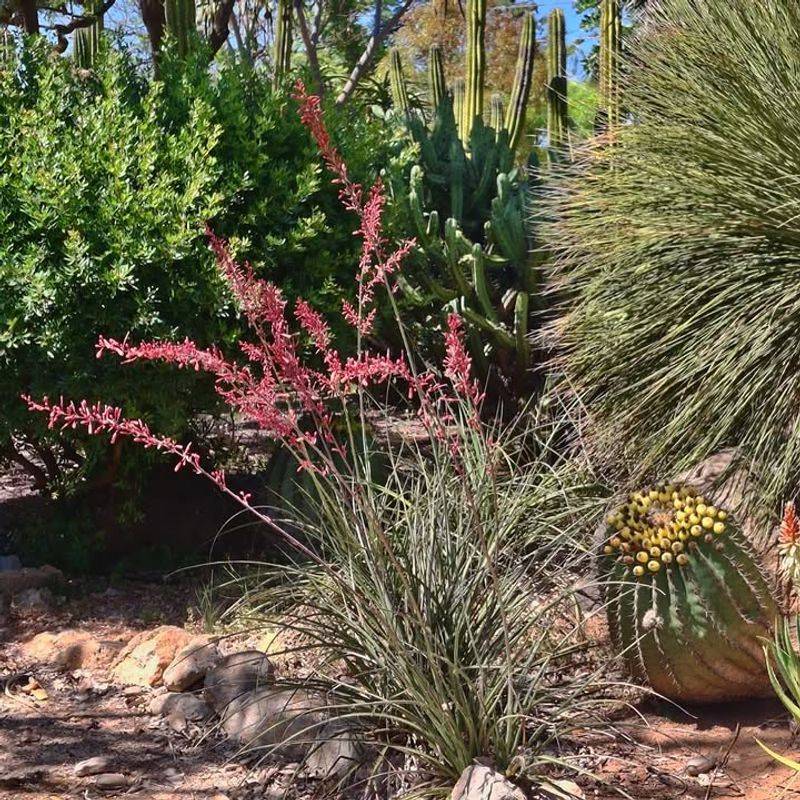
When temperatures push past 105 degrees and everything else looks exhausted, red yucca keeps producing flower spikes without any visible stress.
That reliability through extreme heat is exactly why it earns a spot near patios that need color without constant maintenance. It simply does not quit.
Red yucca, or Hesperaloe parviflora, is not a true yucca despite the name. It forms soft, grass-like clumps with narrow, arching leaves that reach two to three feet tall.
Above those clumps, tall flower stalks shoot up to five or six feet, covered in coral-red to pink tubular blooms from late spring through midsummer.
Hummingbirds are drawn to the flowers consistently. Orioles also visit regularly, which adds unexpected bird activity to patio spaces.
Beyond the visual appeal, the plant itself absorbs heat rather than reflecting it, and its low profile means it does not block airflow across the patio surface.
Water needs are minimal once established. Monthly deep watering through peak summer is typically sufficient in most desert Southwest climates.
Avoid planting in low spots with poor drainage, as standing water around the crown causes rot. Full sun exposure produces the best flowering.
Partial shade is tolerated but usually results in fewer blooms and a slightly looser plant form.
Red yucca works well planted in clusters near patio edges, along low walls, or tucked between larger shrubs to fill gaps with color and texture through the hottest months of the year.
8. Blue Palo Verde Creates Welcome Afternoon Shade
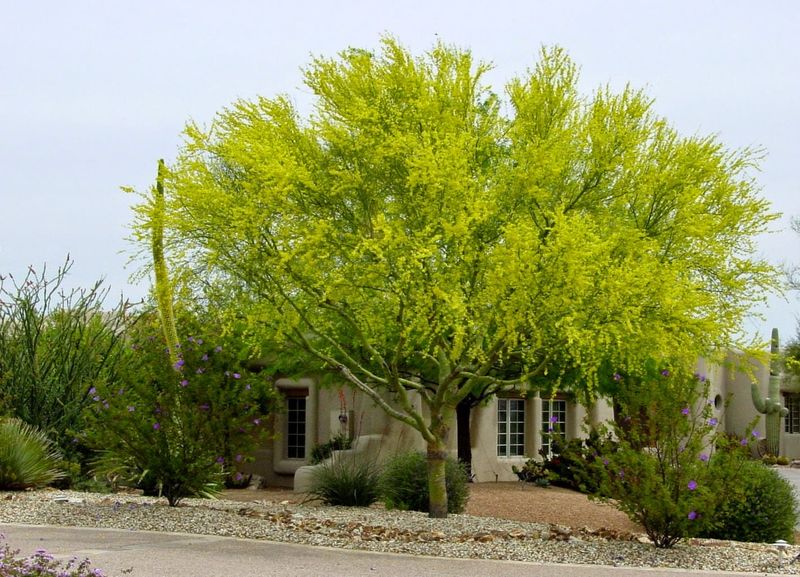
Green bark on a tree is unusual enough to stop people mid-step. Blue palo verde carries that distinctive look year-round, but its real value for patio spaces comes from what it does overhead.
A mature palo verde casts dappled afternoon shade that drops patio surface temperatures meaningfully without blocking every trace of light.
Blue palo verde grows into a broad, spreading canopy reaching 25 to 30 feet wide at maturity. That spread covers significant patio area from a single well-placed tree.
In spring, the entire canopy turns brilliant yellow with tiny flowers, creating one of the most striking seasonal displays in desert Southwest landscapes.
The dappled quality of palo verde shade is important. Unlike solid canopy trees, it allows some light to filter through, which keeps the patio from feeling dark or closed in.
That filtered light also means the area beneath stays slightly warmer than deep shade, which can actually be preferable on cooler mornings.
Established trees need very little supplemental water. Deep watering every three to four weeks through summer supports healthy growth without overwatering.
Staking young trees during the first year helps develop a strong root system before the canopy adds significant weight. Pruning should focus on removing crossing branches and maintaining clearance above the patio surface.
Avoid heavy pruning during summer heat. Placed on the southwest corner of a patio, a single blue palo verde intercepts the harshest afternoon sun and makes outdoor time genuinely comfortable even during the peak of summer.