These 10 Shade Garden Design Tips Make Oregon Yards Feel Lush And Beautiful
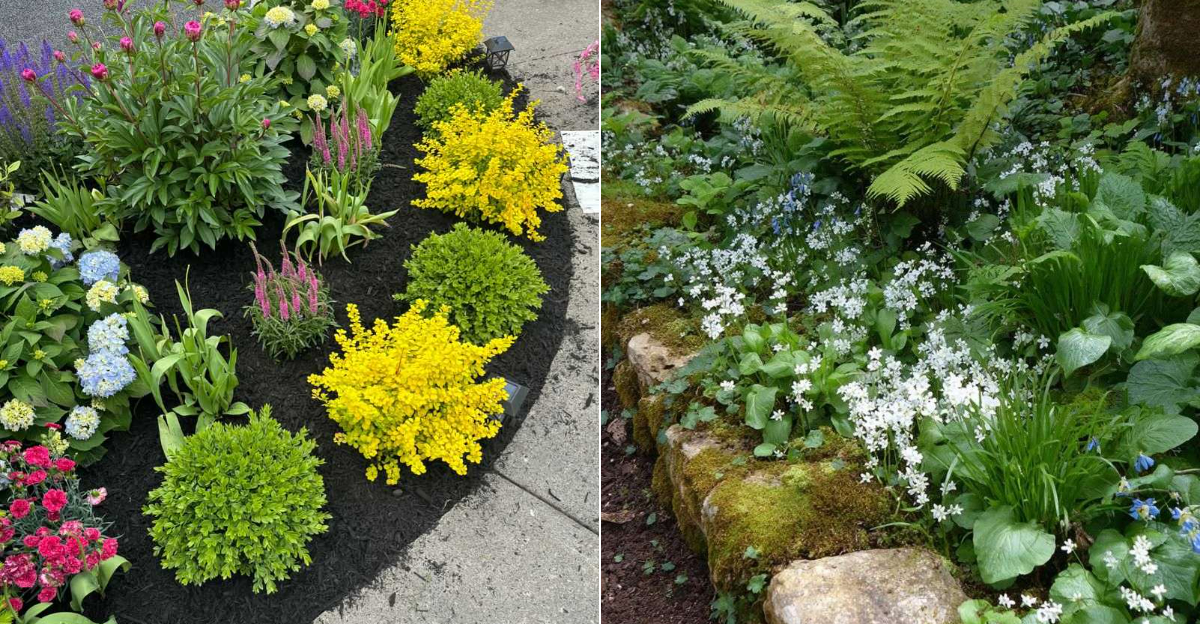
Shade gardens can feel magical, moody, and a little unfairly misunderstood. In Oregon, all that softer light can turn a yard into a lush retreat, but only when the design does more than toss plants into the dimmest corner and hope for woodland vibes.
Shade needs intention. Without it, the space can look flat, gloomy, or like the sun simply forgot to show up.
With the right design tricks, though, a shaded yard can feel layered, cool, calm, and quietly fancy.
Think texture, contrast, curved paths, bright accents, thoughtful spacing, and cozy spots that make the whole garden feel like it has a secret.
The goal is not to fight the shade. It is to make it feel like the best feature in the yard.
Once the layout works with the light, Oregon shade gardens can go from overlooked to absolutely enchanting.
1. Layer Ferns Under Taller Shrubs
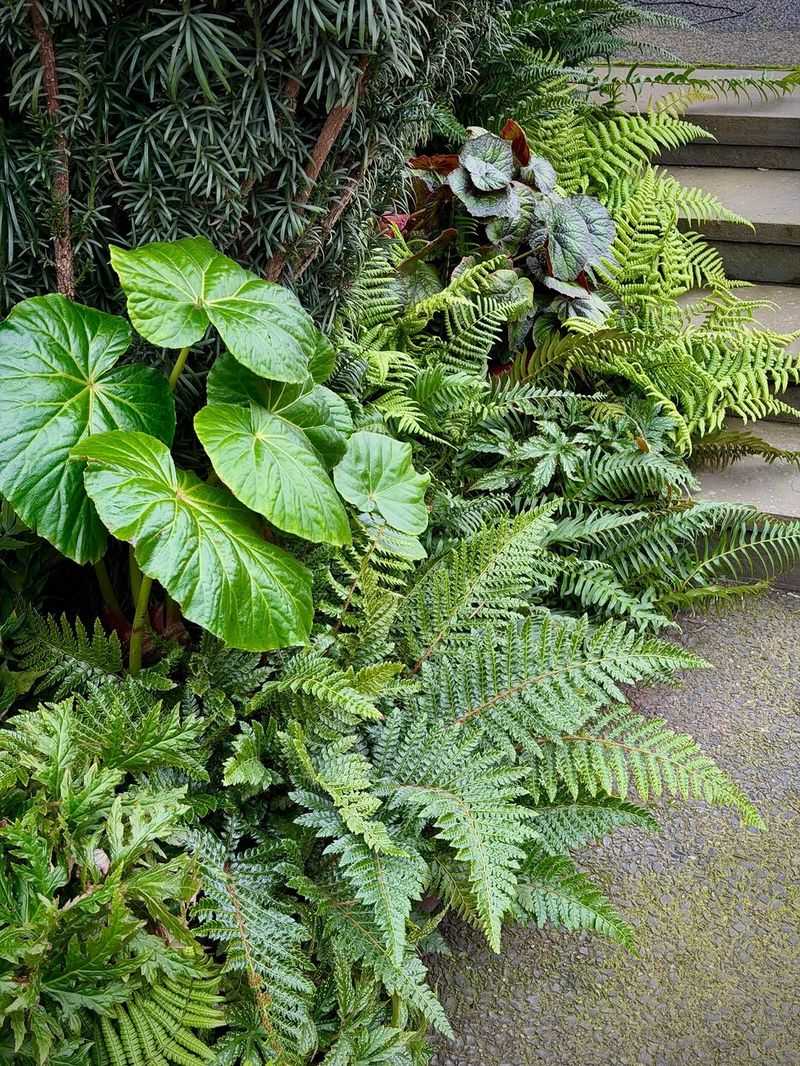
Few plants bring as much life to a shady space as ferns. They have a wild, woodland quality that feels completely at home under big shrubs like rhododendrons, camellias, or native elderberry.
When you layer ferns beneath taller plants, you create depth that makes a yard feel much larger and more interesting.
The trick is to match fern height with the shrub above it. Tall shrubs pair well with bold ferns like sword fern or ostrich fern.
Smaller shrubs look great with delicate maidenhair ferns or lady ferns. This kind of layering mimics how plants grow naturally in the forest, and it feels incredibly organic.
Ferns also fill in fast. Within one or two growing seasons, they can cover bare soil that would otherwise look empty or weedy.
That means less maintenance for you and a tidier garden overall. They also suppress weeds naturally, which is a huge bonus in wet climates where weeds love to pop up.
Watering is minimal once ferns are established in a shaded spot. They thrive in the cool, moist soil that our rainy seasons provide.
Just make sure they have good drainage so roots do not sit in standing water. Add a layer of compost around the base each spring to keep them healthy and growing strong all season long.
2. Use Big Leaves For A Lush Look
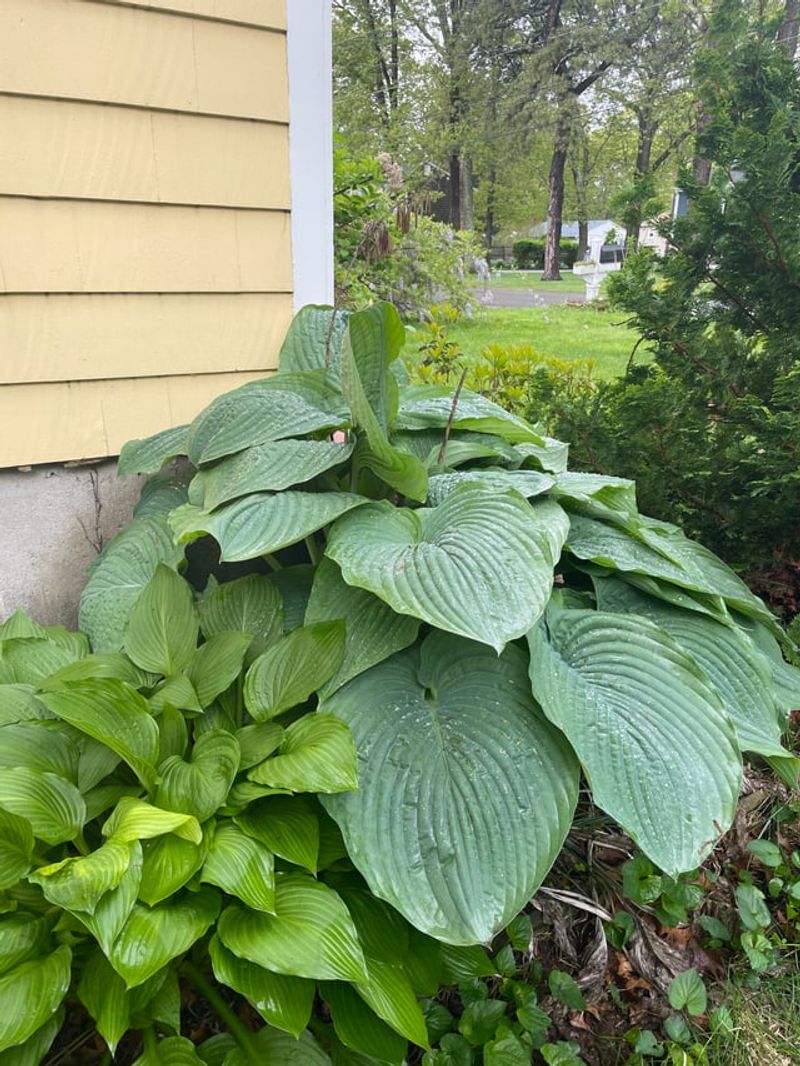
There is something almost theatrical about a plant with giant leaves. Bold foliage creates instant drama in a shady garden and makes the whole space feel more alive.
Plants like hostas, ligularia, rodgersia, and gunnera are masters of this look.
Big leaves work because they catch what little light filters through the tree canopy. They reflect that soft, dappled light back into the garden, making everything feel brighter without adding a single sun-loving plant.
The visual weight of large leaves also anchors a garden bed and gives it a sense of purpose.
Mixing different leaf shapes adds even more interest. Try pairing round hosta leaves with the jagged edges of ligularia or the feathery texture of astilbe.
The contrast between shapes keeps the eye moving through the garden and makes the design feel thoughtful rather than random.
Your Oregon Garden Changes Every Week. Your Plan Should Too.
Gardening in Oregon changes quickly throughout the season. Every Friday you’ll receive a simple weekly plan showing exactly what to plant, prune, fertilize, harvest, and protect so you never miss the right timing.
One thing to keep in mind is scale. In a small yard, go for medium-sized bold leaves so the garden does not feel overwhelming.
In a larger space, you can go as big as you want. Gunnera, for example, can grow leaves several feet wide and creates an almost prehistoric jungle effect that is truly show-stopping.
Water these plants consistently during dry summers, and they will reward you with spectacular foliage from spring all the way through fall.
3. Mix Evergreen Texture With Seasonal Flowers
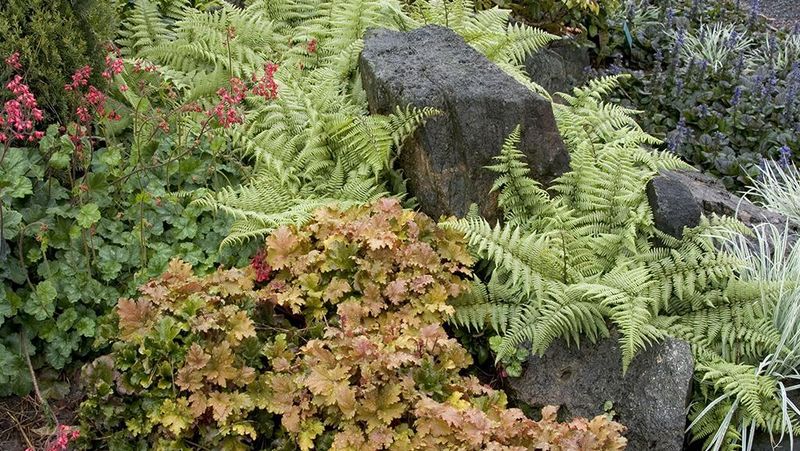
A shade garden that looks great only in spring is a missed opportunity. The real goal is a space that stays interesting all year long.
Mixing evergreen plants with seasonal bloomers is the smartest way to make that happen.
Evergreen ferns, hellebores, epimedium, and low-growing rhododendrons hold the garden together through winter when everything else goes dormant.
They create a green framework that keeps the yard from looking bare and sad during the rainy months.
Then, when spring arrives, seasonal flowers layer in color and softness on top of that sturdy base.
Bleeding heart, astilbe, trillium, and foxglove all make excellent seasonal companions for evergreen plants.
They bloom at different times, which means you can have flowers from early spring through late summer if you plan carefully.
After they fade, the evergreens step back into the spotlight and carry the garden through to the next season.
Texture matters just as much as color in this kind of planting. Smooth evergreen leaves next to feathery astilbe or lacy bleeding heart foliage creates a richness that feels layered and complex.
It looks like it took years to design, even if you planted it all in one afternoon. Start with three or four evergreen anchor plants, then fill in with seasonal bloomers for a garden that genuinely surprises you every single month.
4. Brighten Dark Corners With Variegated Foliage
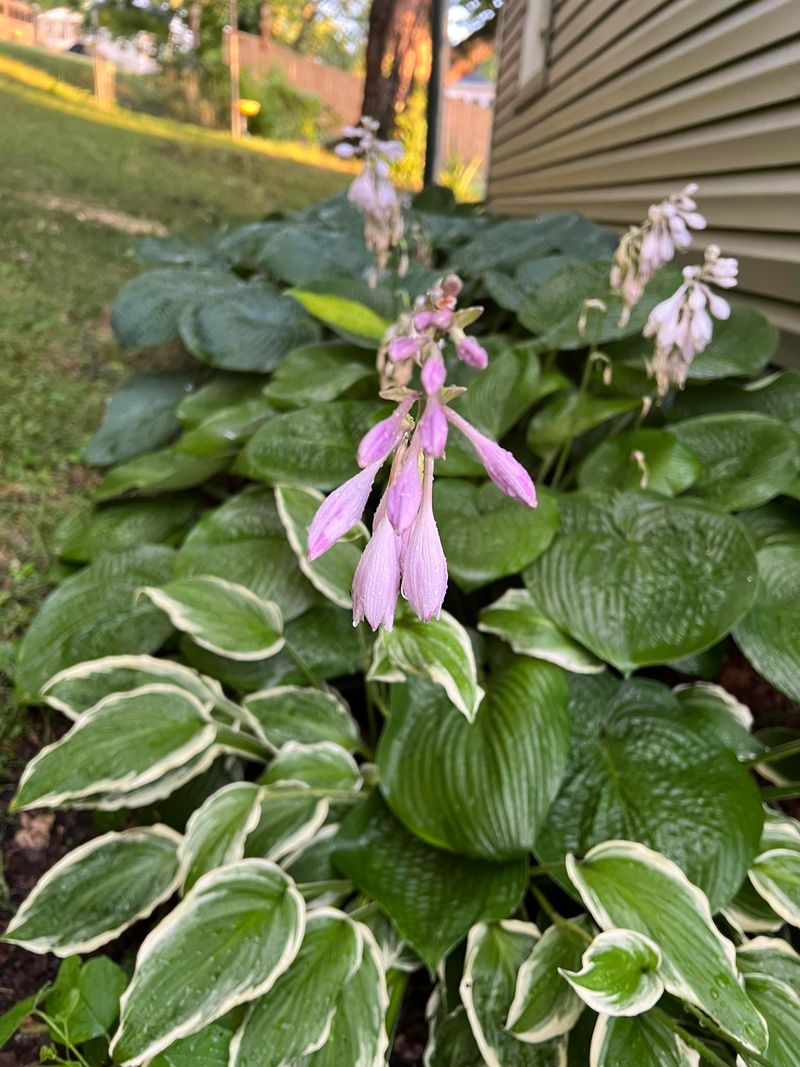
Dark garden corners can feel forgotten and gloomy, but variegated plants fix that problem beautifully. Plants with cream, white, or yellow markings on their leaves act almost like natural spotlights in low-light areas.
They catch the eye and pull attention into spaces that would otherwise disappear.
Variegated hostas are the classic choice, and for good reason. Varieties like ‘Patriot,’ ‘Frances Williams,’ and ‘June’ have bold white or gold edges that glow even on overcast days.
Oregon gets plenty of those cloudy days, so having plants that perform well in dim conditions is a real advantage.
Beyond hostas, look for variegated Solomon’s seal, which has arching stems with cream-edged leaves that sway gently in the breeze.
Variegated Japanese forest grass is another standout, with golden-striped blades that seem to shimmer in the shade.
Even variegated ivy or vinca can brighten up a ground-level corner when used thoughtfully.
The key with variegated plants is not to overdo it. Too many busy patterns in one space can feel chaotic rather than calming.
Use one or two variegated focal plants per corner, and surround them with solid green plants to let them really stand out. That contrast is what creates the brightening effect.
Place them where you want the eye to land, and let their natural luminosity do the rest of the work for you.
5. Repeat Plants So Shade Beds Feel Designed
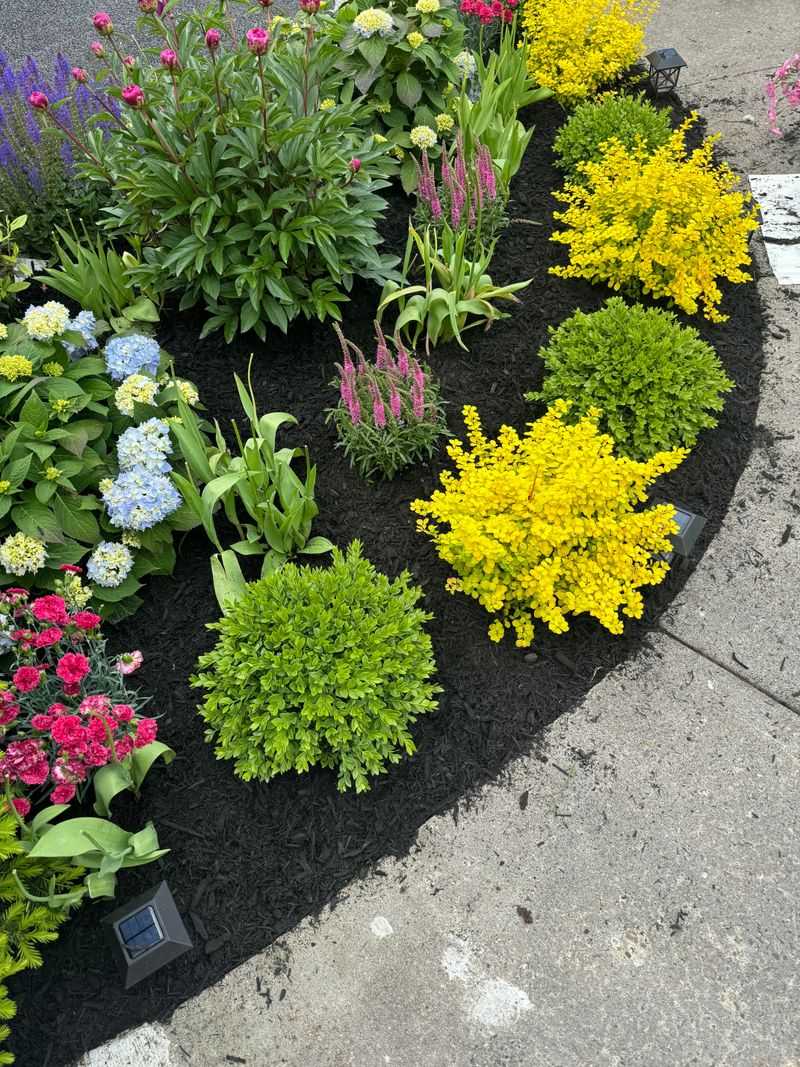
One of the biggest secrets of professional garden design is repetition. When you plant the same species in multiple spots throughout a bed, the whole garden suddenly looks cohesive and intentional.
Without repetition, a shade bed can feel like a random collection of plants rather than a thoughtful design.
Pick two or three plants you love and use them as your anchors. Maybe it is a particular hosta, a specific fern, and a low-growing astilbe.
Plant each one in three or more spots throughout the bed, spacing them out so the eye travels from one grouping to the next. This creates a visual rhythm that feels satisfying and calm.
Repetition also makes the garden easier to maintain. When you have multiples of the same plant, you learn its needs quickly and can care for all of them at once.
You buy in larger quantities, which often saves money too. It is a practical strategy as much as a design one.
Do not worry that repeating plants will make the garden look boring. The spaces between repeated plants get filled with unique specimens that add surprise and variety.
The repeated plants act like punctuation marks in a sentence. They give structure to the whole composition without taking over.
Even in a small yard, repeating just one plant three times can transform a messy-looking bed into something that looks like it was designed by a professional landscaper.
6. Add Native Groundcovers Between Larger Plants
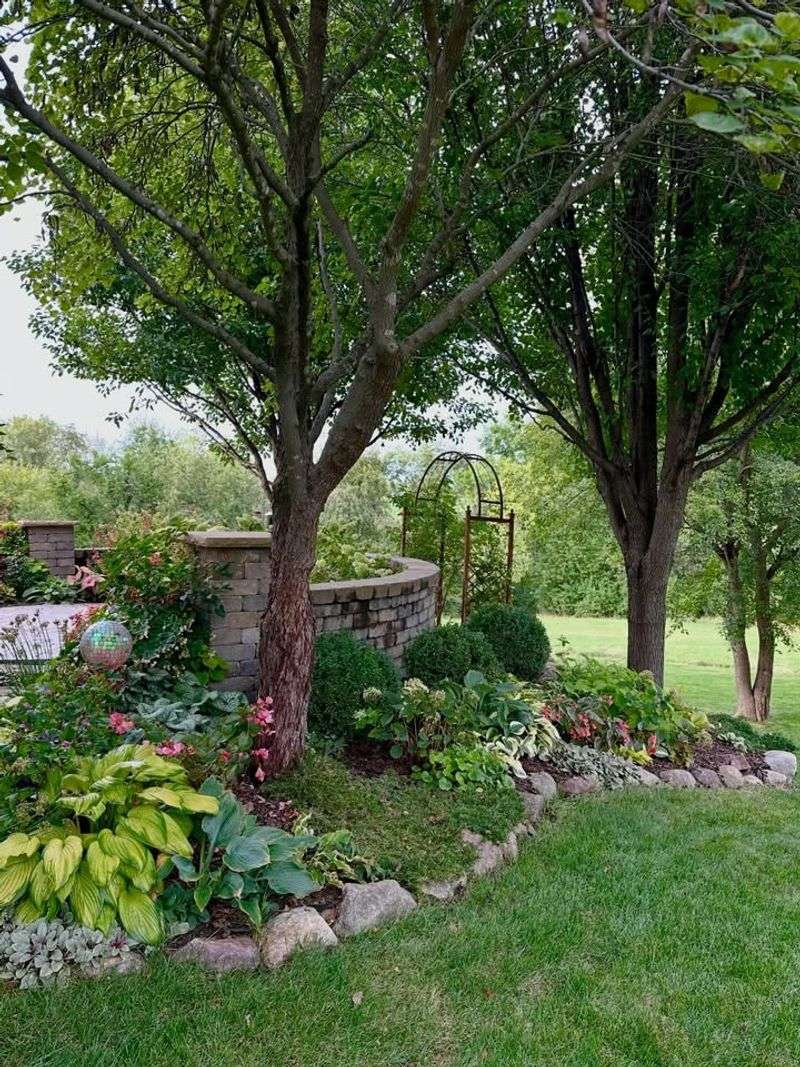
Bare soil in a shade garden is an open invitation for weeds. The best way to close that door is with native groundcovers that spread naturally and fill every gap.
They protect the soil, hold moisture, and create a carpet-like effect that makes the whole garden feel complete.
Wild ginger is one of the best native options for shady spots in this region. It spreads slowly but steadily, forming dense mats of heart-shaped leaves that stay green for most of the year.
It handles dry shade better than most groundcovers, which makes it incredibly useful under established trees where rainfall barely reaches the soil.
Oregon oxalis, also called redwood sorrel, is another excellent choice. Its clover-like leaves fold up at night and open again in the morning, which gives it a charming, almost animated quality.
It thrives in moist, shaded areas and creates a soft, airy carpet that feels very natural and woodland-like.
Bunchberry is a third option worth considering. It produces tiny white flowers in spring and bright red berries in fall, adding seasonal interest at ground level.
All three of these plants require very little care once established. They are adapted to local soils and rainfall patterns, which means they rarely need extra watering or fertilizing.
Using natives between your larger plants is one of the most low-effort ways to create a polished and ecologically healthy shade garden.
7. Use Mossy Paths To Make Shade Feel Intentional
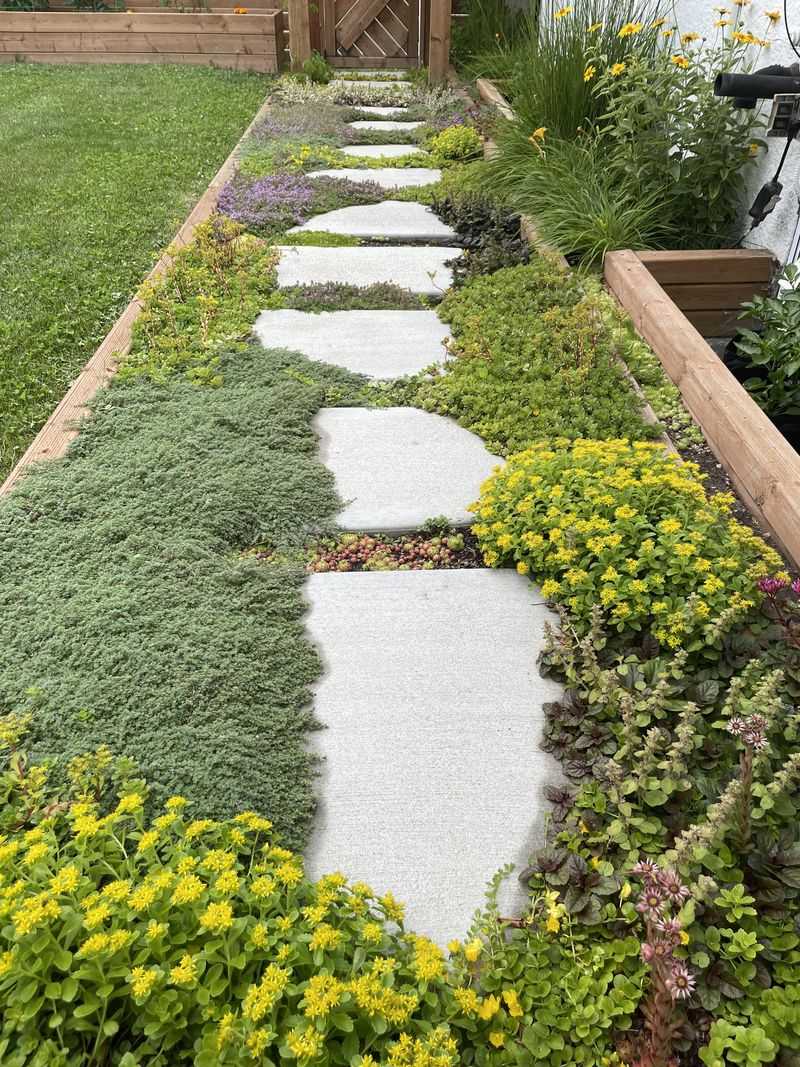
Moss is one of those things that shows up on its own in shady, moist yards, and most people try to get rid of it. But in a shade garden, moss is actually a gift.
When you use it deliberately along a path, it transforms the whole space from wild and accidental to peaceful and designed.
Mossy paths work best with flat stepping stones set directly into the ground. Over time, moss fills in between and around the stones, softening the edges and making the path look like it has been there for decades.
That aged, natural quality is exactly what makes a shade garden feel magical.
You can encourage moss to grow by keeping the path area moist and shaded. If moss is slow to establish, try transplanting small clumps from another part of your yard.
Press them firmly against the soil and keep them watered for a few weeks until they attach. Avoid foot traffic on new moss until it is well rooted.
Once established, moss paths need almost no maintenance. They do not need mowing, edging, or fertilizing.
They just need shade and moisture, both of which a shady yard provides naturally. The visual effect is stunning.
A winding mossy path draws visitors through the garden and creates a sense of discovery with every step. It also signals to anyone who sees it that your shade garden was planned with real care and intention.
8. Plant In Drifts Instead Of Singles
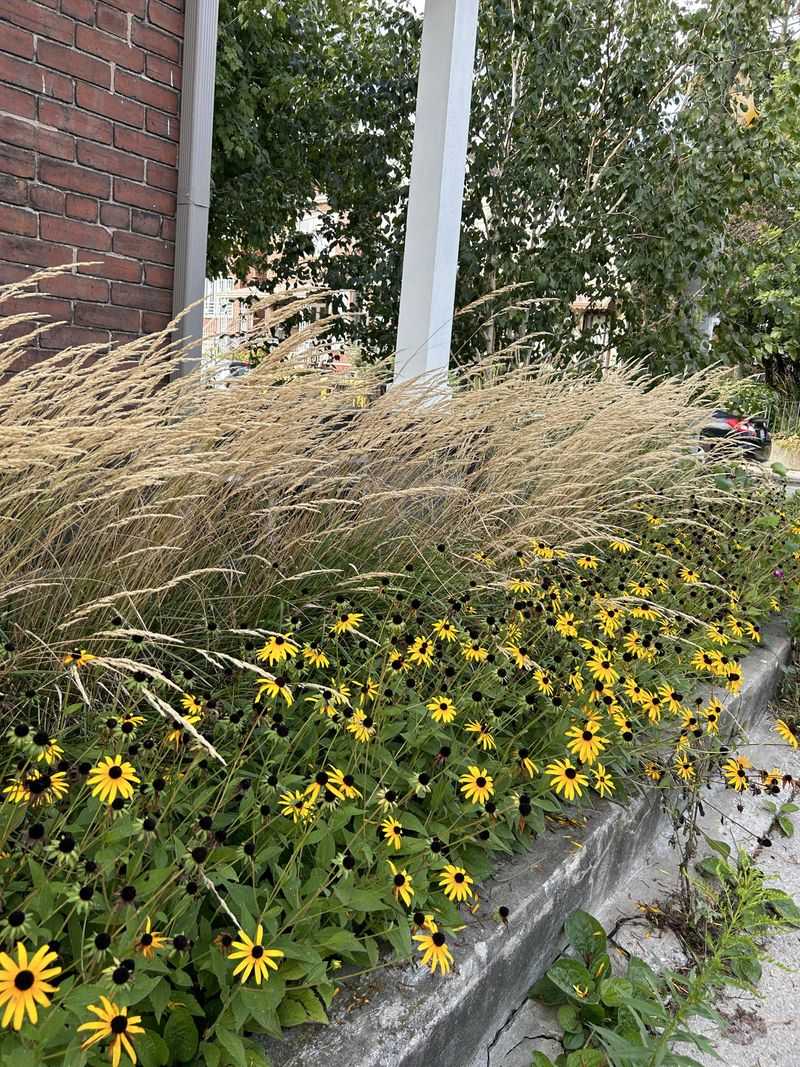
Planting one of everything sounds like a great idea when you are at the nursery, but it rarely looks great in the garden. Single plants get lost in a bed, especially in shade where colors are already muted.
Drifts, which are loose, flowing groups of the same plant, create impact that a solo specimen simply cannot match.
A drift does not have to be huge. Even three plants of the same variety, placed in a gentle curve rather than a straight line, creates a naturalistic sweep that feels intentional.
Five or seven plants make an even stronger statement. Odd numbers tend to look more natural than even ones, which is a classic design principle that really does make a difference.
Astilbe looks spectacular in drifts because the feathery plumes blend and overlap, creating a soft cloud of color. Bleeding heart, lungwort, and toad lily all benefit from the same treatment.
Even ferns look more impressive when planted in groups of five or more rather than scattered individually around the bed.
Drifts also make it easier for pollinators to find flowers, which is a nice ecological bonus. Bees and butterflies are more likely to visit a mass planting than a single isolated bloom.
Start with whatever shade plant you love most, buy five or seven of them, and plant them in a gentle flowing shape. The result will look far more lush and satisfying than a mixed collection of singles ever could.
9. Choose Pale Blooms For Evening Glow
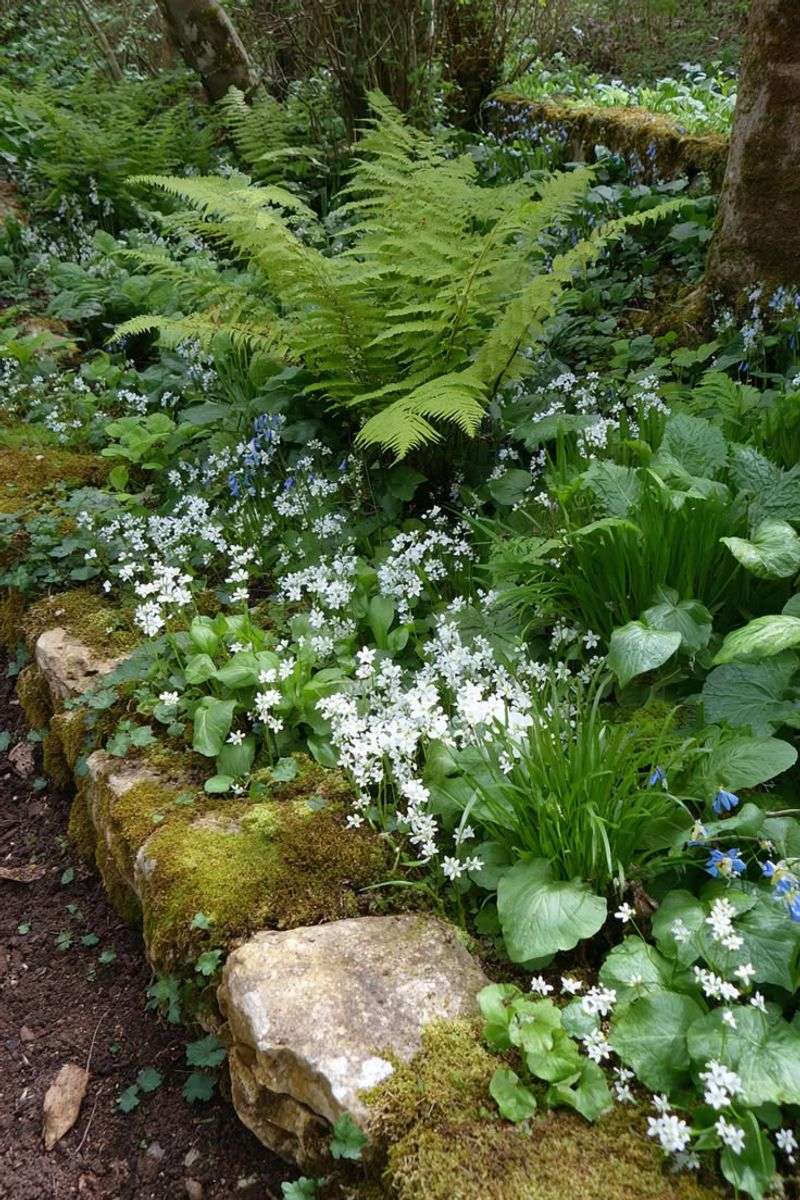
Here is something most gardeners do not think about until they are standing in their yard at dusk: pale flowers glow in low light in a way that bright colors simply do not.
White, cream, soft yellow, and blush pink blooms seem to catch every last bit of available light and reflect it back into the garden.
In a shady yard, this effect is even more powerful. Bright reds and deep purples tend to disappear in shade, but white astilbe, pale hellebores, white foxglove, and cream-colored Solomon’s seal practically shimmer.
They make the garden feel alive even on a gray afternoon or in the fading light of a summer evening.
This is especially useful in Oregon, where evenings are often spent outdoors during the long summer days.
Having a garden that looks beautiful at 7 or 8 in the evening, when many people finally have time to relax outside, is a practical as well as aesthetic choice. Pale blooms extend the visual enjoyment of your garden well past sunset.
Pair white or pale-flowered plants with dark green or deep purple foliage for maximum contrast.
A white astilbe next to a dark-leafed heuchera is a classic combination that looks stunning in any shade garden.
White bleeding heart against a backdrop of dark green ferns achieves the same effect. Keep the color palette simple and let the pale blooms do their quiet, luminous work as the light fades each evening.
10. Mulch With Leaves For A Woodland Finish
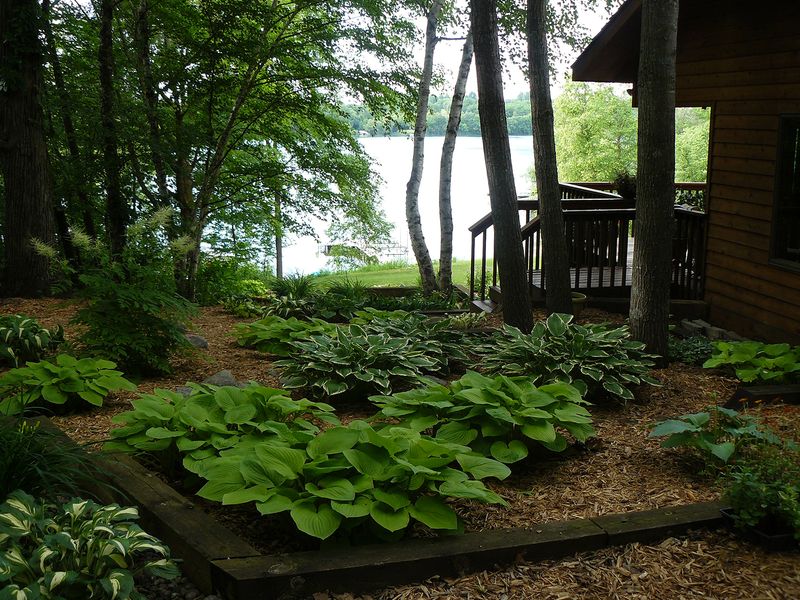
Every fall, yards across Oregon are covered in fallen leaves, and most people bag them up and send them away. That is actually one of the most wasteful things a gardener can do.
Those leaves are free mulch, and in a shade garden, they create exactly the right look and feel.
Leaf mulch mimics the natural forest floor, which is exactly what a shade garden is trying to recreate.
A two or three inch layer of shredded leaves around your plants feeds the soil as it breaks down, suppresses weeds, holds moisture, and insulates roots through cold winters.
It does everything expensive bagged mulch does, for free. Shredding the leaves before using them as mulch is important. Whole leaves can mat together and block water from reaching plant roots.
Run them over with a lawn mower a few times, or use a leaf blower with a vacuum setting to shred them quickly. The shredded material breaks down faster and looks tidier in the garden bed.
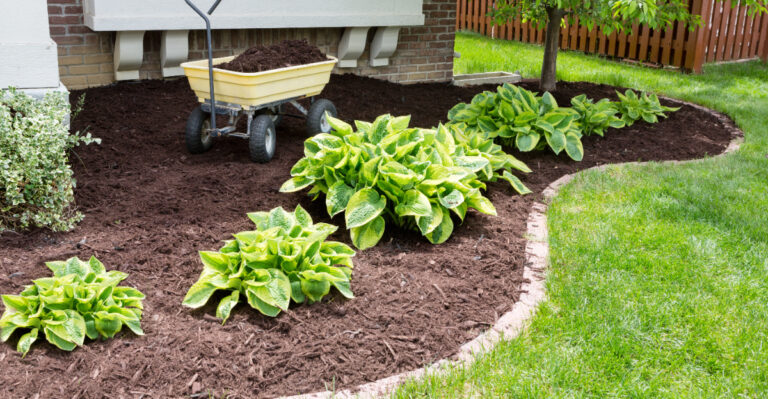
The visual effect of leaf mulch in a shade garden is genuinely beautiful. It gives the bed a rich, earthy tone that makes green foliage pop.
It also signals to visitors that the garden is inspired by nature rather than fighting against it.
Top up the mulch layer each fall as new leaves come down, and your shade garden will have a healthy, woodland-inspired floor that keeps improving with every passing year.