What To Place Near Wooden Structures When Carpenter Bees Start Hovering In Pennsylvania
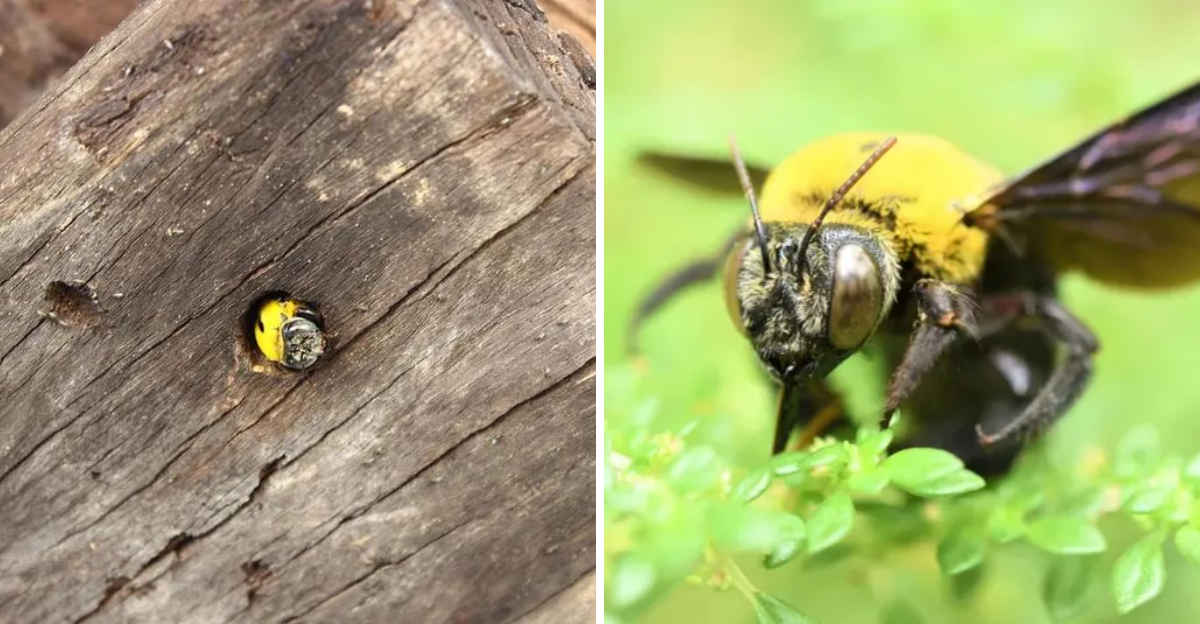
Pennsylvania porch season has a tiny bouncer with wings.
You step outside with coffee, and there it is, hovering at eye level like it is checking your ID. The carpenter bee bobs near the railing, circles the pergola, then heads straight for that bare wooden beam with suspicious confidence.
Rude? Yes. Random? Not at all.
Carpenter bees are not out to chase you around the yard, but exposed softwood can look like prime real estate once spring warms up.
Deck rails, porch posts, shed trim, fence boards, and pergola beams all become possible nesting spots, especially when the wood stays unfinished, weathered, or easy to chew.
So how do you stop a buzzing inspection from becoming a round-hole repair job?
Start before the bees settle in. A few smart placements, finishes, repairs, and simple deterrents can make your wood less inviting and your weekends much less drill-filled.
The goal is not panic. It is prevention with a paintbrush, a plan, and decent timing.
1. Painted Wood Gives Less Appeal
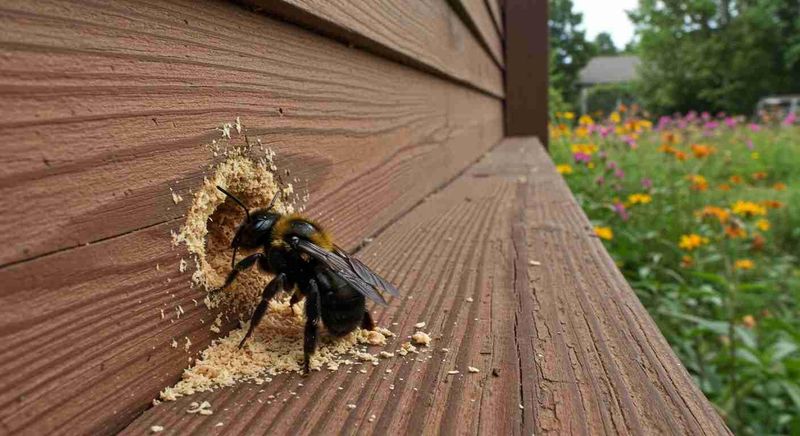
A freshly painted porch beam is one of the most underrated defenses a Pennsylvania homeowner has against carpenter bees.
These bees are not random. They target exposed, weathered softwood because it is easier to drill through. Painted surfaces change the equation completely.
According to Penn State Extension, carpenter bees strongly prefer unfinished or weathered wood.
Paint creates a barrier that discourages drilling by covering the grain and texture bees use to locate soft entry points. It is not a guarantee, but it is a significant deterrent.
Any exterior-grade paint works. The key is full coverage, especially on end grain, undersides of boards, and any surface that faces the weather. Those are the spots bees scout first.
Timing matters too.
Apply paint in early spring before carpenter bees become active, typically before mid-April in Pennsylvania. If you wait until bees are already hovering, you are playing catch-up.
Touch up chipped or peeling areas every season.
Bees will find bare patches faster than you expect. A small scraper, a brush, and an afternoon can protect your structure for the entire warm season.
Painting is not glamorous bee management, but it is practical, affordable, and backed by university research. Start with the most exposed boards and work your way around the structure.
2. Sealed Boards Block Easy Drilling
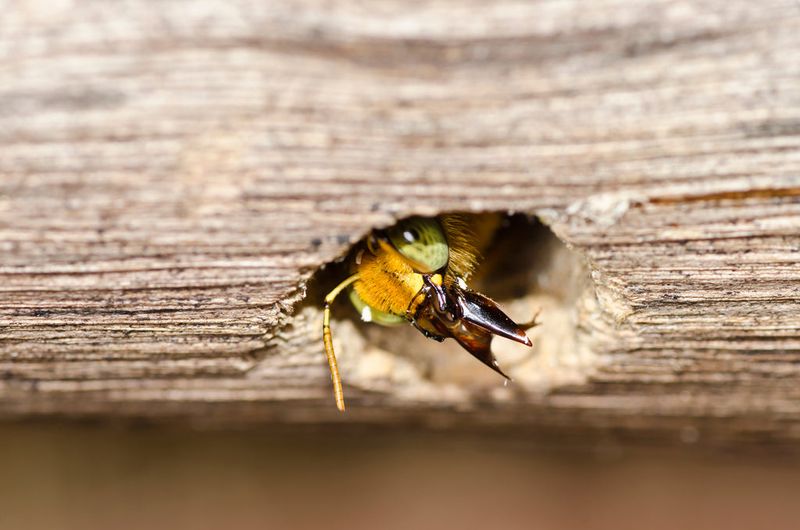
Weathered boards are basically a welcome mat for carpenter bees.
When wood dries out, splits slightly, and loses its protective coating, the grain becomes soft and easy to penetrate. Sealant changes that surface into something far less inviting.
A quality exterior wood sealant, varnish, or polyurethane finish adds a hard layer over the wood surface that carpenter bees find difficult to bite into.
Penn State Extension notes that finishing wood with paint or varnish is one of the most effective ways to reduce carpenter bee activity near structures. The harder the surface, the less appealing it becomes.
Focus on the areas that take the most sun and rain exposure.
Deck boards, porch rails, fascia boards, and exposed beam ends are prime targets. These spots dry out fastest and lose their protective finish first.
Your Pennsylvania Garden Changes Every Week. Your Plan Should Too.
Gardening in Pennsylvania changes quickly throughout the season. Every Friday you’ll receive a simple weekly plan showing exactly what to plant, prune, fertilize, harvest, and protect so you never miss the right timing.
Reapplication is part of the deal.
Sealants do not last forever. Plan to recoat every one to three years depending on your product and how much weather your structure takes. A quick visual check each spring will tell you where the finish is thinning.
Sealing quietly does its job all season long.
Pair it with paint on exposed sections, and you have a solid two-layer defense that requires almost no ongoing maintenance beyond annual inspection.
3. Hardwood Trim Makes Entry Tougher
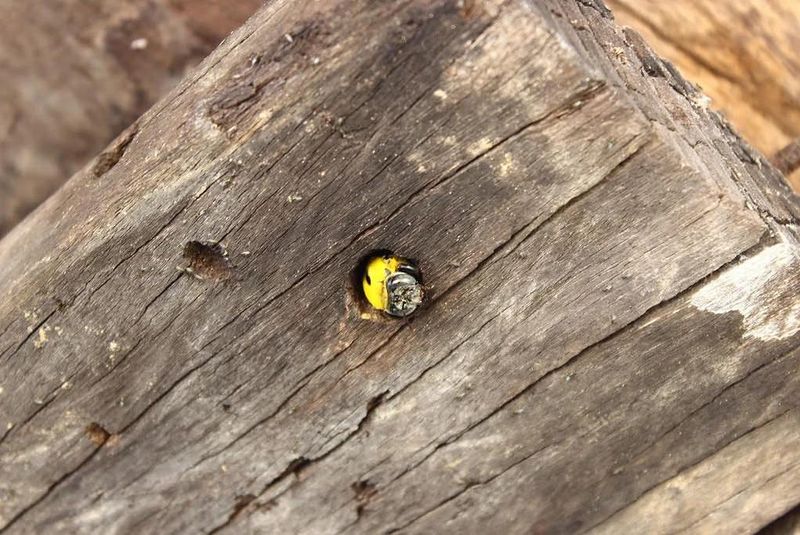
Soft pine fascia boards are practically an invitation.
Carpenter bees love softwoods like pine, cedar, and redwood because they are relatively easy to drill through. Swapping vulnerable trim pieces for harder wood species is a practical upgrade that pays off over multiple seasons.
Hardwoods like oak, ash, or ipe are significantly denser than the softwoods typically used for exterior trim and decorative boards.
That density makes drilling much harder and far less efficient for carpenter bees looking for a quick nesting spot. They tend to move on when the effort is too high.
You do not need to replace your entire structure.
Focus on the spots that show the most activity or the most wear. Fascia boards under eaves, exposed beam ends, and decorative porch trim are the usual hotspots. Replacing just those sections can make a noticeable difference.
Hardwood trim costs more upfront than pine or spruce. But when you factor in the reduced need for repairs, refilling holes, and repainting damaged sections every year, the math often works out in hardwood’s favor over time.
Make sure any hardwood trim you install is also finished with paint or sealant.
Even dense wood benefits from a protective coating. The combination of density and surface protection makes the trim significantly less attractive to drilling bees.
4. Composite Material Removes The Target
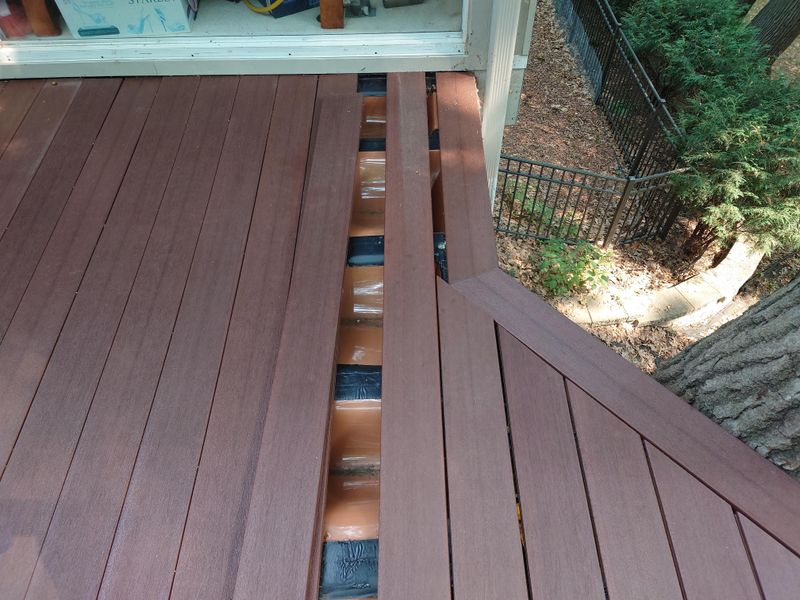
Some materials simply do not interest carpenter bees at all.
Composite decking, PVC trim boards, and fiber cement siding give bees nothing to drill into because they are not real wood. Replacing the most vulnerable sections of your structure with these materials removes the target entirely.
Composite decking has become a popular choice for Pennsylvania homeowners for exactly this reason.
Products made from a blend of wood fiber and plastic are far denser and smoother than natural wood, and carpenter bees show very little interest in them. No grain, no softness, no appeal.
PVC trim boards are another strong option for replacing fascia, soffit, and decorative molding.
They look like painted wood from a distance, they resist moisture, and they last for decades without the maintenance that real wood demands. Carpenter bees cannot find a foothold in them.
The upfront cost of composite and PVC materials is higher than standard lumber. That is worth acknowledging.
But the long-term savings on repairs, refinishing, and pest management can be substantial for homeowners who deal with carpenter bee damage year after year.
You do not have to convert your entire deck at once.
Start with the rail caps, fascia boards, or post wraps. Those are the spots bees love most, and replacing them with composite or PVC makes an immediate impact.
5. Sacrificial Blocks Belong Farther Away
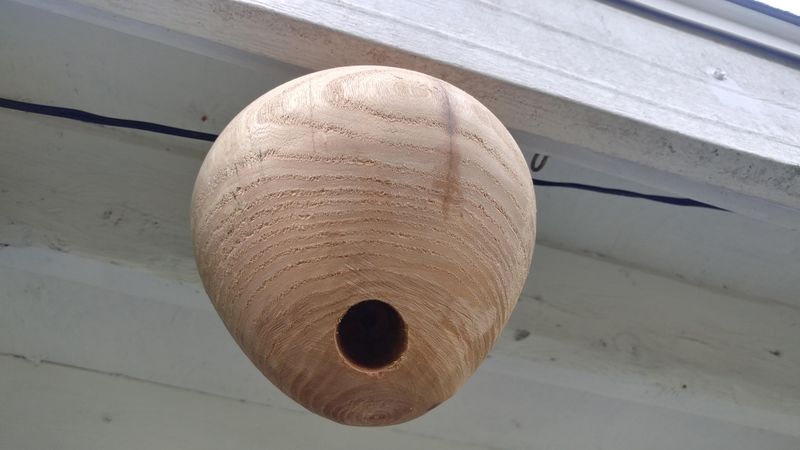
Decoy wood, sometimes called sacrificial blocks, is a strategy that gets talked about a lot in carpenter bee circles.
The idea is to place untreated, unfinished softwood blocks away from your main structure to give bees an alternative drilling spot. It sounds clever, and it can help at the margins.
The honest truth is that sacrificial blocks are not a fix-all.
Penn State Extension and other university sources are careful not to overpromise on natural or passive deterrents. Bees may use the decoy block, or they may ignore it completely and head straight for your porch beam. Results vary.
If you want to try this approach, placement is everything.
Put the block as far from your structure as your yard allows. Mount it on a post in a sunny spot, since carpenter bees prefer warm, sun-exposed surfaces. Use untreated pine or cedar, and leave it completely bare with no paint or sealant.
Think of it as a backup strategy, not your main plan.
Use it alongside painted and sealed wood on your actual structure. The combination gives bees a softer option farther away while making your porch or shed much less attractive up close.
Check the block periodically. If bees are drilling into it, that is actually a small win. Sacrificial blocks cost almost nothing to set up. Just keep your expectations realistic and treat this as one layer of a broader approach.
6. Bee Houses Need The Right Distance
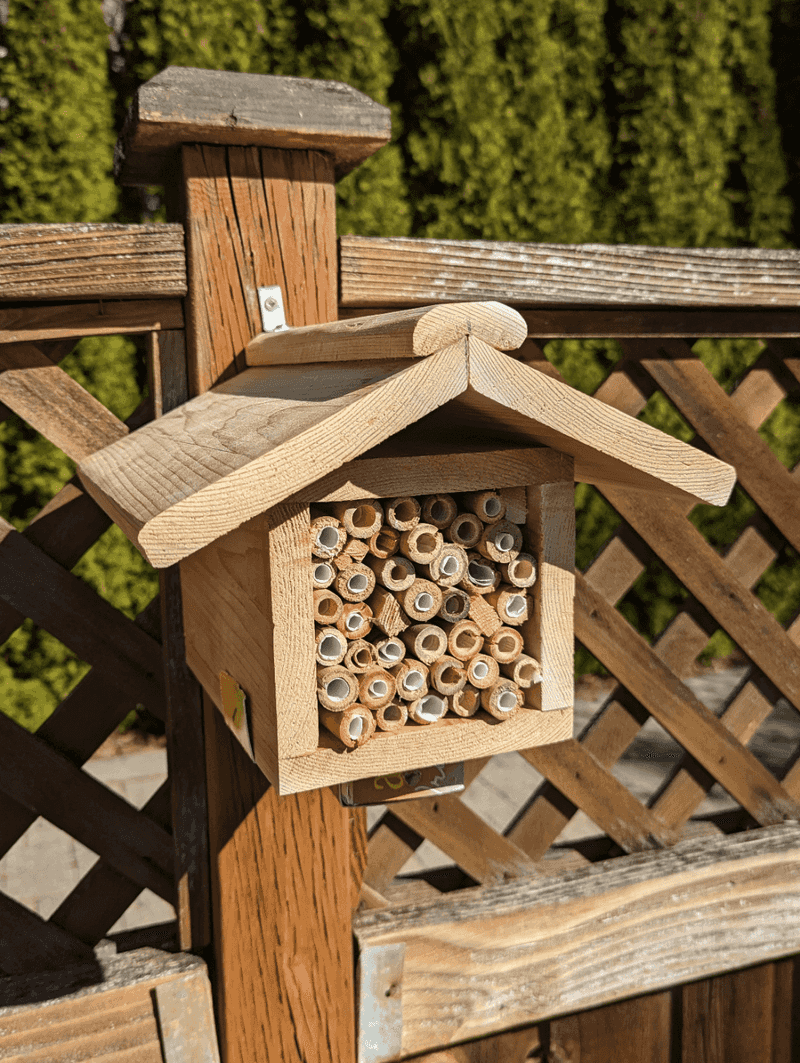
Bee houses designed for solitary native bees have become popular in Pennsylvania gardens, and for good reason.
Supporting native pollinators is genuinely valuable. But placement matters enormously, especially if you are already dealing with carpenter bee activity near your wooden structures.
Mounting a bee house directly on or next to your deck, shed, or porch beam is a mistake.
It signals to bees that the area is a safe nesting zone and can actually increase activity near your structure rather than redirecting it. Distance is the key variable here.
Place any bee house at least fifteen to twenty feet away from the wooden structures you are trying to protect.
Mount it on a fence post, a garden stake, or a separate freestanding structure. Face it southeast so it catches morning sun, which is what solitary bees prefer for warming their nests.
It is also worth noting that standard bee houses are designed for smaller solitary species like mason bees and leafcutter bees, not for carpenter bees.
Carpenter bees drill their own tunnels and are not really attracted to pre-built bee house tubes. So a bee house will not serve as a direct decoy for carpenter bees.
The value of the bee house is in supporting your garden’s pollinator community without concentrating bee activity near vulnerable wood.
Choose a bee house with tubes sized between five and ten millimeters for the best variety of native solitary bee residents.
7. Citrus Scent Is Only Backup
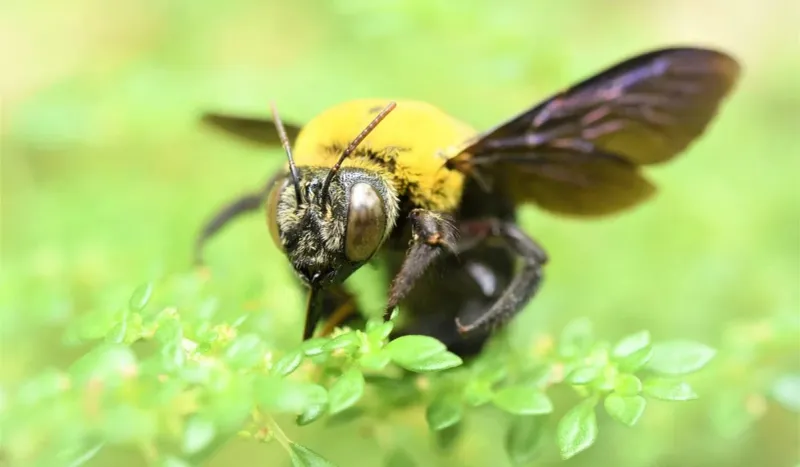
Walk into any gardening forum and you will find someone swearing by citrus spray as a carpenter bee repellent.
Citrus oils, particularly those from citrus peels, are said to irritate carpenter bees and discourage them from landing on treated surfaces. There is some logic to it, but the science is limited.
To be direct: citrus scent is a mild support strategy, not a standalone solution.
University extension sources do not list it as a primary or reliable control method. It may slow down a curious bee for a few minutes, but it will not stop a determined female from drilling into your unprotected fascia board.
That said, it costs almost nothing to try.
Mix a few drops of citrus essential oil with water in a spray bottle and apply it to wooden surfaces that bees are scouting. Reapply after rain or every few days during active hovering season.
Citrus spray works best as part of a layered approach.
Use it on surfaces that are already painted or sealed, where bees are lingering but not yet drilling. Think of it as a mild nudge rather than a barrier.
Almond oil and tea tree oil are sometimes mentioned alongside citrus as potential deterrents. The same realistic expectations apply to all of them.
Protect your wood first with paint and sealant. Then add citrus spray as a light seasonal support if you want to try it.
8. Steel Wool Fills Existing Holes Before New Season
Here’s an eighth item to add:
8. Steel Wool Fills Existing Holes Before New Season
Carpenter bees are loyal to a fault.
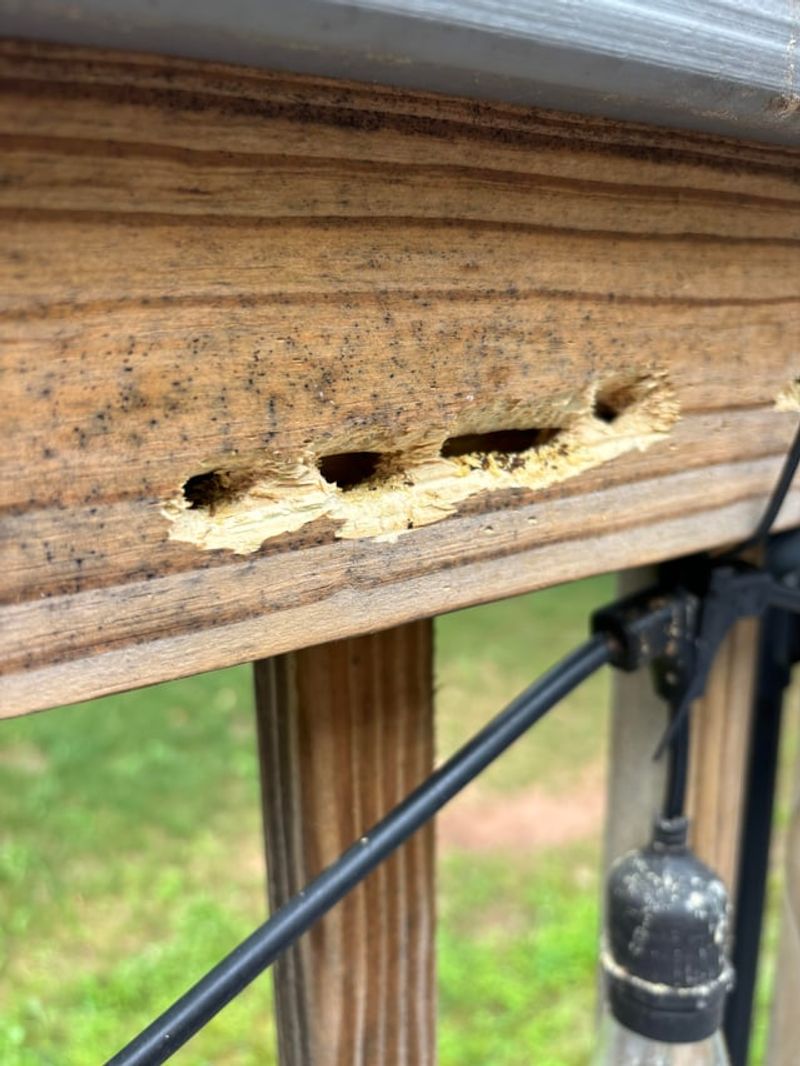
Once a female drills a tunnel in your porch beam or shed wall, she does not abandon it. She returns to it the following season, deepens it further, and may invite other females to nest in galleries branching off the original tunnel.
A hole left open over winter is an open reservation for next spring.
Filling existing holes before April arrives is one of the most practical steps a Pennsylvania homeowner can take, and the material matters.
Steel wool packed firmly into the opening is one of the most effective options because bees cannot chew through it the way they can through wood filler or caulk alone.
Press it in tightly with a pencil or dowel, making sure it fills the full depth of the entry point rather than just sitting at the surface.
After packing with steel wool, seal the opening with an exterior wood filler or paintable caulk.
Smooth it flush with the surrounding wood, let it cure fully, and then paint or seal over the patch to match the surrounding surface.
That two-step approach, steel wool plus sealant, makes reopening the tunnel significantly harder than a single material alone.
Late winter or very early spring is the ideal timing for this work in Pennsylvania.
Bees overwinter inside their tunnels as pupae and emerge in April. Filling tunnels while they are still cold and inactive, rather than waiting until bees are already hovering, gives you the advantage.
Inspect the entire structure systematically.
Holes are often on the undersides of boards, on beam ends, and on the backs of trim pieces where they are not immediately visible from ground level.
A flashlight and a slow walk around the structure in February will reveal most of what needs attention before the season begins.