What Arizona Gardeners Plant Instead Of Mexican Primrose For Coverage Without The Chaos
Arizona groundcovers can turn sneaky fast.
You plant Mexican primrose along a gravel edge because the flowers look charming, the label sounds easy, and the empty strip needs something soft.
Then the runners start traveling.
Across the path. Under the fence. Toward the neighbor’s yard like they were given a mission and a tiny map.
That is when a pretty plant becomes a weekend negotiation.
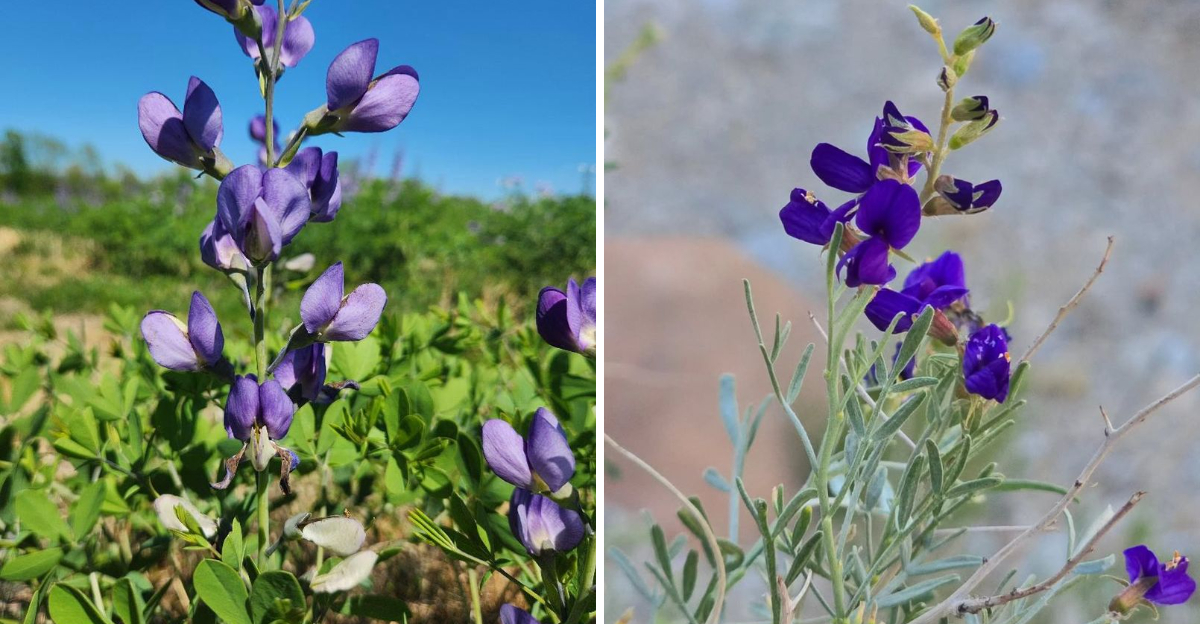
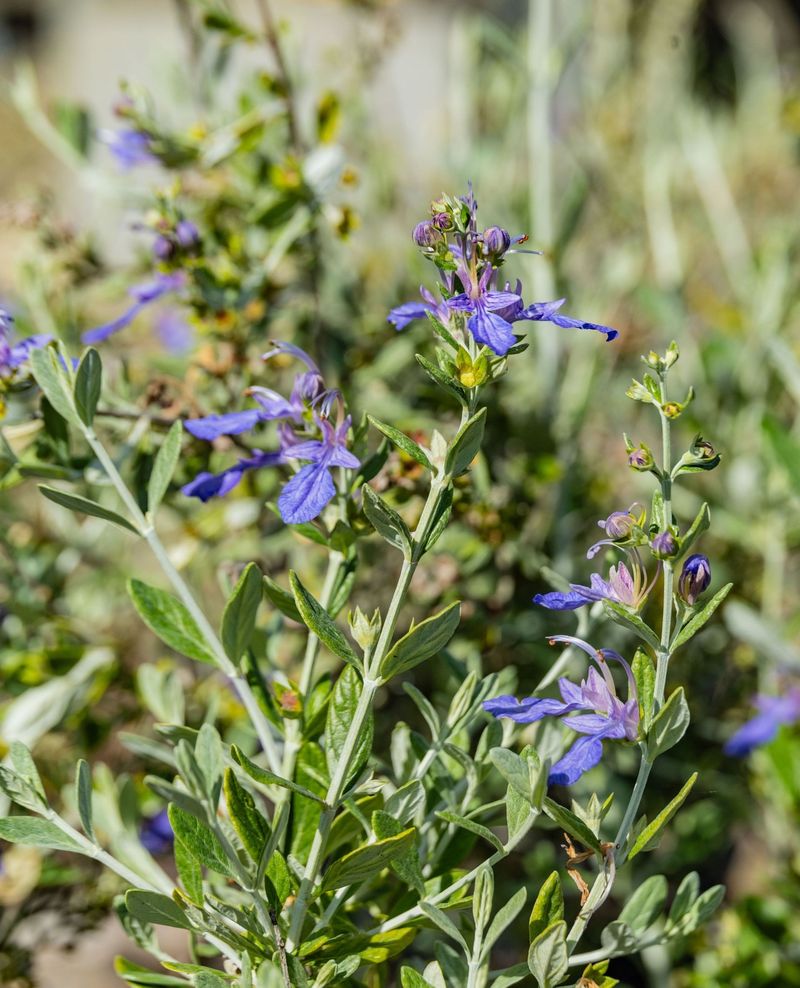
Trailing indigo bush feels different. Also known as creeping dalea, this desert-friendly groundcover brings silvery foliage, soft purple blooms, and real coverage for hot gravel strips without the same grabby reputation.
It still needs smart placement. No plant gets a complete free pass in Arizona soil. But this one tends to work with the yard instead of trying to annex it.
So why are more Arizona gardeners swapping Mexican primrose for trailing indigo bush?
The answer starts with better manners, desert toughness, and a ground-hugging habit that gives bare spaces color without turning every border into a botanical wrestling match.
Trailing Indigo Bush Covers Without Drama
Somewhere between a rock wall and a gravel path, a plant quietly earns its keep without causing a scene.
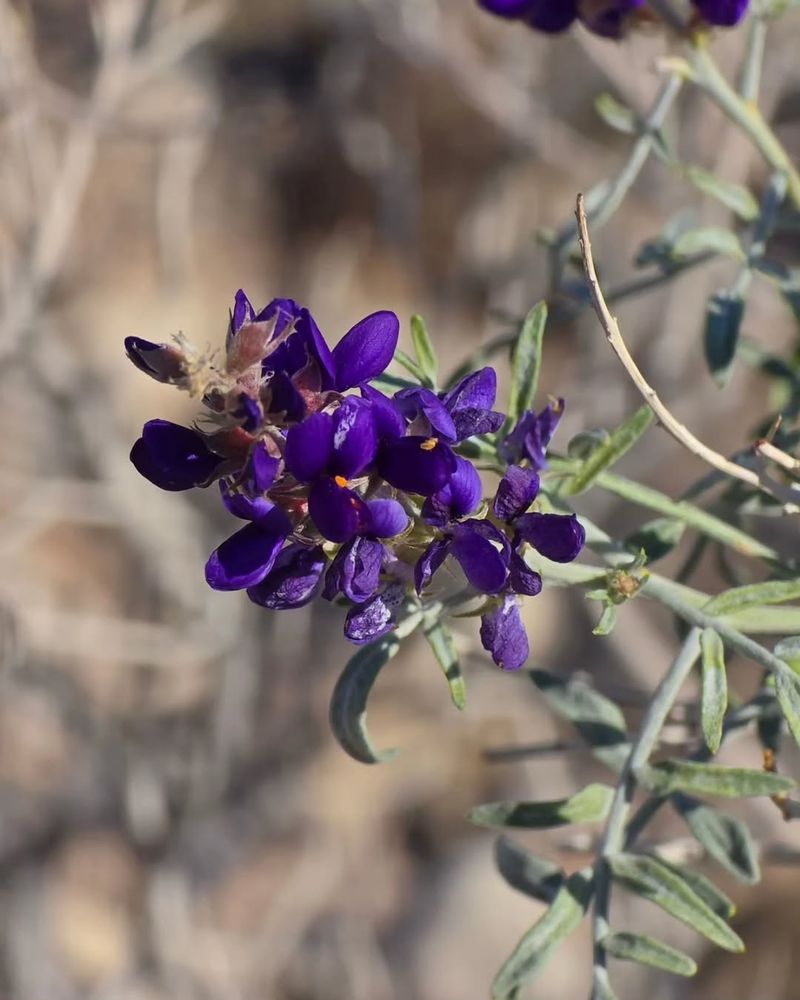
Trailing indigo bush, known botanically as Dalea greggii, is that plant. It creeps along the ground in a controlled, low mat that stays close to the soil rather than launching runners across your entire yard.
Mexican primrose spreads through underground rhizomes that are tough to stop.
Trailing indigo bush spreads differently. Its stems root where they touch the ground, but the process is slower and easier to manage. You get real coverage without waking up one morning to find your groundcover has eaten your sidewalk.
The plant typically grows six to twelve inches tall and spreads three to six feet wide over time, according to the University of Arizona Cooperative Extension.
That is a reasonable footprint for a desert groundcover. It fills in bare patches, softens rocky edges, and holds soil on slopes without staging a takeover.
It works especially well in large planting areas where you want something living and low without constant editing.
Plant it, give it some time to establish, and it rewards you with steady, polite coverage. You may still need to trim it back from walkways occasionally, but that is a small trade for a plant that actually stays in its lane most of the time.
Silvery Foliage Looks Cooler In Heat
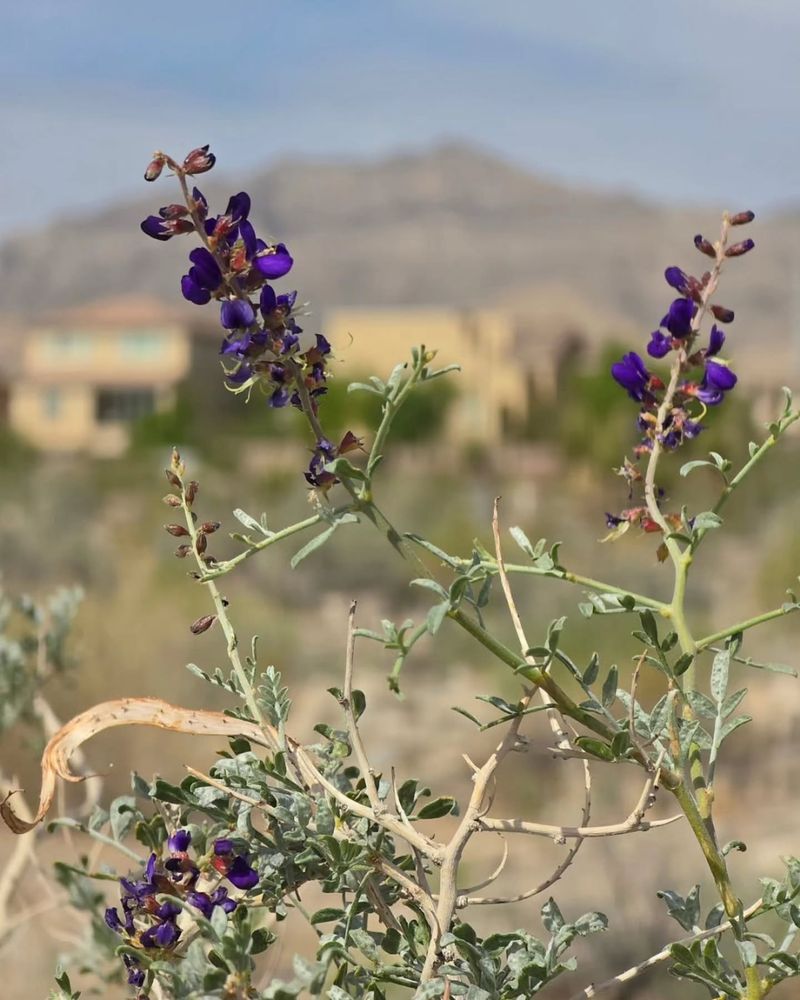
On a blistering July afternoon in Phoenix, most plants look like they are waving a white flag.
Trailing indigo bush looks like it was made for the moment. Its tiny, silvery-gray leaves reflect sunlight instead of absorbing it, giving the whole plant a cooler, calmer appearance even when temperatures push past 110 degrees.
That silver tone is not just pretty. It is practical.
The light-colored foliage reflects solar radiation, which helps the plant conserve moisture and stay cooler than dark-leafed plants growing beside it.
Gardeners who have struggled to find something that looks fresh in a summer desert yard often find trailing indigo bush to be a reliable visual anchor.
Your Arizona Garden Changes Every Week. Your Plan Should Too.
Gardening in Arizona changes quickly throughout the season. Every Friday you’ll receive a simple weekly plan showing exactly what to plant, prune, fertilize, harvest, and protect so you never miss the right timing.
The silver color also pairs beautifully with the warm earth tones common in Arizona landscapes.
Terracotta pots, decomposed granite, sandstone boulders, and adobe walls all look sharper with a soft silver groundcover at their base. It adds contrast without clashing.
From a design standpoint, the foliage texture is fine and feathery, which creates a soft visual layer against hard surfaces like concrete curbs or flagstone.
Native to the Chihuahuan and Sonoran Desert regions, this plant has spent a long time figuring out how to look good under pressure. In an Arizona summer, that is no small talent.
Purple Blooms Feed Desert Pollinators
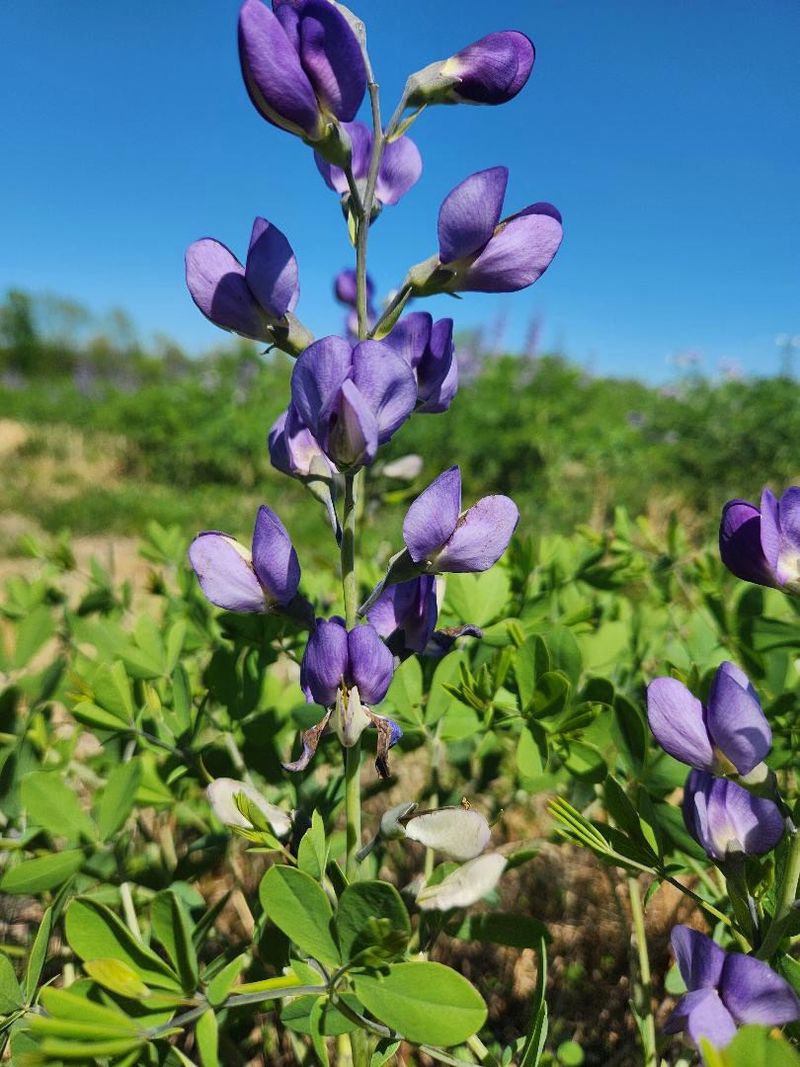
Spring in Arizona has a way of sneaking up on you.
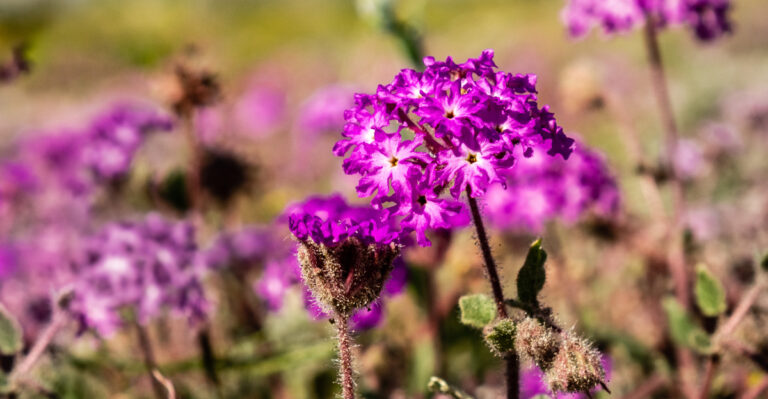
One week the yard looks dusty and quiet, and the next, trailing indigo bush is covered in clusters of tiny purple flowers that practically glow in the desert light.
The blooms appear in late winter through spring, and sometimes again in fall if monsoon rains arrive on schedule.
Those purple flowers are not just pretty. They are a food source.
Native bees, including several species documented by Arizona State University researchers, actively visit Dalea species for nectar and pollen.
Butterflies show up too, particularly small blues and skippers that are easy to miss unless you are watching closely.
The blooms are small individually, but they cover the plant in a way that reads as a solid wash of purple from a few feet away.
It creates a seasonal color moment that Mexican primrose also delivers, so you are not sacrificing beauty when you make the switch. You are just getting it with fewer strings attached.
After blooming, the plant goes back to its silver-green self and continues doing its job as a groundcover.
No deadheading required. No spent flower cleanup that turns into an afternoon project. The blooms fade gracefully, and the foliage carries the visual interest through the hotter months when most other flowering plants have called it a season.
Low Water Needs Fit The Yard
Water is not something Arizona gardeners throw around carelessly.
Between rising utility costs and ongoing drought conditions across the Southwest, every gallon counts. Trailing indigo bush fits neatly into a low-water landscape plan once it gets past its first season in the ground.
During establishment, which typically takes one full growing season, the plant needs regular watering to help its roots get settled.
The University of Arizona Cooperative Extension recommends deep, infrequent irrigation during this period rather than frequent shallow watering.
Deep watering encourages roots to reach down into the soil, which makes the plant more resilient once summer heat arrives.
After establishment, trailing indigo bush shifts into a genuinely low-water mode.
It can survive on rainfall alone in many parts of Arizona, though supplemental irrigation during long dry spells keeps it looking its best.
In the low desert, most established plants do well with a deep watering every two to three weeks during summer, and even less during cooler months.
Compare that to Mexican primrose, which spreads aggressively partly because it is chasing moisture through your soil.
Trailing indigo bush is more content with what it gets. It does not push runners into irrigated lawn areas or creep toward drip emitters that were not meant for it.
Less water drama means less plant drama, and in an Arizona yard, that kind of reliability is worth a lot.
Rooting Stems Fill Space Gently
There is a gardener in every neighborhood who has spent a full Saturday afternoon on hands and knees pulling Mexican primrose runners out from between stepping stones.
If that gardener is you, the way trailing indigo bush spreads will feel like a genuine relief.
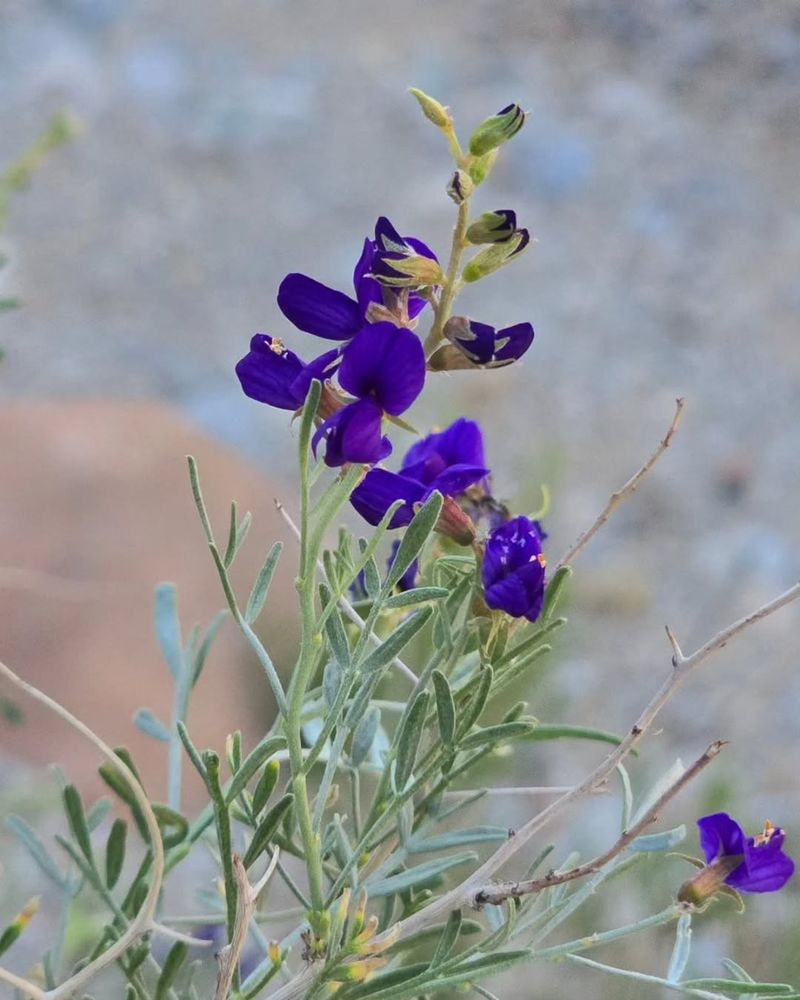
Trailing indigo bush spreads through stems that creep outward along the soil surface.
When a stem touches the ground long enough, it can root at that point and extend the plant’s reach. This is called layering, and it happens gradually rather than explosively. The plant is not passive, but it is not pushy either.
Because the spread happens above ground and at a measured pace, it is much easier to monitor and redirect.
You can see where the stems are going. You can tuck them back, trim them, or guide them toward the space you actually want filled.
With Mexican primrose, the underground rhizomes move invisibly until a new plant pops up somewhere inconvenient.
Trailing indigo bush tends to fill in at a rate of roughly one to two feet per year under good conditions.
That is enough to make real progress on a bare slope or open gravel bed without turning into a land grab.
Gardeners who want coverage that actually respects boundaries find this spreading habit much easier to live with long-term. It fills space like a good houseguest rather than an uninvited one.
Reflected Heat Does Not Scare It
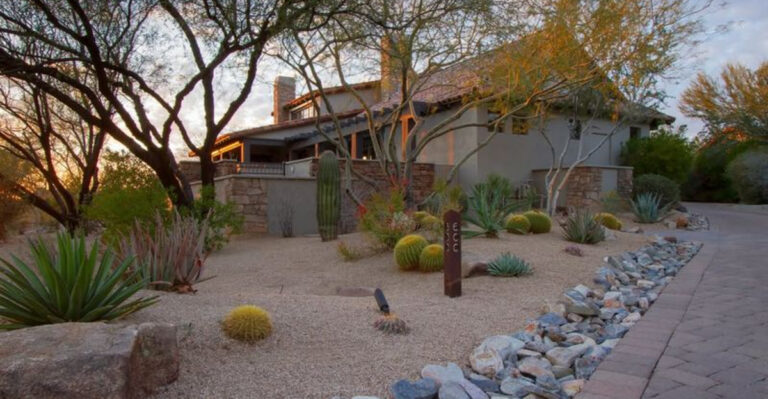
That strip of gravel between the sidewalk and the house wall is one of the hardest spots in any Arizona yard.
Concrete on one side, stucco on the other, and reflected heat bouncing between them all afternoon. Most plants last a season there before giving up entirely.
Trailing indigo bush treats that kind of heat exposure like a baseline condition rather than an emergency.
Native to desert regions of the American Southwest and northern Mexico, this plant evolved in places where reflected heat, rocky substrates, and brutal afternoon sun are just the daily reality.
Planting it along a south-facing wall or at the edge of a baking driveway puts it back in conditions close to its natural habitat. It does not just tolerate those spots. It can actually look good in them.
The silvery foliage plays a role here too.
Light-colored leaves absorb less heat than dark ones, which helps the plant manage thermal stress during the hottest parts of the day.
Combine that with deep roots that access moisture lower in the soil profile, and you have a plant built for exactly the kind of abuse Arizona’s hardscape edges dish out.
Landscape designers working in the Phoenix and Tucson areas frequently recommend trailing indigo bush for these tough transition zones, the spaces where pavement meets planting bed and heat has nowhere to go but up.