The Invasive Tree Spreading Spotted Lanternfly Through Pennsylvania Yards
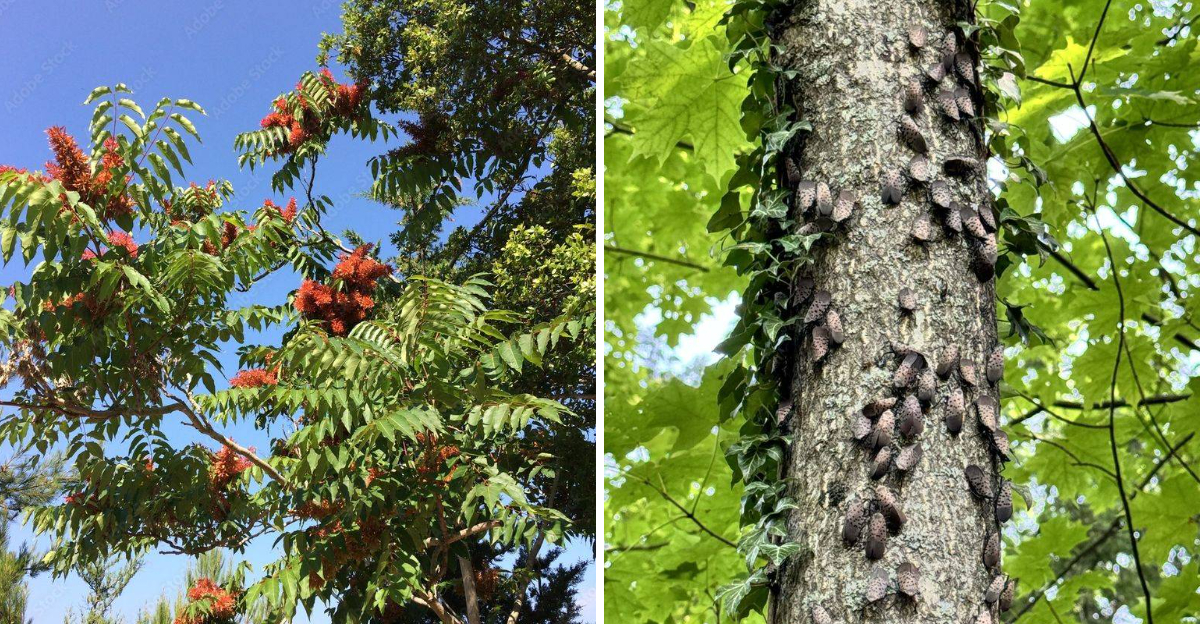
If something is growing suspiciously fast along your Pennsylvania fence line and you cannot quite figure out what it is, there is a reasonable chance you are looking at tree-of-heaven. Not the inspiring name it sounds like.
This invasive tree has made itself very much at home across Pennsylvania, showing up along alleys, fence lines, sidewalk edges, and vacant lots with an enthusiasm that most desirable plants could never match.
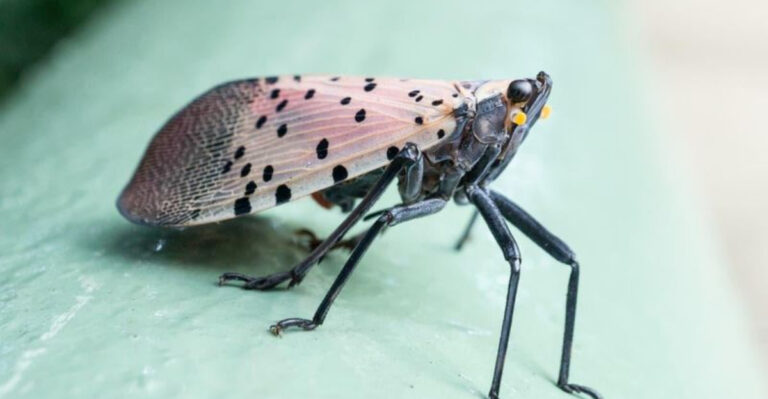
It also happens to be the spotted lanternfly’s favorite hangout, which gives homeowners a very practical reason to care about identifying and managing it.
Female trees produce thousands of seeds annually, root sprouts push up new stems in all the wrong places, and the whole situation can get out of hand faster than most people expect.
Understanding how this tree behaves is genuinely the smartest place to start.
1. Tree-Of-Heaven Is A Preferred Host
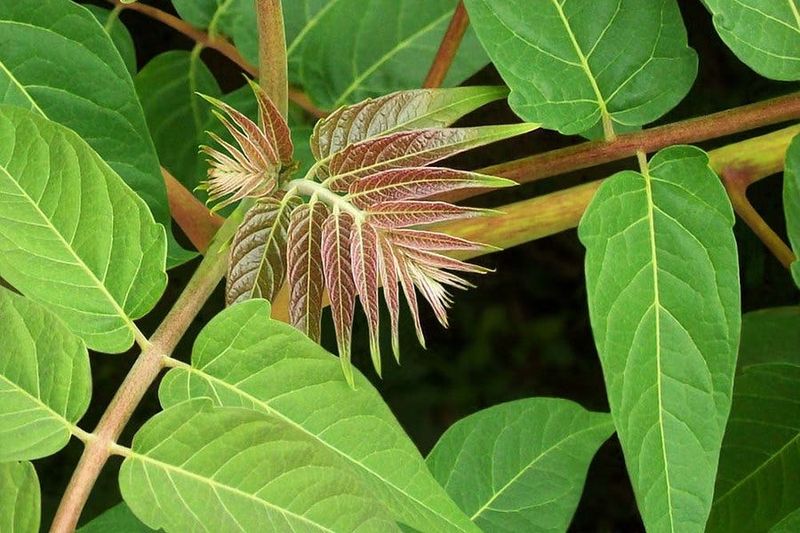
Walk through almost any Pennsylvania neighborhood in late summer and you might spot clusters of spotted lanternflies on a tree that looks unremarkable at first glance.
That tree is often tree-of-heaven, a plant researchers have identified as one of the most attractive hosts for spotted lanternfly activity in the region.
While spotted lanternflies can feed on dozens of plant species, tree-of-heaven seems to draw them in consistently, especially during certain times of the season.
Spotted lanternflies feed by piercing plant tissue and drawing out sap.
When they gather in large numbers on a preferred host like tree-of-heaven, they can stress the plant and leave behind a sticky substance called honeydew, which drips onto surfaces below and can lead to sooty mold growth.
Pennsylvania homeowners with tree-of-heaven on their property may notice this residue on patio furniture, fences, or walkways nearby.
Tree-of-heaven is originally from China and was introduced to Pennsylvania in the 1700s. Since then, it has spread widely across the state, thriving in disturbed soils along roadsides, alleys, and yard edges.
Its presence as a preferred host means that having it on or near your property may increase the chances of spotted lanternfly activity in that area.
Knowing how to identify it is a helpful first step for any Pennsylvania homeowner paying attention to yard conditions this season.
2. Spotted Lanternflies Gather On The Bark
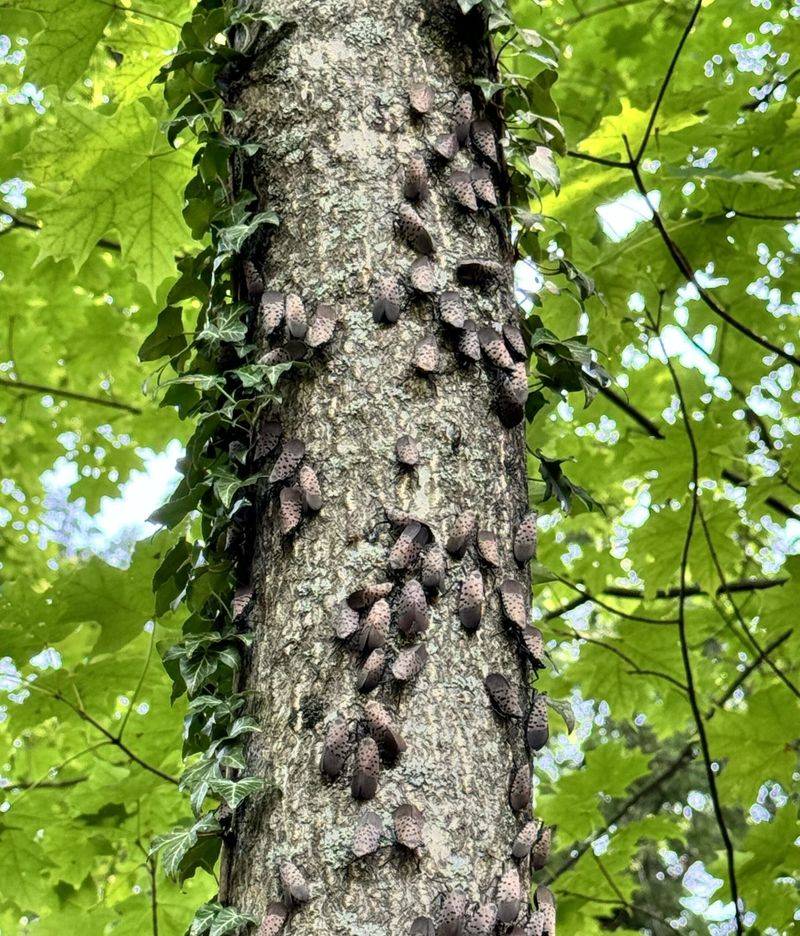
On a warm afternoon in a Pennsylvania yard, you might notice what looks like a strange mosaic of gray, red, and black pressed against tree bark.
Look closer and those shapes turn out to be spotted lanternflies, gathered in clusters along the trunk and lower branches of tree-of-heaven.
This behavior, where the insects congregate on bark rather than spreading evenly across a plant, is one of the more recognizable signs that tree-of-heaven is nearby.
Spotted lanternflies tend to move up and down trunks throughout the day, often gathering lower on the bark in the morning and moving higher as temperatures rise.
During late summer and early fall in Pennsylvania, adult spotted lanternflies may appear in striking numbers on tree-of-heaven trunks.
The adults show their red hind wings when disturbed, making the scene even more noticeable to homeowners who have not encountered this pest before.
Your Pennsylvania Garden Changes Every Week. Your Plan Should Too.
Gardening in Pennsylvania changes quickly throughout the season. Every Friday you’ll receive a simple weekly plan showing exactly what to plant, prune, fertilize, harvest, and protect so you never miss the right timing.
Beyond tree-of-heaven, spotted lanternflies will also feed on fruit trees, grapevines, hops, and other plants. However, seeing large groups on tree bark, especially on a fast-growing tree near a fence or alley, is worth investigating.
The honeydew they produce while feeding can drip onto nearby surfaces and attract other insects.
Checking your Pennsylvania yard for this bark-gathering behavior during late summer is a practical way to stay aware of spotted lanternfly activity around your home.
3. Fast Growth Helps It Spread Through Yards
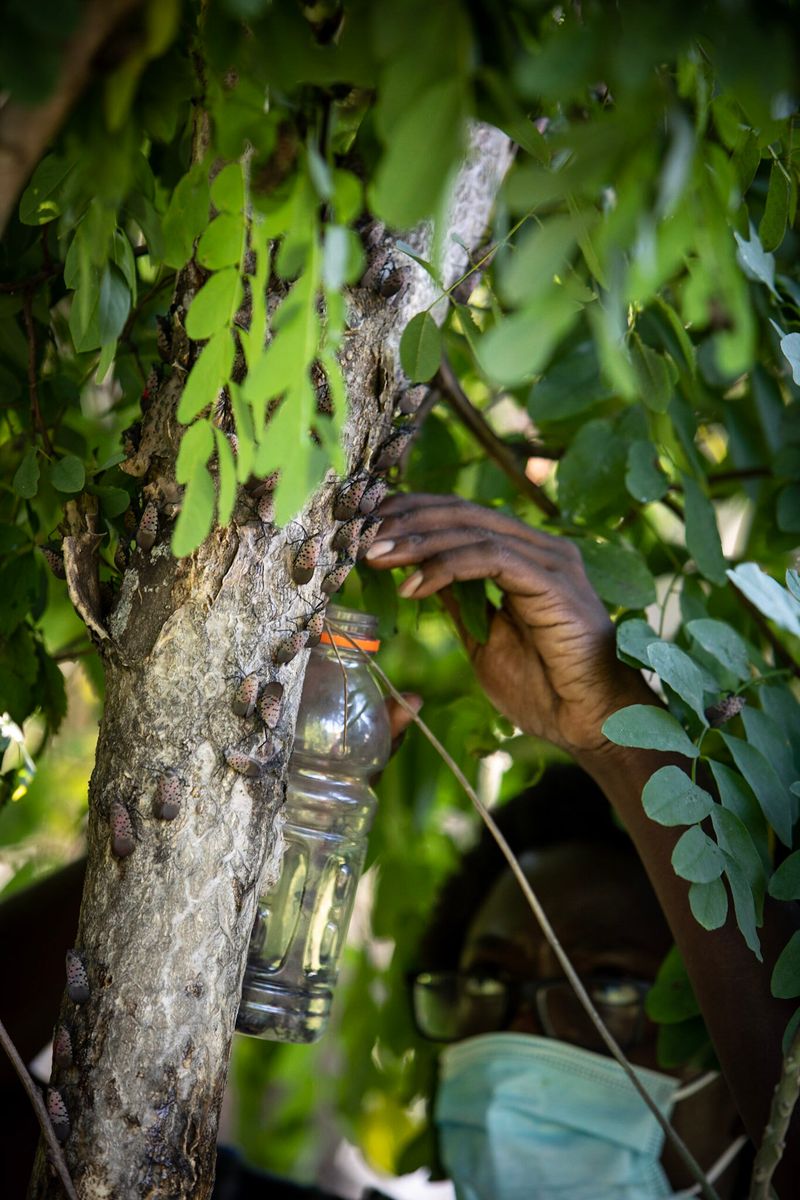
Few invasive plants in Pennsylvania grow as aggressively as tree-of-heaven once it finds a foothold.
Seedlings that sprout in spring can reach several feet in height by the end of the growing season, outpacing many native plants and shrubs that homeowners intentionally plant.
This rapid growth is one reason why tree-of-heaven can quietly take over a yard edge, alley strip, or fence line before most people realize what is happening.
The tree thrives in poor, compacted, or disturbed soils, which makes urban and suburban Pennsylvania environments particularly welcoming.
Cracked sidewalks, gravelly alleys, and the edges of driveways are all places where tree-of-heaven seedlings can take root with minimal competition.
Because the tree grows so quickly, it can reach a size that makes it harder to manage if left unattended for even a single growing season.
Fast growth also means the tree produces seeds sooner than slower-growing plants. A young tree-of-heaven in a Pennsylvania yard could begin producing seeds within just a few years of sprouting.
Each seed cluster contains many individual seeds that are carried by wind, spreading the plant to new areas nearby.
For homeowners trying to reduce spotted lanternfly habitat around their property, understanding how quickly this tree can establish itself is an important part of planning any management approach before the situation expands further.
4. Seedlings Appear Along Fences And Alleys
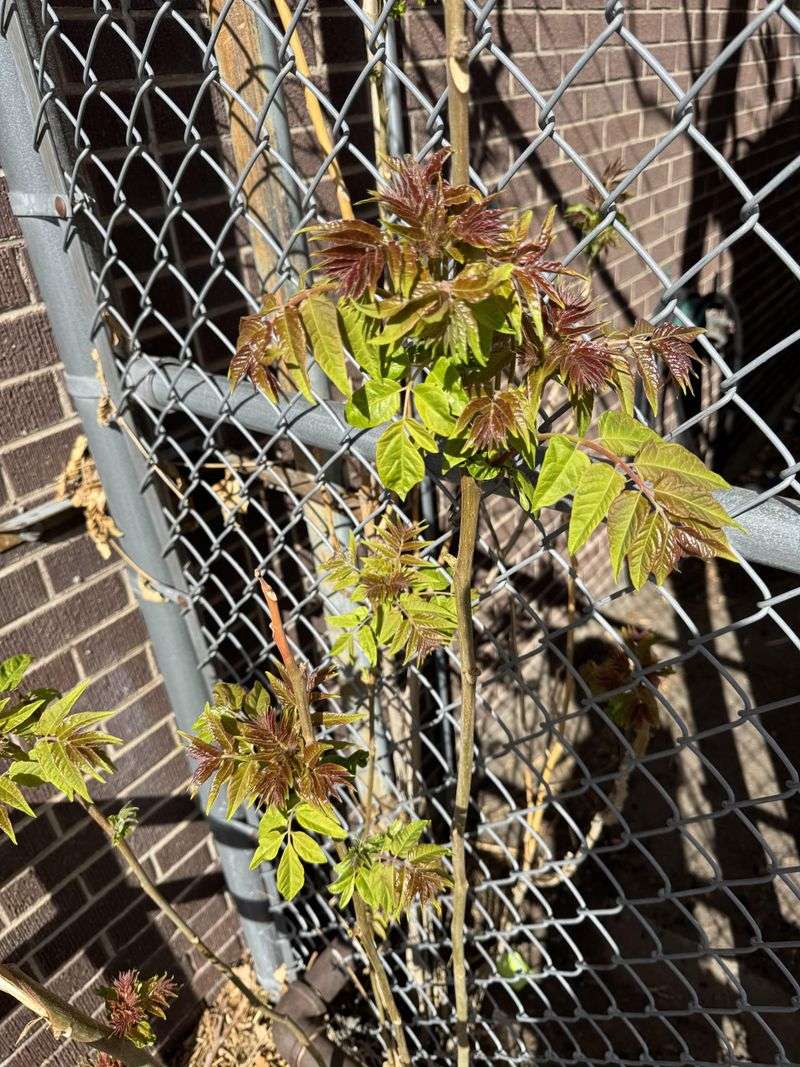
Beside garages, along chain-link fences, and tucked into the narrow strip between a sidewalk and an alley wall, tree-of-heaven seedlings have a talent for appearing where you least expect them.
Many Pennsylvania homeowners first notice the plant not as a mature tree but as a cluster of fast-growing seedlings that look vaguely tropical, with long compound leaves made up of many smaller leaflets arranged along a central stem.
That distinctive leaf shape is one of the easiest early identification clues.
Each leaflet on a tree-of-heaven leaf has a small notch or lobe near its base, which is a detail that helps separate it from similar-looking plants like sumac or black walnut.
In early summer, these seedlings can be easy to overlook, blending in with other weedy growth along fence lines.
By midsummer, some of them may already be taller than knee height, and by fall they can be well established.
Pennsylvania alleys are especially common spots for tree-of-heaven seedlings because seeds blow in from nearby trees and land in the gravelly, disturbed soil that lines many alley edges.
Removing seedlings when they are small is generally easier than dealing with established trees, though even young plants can resprout from their roots if the stem is cut without follow-up treatment.
Staying observant along your fence line through spring and early summer gives you the best window for catching these seedlings early.
5. Crushed Leaves Have A Strong Odor
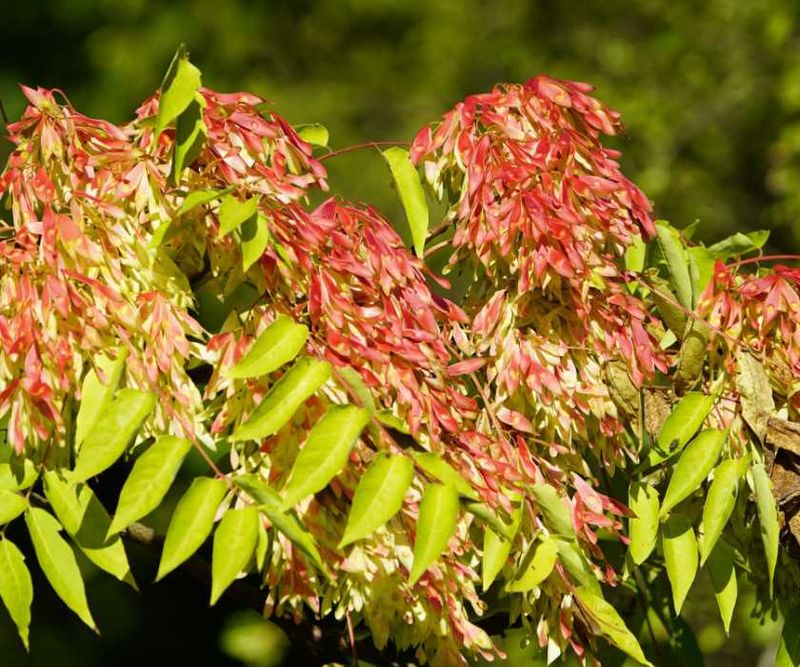
One of the most memorable things about tree-of-heaven is what happens when you crush one of its leaves.
The smell that releases is sharp, somewhat unpleasant, and has been compared to rancid peanut butter or burnt rubber by people who encounter it for the first time.
This odor is caused by compounds in the leaf tissue and is one of the simplest ways to confirm that you are dealing with tree-of-heaven rather than a similar-looking native plant.
Gardeners in Pennsylvania who are learning to identify invasive plants often find this smell test surprisingly useful. If you snap a small branch or crush a leaflet between your fingers and notice that distinctive sharp odor, you can feel fairly confident about the identification.
The smell is strong enough that some people find it noticeable even when walking near a tree-of-heaven on a hot day without touching it.
The odor does not directly affect spotted lanternfly behavior in a way that homeowners need to manage, but it is a helpful identification tool.
Knowing you have tree-of-heaven on your property means you can make informed decisions about monitoring for spotted lanternfly activity and planning any removal steps.
Pennsylvania residents who are new to invasive plant identification often say the smell test is the feature that sticks with them most and makes tree-of-heaven one of the easier invasive plants to recognize once you know what to look for.
6. Female Trees Produce Large Seed Clusters
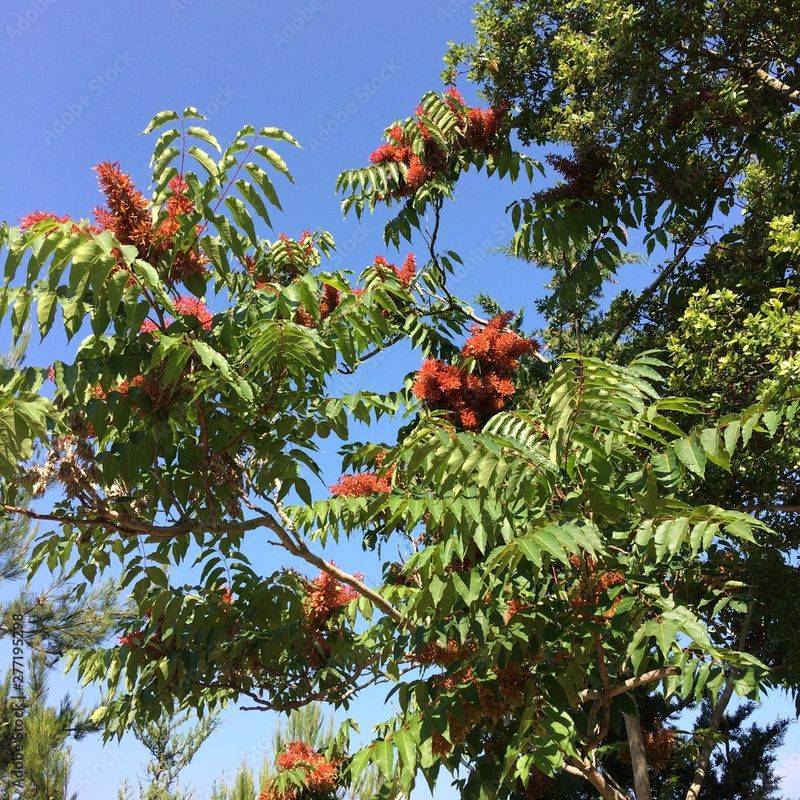
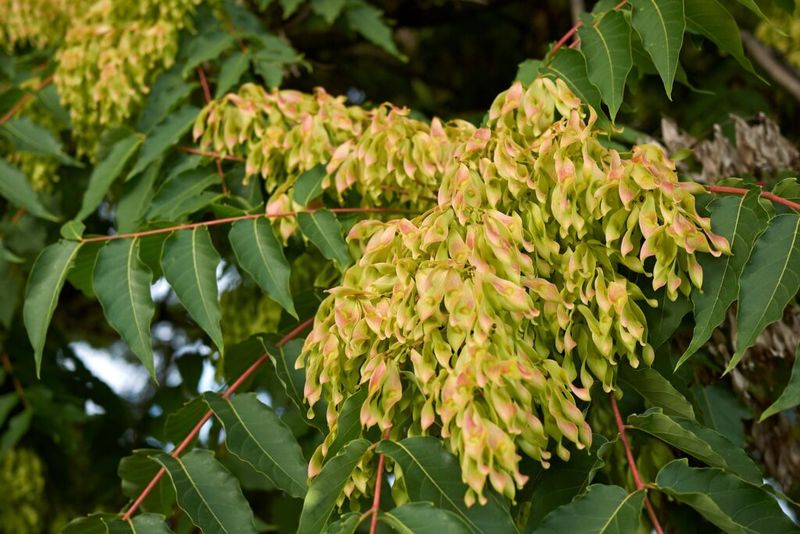
Hanging from the upper branches of a mature female tree-of-heaven, large clusters of papery, winged seeds create an unmistakable sight in late summer across many Pennsylvania neighborhoods.
These seed structures, called samaras, are similar in shape to maple seeds but tend to grow in much larger, denser clusters.
A single female tree can produce an enormous number of seeds in one season, and each seed has a papery wing that allows wind to carry it away from the parent tree.
The sheer volume of seeds a female tree-of-heaven produces is one of the main reasons this invasive plant spreads so effectively.
Seeds can travel considerable distances on a breeze, landing in garden beds, alley edges, vacant lots, and wooded yard borders throughout Pennsylvania communities.
Once a seed lands in a spot with enough light and moisture, germination can happen relatively quickly under the right conditions.
For homeowners trying to manage tree-of-heaven on their property, identifying female trees before or during seed production is useful.
Removing or treating a female tree before seeds mature and drop can help reduce the number of new seedlings that appear the following season.
Male and female trees look similar for most of the year, but the large seed clusters on female trees make identification straightforward in late summer.
Staying aware of seeding patterns in your Pennsylvania yard helps you time any management steps more effectively.
7. Root Sprouts Can Create New Stems
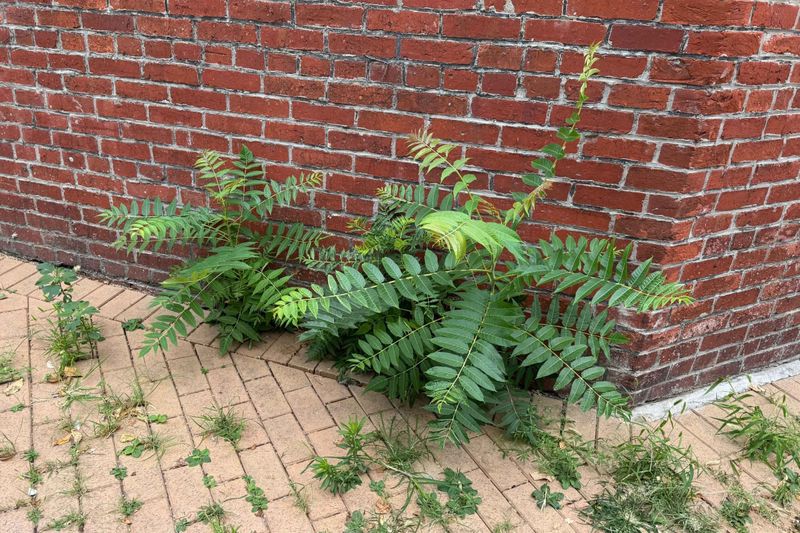
Along a property line in many Pennsylvania yards, you might notice a row of young stems appearing from the ground, each sporting the same large compound leaves, even though no obvious parent tree is nearby.
These are often root sprouts from tree-of-heaven, and they are one of the more stubborn challenges homeowners face when trying to manage this invasive plant.
The root system of tree-of-heaven can extend well beyond the visible canopy, and when the main stem is cut, the roots may respond by sending up multiple new sprouts.
This resprouting behavior means that simply cutting down a tree-of-heaven without any follow-up plan can sometimes result in more stems appearing than were there before.
The plant has a strong ability to recover from damage, and the root system stores energy that feeds new growth after the above-ground portion is removed.
Pennsylvania homeowners who have cut tree-of-heaven and then noticed a flush of new sprouts the following season have experienced this firsthand.
Managing root sprouts effectively often involves follow-up steps beyond cutting, such as applying herbicide to cut stumps according to label directions, or monitoring for new sprout growth and addressing it promptly.
Because root systems can cross property lines, coordination with neighbors may be helpful in some situations.
Pennsylvania extension resources offer guidance on management approaches that account for resprouting, which is worth reviewing before starting any removal project on your property.
8. Removing It Takes Careful Planning
Deciding to remove tree-of-heaven from a Pennsylvania yard sounds straightforward, but the process benefits from some thought before you start cutting.
Because the tree can resprout vigorously from its roots, removal without a follow-up plan may lead to a flush of new growth rather than a solved problem.
The size and location of the tree also matter, since large trees near power lines, fences, or structures may require professional help to remove safely.
Timing plays a role in how effective removal efforts tend to be.
Late summer and early fall, when the tree is moving energy down into its roots, is often considered a favorable window for herbicide treatments on cut stumps, though always following product label directions is essential.
Smaller seedlings and young sprouts may be easier to remove by hand when the soil is moist, but even these should be monitored for regrowth in the weeks following removal.
Pennsylvania homeowners should also consider that removing tree-of-heaven does not automatically eliminate spotted lanternfly activity on a property, since the insects can feed on many other plants and move in from surrounding areas.
Removing a preferred host may reduce the attractiveness of your yard to spotted lanternfly over time, though managing the pest effectively often involves a broader approach than tree removal alone.
Monitoring regularly, reporting sightings to Pennsylvania authorities, and staying informed about current regional guidance are all important parts of that bigger picture.
Planning carefully gives your removal efforts the best chance of lasting impact.