What It Really Means When Japanese Beetles Start Eating Your North Carolina Garden Plants
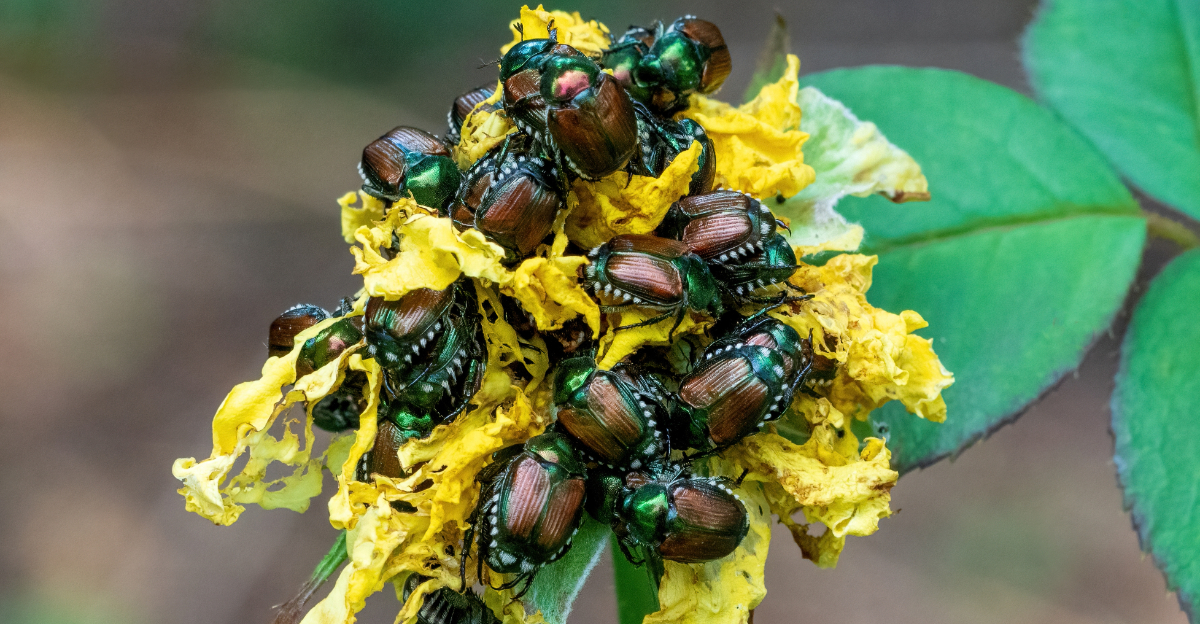
Japanese beetles are not subtle about their preferences, and a garden that suddenly has them feeding in numbers is not experiencing random bad luck.
These insects make calculated choices about where to land and feed based on specific plant chemistry, sun exposure, and what their internal population dynamics are doing at any given point in the season.
North Carolina’s summer heat influences beetle behavior in ways that affect which plants get hit first, how long feeding pressure stays intense, and what actually works to reduce damage versus what just moves the problem around.
Understanding what beetle feeding activity is actually communicating about a garden’s current conditions changes the entire response from reactive to genuinely effective.
1. Leaves Eaten Away Mean Adult Beetles Are Feeding
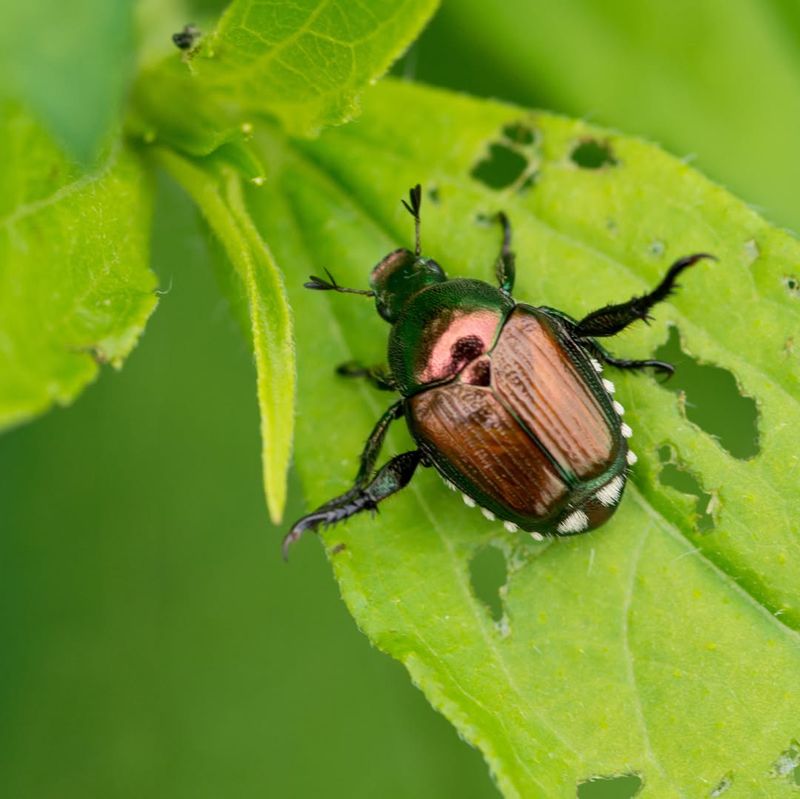
Walk up to a rose bush with that classic lace-like leaf pattern and you are looking at one of the most tell-tale signs in any North Carolina garden.
Adult Japanese beetles chew through the softer tissue between the leaf veins, leaving the veins behind like a skeleton.
The result is a leaf that looks almost see-through, with a delicate webbed structure that can be striking and alarming at the same time.
Thin-leaved plants tend to show this damage more dramatically than tough, thick-leaved ones.
Roses, beans, and grapes are especially vulnerable because their leaves offer soft tissue that beetles find easy to chew through quickly.
A heavily attacked plant can look stripped within just a few days of feeding activity starting. Not every skeletonized leaf means the whole plant is struggling.
Established plants with strong root systems often push through this kind of surface damage and recover well once beetle season winds down. Still, catching it early is always the better move.
Check your most-loved plants every single day during peak season, which in North Carolina typically runs from late June through August, and act quickly when you spot that telltale lacy look appearing on your foliage.
2. Beetles Are Gathering Because Other Beetles Are Already There
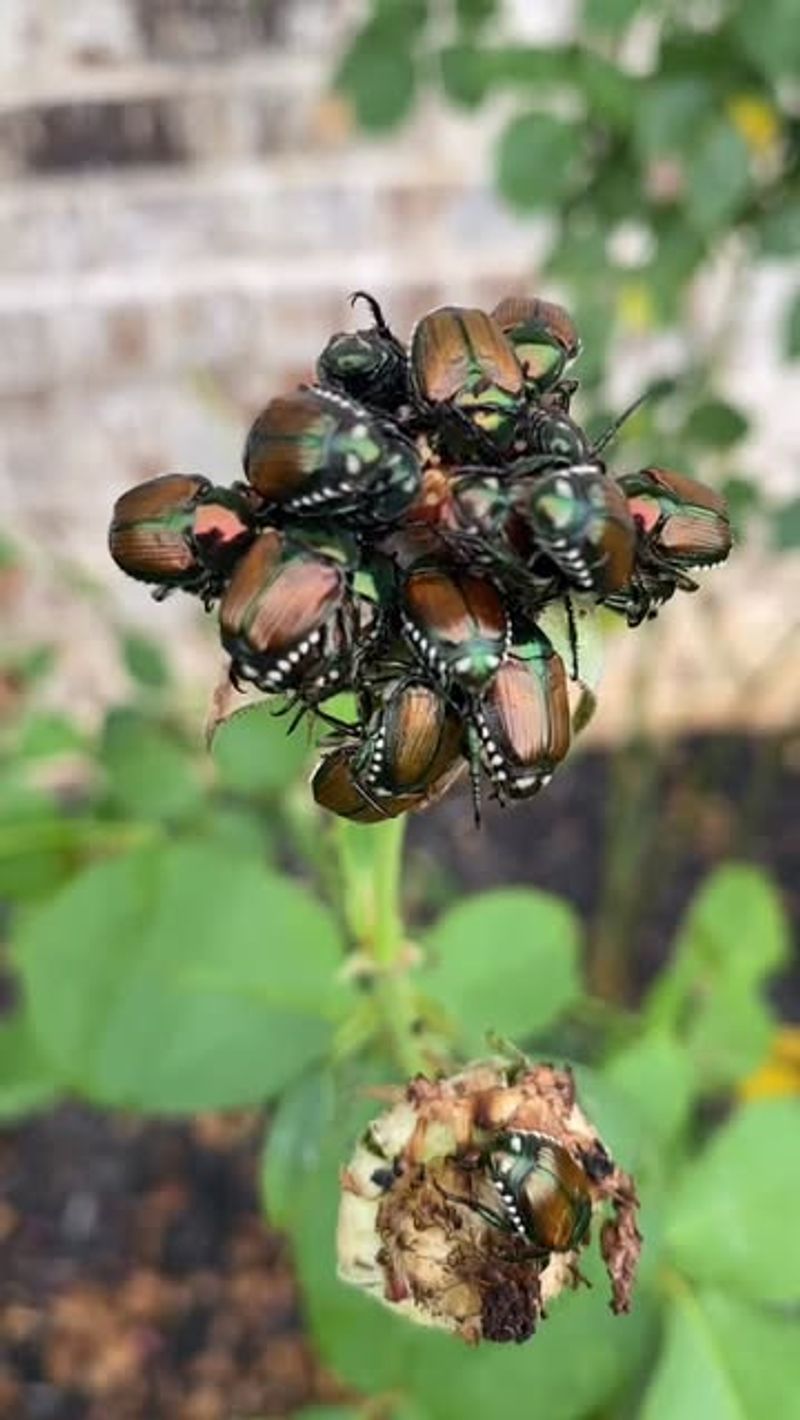
Spot one Japanese beetle and you might think it is no big deal. Spot five more the next morning and suddenly the pattern becomes clear. Japanese beetles do not just wander alone into your garden by chance.
They use scent signals and aggregation cues to communicate with each other, which means the first few beetles on a plant can actually help recruit more beetles to that same spot.
Mating activity also plays a big role in why groups form so quickly. A beetle feeding and mating on a rose attracts others nearby, and before long a single branch can hold a surprisingly busy crowd.
This is why early action matters so much more than waiting to see how bad things get. Removing even a small group in the first day or two can genuinely reduce how many show up next.
Think of it like a dinner party where the first guests set the tone. Once a few beetles signal that a plant is worth visiting, the invitation spreads fast through the neighborhood.
Your North Carolina Garden Changes Every Week. Your Plan Should Too.
Gardening in North Carolina changes quickly throughout the season. Every Friday you’ll receive a simple weekly plan showing exactly what to plant, prune, fertilize, harvest, and protect so you never miss the right timing.
North Carolina gardeners who check their gardens daily during peak season and remove early arrivals right away consistently report less severe damage overall.
Breaking up that first gathering is one of the most practical and effective steps you can take without reaching for any product at all.
3. Favorite Plants Are Sending The Strongest Invitation
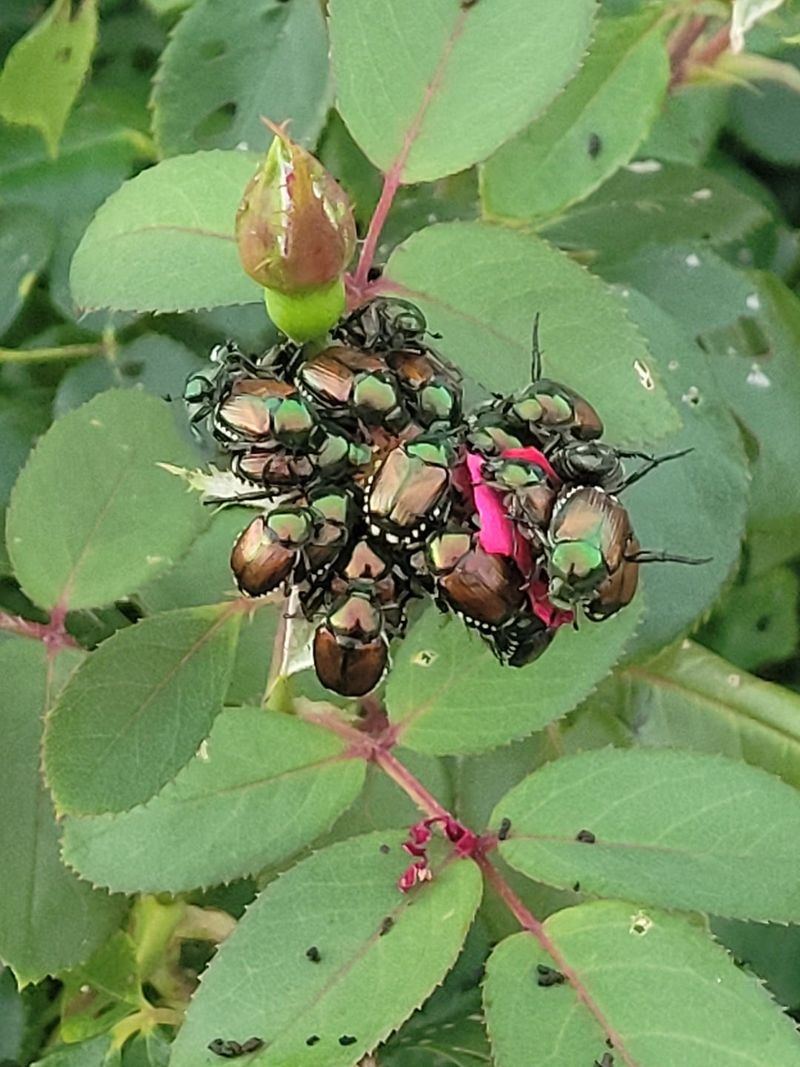
Japanese beetles are picky in the best possible way for understanding their behavior. They have clear favorites, and your garden layout can tell you a lot about where damage will concentrate.
Roses, grapes, beans, corn silks, fruit trees, crape myrtles, and many flowering plants top their preferred menu, often drawing heavy feeding while plants just a few feet away look completely untouched.
The reason comes down to plant chemistry and scent. Certain plants release volatile compounds that beetles find irresistible, especially when leaves or flowers are already slightly damaged and releasing more scent.
Once feeding starts on a preferred plant, the activity can escalate quickly while neighboring plants that are not on the favorites list remain perfectly fine. Knowing which plants beetles love most actually gives gardeners a planning advantage.
Grouping highly attractive plants together in one area makes monitoring easier, and choosing some beetle-resistant varieties for new plantings can reduce overall pressure over time.
Native plants and less attractive species like boxwood, holly, and arborvitae rarely get touched at all.
If your roses and grapes are getting hammered every summer while your other shrubs look great, that contrast is not random.
It is the beetles following their instincts straight to the plants they find most appealing in your specific North Carolina yard.
4. Morning Removal Can Slow The Crowd
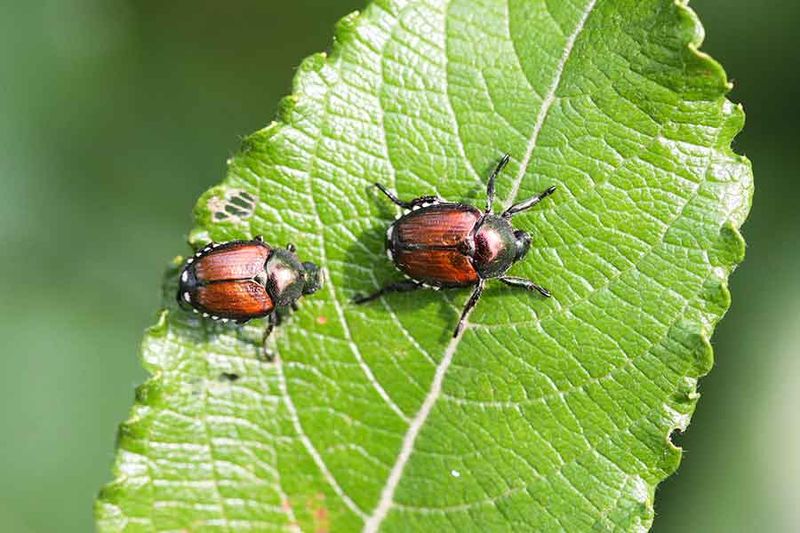
There is something satisfying about beating Japanese beetles at their own game, and early morning is exactly when you have the upper hand.
During the cooler morning hours, beetles are slower and less active, making them much easier to remove by hand before they warm up and fly off.
North Carolina summers heat up fast, so getting outside before 9 a.m. gives you the best window. The method is straightforward.
Hold a wide container filled with soapy water under the branch where beetles are resting, then gently tap or shake the branch.
Beetles drop straight in rather than flying away, and the soapy water takes care of the rest without you having to chase anything around the garden.
A shallow dish or an old plastic container works perfectly fine for this job. Doing this consistently during the peak weeks of beetle season makes a real difference over time.
Fewer beetles feeding means fewer beetles sending out those aggregation signals that pull in more visitors.
It also means less stress on your plants during the weeks when they are most vulnerable. Morning removal is free, requires no products, and fits easily into a regular garden routine.
Even spending just ten or fifteen minutes on your most prized plants each morning can visibly reduce the beetle pressure you see by midday and into the afternoon hours.
5. Traps Can Make The Problem Feel Worse
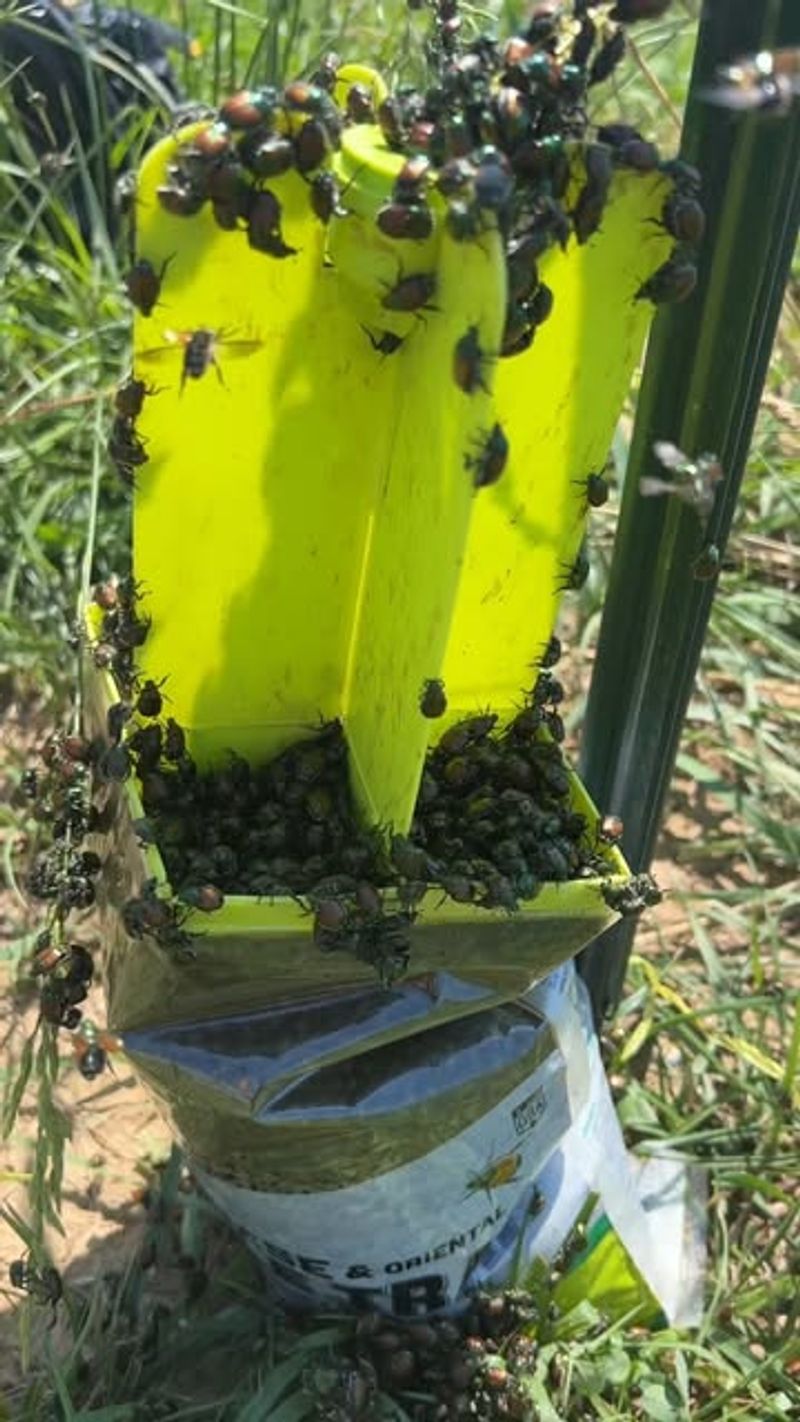
Japanese beetle traps are everywhere at garden centers every summer, and they look like a logical solution.
The bright yellow bags with floral and pheromone lures are genuinely effective at attracting beetles.
The problem is that they attract far more beetles than they actually catch, pulling in insects from a wide area and concentrating activity right near wherever the trap is placed.
Research from university extension programs consistently shows that traps placed near valued plants can actually increase the number of beetles feeding on those plants rather than reducing it.
The lure draws beetles in from a distance, and not every beetle that flies toward the trap ends up inside it.
Plenty of them land on nearby roses, grapevines, or fruit trees instead, making the problem noticeably worse in that area. If you choose to use a trap at all, placement is everything.
Position it at least 30 feet away from any plant you want to protect, ideally at the edge of your property or in a less important area.
Some gardeners place them near a fence line or at the far end of the yard. Never hang one directly beside a rose bed or fruit tree and expect the plants to benefit.
Used correctly and placed far away, traps can help reduce overall beetle numbers in the yard, but used carelessly, they become a magnet that works against you.
6. The Plant May Not Be As Lost As It Looks
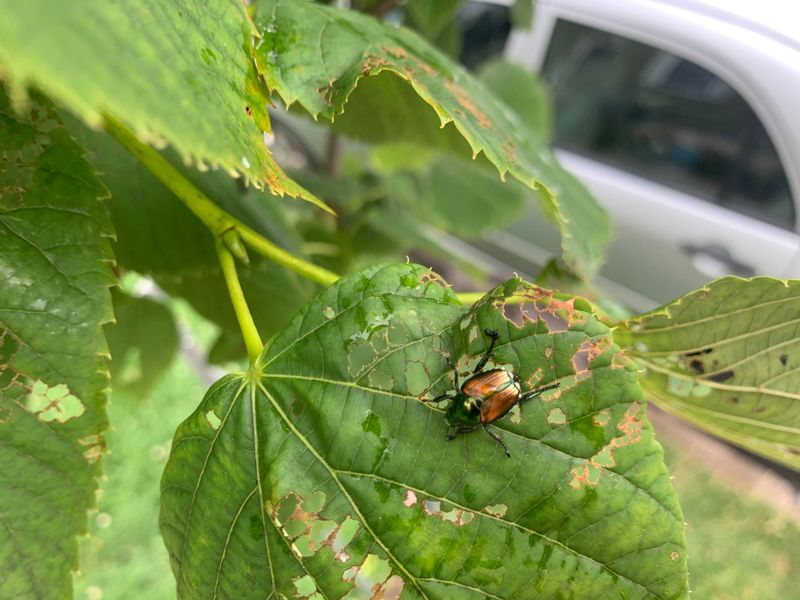
Skeletonized leaves have a way of looking absolutely alarming, especially when a favorite rose or crape myrtle suddenly looks stripped and sad. It is easy to assume the worst when so many leaves look damaged at once.
But established plants are tougher than they appear, and Japanese beetle feeding, while stressful, does not automatically mean a plant is beyond help.
Mature shrubs, trees, and well-rooted perennials have significant energy stored in their root systems.
That stored energy allows them to push out new growth once beetle pressure eases, which it does naturally as adults finish their seasonal activity and move on.
A rose that looks rough in July can bounce back with fresh leaves and even new blooms before the season ends, especially if it received good care throughout the spring.
The key is to judge the whole plant rather than focusing only on the worst-looking branch.
Check the overall structure, look for new bud formation, and consider how established the plant actually is.
A young transplant in its first season needs much quicker intervention than a ten-year-old shrub that has weathered many summers.
Give established plants some grace during beetle season, keep them watered during dry spells, and avoid stressing them further with unnecessary treatments.
Most will surprise you with how well they recover once the beetles move on.
7. Young Plants Need Faster Protection
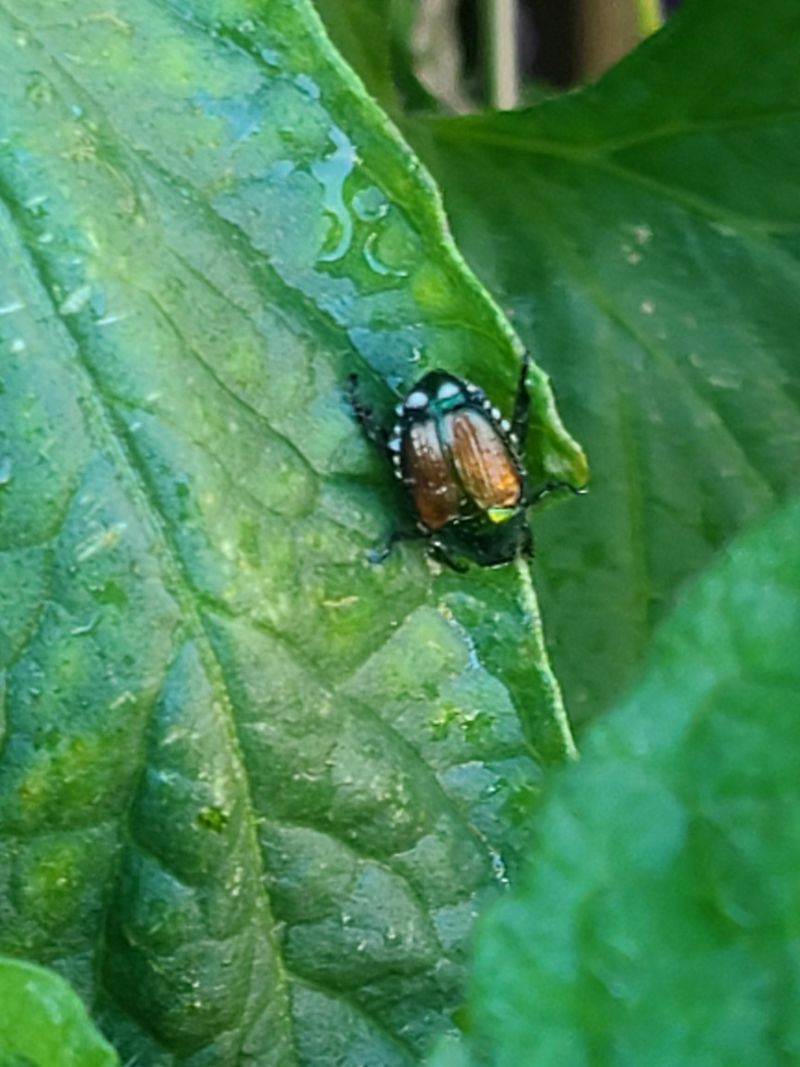
Young plants and new transplants simply do not have the reserves that mature garden plants carry.
A seedling with six leaves cannot afford to lose four of them to beetles without taking a real setback.
For small vines, newly planted fruit trees, and first-season transplants, Japanese beetle feeding can slow growth significantly and stress the plant at exactly the wrong time.
Acting fast with young plants is not about panicking. It is about recognizing that they need a little extra attention during the weeks beetles are most active.
Hand removal works well here too, and for small plants the process takes almost no time at all.
A quick check each morning and a few seconds of removal can keep a young plant in good shape through the peak season without any additional steps.
Temporary fine mesh fabric, sometimes called row cover, offers another practical option for protecting seedlings and small transplants during the heaviest feeding weeks.
Drape it loosely over the plant and secure the edges so beetles cannot find their way underneath. It lets in light and air while keeping insects off the foliage.
Remove it during flowering if pollinators are needed, and check underneath regularly to make sure no beetles slipped in.
Combined with daily monitoring, this simple approach can make a real difference for the youngest and most vulnerable plants in your North Carolina garden.
8. Damaged Flowers And Fruit Need Cleanup
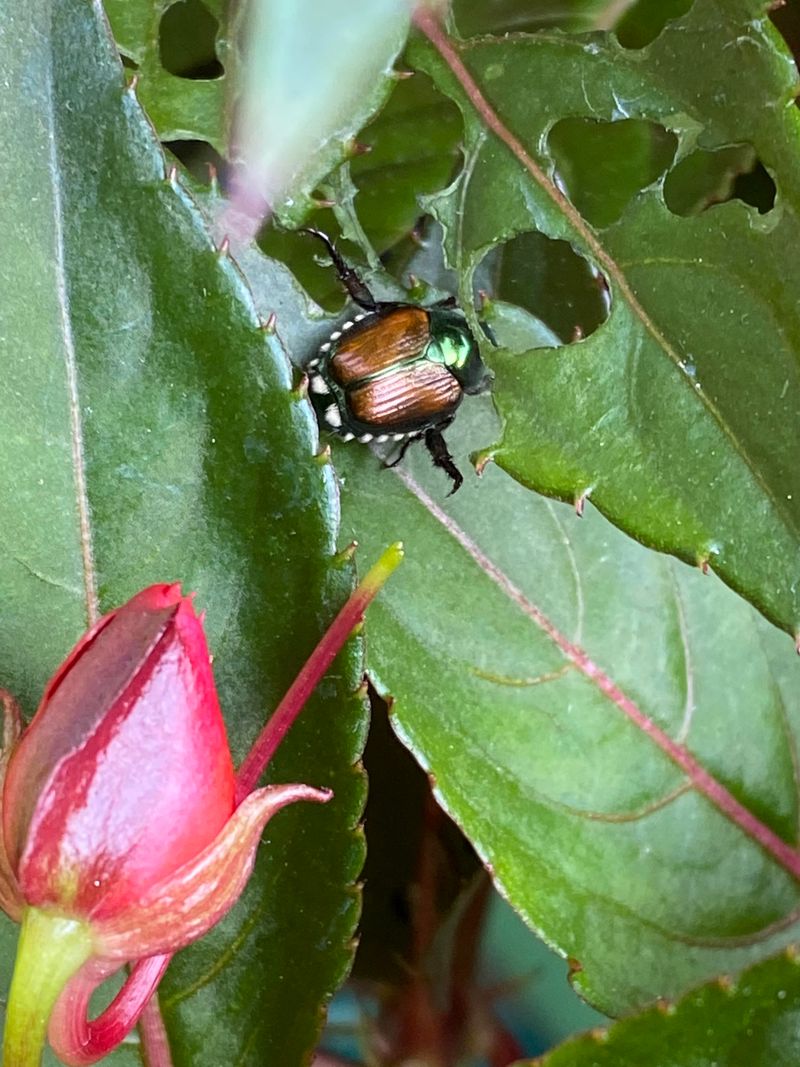
Japanese beetles have a particular attraction to soft, ripe, and slightly damaged fruit.
Once a peach, apple, or fig starts to soften on the branch, it becomes one of the easiest targets in the entire garden.
Beetles gather on damaged fruit quickly, and the activity can escalate in a short time when overripe fruit is left in place either on the tree or on the ground beneath it.
Harvesting fruit as soon as it reaches ripeness is one of the simplest and most overlooked ways to reduce beetle pressure naturally.
Ripe fruit left hanging too long not only attracts beetles but can also ferment slightly, making it even more appealing.
Picking up fallen fruit from the ground and removing it from the garden area cuts off one of the easiest food sources beetles can find without any effort. The same principle applies to flowers.
Spent or damaged blooms on roses and other flowering plants can draw beetles in, so deadheading regularly during peak season serves double duty.
It keeps the plant looking better and removes some of the scent signals that attract more beetles.
Keeping the area around prized plants clean and tidy during July and August is a low-effort habit that adds up over the weeks.
A tidy garden gives beetles fewer reasons to stick around and fewer easy spots to gather and feed.
9. Lawn Grubs May Be Part Of The Bigger Cycle
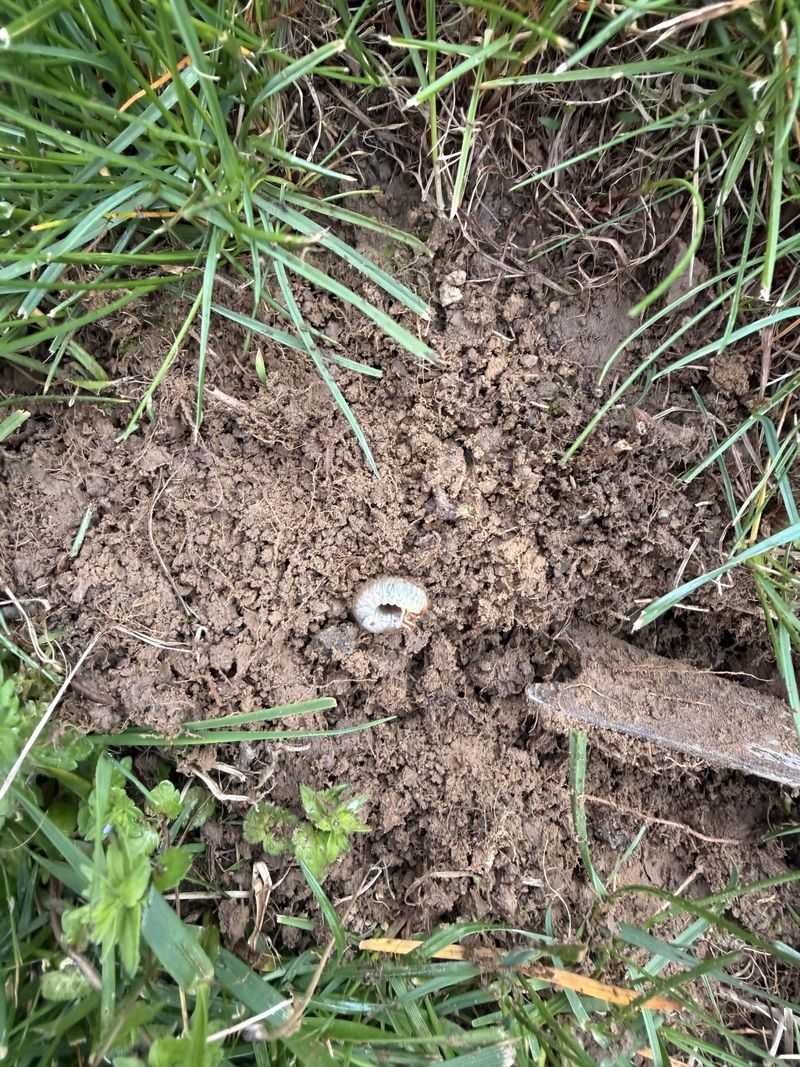
Adult Japanese beetles flying through your garden in summer are only part of the story. After feeding and mating, females move into nearby grassy areas to lay eggs in the soil.
Those eggs hatch into grubs that spend weeks feeding on grass roots below the surface, which is why lawns and garden areas are often connected parts of the same beetle cycle year after year.
Grub activity underground can cause patches of lawn to feel spongy or pull away from the soil easily, since the roots holding the turf are being fed on from below.
Birds and other wildlife sometimes dig into affected areas searching for grubs, which creates its own kind of visible lawn damage.
Recognizing this connection helps gardeners understand why a beetle problem in the garden rarely exists in complete isolation from what is happening in the surrounding lawn.
Healthy lawn care practices go a long way toward keeping grub populations in check over time.
Proper mowing height, good watering habits, and avoiding over-fertilizing with nitrogen all contribute to a lawn that supports fewer grubs naturally.
If you suspect a serious grub problem in your turf, your local North Carolina Cooperative Extension office is the best place to get advice on timing and appropriate treatment options.
Random treatment without proper identification and timing rarely delivers the results gardeners hope for, so getting local guidance first always pays off.
10. Sprays Should Be The Last Step, Not The First
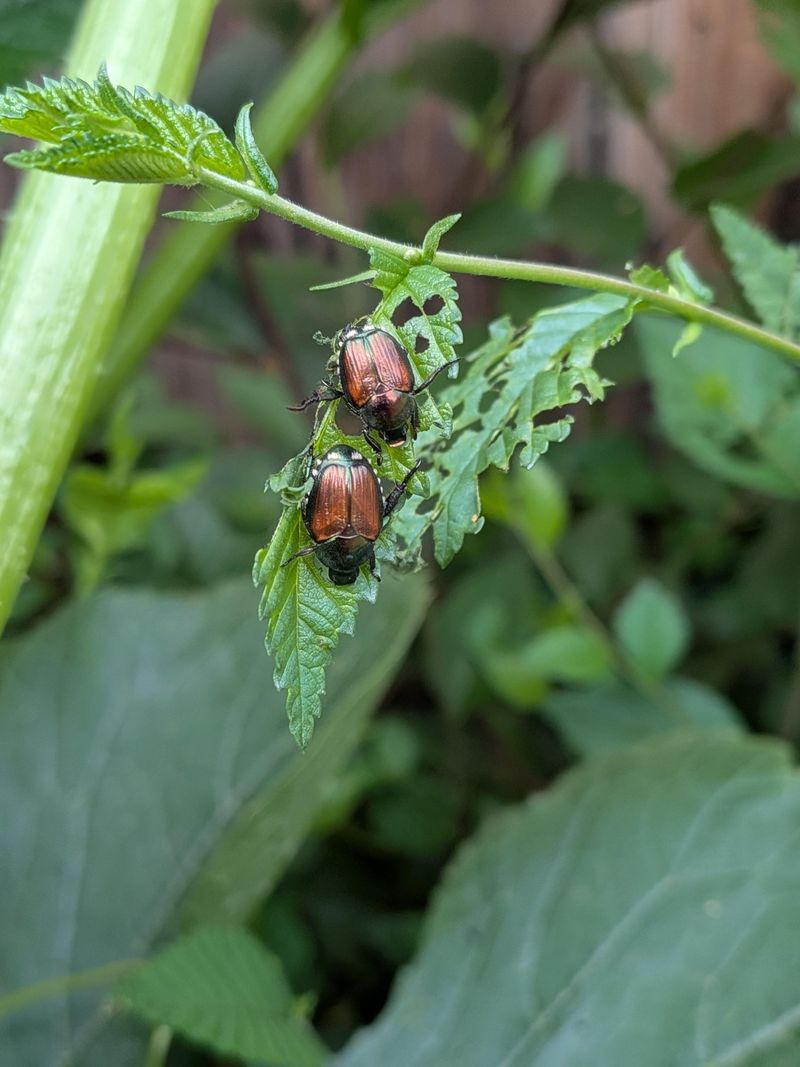
Reaching for a spray bottle the moment you see chewed leaves is a completely understandable reaction, but it is rarely the most effective first move with Japanese beetles.
Many of the plants beetles favor most, including roses, beans, and fruit trees, are also visited regularly by bees, butterflies, and other helpful insects.
Some products that target beetles can also affect those pollinators if applied at the wrong time or in the wrong way.
A smarter routine starts with identification. Confirm you are actually dealing with Japanese beetles before doing anything else, since other insects can cause similar-looking leaf damage.
Once you have confirmed the pest, hand removal, morning checks, and cleanup of ripe fruit handle a surprising amount of the pressure without any product at all.
These steps work, they are free, and they do not carry any risk to the beneficial insects working in your garden.
If populations are genuinely overwhelming and manual methods are not keeping up, a labeled product may become a reasonable option.
Always read the full label before using anything, follow the directions exactly, and apply during evening hours when pollinators are less active.
Your local North Carolina Cooperative Extension office can point you toward current recommendations for your specific situation.
The best beetle management routine combines early identification, consistent hand removal, smart trap placement, young plant protection, fruit cleanup, and a product only when truly necessary and used correctly.