The Texas Lawn Signs That Look Like Drought But Are Actually Chinch Bug Damage
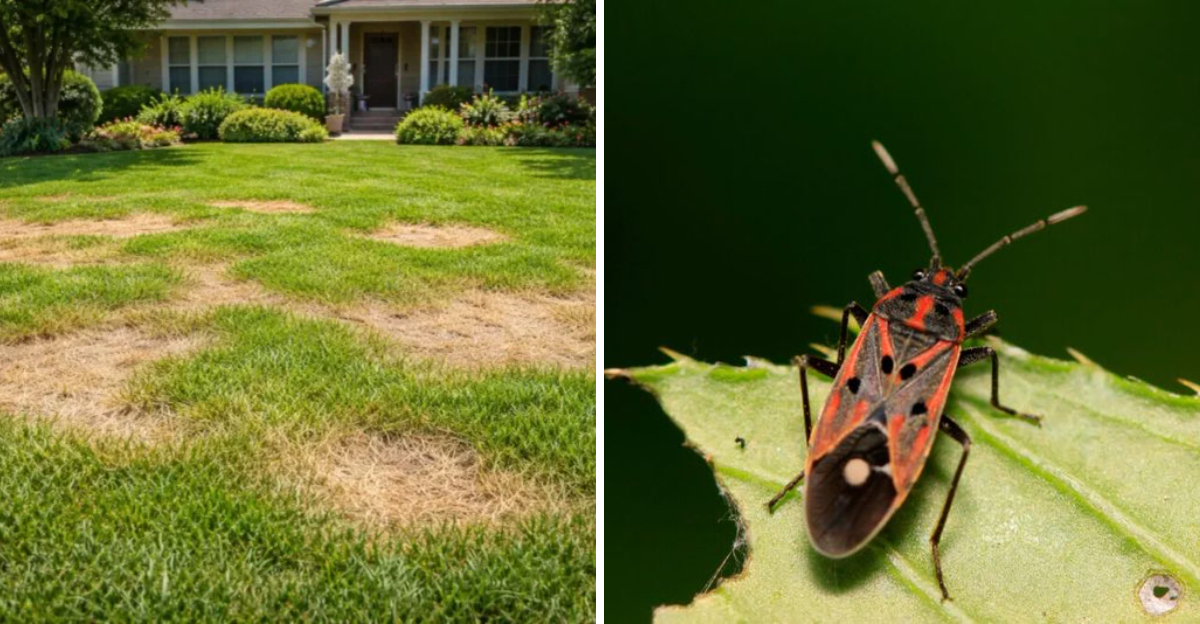
Your Texas lawn is turning yellow and brown in the middle of summer, so naturally you do what any reasonable person does: you water more. Totally logical.
Unfortunately, if chinch bugs are the actual problem, all that extra watering is not going to help even a little bit, and your water bill is going to have some feelings about that.
Southern chinch bugs are one of the sneakiest lawn pests in Texas because the damage they cause looks almost identical to drought stress.
Same yellowing, same browning, same general sense of despair about your lawn’s future. The difference is in the details: where the damage is happening, what shape it forms, and whether tiny insects are lurking right where green grass meets brown.
Those clues tell you far more than the color alone ever could.
1. Yellow Patches Appearing In Hot Sunny Areas
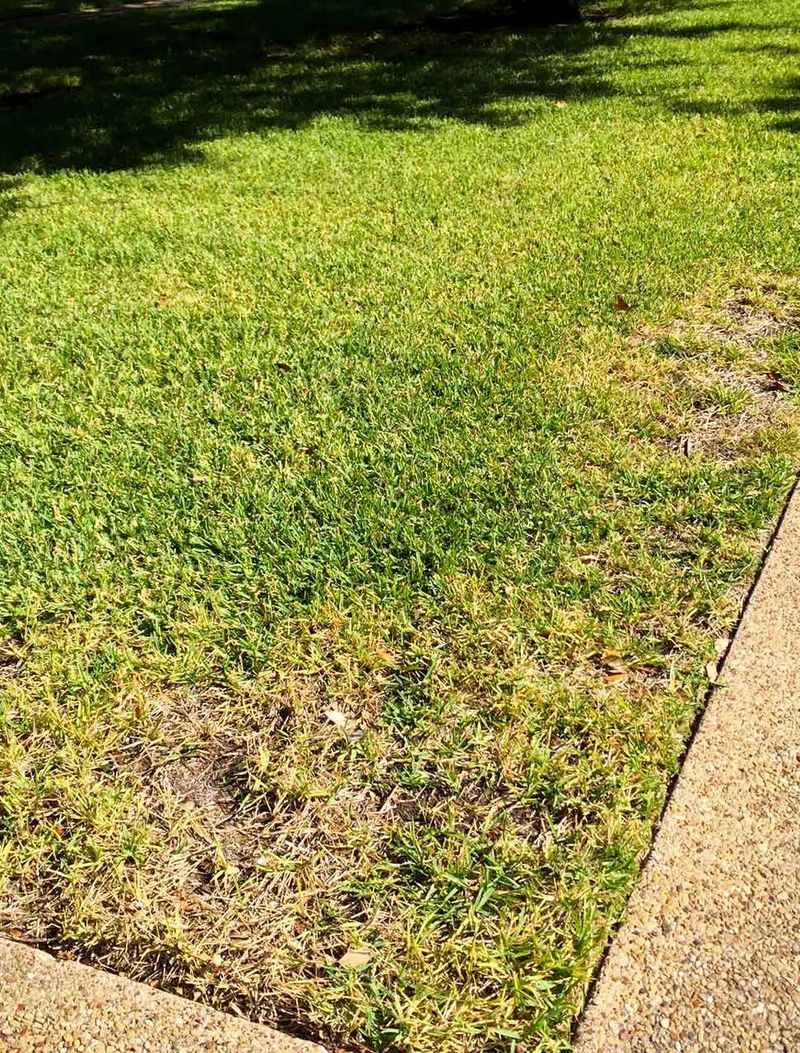
A yellow patch showing up near the sunniest corner of your lawn might seem like an obvious sign of heat stress, especially during a Texas summer when temperatures regularly climb past 100 degrees.
St. Augustinegrass loves warmth but struggles when it bakes in direct sun without enough moisture, so yellowing in those spots can feel like a textbook drought response.
The problem is that chinch bugs love the exact same conditions.
Southern chinch bugs are drawn to hot, dry, sunny areas of the lawn. They tend to show up first along south-facing exposures, open patches with little shade, and turf that gets full sun all day.
When they begin feeding, the grass yellows in a way that looks nearly identical to drought-stressed turf.
One clue to watch for is whether watering improves the yellow area within a few days. Drought-stressed St. Augustinegrass usually perks up after a good soak, while chinch bug damage tends to stay yellow or worsen even with irrigation.
Checking the soil moisture before adding more water can save you from wasting time and missing the real culprit hiding in that sunny patch.
2. Irregular Brown Spots That Keep Expanding
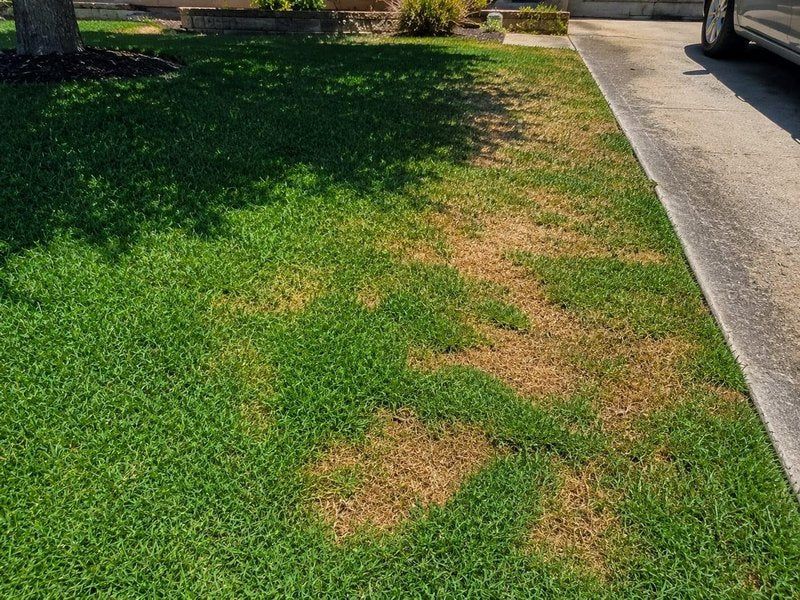
Perfectly round brown spots usually point toward a fungal issue, but when the damage in your Texas lawn looks ragged, uneven, and keeps spreading outward week after week, chinch bugs deserve a closer look.
Unlike drought stress, which tends to affect the lawn more uniformly during dry spells, chinch bug damage spreads in irregular patterns as the insects move outward from their feeding zones in search of fresh grass.
Southern chinch bugs feed by piercing grass blades and injecting a substance that disrupts water movement within the plant. As more bugs gather and feed, the damaged zone expands in a lopsided, unpredictable shape rather than a neat circle or even fade.
Homeowners often notice the spots seem to grow a little more each week, even when rainfall or irrigation has been consistent.
Watching how a brown spot changes over time is one of the most practical ways to separate pest damage from drought stress in a Texas lawn.
If the patch keeps growing outward despite regular watering and the edges look yellowish rather than crispy and dry, that expanding border is a signal worth investigating.
Your Texas Garden Changes Every Week. Your Plan Should Too.
Gardening in Texas changes quickly throughout the season. Every Friday you’ll receive a simple weekly plan showing exactly what to plant, prune, fertilize, harvest, and protect so you never miss the right timing.
A closer look at the grass along those edges often reveals the insects responsible.
3. Damage Along Driveways, Sidewalks, And Curbs
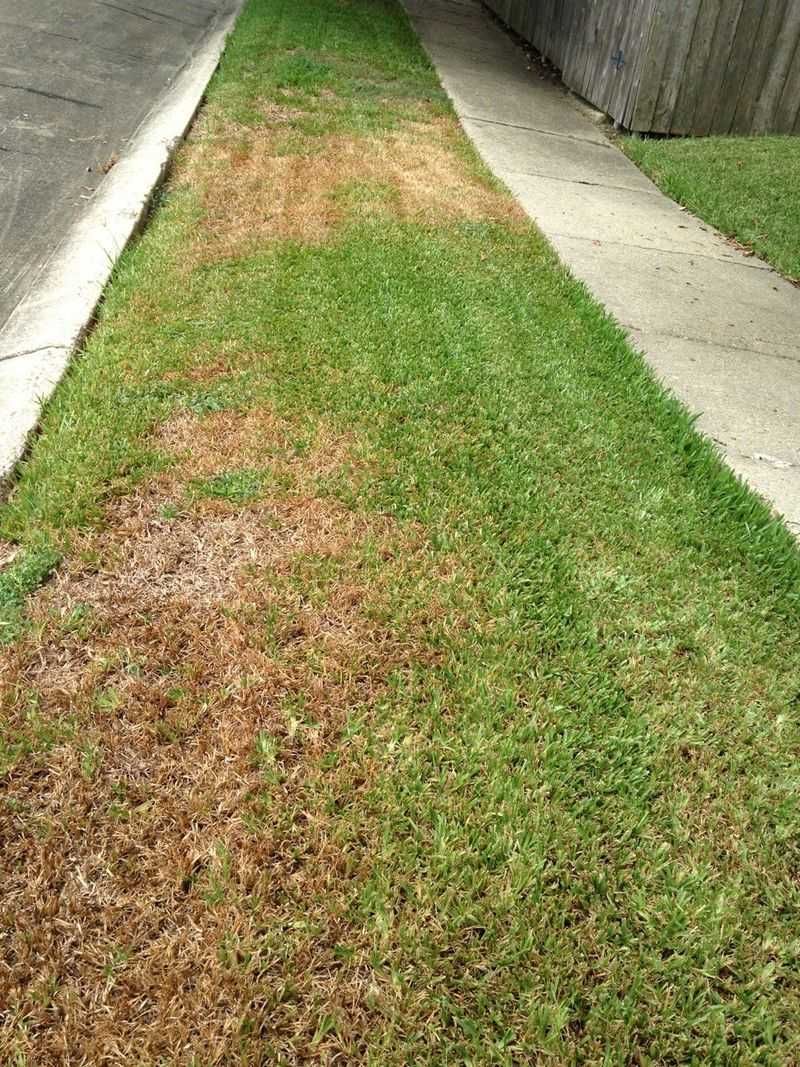
Grass growing right next to concrete tends to suffer first during a Texas drought because pavement absorbs heat and radiates it back onto nearby turf.
So when the strip of St. Augustinegrass along your driveway, sidewalk, or curb starts turning brown, drought feels like the obvious explanation.
However, that same heat-absorbing concrete also creates the warm, dry microclimate that chinch bugs prefer most.
Damage concentrated along hardscape edges is one of the more reliable location-based clues that chinch bugs may be the problem rather than dry soil.
These insects tend to colonize the hottest, most exposed sections of a lawn first, and the narrow turf strips next to driveways and curbs check every box.
The grass there often shows yellowing first, followed by browning that spreads inward toward the healthier lawn.
Checking the soil moisture right at the edge of the driveway can help clarify the situation. If the soil feels reasonably moist but the grass still looks stressed, that disconnect points away from simple drought.
Parting the grass blades at the edge of the damaged area and looking for small, fast-moving insects near the soil surface is one of the most straightforward ways to confirm whether chinch bugs are present in those border zones.
4. St. Augustine Grass Looking Dry Despite Watering
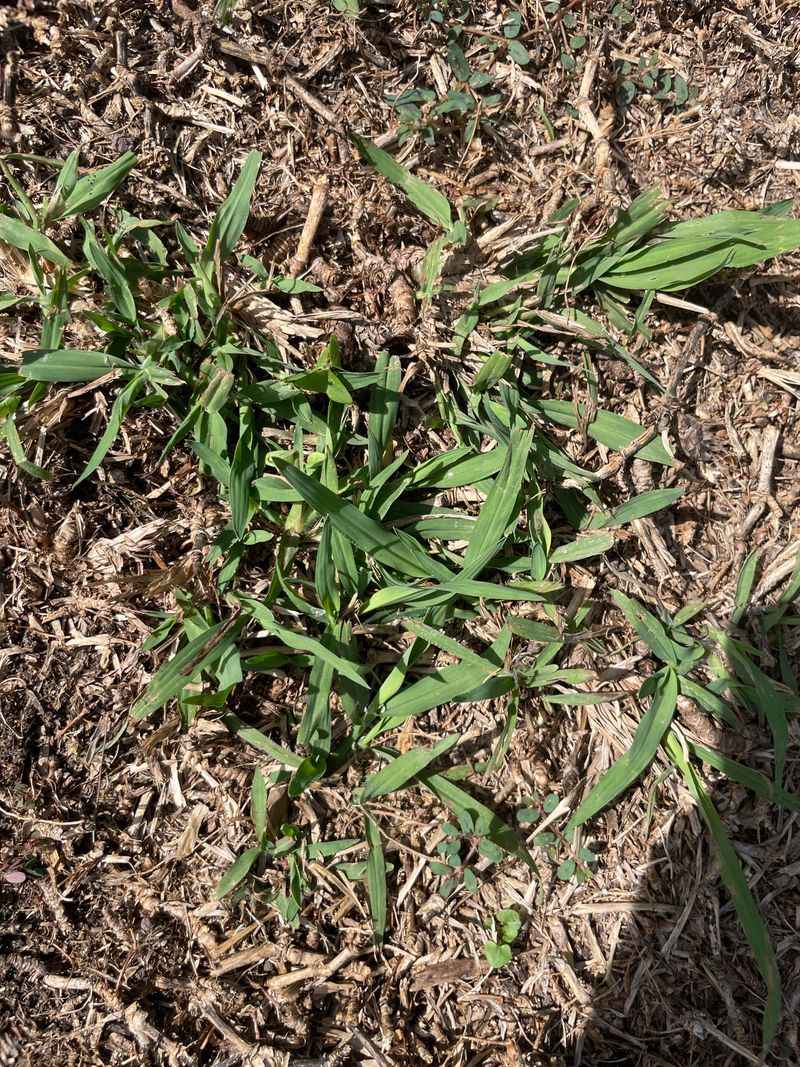
Few things are more frustrating than watering your lawn on schedule and still watching the grass look parched.
St. Augustinegrass in Texas needs consistent moisture during summer, and when it starts looking stressed despite regular irrigation, the first instinct is usually to water more.
But that response can actually make things harder to diagnose if chinch bugs are the real issue.
Southern chinch bugs interfere with the grass plant’s ability to move water through its own tissues.
Even when the soil has adequate moisture and the roots are intact, the feeding damage can cause the grass to look wilted, dry, and yellowish because the plant cannot use the water available to it.
Watering more does not reverse that kind of damage, and the grass continues to decline regardless of how much moisture the soil receives.
Noticing that your irrigation appears to be working fine everywhere except in one or two patches is an important observation.
If specific areas keep looking dry and stressed while the rest of the lawn responds normally to watering, that uneven response is a red flag.
Rather than increasing your irrigation output across the whole yard, focus on scouting the struggling patches for insects before making any changes to your watering routine.
5. Yellow Halos Around Thinning Lawn Patches
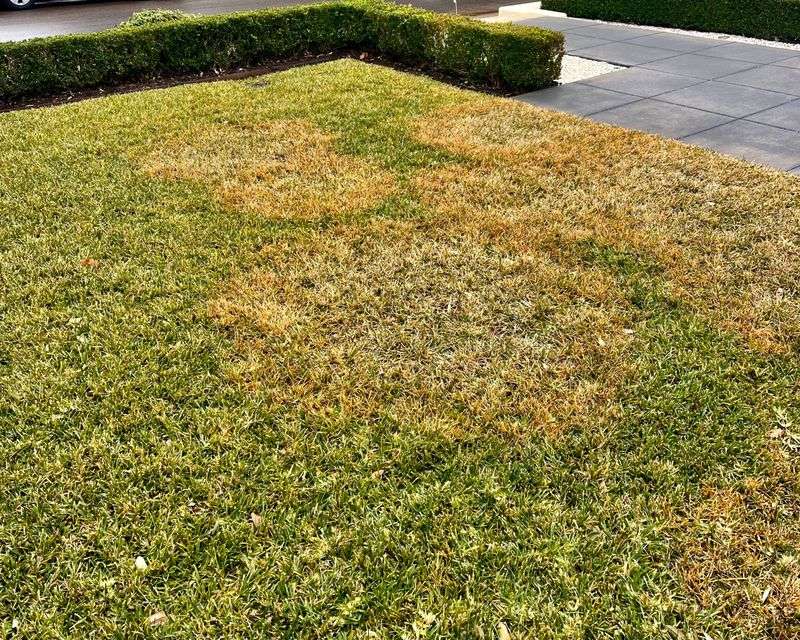
One of the more distinctive visual clues in a chinch bug-damaged Texas lawn is the yellow ring, sometimes called a halo, that forms around the edge of a brown patch.
While the center of the damage may already look completely brown and dried out, the surrounding grass takes on a pale yellow color before it eventually turns brown as well.
That yellow transition zone is where the active feeding is happening. Drought stress does not typically produce this kind of halo pattern.
When St. Augustinegrass dries out from lack of water, the color tends to fade more gradually and evenly across the affected area without a sharp yellow ring separating stressed grass from healthy turf.
The presence of that yellow border is a meaningful visual distinction that can help homeowners tell the two problems apart before spending time or money on the wrong solution.
Spotting a yellow halo in your Texas lawn is a good reason to stop and scout carefully before reaching for a hose or a pesticide.
The edge of that yellow ring, right where it meets the still-green grass, is exactly where chinch bugs tend to concentrate as they move outward.
Parting the grass blades in that transition zone and looking near the soil surface often reveals the insects if they are present.
6. Bugs Hiding Where Green And Brown Grass Meet
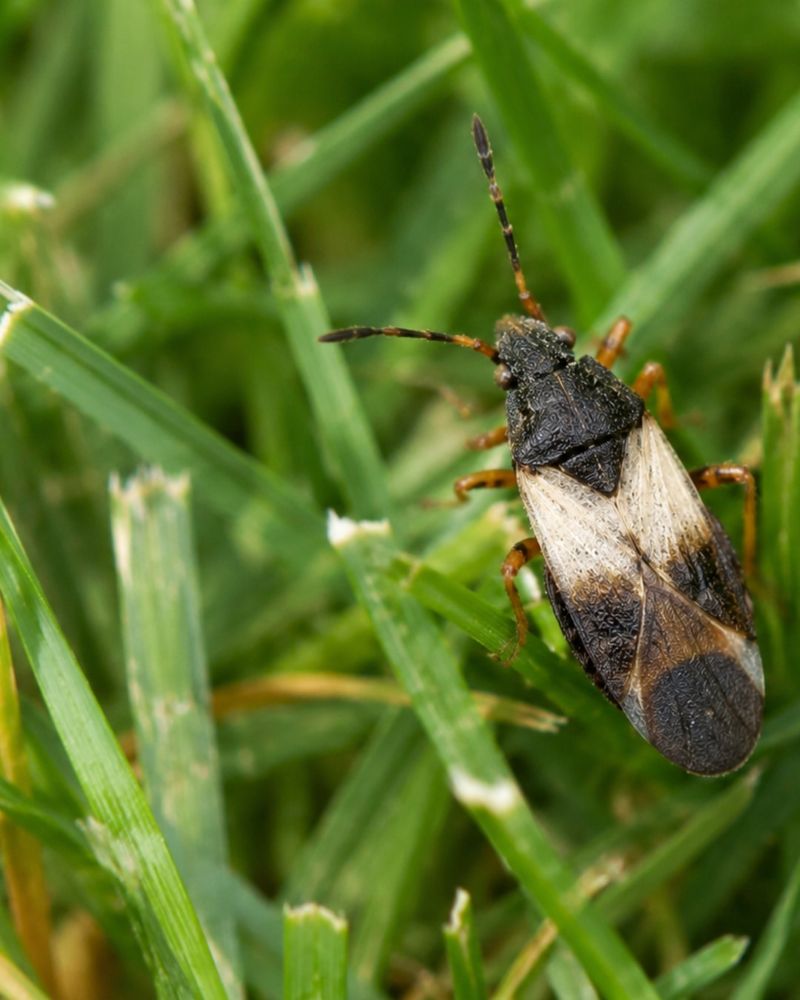
Right at the boundary where your lawn shifts from brown to green is where the action is actually happening. Southern chinch bugs do not stay in the center of already-damaged turf for long.
Once the grass in a patch is fully stressed, the insects move outward toward fresh, green grass, which means the leading edge of the damage is where you are most likely to find them.
Scouting that transition zone is the most reliable way to confirm whether chinch bugs are behind the damage you are seeing.
One common method involves parting the grass blades at the green-to-brown border and looking near the thatch layer and soil surface for small, fast-moving insects.
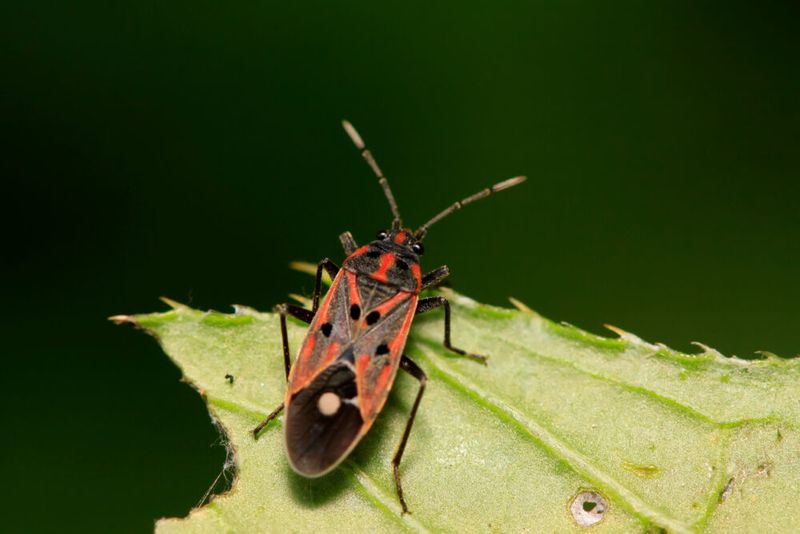
Adult southern chinch bugs are tiny, roughly the size of a sesame seed, with black bodies and white wing patches. Younger nymphs appear reddish-orange and are even smaller.
A simple flotation test can also be helpful when visual scouting is difficult. Pressing a bottomless can into the soil at the edge of the damaged area, filling it with water, and waiting a few minutes can cause chinch bugs to float to the surface if they are present.
Finding insects in that spot confirms the diagnosis and gives you a clear direction for managing the problem in your Texas lawn.
7. Rapid Lawn Decline During Hot Dry Weather
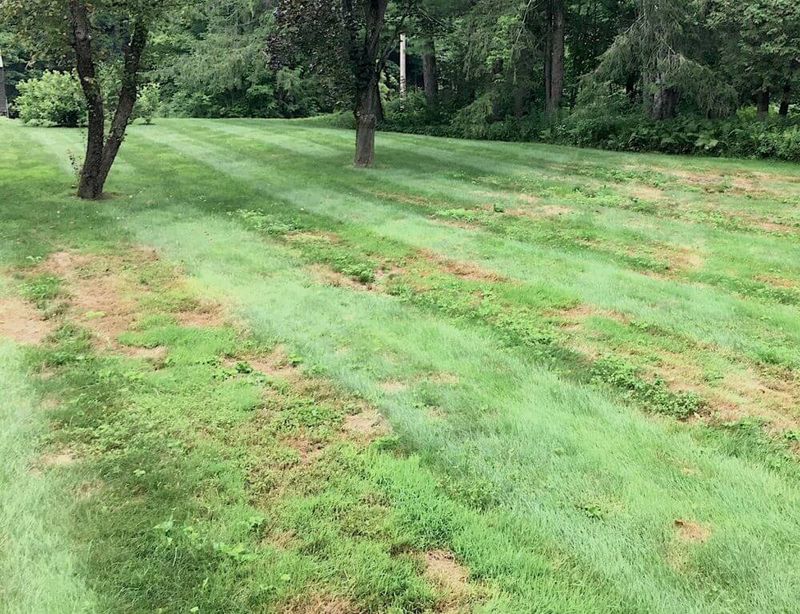
When a Texas lawn goes from looking slightly stressed to noticeably damaged in just a week or two, the speed of that decline can be telling.
Drought stress tends to develop more gradually as soil moisture depletes, and a good rain or irrigation session often slows or reverses the decline.
Chinch bug damage can move faster, especially when hot, dry conditions allow populations to grow quickly and spread across more of the lawn.
Southern chinch bugs reproduce rapidly during the warmest months of a Texas summer. Multiple generations can develop in a single season, and large populations feeding across a lawn can cause visible damage to spread surprisingly fast.
Homeowners sometimes describe the lawn looking fine one week and significantly worse the next, which does not always match the pace of typical drought stress progression.
Paying attention to the timing and speed of lawn decline is a practical diagnostic habit.
If the damage is advancing quickly during a stretch of hot, dry weather even with regular watering, the rate of spread becomes another reason to scout before assuming drought is the cause.
Catching a chinch bug infestation early, while the affected area is still relatively small, gives homeowners more options for managing the problem before it spreads across a larger section of the yard.
8. Damage That Looks Patchy Instead Of Even
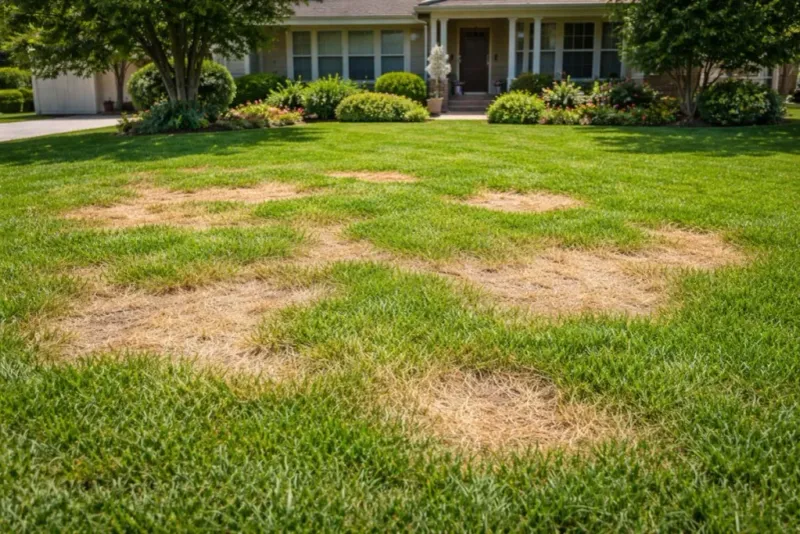
Drought stress across a Texas lawn tends to show up in a relatively widespread, fairly consistent pattern, especially in lawns with uniform soil and irrigation coverage.
When the damage looks patchy instead, with some areas staying green while nearby spots turn yellow and brown without a clear reason, that uneven distribution is worth a second look.
Chinch bugs feed in concentrated colonies, which is part of why their damage tends to appear in distinct patches rather than spreading evenly across the whole lawn.
St. Augustinegrass in open, sunny sections of a Texas yard may show heavy damage while shaded areas nearby look completely healthy.
Since chinch bugs prefer heat and sun, the contrast between damaged and undamaged turf often follows the sun exposure pattern across the lawn rather than the irrigation pattern.
That distinction can be a useful clue when trying to figure out whether drought or insects are driving the problem.
Walking your lawn and mapping out where the damage is concentrated can help you spot that pattern.
If the worst areas consistently align with the sunniest, hottest sections of the yard rather than with spots that are known to receive less water, the location of the damage starts pointing toward a pest problem rather than a watering issue.
That kind of observation guides smarter scouting and more accurate diagnosis.
9. Lawn Problems That Need Scouting Before Treatment
Treating a lawn problem without confirming what is actually causing it is one of the most common and costly mistakes Texas homeowners make during summer.
Applying extra irrigation to a chinch bug infestation does not help the grass recover and may even create conditions that favor other lawn issues.
On the other hand, applying an insecticide to a lawn that is simply drought-stressed wastes money and adds unnecessary chemicals to the yard without addressing the real problem.
Scouting before treating is a straightforward habit that makes a real difference.
Checking the soil moisture, examining the pattern and location of the damage, and inspecting the transition zone between green and brown turf for insects are all steps that take only a few minutes but can completely change the diagnosis.
Finding chinch bugs in that scouting process confirms the pest is present and justifies moving forward with a targeted response.
Correct identification is the foundation of effective lawn care in Texas. St. Augustinegrass faces multiple stressors during summer, including drought, heat, fungal issues, and insect pressure, and the symptoms can overlap in ways that make quick assumptions risky.
Taking a few extra minutes to scout carefully before deciding on a course of action protects the lawn, the budget, and the time you have already invested in keeping your Texas yard healthy through the season.