8 Drought-Tolerant Native Wildflowers That Thrive Across New York Summers
New York summers can swing hard. One week the air is thick enough to fog your glasses. The next, a dry spell leaves the topsoil looking like a dried-up riverbed.
Many garden beds struggle by August, wilting in the heat and waiting for rain that isn’t coming. Native wildflowers tell a different story. These plants grew up on this exact soil.
They’ve weathered the same heat waves. They’ve endured the same long dry stretches. Somehow they never learned how to struggle. Give them a patch of sun and they’ll pay you back with color that outlasts every hydrangea on the block.
You don’t need acreage upstate or a landscaper on call. A sunny patio corner in Queens works. So does a small backyard in the Hudson Valley. These eight wildflowers thrive with little help.
They attract steady numbers of bees and butterflies. And they keep blooming long after other plants have quit.
1. Black-Eyed Susan
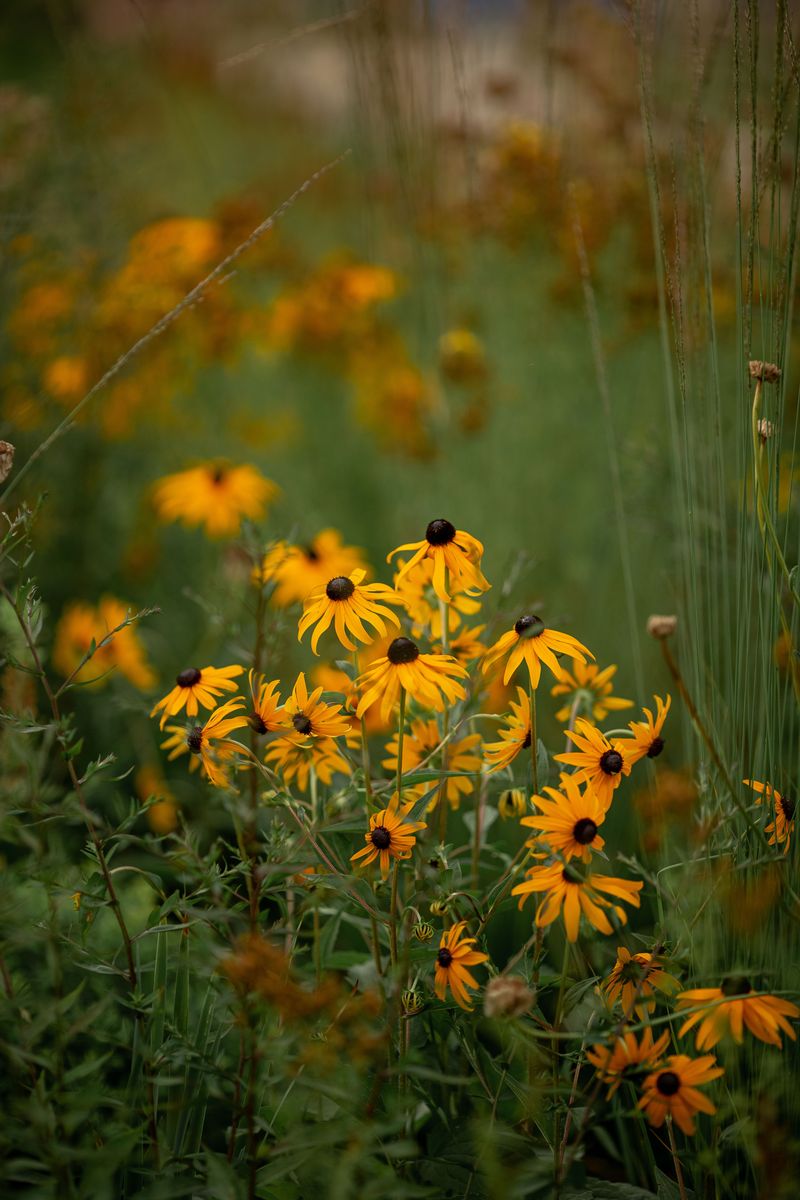
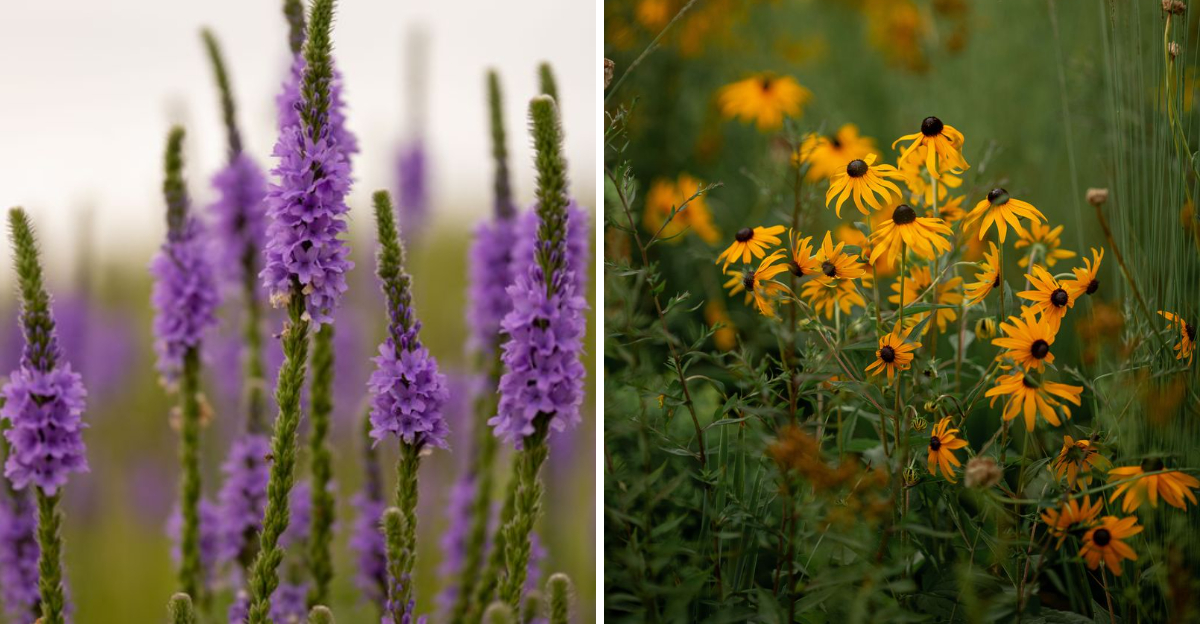
Few flowers own a summer field quite like Black-Eyed Susan. That bold yellow glow with a dark chocolate center is impossible to miss, and pollinators absolutely cannot resist it.
Black-Eyed Susans are drought-tolerant native wildflowers built for tough summers. They push deep roots into dry soil and keep blooming even when rain disappears for weeks.
Plant them in full sun and step back. They spread cheerfully over time, filling gaps in garden beds without any fuss from you.
Goldfinches love snacking on the seed heads in late summer, so skip trimming if you want wildlife visitors. The seeds also self-sow easily, meaning free plants every spring.
These flowers work beautifully alongside ornamental grasses and other native bloomers. The contrast of yellow petals against wispy green stems creates a relaxed, meadow-like look that feels both wild and intentional.
They bloom from June through September, giving you nearly four months of color. That kind of staying power is rare and notably valuable in any garden plan.
Start them from seed or transplant young plants in spring. Once established after the first season, they practically take care of themselves through heat and drought.
If you want one flower that delivers big impact with minimal effort, this is your answer. Black-Eyed Susans prove that going native is always a smart and rewarding choice.
2. Purple Coneflower
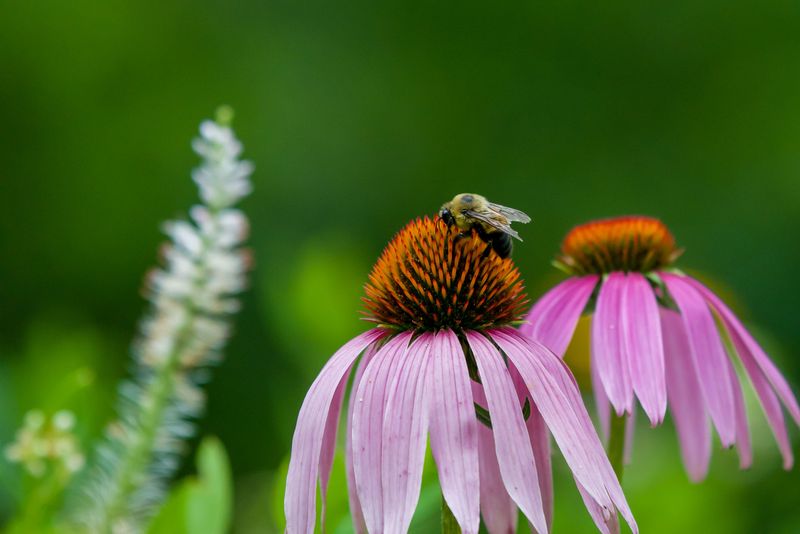
Purple Coneflower has a reputation, and it has earned every bit of it. Gardeners love it, bees favor it heavily, and butterflies visit it frequently for nectar.
Known scientifically as Echinacea purpurea, this plant has naturalized beautifully across New York and is a champion among drought-tolerant wildflowers, even though its native range lies further south and west.
Its thick taproot digs deep to find moisture that other plants simply cannot reach. The rosy-purple petals sweep backward from a spiky copper center, giving the bloom a distinctive, almost playful look.
That unique shape makes it stand out in any planting. Purple Coneflower blooms from July into September, bridging the gap between early and late summer bloomers.
Your New York Garden Changes Every Week. Your Plan Should Too.
Gardening in New York changes quickly throughout the season. Every Friday you’ll receive a simple weekly plan showing exactly what to plant, prune, fertilize, harvest, and protect so you never miss the right timing.
Pair it with Black-Eyed Susans for a color combination that practically hums with energy. Beyond beauty, this plant has serious ecological value.
Monarch butterflies use it as a fuel stop during migration, and songbirds feast on the seed cones through fall and winter.
It tolerates poor, rocky, or clay-heavy soil without complaint. Sandy loam is ideal, but honestly, this plant adapts to almost anything a typical backyard throws at it.
You can remove spent blooms to encourage more flowers, or leave the cones standing for birds. Both choices have real rewards, so pick based on your garden goals.
Give it full sun and decent drainage, and Purple Coneflower will reward you season after season. It spreads slowly by seed, building a fuller clump each passing year.
3. Wild Bergamot
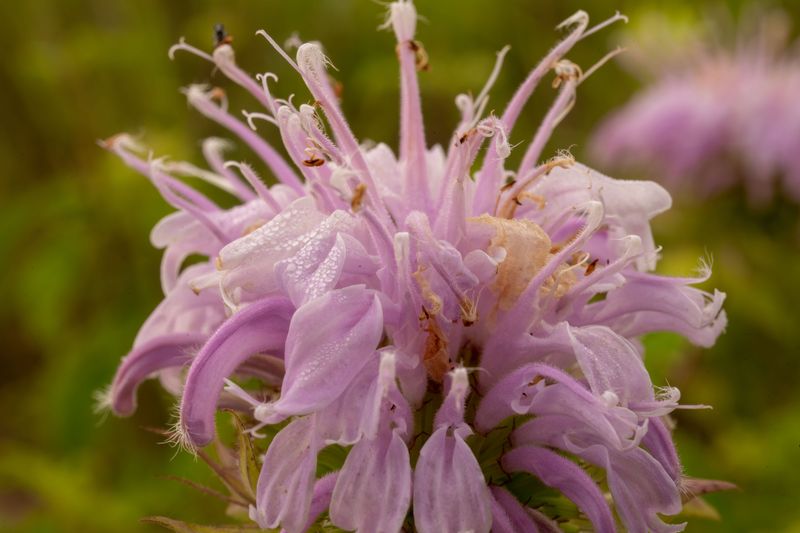
Crush a Wild Bergamot leaf between your fingers and you will instantly smell something like oregano mixed with mint. That fragrance alone makes this plant worth growing.
Wild Bergamot, or Monarda fistulosa, is one of those drought-tolerant native wildflowers that looks delicate but handles summer stress remarkably well. Its lavender-pink blooms rise on sturdy stems above fragrant, gray-green foliage.
Bumblebees go absolutely wild for this plant. Hummingbirds visit too, hovering at the tubular florets like tiny helicopters fueling up mid-flight.
Unlike its cousin bee balm, Wild Bergamot is far more resistant to powdery mildew. That makes it a smarter, lower-maintenance choice for hot and humid summer conditions.
It blooms from June through August, peaking right when many gardens start looking tired. The timing feels almost considerate, filling a visual gap with real color and texture.
Plant it in masses for the most dramatic effect. A wide sweep of lavender blooms swaying in a summer breeze creates a meadow scene that feels genuinely cinematic.
After blooming, the globe-shaped seed heads dry beautifully on the stem. Leave them standing through fall and winter for structural interest and food for seed-eating birds.
Wild Bergamot spreads by rhizome, so give it room to roam. With full sun and dry to medium soil, it builds into a generous, wildlife-rich patch that rewards patience every season.
4. New England Aster
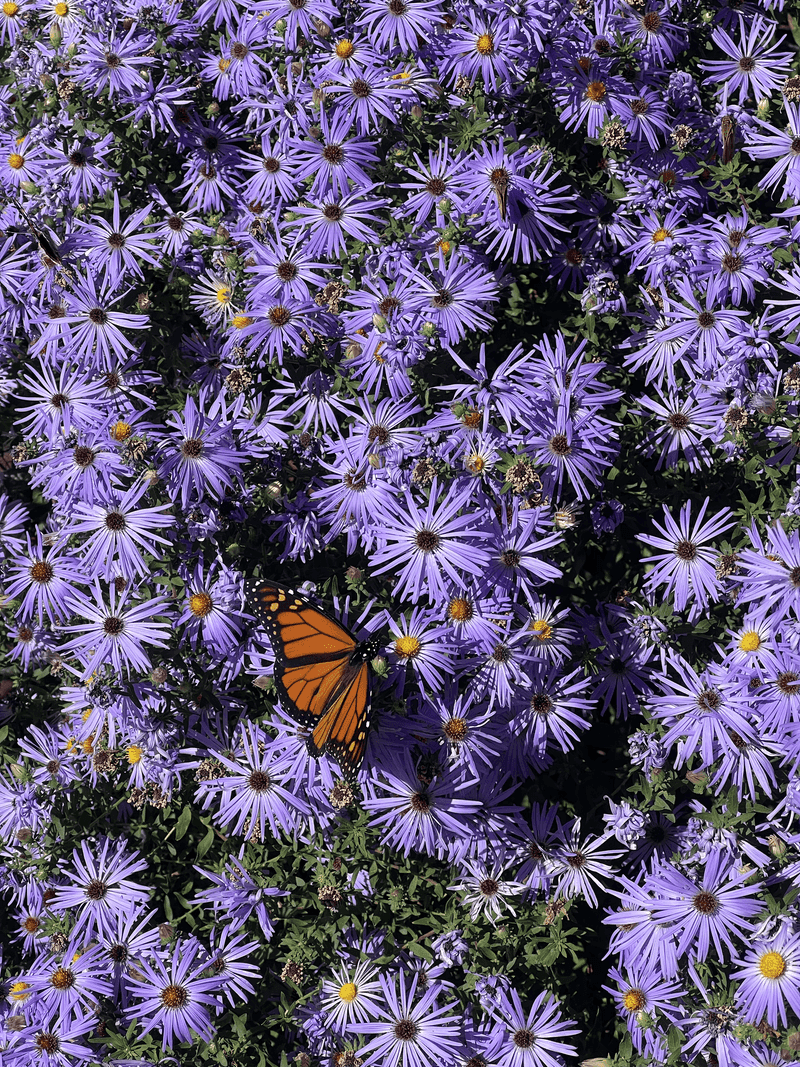
When most summer flowers are winding down, New England Aster is just getting started. It swoops in with a burst of deep purple in late August and carries the show straight through October.
This plant is a powerhouse among drought-tolerant native wildflowers, storing energy all season before unleashing a spectacular bloom. The vivid violet-purple petals surrounding bright yellow centers are genuinely stunning up close.
Monarch butterflies migrating south depend heavily on New England Aster as a late-season nectar source. Planting it is one of the most impactful things you can do for wildlife in your yard.
It grows tall, often reaching four to five feet, so position it toward the back of a border. Pinching stems back in early June keeps plants compact and encourages bushier, fuller growth.
New England Aster tolerates drought well once established, though it appreciates occasional watering during extreme heat waves. Moist to medium soils in full sun produce the most vigorous, flower-packed plants.
The foliage is dense and somewhat rough-textured, creating a bold visual presence even before blooms open. Deer tend to leave it alone, which is a genuine bonus in suburban gardens.
It self-seeds freely, so you may find friendly volunteers popping up nearby each spring. Transplant them while small to expand your planting without spending a single extra dollar.
Few plants close out summer with this much visual impact and ecological value. New England Aster is a seasonal finale worth waiting for every single year.
5. Blazing Star
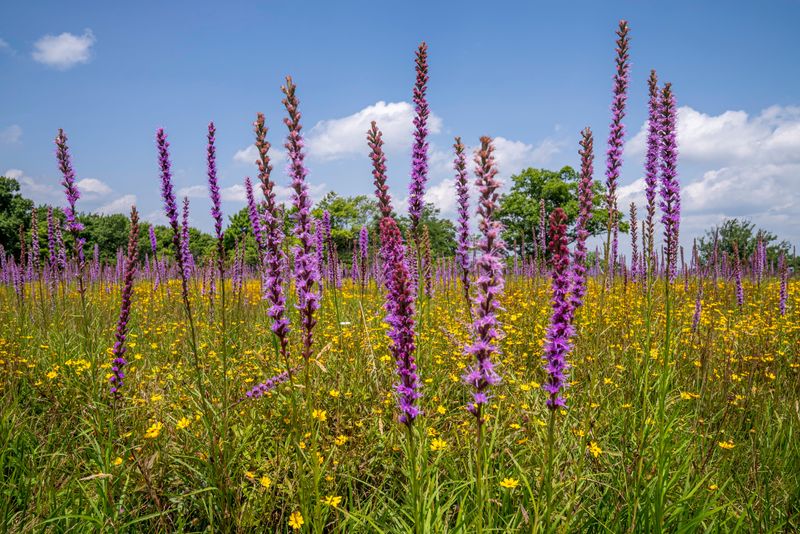
Blazing Star does something almost no other flower does: it blooms from the top of the spike downward. That quirky trait makes it endlessly fascinating to watch as summer unfolds.
Also called Liatris, this is one of the most visually striking drought-tolerant wildflowers you can add to a sunny border, though the popular garden variety (Liatris spicata) hails from further south, not New York specifically.
The tall, wand-like spikes of magenta-purple rise dramatically above grass-like foliage. Monarch butterflies and swallowtails flock to the blooms during their peak in July and August.
Hummingbirds are regulars too, making Blazing Star a genuine wildlife magnet in peak season.
Once established, it handles dry spells with ease. The plant grows from a corm, a small underground storage structure that holds moisture and nutrients through tough conditions.
Full sun and well-drained soil are the main requirements here. Blazing Star actually performs better in lean soil, since rich, moist conditions can cause floppy stems and reduced flowering.
The dried seed heads are just as attractive as the blooms. American goldfinches cling to the stalks in fall, pulling out seeds with focused, cheerful determination.
Plant Blazing Star in clusters of three or five for the most visual impact. Odd-numbered groupings create a natural, effortless look that blends seamlessly into both formal and informal garden styles.
Its vertical form contrasts beautifully with mounded plants like coneflower and black-eyed Susan. Blazing Star earns its name every summer, lighting up the garden like a purple torch.
6. Goldenrod
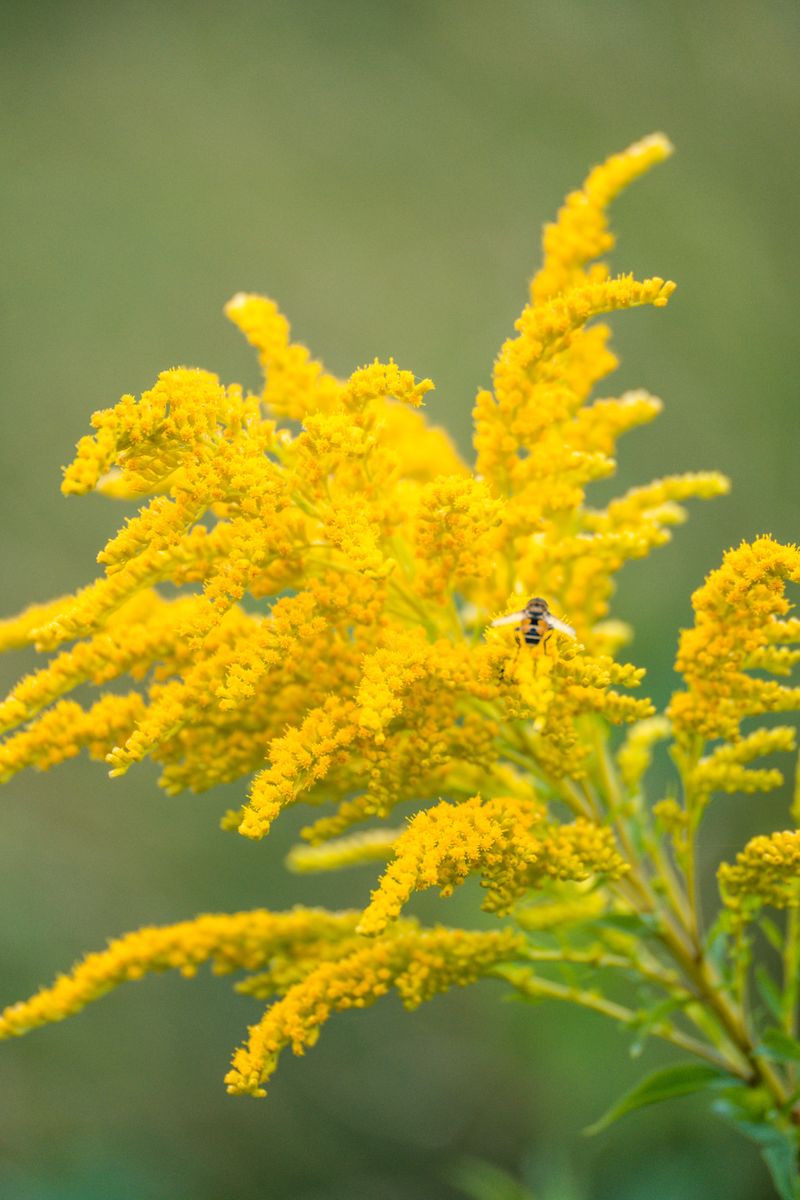
Goldenrod gets blamed for hay fever every August, but that reputation is completely unfair. Ragweed is the real culprit, and Goldenrod just happens to bloom at the same time.
Among drought-tolerant native wildflowers, Goldenrod is arguably the most ecologically generous. Over 100 species of insects rely on it, making it one of the most valuable plants in any native garden.
The plume-like clusters of tiny golden flowers are warm, cheerful, and abundantly beautiful. They catch late summer light in a way that makes the whole garden feel like it is glowing.
Goldenrod blooms from August through October, bridging the gap between mid-summer and fall beautifully. It holds the garden together visually when other plants start fading and looking worn out.
It spreads by rhizome, which means it can fill a space quickly. Plant it where you want coverage, or use a buried barrier to keep it from wandering into neighboring areas.
Stiff Goldenrod and Showy Goldenrod are two well-behaved cultivars perfect for smaller garden spaces. Both stay relatively compact and produce generous blooms without the aggressive spreading habit of some wild types.
Goldenrod pairs naturally with New England Aster, the purple and gold combination looking like autumn itself decided to show up early. That pairing is a classic for a very good reason.
The seed heads attract finches and sparrows well into winter, extending the plant’s wildlife value far beyond bloom season. Goldenrod is a true garden workhorse that asks for almost nothing.
7. Blue Vervain
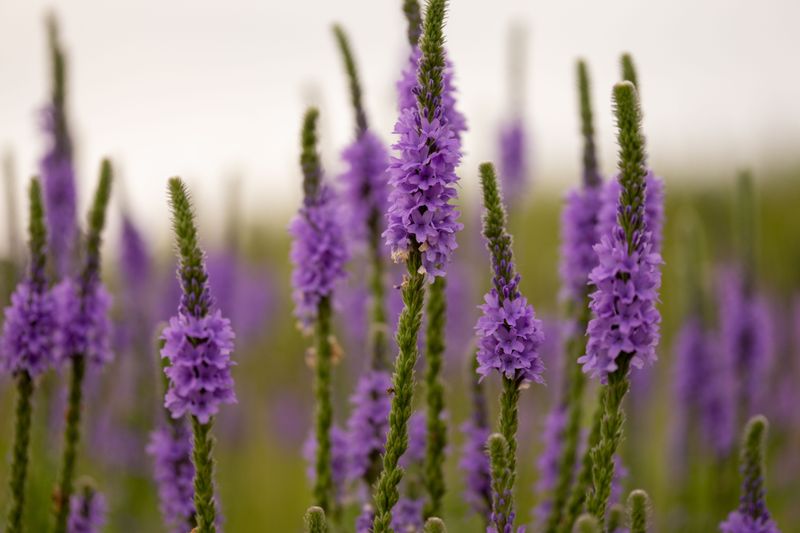
Blue Vervain has an almost architectural quality that makes it stand apart from rounder, fluffier wildflowers. Its slender candelabra-like spikes of tiny violet-blue blooms feel modern and graphic in the best way.
Verbena hastata is one of those drought-tolerant native wildflowers that also tolerates occasional wet feet, making it incredibly versatile. Rain garden, dry border, or meadow edge, it adapts without complaint.
The blooms open progressively from the base of each spike upward, creating a long display window that stretches from July into September. That extended bloom time is a genuine asset in any planting plan.
Bumblebees absolutely swarm Blue Vervain when it peaks. Smaller native bees also visit frequently, making this plant a buzzing, productive hub of pollinator activity during peak summer heat.
It grows three to five feet tall, creating vertical structure that plays beautifully against lower-growing plants like Wild Bergamot and coneflower. The contrast in height and form keeps the eye moving through the garden.
Birds love the tiny seeds that form after blooming. Song sparrows and swamp sparrows in particular are known to forage through dried Blue Vervain stems during fall and winter months.
This plant self-seeds freely, so expect new seedlings to appear nearby each spring. They are easy to transplant while small, helping you expand a planting without extra cost or effort.
Blue Vervain brings a cool, moody color tone to the summer garden. That distinctive blue-violet hue is rare among native plants, and it is absolutely worth seeking out.
8. Partridge Pea
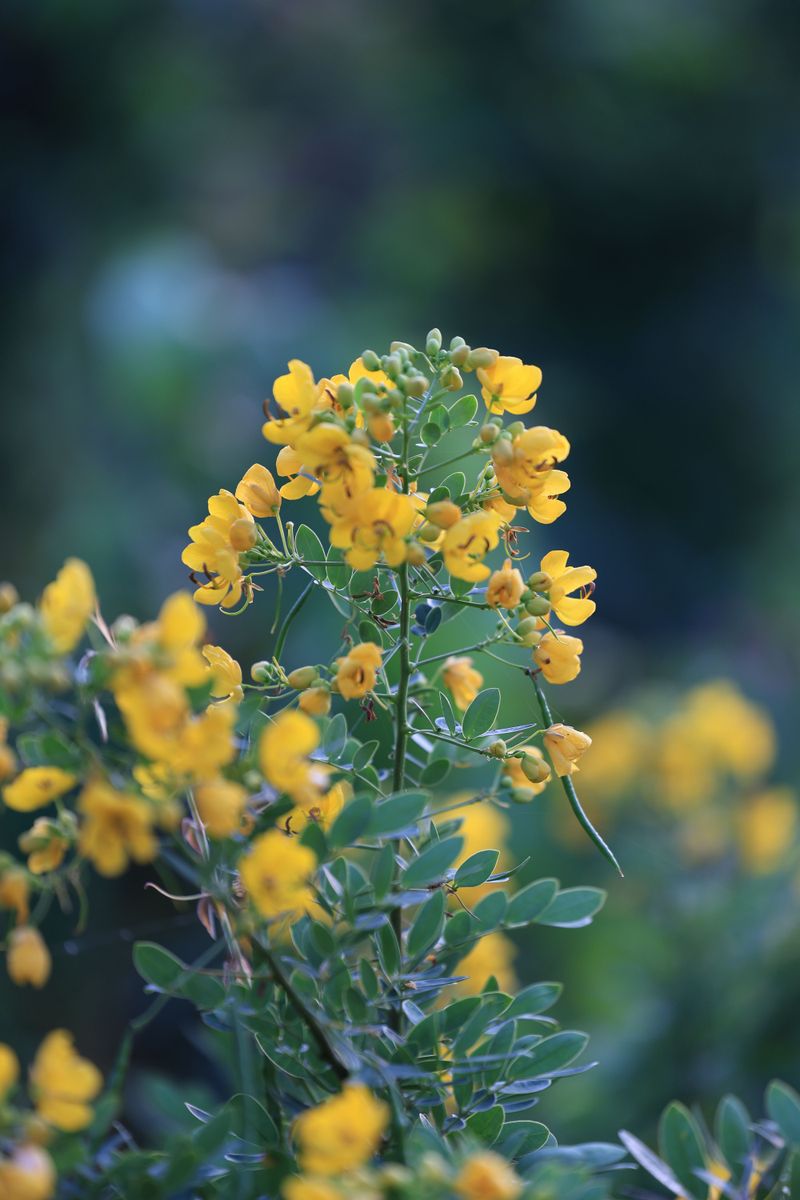
Partridge Pea is the underdog of native wildflowers, and it is time to give it the recognition it deserves. Most gardeners walk right past it without realizing what an ecological powerhouse it is.
Chamaecrista fasciculata is a nitrogen-fixing annual, meaning it actually improves your soil while it grows. That quality alone puts it in a different category from most drought-tolerant native wildflowers.
The bright yellow blooms with distinctive reddish-purple stamens are cheerful and eye-catching from July through September. The feathery compound leaves fold slightly when touched, adding a playful, interactive quality to the plant.
Sulphur butterflies depend on Partridge Pea as a larval host plant. Planting it means you are not just feeding adult butterflies but supporting the next generation through its entire life cycle.
Bobwhite quail, wild turkeys, and songbirds feast on the seeds in fall. If you want to attract ground-feeding birds to your garden, few plants deliver results as reliably as this one.
It thrives in poor, sandy, or gravelly soil with full sun and minimal water. Rich garden soil can actually make it too leafy and reduce flowering, so resist the urge to fertilize.
Since it is an annual, Partridge Pea reseeds itself generously each year. Once you plant it once, you are unlikely to need to plant it again, as it returns faithfully season after season.
Drought-tolerant native wildflowers like Partridge Pea prove that low-maintenance gardening and high ecological impact are not mutually exclusive. This little plant delivers outsized ecological value every summer.