Oregon’s Himalayan Blackberry Problem Gets Worse When You Make This One Mistake
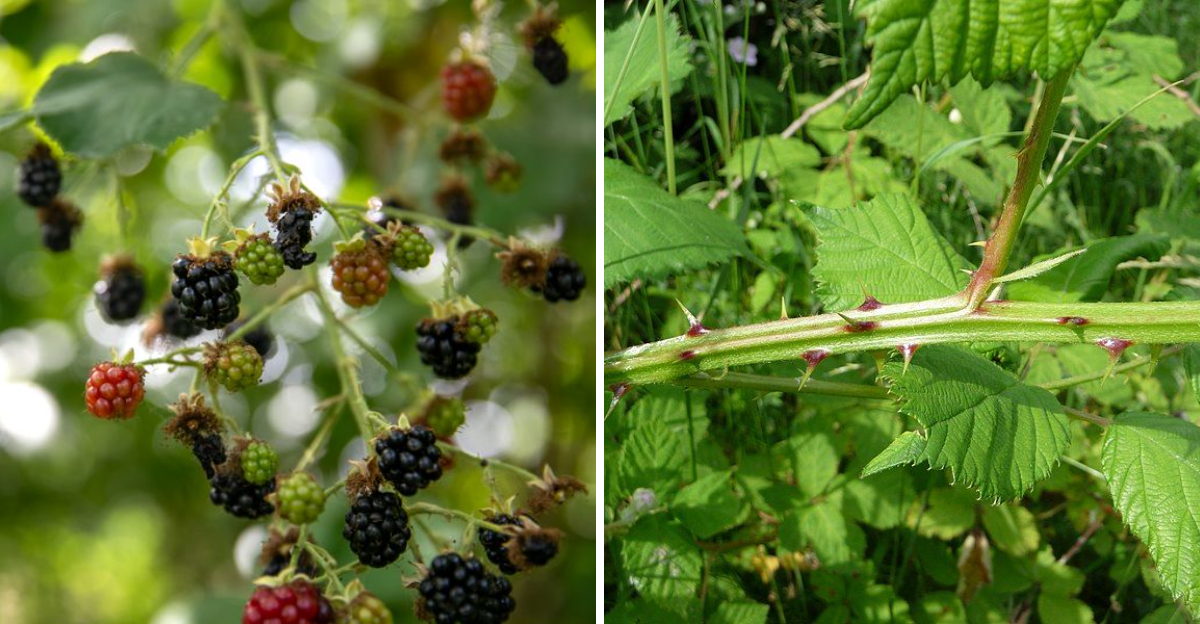
If Himalayan blackberry has claimed a corner of your Oregon property, you already know the particular frustration of cutting it back and feeling satisfied for about three weeks.
Then it returns looking completely unbothered by everything you just put it through.
This plant is not going anywhere without a fight, and that fight requires more than one round.
Dense thorny canes, root crowns buried deep underground, and an almost impressive ability to push new growth back up after being cut make this one of the most persistently challenging plants Oregon homeowners deal with.
The cycle of cutting, walking away, and then doing it all over again a month later is the most common mistake people make.
Real progress with Himalayan blackberry almost always comes down to follow-up work, and knowing what that actually looks like changes everything.
1. Cutting Canes Once And Leaving The Roots
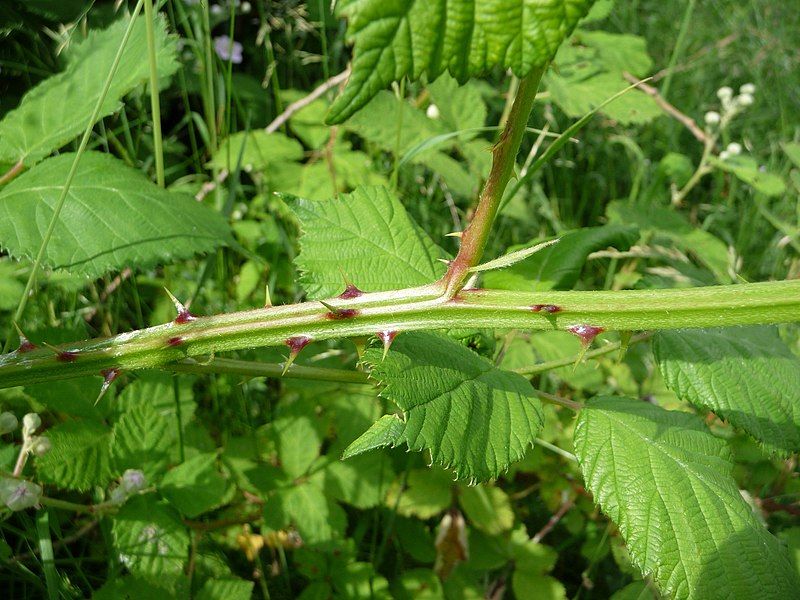
Thorny canes piled beside a fence can feel like real progress, especially after a long weekend of cutting and hauling. The yard looks cleaner, the thicket is gone, and it seems like the problem is handled.
But what you see above ground is only part of the plant, and what stays in the soil is the part that keeps the blackberry going.
Himalayan blackberry builds up large, woody crowns just at or below the soil surface. Those crowns store energy the plant uses to push new canes right back up, sometimes within a matter of weeks.
Cutting without addressing the crowns leaves that energy bank completely intact and ready to recharge the plant.
In Oregon yards, this is one of the most common reasons a blackberry patch seems to come back stronger after removal.
Homeowners do the hard work of clearing canes, but the roots and crowns left behind have no competition and plenty of stored energy to work with.
The plant does not need to start over from seed. It simply uses what it already has underground to rebuild.
Treating a cane cutback as the final step, rather than the first step, is what keeps so many Oregon properties stuck in the same frustrating cycle. Addressing what remains below ground after cutting is where the real follow-up work begins.
2. A Quick Cutback Does Not Control Blackberry
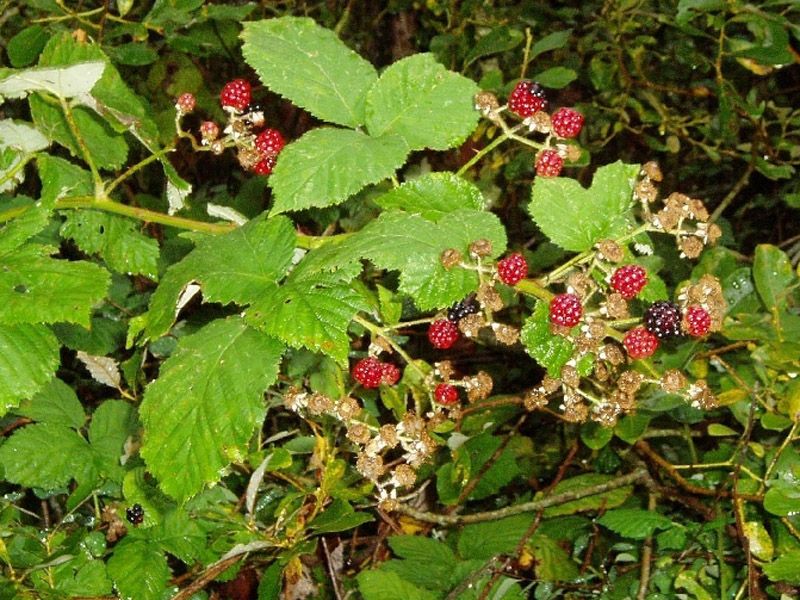
Green shoots returning after a weekend cleanup are one of the most discouraging things an Oregon homeowner can find. The area looked cleared, the canes were hauled away, and the fence line finally had some breathing room.
Then, within a few weeks, small green shoots start poking up from the same spots.
A quick cutback can make a blackberry patch look much tidier for a while, and that is a fair first step. But the plant is still very much alive below the surface, and once those cut canes are gone, the root system redirects its energy toward sending up new growth.
The cleaner appearance after cutting can sometimes give a false sense that the problem is solved.
Skipping follow-up is where the real trouble starts. Without a plan to address regrowth as it returns, the new shoots are allowed to leaf out, rebuild stored energy, and eventually grow into fresh canes.
Your Oregon Garden Changes Every Week. Your Plan Should Too.
Gardening in Oregon changes quickly throughout the season. Every Friday you’ll receive a simple weekly plan showing exactly what to plant, prune, fertilize, harvest, and protect so you never miss the right timing.
By the time the thicket looks as bad as it did before the cleanup, the plant has had months to recover.
Along Oregon fence lines, creek edges, and driveway corners, this pattern repeats itself on properties all over the state.
A cutback is useful for reducing the immediate tangle, but treating it as a complete solution tends to set the whole process back rather than move it forward.
Follow-up is what separates a temporary fix from real progress.
3. Himalayan Blackberry Regrows From Crowns And Roots
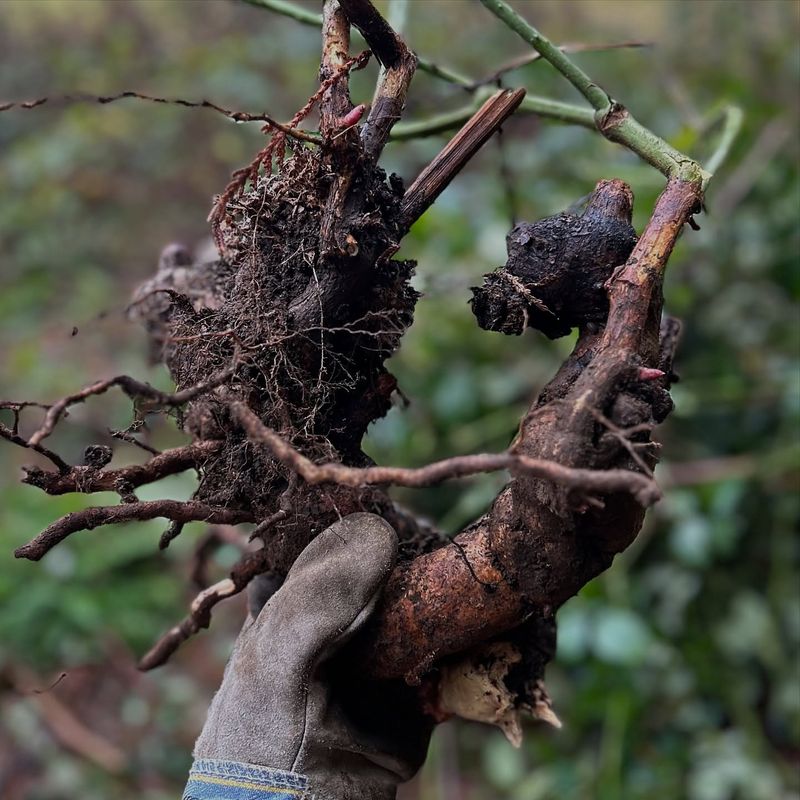
Hidden just beneath the soil surface, blackberry crowns are some of the most stubborn plant structures a homeowner can deal with. They look like dense, woody knobs where the canes meet the roots, and they hold a surprising amount of stored energy.
That stored energy is exactly what allows Himalayan blackberry to resprout so quickly after canes are removed.
Himalayan blackberry is well established across Oregon, from urban backyards to rural field edges and creek banks. One reason it spreads and persists so effectively is that surface cutting alone does not address the belowground parts of the plant.
The crowns and roots can remain viable even after repeated cane removal, continuing to send up new shoots whenever conditions allow.
Understanding how the plant regrows helps explain why follow-up work matters so much. When new shoots emerge from a crown, they are drawing on energy that was stored during the previous growing season.
If those shoots are allowed to leaf out fully and photosynthesize, they begin restoring that energy reserve. Catching regrowth before it matures is part of what makes repeated removal more effective over time.
Oregon homeowners dealing with established patches often find that the crowns are larger than expected once digging begins.
Recognizing that the crown and root system is the core of the problem, rather than the visible canes, shifts the focus of control efforts toward where they can do the most good.
4. Repeated Cutting Weakens Plants Over Time
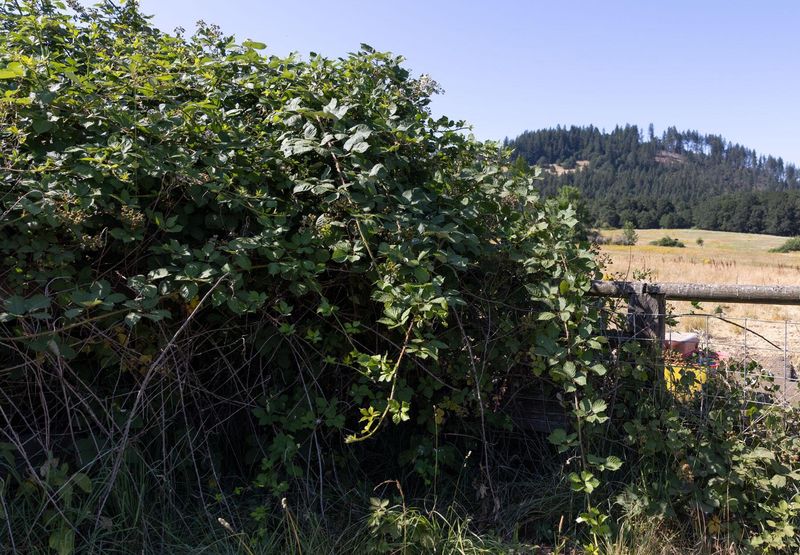
Persistence is the part most homeowners underestimate when it comes to blackberry control.
One round of cutting rarely moves the needle much, but returning to cut regrowth again and again over a full growing season can start to reduce the plant’s ability to rebuild itself.
The key is not letting new shoots mature before they are cut back again.
Every time a blackberry plant sends up new leaves, it is working to restore the energy it lost when canes were removed. If those leaves are cut before they can photosynthesize and rebuild the root’s energy supply, the plant has to draw down its reserves again.
Over several rounds of repeated cutting, those reserves can gradually decrease.
This approach takes real commitment and works better on smaller patches or scattered plants than on a large, established thicket with deep, extensive root systems.
Along Oregon fence lines and yard edges where plants are younger or less established, repeated cutting through the growing season has a better chance of making meaningful progress.
The timing of each follow-up cut matters too. Cutting too infrequently gives the plant time to rebuild between rounds, which reduces the cumulative effect.
Cutting consistently, before new shoots have a chance to fully leaf out and start feeding the roots again, is what gives repeated removal its best chance of working.
It is slow, steady work, but it can reduce the problem over time when done with patience and regularity.
5. Digging Crowns Removes More Of The Problem
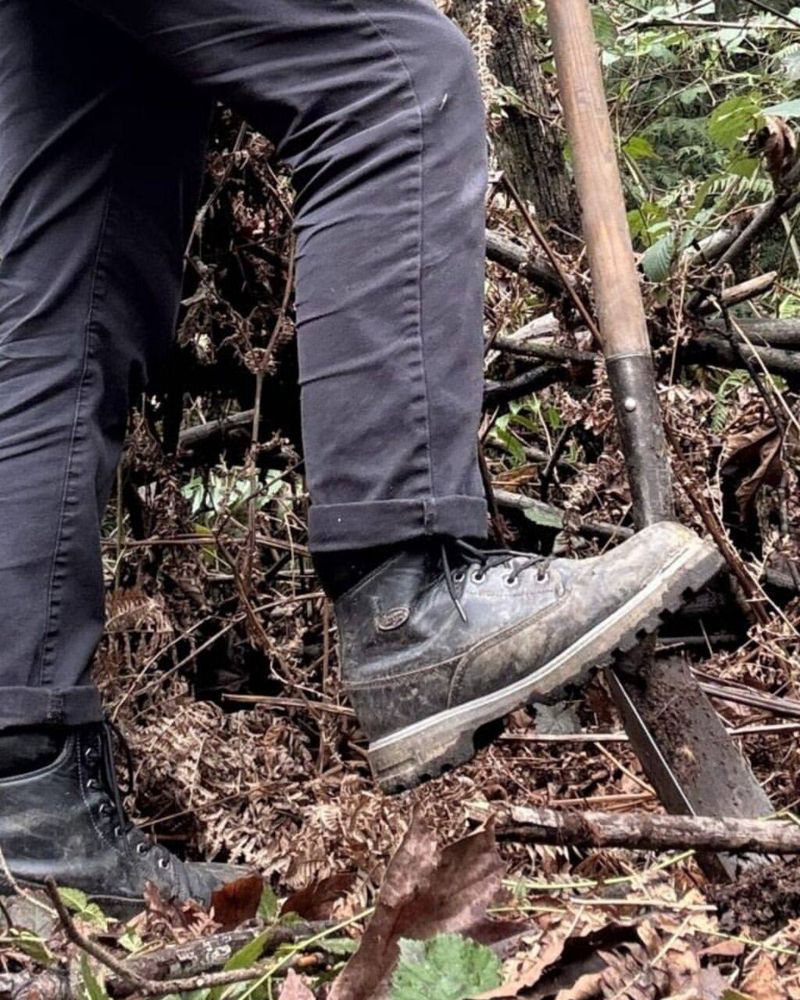
Vines creeping through a neglected corner of the yard often trace back to one or two large crowns buried just under the surface. When those crowns are dug out rather than just cut back, the follow-up regrowth from that spot tends to be much less aggressive.
Digging is harder work than cutting, but it removes more of the source.
For smaller patches or individual plants scattered along a fence line or driveway edge, digging out the crown where it is accessible can be one of the more practical steps in reducing the problem.
The goal is to remove as much of the woody crown and upper root mass as possible, since regrowth from smaller root fragments is generally less vigorous than regrowth from an intact crown.
In Oregon yards with rocky or compacted soil, digging can be physically demanding, and some crowns may be too large or too deep to remove completely.
In those situations, digging out what is reachable and then following up on any regrowth that emerges can still reduce the plant’s overall strength over time.
Combining digging with follow-up monitoring gives the best results for established plants. After a crown is removed, checking the area regularly and cutting or digging any new shoots that emerge keeps the remaining root fragments from recovering.
Tackling one section of a thicket at a time, rather than trying to clear everything at once, can make the digging approach more manageable for most Oregon homeowners.
6. Mowing Works Only With Persistence
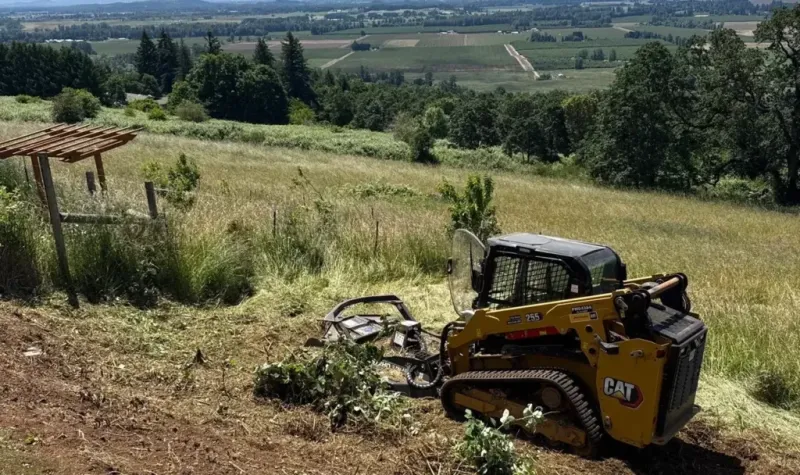
Mowed patches coming back with fresh green shoots are a familiar sight on Oregon rural properties and open lot edges.
Mowing can knock blackberry canes down quickly and make large areas more manageable, but the plant does not stop growing just because the top has been cut.
What happens after the mower passes through is what determines whether mowing actually helps.
Blackberry can regrow from crowns after mowing, and if the regrowth is allowed to fully leaf out between mowing sessions, the plant can use that time to start restoring its energy.
Mowing at intervals that are too far apart gives the plant room to recover, which reduces the cumulative effect of each pass.
When mowing is done frequently enough to prevent new leaves from maturing, it can contribute to weakening the plant over time.
This approach tends to work better on open areas where mowing is practical, such as field edges, large rural lots, or utility corridors, rather than in fenced corners or steep slopes where access is limited.
Mowing alone is unlikely to clear an established Oregon blackberry thicket on its own, but it can be a useful part of a broader management approach.
Combining mowing with hand removal of crowns in accessible spots, and staying consistent with follow-up, gives the effort a better chance of reducing the thicket over multiple growing seasons.
Expecting results from a single mow, without any follow-up, is one of the reasons blackberry keeps coming back thicker than before.
7. Regrowth Needs Follow-Up Before It Thickens
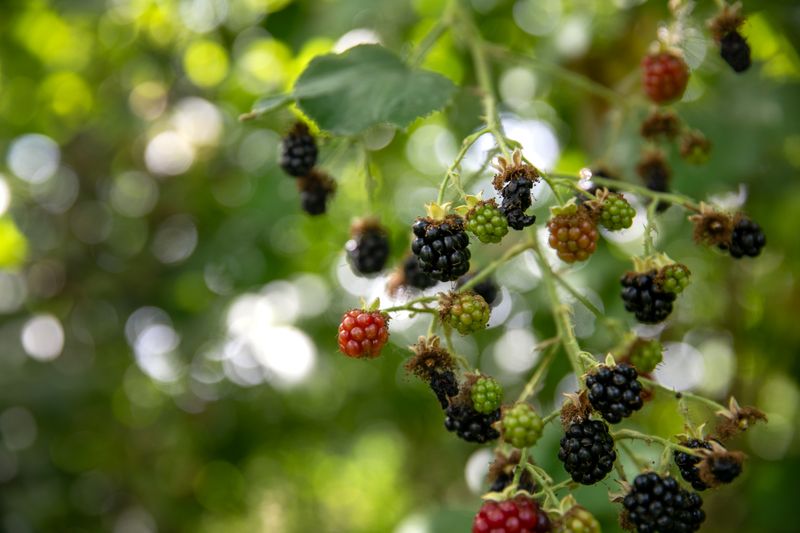
Small new shoots coming up along a cleared property line can be easy to ignore, especially when they look nothing like the dense thicket that was just removed.
But those small shoots are exactly the right time to act, because they are far easier to address before they have a chance to grow into fresh canes and rebuild the thicket.
Once regrowth is allowed to mature, it develops new canes with thorns, starts producing leaves that feed the root system, and begins arching outward to root at the tips.
What started as a manageable set of small shoots can turn into a substantial new thicket within a single growing season if follow-up is skipped.
Catching regrowth early, when shoots are still short and tender, takes much less effort than clearing a fully established patch.
Cutting, pulling, or digging small shoots is faster work and causes more stress to the root system, since the plant is spending energy on regrowth that gets removed before it can give anything back.
Across Oregon, homeowners who stay on top of small regrowth along fence lines, yard edges, and open corners tend to see their cleared areas stay cleaner over time compared to those who wait until the problem is visible from the street again.
Building a habit of checking cleared areas every few weeks through the growing season and removing any new shoots promptly is one of the most practical things an Oregon homeowner can do to keep the blackberry from regaining ground.
8. Replanting Helps Keep Blackberry From Returning
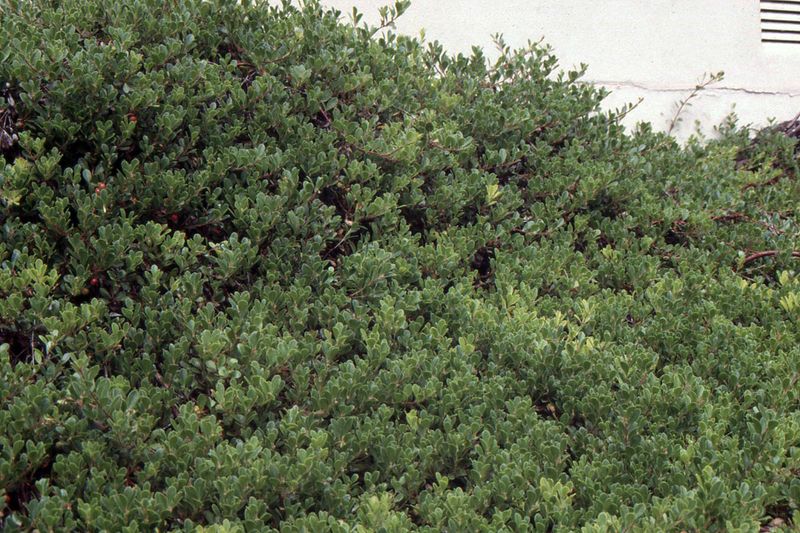
Bare soil left after blackberry removal is an open invitation for weeds to move back in. In Oregon, where Himalayan blackberry spreads readily along disturbed edges, leaving cleared ground empty is one of the fastest ways to end up back where you started.
The soil is ready, the light is available, and if blackberry seed or root fragments are nearby, the space will not stay empty for long.
Filling cleared areas with desirable plants and mulch after removal is a practical way to make the space less welcoming to blackberry.
Dense ground covers, native shrubs, or ornamental grasses can occupy the root zone and compete for the light and moisture that blackberry regrowth needs.
Mulch laid over bare soil helps suppress early seedling establishment and keeps the surface less hospitable.
Choosing plants suited to Oregon’s climate and the specific conditions of the site gives the replacement planting a better chance of establishing quickly and filling in before weeds can take hold.
A shady fence line, a sunny driveway edge, and a moist creek-adjacent corner all call for different plant choices, and matching that selection carefully to the spot makes a real difference.
Replanting does not guarantee that blackberry will not return, especially if root fragments or crowns remain in the soil. But a well-planted, mulched area gives cleared ground a much better chance of staying clear than bare soil does.
Treating replanting as the final step of a blackberry removal project, rather than an optional extra, is one of the most overlooked parts of keeping Oregon yards from cycling back through the same problem.