The California Groundcovers That Fill Cracks In Pavement So Weeds Can’t Move In
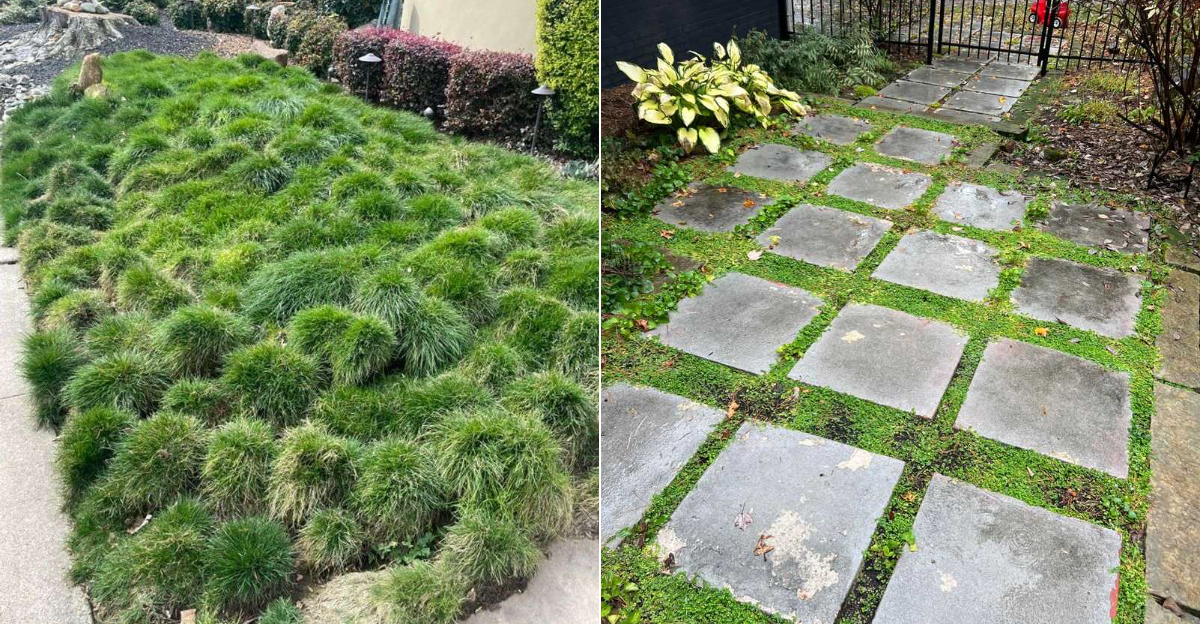
Pavement cracks rarely stay empty for long. Give them a little dust, a splash of water, and one determined weed will treat the gap like a luxury apartment.
That is where low-growing groundcovers can completely change the look of a California yard. Instead of leaving narrow spaces bare, these plants can weave through the gaps and create a softer, more finished effect.
Much better than playing tug-of-war with weeds every weekend. Still, planting between pavers takes more thought than it seems.
Heat collects quickly, foot traffic can be rough, and some plants spread with a little too much enthusiasm.
The goal is to find something tough enough for the space without creating a brand-new maintenance problem.
With the right choice, those awkward cracks can become part of the design. Even better, weeds will have a much harder time claiming the territory first.
1. Chamomile Softens Light Foot-Traffic Paths
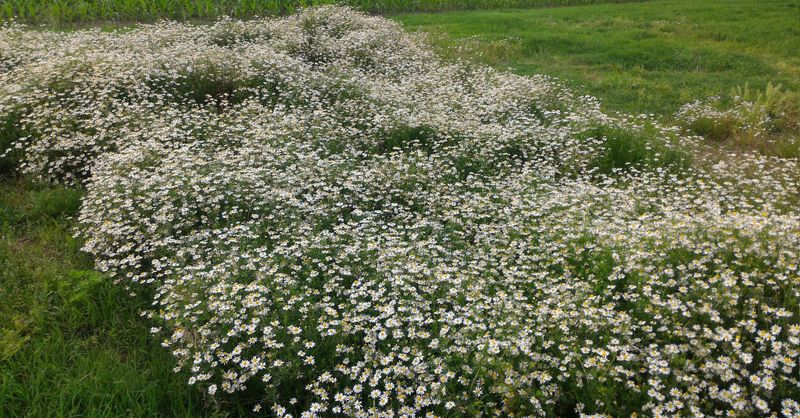
Few plants smell as sweet underfoot as Roman chamomile. Every time someone steps on it, it releases a fresh, apple-like scent that makes walking through the garden feel like a treat.
That alone makes it worth planting between your stepping stones or along a lightly used path.
Roman chamomile stays low, usually only two to three inches tall, and it spreads sideways to fill in gaps over time.
It handles occasional foot traffic better than most flowering groundcovers, which makes it a smart pick for garden paths that see light use.
It will not hold up to heavy daily stomping, but for a weekend walkway or side garden path, it works beautifully.
This plant loves full sun and drains well in sandy or loamy soil, both of which are common in many parts of California. It does not need much water once it gets established.
Planting small plugs or divisions about six inches apart gives it room to spread without leaving gaps that weeds can sneak into.
Come late spring and early summer, tiny white flowers bloom above the soft, feathery foliage. The flowers are cheerful and add a cottage-garden look to any paved area.
If you want a path that feels lived-in, fragrant, and full of character, Roman chamomile is a strong and simple choice worth trying.
2. Mondo Grass Fills Wider Paver Joints
Not every crack between pavers is small and delicate. Some joints are wide and deep, and most low-growing plants just cannot fill them well.
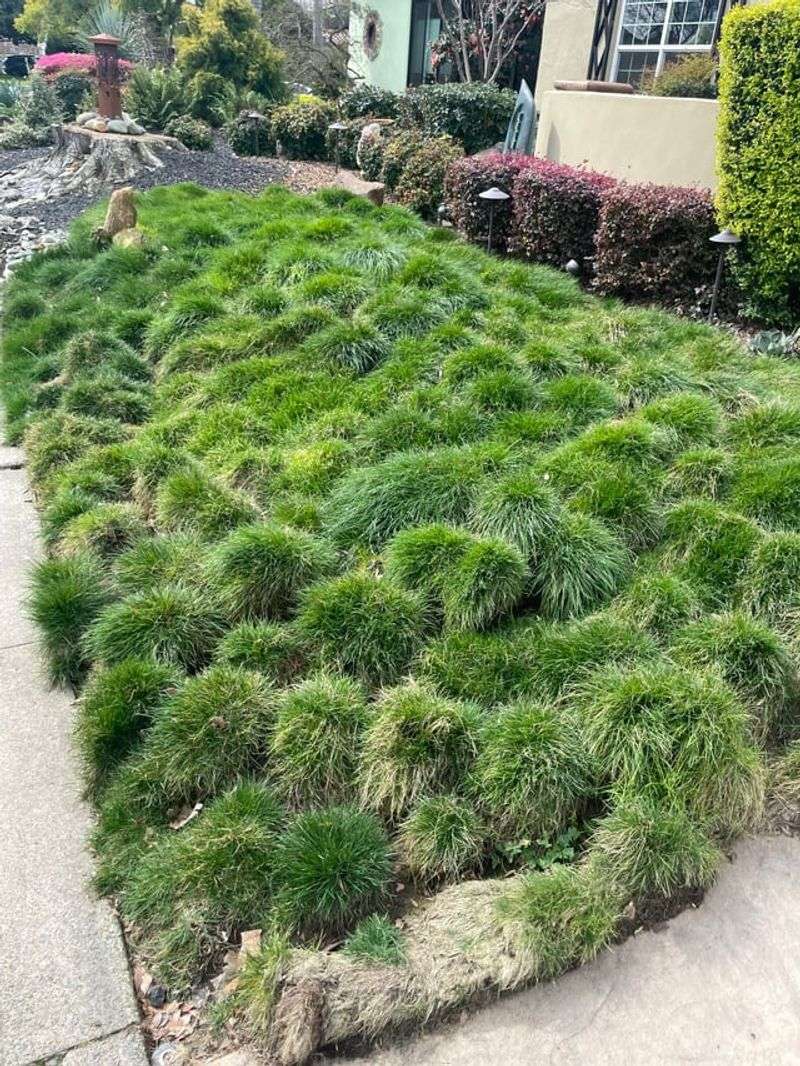
That is where mondo grass steps in and handles the job with ease. Mondo grass grows in neat, dark green clumps that spread slowly but steadily over time. It does not flop around or get scraggly.
Instead, it stays tidy and consistent, which gives paved areas a clean, polished look that holds up through all four seasons. It is one of the most reliable plants for wide paver joints in shaded or partly shaded spaces.
One of its best qualities is that it tolerates shade far better than most groundcovers on this list.
Northern regions of California, where tree cover is thick and sunlight is filtered, are great spots for mondo grass to thrive.
Your California Garden Changes Every Week. Your Plan Should Too.
Gardening in California changes quickly throughout the season. Every Friday you’ll receive a simple weekly plan showing exactly what to plant, prune, fertilize, harvest, and protect so you never miss the right timing.
It also handles dry spells once established, though it prefers some regular moisture during hot summer months.
Dwarf mondo grass is an even smaller version that stays under two inches tall. Both standard and dwarf types spread through underground runners, so they slowly crowd out weeds without any extra help from you.
Plant them about four to six inches apart in wider joints, water them in well, and give them one growing season to fill the space. The results are worth the wait.
3. Baby Tears Covers Shady Patio Cracks
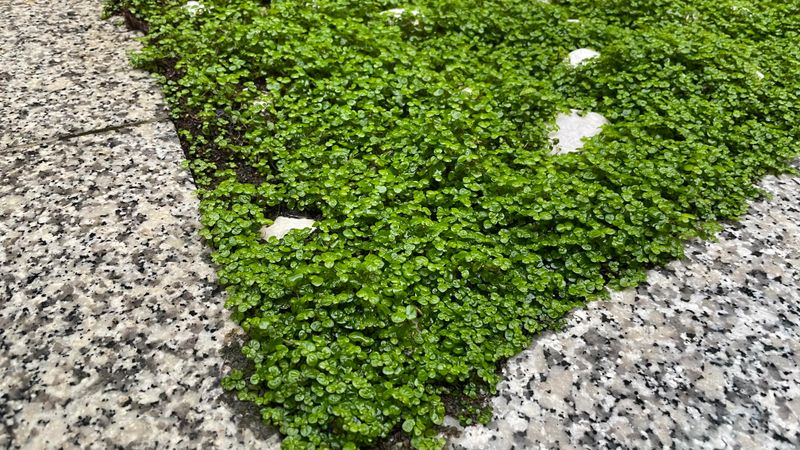
There is something almost magical about baby tears. Its tiny, round leaves are so small and delicate that a thick mat of it looks like a soft green carpet draped over the ground.
It has a lush, almost tropical look that makes shaded patios feel cool and inviting.
Baby tears thrives in moist, shaded spots where other groundcovers struggle to survive. If your patio sits under a tree or gets very little direct sun, this plant will feel right at home.
It spreads quickly and fills cracks with a dense mat that leaves almost no room for weeds to push through.
Coastal areas of California are especially good for baby tears because the plant loves humidity and mild temperatures. In drier inland areas, it needs more frequent watering to stay looking its best.
Keep the soil consistently moist but not waterlogged, and it will reward you with year-round greenery that looks fresh even in winter.
One thing to keep in mind is that baby tears is soft and not suited for foot traffic. It works best in decorative patios or areas where people do not walk regularly.
Use it along the edges of stone paths or in the joints of a sitting patio where feet rarely land. With the right conditions, it grows so thickly that weeds simply cannot find a foothold anywhere nearby.
4. Creeping Rosemary Spills Over Wider Edges
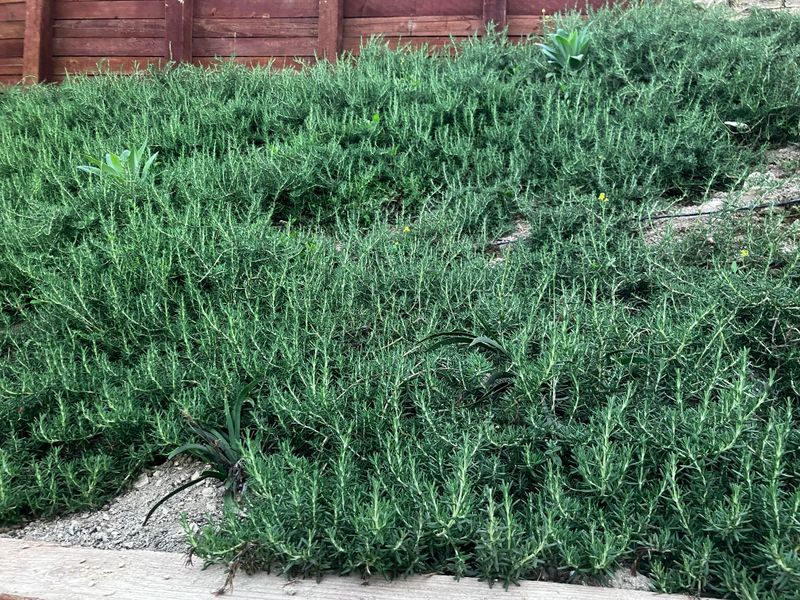
Most people know rosemary as an herb they use in the kitchen, but creeping rosemary is a whole different experience in the garden.
Instead of growing upright like the cooking variety, it trails and spills outward, draping itself beautifully over walls, wide paver edges, and raised beds.
Creeping rosemary can spread several feet wide over a few years, and its woody stems fill in large gaps with a tough, fragrant mat.
It produces small blue or purple flowers in late winter and early spring, which attract bees and other pollinators at a time when not much else is blooming. That makes it both a weed blocker and a wildlife benefit rolled into one.
California’s dry, sunny climate suits creeping rosemary extremely well. It is highly drought-tolerant once established and actually prefers lean, well-drained soil.
Rich, wet soil can cause root problems, so avoid overwatering. Plant it at the edge of a wide paved area and let it cascade over the edge naturally for the best visual effect.
It handles heat well and holds up to reflected warmth from concrete or stone, which is a big plus for sunny front yards and driveways. Trim it lightly once a year to keep it from getting too woody.
Over time, it builds a thick, aromatic barrier that weeds simply cannot compete with. It is tough, useful, and surprisingly beautiful in almost any paved setting.
5. Woolly Thyme Softens Hot Walkway Cracks
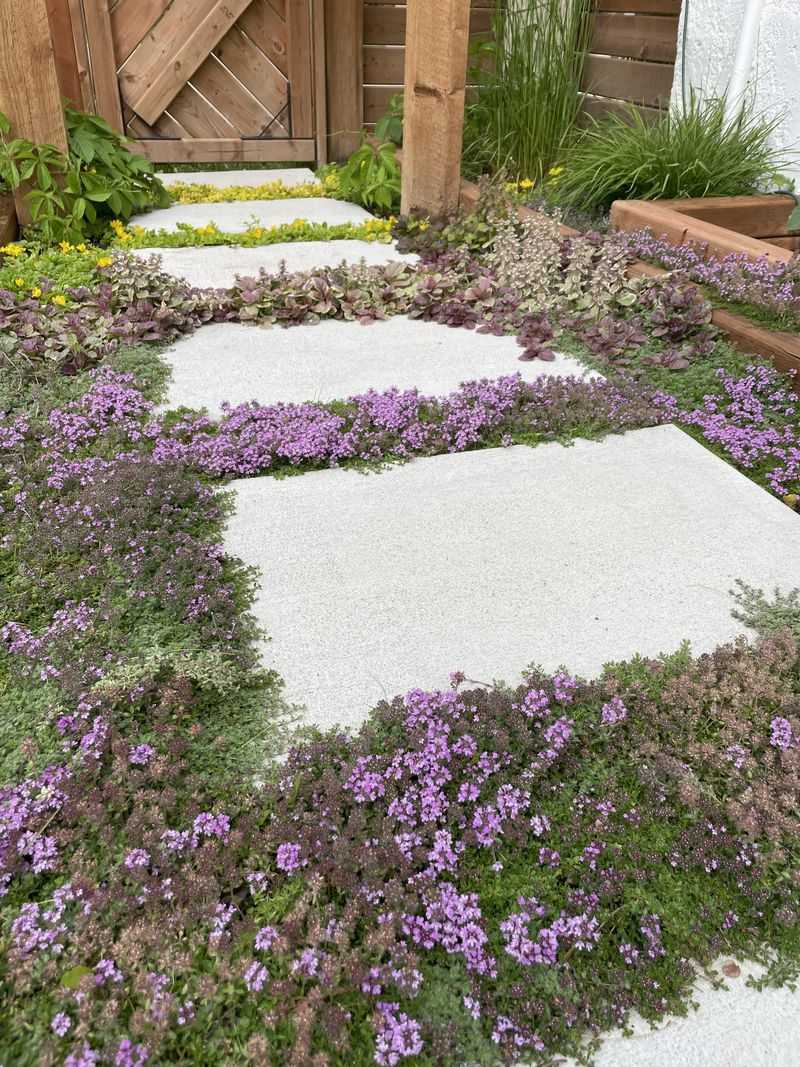
Hot pavement in summer can feel like a desert, and most plants want nothing to do with it. Woolly thyme is the exception.
It actually loves heat, and it thrives in the kind of baking, sun-drenched walkways that send other groundcovers running.
The leaves of woolly thyme are covered in fine, soft hairs that give the plant a fuzzy, silver-green appearance. Up close, it looks almost velvety.
That texture makes it one of the most visually interesting groundcovers you can plant between pavers, and it stays low enough, usually under an inch tall, to never feel out of place in a paved area.
It handles light to moderate foot traffic with ease, which is a big advantage for garden paths that people actually use. The more it gets gently stepped on, the more it releases a mild, herbal scent.
Many gardeners say that is one of their favorite things about it. It turns an ordinary walkway into a sensory experience.
Woolly thyme grows well across most of our state, especially in hot inland valleys where summer temperatures climb high. It needs very little water once established and spreads steadily to fill cracks without becoming invasive.
Plant plugs about six inches apart in spring, give them a good start with regular watering for the first few weeks, and then step back and let the plant do its job.
6. Elfin Thyme Makes Tiny Cracks Look Intentional
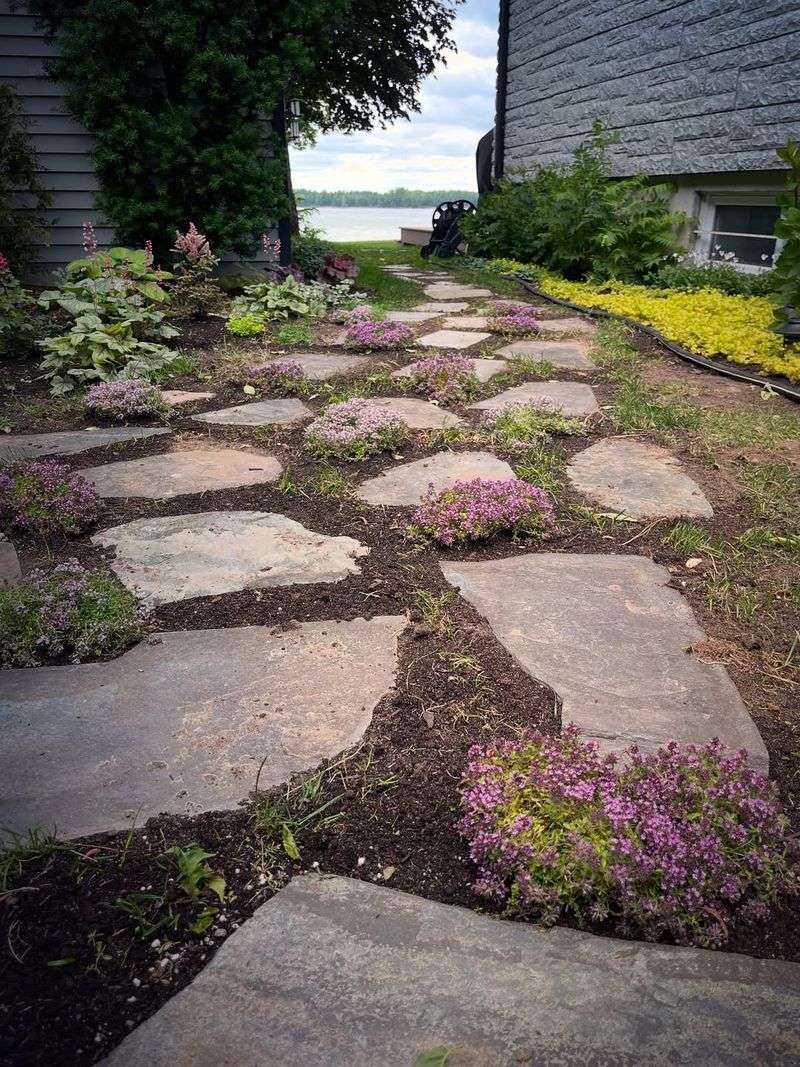
Elfin thyme is the smallest member of the thyme family, and it is remarkable what such a tiny plant can do.
It grows only about one inch tall and spreads in a tight, even mat that makes even the thinnest cracks between pavers look like they were designed that way on purpose.
That is really its superpower. Where other plants look out of place in narrow joints, elfin thyme fits in perfectly.
Its miniature pink flowers bloom in summer and give the whole paved area a soft, colorful glow that looks intentional and well-planned. Visitors often assume the homeowner hired a professional landscaper to achieve the effect.
Full sun and well-drained soil are what this plant needs most. It is extremely drought-tolerant once established, which makes it a great fit for the dry summers common in many parts of California.
It does not need fertilizer, rarely needs trimming, and stays neat on its own without much help from you.
Elfin thyme tolerates light foot traffic, though it prefers paths where people step carefully rather than stomp.
Plant it between closely spaced flagstones or small pavers where the joints are narrow and shallow.
Space plugs about four inches apart so the mat forms quickly. Within one season, the gaps will be filled with a dense, fragrant carpet that weeds will struggle to penetrate.
It is one of the easiest and most rewarding groundcovers a gardener can try.
7. Blue Star Creeper Fills Damp Paver Seams
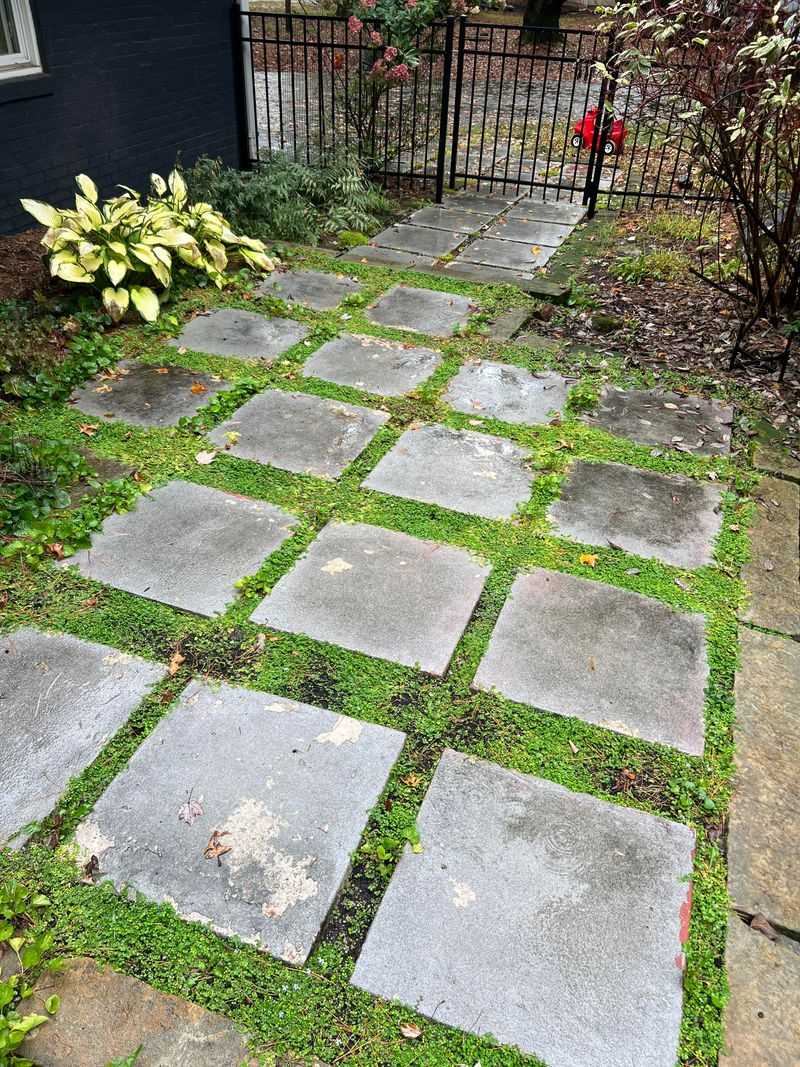
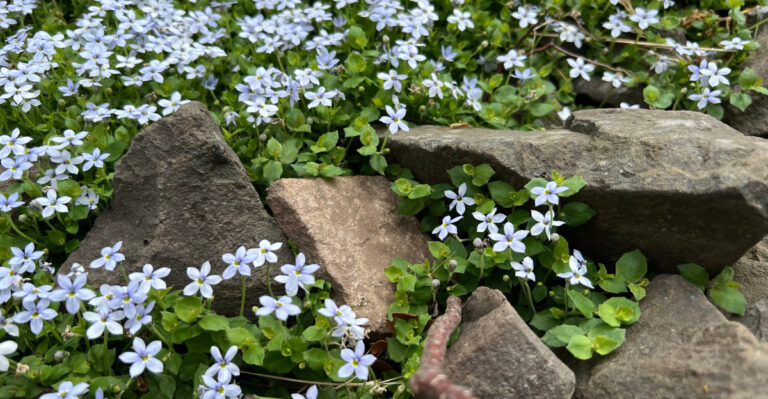
Blue star creeper is one of those plants that makes people stop and look twice. Its tiny, star-shaped blue flowers sit just above a low mat of bright green leaves, and when it blooms in spring and again in fall, it looks like someone scattered little blue stars across the ground.
It is genuinely eye-catching. What makes it especially useful for paved areas is how well it handles moisture.
Many groundcovers struggle in damp spots, but blue star creeper actually prefers consistent moisture and partly shaded conditions.
If your patio or path gets irrigation runoff or stays slightly damp, this plant will feel right at home in those seams.
It spreads at a moderate pace and stays low, usually under two inches tall. That makes it easy to manage and keeps it from overrunning surrounding plants or lawn areas.
It can handle very light foot traffic, though it prefers spots where it is mostly left alone to spread at its own pace.
Coastal and northern parts tend to suit blue star creeper well because of the mild temperatures and natural moisture.
In hotter, drier inland zones, it needs more frequent watering and some afternoon shade to stay healthy.
Plant it in paver seams that get partial sun and keep the soil lightly moist. Over one growing season, it builds a cheerful, weed-blocking mat that adds real color and life to any paved surface.
8. Corsican Mint Works Between Shaded Stones
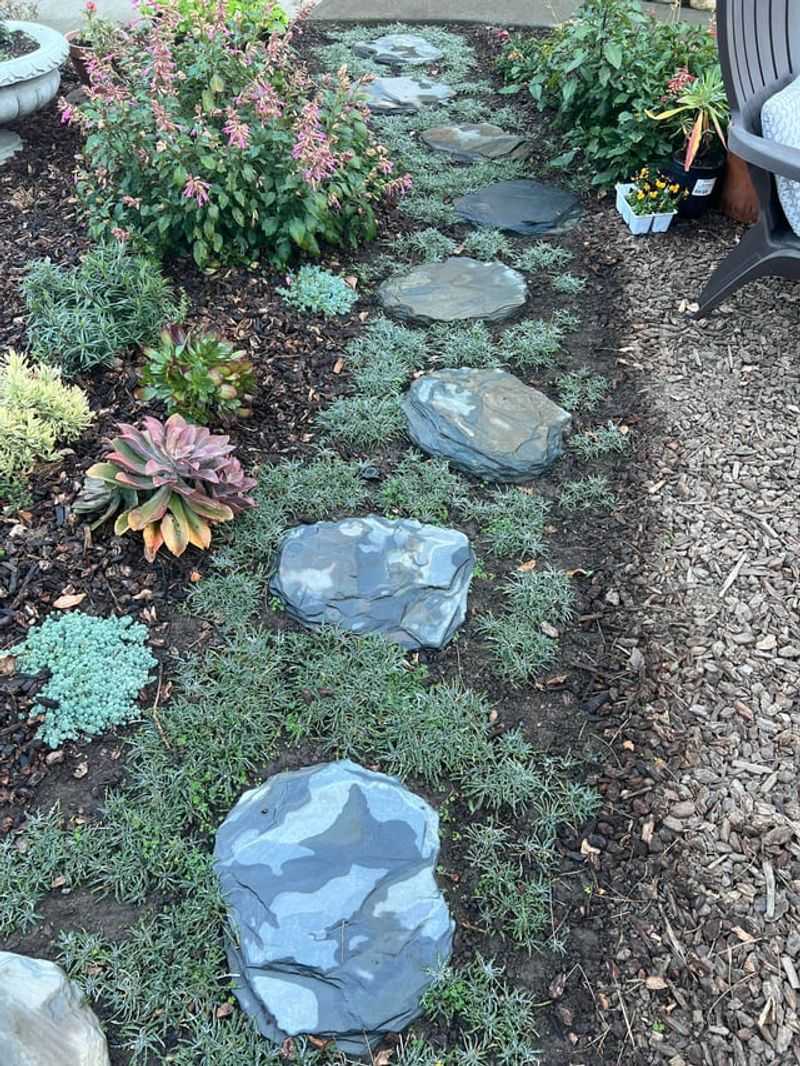
Corsican mint is the smallest mint you will ever come across, and it is absolutely perfect for the tight, shaded spaces between stepping stones where almost nothing else will grow.
Its tiny leaves form a flat, dense mat that hugs the ground and smells strongly of peppermint whenever it is touched or lightly stepped on.
That scent is one of the most talked-about things about this plant. Gardeners who plant it between stones often say their garden paths smell like a candy shop on warm days.
It is one of those small surprises that makes a garden feel truly special and thoughtfully planted.
Corsican mint loves shade and consistent moisture, which makes it a good match for patios under trees or along the north side of a house where direct sun rarely reaches.
It grows only about half an inch to one inch tall, so it never blocks the view of the stones themselves. Instead, it fills the gaps and makes the whole surface look lush and finished.
It handles very light foot traffic, though it prefers to be stepped on occasionally rather than constantly. In the milder coastal and central regions of California, it stays green through most of the year.
Plant small divisions or plugs about four inches apart in moist, shaded soil. Keep them watered regularly for the first season, and they will knit together into a fragrant, weed-blocking mat that brings a smile every time you walk by.