The Underrated Georgia Perennial That Keeps Blooming Through August Heat
Some perennials put on a beautiful spring show, then fade into the background once the hottest weather arrives.
If you are tired of replacing worn-out flowers every summer, it may be time to grow something that thrives when many other plants slow down.
Choosing the right perennial can keep your garden colorful long after early bloomers have finished. That is a difference you will notice every time you step outside.
One often-overlooked perennial deserves far more attention for its dependable summer performance in Georgia. It continues producing fresh blooms through August heat while asking for very little in return once established.
Before filling another empty space with a short-lived plant, consider one that keeps your garden looking bright for weeks longer.
You may be surprised how much color a single reliable perennial can add during the toughest part of summer.
1. Gaura Keeps Blooming Through Summer Heat
August in Georgia feels like standing inside an oven. Most flowering perennials shut down, drop petals, and wait for cooler days.
Gaura refuses to follow that pattern.
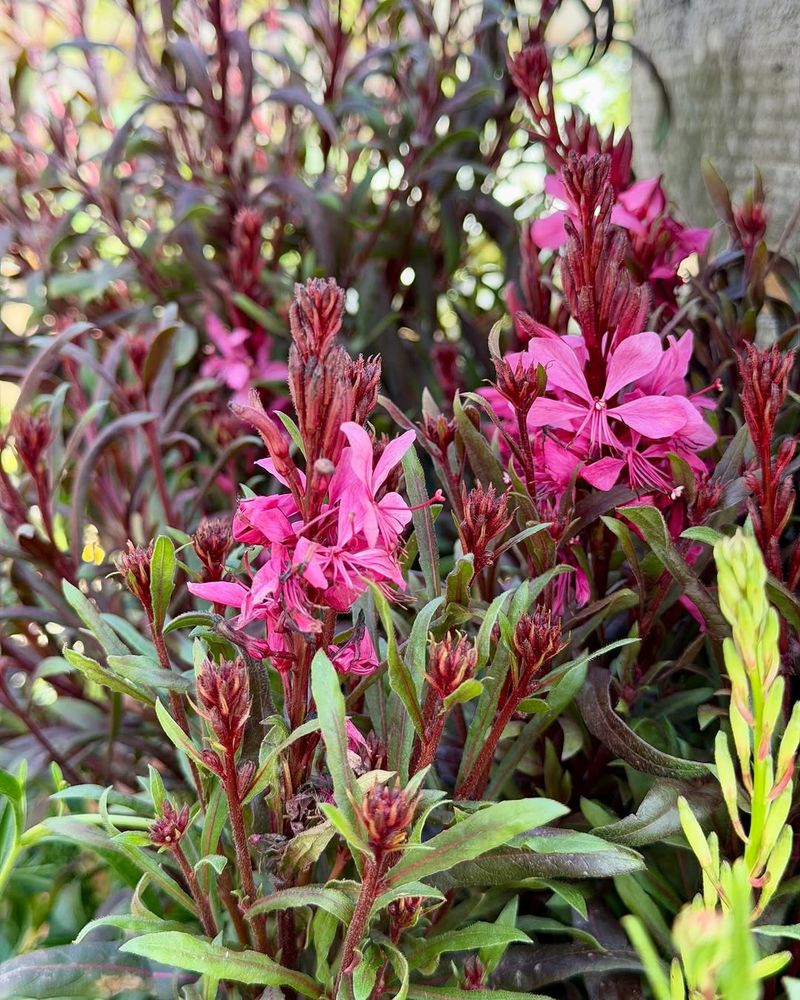
Known botanically as Oenothera lindheimeri, gaura produces slender, wand-like stems covered in small blooms that open continuously from late spring straight through summer.
Even when temperatures climb past 95 degrees, fresh flowers keep appearing at the tips of each stem.
Part of what makes gaura so reliable is its deep taproot. That root system reaches down into the soil and pulls moisture from levels most shallow-rooted plants cannot access.
This gives gaura a built-in advantage during dry stretches.
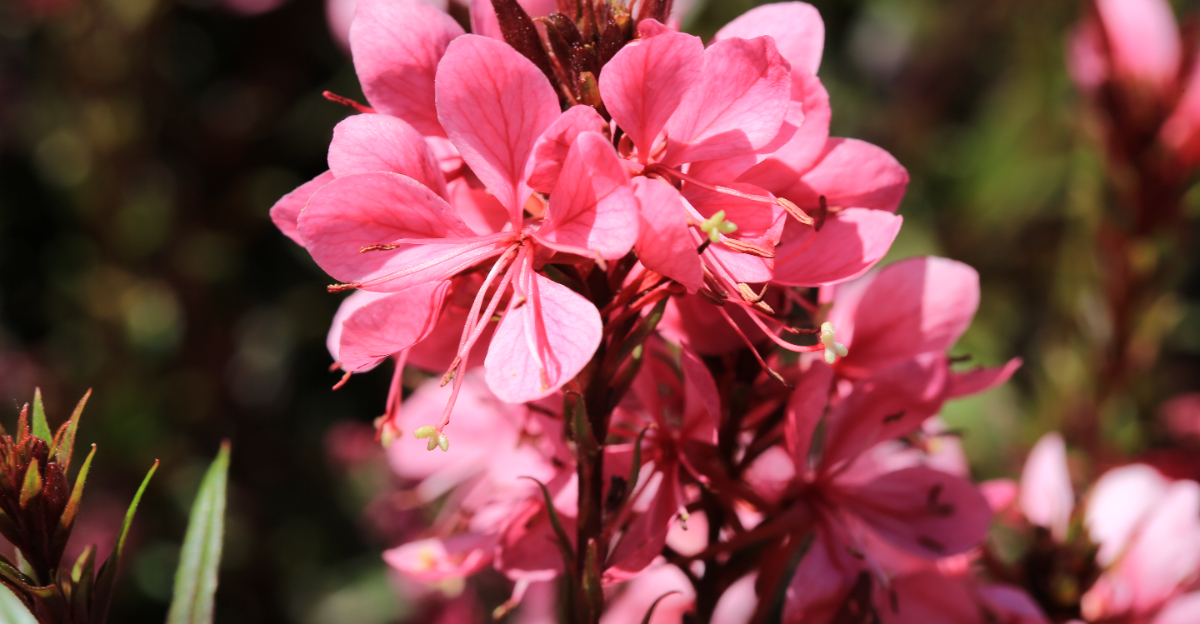
Blooms come in shades of white and soft pink. Some varieties show a gradient where petals shift from white at the edges to a rosy center.
The effect is subtle and genuinely pretty.
Gaura also attracts pollinators consistently. Hummingbirds, bees, and butterflies visit the flowers regularly throughout the season.
A single established clump can become a busy pollinator hub by midsummer.
Unlike many perennials that bloom in one dramatic flush and then go quiet, gaura spreads its flowering energy across months. It does not burn bright and fade fast.
2. Full Sun Delivers The Best Results
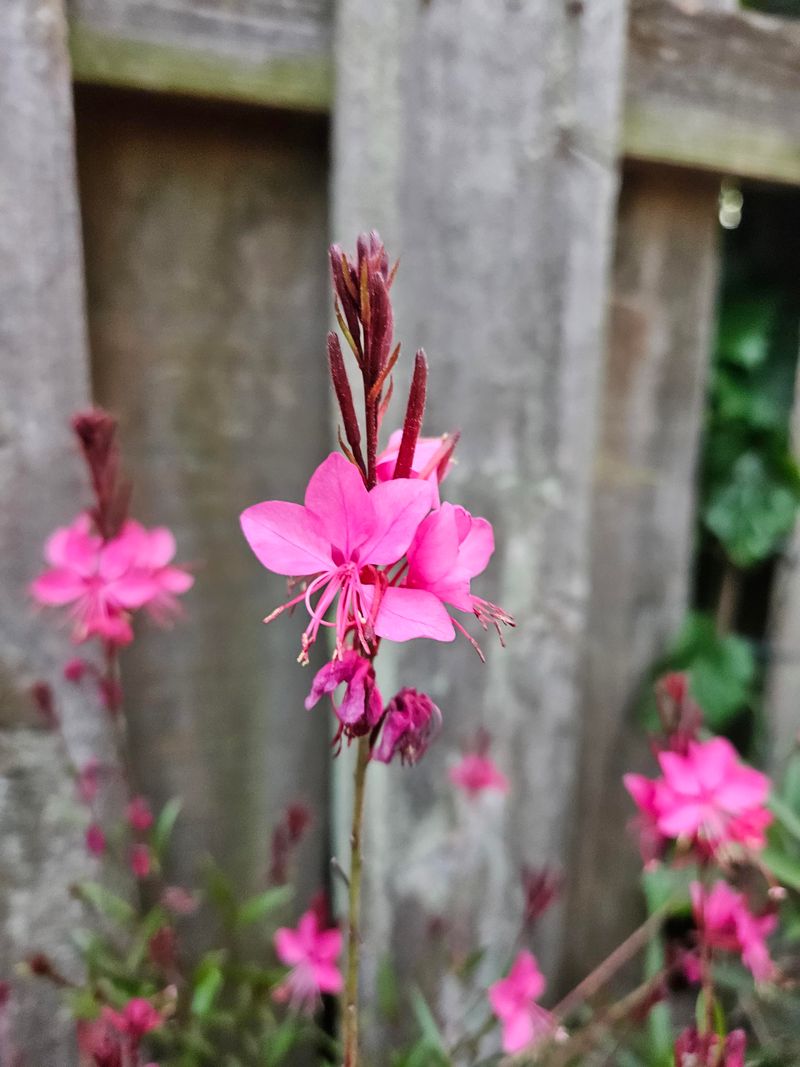
Shade is not gaura’s friend. Put it in a spot that gets less than six hours of direct sun and the plant becomes leggy, weak, and stingy with its blooms.
Full sun is where gaura truly performs.
A south-facing bed or an open garden area with no overhead canopy is ideal. Morning sun alone is not enough.
Gaura needs that intense afternoon exposure to stay compact, upright, and floriferous.
Interestingly, the more sun gaura receives, the better its drought tolerance becomes. Plants grown in full sun develop stronger root systems faster than those in partial shade.
That root strength is what carries them through August without wilting.
Spacing also matters in a sun-drenched bed. Crowding gaura plants reduces airflow and can lead to fungal issues in humid Southern summers.
Give each plant about 18 to 24 inches of breathing room.
Companion planting in full sun works well with gaura. Ornamental grasses, black-eyed Susans, and coneflowers all share similar light and water preferences.
Your Georgia Garden Changes Every Week. Your Plan Should Too.
Gardening in Georgia changes quickly throughout the season. Every Friday you’ll receive a simple weekly plan showing exactly what to plant, prune, fertilize, harvest, and protect so you never miss the right timing.
Mixing them creates a layered look without anyone competing too aggressively for resources.
Gardeners in the South sometimes overlook spots that feel too hot or exposed. Those baking, reflective corners near driveways or stone pathways are often exactly where gaura will flourish most.
3. Fast-Draining Soil Prevents Root Problems
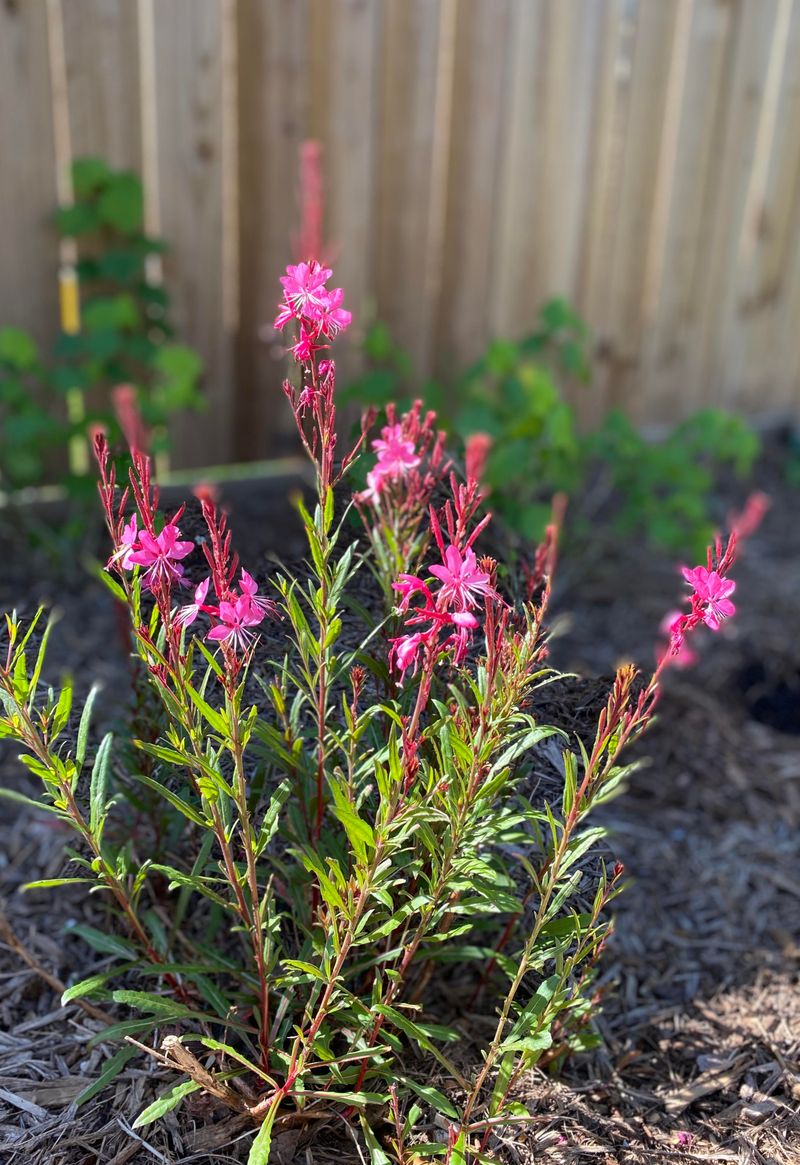
Wet feet are a real problem for gaura. Roots that sit in soggy soil for extended periods will rot, and a rotting root system cannot support a blooming plant.
Drainage is non-negotiable.
Sandy or loamy soils work best. Heavy clay, which is common across much of the Southeast, holds water too long for gaura to thrive without amendment.
Mixing coarse sand or fine gravel into clay beds can improve drainage significantly before planting.
Raised beds are another solid option. Elevating the planting area by even six to eight inches changes drainage dramatically.
Gaura in raised beds often outperforms gaura planted directly into unamended native soil.
Soil pH matters less than drainage quality. Gaura tolerates a fairly wide pH range, roughly 6.0 to 7.5, without showing stress.
Focus energy on drainage first and pH adjustment second.
Avoid planting gaura at the base of slopes where water collects after rain. Low-lying areas that stay damp for 24 hours or more after a storm are risky spots.
Choose elevated planting locations whenever possible.
Mulching around gaura helps regulate soil temperature and reduce surface moisture evaporation, but keep mulch pulled a couple of inches back from the crown.
4. New Plants Need Consistent Moisture At First
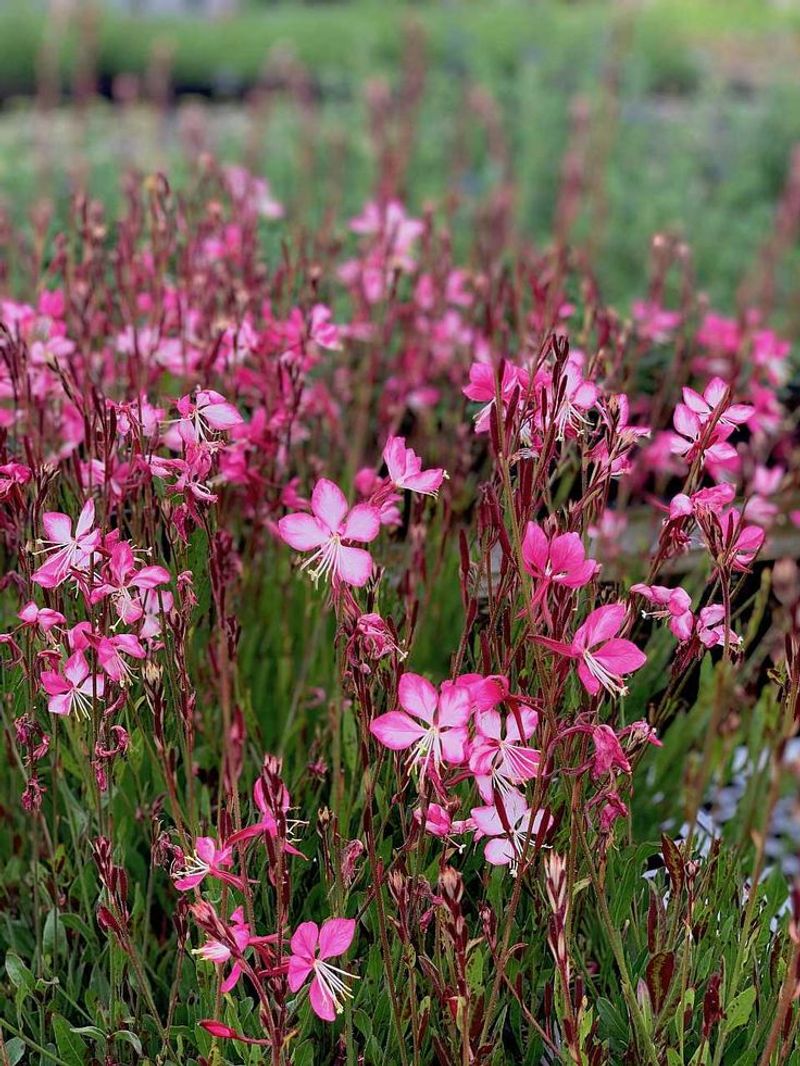
Gaura earns its drought-tolerant reputation only after it has settled in. Brand-new transplants are not tough yet.
They need regular watering during the first growing season to develop the deep root system that makes them so resilient later.
Water newly planted gaura two to three times per week during dry spells in the first month. After roots have established, usually by the second month, you can begin backing off gradually.
Watch the plant, not the calendar.
Signs of underwatering in young plants include drooping stems and slightly curled leaf edges. These are early warnings worth paying attention to.
Catching them early and watering promptly usually turns the plant around within a day or two.
Overwatering is just as risky during establishment. Soggy soil around new roots creates the same rot risk as it does for mature plants.
Water deeply but allow the top inch of soil to dry out between sessions.
Morning watering is preferable. Wet foliage that dries quickly in morning sun is less prone to fungal issues than foliage that stays wet overnight.
Drip irrigation or soaker hoses keep moisture at root level and off the leaves entirely.
Once gaura survives its first full summer, the dynamic shifts. By the second year, most established plants handle dry stretches with minimal intervention.
5. Light Pruning Encourages Fresh Flowers
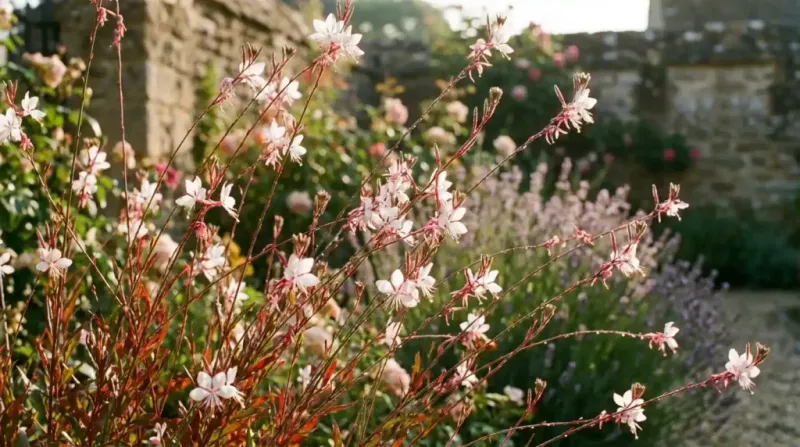
Gaura does not demand heavy maintenance, but a little well-timed trimming goes a long way. Cutting back spent stems by about one-third in midsummer can trigger a fresh flush of blooms right when the garden needs them most.
Look for stems where most of the flowers have finished and only a few buds remain at the tips. Those are the ones worth cutting back.
Healthy green stems with active blooms should be left completely alone.
Sharp, clean pruning shears make a real difference. Ragged cuts from dull blades create entry points for disease.
Deadheading individual spent blooms is optional. Gaura reblooms on its own fairly reliably without deadheading, but removing old flowers can keep the plant looking tidier if appearance matters in that particular bed.
Do not cut gaura back hard in the middle of summer. Removing more than half the plant at once stresses it significantly.
A light trim is enough to refresh the plant without setting it back during peak heat.
In Georgia, a midsummer trim around late June or early July often results in a strong second wave of blooms in August and September.
6. Avoid Overfeeding During The Growing Season
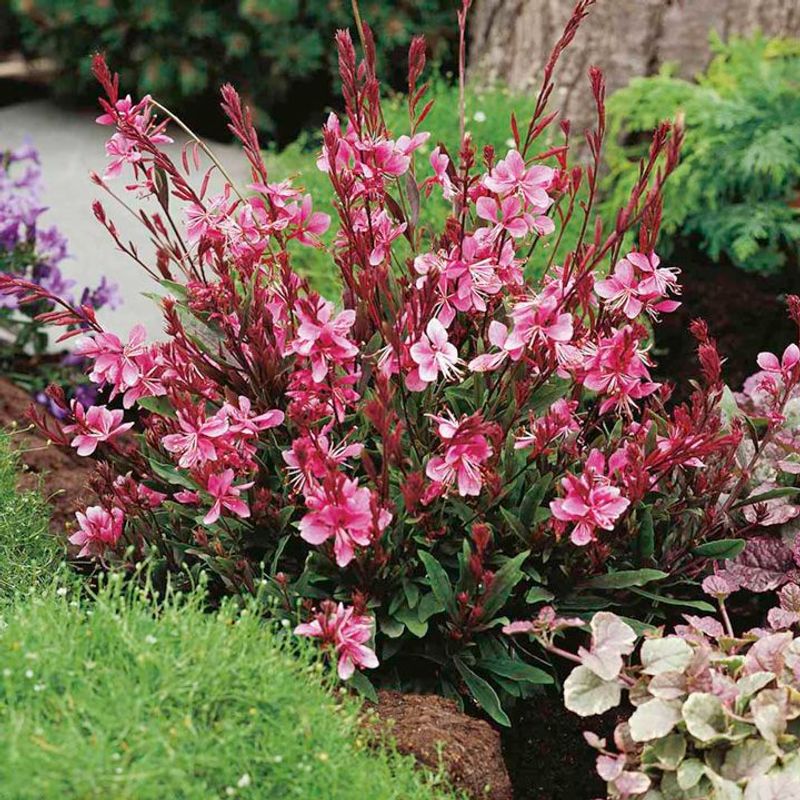
More fertilizer does not mean more flowers with gaura. Feed it too much nitrogen and you will get a lush, leafy plant that barely blooms.
Gaura thrives on lean soil, not rich amended beds loaded with fertilizer.
A single light application of a balanced, slow-release granular fertilizer in early spring is usually sufficient for the entire growing season. That modest boost helps the plant come out of dormancy without pushing excessive vegetative growth.
Skip the high-nitrogen lawn fertilizers entirely. Those products encourage green growth at the expense of flowering.
Gaura’s blooming cycle is actually triggered in part by mild nutrient stress, so feeding it heavily works against what you want.
Compost is a gentler option than synthetic fertilizers. A thin layer of finished compost worked into the soil around the plant in spring feeds slowly and improves soil structure without spiking nutrient levels sharply.
If gaura is producing lots of leafy growth but few flowers mid-season, excess nitrogen is often the cause. Cutting back on feeding and ensuring good drainage usually corrects the issue over a few weeks.
Native and near-native plants like gaura evolved in nutrient-poor conditions. Mimicking those lean conditions in the garden tends to produce the best results.
Resist the urge to treat gaura the same way you would a heavy-feeding vegetable or annual flower.
7. Leave Seed Heads For Natural Reseeding
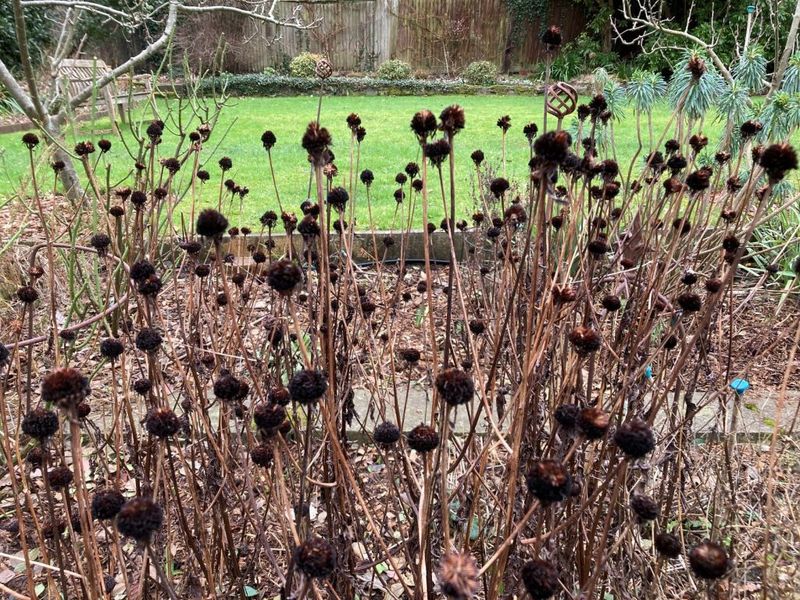
Gaura is a generous self-seeder when conditions allow. Letting seed heads mature and drop at the end of the season can result in new seedlings appearing nearby the following spring, essentially giving you free plants without any effort.
Seed heads form at the tips of spent flower stems as summer winds down. They are small, narrow, and easy to overlook.
Leaving them intact rather than cutting everything back in late summer is all it takes to encourage natural reseeding.
Seedlings that sprout from dropped seeds may not match the parent plant exactly. Named cultivars do not reproduce true from seed, so volunteer seedlings often revert to the wild-type form, which typically shows smaller blooms in white or pale pink.
That is not necessarily a problem, since the species form is still attractive and tough.
If you want to collect seeds intentionally, wait until the pods begin to brown and dry. Snip the stems, place them upside down in a paper bag, and let them finish drying indoors.
Store collected seeds in a cool, dry place until spring planting.
Reseeding behavior varies depending on soil, moisture, and local conditions. Not every garden will see volunteer seedlings, but many do.