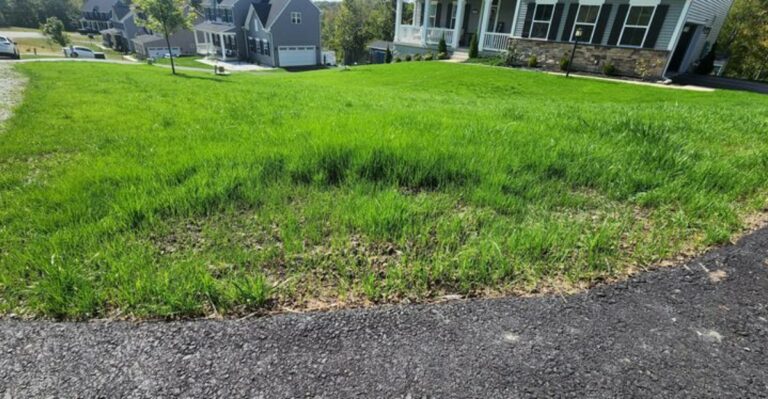
The Reason Robins Gather On Dry New York Lawns
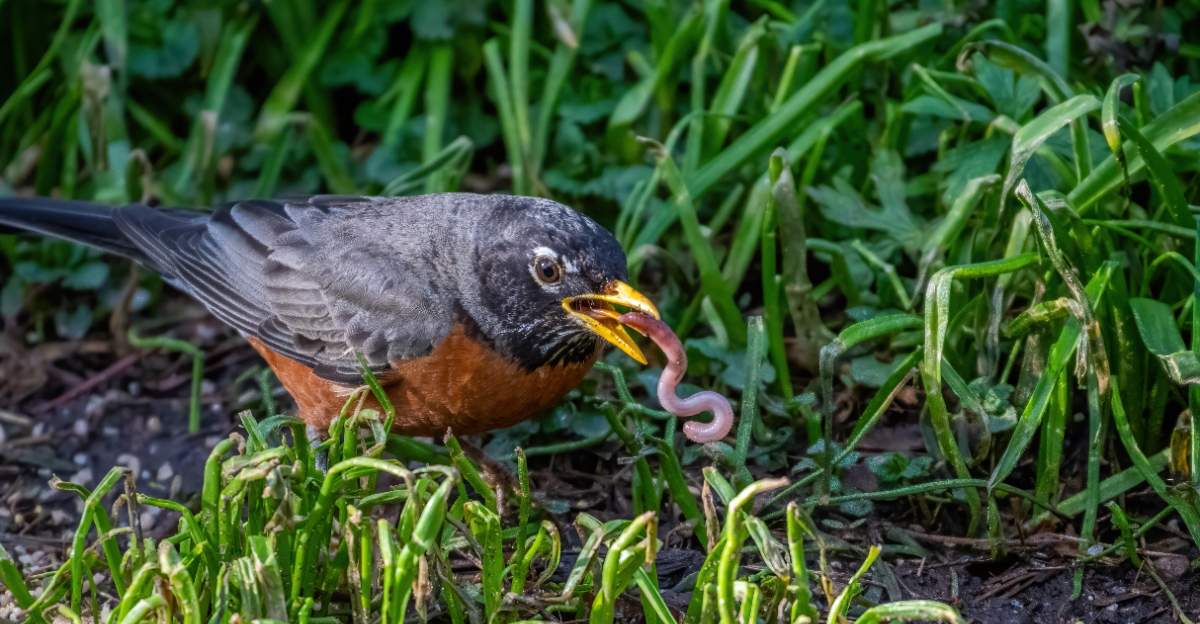
Your lawn looks tired and cracked, yet a dozen robins are working it like a buffet line. That contradiction is exactly the point, because dry grass hides more activity than a lush green carpet ever could.
New York homeowners notice this pattern every fall, right when temperatures drop and rainfall gets unpredictable. Robins are not wandering aimlessly across your patchy grass, they are responding to a food signal that thin, stressed turf sends louder than healthy grass does.
Look closer and you will spot a pattern in where they hop, peck, and pause. That behavior is not random, it follows a signal your lawn is sending whether you realize it or not.
Dry Soil Pushes Earthworms Closer To The Surface
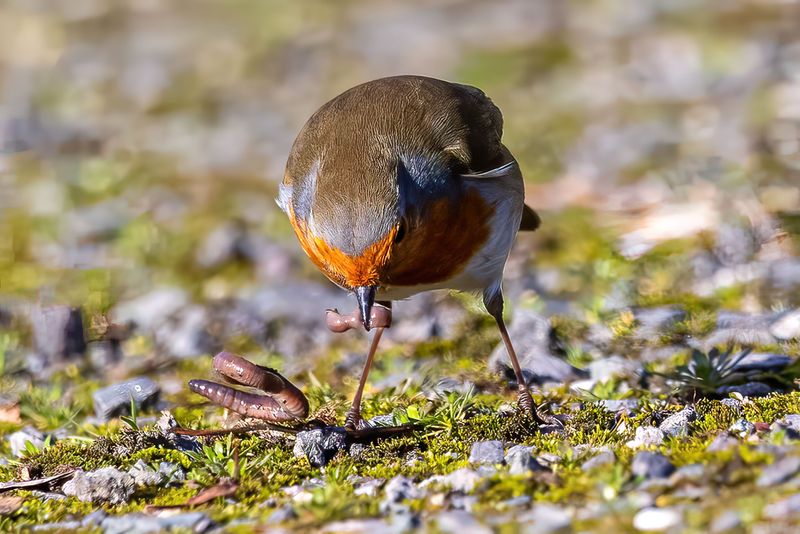
Dry soil is not just bad news for your grass. It changes the surface in ways that make hungry robins take notice.
When the ground dries out, earthworms retreat deeper to find the moisture they need. That downward shift thins out the population of insects and worms still active near the top layer.
At the same time, dry conditions stress the grass itself, leaving it shorter and more sparse. That thinning cover exposes bare soil and whatever surface insects remain, giving robins a much clearer hunting ground.
Most people assume robins are drawn to wet lawns where worms surface after rain, and that is true in the short term. But persistently dry patches offer something different: open, low-cover terrain where every remaining meal is easy to spot.
Robins have learned over generations that thin, dry patches make for efficient feeding. A lawn that has gone without water for several days becomes far easier to work than a dense, healthy one.
Compacted, clay-heavy soil common in many New York suburban yards holds moisture unevenly. Surface insects cluster near pockets of dampness, making them easier to locate in predictable spots.
Gardeners who skip irrigation for a week often notice more robin activity within days. The shorter, sparser grass is what makes the difference.
Understanding this pattern helps explain why robins seem to prefer struggling lawns over lush ones. A perfectly watered, thick yard actually hides the soil surface, making hunting much harder for them.
Dry ground is not a problem for robins. For them, it is an open door to easier hunting.
Robins Rely On Sight, Not Sound, To Hunt
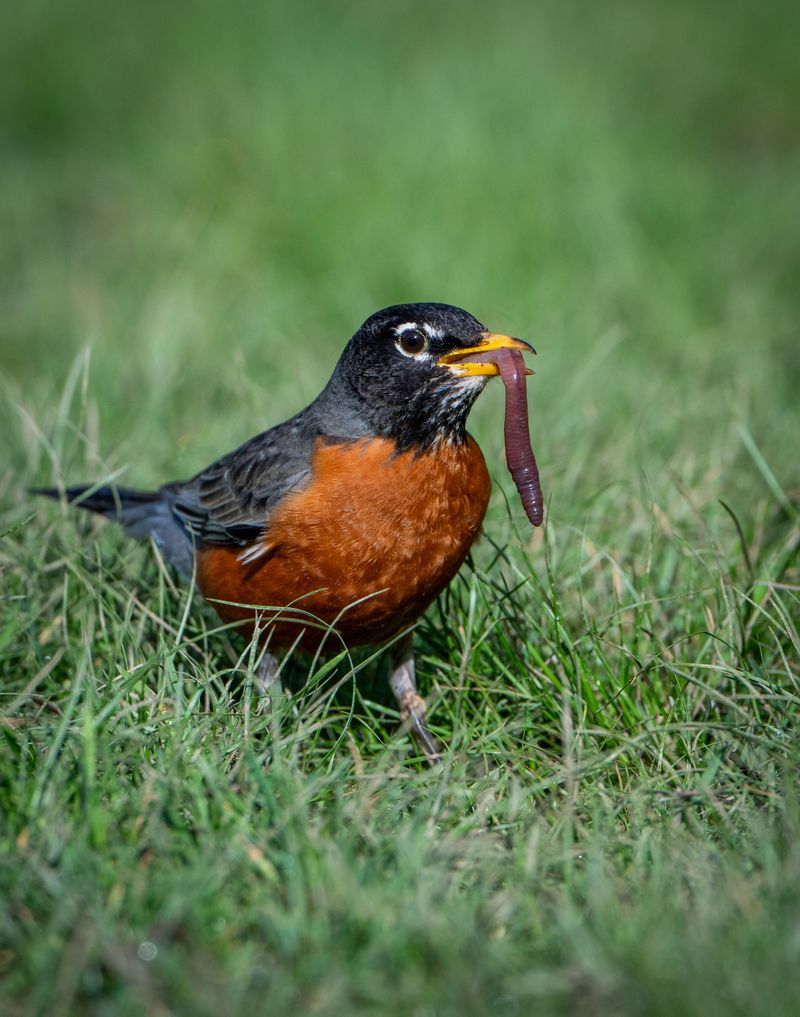
Here is something that surprises almost everyone who hears it. Robins do not listen for worms underground.
For years, people believed those famous head tilts meant robins were listening. Scientists have since confirmed the birds are actually looking, not listening.
A robin tilts its head to the side to get a better angle of vision. Their eyes are positioned on the sides of their heads, so tilting gives one eye a direct downward view.
They scan the soil surface for the tiniest movement or slight color contrast. A worm poking up even a centimeter can catch a robin’s sharp eye instantly.
Your New York Garden Changes Every Week. Your Plan Should Too.
Gardening in New York changes quickly throughout the season. Every Friday you’ll receive a simple weekly plan showing exactly what to plant, prune, fertilize, harvest, and protect so you never miss the right timing.
Dry lawns help robins hunt visually because shorter, stressed grass offers less interference. Thick green turf hides the soil beneath a dense canopy of blades.
On a dry patch, the ground is more exposed and easier to scan quickly. Robins can cover more territory in less time when visibility is high.
Their eyesight is genuinely impressive by any measure. Robins can detect motion at distances that would make most backyard observers jealous.
Low morning light actually enhances their ability to spot surface movement. The long shadows cast by early sun make slight soil disturbances more visible.
This explains why you often see robins working a lawn in the morning rather than midday. Bright overhead light flattens shadows and reduces visual contrast on the ground.
Watching a robin hunt is watching a precision instrument at work. Every tilt is a calculated, focused move toward the next meal.
Short Grass Gives Easier Access To Prey
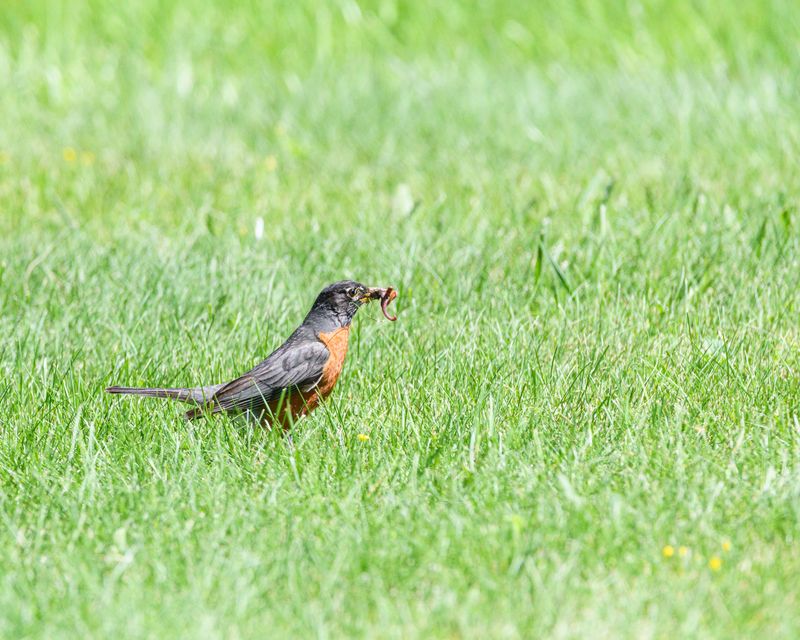
Lawn height matters more than most homeowners realize. Robins have strong preferences, and short grass tops the list.
When grass grows tall and thick, it creates a physical barrier between the bird and the soil. Robins cannot easily reach worms hidden under a dense mat of overgrown turf.
A closely mowed lawn removes that obstacle entirely. The birds can walk, probe, and pull with far less resistance.
Most robins prefer grass cut between two and three inches. That height keeps enough structure to hold soil moisture while still leaving the surface accessible.
Dry New York lawns often end up shorter naturally because stressed grass slows its growth. Heat and drought together create the low, sparse conditions robins find ideal.
Sparse patches are especially attractive because they expose bare soil directly. A robin does not need to push through anything to get to what it wants.
Homeowners who mow frequently during dry spells sometimes unknowingly create perfect robin habitat. The combination of short blades and dry ground is hard for the birds to resist.
Golf courses and athletic fields in the New York area attract enormous robin flocks for this exact reason. Precision-cut turf over dry ground is practically a robin restaurant.
Tall, lush grass is beautiful to look at but functionally off-limits for ground-feeding birds. Robins will skip right over it to find a more accessible patch nearby.
The best hunting grounds are simple, open, and low. Robins figured that out long before any homeowner ever picked up a mower.
Morning Watering Habits Influence Where Robins Feed
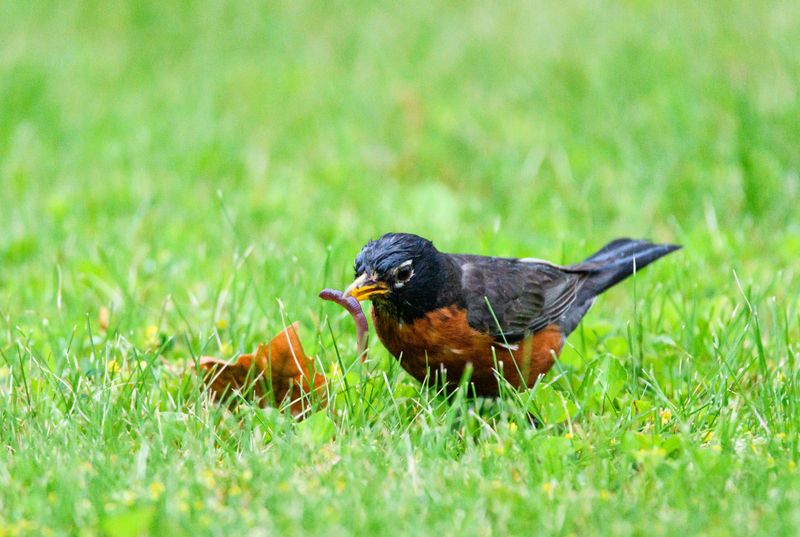
Your sprinkler schedule is shaping where robins show up each day. Most people never connect the two things.
When you water in the morning, moisture soaks into the top layer of soil quickly. Worms respond within minutes by moving toward the damp zone near the surface.
Robins have learned to follow this pattern closely. They often show up shortly after a lawn gets watered.
But here is where the dry lawn factor becomes important. Sections of a yard that miss regular watering stay thinner and more exposed longer.
Those dry zones offer less grass cover to hide behind, not more worms pushing upward. That open, sparse terrain makes it easier for robins to spot and reach whatever insects remain near the surface.
Robins recognize this difference and often prefer the drier, thinner sections over freshly watered ones. Less cover means less effort spent searching.
Neighborhoods with inconsistent irrigation create a patchwork of wet and dry zones. Robins map these zones and return to the most productive spots repeatedly.
Homeowners on the same block often notice robins clustering in one yard and ignoring another. Watering habits are frequently the hidden reason for that pattern.
Switching to afternoon watering can shift robin activity too. Morning feeders tend to arrive before noon, so evening moisture cycles attract fewer early birds.
Paying attention to your watering schedule gives you surprising influence over local wildlife. A small timing shift can bring more robins, or fewer, depending on your preference.
Large Flocks Signal Migration Season Nearby
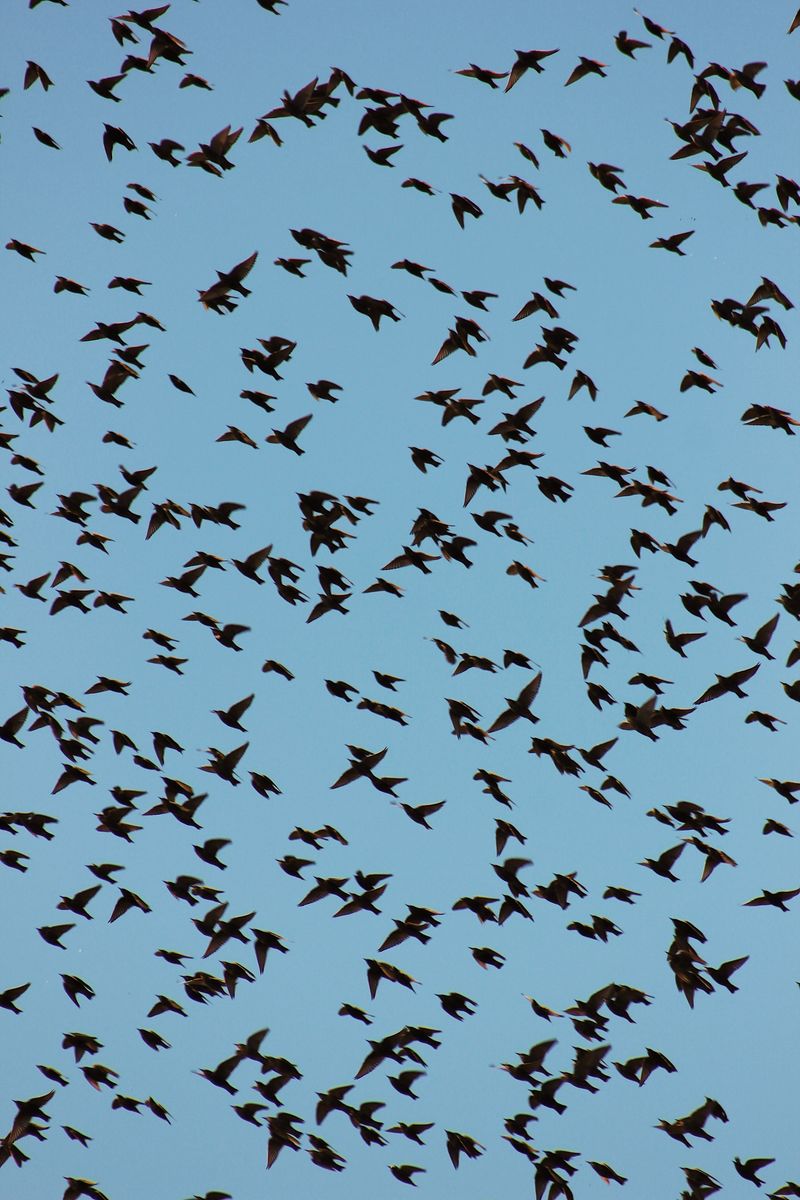
Spotting twenty robins at once feels almost surreal. That kind of gathering means something big is happening in the bird world.
Robins are not year-round loners. During migration season, they band together in flocks that can number in the hundreds.
These groups travel and feed together as they move south ahead of colder temperatures. A dry New York lawn becomes a pit stop on a much longer journey.
Flocking behavior ramps up noticeably in September and October across the New York metro area. Homeowners sometimes wake up to find dozens of birds working their yard before breakfast.
The flock dynamic is efficient by design. More eyes scanning a surface means prey gets spotted faster by the group overall.
Individual birds benefit from the group even when they are not the ones making the catch. Movement from one robin can flush worms or insects that a nearby bird grabs instead.
Dry lawns in fall are especially productive because stressed, thinner grass leaves the soil surface more exposed. That means whatever insects and worms remain near the top are far easier for a flock to spot.
Migration flocks tend to move quickly through an area. A yard that hosts fifty robins one morning might be completely empty by afternoon.
Seeing a large flock is a seasonal clock of sorts. It tells you that cooler weather is arriving and the robins are preparing for a long flight south.
That rush of wings and red-orange chests is one of autumn’s most underrated backyard moments. Enjoy it while it lasts.
Simple Lawn Changes Support Healthy Robin Activity
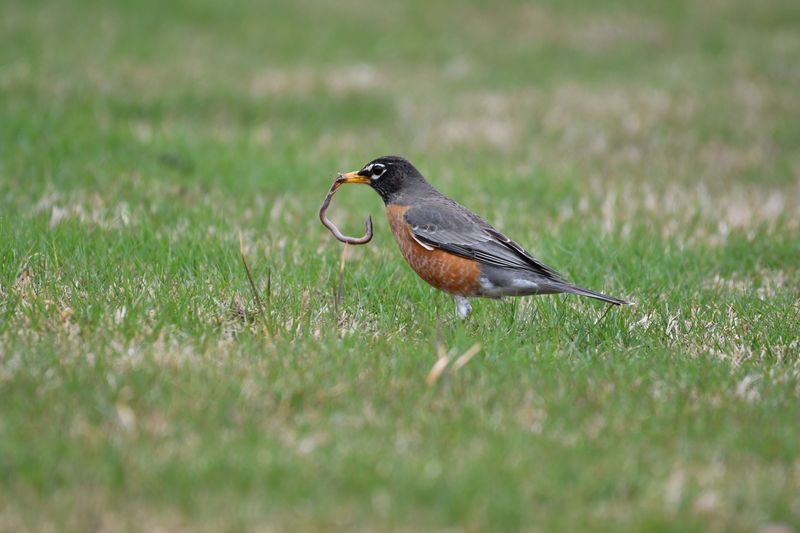
You do not need a wildlife degree to make your yard more robin-friendly. A few straightforward adjustments go a long way.
Start by reconsidering your mowing schedule. Keeping grass between two and three inches creates the ideal height for robins to forage comfortably on dry New York lawns.
Avoid bagging your clippings every single time. Leaving some organic material on the surface encourages earthworm populations to stay active and closer to the top layer.
Skip the pesticides whenever possible. Chemical treatments that target grubs and surface insects also reduce the worm populations that robins depend on for food.
Light, frequent watering keeps the top layer of soil damp, which encourages worms to stay closer to the surface longer. Deep, infrequent watering lets the surface dry out between sessions, pushing worms further down.
Leaving a section of lawn unwatered for a few days thins out the grass and exposes more bare soil. Robins notice these open zones fast.
Adding a shallow birdbath near your lawn gives robins a reason to linger after feeding. Fresh water is a powerful draw, especially during dry stretches in late summer.
Reducing foot traffic on certain lawn sections lets the soil develop a more natural texture. Compacted areas from heavy use become difficult for worms to navigate and hard for robins to probe.
Native plantings around the lawn edge attract insects that supplement a robin’s diet beyond worms. A diverse yard ecosystem keeps them returning throughout the season.
Small changes stack up quickly. A few thoughtful tweaks turn an ordinary yard into a reliable stop on the robin circuit.