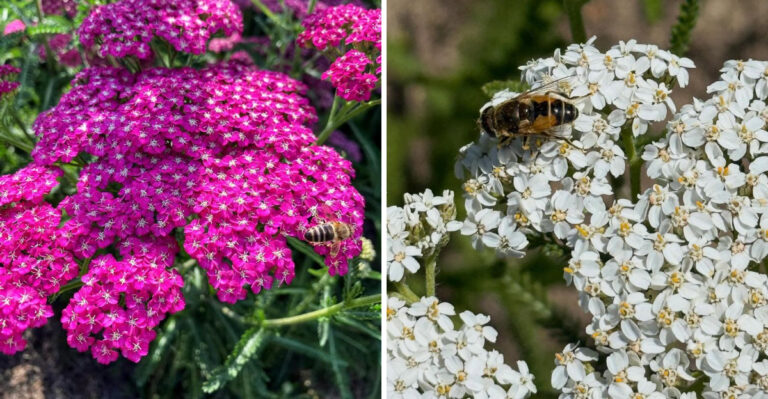
Why Deer Damage Shows Up First Along Michigan Driveways And Side Yard Borders In August
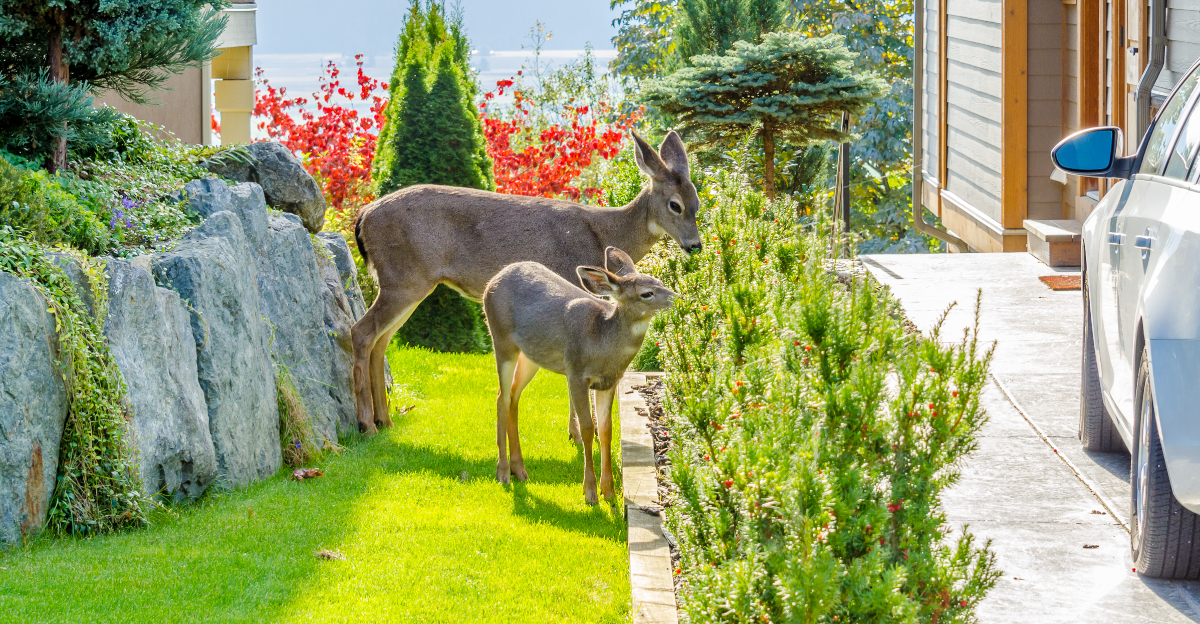
Deer tend to follow the path of least resistance, which often means driveways and side yard borders become their first stop in August.
These edge areas typically offer easy access points between wooded areas and open yard space, making them natural travel routes.
Plants along these borders also tend to receive less foot traffic and human activity, giving deer more confidence to browse undisturbed.
August hunger increases as natural food sources start thinning out, pushing deer to explore new areas more aggressively.
Driveway plantings often include tender ornamentals that are especially appealing compared to tougher interior yard plants. Installing motion activated deterrents near these border areas can help reduce repeat visits.
Choosing deer resistant plants specifically for these vulnerable edges offers longer term protection. Recognizing this pattern helps Michigan homeowners target prevention efforts where they matter most.
1. Driveways Often Follow A Natural Deer Travel Route
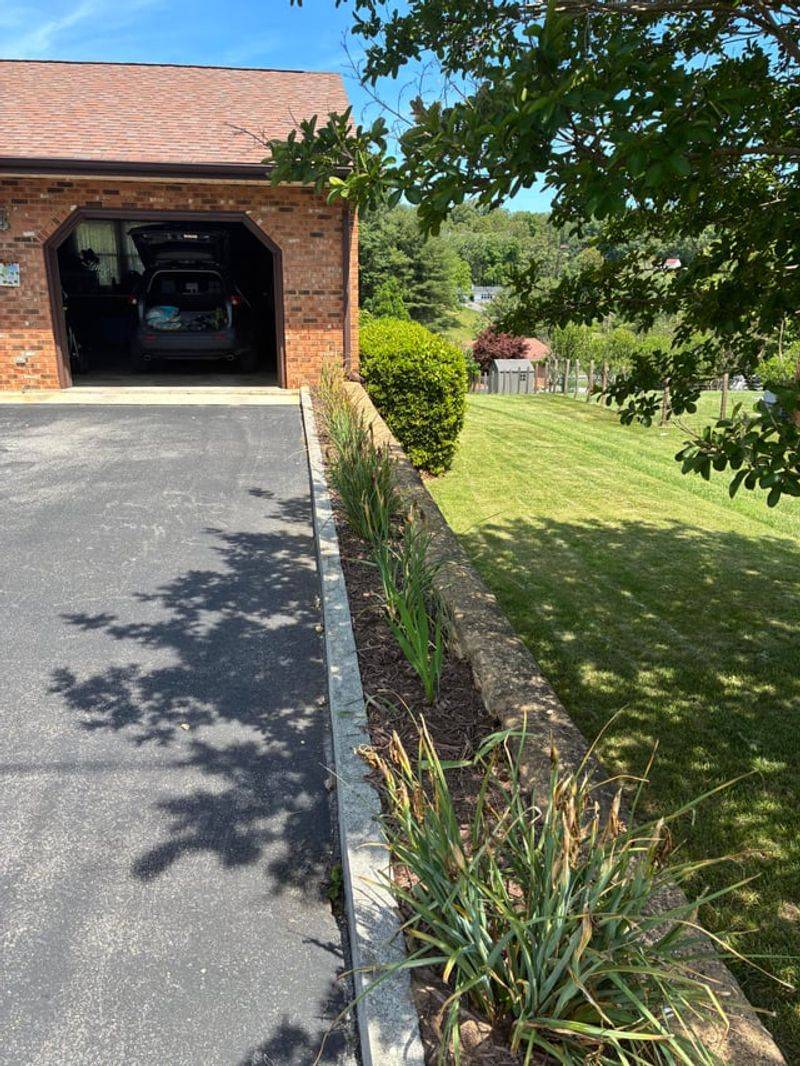
Most driveways do more than just connect your garage to the road. They often cut through or run alongside the exact kind of open corridor that deer naturally prefer to travel.
A driveway that borders a treeline, passes a drainage ditch, or runs near a fence gap becomes an effortless path for deer moving between wooded areas and quieter parts of a neighborhood.
Deer are most active during early morning hours, at dusk, and throughout the night. During these times, your driveway edge offers a wide, obstacle-free route that feels safe and familiar.
Over time, deer can establish a repeated path that follows the same line night after night, which explains why damage keeps appearing in the same strip of plants even after you remove damaged stems.
The driveway itself is not attracting deer as a food source. The plants growing beside it are simply the first accessible vegetation the animal encounters after entering your property along that familiar line.
Think of the driveway edge as a deer highway with your hostas or daylilies acting as a convenient roadside stop.
Recognizing the driveway as a travel corridor rather than just a paved surface helps you think more strategically about where to focus your protection efforts first and where future plantings might be most vulnerable to repeated browsing pressure.
2. Side Yard Borders Create Useful Edge Habitat
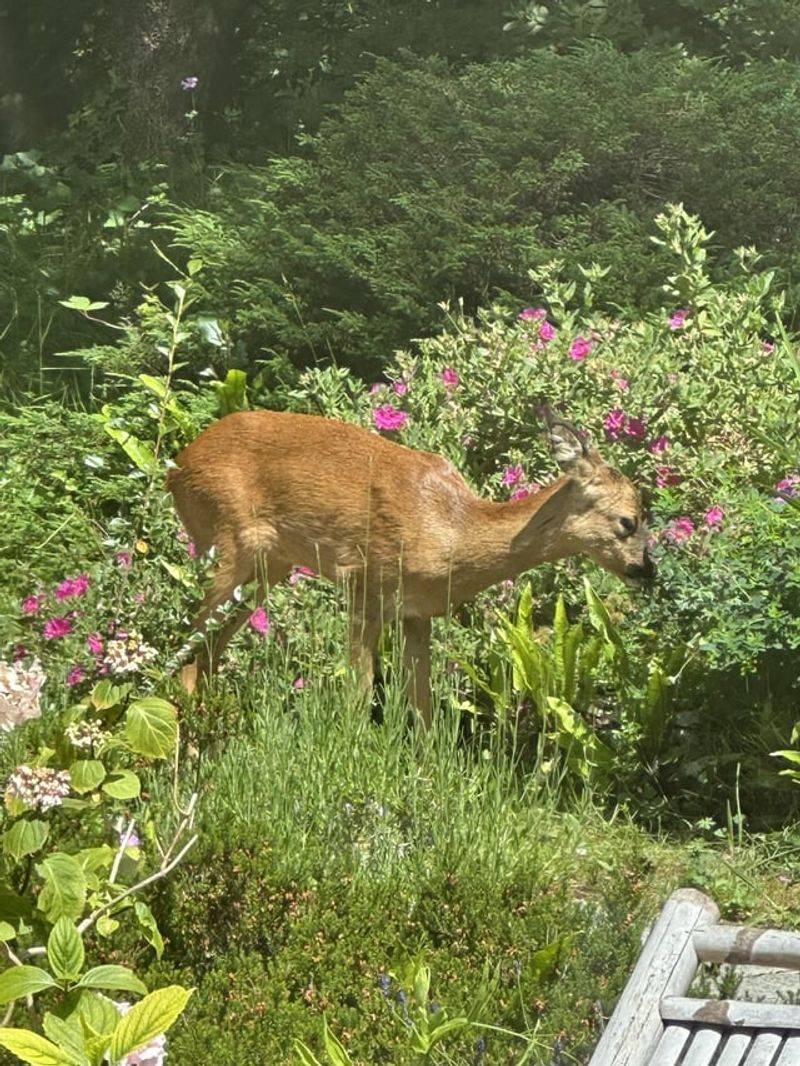
Side yards have a way of going unnoticed, tucked between houses and fences without much foot traffic or activity. That quiet, narrow strip is exactly the kind of space deer find appealing.
It offers concealment from open areas while still providing easy access to browse the plants growing along the border edge.
Ecologists call this kind of space edge habitat, meaning it sits between two different environments.
In your yard, that transition might be between a mowed lawn and a dense row of arborvitae, or between a wooden privacy fence and a perennial bed.
Deer are drawn to edges because they can keep one side sheltered while staying close to open ground for a quick escape if needed. Your side yard border often checks every box on that list.
Your Michigan Garden Changes Every Week. Your Plan Should Too.
Gardening in Michigan changes quickly throughout the season. Every Friday you’ll receive a simple weekly plan showing exactly what to plant, prune, fertilize, harvest, and protect so you never miss the right timing.
Repeated damage along one side of the property is a strong clue that the planting sits beside an established travel corridor. Deer rarely wander randomly.
They follow routes that feel reliable and low-risk, and a narrow side yard border with shrubs or ornamental plants offers exactly that combination.
If your neighbor has a woodlot, a dense hedge, or even a tall privacy fence on the other side, that only adds to the appeal.
Noticing this pattern early means you can start protecting those specific plants before browsing becomes a seasonal habit that is much harder to interrupt once it is established in a deer’s regular routine.
3. The First Plants Along The Route Receive The Most Attention
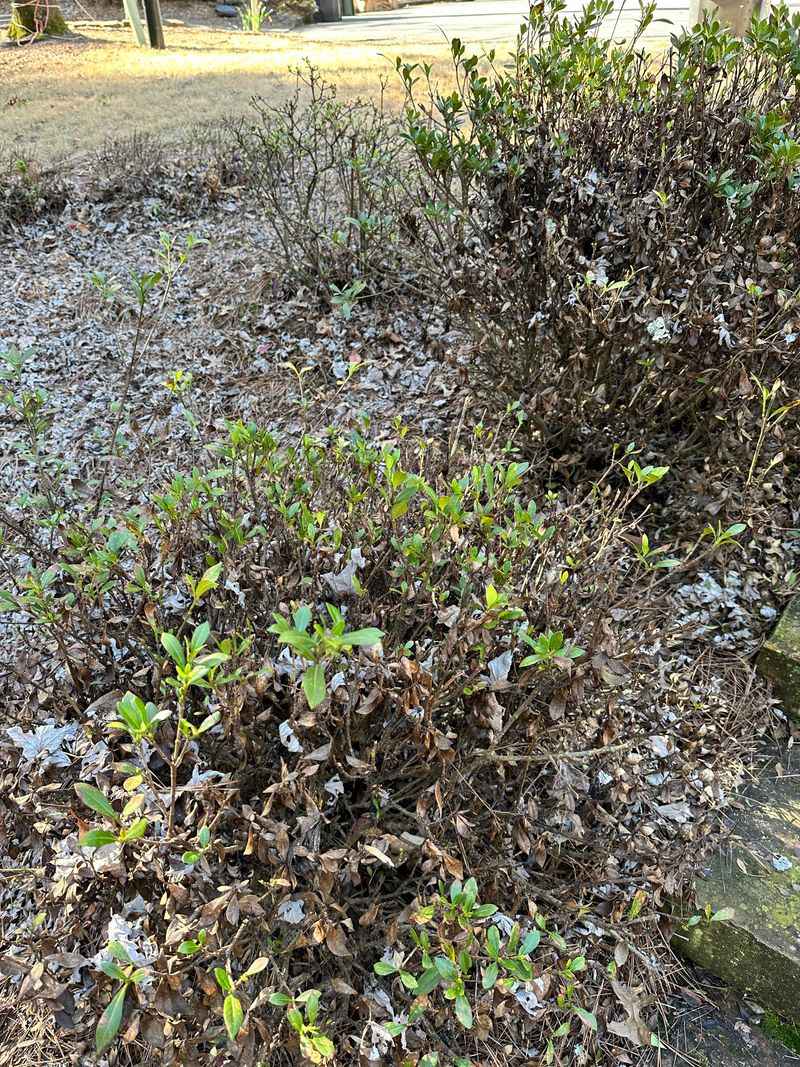
Picture a deer stepping into your yard at 2 a.m., moving quietly along the driveway edge it has used many times before. The first hosta it reaches gets sampled.
If that plant is tender and flavorful, the deer stops and feeds right there before moving any further. The plants closer to your house, just 20 feet away, may never get touched at all.
This is one of the most confusing patterns homeowners notice. Identical plants in the same bed can show completely different levels of damage depending on where they sit along the entry route.
Hostas, daylilies, hydrangeas, roses, and young fruiting shrubs placed near the driveway or border edge are especially vulnerable because they offer easy, early access.
Deer do not always need to venture deeper when the first stop already satisfies their appetite.
Placement matters just as much as plant type when it comes to deer pressure. A plant that would survive just fine near the front door may get stripped bare when positioned at the outer edge of the yard near a known entry point.
If you have noticed that damage is always heaviest on the same strip of plants closest to the street or fence line, that is the pattern telling you something important.
Shifting highly favored plants closer to the house or to more frequently used areas of the yard can reduce exposure without requiring a complete garden redesign.
Small placement changes can make a surprisingly big difference over the course of a season.
4. Irrigated Border Plants Stay Tender During August
August in Michigan can bring stretches of dry, hot weather that turn roadside vegetation tough and unappetizing. Wild grasses go dormant. Weeds stiffen. Roadside plants lose moisture and become less appealing to browse.
Meanwhile, your irrigated garden border stays green, moist, and actively growing, and that contrast does not go unnoticed by deer moving through the area.
Deer strongly prefer tender leaves, soft shoot tips, plump flower buds, and actively growing stems.
When natural forage beyond your yard becomes fibrous and dry during a dry August spell, a well-watered ornamental border becomes one of the most attractive food sources in the neighborhood.
The irrigation system you installed to keep your plants thriving is, in a way, also advertising a buffet to every deer passing through the area after dark.
This does not mean you should let valuable plants struggle through drought stress just to reduce deer appeal. That trade-off rarely makes practical sense for a well-maintained landscape.
Instead, understanding this dynamic helps you recognize why August tends to bring a noticeable spike in browsing activity along irrigated borders. Pairing regular irrigation with protective measures gives you the best of both outcomes.
During the hottest and driest weeks of a Michigan summer, deer are drawn to your yard because irrigated garden plants offer far more moisture and fresh growth than surrounding dry vegetation.
Combining repellents, barriers, and strategic plant choices becomes much more effective once you account for this seasonal forage drive.
5. Shrubs And Fences Provide Concealed Approach Routes

Deer are cautious animals, and they rarely step into wide-open spaces without cover nearby.
A tall privacy fence, a dense row of evergreen shrubs, a neighbor’s overgrown hedge, or even a garden shed can all serve as cover that allows a deer to approach your border plantings while staying mostly hidden from view.
Side yards are especially prone to this dynamic because they tend to be narrower and more sheltered than front or back yards.
An animal browsing along a concealed approach route may reach into a planting bed from the edge without fully entering the open garden space.
This is why damage is often heaviest on the outer face of shrubs or on the side of a bed closest to the fence or woodlot.
The deer is essentially reaching in from safety rather than walking through exposed ground to get to the center of the planting.
Walking your property from several different directions can reveal likely entrance points that are not obvious from the back door or the front driveway.
Look for gaps in fencing, areas where shrubs thin out, or spots where neighboring vegetation creates a sheltered corridor leading directly toward your planted border. Identifying these points does not always mean you need to block them entirely.
Sometimes adding a simple barrier or repellent treatment right at the entry point is enough to redirect the animal along a less damaging path through your yard before it reaches your most valued plants.
6. Repeated Browsing Creates A Visible Edge Pattern
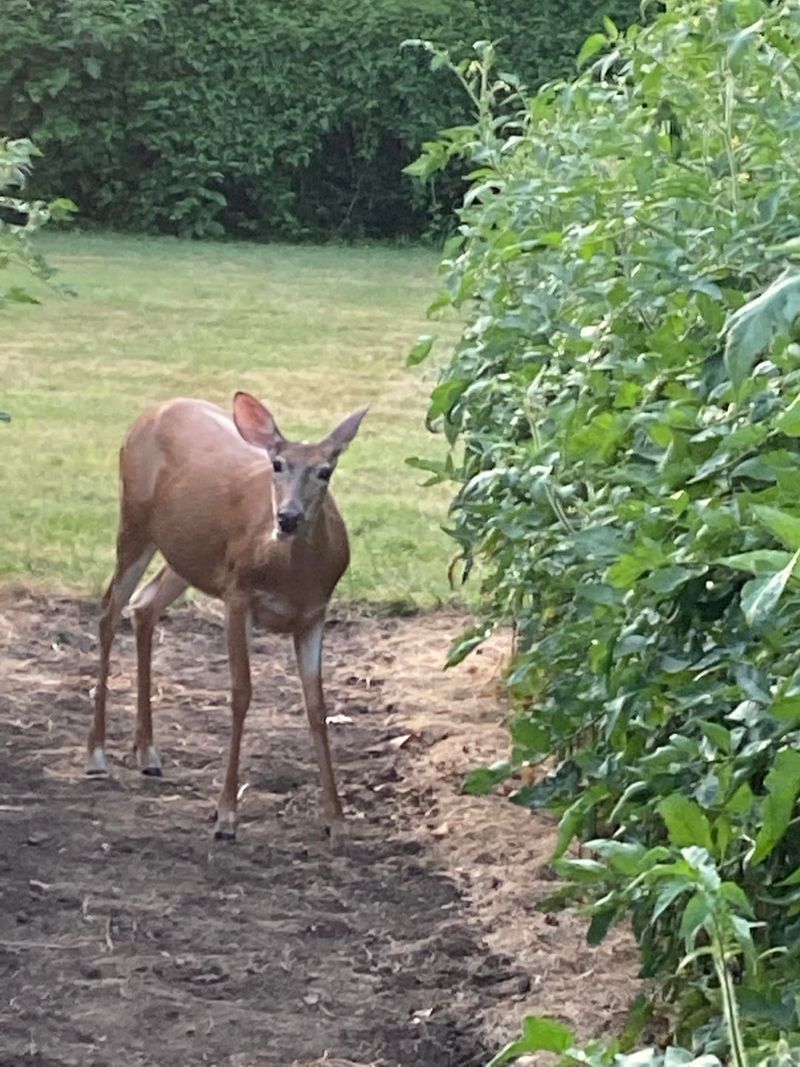
Once you know what deer damage actually looks like, it becomes much easier to spot early and respond quickly. Unlike the clean, angled cuts left by rabbits or other small animals, deer pull and tear plant tissue because they do not have upper front teeth.
The result is a rough, ragged break on stem ends, torn leaf edges, and missing shoot tips that look more shredded than sliced.
One of the clearest signs of deer activity is a consistent browse line, meaning all the damage appears at roughly the same height across multiple plants.
Adult deer typically feed between knee height and about five to six feet off the ground, depending on whether they are standing or reaching.
If every damaged plant in your border has clean growth below a certain point and ragged, missing growth above it, deer are almost certainly responsible.
Hoof prints in soft mulch or bare soil near the bed are another reliable confirmation. Deer prints are distinctive, showing a split heart shape that is hard to confuse with dog or raccoon tracks. Droppings left near the browsed area are also common.
Checking for damage concentrated on the outer face of shrubs or on the side of the bed closest to the driveway edge can confirm that the animals are feeding from the path rather than fully entering the planting bed.
Catching this pattern early gives you the best chance to act before the browsing becomes a deeply ingrained habit that repeats every single night.
7. Fallen Fruit And Bird Food Can Reinforce The Route
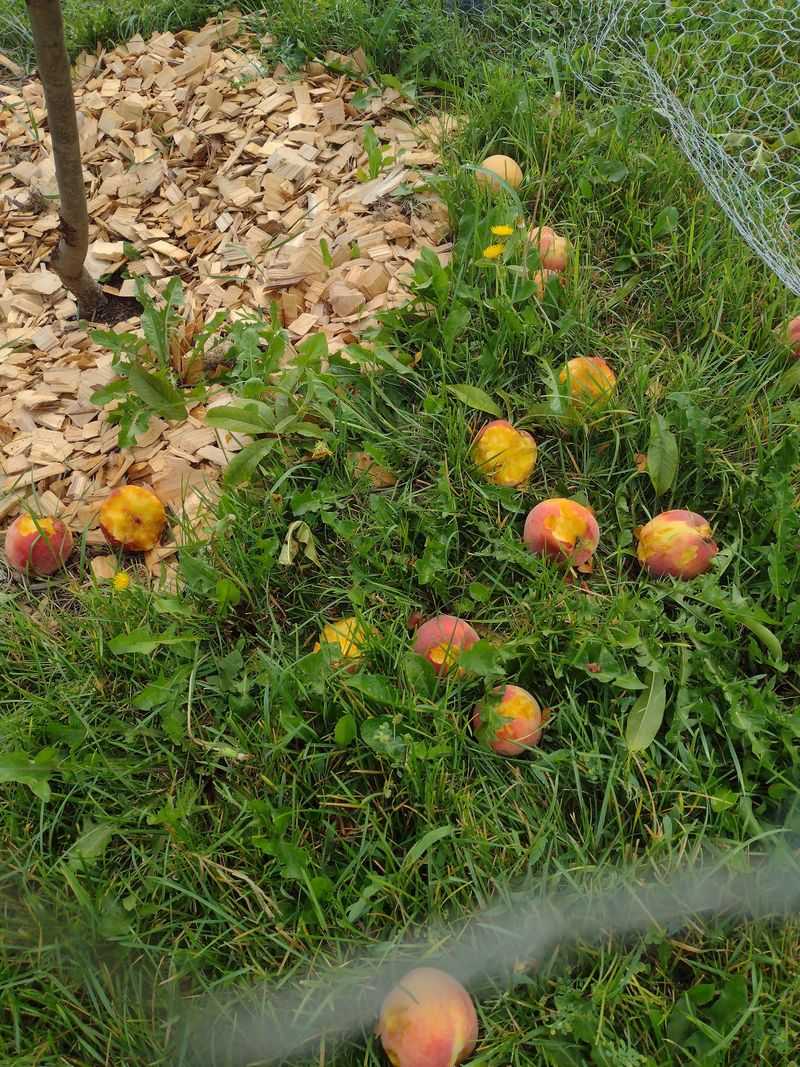
Deer are opportunistic feeders, and a reliable food reward can turn an occasional route into a nightly ritual.
Accessible food rewards like fallen fruit, spilled birdseed, outdoor pet food, or exposed vegetable scraps strongly attract deer to your property.
Once discovered, deer will integrate these extra food sources into their regular travel routes and return to your yard consistently.
The problem with these secondary attractants is that they reinforce the entire route, not just the spot where the food is found.
A deer that learns your side yard offers fallen fruit under the crabapple tree will also browse your hydrangeas on the way in and your rose bush on the way out.
Removing the extra attractant does not guarantee the deer will stop visiting, but it does reduce the motivation to keep returning to that specific part of your yard night after night.
Gathering fallen fruit regularly, moving bird feeders away from vulnerable garden areas, securing pet food indoors after evening, and avoiding intentional deer feeding are all practical steps that reduce the reward cycle.
Some Michigan counties and municipalities also have guidelines around feeding wildlife, so checking local rules is worth a few minutes of your time.
Removing these extra food sources won’t automatically erase a well-established deer path, but it eliminates a major incentive for them to linger and feed heavily in your yard.
Without those easy rewards, deer are far less likely to spend their nights browsing in the exact same spot all season long.
8. Protect The Entrance Before Damage Moves Deeper
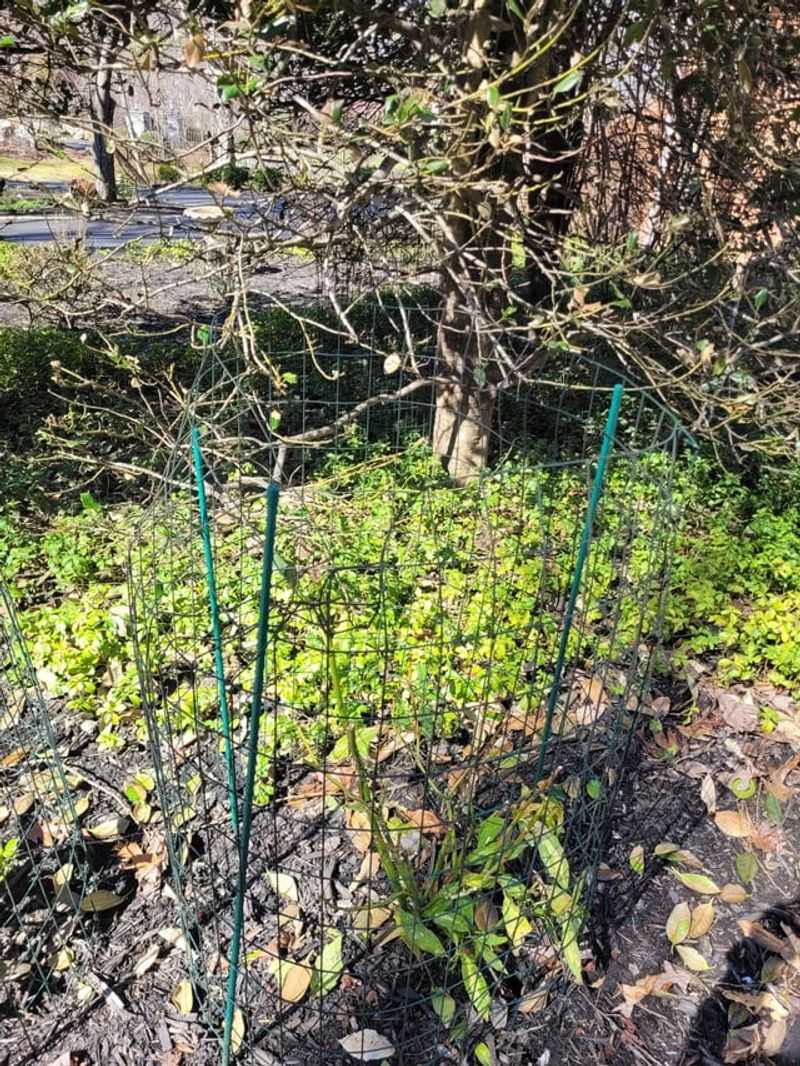
The most effective place to stop deer damage is right at the entrance, before the browsing habit has a chance to spread deeper into the yard.
Once deer become comfortable moving further into your property, protecting individual plants becomes a much bigger and more expensive project.
Starting at the outer edge of the driveway or side yard border gives you the best chance of interrupting the pattern early.
Sturdy wire cages or individual plant barriers work well for protecting hostas, young shrubs, and other highly favored plants that sit closest to the entry point.
Choose cages that are tall enough to prevent a deer from reaching over the top, generally at least four feet for most browsing situations.
Repellents can also be effective, but they need to be applied before repeated browsing begins and reapplied consistently after rain, irrigation, and fresh new plant growth, all of which reduce the product’s effectiveness on treated foliage.
Trimming dense vegetation near known entry points can improve visibility in areas where doing so is practical and safe, which sometimes discourages deer from approaching a spot that no longer feels sheltered.
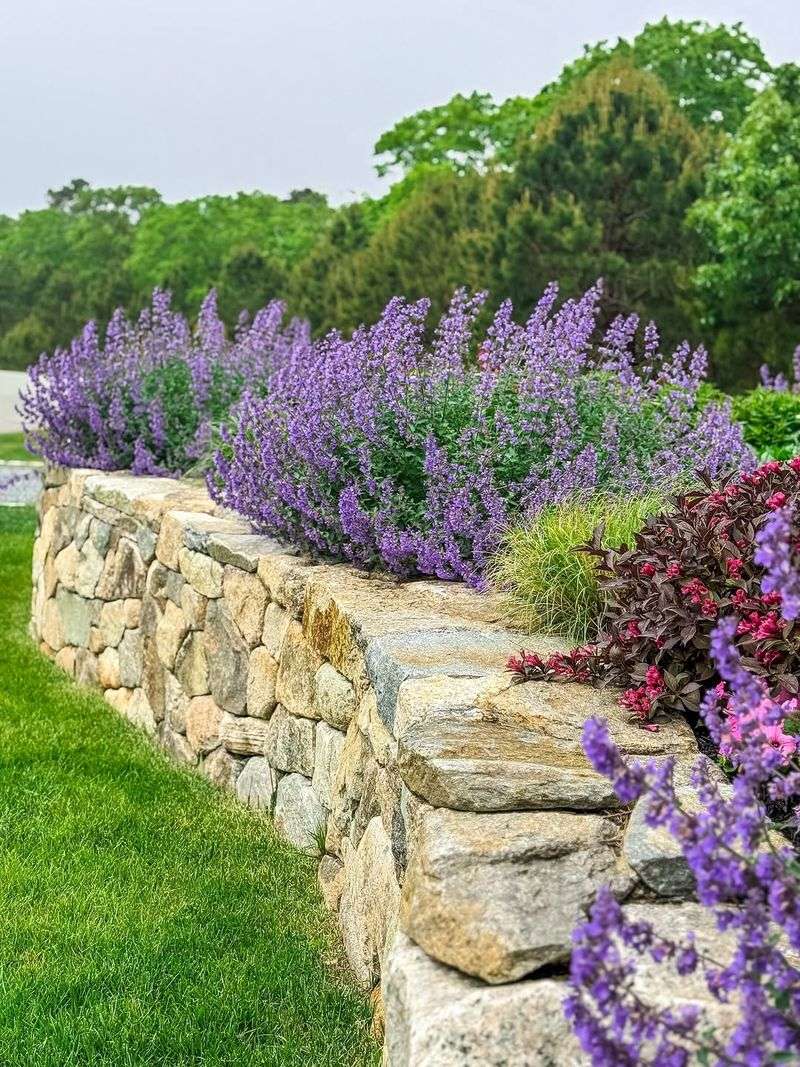
Choosing plants that deer find less appealing, such as lavender, Russian sage, ornamental grasses, or catmint, for the most exposed border positions is a long-term strategy that pays off season after season.
While severe deer pressure and scarce wild food can drive deer to sample almost anything, a strategic approach significantly reduces damage.
Combining physical barriers, repellents, and deer-resistant plants offers your Michigan landscape its best defense along vulnerable driveway and side yard edges.