Why Ohio Basil Turns Black After Rain (And What To Do Immediately)
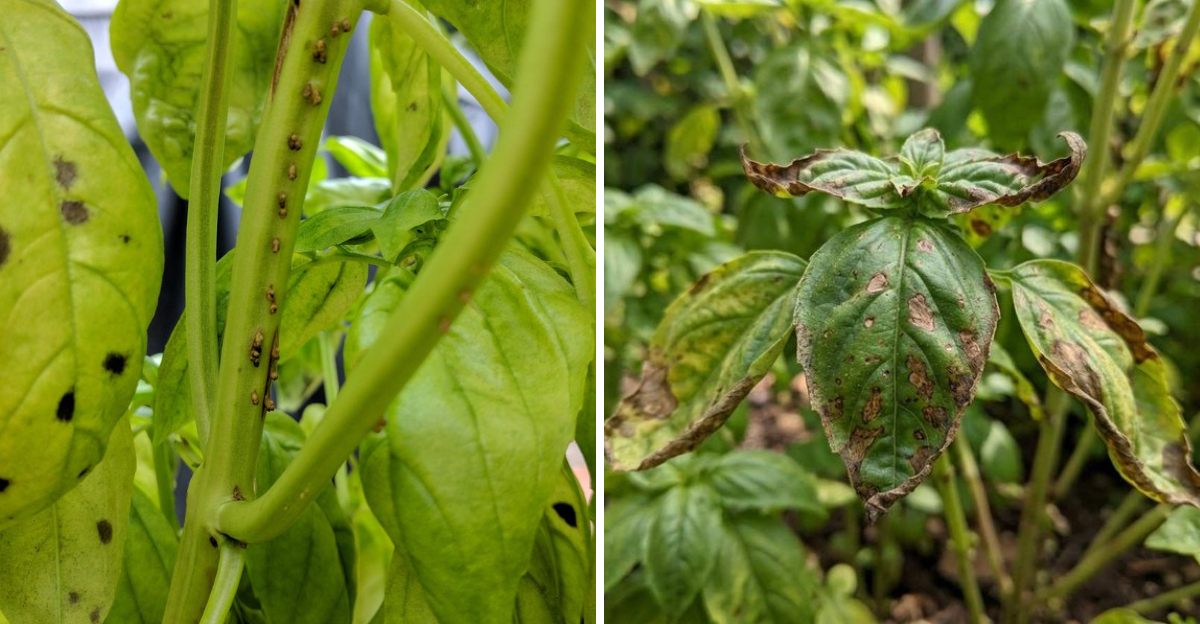
Basil can go from pesto-perfect to pitiful overnight. One day, the leaves look full, bright, and ready for harvest.
Then an Ohio thunderstorm rolls through, humidity hangs in the air until morning, and the plant suddenly has black edges, dark spots, limp tips, and a very dramatic case of garden regret.
The rain did not simply “bruise” the plant.
Basil has soft, tender leaves that do not handle long stretches of wetness well.
Add warm nights, crowded stems, soil splash, and poor airflow, and those leaves become an easy target for mildew, bacterial spots, and fast-spreading foliar trouble.
The good news is that quick action can save a lot of the plant.
So why does basil turn black after rain in Ohio, and what should you do first?
Start by removing damaged leaves, opening airflow, keeping water off the foliage, and stopping soil from splashing back onto the plant during the next storm.
1. Rain Kept Leaves Wet
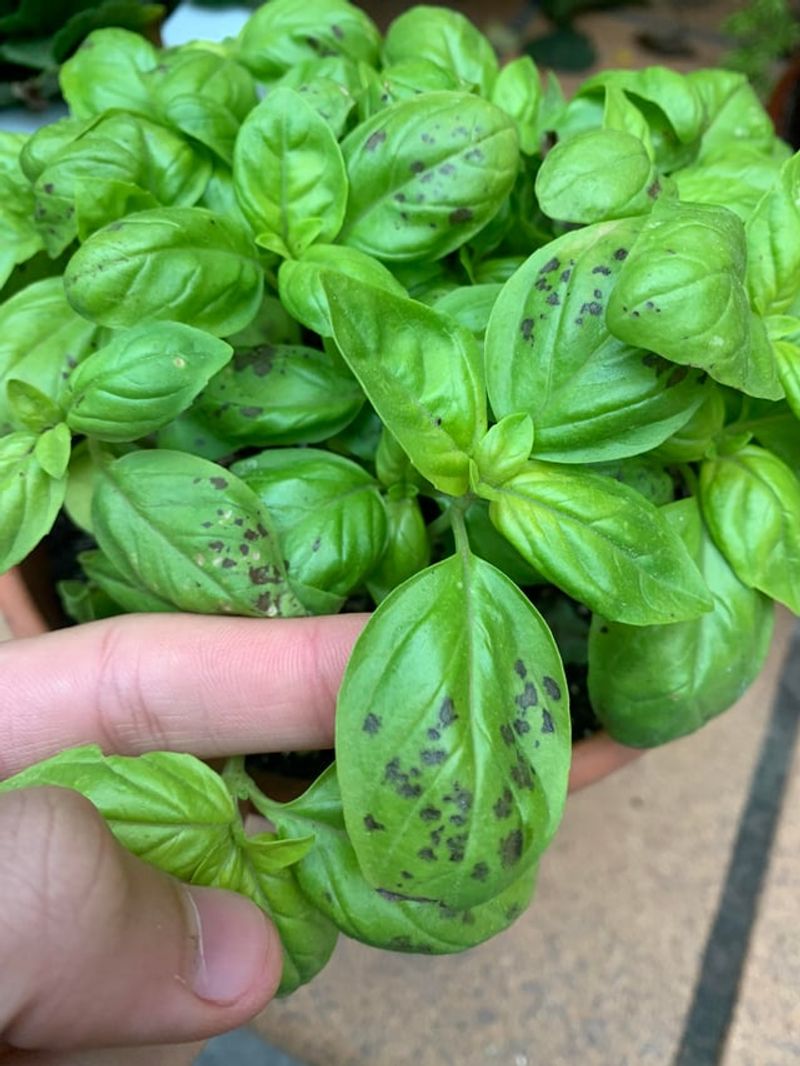
Wet basil leaves are where trouble usually starts.
After a heavy Ohio rain, basil foliage can stay damp for hours, especially during humid nights. That long wet period gives fungal and bacterial problems the conditions they need to spread across soft leaves.
Basil does not have tough foliage.
Its leaves are thin, tender, and easily stressed by moisture that lingers on the surface. Rain may look harmless, but several hours of wet leaves can quickly turn into dark spots, blackened edges, and limp growth.
Warm nights make it worse.
Ohio summer storms often arrive late in the day, then leave the garden damp overnight. Without sun or airflow to dry the leaves, moisture sits in every fold and crowded stem cluster.
That creates a perfect disease window.
Spores and bacteria move more easily across wet surfaces. Once they find stressed tissue, symptoms can appear fast, sometimes by the next morning.
Check plants early after storms.
Look at the top and underside of leaves, especially near the lower part of the plant where moisture lasts longest. Early spotting is much easier to manage than a plant covered in damage.
Do not brush through wet basil.
Touching soaked plants can move pathogens from leaf to leaf. Let foliage dry first, then prune carefully.
Rain is not the enemy by itself.
Wet leaves that stay wet too long are the real problem.
2. Downy Mildew May Be Starting
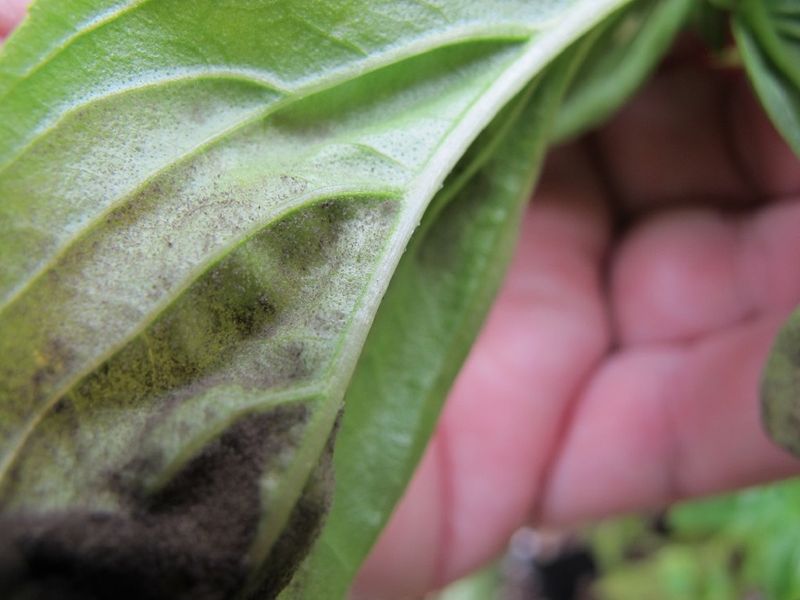
The underside of the leaf can reveal the answer.
Basil downy mildew often starts quietly. The top of the leaf may look yellow, dull, or slightly uneven before dark patches appear. Many gardeners mistake that first stage for a nutrient issue or ordinary storm stress.
Flip the leaf over.
A grayish, purplish, or dusty growth on the underside is the warning sign. That fuzzy coating means spores are forming, and the disease can spread quickly through nearby basil.
Moisture drives it.
Downy mildew loves warm temperatures, high humidity, and wet foliage. Ohio rain followed by a sticky night gives it exactly what it wants.
Your Ohio Garden Changes Every Week. Your Plan Should Too.
Gardening in Ohio changes quickly throughout the season. Every Friday you’ll receive a simple weekly plan showing exactly what to plant, prune, fertilize, harvest, and protect so you never miss the right timing.
Blackening comes later.
As infected tissue breaks down, leaves can turn brown or black, curl, and collapse. The plant may look worse by the day once the disease gains momentum.
Act immediately.
Remove affected leaves as soon as you see symptoms. Cut them off cleanly rather than pinching and tearing. Bag them for the trash instead of dropping them on the soil.
Check every basil plant nearby.
One infected plant can spread spores to the rest of the row or container group. Healthy-looking leaves still need close inspection for early yellowing or underside fuzz.
Next season, resistant varieties can help.
Right now, speed matters more than anything. The faster infected leaves leave the garden, the better chance healthy growth has to continue.
3. Bacterial Spots Turn Dark
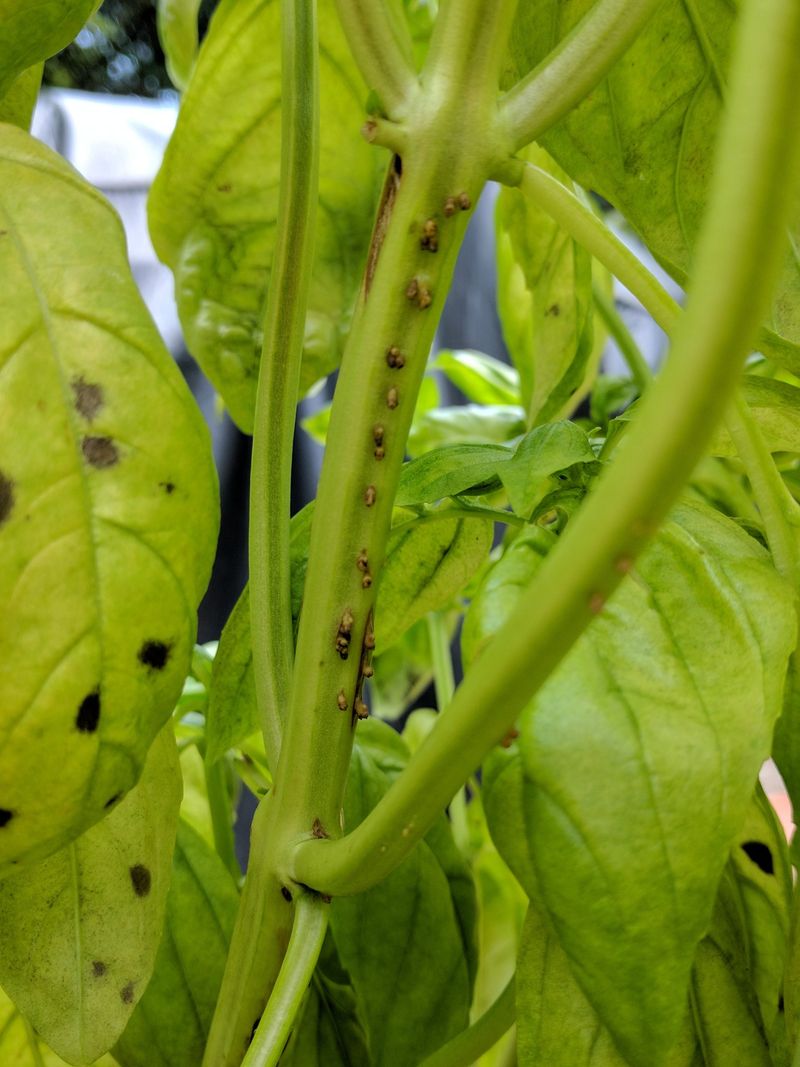
Small dark spots after rain often point to bacteria.
Bacterial leaf spot can show up as tiny water-soaked marks that later turn brown or black. The spots may look greasy at first, then spread into larger damaged patches as wet weather continues.
The pattern is different from downy mildew.
There is no fuzzy growth underneath the leaf. Instead, the spots stay flat, dark, and often irregular. Some may have yellowish halos around the edges.
Rain helps bacteria move.
Drops splash from leaf to leaf, hands brush wet foliage, and contaminated tools can carry the problem farther through the plant. Once leaves stay damp, bacteria spread faster.
Warm weather adds fuel.
Ohio summer heat after rain creates the kind of muggy environment where bacterial spots can move quickly through crowded basil.
Remove spotted leaves fast.
Do not wait to see what happens. Damaged leaves rarely recover, and leaving them on the plant gives the problem more time to spread.
Clean tools between cuts.
Wipe pruners or scissors with rubbing alcohol before moving to another plant. Wash hands after handling diseased leaves, especially before touching healthy basil.
Copper sprays may suppress some bacterial issues, but they are not magic.
They work best before severe damage appears. Once dark spotting is obvious, sanitation and dry foliage matter most.
Dark spots are not just cosmetic.
They are the plant telling you to slow the spread now.
4. Soil Splash Spread Trouble
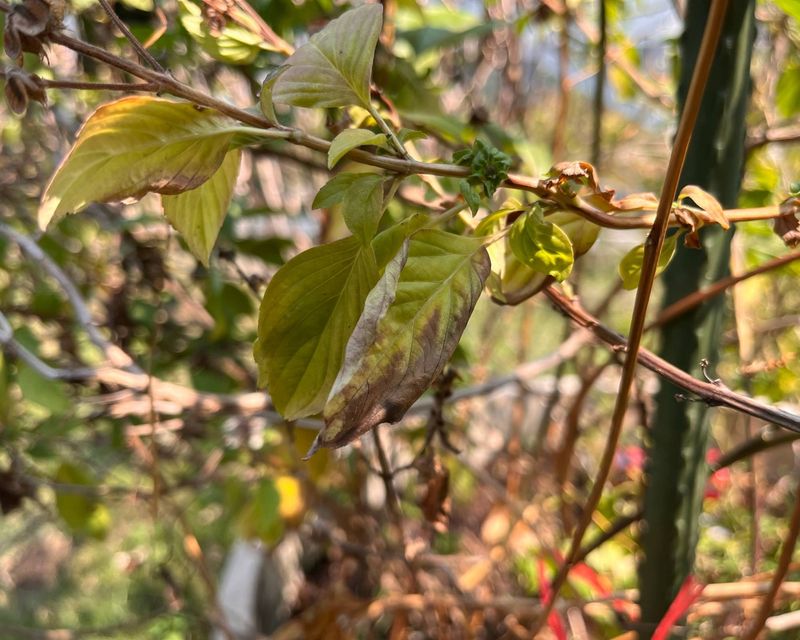
The lower leaves often get hit first for a reason.
Heavy rain striking bare soil can launch tiny muddy droplets onto basil leaves. Those droplets may carry bacteria, fungal spores, and other microbes straight from the ground to tender foliage.
This is soil splash.
It is one of the quietest ways basil problems spread after Ohio storms. The rain falls, the soil jumps, and the lowest leaves become the first landing zone.
Look near the base.
Black spots, speckling, or limp lower leaves after rain often mean splash played a role. The damage may then move upward as moisture, hands, or tools spread the problem.
Mulch breaks the cycle.
A two-inch layer of straw, shredded leaves, fine wood chips, or clean grass clippings cushions rainfall and keeps mud from bouncing onto the plant.
Keep mulch loose.
Packed mulch can hold too much moisture around stems. Spread it gently around the plant while leaving a little space at the base for airflow.
Remove contaminated lower leaves.
Leaves already spotted from soil splash can keep spreading trouble. Snip them off and bag them, then mulch the soil before the next storm arrives.
Raised beds can help too.
Extra height improves drainage and reduces the amount of splash reaching the foliage.
Bare soil under basil is a storm problem waiting to happen.
Cover the ground, and the next rain has fewer ways to carry trouble upward.
5. Crowding Trapped Humid Air
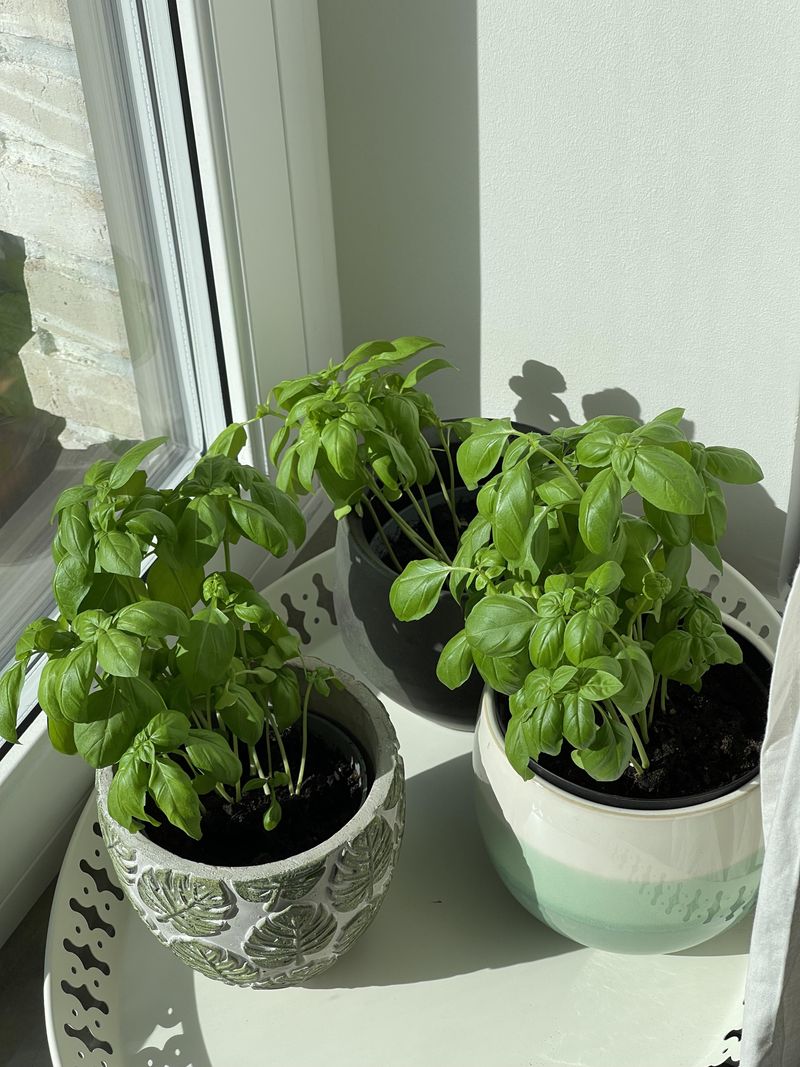
A lush basil patch can be too full for its own good.
Crowded plants trap moisture between overlapping leaves. After rain, that dense interior stays damp long after the outer leaves dry, creating a humid pocket where disease can settle in.
Basil needs room to breathe.
Plants packed tightly into a bed, planter, or porch corner may look productive, but poor airflow makes every storm more risky. Wet leaves need moving air to dry.
Spacing often disappears by midsummer.
Tiny spring seedlings become bushy plants. Containers get pushed together. Stems lean into each other. Suddenly the whole planting turns into one damp green wall.
Open the canopy.
Remove weak stems, yellowing leaves, and crowded inner growth. Harvesting a few larger stems can improve airflow while giving the kitchen something useful.
Thin plants that are too close.
Taking out every other plant may feel painful, but the remaining basil often grows better and stays healthier. One strong plant beats three sickly ones fighting for air.
Move pots apart.
Containers clustered against a wall or fence should be spread into a breezier spot. Even a few extra inches between pots can improve drying after rain.
Airflow is disease prevention.
It does not cure damaged leaves, but it makes the plant far less inviting to the next round of spots and blackened edges.
A basil patch should look full, not suffocated.
6. Remove Spotted Leaves Fast
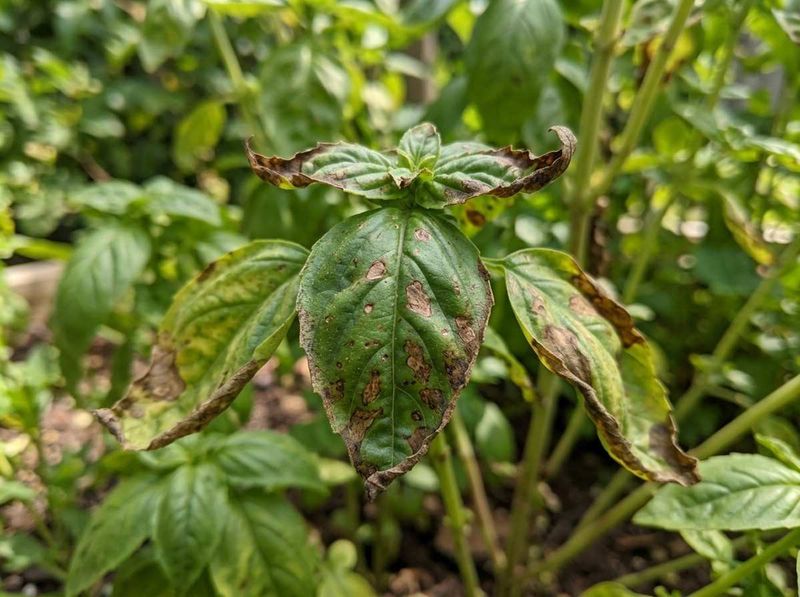
Damaged leaves should not stay on the plant.
Once basil leaves turn black, spotted, or fuzzy underneath, they are no longer helping much. They can become a source of spores or bacteria that move to healthy growth.
Use clean scissors or pruners.
Cut affected leaves at the stem. Avoid ripping leaves off by hand, especially while the plant is wet. Torn tissue creates more stress and more entry points for disease.
Sanitize as you work.
Wipe blades with rubbing alcohol between plants, and after cutting heavily affected sections. This feels like extra effort, but it prevents tools from becoming part of the problem.
Do not compost diseased basil.
Bag spotted leaves and put them in the trash. Home compost piles may not heat evenly enough to break down disease organisms.
Clear fallen leaves too.
Blackened leaves on the soil can splash spores or bacteria back onto the plant during the next rain. A quick cleanup around the base matters.
Prune lightly but decisively.
A basil plant can recover from losing damaged leaves, especially during warm weather. It struggles more when infection keeps spreading through the canopy.
Leave healthy growth in place.
Basil needs clean leaves to rebuild. Once the problem leaves are gone, give the plant sun, airflow, and steady soil moisture.
Fast pruning is not a panic move.
It is the garden equivalent of stopping the spill before it reaches the whole counter.
7. Water At Soil Level
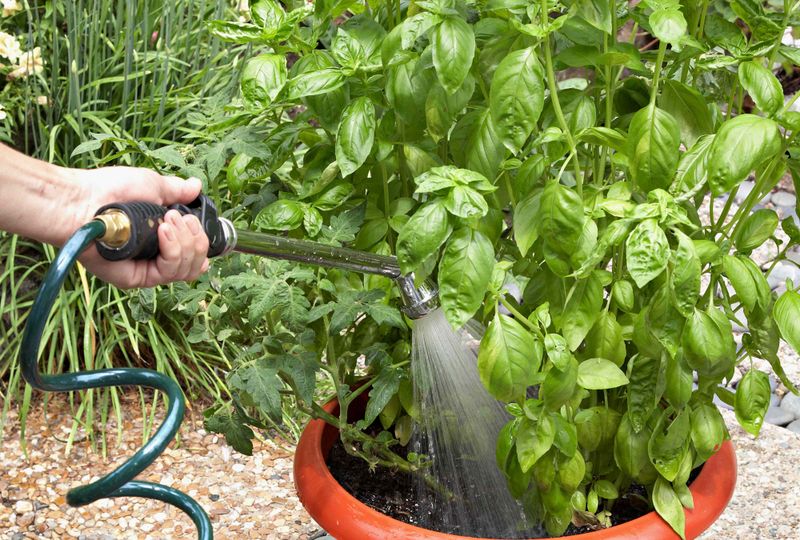
Overhead watering makes a rainy problem worse.
Basil already gets enough wet foliage from Ohio storms. Spraying leaves with a hose or sprinkler adds more moisture and extends the amount of time disease can spread across the plant.
Water the roots instead.
Use a watering can with a narrow spout, a drip line, or a soaker hose. Aim for the soil around the plant, not the leaves.
Morning is best.
Any accidental splash has time to dry during the day. Evening watering leaves moisture sitting overnight, which is exactly when humidity tends to rise.
Container basil has an advantage.
Pots can be moved under an overhang before heavy rain, then returned to sun once the storm passes. That simple move can prevent hours of leaf wetness.
In-ground basil needs smarter setup.
Mulch the soil, give plants space, and water low. During a wet stretch, skip unnecessary watering until the top inch of soil begins to dry.
Avoid soaking the stems.
Basil likes moisture in the root zone, but constantly wet crowns and stems can lead to more problems. Slow, directed watering is better than flooding the base.
Watch drainage after storms.
Limp basil with blackened leaves and soggy soil may be dealing with root stress too. The soil should be moist, not swampy.
Watering lower is one of the easiest fixes.
The plant needs a drink. The leaves do not need a bath.
8. Open Airflow Today
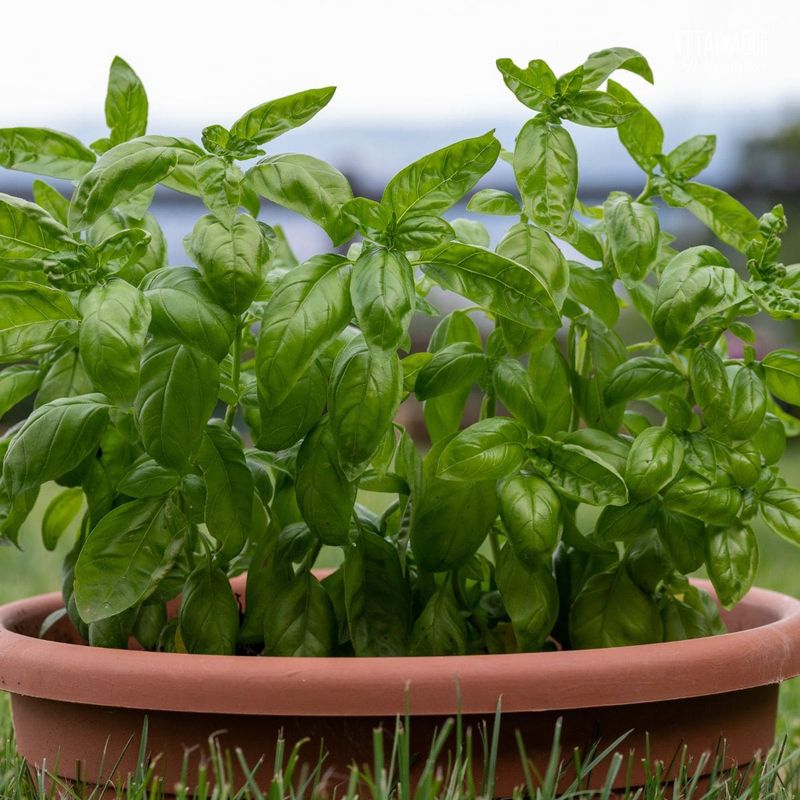
The fastest fix may be moving things apart.
After removing damaged leaves, give the plant better air. Basil that dries quickly after rain has a much better chance of staying productive through Ohio’s humid summer weather.
Start with containers.
Move pots away from walls, fences, corners, and tight clusters. A breezy patio spot with morning sun and open sides is much better than a damp, still corner.
Look inside the plant.
Dense interior stems can block airflow and hold moisture. Snip a few large stems just above a leaf node to open the center and encourage fresh branching.
Thin crowded beds.
Plants spaced too closely will keep trapping humidity no matter how carefully you water. Remove the weakest plants, or harvest them hard enough to create breathing room.
Keep weeds down.
Weeds around basil reduce air movement near the soil surface and hold extra moisture after rain. Pull them carefully, then mulch the bed.
Raise sagging stems.
Basil leaning into wet soil or neighboring plants stays damp longer. Light support or strategic pruning can lift the foliage and improve drying.
Do the cleanup on a dry day.
Working through wet leaves can spread disease. Let the plant dry, then prune, thin, and rearrange.
Airflow will not erase existing black spots.
But it can protect the healthy leaves that remain, and those leaves are the ones that will bring your basil back to pesto territory.