Why Autumn Olive Seedlings Keep Appearing In Michigan Yards Even If You Never Planted One
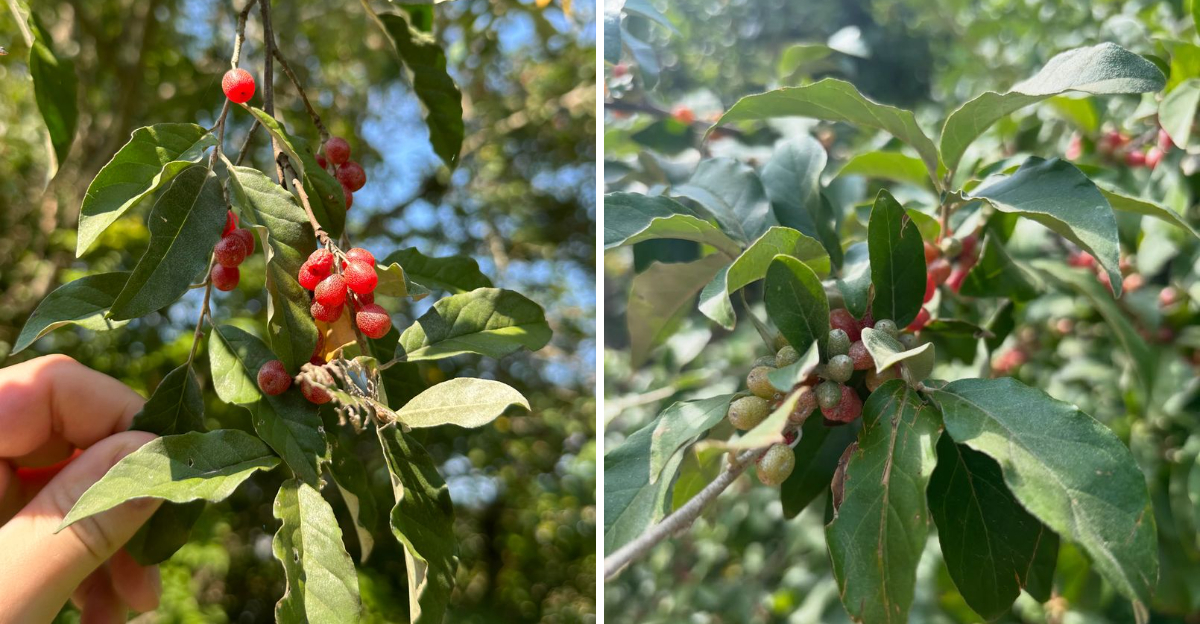
Autumn olive seedlings often show up in Michigan yards through no direct planting at all, thanks to birds spreading seeds from nearby established plants.
This invasive shrub produces abundant berries that birds eat and then deposit seeds across wide areas through their droppings.
Once established, autumn olive spreads aggressively, outcompeting native plants for sunlight, water, and available soil nutrients.
Its ability to fix nitrogen in soil, while sounding beneficial, actually gives it an unfair advantage over native plants adapted to leaner conditions.
Removing seedlings while still small prevents the deep root systems that make mature plants so difficult to fully remove later. Checking yard edges near wooded areas or fence lines helps catch new seedlings before they become established.
Cutting alone typically triggers vigorous resprouting, making complete removal, including roots, the more effective long term approach.
Staying vigilant about these unexpected seedlings helps protect the rest of your yard from this persistent invader.
1. Birds Carry Autumn Olive Seeds Into Yards
Picture a robin hopping through your backyard after spending the morning feasting along a weedy roadside. That bird just became an unwitting seed courier for Autumn Olive.
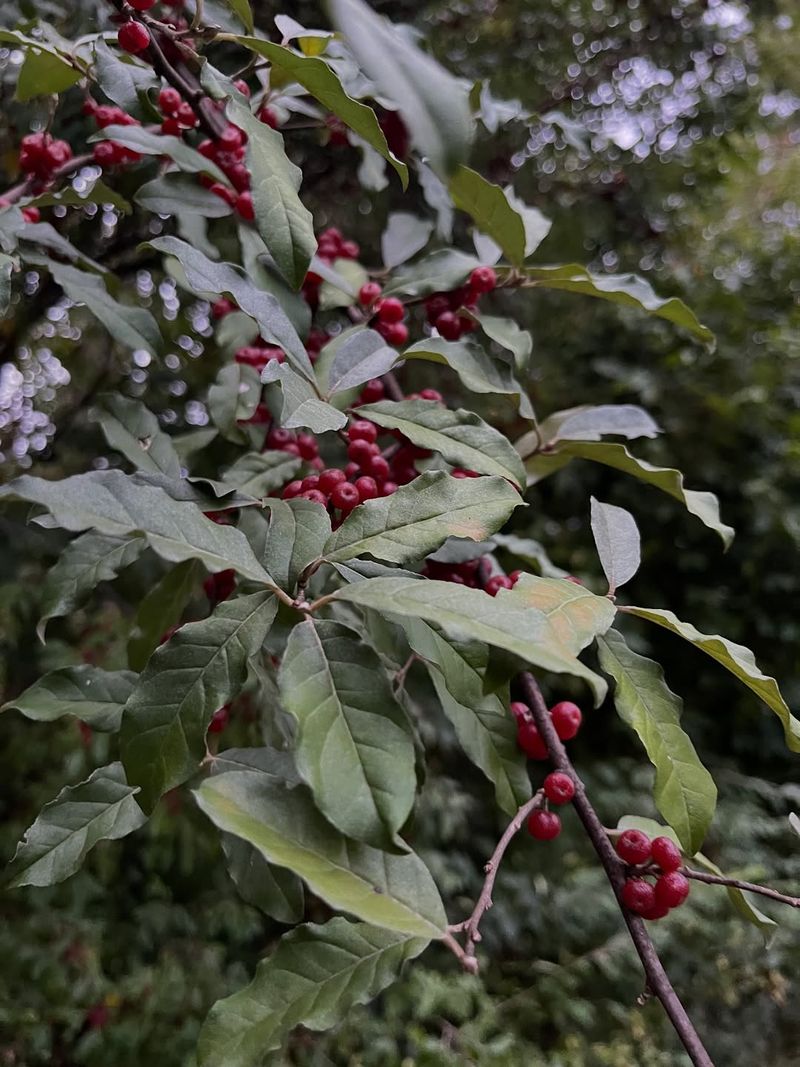
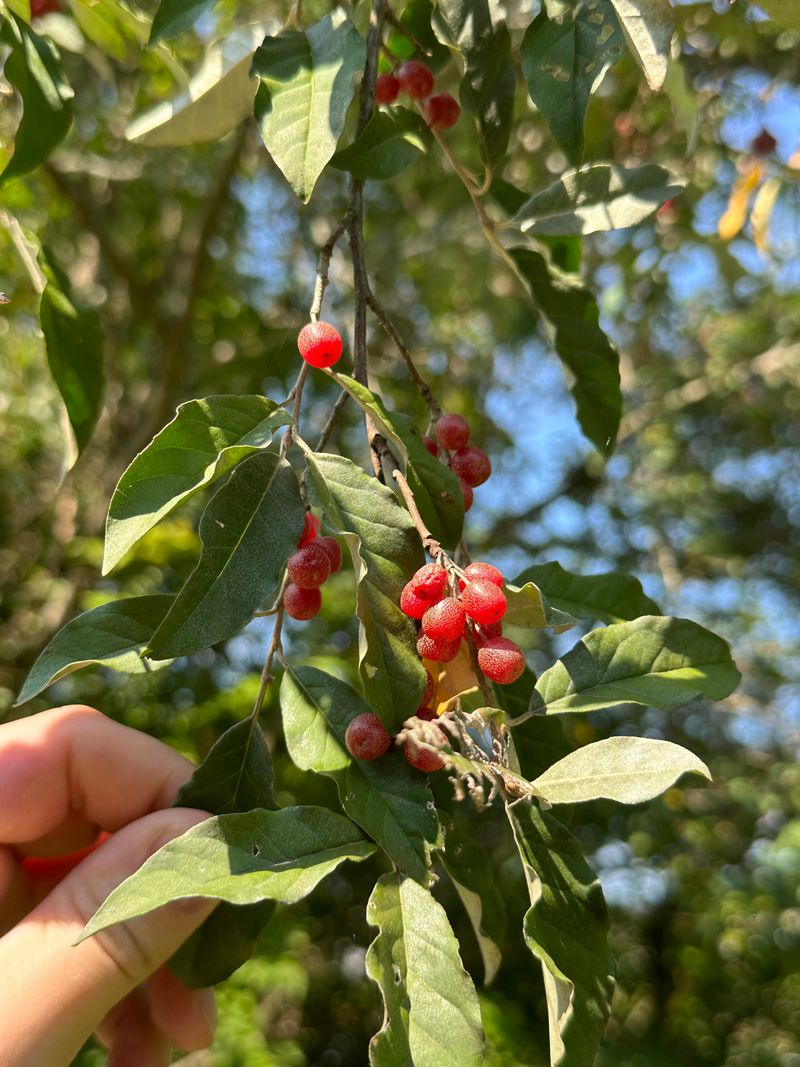
Birds are drawn to the shrub’s clusters of small, speckled red berries, and after eating them, they can fly a considerable distance before depositing the seeds somewhere entirely new.
Michigan homeowners do not need a single Autumn Olive plant on their property for seedlings to appear.
Shrubs growing along roadsides, woodland edges, vacant lots, open fields, and neighboring properties all produce fruit that birds can carry into your yard.
Seeds often land beneath bird feeders, along fence lines, under favorite perch trees, and inside garden beds where conditions happen to be just right for sprouting.
This natural seed movement is one of the biggest reasons isolated seedlings pop up far from any obvious parent plant.
A seedling appearing in a sunny corner of your yard may have originated from a shrub growing several properties away, or even further down the road. Birds follow their own routes, and your yard is simply a convenient stop along the way.
Keeping an eye on areas where birds tend to rest or gather is a smart habit. Spots beneath trees, along fence tops, and near feeders are prime locations for new seedlings.
Catching them early, while they are still small and shallow-rooted, makes removal much more manageable before the plant has a chance to get comfortable and grow strong.
2. Mammals Also Move Seeds Between Properties
Birds often get all the credit for spreading Autumn Olive, but mammals play a surprisingly significant role too.
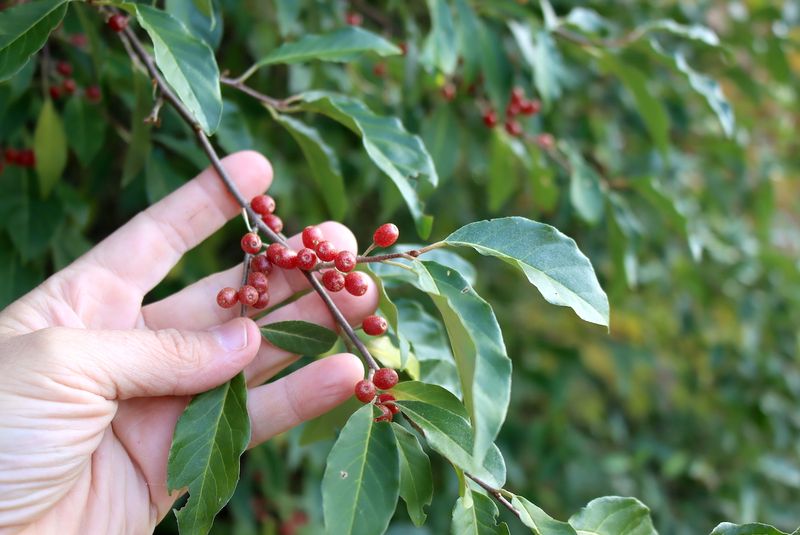
Deer, raccoons, foxes, and other wildlife that roam Michigan neighborhoods regularly consume the shrub’s berries, then travel well beyond the original plant before the seeds pass through their digestive systems.
The result is a wide, unpredictable pattern of seedlings appearing across yards and natural areas alike.
Yards that border natural areas, open fields, drainage corridors, and brushy lots are especially likely to receive seeds this way. Animals follow habitual travel routes, and if those routes pass through your yard, seeds come along for the ride.
Your Michigan Garden Changes Every Week. Your Plan Should Too.
Gardening in Michigan changes quickly throughout the season. Every Friday you’ll receive a simple weekly plan showing exactly what to plant, prune, fertilize, harvest, and protect so you never miss the right timing.
You might notice new seedlings appearing along the edges of your property where wildlife tends to pass through most frequently.
Michigan wildlife managers recognize mammals as an important factor in Autumn Olive’s continued spread across the state. Unlike birds, mammals often travel at night, meaning the seed delivery happens quietly and without any visible clues.
A seedling that appears seemingly out of nowhere along your back fence or near a wooded corner may have arrived courtesy of a nighttime visitor.
Knowing this helps Michigan homeowners understand why removing one or two plants from their own yard does not always stop new seedlings from appearing the following season.
The surrounding landscape, with its mix of wildlife and mature seed-producing shrubs, continues to supply fresh seeds year after year.
Staying observant and checking yard edges regularly through spring and early summer makes it far easier to catch new seedlings before they become a larger challenge.
3. Abundant Fall Berries Create Many New Opportunities
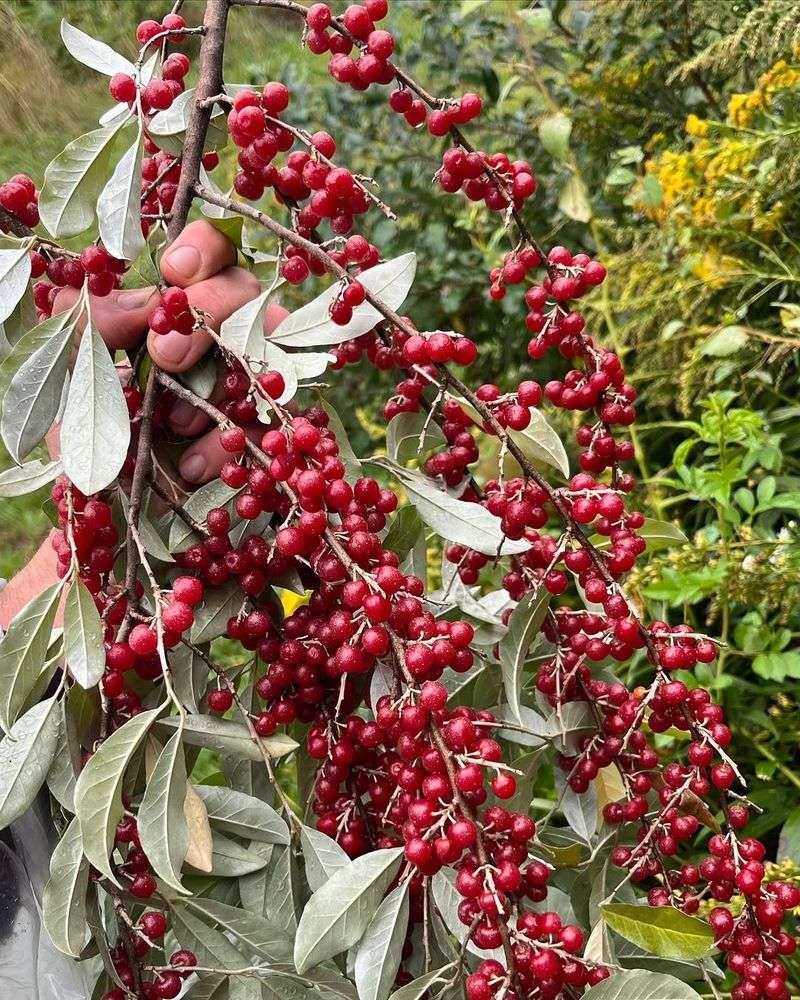
One mature Autumn Olive shrub can produce an enormous number of berries every fall, and that abundance is exactly what makes the plant such a persistent spreader.
Some established shrubs yield thousands of individual fruits in a single season, giving birds and mammals a seemingly endless supply to snack on and carry away.
More berries mean more seeds, and more seeds mean more chances for new plants to sprout somewhere unexpected.
The berries ripen in late summer and remain available well into fall, which lines up perfectly with the season when many Michigan birds are actively feeding to prepare for migration.
A heavily fruiting shrub becomes a popular stop on the local wildlife circuit, and each visitor that leaves with a belly full of berries potentially deposits seeds in a new location. That is a lot of planting activity happening without any human involvement at all.
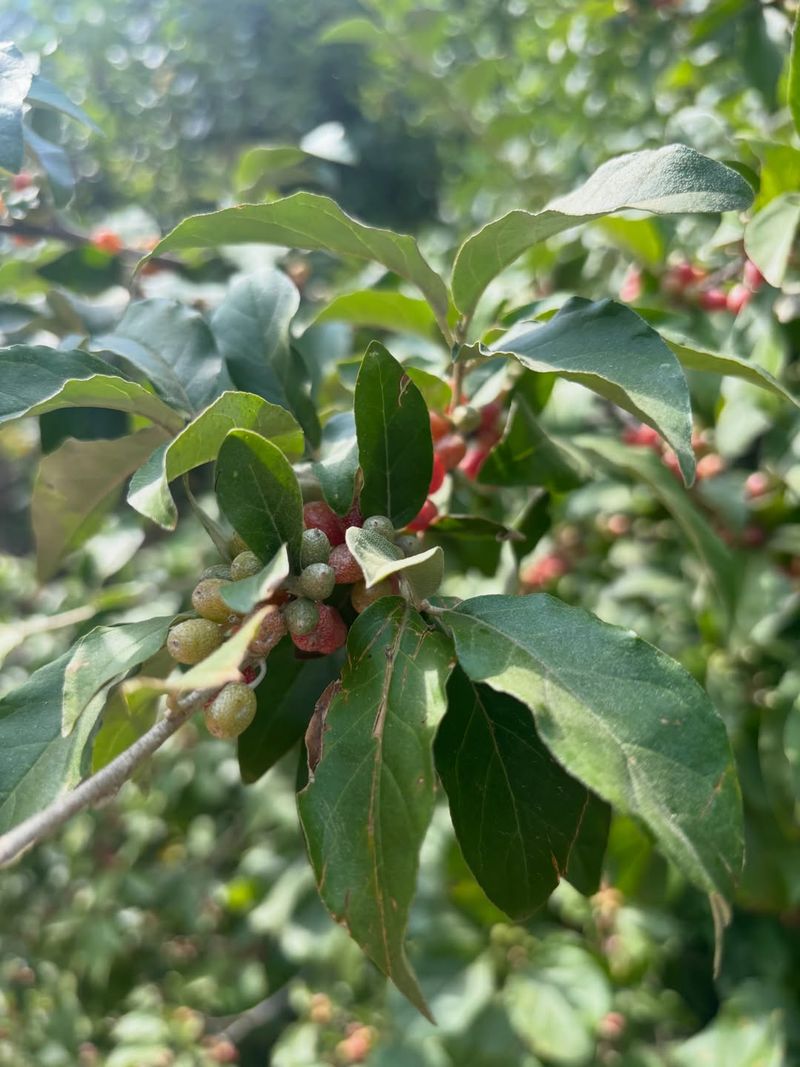
Knowing what to look for makes it easier to spot the source of your seedling problem. Autumn Olive berries are small, round, and speckled with silver or gold dots on a red background.
The leaves are another giveaway, with a distinctive silvery underside that catches light in a way most other shrubs do not match.
When seedlings keep reappearing in the same areas of your yard, it is worth checking nearby property edges, hedgerows, roadsides, and unmanaged corners for mature fruiting shrubs.
Finding and addressing the local seed source, or at least reporting it to neighbors or local land managers, can help reduce the number of new seedlings arriving in your yard each season.
4. Autumn Olive Is Already Widespread Across Michigan
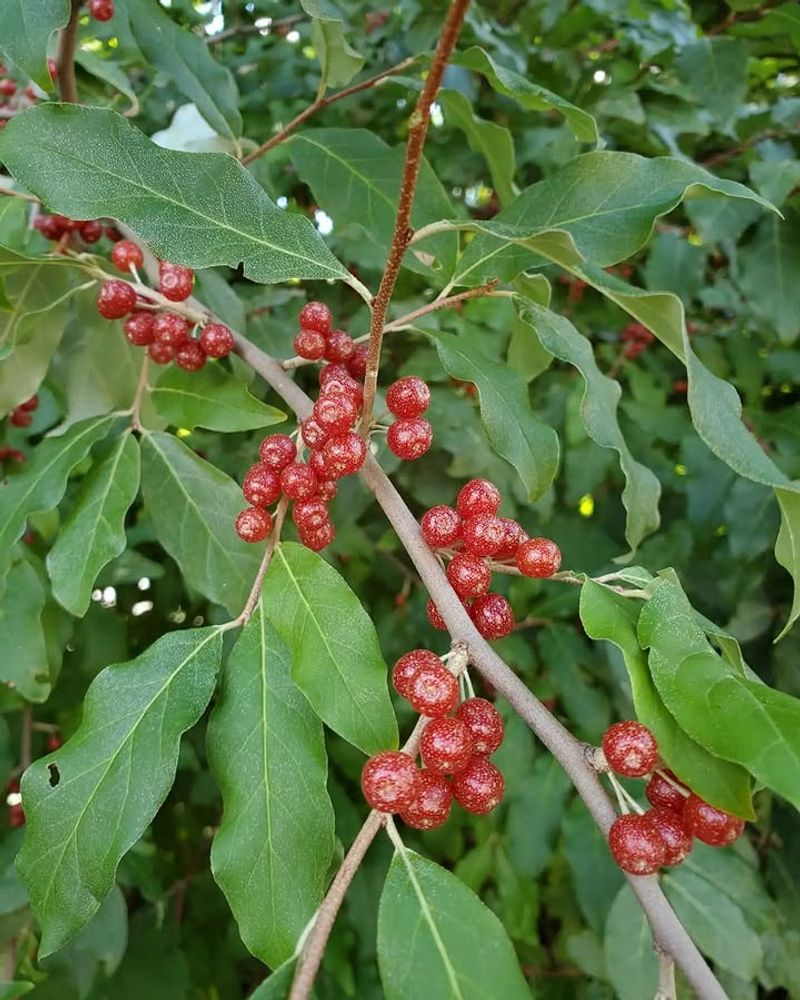
Here is something that surprises a lot of Michigan homeowners: Autumn Olive has already established itself across a huge portion of the state.
It grows along roadsides, fence lines, old fields, utility corridors, forest margins, and mixed brush areas in both the Lower and Upper Peninsulas.
Because it blends so naturally into the surrounding vegetation, many people pass by established plants every single day without recognizing them.
That widespread presence means a seed-producing shrub may be growing quite close to your home without you ever having noticed it.
You do not need to have planted Autumn Olive, or even to have seen it on your property, for seeds to arrive in your yard regularly.
The plant is simply part of the broader Michigan landscape at this point, and its seeds travel constantly through the surrounding environment.
Mature plants are particularly good at hiding in plain sight. They blend into mixed brush along roadsides, disappear among other shrubs at woodland edges, and grow quietly along fence lines where vegetation is rarely managed.
Unless you know the identifying features, including the silver-speckled leaves and distinctive berries, it is easy to overlook them entirely.
Removing a seedling from your yard is a good move, but it is worth understanding that seeds from neighboring landscapes will likely keep arriving.
Staying consistent with yard checks, especially through spring when new seedlings are easiest to spot and remove, is more effective than a single seasonal effort. Building that habit into your regular yard routine makes a real difference over time.
5. Old Wildlife Plantings Still Supply Seeds
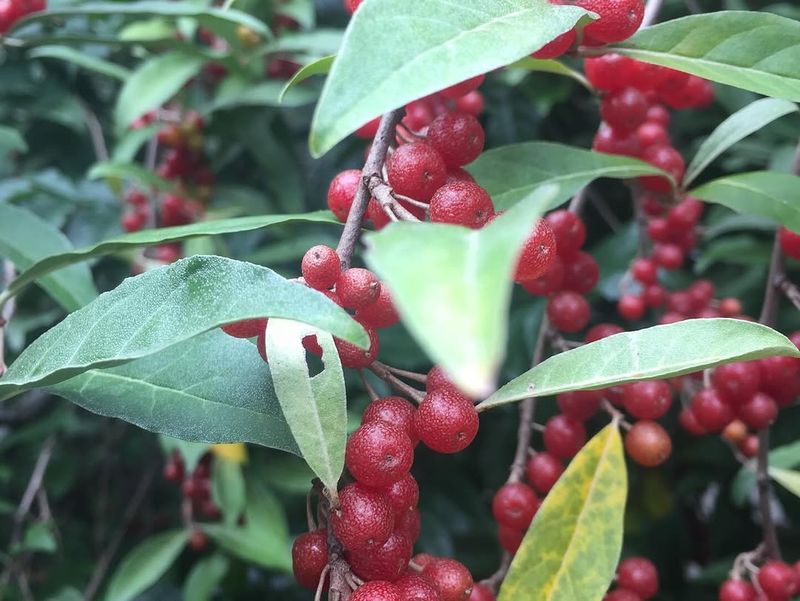
Decades ago, Autumn Olive was widely promoted as a beneficial plant for wildlife habitat. Conservation programs, government agencies, and landowners across Michigan planted it intentionally to provide food and cover for birds and deer.
At the time, its fast growth and heavy berry production seemed like pure advantages. The full picture of how aggressively it would spread was not yet well understood.
Many of those original plantings are still out there, quietly producing fruit year after year on old farmland, former conservation areas, public land, and property boundaries that have changed hands multiple times since the shrubs were first established.
A homeowner who has never grown Autumn Olive and has no planting records has no way of knowing that an old shrub from a 1970s or 1980s wildlife program might be growing just beyond their back fence.
These legacy plants are often quite large and heavily established by now, which means they produce enormous quantities of fruit each season.
A single old shrub from a past planting can supply seeds to a wide surrounding area for many years without anyone connecting it to the seedlings appearing in nearby yards.
It is a long-running, low-visibility seed source that most homeowners never think to look for.
If you are curious about the history of your neighborhood, local conservation district offices sometimes have records of past wildlife planting programs in your area.
Knowing that an older planting exists nearby helps you understand why new seedlings keep showing up and encourages a more consistent approach to monitoring and managing your yard edges over time.
6. Disturbed Yard Edges Provide Easy Establishment Sites
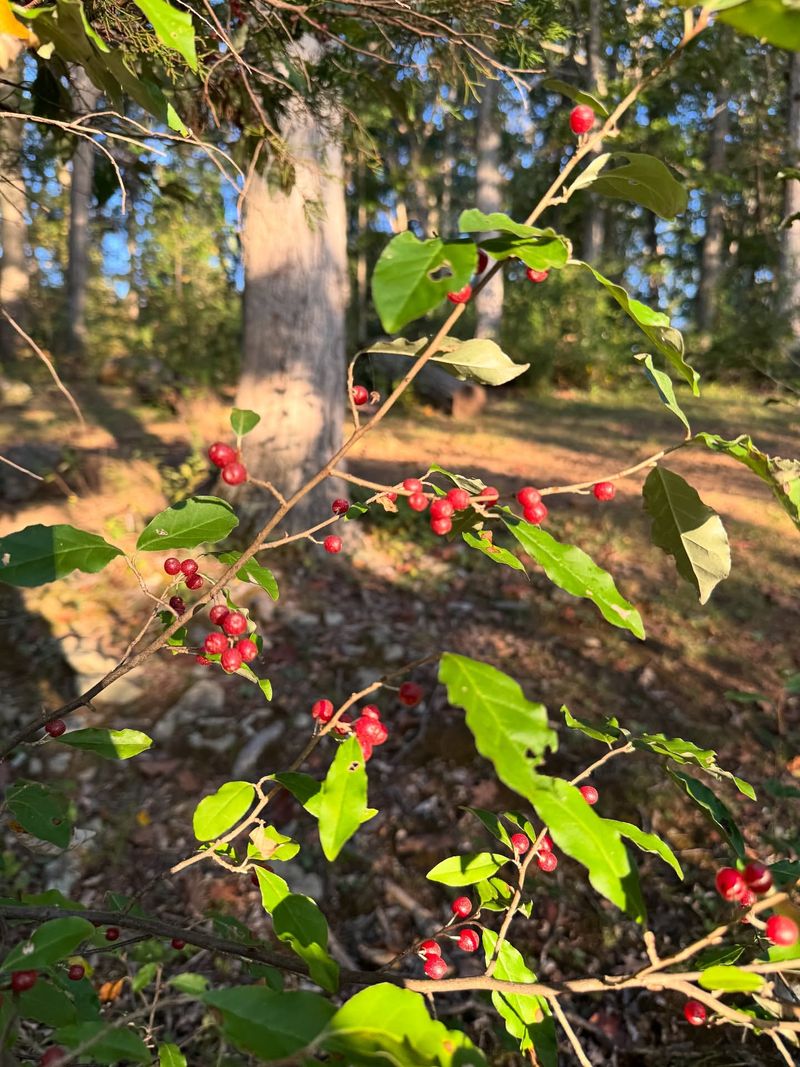
Autumn Olive has a well-known preference for disturbed ground, and that preference lines up perfectly with the kinds of conditions that naturally develop in many Michigan yards.
Freshly cleared areas, construction zones, spots where old tree roots were removed, and neglected corners where vegetation has been cut back all create the kind of open, exposed soil that this shrub loves.
If your yard has any of those conditions, it is essentially rolling out a welcome mat for new seedlings.
Fence lines are a particularly common hotspot. They tend to get cleared periodically, leaving exposed soil that receives seeds from birds perching overhead.
Similarly, the transition zone between a maintained lawn and a wooded area at the back of a property creates exactly the kind of edge habitat where Autumn Olive thrives. It is adapted to colonize those in-between spaces quickly and efficiently.
The good news is that seedlings growing in disturbed areas are usually easiest to remove when they are young. Small plants with shallow roots can often be pulled by hand after a rain when the soil is soft.
Catching them in their first season, before they develop the deep and spreading root system of a mature shrub, saves a significant amount of effort later on.
Making a habit of walking yard edges and transition zones in late spring, when new seedlings are actively growing and easy to spot, is one of the most practical things a Michigan homeowner can do.
Staying consistent with that routine through a few seasons will noticeably reduce the number of established plants competing for space in your yard over time.
7. Autumn Olive Can Establish In Many Soil Conditions
Most gardeners know that different plants have different soil preferences, and learning those preferences can help predict where certain plants will thrive. Autumn Olive, however, plays by a different set of rules.
It is remarkably adaptable, tolerating sandy soils, clay-heavy ground, low-fertility sites, and even spots with poor drainage that would challenge many other plants. That flexibility is a big part of why it shows up in so many unexpected places.
One of the reasons Autumn Olive handles poor soils so well is a helpful partnership it forms with nitrogen-fixing bacteria in root nodules.
Those bacteria convert atmospheric nitrogen into a form the plant can use, giving Autumn Olive a built-in nutrient advantage in spots where soil fertility is low.
It can essentially fertilize itself, which allows it to get established and grow vigorously in conditions where other desirable plants might struggle to compete.
This means seedlings can appear in the sunny, dry edge of a lawn, in a partly shaded garden bed with thin soil, or along a gravel driveway where almost nothing else grows.
The plant is not picky, and it does not need the ideal gardening conditions that homeowners work hard to create for their desired plants. It simply finds a foothold and starts growing.
Understanding this adaptability helps explain why Autumn Olive seedlings turn up in such varied spots around a yard.
Checking a wide range of locations, from the shadiest corner to the driest sunny strip, gives you a more complete picture of what is actually establishing on your property each season and where to focus your removal efforts most effectively.
8. Some Apparent Seedlings May Be Root Shoots
Not every small Autumn Olive stem growing in your yard started from a freshly dropped seed.
Some of them are root shoots, which are new stems that grow directly from an existing root system left in the ground after a shrub was previously cut or removed.
If you have dealt with an Autumn Olive plant in your yard before and thought the job was finished, those reappearing stems may be telling a different story.
When a shrub is cut at ground level but the root system remains largely intact, the plant often responds by sending up multiple new shoots from the roots.
These sprouts can appear close together in a cluster, or they may emerge a short distance away from where the original stem was growing.
That pattern, several new stems appearing near a previously managed spot, is a strong clue that you are dealing with regrowth rather than a brand-new seedling from a seed.
The distinction matters because the management approach is different. A true seedling with a small root system is relatively straightforward to remove completely.
A root shoot connected to an established underground root mass requires more thorough removal to prevent the cycle of regrowth from continuing season after season.
Michigan homeowners dealing with repeated sprouts in the same location should try to remove as much of the root mass as practical during the process.
Digging out the roots more completely, especially on smaller plants where it is still manageable, reduces the chances of vigorous regrowth the following spring.
Confirming identification before removal also ensures you are focusing your effort on the right plant.