How To Stop Hornworms From Destroying Your California Tomatoes This Week
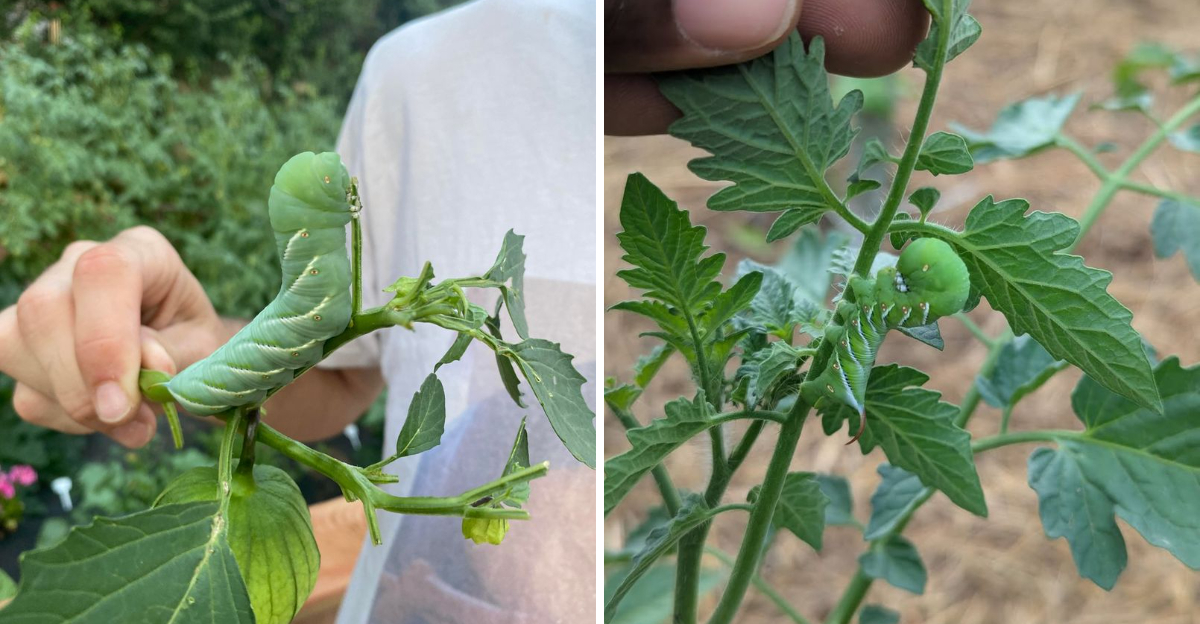
Tomato damage can appear almost overnight.
One morning, the plants look full, green, and productive. The next, a branch is stripped bare, a green tomato has fresh chewing, and dark pellets are scattered on the soil below.
That kind of damage feels sudden because the caterpillars behind it are built to hide.
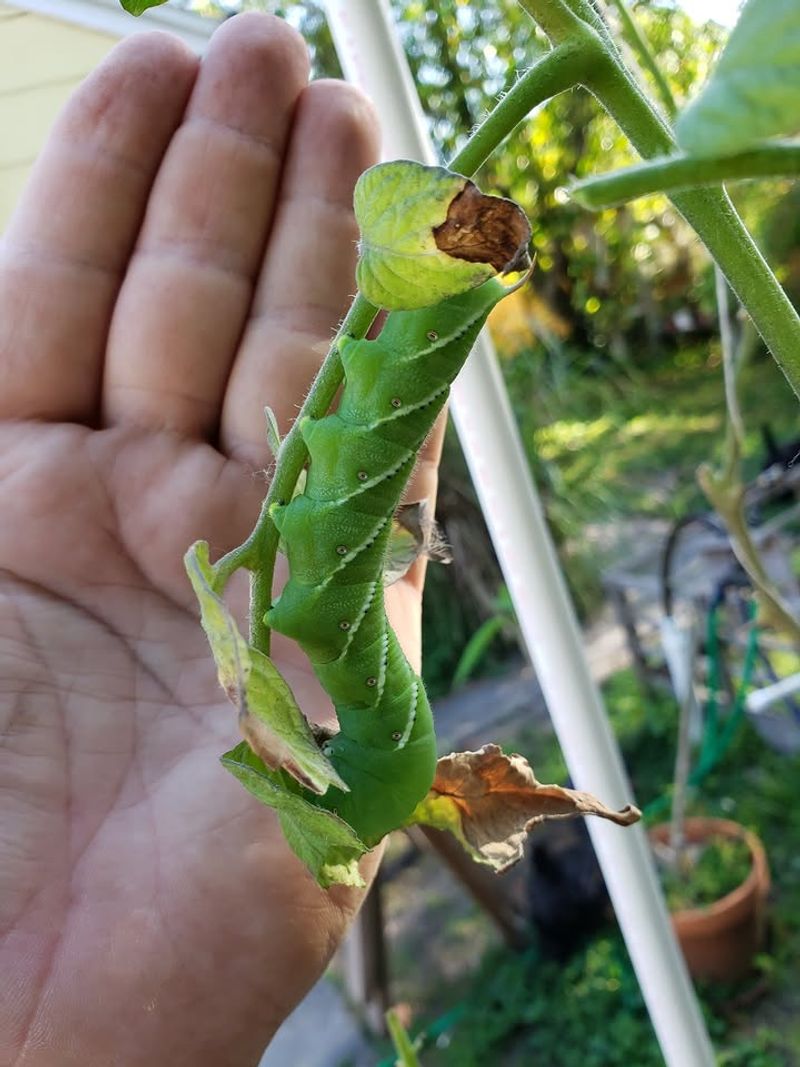
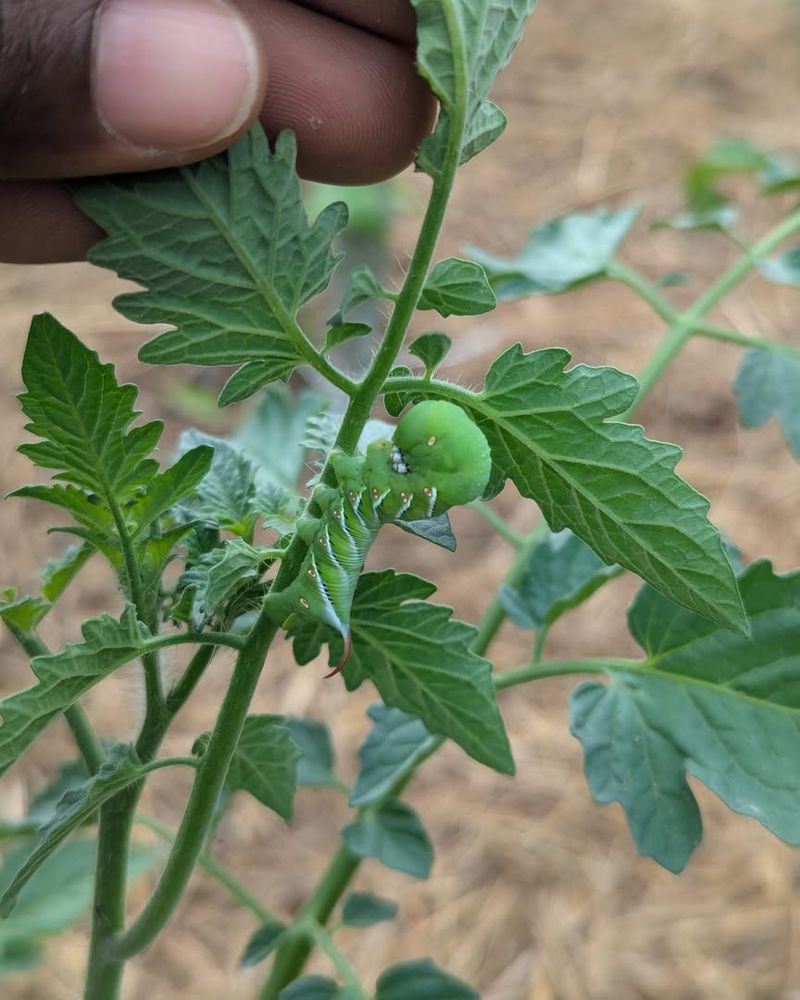
They blend into the plant almost perfectly. Their bodies match green stems, their markings mimic leaf veins, and they often rest along branches where a quick glance misses them.
By the time they reach full size, they can remove a shocking amount of foliage in a short period.
This is not the week to wait and see.
California tomato plants can keep producing well into the season, but only when enough healthy foliage remains to feed and shade the fruit.
So how do you stop hornworms from overwhelming your tomatoes right now?
Start with the clues they leave behind, remove large caterpillars by hand, protect beneficial insects already doing the work, and keep scouting every couple of days until fresh damage stops.
1. Follow Droppings To Hidden Feeders
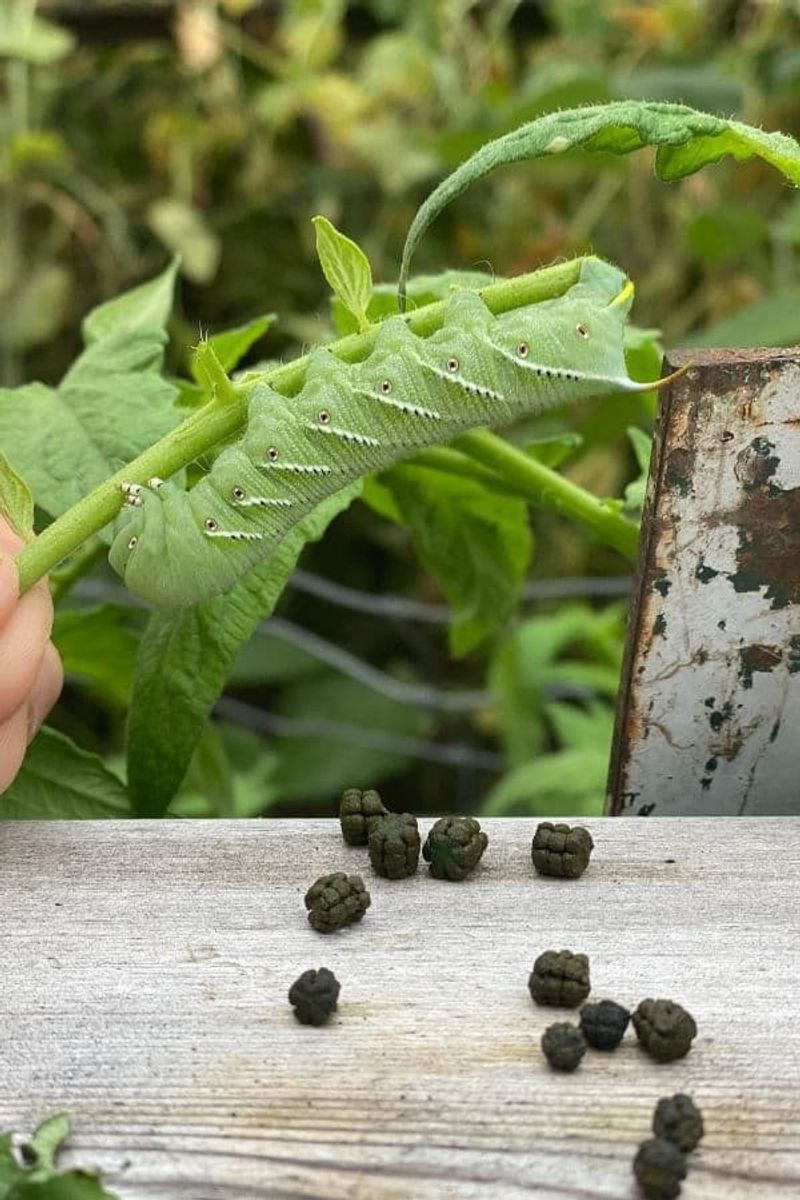
The droppings usually give the caterpillar away first.
Dark, chunky pellets on the soil beneath a tomato plant are one of the clearest signs that a hornworm is feeding overhead. These pellets, often called frass, can look like small ridged peas scattered under the canopy.
Look straight above the droppings. A hornworm is often feeding within a foot or two of where the frass landed.
Do not scan too quickly. These caterpillars are excellent at matching tomato stems and leaves, so a fast glance across the plant can miss even a large one.
Follow the stem slowly. Move your eyes upward from the droppings, checking each branch junction and leaf stem.
Check shaded interior growth. Hornworms often sit deep inside the plant during the day, away from harsh sun and open view.
Compare the clues. Bird droppings are usually whitish and splattered, while hornworm frass is dark, firm, and pellet-like.
Fresh frass means active feeding. Old damage without new droppings may mean the caterpillar has already moved or been removed by a predator.
Use the droppings as a map. Each pile narrows the search area and saves you from tearing through the whole plant at random.
Check under cages too. Frass can collect on tomato cage rings, mulch, leaves, or the rim of a container.
This is the fastest way to start.
The caterpillar may be hidden, but its mess usually points right to the branch where it is feeding.
2. Check Bare Stems At Dawn
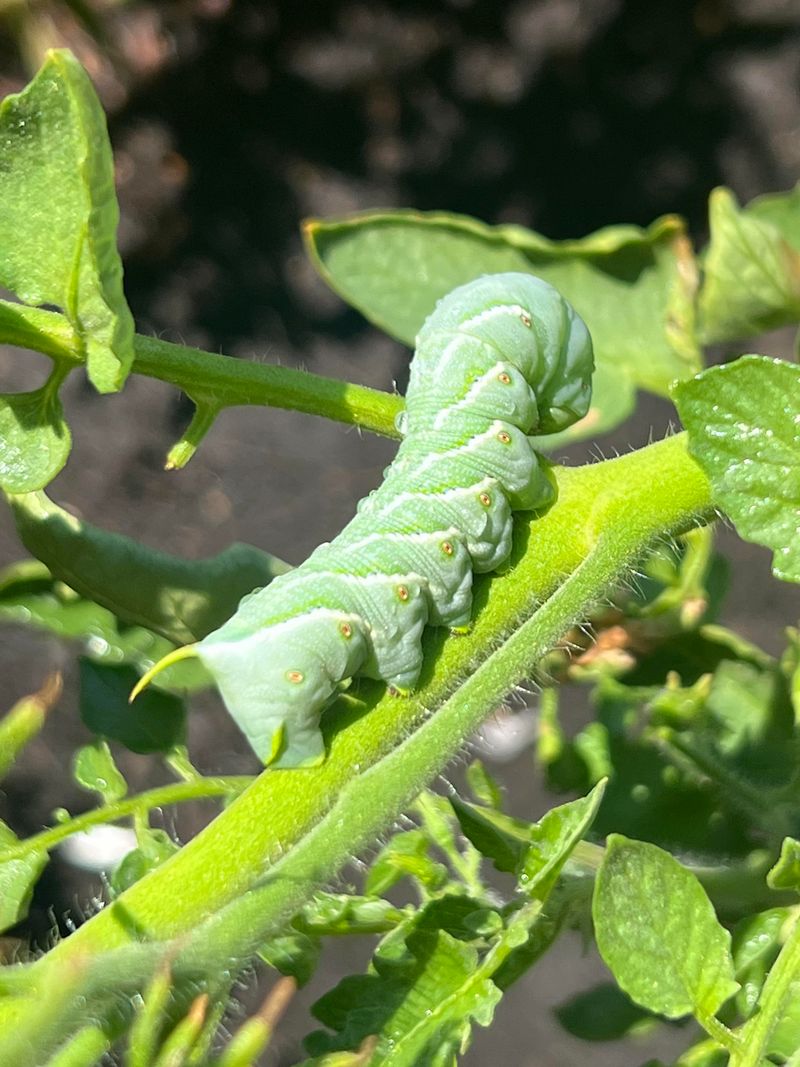
Bare stems are another strong clue.
Hornworms often chew away the leaf blade and leave the small leaf stalk behind. Those stripped petioles stick out like tiny green twigs along the stem.
Dawn is a smart scouting time. The light is softer, temperatures are cooler, and the caterpillars may still be easier to spot before they settle into deeper shade.
Start at the stripped branch. That is where the caterpillar fed recently, and it may still be close.
Your California Garden Changes Every Week. Your Plan Should Too.
Gardening in California changes quickly throughout the season. Every Friday you’ll receive a simple weekly plan showing exactly what to plant, prune, fertilize, harvest, and protect so you never miss the right timing.
Follow the branch toward fresh growth. Hornworms often move toward leaves that have not yet been chewed.
Look for missing clusters. One bare branch may not seem serious, but several stripped areas can mean the caterpillar has been feeding for days.
Use low-angle light. Morning shadows can reveal a hornworm’s outline against the stem better than harsh midday sun.
Take your time near fruit clusters. When leaves run low, hornworms may chew green tomatoes too.
Check both sides of the plant. A caterpillar can hide on the far side of a stem where your first view never catches it.
Look for the horn. The tail-end horn looks dramatic, but it is not a stinger.
Do not wait for the whole plant to thin. Bare stems are enough reason to begin searching right away.
Morning checks turn random damage into a pattern.
Once you know where the feeding started, the hidden caterpillar becomes much easier to find.
3. Search Beneath Chewed Leaves
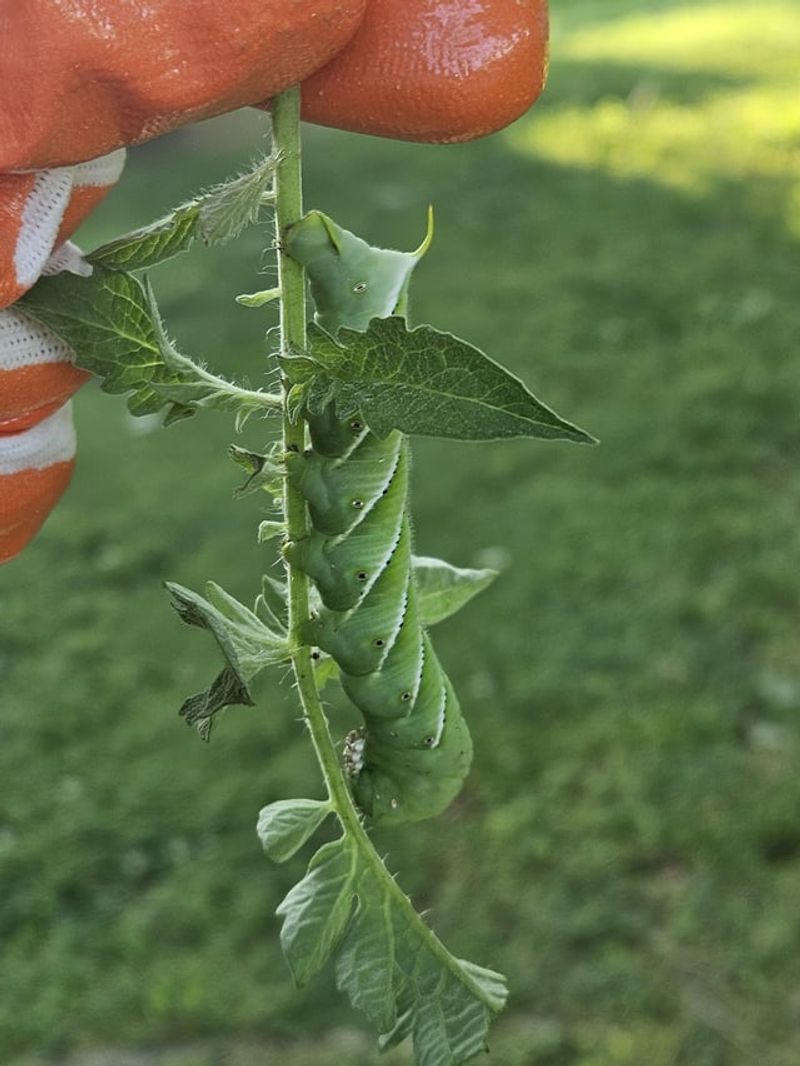
The underside of the plant is where the search gets serious.
Hornworms do not usually sit in plain view on top of leaves. They tuck along stems, leaf stalks, and inner foliage where their green bodies disappear into the plant.
Part the foliage gently. Use both hands to open the canopy without snapping stems or knocking off fruit.
Work from the bottom up. This keeps you from missing lower branches where caterpillars may rest between feeding sessions.
Check the undersides of damaged leaves. A chewed edge above often means a caterpillar is gripping the leaf or stem below.
Look along petioles. Hornworms often stretch parallel to leaf stalks, which makes them look like part of the plant.
Search branch junctions carefully. The place where a leaf stem meets the main stem is one of their favorite hiding spots.
Do not stop at tomatoes. Peppers, eggplants, potatoes, and nightshade weeds nearby can also host related caterpillars.
Check nearby plants the same day. A hornworm problem can move through the nightshade family rather than staying on one tomato.
Know the look, but do not worry too much about the name. Tomato hornworms and tobacco hornworms have slightly different markings, but both chew tomato foliage and call for the same response.
Large caterpillars are easier to see after damage begins. Smaller ones may require repeated checks as they grow.
The plant has more hiding places than it seems.
A slow search beneath chewed leaves catches what the first glance always misses.
4. Handpick Large Hornworms
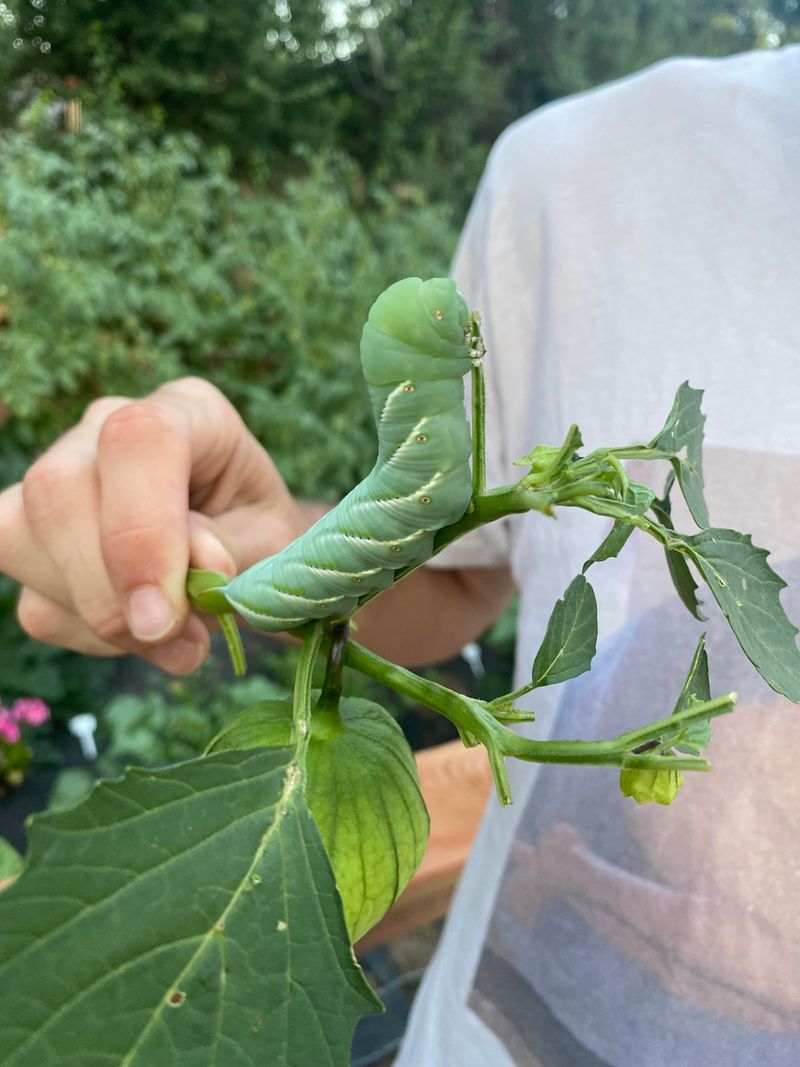
Large hornworms are best removed by hand.
Once they are several inches long, they can eat a lot of foliage quickly, and some low-risk sprays work better on younger caterpillars. A visible large hornworm should come off the plant right away.
Wear gloves. Hornworms are not venomous, but they grip tightly, and many gardeners prefer not to touch them directly.
Hold the branch steady. This keeps you from breaking the tomato stem while pulling the caterpillar free.
Grip firmly but gently. Pull straight away from the stem with steady pressure.
Use tongs when needed. Kitchen tongs, garden forceps, or pruners can help remove one that is clinging tightly.
Drop it into a sealed container. Do not place it on the ground beside the bed and expect it to stay there.
Check the same branch again. A second caterpillar may be hiding close to the first one.
Inspect the whole plant afterward. One large hornworm is often not the only one in the planting.
Look again the next morning. Smaller caterpillars that were hard to spot may become easier to find after another feeding period.
Handpicking protects beneficial insects. It targets the actual pest without coating the whole garden in unnecessary spray.
This is simple, direct, and effective.
When the caterpillar is large enough to see, removing it by hand is usually the fastest way to stop that day’s damage.
5. Leave Parasitized Larvae In Place
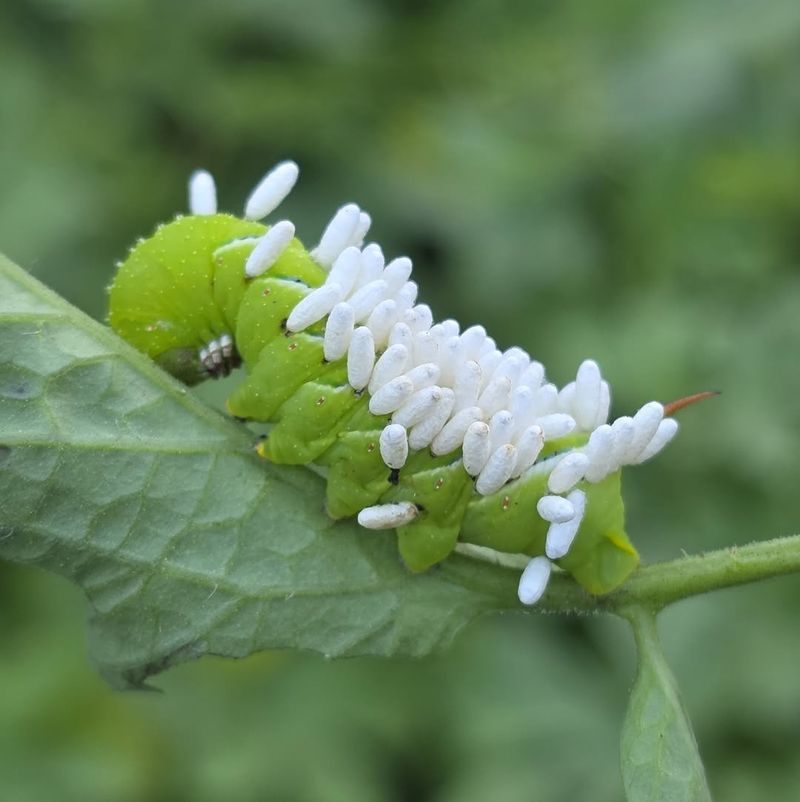
A hornworm covered in white cocoons is already being handled.
Those small white oval structures are not hornworm eggs. They are cocoons from tiny parasitic wasps that developed inside the caterpillar and emerged to finish their life cycle.
That caterpillar is no longer the real threat. Once parasitized, it usually feeds very little and becomes much less damaging to the plant.
Leave it on the stem. Removing it interrupts the next generation of beneficial wasps.
Those wasps are valuable. Adults that emerge from the cocoons can search for more hornworms in your garden and nearby yards.
Mark the branch if needed. A small twist tie, yarn, or note can remind you not to remove that particular caterpillar later.
Do not spray that plant casually. Broad treatment can harm the helpful insects you are trying to preserve.
Explain it to curious gardeners. The white cocoons can look alarming, but they are one of the best natural pest-control signs in the tomato patch.
Keep scouting around it. One parasitized hornworm does not guarantee every hornworm on the plant has been found.
Protect flowers nearby. Beneficial insects need safe habitat and nectar sources throughout the garden.
This is one of the rare times doing less helps more.
A parasitized hornworm is basically a living nursery for the wasps that help keep future hornworms in check.
6. Use Bt On Small Caterpillars
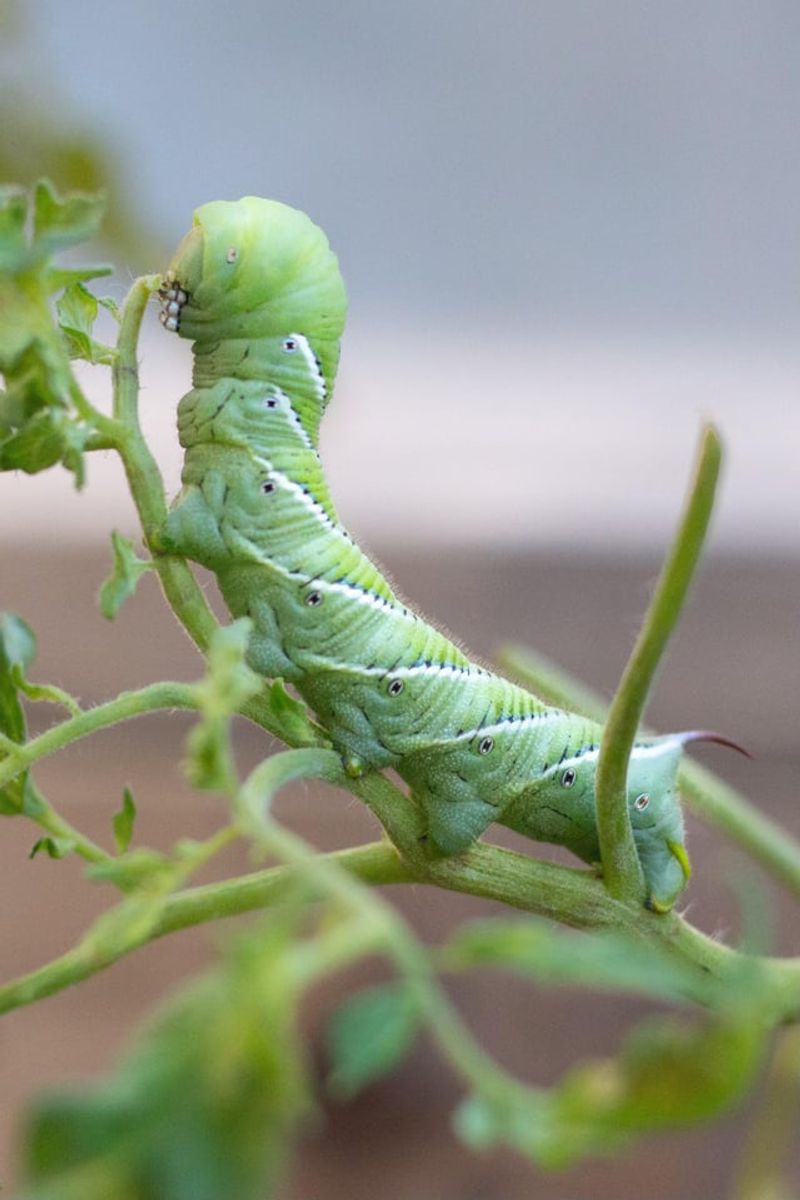
Bt works best before hornworms get large.
Bacillus thuringiensis var. kurstaki, usually called Bt, is a caterpillar-targeting product that must be eaten to work. That detail matters because timing decides how useful it will be.
Use it on small larvae. Young hornworms under about an inch are much better targets than full-size caterpillars.
Handpick the big ones first. A huge caterpillar chewing through the plant should not be left in place while you wait for a spray to solve it.
Cover leaf surfaces thoroughly. Bt has to be on the foliage where small caterpillars feed.
Spray affected plants, not the entire yard. Targeted use keeps the treatment focused where fresh damage is happening.
Late afternoon can be useful. Sunlight can break Bt down, so evening coverage may last better through the night feeding period.
Reapply only as directed. Rain, irrigation, and sun can reduce coverage, but the label controls timing and rate.
Check the product label every time. California gardeners should follow the exact instructions for tomatoes, mixing, protective gear, and harvest intervals.
Avoid spraying flowers when possible. Tomatoes need pollinator visits less than squash, but bees and other insects still move through vegetable gardens.
Bt is not a blanket cure.
It is a useful tool for small caterpillars, especially when paired with handpicking and close scouting.
7. Spot Treat Damaged Plants Only
The whole garden does not need treatment because one tomato has damage.
Hornworm management works best when it is targeted. Treating plants without fresh feeding signs can disrupt beneficial insects and waste product without improving control.
Walk the full tomato row first. Look for frass, bare stems, chewed leaves, and fruit damage before deciding where action is needed.
Mark active plants. A clip, flag, or note helps you remember which plants had fresh signs.
Treat only confirmed areas. Focus on foliage where small caterpillars are likely feeding.
Leave undamaged plants alone. They may already have natural enemies present and no active pest pressure.
Avoid routine preventive spraying. Hornworms are large, visible once damage appears, and often manageable without spraying every plant.
Protect beneficial insects. Parasitic wasps, lacewings, ground beetles, spiders, and birds all help in the garden.
Use the least disruptive option first. Handpicking and leaving parasitized larvae are often enough for small gardens.
Follow crop-specific labels. A product allowed on tomatoes may have different directions for peppers or eggplants nearby.
Watch drift. Spray only when air is calm enough to keep product on the intended plant.
Spot treatment keeps the response proportional.
That matters in a California garden where beneficial insects can help long after this week’s hornworm problem is gone.
8. Scout Again After Two Days
The follow-up check matters as much as the first one.
A single search can miss small caterpillars, hidden larvae, or eggs that hatch later. Returning in two days keeps the problem from rebuilding quietly.
Start with fresh droppings. New frass means a caterpillar is still feeding somewhere above.
Compare damaged areas. A branch that was already bare is old news, but newly chewed leaves point to active feeding.
Look for small caterpillars. They may have been too tiny to notice during the first inspection.
Recheck plants where large hornworms were removed. More than one can feed on the same tomato plant.
Inspect after irrigation or rain. Moisture can make droppings easier to spot on mulch or bare soil.
Reapply Bt only when needed and allowed. Fresh feeding on small caterpillars may justify another application within label directions.
Leave parasitized hornworms alone. Check them, but do not remove them unless they are gone and only empty cocoons remain.
Keep checking every two days. Continue until you see no fresh droppings, no new chewing, and no caterpillars.
Stay alert through the season. Adult moths can lay eggs later, so one clean week does not guarantee the rest of summer stays quiet.
This is how you win the week.
Not with one dramatic search, but with repeated checks that stop each new feeder before the damage spreads.