Why Are Massachusetts Gardeners Noticing More Brown Spots On Hydrangea Leaves This Season
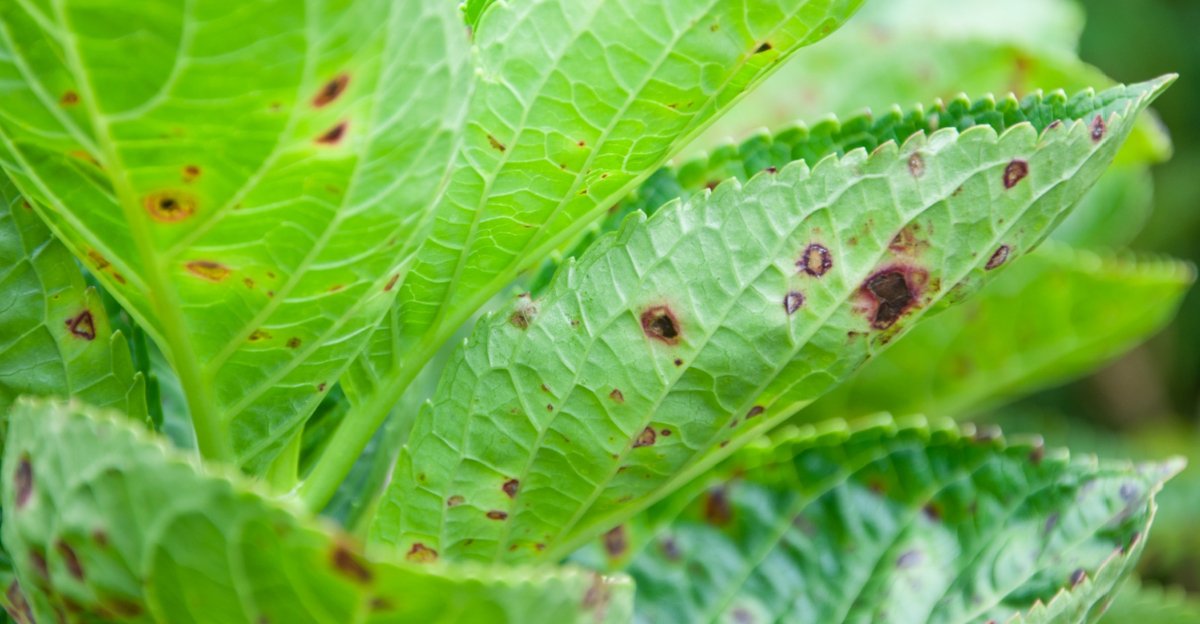
Brown spots are spreading across your hydrangea leaves right now. Spots multiply quickly across nearly every leaf you own.
Massachusetts gardens are showing this same pattern everywhere. Neighbors compare notes, yet your yard still feels different.
Humidity holds moisture against your leaves long after every summer rain ends. Crowded shrubs hold that moisture close for even longer.
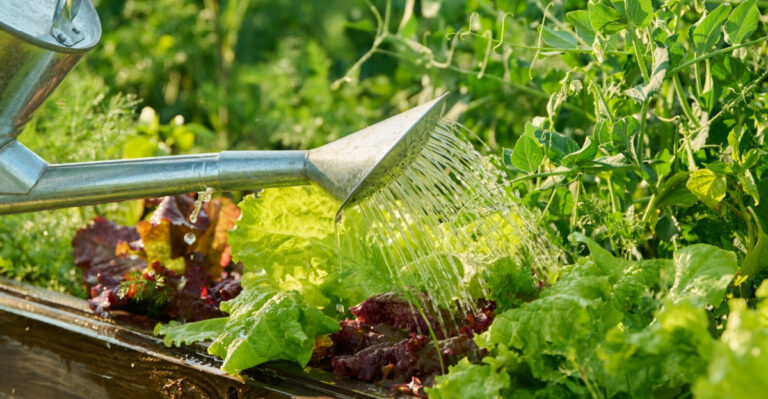
Water splashing upward from soaked soil carries pathogens straight onto your leaves. Overhead watering only adds to your problem.
Gardens across Massachusetts confirm you aren’t imagining this. Timing matters, since damage builds quickly on your plants.
Untreated leaves drop early, weakening the growth you worked hard all season to build. Diagnosis needs more than a glance at your yard.
Treatment works well, but only when applied correctly and promptly enough. Nothing about this simply waits for your hesitation. Your hydrangeas need attention now, before the damage spreads further.
1. Humid Weather Encourages Fungal Leaf Spot Growth
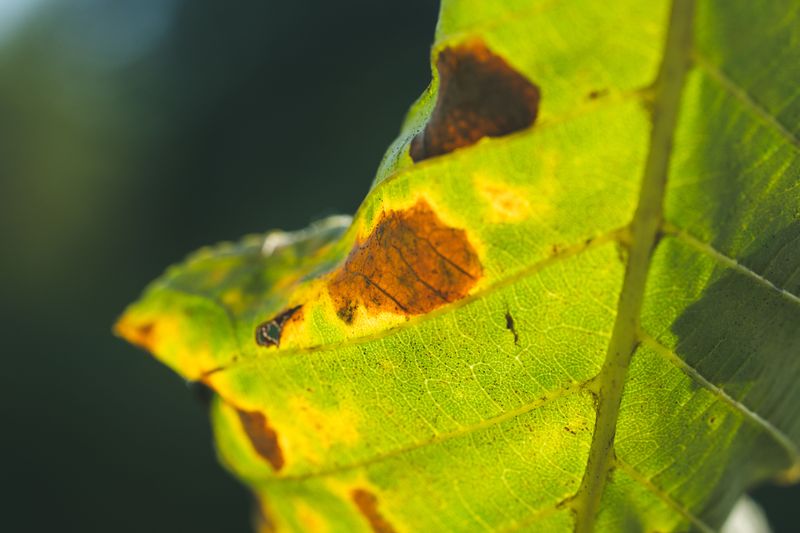
Summer humidity creates ideal conditions for fungal disease. When the air stays warm and wet for days at a time, fungal spores become active quickly and go to work fast.
Fungal leaf spot is one of the top reasons gardeners see brown, spotted hydrangea leaves every season. The spores land on leaf surfaces and begin breaking down plant tissue almost immediately.
Warm, humid nights combined with daytime moisture create favorable growing conditions for many fungi. Your hydrangea has no natural defense against this kind of sustained moisture pressure.
You might notice the spots start small and circular, often with a yellow halo around a darker brown center. Over time, multiple spots merge into larger patches of damaged tissue.
The fungus spreads quickly across an entire shrub if conditions stay humid for a week or more. Once established, it becomes much harder to control without intervention.
Applying a copper-based fungicide early in the season can slow the spread significantly. Look for products labeled for ornamental shrubs and follow the directions carefully.
Picking off heavily spotted leaves and bagging them helps reduce the spore load in your Massachusetts garden. Do not compost those leaves, because spores survive and spread from compost piles.
Keeping your plants healthy through proper feeding also helps them fight back against fungal pressure. A well-fed hydrangea bounces back faster and shows less severe spotting overall.
2. Overhead Watering Splashes Spores Onto Leaves
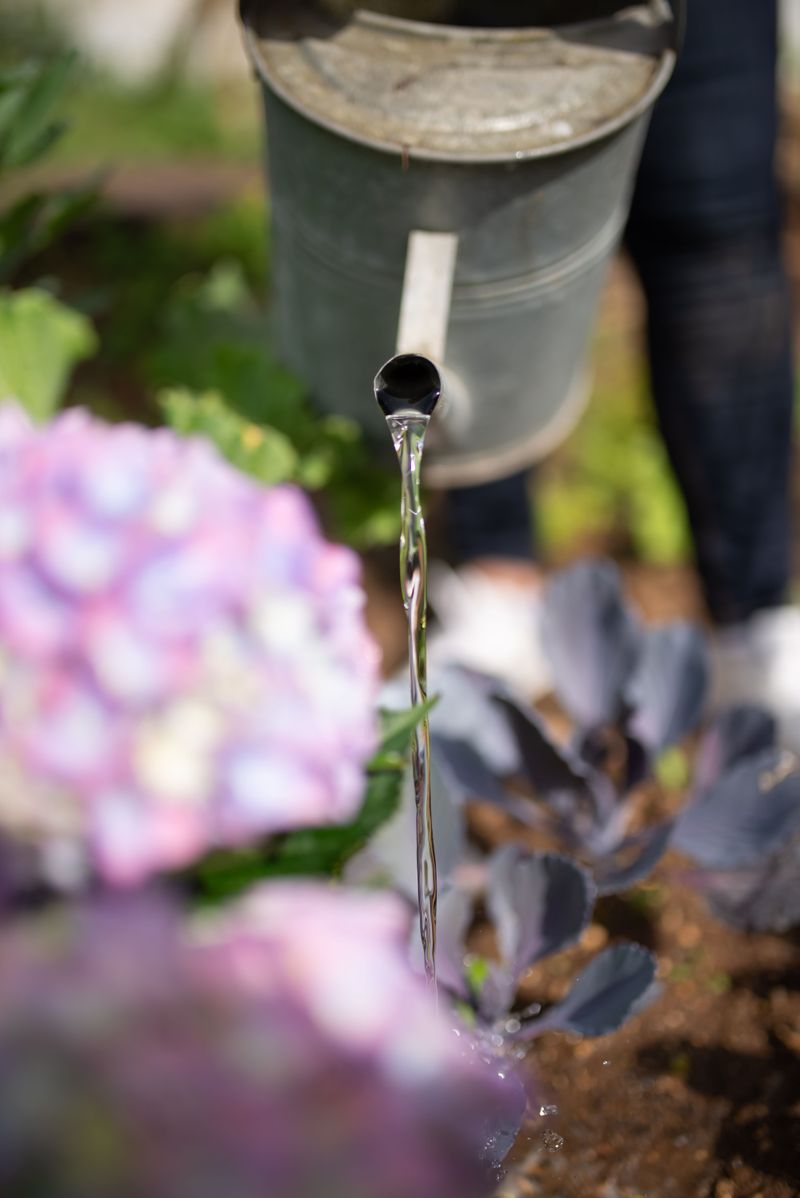
Many gardeners grab the hose after work and soak the entire shrub from top to bottom. It is, however, one of the fastest ways to spread disease through the garden.
When water hits the soil beneath your plants, it picks up fungal spores hiding in fallen leaves and dirt. Those spores travel upward in the splash and land directly on healthy leaf surfaces.
Brown, spotted hydrangea leaves often trace back to this exact watering habit. The connection between overhead watering and leaf disease is well documented by plant pathologists.
Switching to drip irrigation or a soaker hose makes a dramatic difference almost immediately. Water delivered at the root zone never touches the foliage at all.
If you must use a regular hose, aim the water low and slow near the base of each shrub. Keep the stream gentle so it does not kick up soil particles.
Morning watering is always better than evening watering regardless of your method. Foliage that gets accidentally wet in the morning has hours of sunlight to dry off.
Evening watering leaves leaves damp all night long, which is exactly the window fungi need to establish themselves. Even a small amount of overnight wetness adds up over a full growing season.
Mulching around the base of your hydrangeas also reduces splash-back significantly. A two-inch layer of wood chips acts like a buffer between the soil and your plants.
3. Poor Air Circulation Traps Excess Moisture
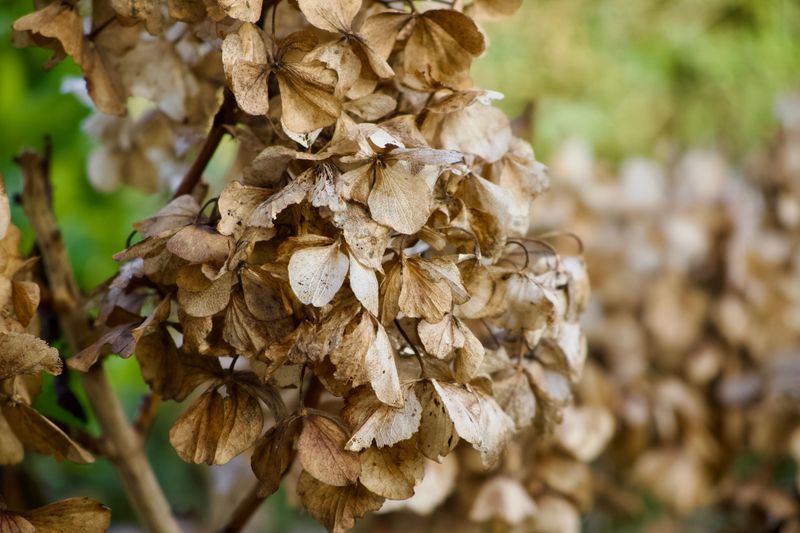
Hydrangeas left in stagnant, humid air face the same problem as any plant denied airflow. That is essentially what happens when hydrangeas sit in stagnant, humid air with nowhere for moisture to escape.
Poor air circulation is one of the sneakiest causes of leaf disease because it is invisible. You cannot see bad airflow, but your plants absolutely feel it.
When leaves stay wet for extended periods because air cannot move through the canopy, fungal spores have all the time they need to germinate and spread. The problem compounds quickly in shaded garden spots.
Pruning your hydrangeas to open up the center of each shrub allows air to flow more freely through the branches. Even removing a few interior stems makes a noticeable difference.
Massachusetts gardeners who notice spotting on their hydrangeas should also check nearby structures. Fences, walls, and dense hedges can create pockets of still air that trap humidity right where it hurts most.
Spacing plants properly at planting time prevents this problem from the start. Most hydrangea varieties benefit from ample clearance on all sides, though exact spacing varies by cultivar.
If your plants are already crowded, selective pruning is your best short-term solution. Focus on thinning rather than cutting back hard, so you preserve the shape of the shrub.
Brown, spotted hydrangea leaves often improve dramatically after a single good pruning session. Better airflow means faster drying and far fewer opportunities for disease to take hold.
4. Cercospora Fungus Thrives In Warm Damp Conditions
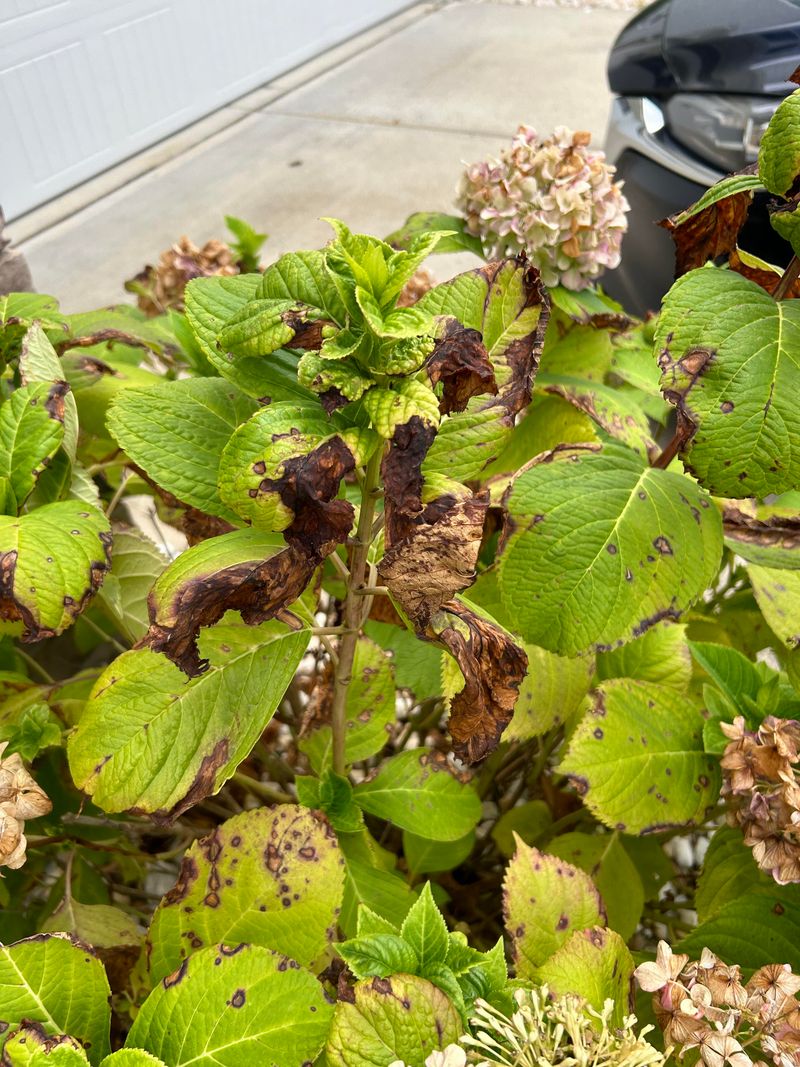
Cercospora is one of the more persistent fungal diseases hydrangeas can encounter. It has a very specific look that sets it apart from other leaf problems.
Cercospora leaf spot typically shows up as small, circular spots with a tan or brown center and a distinctive purple or reddish-brown border. Those colored edges are a reliable clue that Cercospora is the culprit.
This fungus thrives in warm temperatures paired with persistent leaf wetness. Summer in New England checks both boxes almost every single year.
Cercospora spores survive in infected plant debris through the winter and become active again when conditions warm up. That means last year’s fallen leaves are a direct source of this season’s outbreak.
Brown, spotted hydrangea leaves caused by Cercospora tend to appear first on lower, older foliage and then move upward. Watching for this progression helps you catch it early.
Fungicides labeled for Cercospora control on ornamental shrubs are effective when applied before the disease spreads widely.
Check the product label to confirm it is approved for use in your state before applying. Early intervention is always more effective than trying to control a full-blown outbreak.
Removing and disposing of infected leaves slows the spread by reducing the spore source. Bag the leaves tightly and put them in the trash, not the compost bin.
Consistent monitoring through July and August gives you the best chance of keeping this fungus under control. Check the undersides of leaves where spore clusters often appear first.
5. Overcrowded Plants Block Proper Airflow
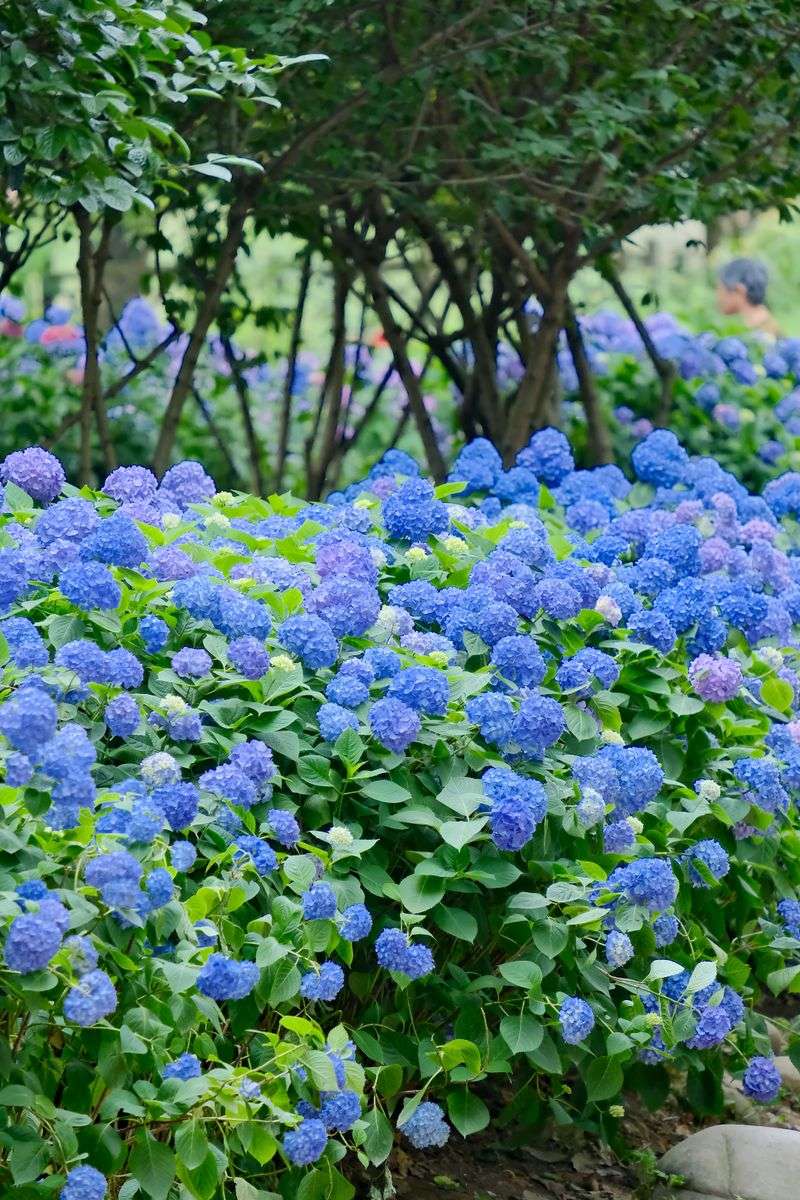
When hydrangeas are packed in too tightly, they essentially compete against each other in every possible way. They compete for water, nutrients, and airflow.
Overcrowded planting is a common mistake because hydrangeas look small when first planted. Five years later, those small shrubs have merged into one dense mass of overlapping branches.
Overlapping branches and leaves create a dense canopy that holds moisture like a sponge. That trapped humidity becomes a breeding ground for the fungi responsible for brown, spotted hydrangea leaves.
Thinning out overcrowded beds takes effort, but the benefit is significant. Plants that have room to breathe dry off faster after rain and resist disease much more effectively.
Start by removing the weakest or most diseased shrubs from the group. Giving the remaining plants more space to expand is far better than trying to keep all of them crammed together.
If removing whole plants feels drastic, aggressive pruning of each shrub can help open things up without removing plants entirely. Focus on cutting branches that cross or rub against each other.
After thinning, apply a fresh layer of mulch around each plant to suppress weeds and retain moisture at the root level. This keeps the soil healthy without adding humidity to the foliage zone.
Overcrowding is a fixable problem, and fixing it now pays dividends for years to come. Your hydrangeas will show visibly cleaner, healthier leaves.
6. Old Infected Leaves Spread Spores Nearby
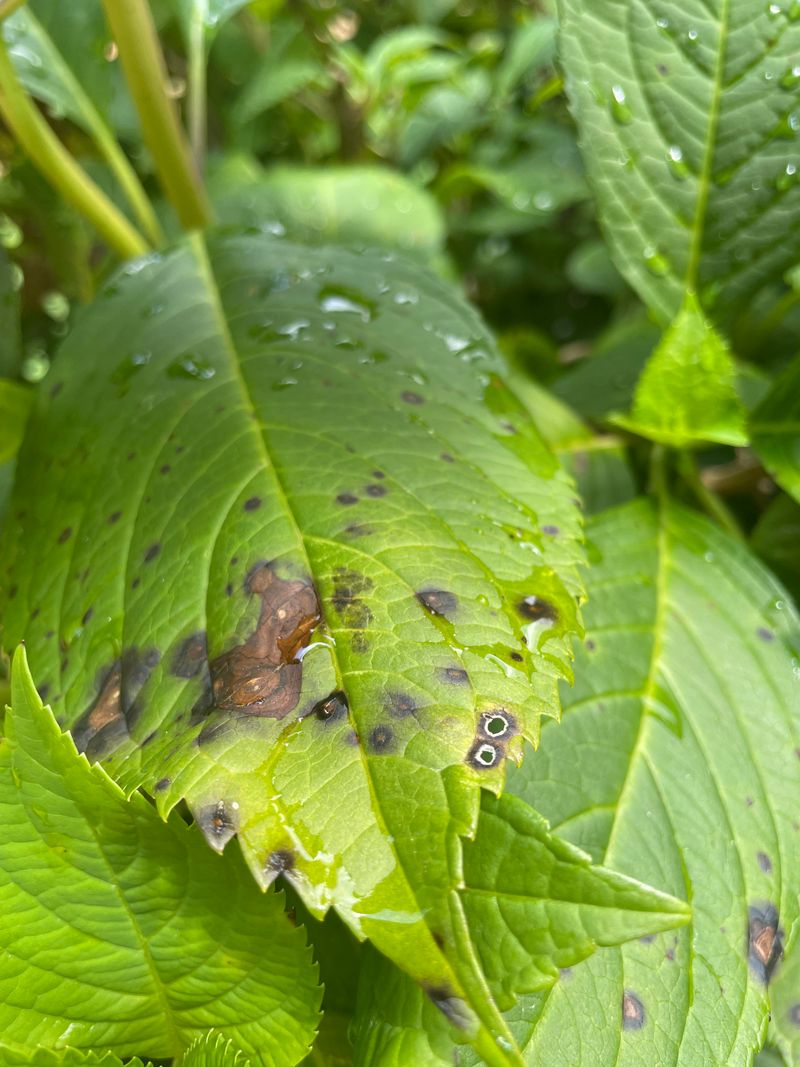
Last fall, you probably raked up a pile of hydrangea leaves and left a few behind without thinking twice. Those forgotten leaves are becoming active again this summer.
Fungal spores are remarkably durable and can survive through freezing temperatures, snow, and rain without losing their ability to infect new growth. When spring warmth arrives, they pick up right where they left off.
Old infected leaves sitting on the soil beneath your hydrangeas act as a spore reservoir that keeps releasing new batches of disease all season long. Every rain event splashes those spores back up onto fresh foliage.
Fall cleanup is one of the single most effective things you can do to reduce brown, spotted hydrangea leaves the following year. Raking up and disposing of all fallen leaves breaks the cycle.
Do not wait until all the leaves have dropped to start cleaning up. Remove spotted leaves as they fall throughout the growing season to keep the spore load as low as possible.
Pulling up old mulch that has been in place for more than two years also helps. Fungal spores accumulate in decomposing mulch just as they do in fallen leaves.
Replace old mulch with a fresh layer of clean wood chips or shredded bark each spring. Fresh mulch reduces splash-back and gives spores fewer places to hide near your plants.
A little extra attention to garden hygiene makes a meaningful difference. Clean beds produce healthier plants season after season.
7. Prolonged Leaf Wetness Invites Bacterial Infection
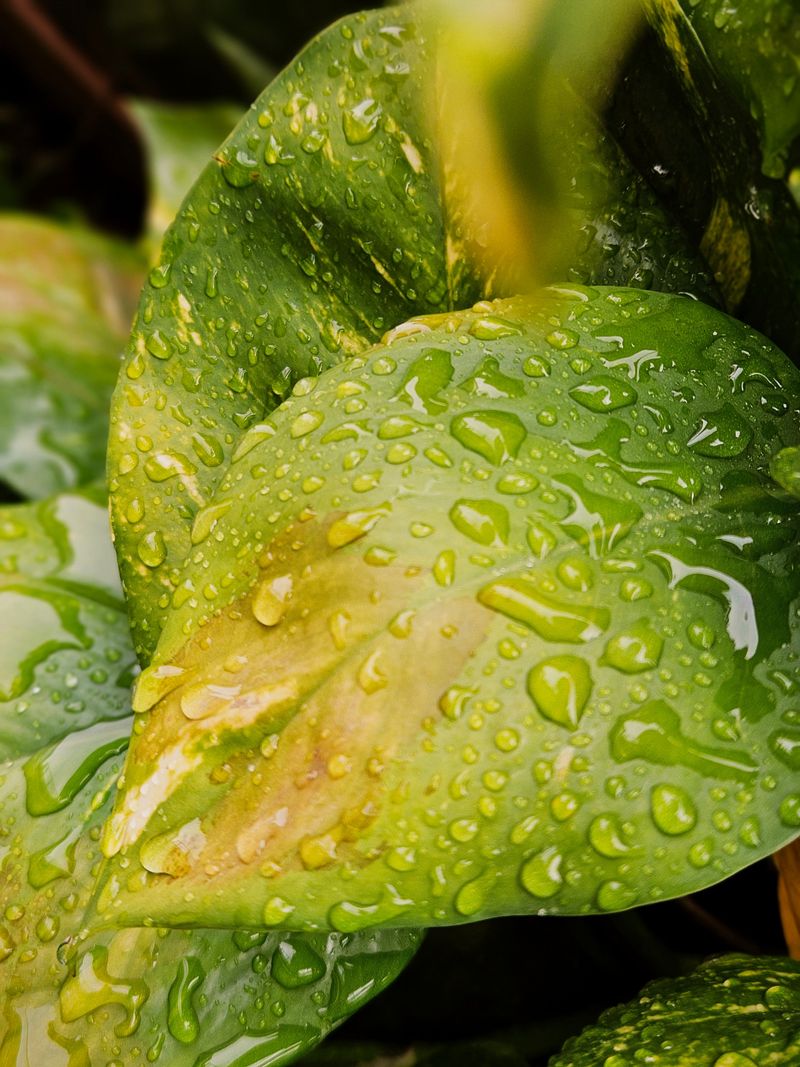
Rain is great for gardens, but water that lingers on leaves for hours is a different story entirely. Extended leaf wetness creates an open door for bacterial pathogens that cause rapid, ugly damage.
Bacterial leaf scorch is less common than fungal disease, but it produces some of the most severe brown patches seen on a hydrangea. The damage often appears water-soaked and dark before it dries into crispy brown tissue.
Unlike fungal infections that spread gradually, bacterial infections can escalate quickly during wet spells. An extended stretch of cloudy, rainy weather can trigger a noticeable outbreak.
Brown, spotted hydrangea leaves caused by bacteria often show irregular margins rather than the clean circular spots typical of fungal disease. This distinction helps you choose the right treatment approach.
Copper-based bactericides can help manage bacterial leaf problems when applied at the right time. Timing matters enormously, so start treatments at the first sign of symptoms rather than waiting.
Improving drainage around your plants reduces the amount of time water sits on or near the foliage. Raised beds and amended soil both help water move through faster.
Avoid handling your plants when they are wet, because bacterial pathogens transfer easily from hand to leaf and leaf to leaf. Clean your pruning tools with rubbing alcohol between cuts.
Staying proactive with sanitation and smart watering habits keeps bacterial threats at bay most seasons. Healthy hydrangeas in well-drained soil resist infection far better than stressed ones.
8. Stressed Plants Become More Disease Susceptible
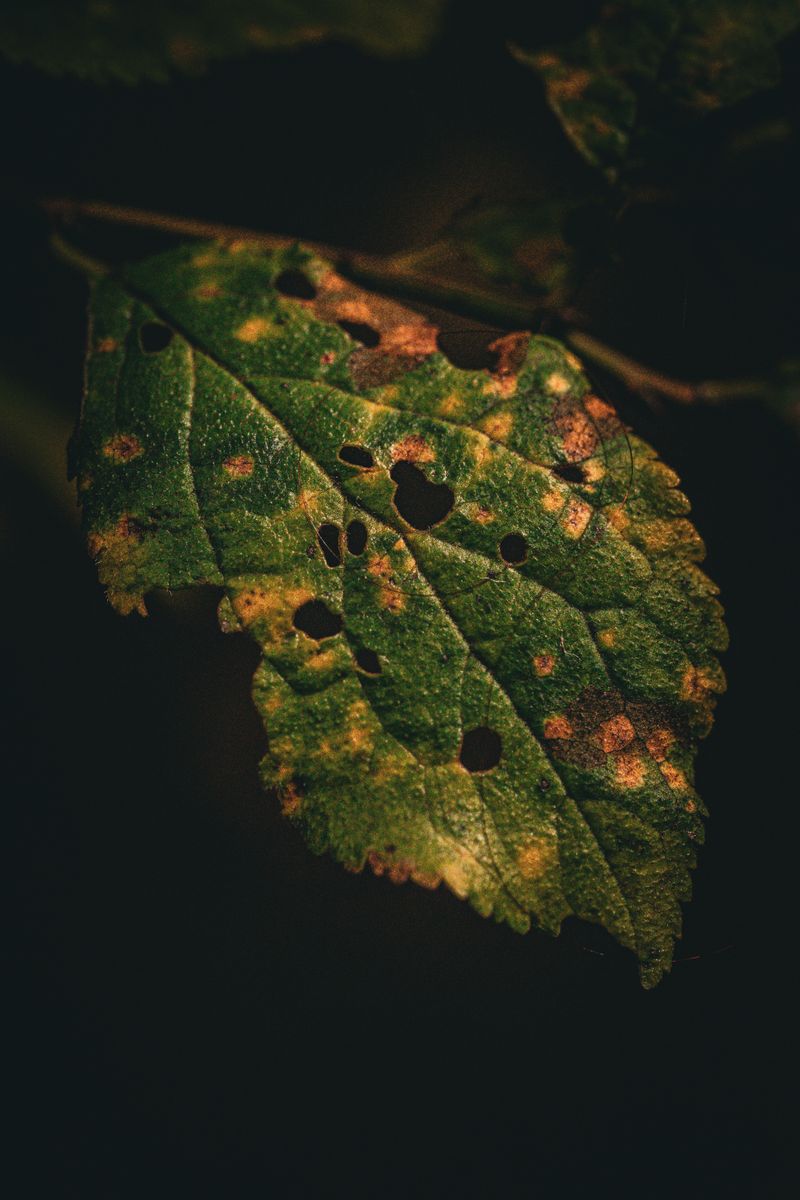
A stressed hydrangea becomes far more vulnerable to passing pathogens. When plants are struggling, their natural defenses drop and disease moves in fast.
Drought stress, heat stress, nutrient deficiencies, and compacted soil all weaken a hydrangea’s immune response.
Any one of these factors alone can open the door to the brown, spotted hydrangea leaves you are trying to prevent.
Hydrangeas that dry out between waterings and then get drenched all at once experience dramatic stress swings. Inconsistent moisture is one of the most overlooked contributors to overall plant vulnerability.
Feeding your hydrangeas with a balanced slow-release fertilizer in early spring sets them up for a stronger season. Well-nourished plants produce thicker, healthier leaf tissue that resists penetration by fungal spores.
Soil pH is best known for controlling bloom color in many hydrangea varieties, but it also affects nutrient absorption and overall plant vigor.
Hydrangeas generally prefer slightly acidic soil, and plants growing far outside that range can struggle to take up nutrients effectively, leaving them more vulnerable to stress and disease.
Testing your soil every two to three years gives you a clear picture of what your plants actually need. Amendments like sulfur or lime adjust pH gradually without shocking the root system.
Consistent, deep watering once or twice a week is far better than light daily sprinkling. Deep watering encourages roots to grow downward, making plants more resilient during dry stretches.
Giving your hydrangeas the right care from the ground up is the most powerful disease prevention strategy available. Strong, well-fed plants simply have more fight in them.