The Native North Carolina Perennial That Keeps Butterflies Working Your Yard Through Much Of The Warm Season
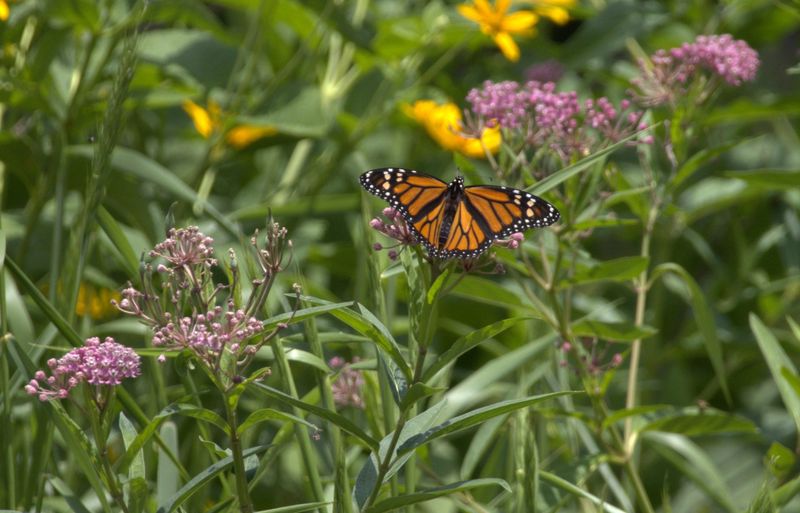
Swamp milkweed is one of those plants that pulls its weight quietly, then one August afternoon you notice four or five butterflies working the same patch and you stop whatever you were doing. This native perennial grows across North Carolina, from the Coastal Plain to the mountains, and it earns its place by feeding adult butterflies with nectar and giving monarch caterpillars the only food they can actually use. It blooms from mid-spring into early fall, which is a genuinely long season for a single plant. One thing to know upfront: the right site makes all the difference, and no single perennial can guarantee a yard full of butterflies from now until frost.
Swamp Milkweed Fits The Right North Carolina Yard
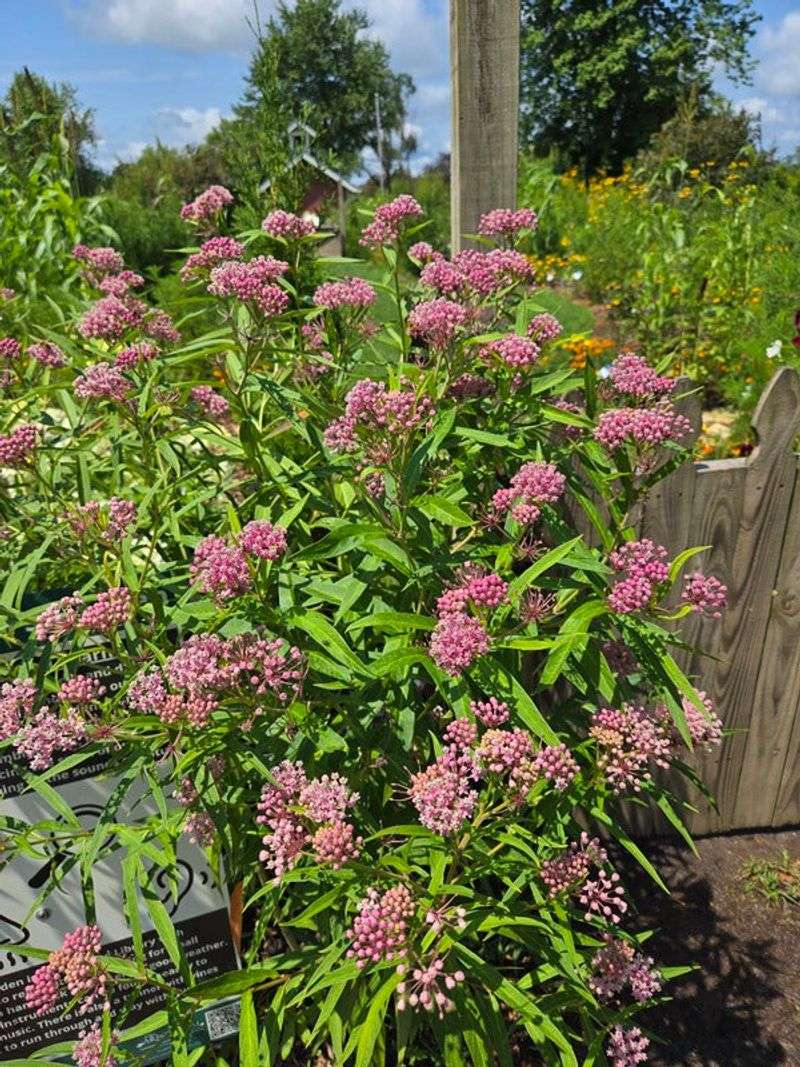
Swamp milkweed, Asclepias incarnata, is a strong native perennial choice for a suitable North Carolina site, not a one-size-fits-all answer for every yard in the state. NC State Extension lists it as native across the Coastal Plain, Piedmont, and Mountains, so chances are good that a version of this plant grew somewhere near your neighborhood long before any garden did.
The flowers are clusters of small, star-shaped blooms in shades of pink to rose-purple, and they appear on stems that can push 3 to 5 feet tall by midsummer. That height is part of what makes the plant so useful. Butterflies and other pollinators can spot it from a distance, and it stands above most of the surrounding garden traffic.
The plant does two jobs at once. Its flowers supply nectar for adult butterflies and other pollinators, and its foliage is the required food source for monarch caterpillars. Those are two separate functions, and that double role is rare in a single native perennial.
One honest note right up front: swamp milkweed can support a long season of butterfly activity, but it will not guarantee nonstop flowers or a yard packed with butterflies through every warm week of the year. What it will do, on the right site and with a little company from other native plants, is give you a genuinely useful anchor for a healthier yard.
Expect Flowers Into Early Fall, Not A Frost Guarantee
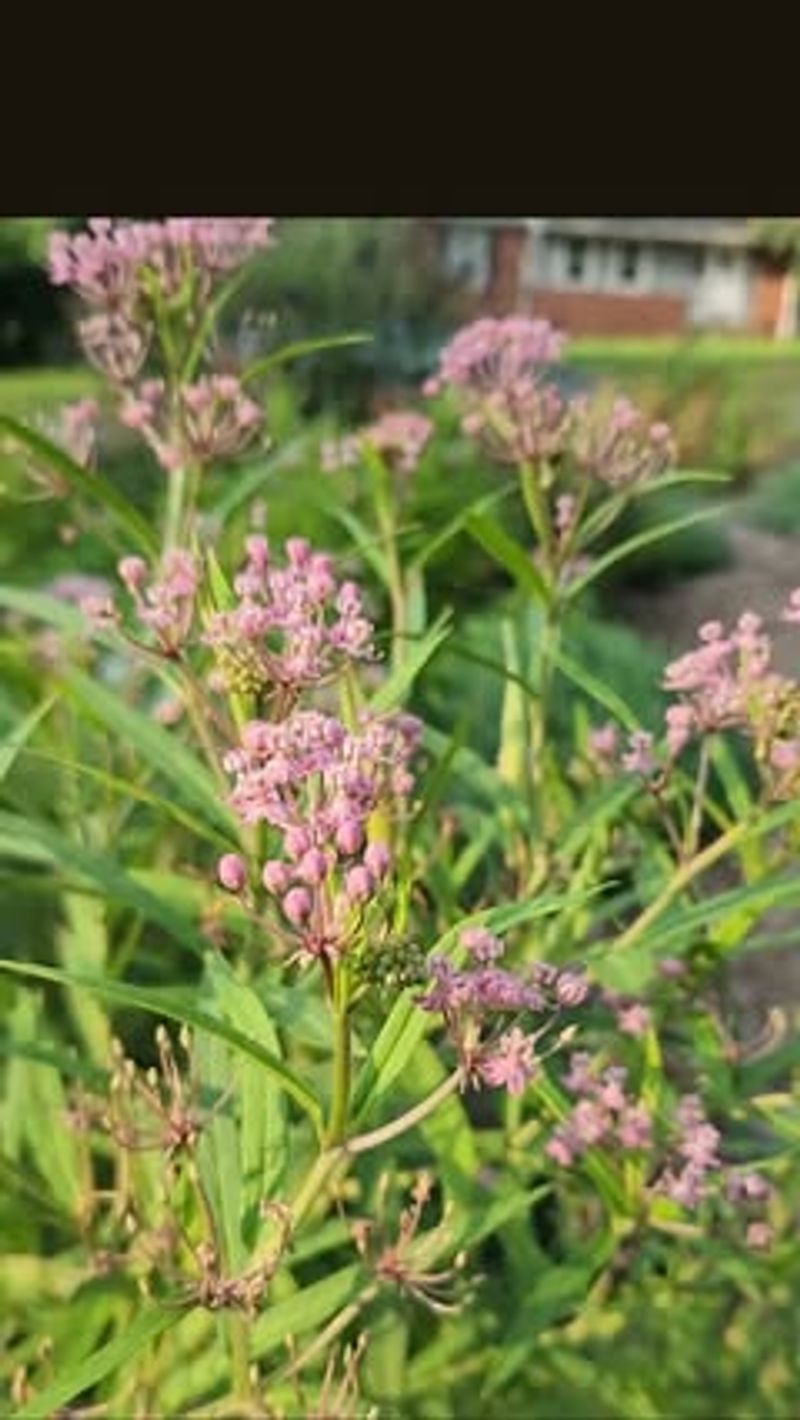
NC State describes swamp milkweed’s flowering window as mid-spring into early fall, and that is the honest range to plan around. Long-blooming does not mean the plant is covered in fresh flowers every single day from May through October. Bloom timing shifts with how much sun the plant gets, how consistently moist the soil stays, how well established the plant is, and what the weather has been doing.
The phrase “right up to first frost” sounds satisfying in a headline, but it does not hold up across North Carolina’s geography. National Weather Service frost and freeze maps for the Raleigh region show that first-frost timing varies considerably from the mountains to the Piedmont, and Wilmington-area freeze data confirms the coast often goes weeks longer without a killing frost than inland stations do. A Boone garden and a Wilmington garden are not on the same schedule.
Your North Carolina Garden Changes Every Week. Your Plan Should Too.
Gardening in North Carolina changes quickly throughout the season. Every Friday you’ll receive a simple weekly plan showing exactly what to plant, prune, fertilize, harvest, and protect so you never miss the right timing.
What you can reasonably expect is a plant that contributes nectar and host foliage through much of the warm season, often well into September, when many other garden perennials have already quit. That is a genuinely useful window, especially when the monarchs are moving through on their fall migration.
Give the plant a year to get its roots established before you judge the bloom. A newly planted swamp milkweed in its first season may flower modestly. By year two or three, with good sun and consistent moisture, it tends to perform much more reliably and hold its flowers longer into the season.
How Swamp Milkweed Supports Butterflies
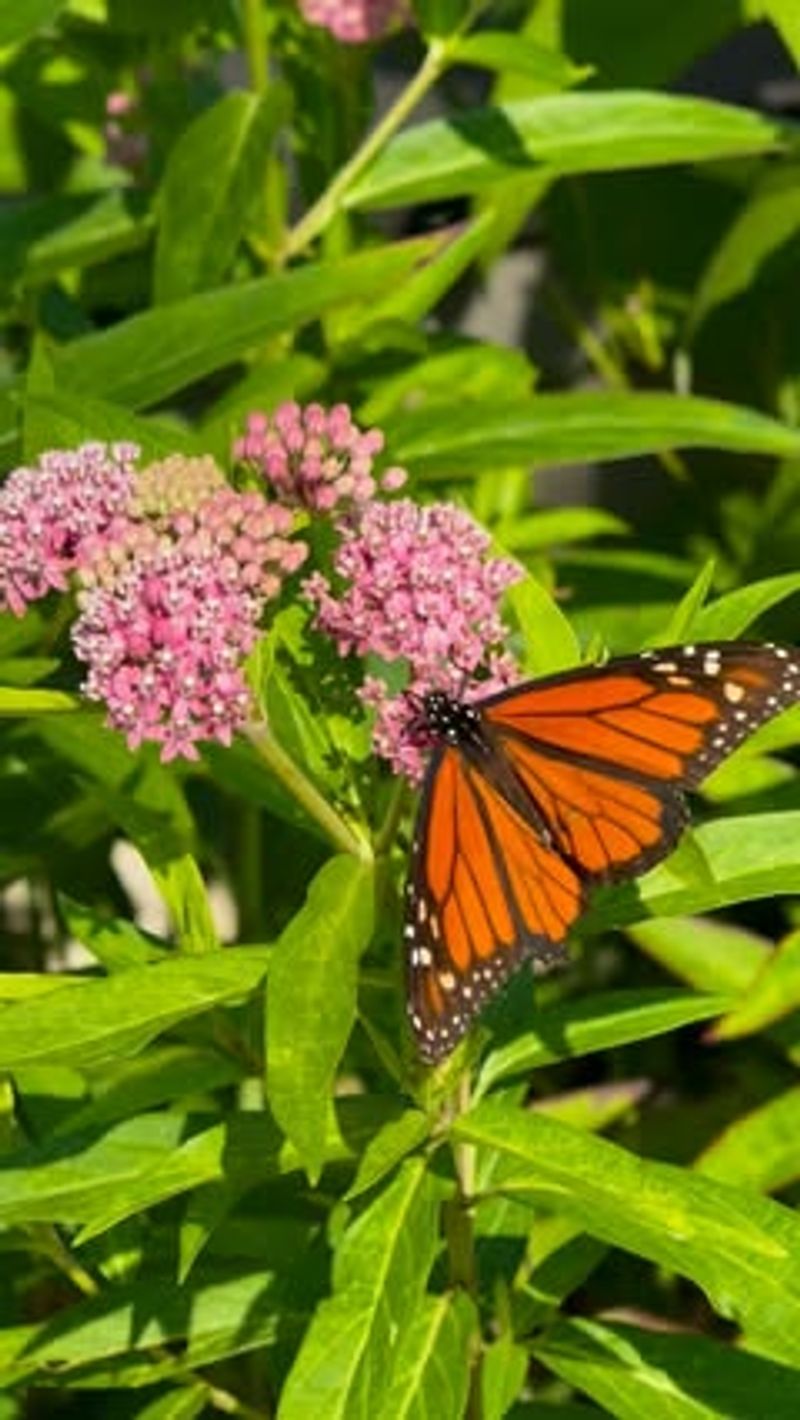
Swamp milkweed does something most garden plants cannot: it feeds butterflies at two completely different life stages. The flowers produce nectar that adult butterflies, bees, and other pollinators drink on warm sunny days. The leaves are the only food monarch caterpillars can actually digest, so a female monarch laying eggs is not being picky, she genuinely has no other option.
Those are two separate functions, and understanding the difference helps set realistic expectations. A plant can be a great nectar source without hosting any caterpillars, and a host plant can be stripped of leaves by caterpillars while producing very little nectar. Swamp milkweed handles both roles, which is why the Monarch Joint Venture recommends native milkweed species as a foundation for monarch habitat.
That said, swamp milkweed does not attract every butterfly in North Carolina. Many species need completely different host plants to complete their life cycle. NC State Extension notes that the eastern tiger swallowtail, which is North Carolina’s official state butterfly, relies on native trees and shrubs as its caterpillar host plants, not nectar flowers. Milkweed alone will not serve the full range of butterfly species you might hope to see.
Think of swamp milkweed as one strong piece of a larger puzzle. NC State’s native plants guidance consistently points toward a mix of host plants and nectar sources across the season, because no single plant can cover every butterfly’s needs. Swamp milkweed covers a genuinely important piece of that mix, but the broader garden does the rest of the work.
Match The Plant To Moisture, Sun, And Space
Before you buy a swamp milkweed, walk your yard after a good rain and notice where the water lingers. That low spot along the fence, the edge of the downspout splash zone, the strip next to the driveway where the Piedmont clay holds water for a day or two after a storm: those are the places this plant was made for.
NC State’s plant profile describes swamp milkweed as naturally favoring stream edges, ponds, and bogs, and it adapts well to moist clay or loam in a home landscape. Rain-garden edges, damp Coastal Plain beds, and low spots in the Piedmont are all good candidates. A permanently dry, sandy planting strip is not a good match, and the plant will struggle there no matter how much you water it at first.
Sun matters just as much as moisture. Aim for at least 6 hours of direct light, which is what most gardeners mean by full sun. Partial shade is tolerated, but NC State’s butterfly habitat guidance points out that many adult butterflies are most active in sunshine, so a shady planting tends to get less traffic even when the plant is healthy.
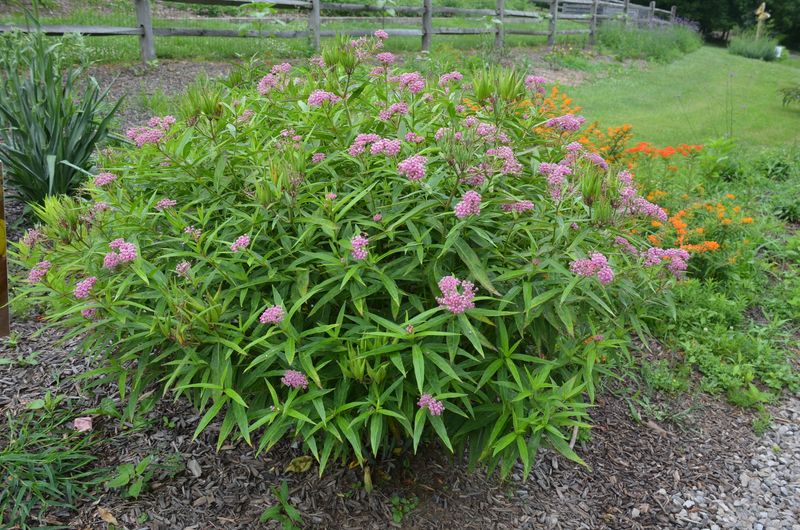
Plan for a mature size of roughly 3 to 5 feet tall and 2 to 3 feet wide, with about 3 to 6 feet of planting space recommended so the roots and stems have room to develop properly over several seasons.
If your yard is mostly dry, sandy Sandhills soil or a rocky mountain slope, butterfly weed, Asclepias tuberosa, is the better milkweed choice. It tolerates drought and poor dry soil far better than swamp milkweed does, and it also serves as a monarch host. Matching the plant to the actual site, rather than the ideal site, is the single most important decision you will make.
Place It Where Butterflies Can Find It
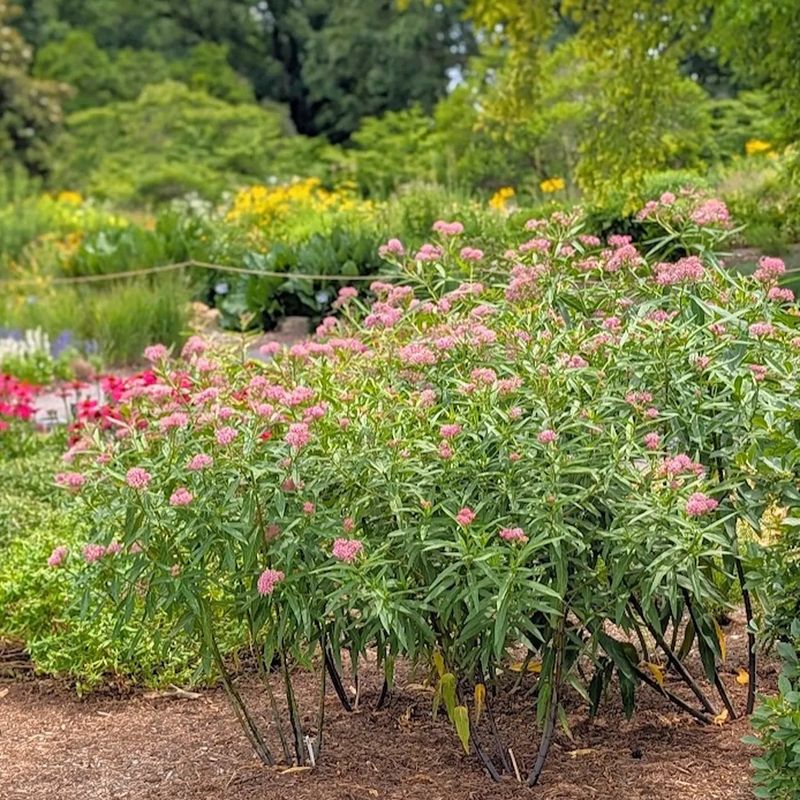
Mature swamp milkweed reaches 3 to 5 feet tall, and that height is actually an asset if you use it right. Position the plant where its stems will be visible from open yard space, not tucked behind a dense row of shrubs where butterflies would have to hunt for it. An open border, a rain garden edge, or a sunny corner near a path all give the plant the visibility it earns.
Watch the mature height against your windows and shorter neighbors. A 4-foot plant placed directly in front of a knee-high sedum will shade the sedum out within a season or two. Give swamp milkweed the back or middle of a bed, where it can show off without crowding plants that need light to thrive.
University of Georgia extension research on monarch gardens found that taller milkweed species, including swamp milkweed, attracted more monarch eggs and larvae than shorter milkweed species in their study gardens. That is useful regional guidance from a neighboring state, and it lines up with what many Piedmont gardeners have noticed anecdotally. It is not a guarantee for every North Carolina yard, but it is a reasonable reason to let this plant reach its full height rather than cutting it back early.
NC State’s profile recommends planting swamp milkweed where it has 3 to 6 feet of space to develop. Give it room, give it sun, and put it somewhere a butterfly flying overhead can actually see it. That combination does more for butterfly activity than any single planting trick.
Before You Spray, Check The Insects
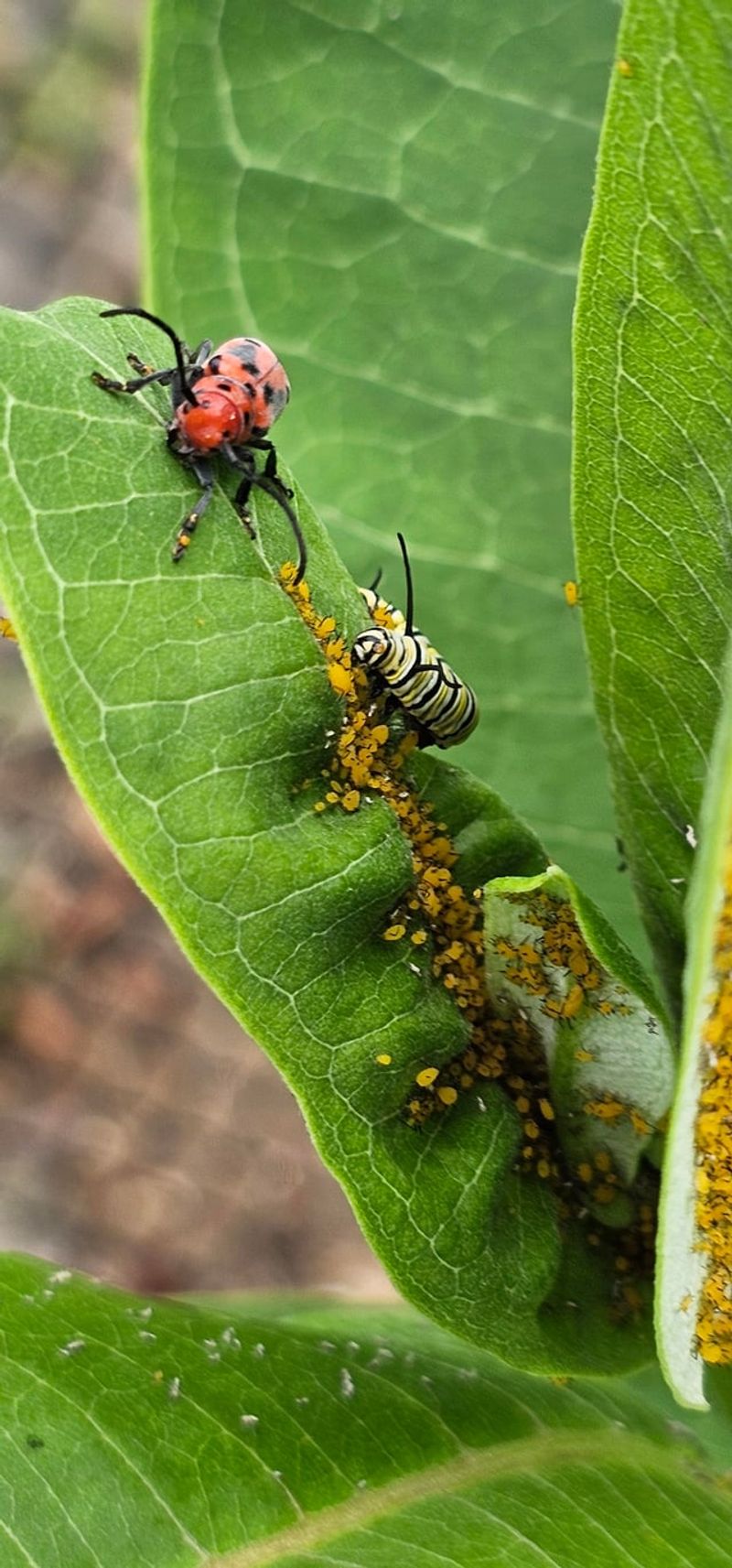
Here is where a lot of well-meaning gardeners make a costly mistake. You spot a cluster of bright orange aphids on your swamp milkweed, or a few milkweed bugs working the seed pods, and the instinct is to reach for a spray. Slow down before you do that.
Monarch larvae, tussock moth caterpillars, milkweed beetles, and various milkweed bugs are all common associates of this plant. Their presence reflects the plant doing its ecological job, not a sign that something is going wrong. Aphids and large milkweed bugs can cause real damage, especially to seed pods, but observation should come before any treatment decision.
Monarch Joint Venture’s guidance on milkweed aphids advises against broad insecticide use because it harms non-target insects, including the monarch caterpillars you planted the milkweed to support in the first place. If a pest problem is severe enough that you feel you must act, choose the most targeted option available and apply it carefully, away from any caterpillars or pollinators you can see.
Monarch Joint Venture’s pesticide guidance also warns that systemic insecticides used by nurseries can remain in plant tissues for months after purchase. When you buy swamp milkweed, ask the nursery whether it has been treated with systemic products, because a treated plant can harm caterpillars even when no spray was applied at home.
One more thing worth knowing: NC State describes swamp milkweed as having low-severity poisonous characteristics. Do not eat any part of the plant, and keep children and pets from chewing the stems or leaves. It is a garden favorite and a wildlife resource, but harmless to eat it is not.
Build The Longer Butterfly Season Around It
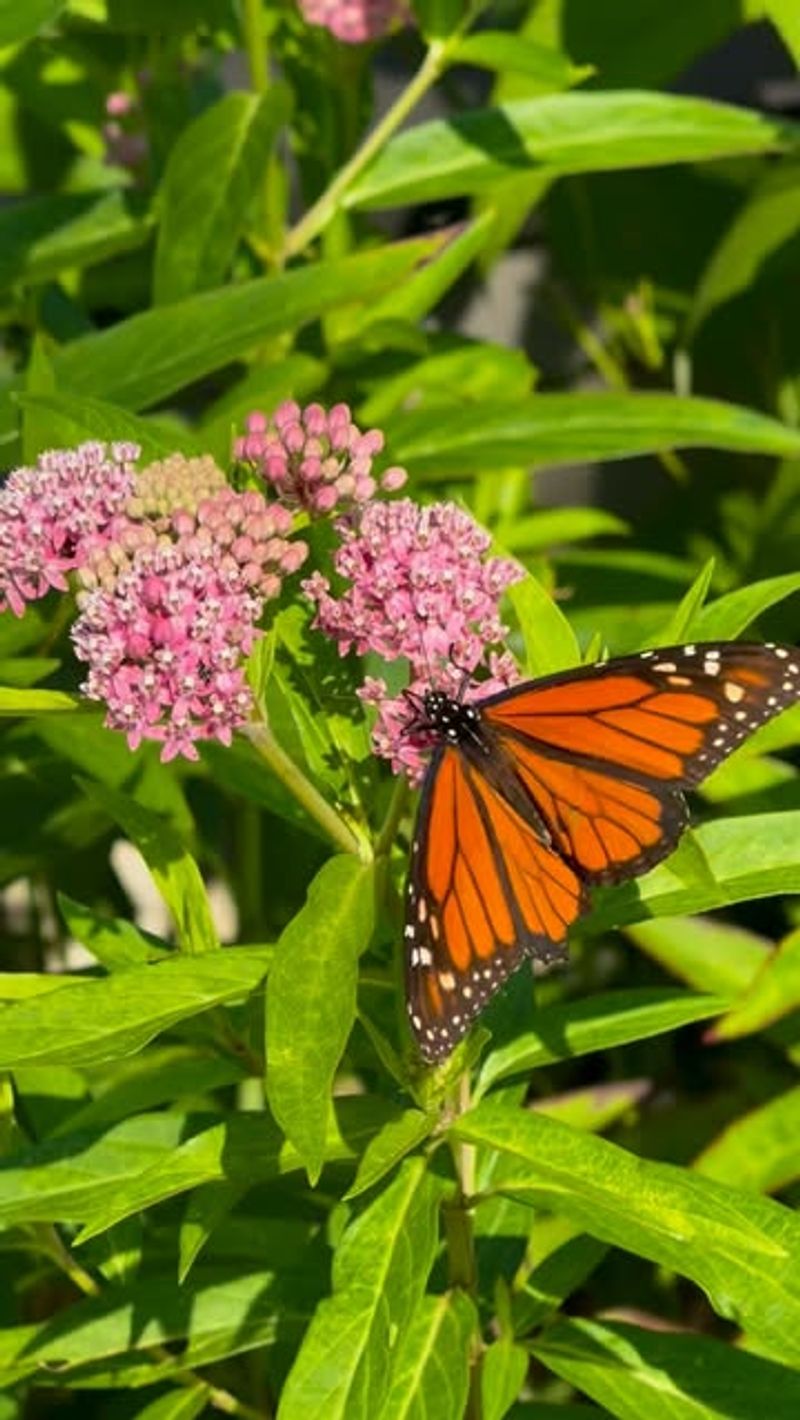
Swamp milkweed can anchor a butterfly-friendly yard, but no single plant covers every season or every species. The honest goal is a garden that offers something useful from early spring through late fall, and that takes more than one perennial to pull off.
NC State’s butterfly habitat guide recommends layering native plants with overlapping bloom periods across spring, summer, and fall. Early bloomers bring in the first butterflies of the year. Swamp milkweed carries the middle of the season. And late-season nectar plants matter more than most gardeners realize, especially in August, September, and October when monarchs are actively migrating through North Carolina on their way south.
Monarch Joint Venture notes that fall nectar plants are critical during the migration window, roughly mid-August through late October, because monarchs need to build fat reserves for the journey to Mexico. A yard that goes quiet on nectar in September leaves migrating butterflies with less to work with at exactly the wrong time.
Native mountain mint, Pycnanthemum tenuifolium, and native goldenrod, Solidago caesia, are two strong North Carolina choices for bridging that late-season gap. Neither one replaces milkweed as a monarch caterpillar host, but both supply nectar when swamp milkweed is winding down. Add shelter in the form of native shrubs or a brush pile, keep a mix of host plants for the swallowtails and other species that need something besides milkweed, and the Monarch Joint Venture’s habitat framework gives you a sound model to follow.
Swamp milkweed is a genuinely useful plant for the right North Carolina site. The yard that keeps butterflies returning through the season, though, is the one built around it.